
El Escorial
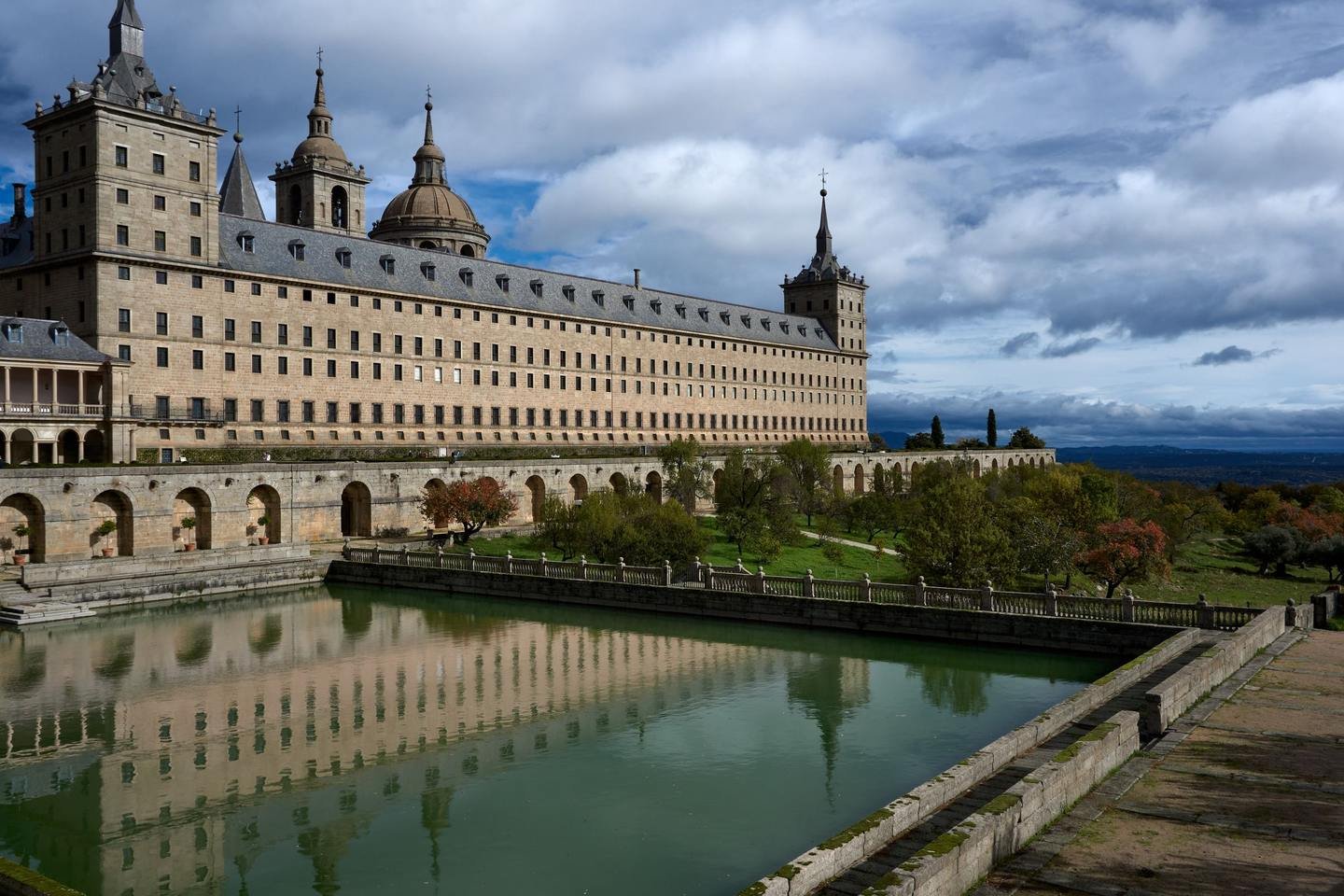
Travel writing has spent two centuries describing El Escorial as the gloomiest building in Europe: the granite tomb that Philip II built to live in, grim as its master. Almost none of that survives a visit. What Philip built in the mountains above Madrid was a monastery, a royal palace, a library, a college and a mausoleum, all inside one rectangle, in a style his architect Juan de Herrera made deliberately plain. It was admired in its own time as the eighth wonder of the world. The severity was a choice, not a mood — and inside it are some of the most lavish rooms in Spain.
A vow, a king and a rectangle of granite
On 10 August 1557, St Lawrence’s day, Spanish forces defeated the French at San Quintín. Philip II built this monastery in thanksgiving and dedicated it to the saint, and he also meant it as a tomb for his father, the emperor Charles V, and for the dynasty after him. The first stone was laid in 1563. Juan Bautista de Toledo drew the plan and died in 1567; his assistant, Juan de Herrera, finished it in 1584 — astonishingly fast for a building this size.
It was always several institutions at once. Hieronymite monks sang the offices in the basilica (the Augustinians have been here since 1885). The king lived in a palace wrapped round the east end, the college taught, and the library was meant to hold all the knowledge of the age. Philip governed an empire on which the sun never set from a small room here, and he died in it, on 13 September 1598, looking at the high altar.
The visitor’s cheat sheet
| Where | San Lorenzo de El Escorial, about 45km north-west of Madrid. While works continue, visitors enter by the west front, through the Patio de los Reyes. The ticket office is in the Visitor Reception Centre opposite the north front |
|---|---|
| Getting there | C-8 local train from Madrid to El Escorial, then uphill to the monastery; or buses 661 and 664 from Moncloa. About an hour either way |
| Opening hours | Tuesday–Sunday. October–March 10am–6pm; April–September 10am–7pm. Ticket office and entry close at 4.45pm in winter and 5.45pm in summer. Closed every Monday, and in 2026 on 1 and 6 January, 1 May, 13 September and 24, 25 and 31 December |
| Admission | €14; reduced €7 (ages 5–16, over-65s, students to 25). Free for under-5s, unemployed people, visitors with a disability of 33% or more and some others. Buy in advance, online or at the Visitor Reception Centre. The basilica is free, and closes during services |
| Free entry | Wednesdays and Sundays from 3pm to closing, for EU citizens and residents and Ibero-American citizens with proof: ticket office only |
| Guided tours | €22 (reduced €15), or €8 on top of a ticket. In English Tuesday–Sunday at 10.45am, about two hours |
| Photography | Without flash, for personal use, except in restricted areas. No tripods or selfie sticks |
| How long | Two to three hours for the monastery; a full day with the gardens and the town |
Hours and admission checked against the official site in September 2026. They change; the official site is always the last word.
The basilica needs no ticket. The church at the heart of the building is free to enter, and closed during services; the ticket is for the rest. And the famous free afternoons — Wednesdays and Sundays from 3pm — are for EU citizens and residents and Ibero-American citizens only, and are handed out at the ticket office on the day. You cannot book them.
What to see, in the order you meet it
The scale, and the gridiron story
The rectangle is about 200 metres by 160, with sixteen courtyards, the basilica at the centre and a tower at each corner. The story everyone tells is that its grid of courtyards recalls the gridiron on which St Lawrence was roasted to death, with the royal palace projecting from the east end as the handle. It is an old tradition and a satisfying one, but nothing from the design stage says so, and the plan is as easily explained by what the building had to contain. Enjoy it as a tradition.
The Patio de los Reyes
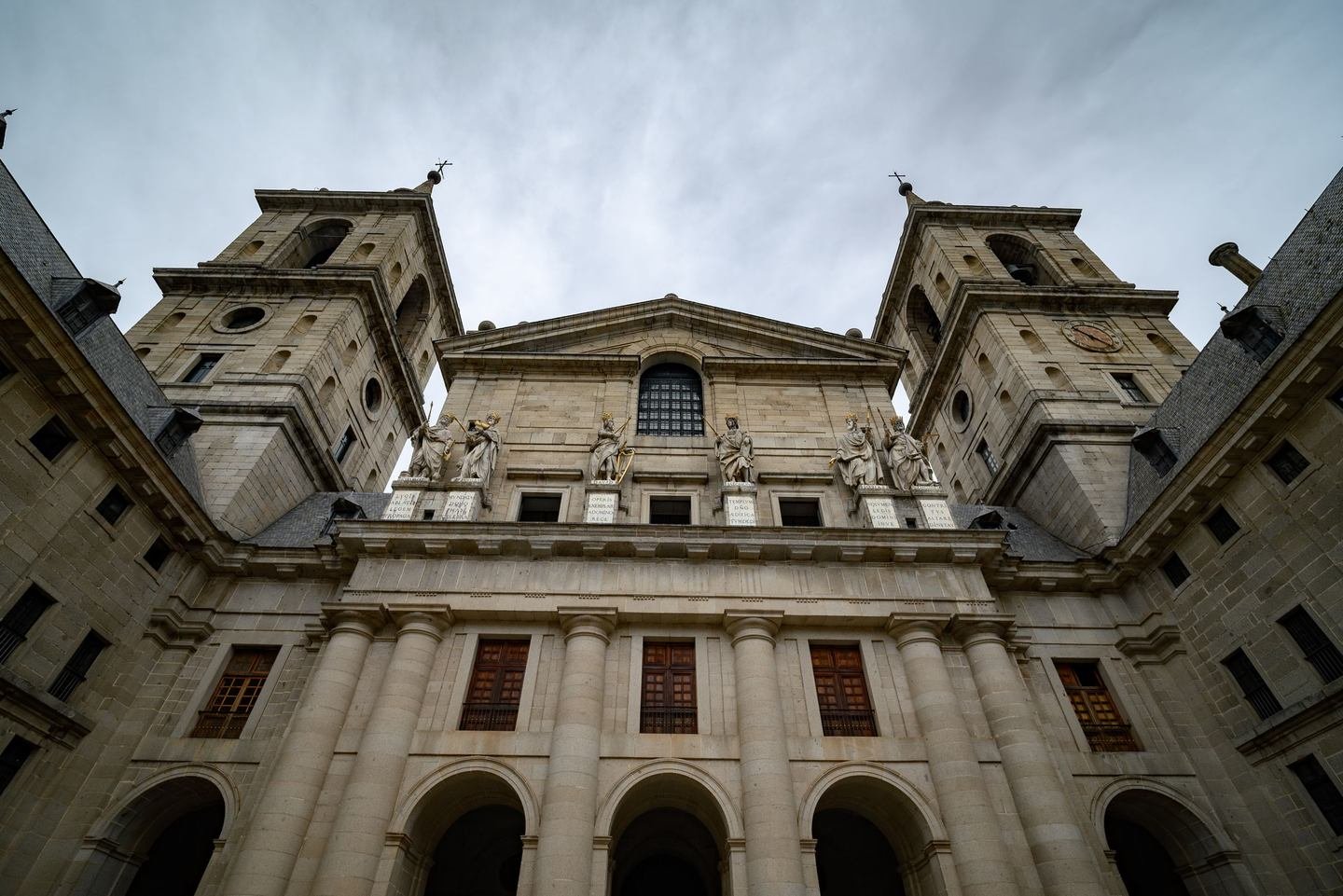
Since February 2026, while works go on elsewhere, visitors come in by the main west front, the way the building was meant to be entered, into the Patio de los Reyes. Across it rises the basilica’s façade with six statues of the kings of Judah, which gave the courtyard its name. To your left is the college, to your right the monastery, and the library runs above the entrance behind you.
The basilica
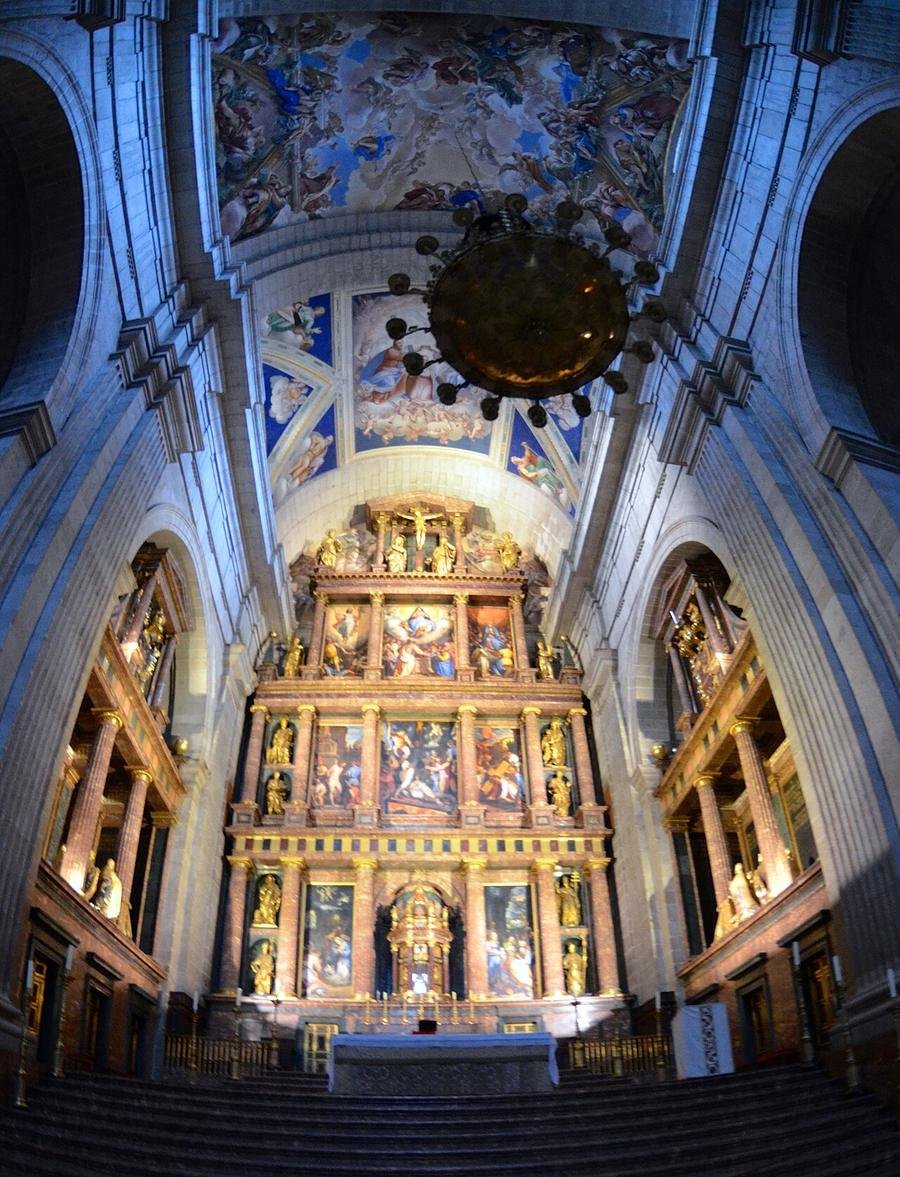
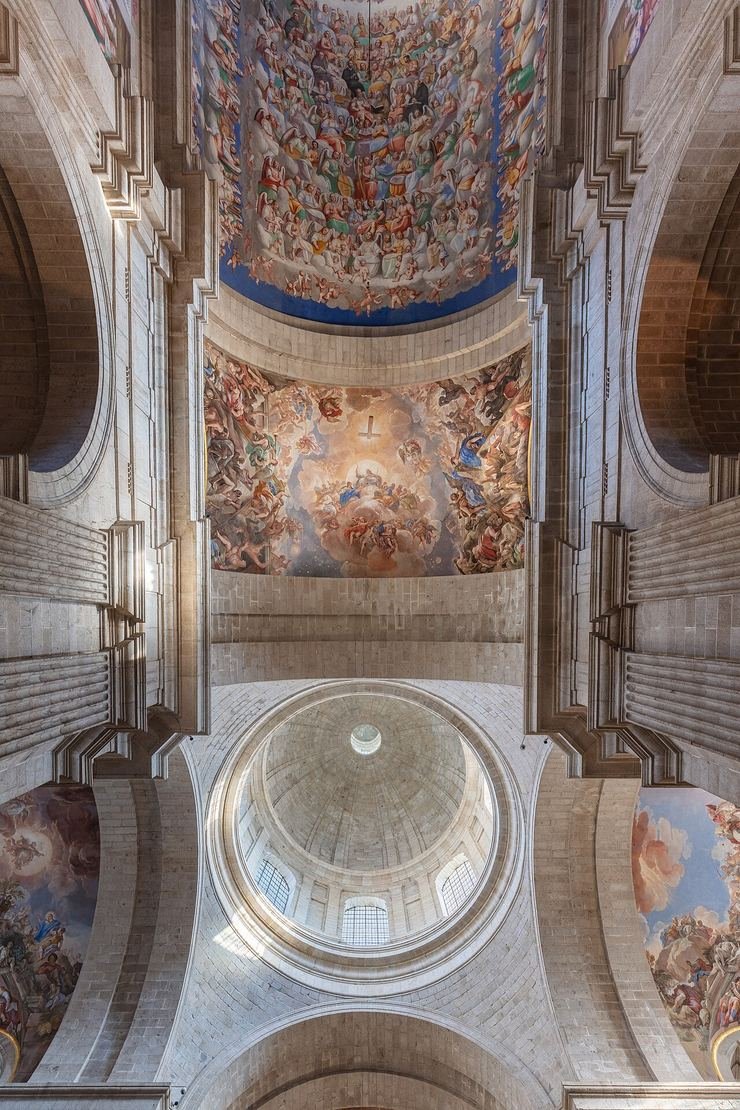
The church is Herrera’s style at full strength: grey granite, Doric columns, almost no ornament on the structure at all. That makes the high altar more startling — a towering retablo of red jasper and gilt bronze, flanked by gilded bronze groups of Charles V and Philip II with their families, kneeling in prayer and facing the altar for eternity. Under the choir at the west end, look for the flat vault, a piece of engineering showmanship.
The Pantheon of the Kings
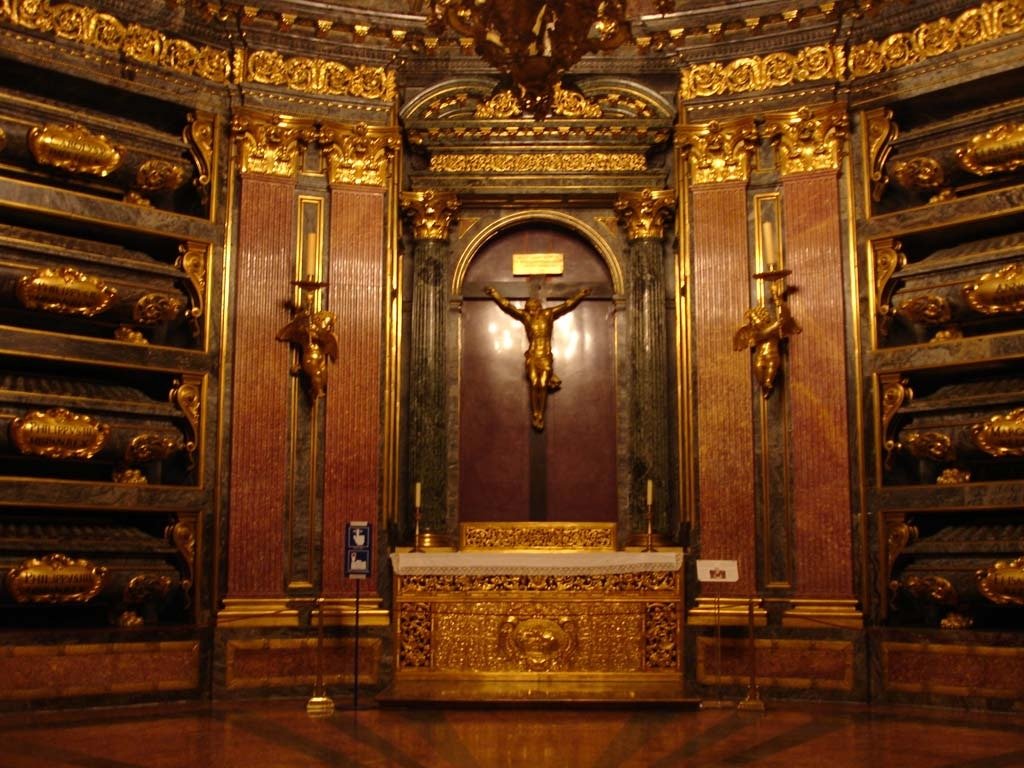
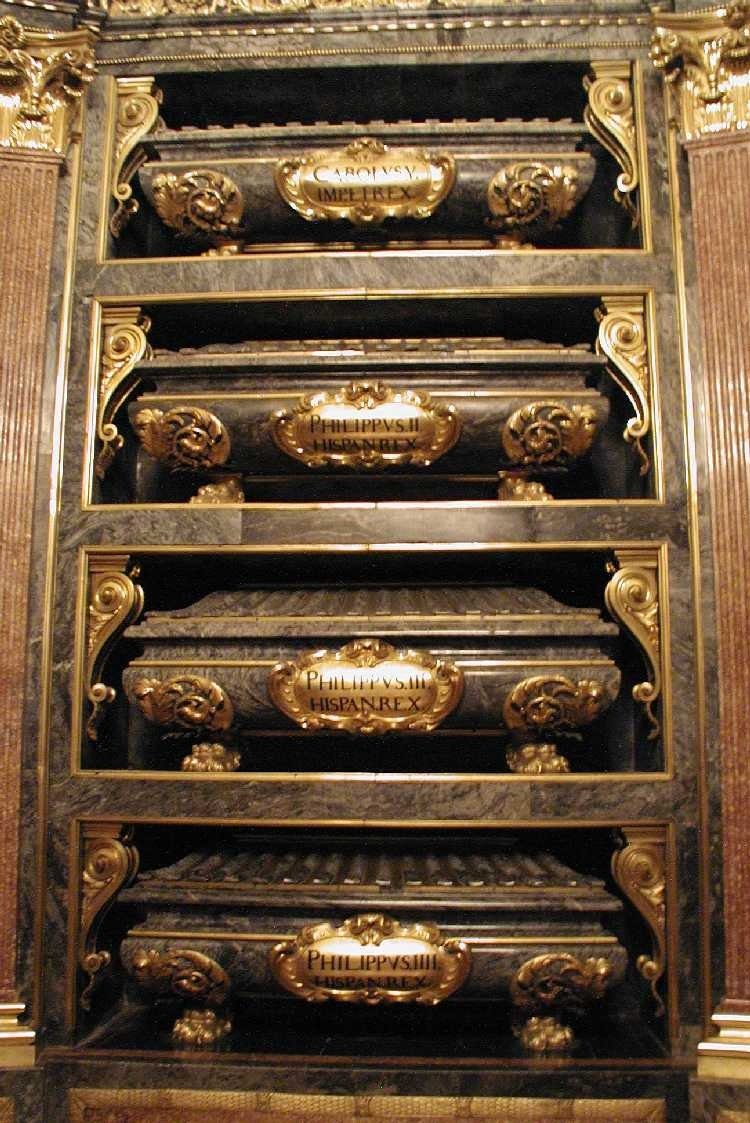
Down a marble stair beneath the high altar is the chamber the building was, in a sense, made for. Herrera planned a plain granite crypt; Philip III and Philip IV transformed it into an octagon of polished marble and gilt bronze, completed in the 1650s. The urns are identical and stacked in tiers. The rule is strict: kings on one side, and on the other only those queens who were mothers of kings. Every monarch of Spain since Charles V is here, with three exceptions: Philip V, who preferred La Granja; Ferdinand VI, who lies in Madrid; and Amadeo of Savoy, king for barely three years in the 1870s.
What guides mention with some relish is the pudridero, the “rotting room”: a body is left in a separate chamber for decades until only the bones remain, and only then moved into its urn. It is not on the visit.
The Pantheon of the Infantes
Beyond it, a sequence of white marble rooms of the nineteenth century holds princes, princesses and the consorts who did not qualify for the kings’ chamber. The most affecting monument is the many-tiered white tomb for royal children who died young, which visitors have nicknamed “the wedding cake”.
The chapter houses, the sacristy and the paintings
The monastery rooms off the main cloister hold a picture collection that would be a museum anywhere else. In the chapter houses hangs Velázquez’s Joseph’s Tunic, alongside sixteenth- and seventeenth-century Spanish and Italian painting. The sacristy has works by Ribera and Luca Giordano and, over its altar, Claudio Coello’s painting of Charles II and his court adoring the Sacred Form. On the last Sunday of September the painting is lowered to reveal the relic behind it. Giordano also painted the vault over the main staircase in 1692.
The Habsburg palace and Philip II’s rooms
The palace of the Austrias, the Habsburgs, is built round the Patio de Mascarones, and the king’s own apartment is the surprise of the visit: small whitewashed rooms with tiled skirting, plain furniture and a chair with a rest for his gouty leg. The bedroom opens on to the basilica, so that a sick king could follow Mass at the high altar from his bed. He did, in the summer of 1598, and he died here.
The Hall of Battles
The long gallery in the palace was the king’s gallery; it became the Hall of Battles for the frescoes that run along its walls like painted tapestries. They show the Castilian victory at La Higueruela near Granada in 1431, the San Quintín campaign that started the whole building, and the conquest of the Azores in the early 1580s, in minute detail: regiments, tents, siege guns and baggage trains, the whole apparatus of sixteenth-century war.
The library
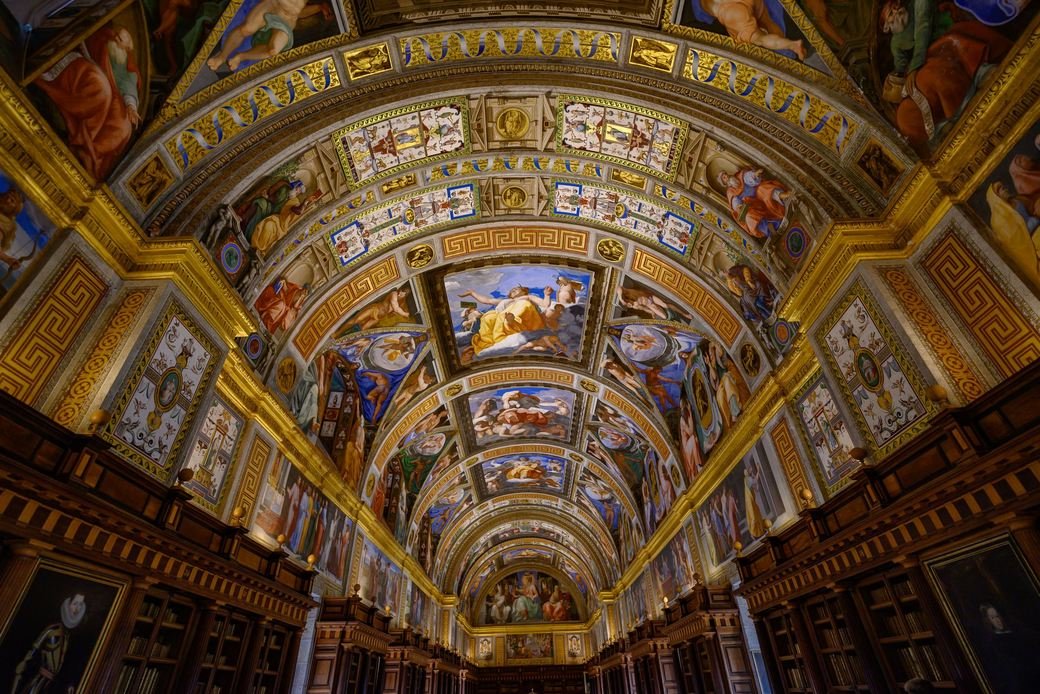
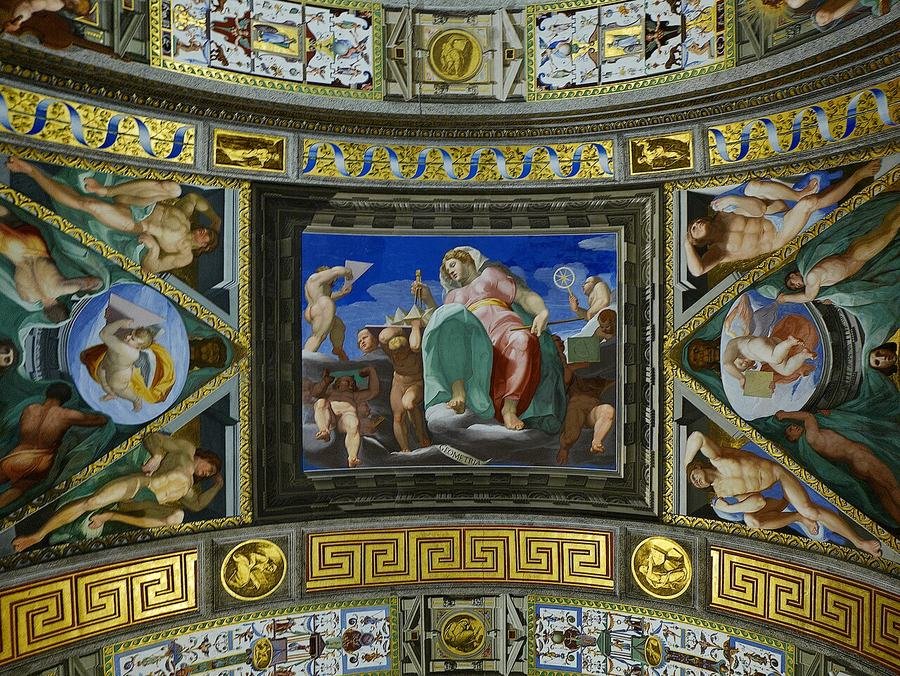
The best room in the building. The main hall is 55 metres long and ten wide, lit by windows on both sides, with a vault painted between 1586 and 1592 by Pellegrino Tibaldi and his workshop with the liberal arts — grammar, rhetoric, dialectic, arithmetic, music, geometry, astronomy — each with its sages beneath. The bookcases, designed by Herrera, are of exotic woods, and the books stand with their spines to the wall and their gilded fore-edges facing out, to protect the bindings and let the paper breathe. The collection, especially its Arabic, Greek and Hebrew manuscripts, is one of the great historic libraries of Europe, even after the fire of 1671 destroyed some five thousand manuscripts. The printed books in this hall survived.
The gardens, and the two little houses
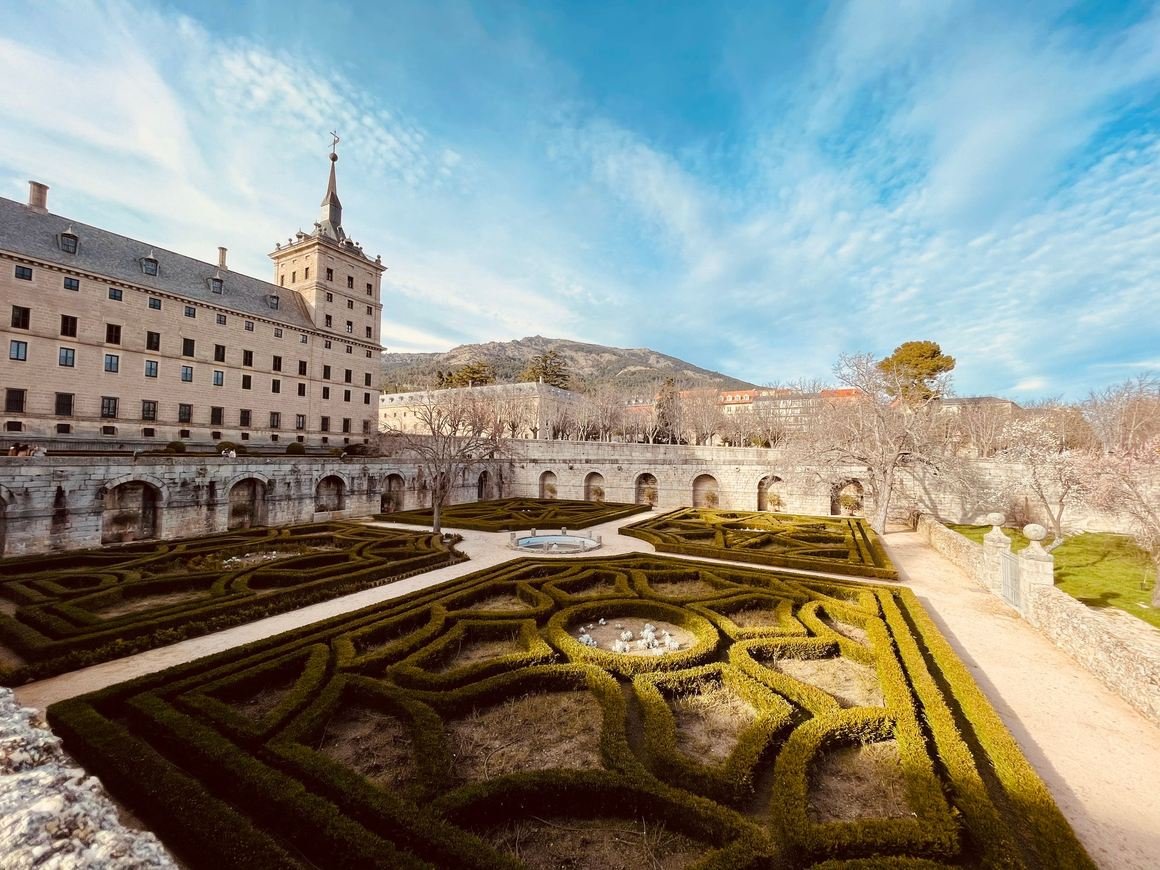
The Friars’ Garden runs along the south side on terraces, with box parterres and views over the plain towards Madrid, and it is the place to sit afterwards. Down the hill are two small eighteenth-century pleasure houses, the Casita del Príncipe and the Casita del Infante, built for Charles III’s sons. They have separate tickets and limited opening, so check before you walk down.
“The gloomiest building in Europe”
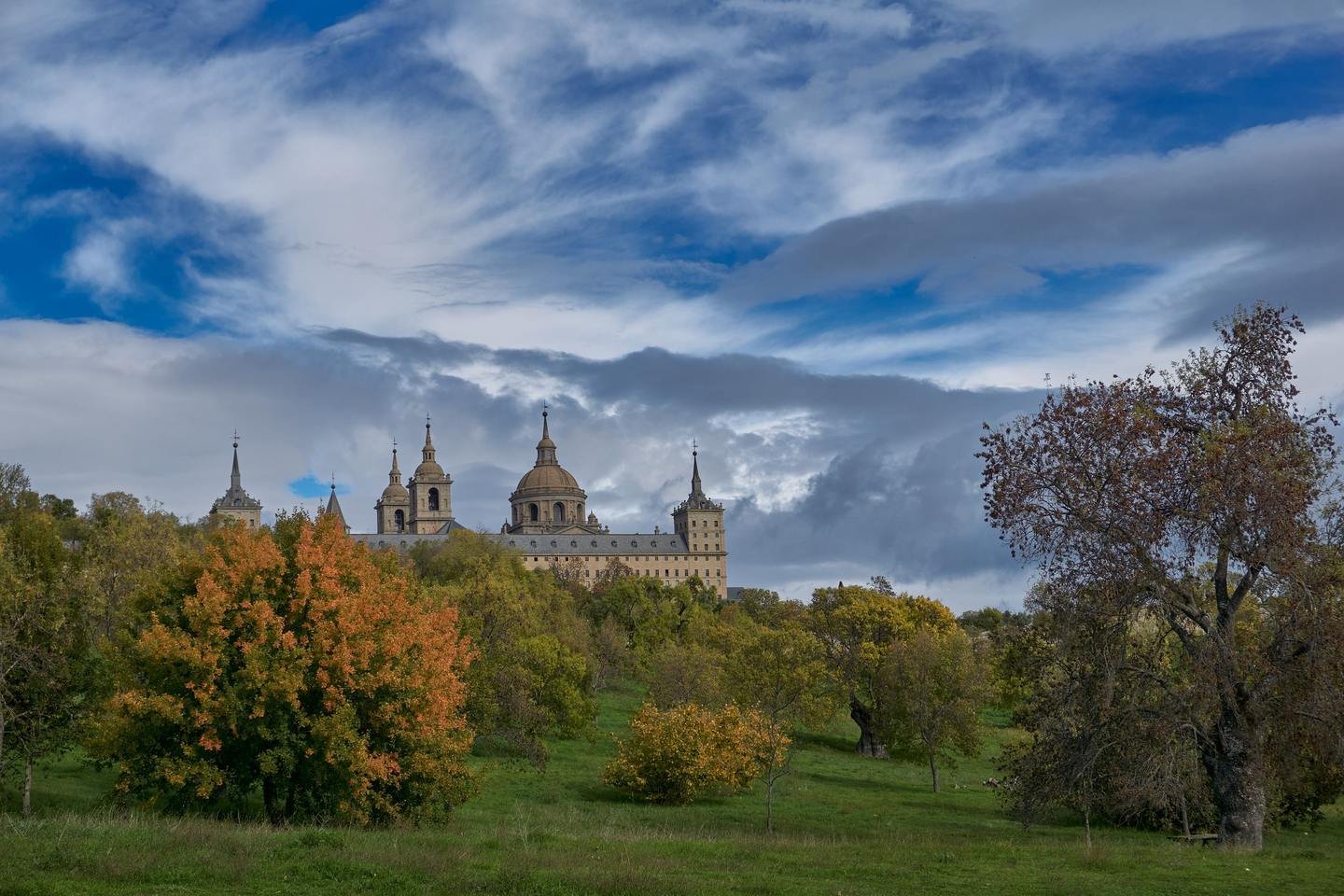
The reputation deserves a paragraph of its own, because it is the lens most visitors arrive with. Philip II’s contemporaries called El Escorial the eighth wonder of the world. The idea that it is a sinister granite prison was largely made by nineteenth-century foreign travellers, who brought the Black Legend of Philip’s Spain with them and found in the building what they expected. The austerity is real, but it is Herrera’s: a deliberate style, stripped, geometric and grand, that became the official architecture of Habsburg Spain. The building is severe in the way a great public library is severe. It is not sad.
Tickets and tours
Book ahead, and remember Mondays
Tickets must be bought in advance, online through Patrimonio Nacional or at the Visitor Reception Centre opposite the north front, and the standard ticket is €14. The English guided tour leaves at 10.45am from Tuesday to Sunday and is worth having: the building is hard to read without a guide. The monastery is closed every Monday, which catches a great many day-trippers from Madrid.
Tour and hotel links go to GetYourGuide and Booking.com. This site earns nothing from them at present — they are here because they are the quickest way to check what is actually available.
Don’t miss
- The library vault Tibaldi’s liberal arts, and the books turned spine to the wall.
- The Pantheon of the Kings Marble and gilt bronze, and the strict rule about who gets in.
- Philip II’s bedroom Tiny, plain, and with a door on to the high altar.
- The Hall of Battles A sixteenth-century army painted in every detail.
- Velázquez’s Joseph’s Tunic In the chapter houses, without the Prado’s crowds.
- The royal bronzes at the altar Charles V and Philip II, kneeling towards the altar with their families.
- The Friars’ Garden Box parterres and a view all the way to Madrid.
Insider tips
It is closed on Mondays. Every Monday, all year, and on a handful of fixed dates besides — in 2026 those include 13 September. Check the day before you take the train.
Take the bus rather than the train if walking uphill matters. The C-8 station is at the bottom of the town; the 661 and 664 buses from Moncloa drop you much nearer the monastery.
Arrive early. Entry closes an hour and a quarter before the building does, at 5.45pm in summer and 4.45pm in winter, and the route is long.
If you are an EU or Ibero-American citizen, the free Wednesday and Sunday afternoons are real value, but they start at 3pm and the queue at the ticket office starts well before.
Give it a whole day. The town of San Lorenzo is pleasant, the mountain air is noticeably cooler than Madrid’s in summer, and the gardens and walks round the monastery are part of the point.
Common questions
How much does it cost to visit El Escorial?
The standard ticket is €14 and the reduced ticket €7, for ages 5 to 16, over-65s and students up to 25. Under-5s go free. A guided tour costs €22, or an €8 supplement on a ticket you already hold. The basilica itself needs no ticket at all.
Is El Escorial free on certain days?
Yes, for some visitors. On Wednesdays and Sundays from 3pm until closing, entry is free for EU citizens and residents and for Ibero-American citizens, with proof. The free tickets are given out only at the ticket office on the day, and cannot be booked online.
Is El Escorial open on Mondays?
No. The monastery closes every Monday, all year. It opens Tuesday to Sunday from 10am, closing at 6pm from October to March and 7pm from April to September, and the ticket office and entry close an hour and a quarter before that.
Who is buried at El Escorial?
Most of the kings of Spain since Charles V, in the Pantheon of the Kings beneath the high altar, with the queens who were mothers of kings. The exceptions are Philip V, buried at La Granja, Ferdinand VI, in Madrid, and Amadeo of Savoy, who reigned only from 1870 to 1873. Other royal children and consorts lie in the Pantheon of the Infantes next door.
Is El Escorial built in the shape of a gridiron?
That is the tradition: St Lawrence was martyred on a gridiron, the monastery is dedicated to him, and its plan of courtyards is said to recall one, with the palace as the handle. It is a good story, and it is not documented from the time the building was designed.
How do you get to El Escorial from Madrid?
By the C-8 local train from Madrid to El Escorial, followed by an uphill walk or a short bus ride to the monastery, or by buses 661 and 664 from the Moncloa interchange, which stop in the town close to it. Either way it takes about an hour.
Where to stay and eat nearby
Most visitors come for the day from Madrid, but San Lorenzo de El Escorial is a pretty mountain town with restaurants round the monastery and a few good hotels, and staying the night lets you see the building in the evening light with the day-trippers gone.
More churches in Spain
- Seville Cathedral — the cathedral of the city that ran Philip II’s American trade.
- Sagrada Família — the opposite of Herrera in every possible way.
- Jerónimos Monastery — Portugal’s royal Hieronymite monastery, built with spice-trade money.
- Batalha Monastery — another monastery built to give thanks for a battle.