
Santiago de Compostela Cathedral
Every year hundreds of thousands of people walk across Spain, France or Portugal to reach this building, and a surprising number of them assume they will have to buy a ticket at the end. They don’t. The cathedral is free to enter every day from seven in the morning to nine at night, and the tomb, the altar and the statue of St James are all in the free part. The second thing most visitors get wrong is the Botafumeiro, the great censer that swings across the transept: it does not fly at every Mass, and in September 2026 it was not flying at all.
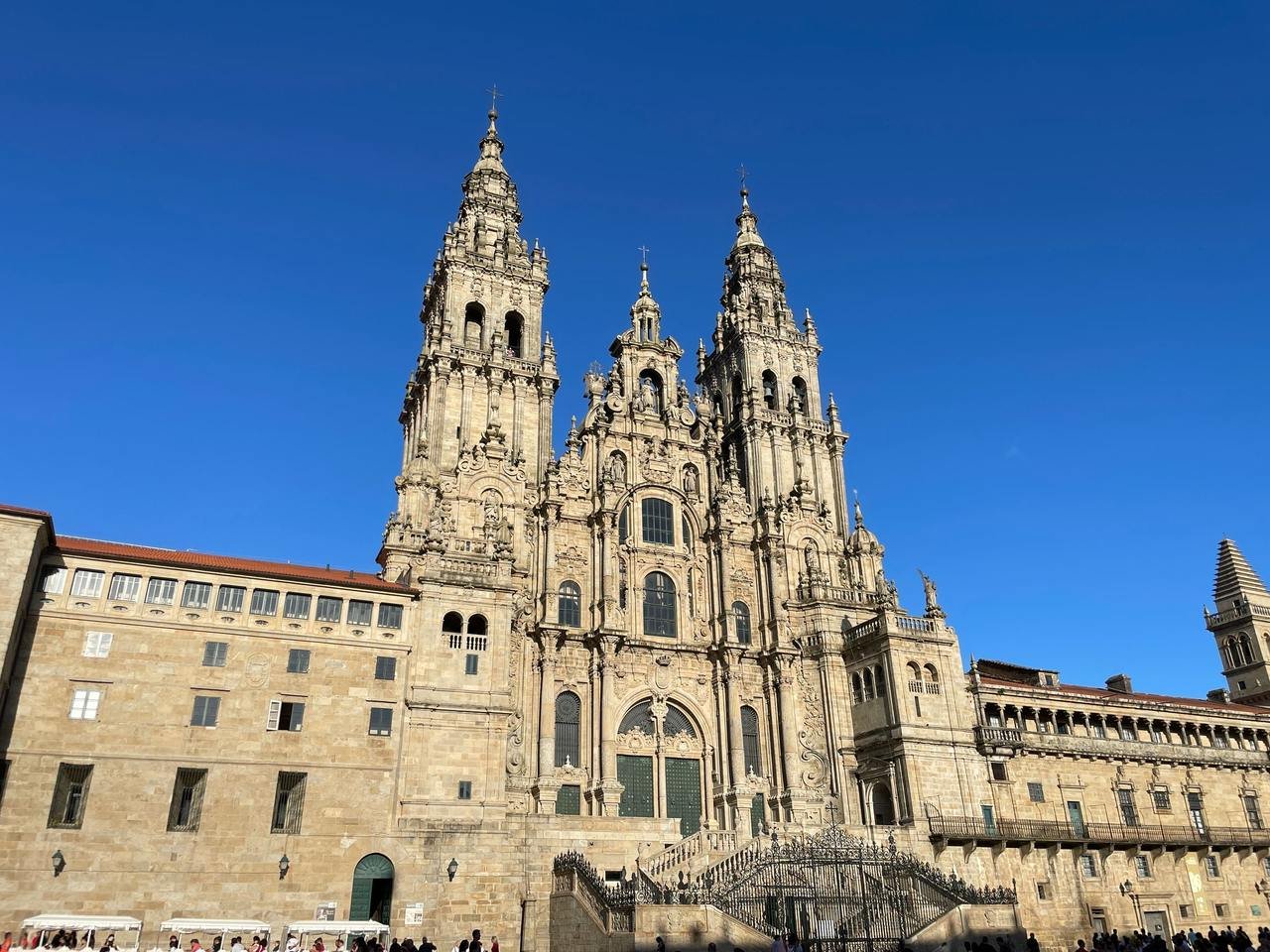
A tomb, a road and a Romanesque cathedral
Early in the ninth century, according to the cathedral’s tradition, a hermit saw lights over a wood here, and the bishop of Iria Flavia identified a tomb as that of St James the Apostle. The king of Asturias built a church over it, and pilgrims began to come from all over Christian Europe. In 997 the Andalusi general al-Mansur sacked the town. The chronicles say he carried the church bells to Córdoba to hang as lamps in the great mosque, and that when Córdoba fell to the Christians in 1236 they were carried back.
The present cathedral was begun around 1075 and consecrated in 1211: a Romanesque pilgrimage church, designed with aisles and a gallery so that crowds could circulate round the shrine without disturbing the services. That church is still here, intact inside. What changed is the outside: from the seventeenth century onwards it was wrapped in Baroque, and the building you see from the square is a Baroque screen in front of a Romanesque church.
The visitor’s cheat sheet
| Where | Praza do Obradoiro, Santiago de Compostela. The basilica entrance is the Porta das Praterías on the south side; the museum and the paid visits start at the Gelmírez Palace on the Obradoiro |
|---|---|
| Opening hours | Basilica every day 7am–9pm. Museum and paid visits every day 10am–8pm, last tickets half an hour before; museum closed 1 and 6 January, 25 July and 25 December, and closes early on 24 and 31 December |
| Admission | The basilica is free. Museum €9 (reduced €7). Pórtico da Gloria with audio guide €15 (reduced €12), including the museum. Roofs and Ratchet Tower, guided, €15 (reduced €12). Complete visit €23 (reduced €19). Reduced rates include accredited pilgrims, students, over-65s and under-12s |
| Free Pórtico visits | Monday–Friday 4–5.30pm, without a guide, by invitation from the ticket site, two per person |
| Pilgrim’s Mass | 7.30am, 9.30am, 12 noon and 7.30pm at the high altar |
| Bags | No backpacks in the cathedral; no bags, rucksacks, umbrellas or walking sticks on the paid visits |
| Photography | Not allowed in the museum or the Pórtico da Gloria |
| How long | An hour in the basilica; half a day with the Pórtico, the museum and the roofs |
Hours and admission checked against the official site in September 2026. They change; the official site is always the last word.
The cathedral is free. Everything that matters to a pilgrim — the tomb, the statue of St James, the Pilgrim’s Mass — is in the free basilica, open every day from 7am to 9pm. The paid visits are the museum, the Pórtico da Gloria and the roofs. And the Pórtico has free weekday-afternoon slots that almost nobody knows about: 4 to 5.30pm, Monday to Friday, by invitation from the cathedral’s ticket site.
What to see, in the order you meet it
The Obradoiro façade and the square
The Praza do Obradoiro is where the Camino ends, and the thing to do first is nothing: sit on the stones and watch people arrive, some in tears, some in groups, some photographing their boots. Above them rises the Obradoiro façade, built by Fernando de Casas Novoa in the 1740s — a towering Baroque front of granite and glass, designed partly to protect Master Mateo’s Romanesque portico behind it from the Galician weather.
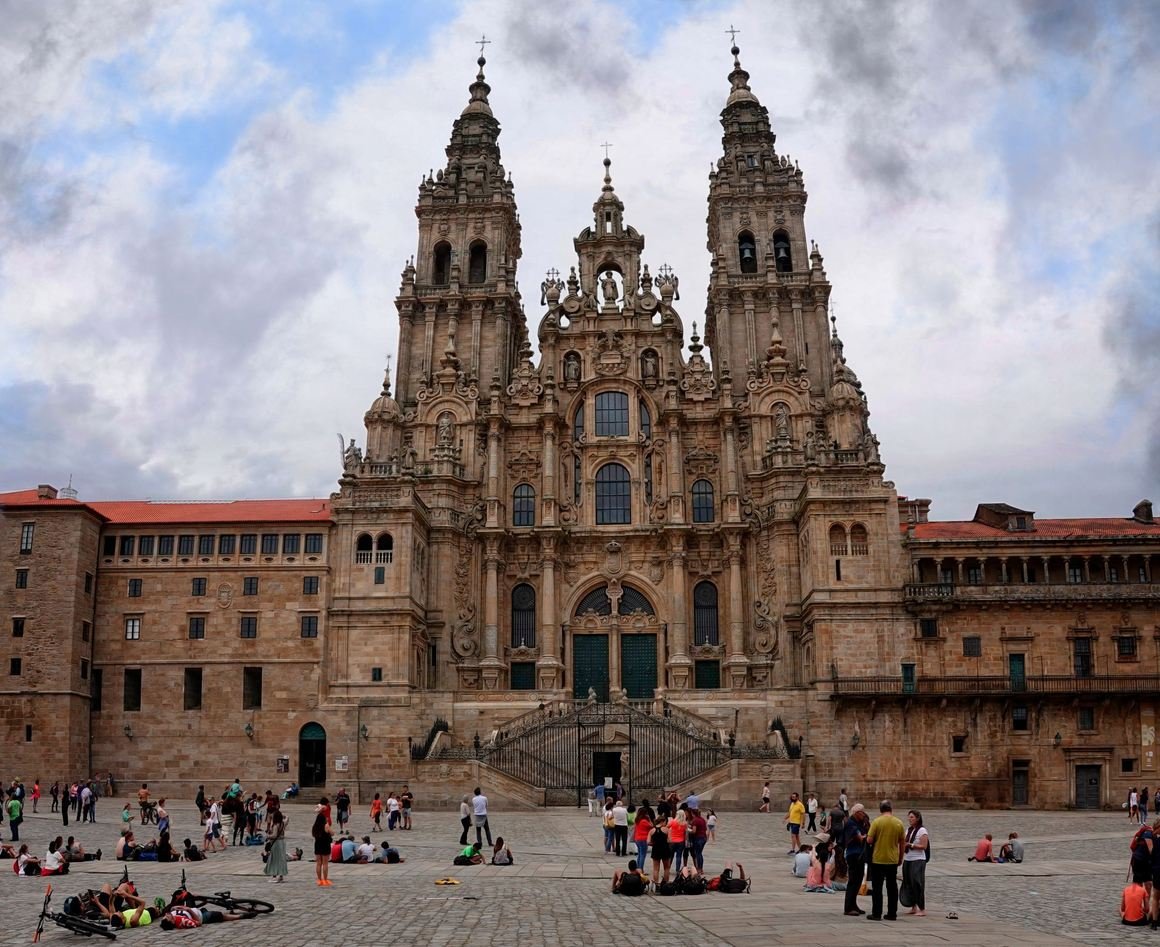
The Praterías façade
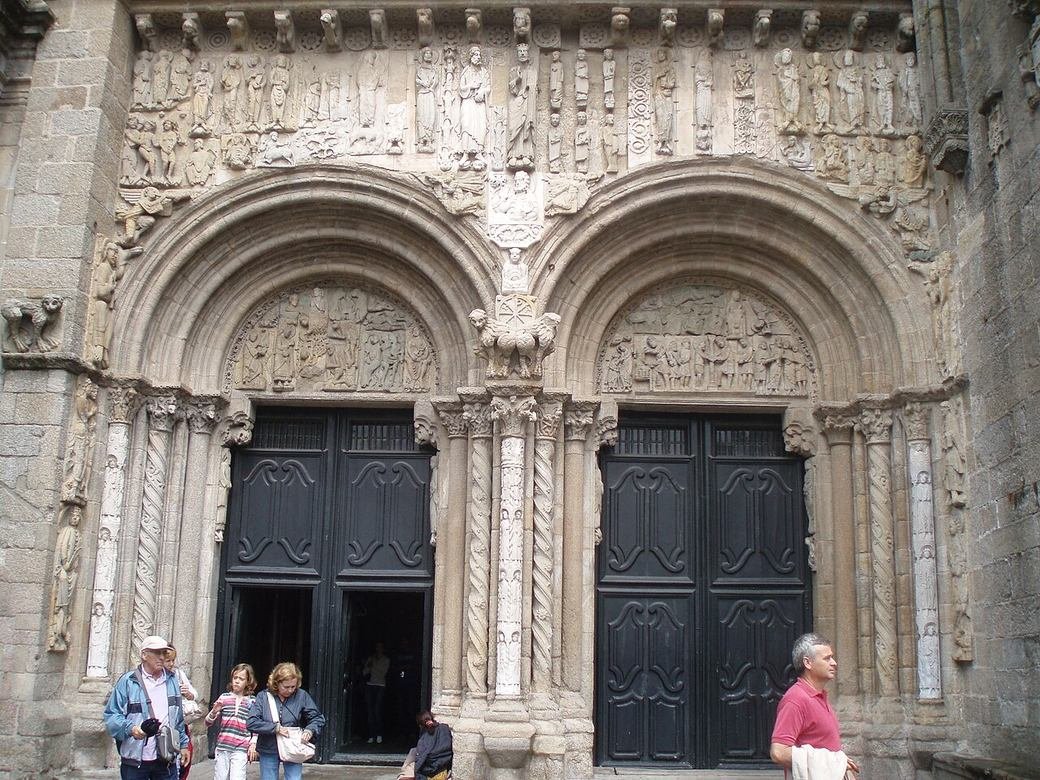
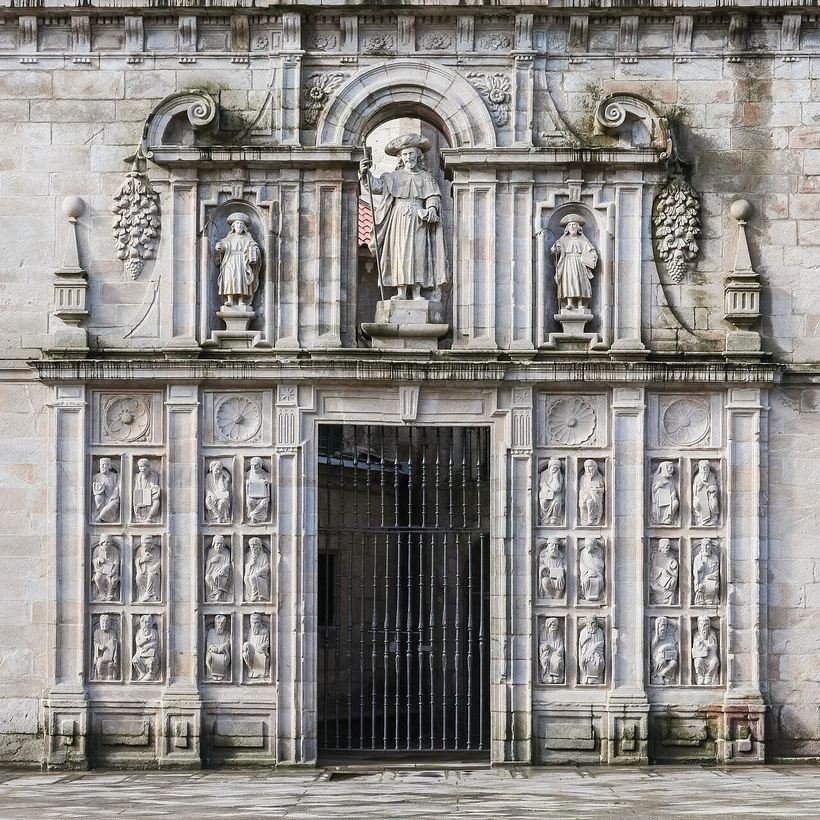
Walk round to the south side. The Praterías façade, named for the silversmiths’ workshops in the square below it, is the only Romanesque façade of the cathedral still on the outside, twelfth-century, with sculpture that has been rearranged and patched over nine hundred years. This is the door the basilica uses as its public entrance.
The Romanesque nave
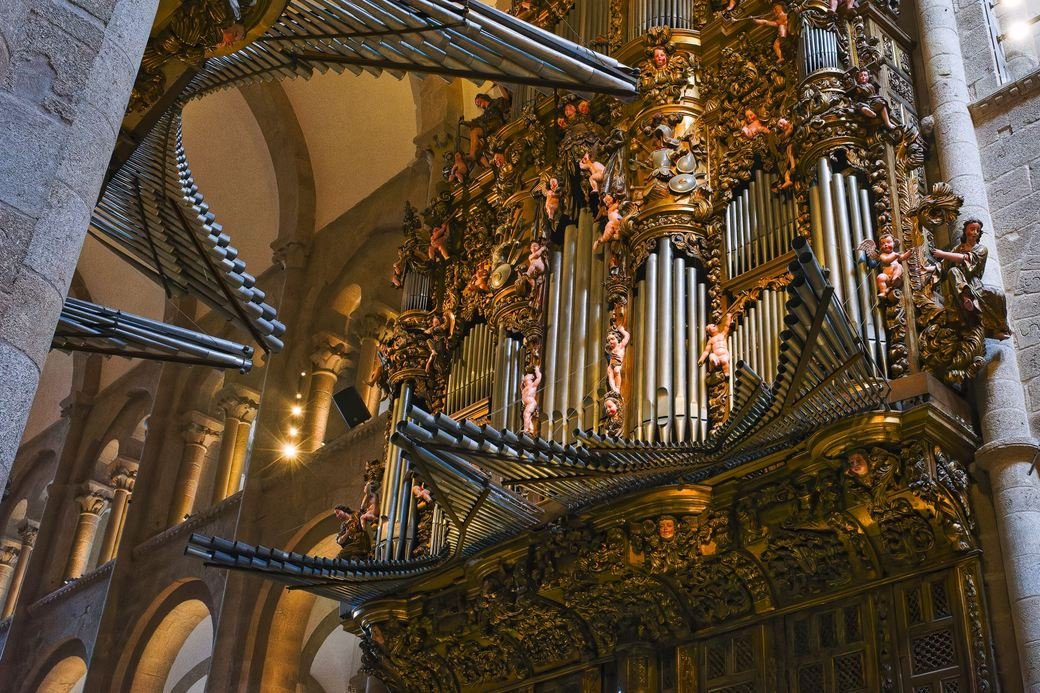
Inside, the Romanesque church is complete: a long barrel-vaulted nave, aisles, a gallery above them, and an ambulatory round the east end, all in grey granite. Walk to the crossing and look up into the lantern: the pulley mechanism for the Botafumeiro hangs from it.
The high altar and the embrace
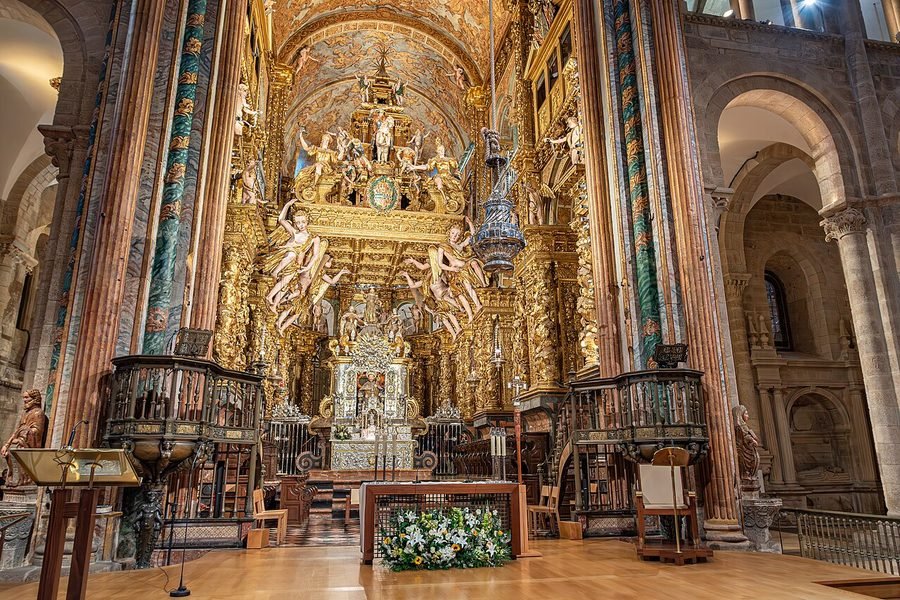
The high altar is Baroque, all gilded wood and twisting columns, round a seated thirteenth-century statue of St James. Behind it, a narrow stair lets you climb up and embrace the statue from behind, which is the traditional end of the pilgrimage and the reason for the queue that winds along the ambulatory. It is free, and it moves.
The crypt and the shrine
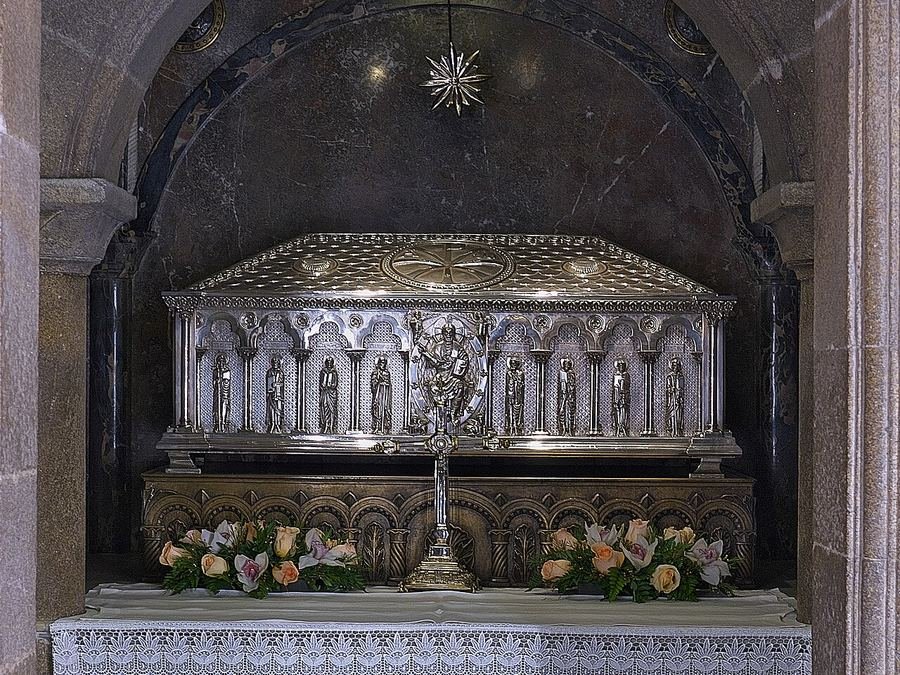
Beneath the altar, a small crypt holds a silver casket with the relics venerated as those of St James and two of his disciples. The history of the relics is that they were hidden in 1589, when an English fleet under Drake threatened A Coruña, so well that they were lost for nearly three centuries. Excavations found them again in 1879, and Pope Leo XIII declared them authentic in 1884. Whether they are the apostle’s is a matter of faith; the pilgrimage they created is a matter of record.
The Botafumeiro
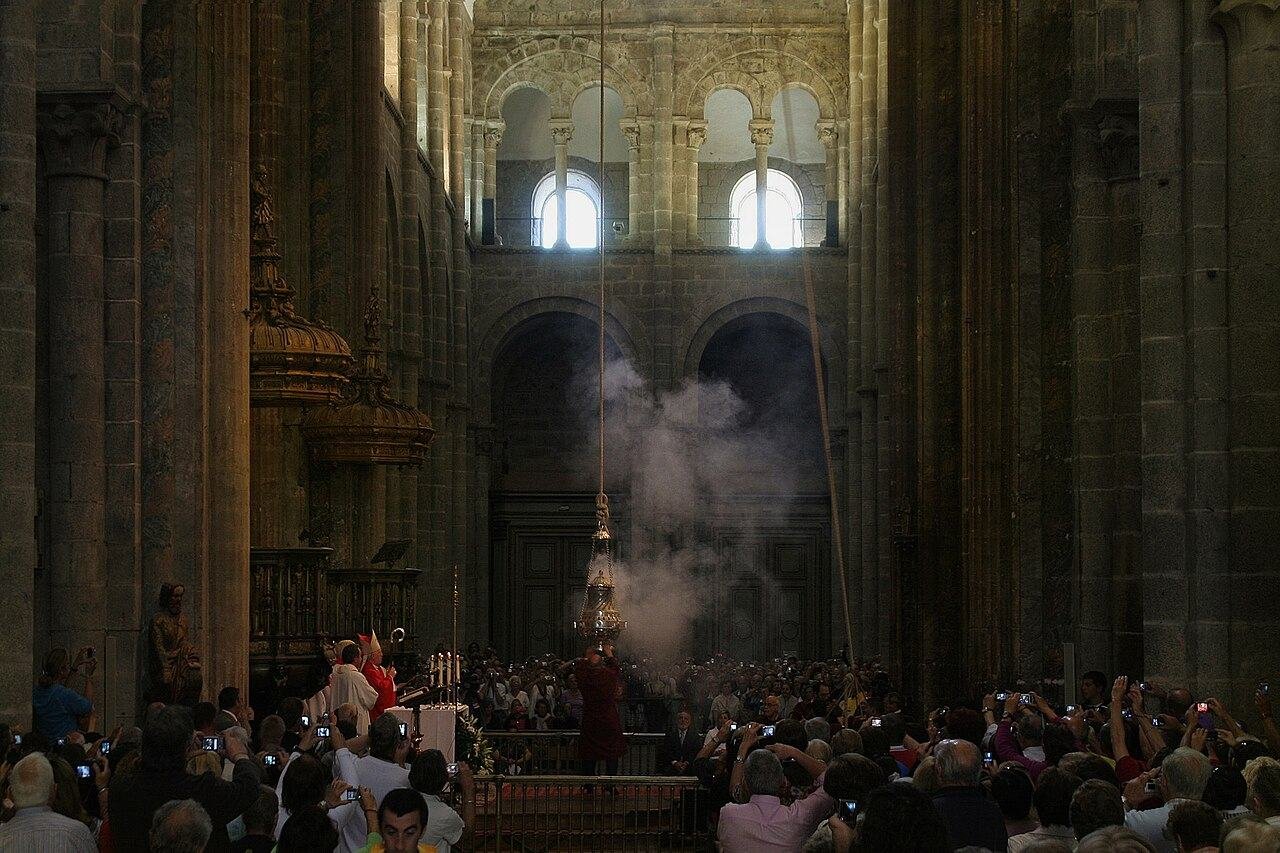
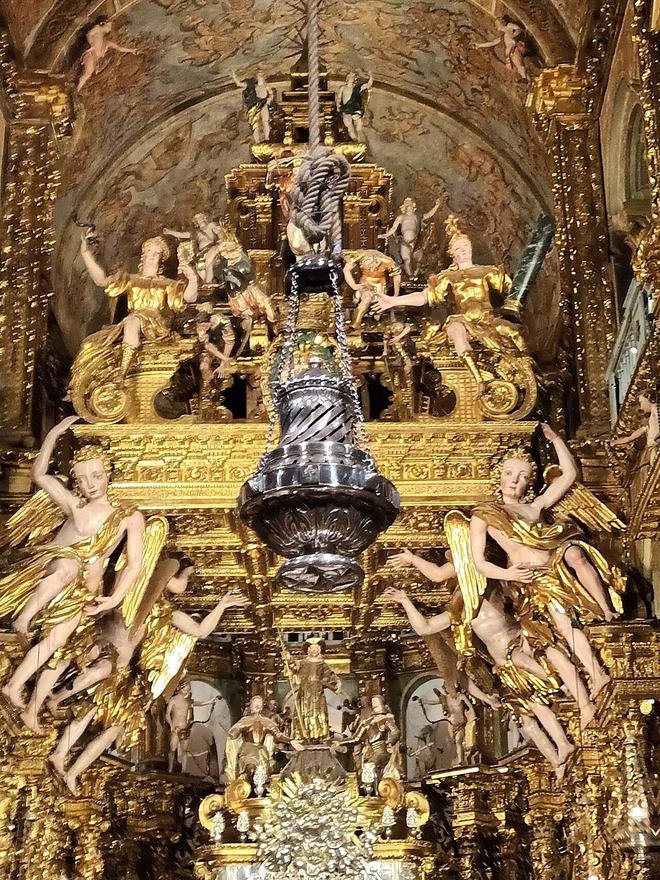
The cathedral’s great censer weighs 53 kilograms and stands 1.5 metres high. It hangs from a pulley 20 metres up in the crossing, and it takes eight men, the tiraboleiros, pulling on ropes to set it swinging across the transept in a great arc, trailing smoke, until it is moving fast enough to make the congregation duck. It was first recorded in the twelfth century in the Codex Calixtinus. The one used normally is a brass censer of 1851; a silver replica, given in 1971, is kept for special occasions.
It does not swing at every Mass. It is used at the cathedral’s principal solemnities — among them Epiphany, Easter Sunday, Pentecost, 25 July, the Assumption, All Saints, Christ the King, the Immaculate Conception and Christmas — and at other Masses when a pilgrimage has requested it from the cathedral in advance. There is no reliable day-of-the-week pattern, and people who arrive at noon expecting it are usually disappointed. In September 2026 the cathedral’s own site carried a notice that the Botafumeiro was temporarily out of use for restoration; check the liturgy page before you plan a visit round it.
The Pórtico da Gloria
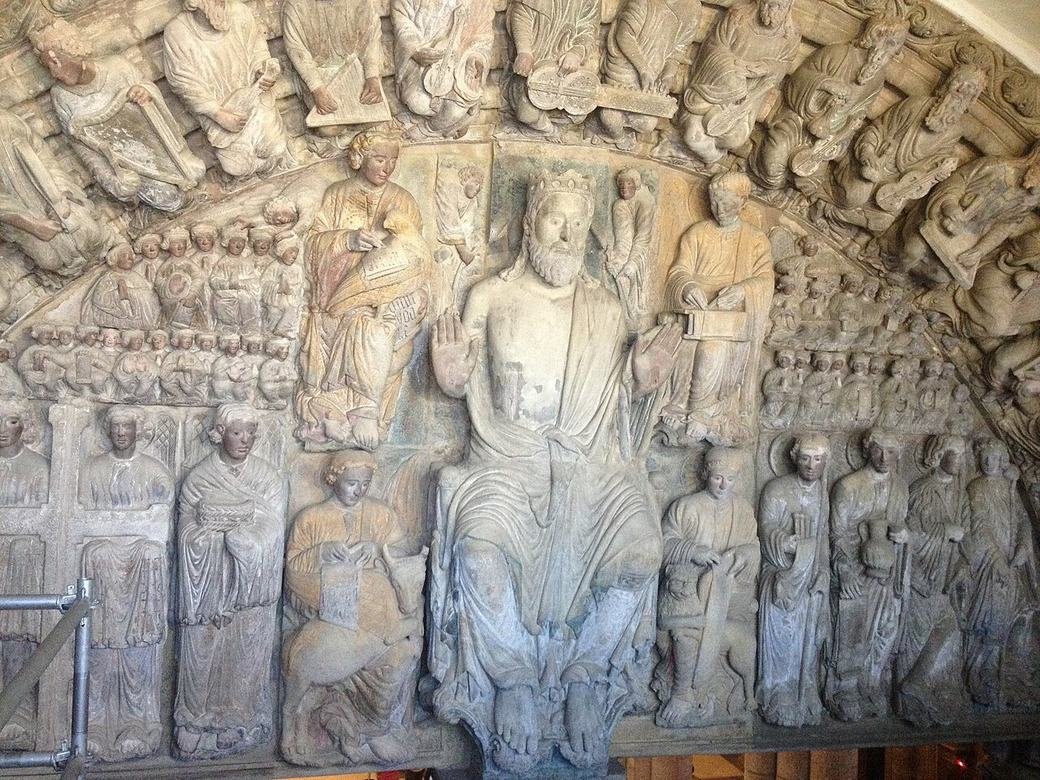
Behind the Obradoiro front is the masterpiece of Spanish Romanesque sculpture: the triple portico carved by Master Mateo, whose lintels, according to their own inscription, were set in place on 1 April 1188. Christ in majesty sits at the centre surrounded by the evangelists and the elders of the Apocalypse tuning their instruments, with prophets and apostles on the jambs — including a smiling Daniel. A ten-year restoration, finished in 2018, brought back much of the original colour.
It is now a timed, ticketed visit of at most 25 minutes, with no photography. The central column, with its Tree of Jesse, has five deep hollows worn by the fingers of centuries of pilgrims who put their hand there on arrival. That is no longer allowed. Nor is the old custom of bumping heads with the kneeling figure on the back of the column, said to be Mateo himself, for a share of his genius.
The museum and the cloister
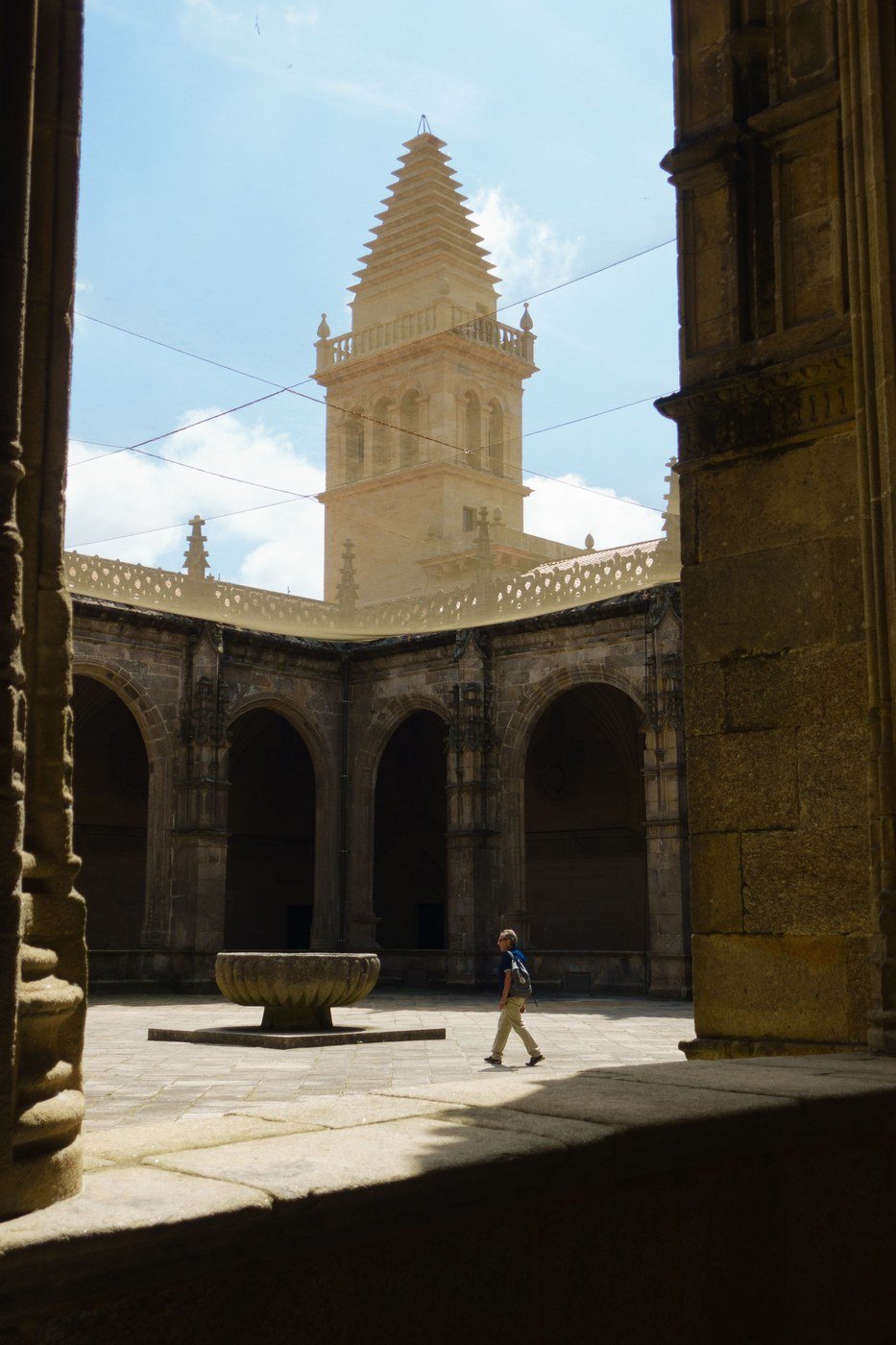
The museum ticket covers the permanent collection, the cloister, the treasury and the relics chapel, the Gelmírez Palace and the crypt under the Pórtico. The highlights are the reassembled fragments of Mateo’s stone choir, which once filled the nave, and the tapestries. The cloister, from the sixteenth century, replaced a Romanesque one.
The roofs
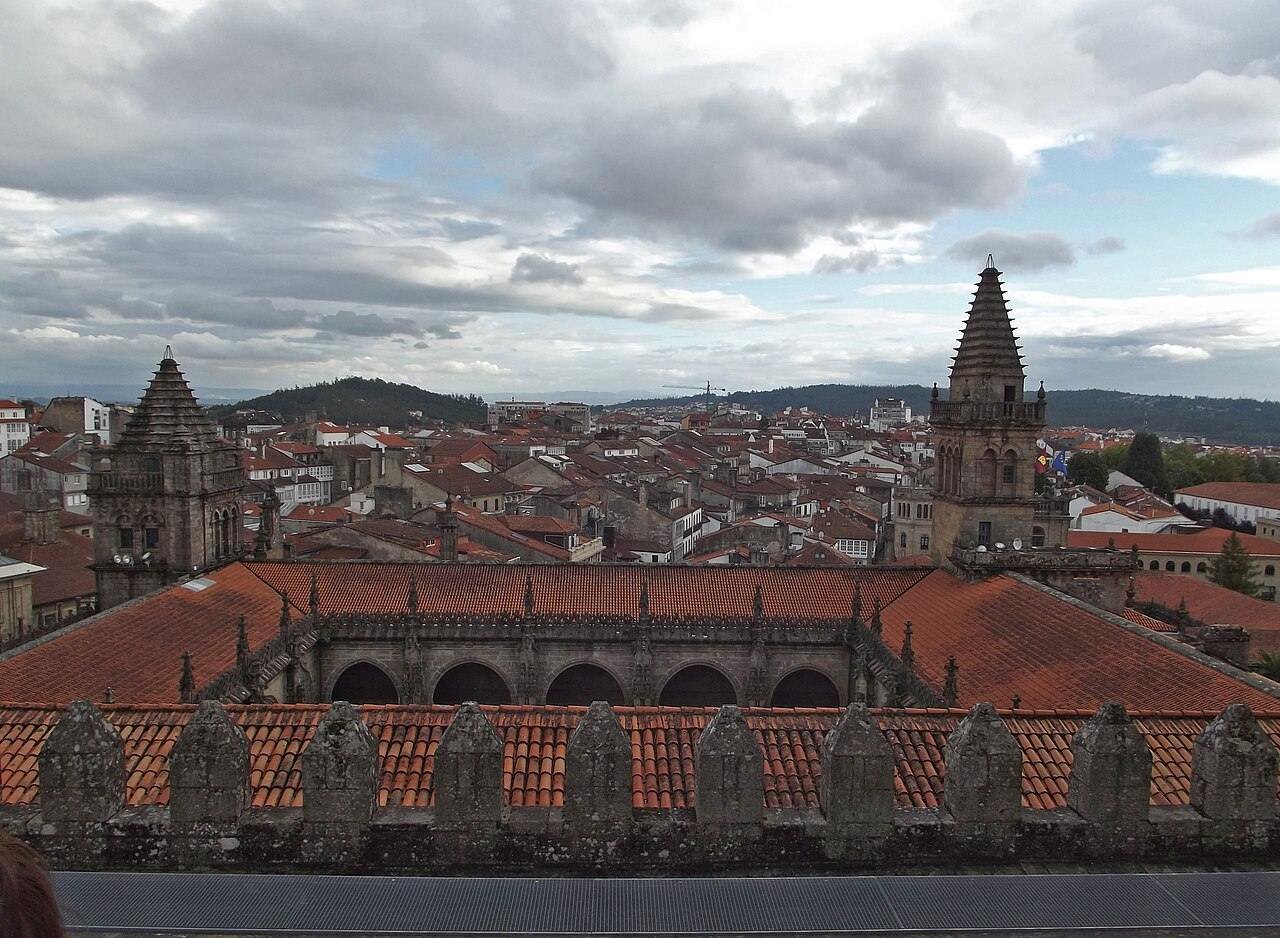
The guided visit to the roofs takes you out on to the stepped granite roofs of the cathedral and up the Ratchet Tower, named for the wooden rattle used instead of bells in Holy Week. You look straight down into the Obradoiro and across the whole of the old town. It lasts about an hour, and it is guided, usually in Spanish, with English visits at a flat €15.
The Quintana and the Holy Door
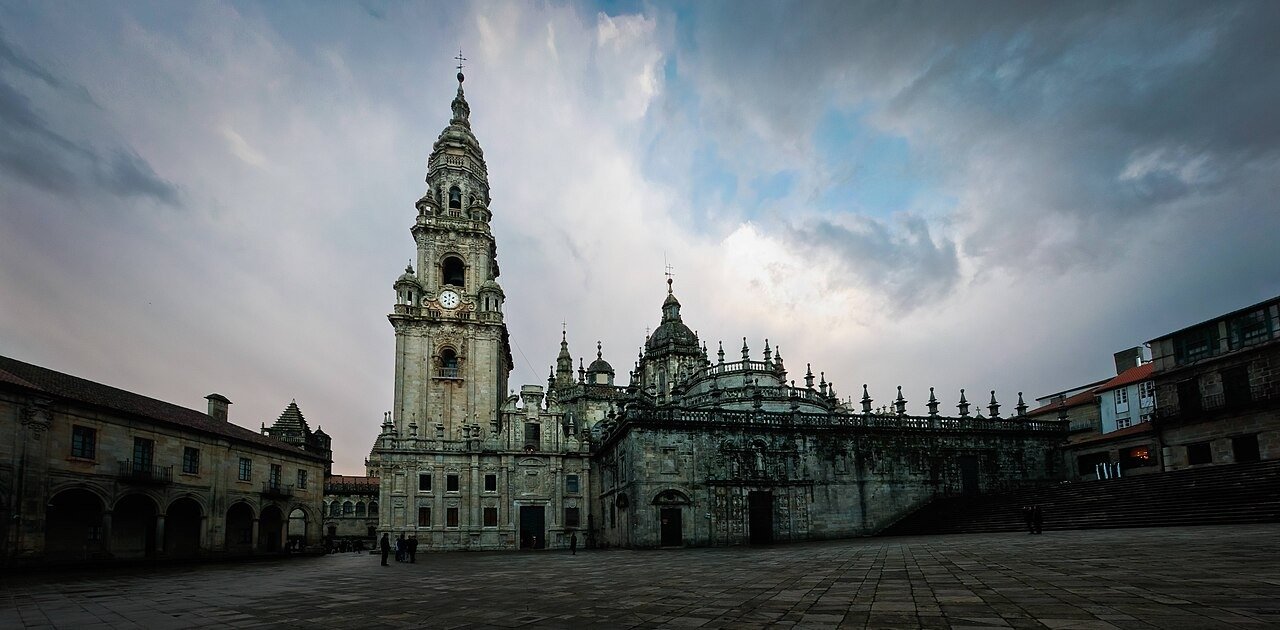
On the east side, facing the Praza da Quintana, is the Holy Door, walled up except in Holy Years. A Compostelan Holy Year falls whenever 25 July is a Sunday, which follows a cycle of 6, 5, 6 and 11 years. The last was 2021, extended to 2022 by papal concession, which has muddled many published cycles. The next is 2027, so the door is opened at the end of December 2026, and 2027 will be a very busy year on the Camino.
Tickets and tours
The cathedral is free; choose what else
You need no ticket for the basilica. For the paid visits, buy on the cathedral’s own ticket site: the Pórtico with an audio guide is €15 including the museum, the roofs are €15, and the complete visit with both is €23. Timed visits are strict about punctuality, and reduced rates cover accredited pilgrims with their credential. The free Pórtico invitations on weekday afternoons are the best deal in the building.
Tour and hotel links go to GetYourGuide and Booking.com. This site earns nothing from them at present — they are here because they are the quickest way to check what is actually available.
Don’t miss
- The Pórtico da Gloria Master Mateo’s elders tuning their instruments, in their restored colours.
- The embrace of St James Up the stair behind the altar. Free, and the end of the road.
- The Obradoiro at arrival time Late morning, as the walkers come in.
- The roofs Granite steps above the city, and the Ratchet Tower.
- The Praterías façade The last Romanesque front on the outside.
- The Botafumeiro’s pulley Look up at the crossing even if the censer is not there.
- Mateo’s stone choir Reassembled in the museum.
Insider tips
Do not plan a trip around the Botafumeiro. Check the cathedral’s liturgy page first: it lists the feast days it swings on, and in September 2026 it said the censer was out of use for restoration. On an ordinary day the Pilgrim’s Mass is well worth attending without it.
Leave the backpack behind. The cathedral does not allow backpacks inside, and the paid visits turn away bags, umbrellas and walking sticks too. Left-luggage services all round the old town exist for exactly this.
Ask for the Pórtico invitations. The free visits run Monday to Friday from 4 to 5.30pm, two invitations per person, through the cathedral’s ticket site, and they are the same 25 minutes in front of the same sculpture.
Pilgrims with a credential get the reduced rate on the paid visits. The Compostela certificate itself comes from the Pilgrim’s Reception Office on Rúa das Carretas, not from the cathedral.
Come back at night. The squares round the cathedral are at their best after dark, with the granite lit and the day-trippers gone, and the basilica stays open until nine.
Common questions
Is Santiago de Compostela Cathedral free to enter?
Yes. The basilica is open every day from 7am to 9pm and there is no charge to go in, visit the tomb of St James or embrace the statue behind the altar. The paid parts are the museum, the Pórtico da Gloria and the guided visit to the roofs.
When does the Botafumeiro swing?
On the cathedral’s major feast days, and at other Masses when a pilgrimage group has requested it from the cathedral. There is no daily or weekly rule. In September 2026 the cathedral’s own site said the Botafumeiro was temporarily out of use for restoration, so check there before planning a visit around it.
What time is the Pilgrim’s Mass in Santiago?
The cathedral lists four Pilgrim’s Masses a day at the high altar, at 7.30am, 9.30am, 12 noon and 7.30pm. Backpacks are not allowed into the cathedral, so leave them at your accommodation or the left-luggage services in town.
How much is the Pórtico da Gloria?
A visit to the Pórtico with an audio guide is €15, or €12 reduced, and includes the museum. The complete visit, with the roofs as well, is €23. There are also free visits without a guide on weekday afternoons from 4 to 5.30pm, by invitation from the ticket site, two per person.
When is the next Holy Year in Santiago?
2027. A Compostelan Holy Year falls whenever 25 July, the feast of St James, is a Sunday, which happens in a cycle of 6, 5, 6 and 11 years. The Holy Door is opened at the end of the year before, and closes at the end of the Holy Year itself.
Are the remains of St James really in the cathedral?
The cathedral holds that they are, and that is a matter of faith rather than of historical proof. What is documented is that a tomb was identified here as the apostle’s in the ninth century, that the pilgrimage grew from it, and that the relics, hidden in the sixteenth century, were found again in 1879.
Where to stay and eat nearby
The old town is small, granite and almost entirely pedestrian, and everywhere in it is close to the cathedral. There is accommodation at every level, from pilgrim hostels to the Hostal dos Reis Católicos on the Obradoiro itself, founded as a pilgrims’ hospital in the fifteenth century. In 2027, a Holy Year, book early.
More churches in Spain
- Mosque-Cathedral of Córdoba — where al-Mansur took Santiago’s bells.
- Seville Cathedral — the largest Gothic cathedral, and a very different idea of a great church.
- Sagrada Família — the most visited church in Spain.
- Skellig Michael — the other end of the pilgrimage spectrum, on a rock in the Atlantic.