
Burgos Cathedral
Burgos Cathedral is the great Gothic cathedral of Castile: begun in 1221 on the model of the cathedrals of northern France, crowned two centuries later with openwork spires by a German master, and filled with chapels, tombs and altarpieces. El Cid is buried under its crossing. It was listed by UNESCO on its own in 1984, and it stands on the pilgrim road to Santiago.
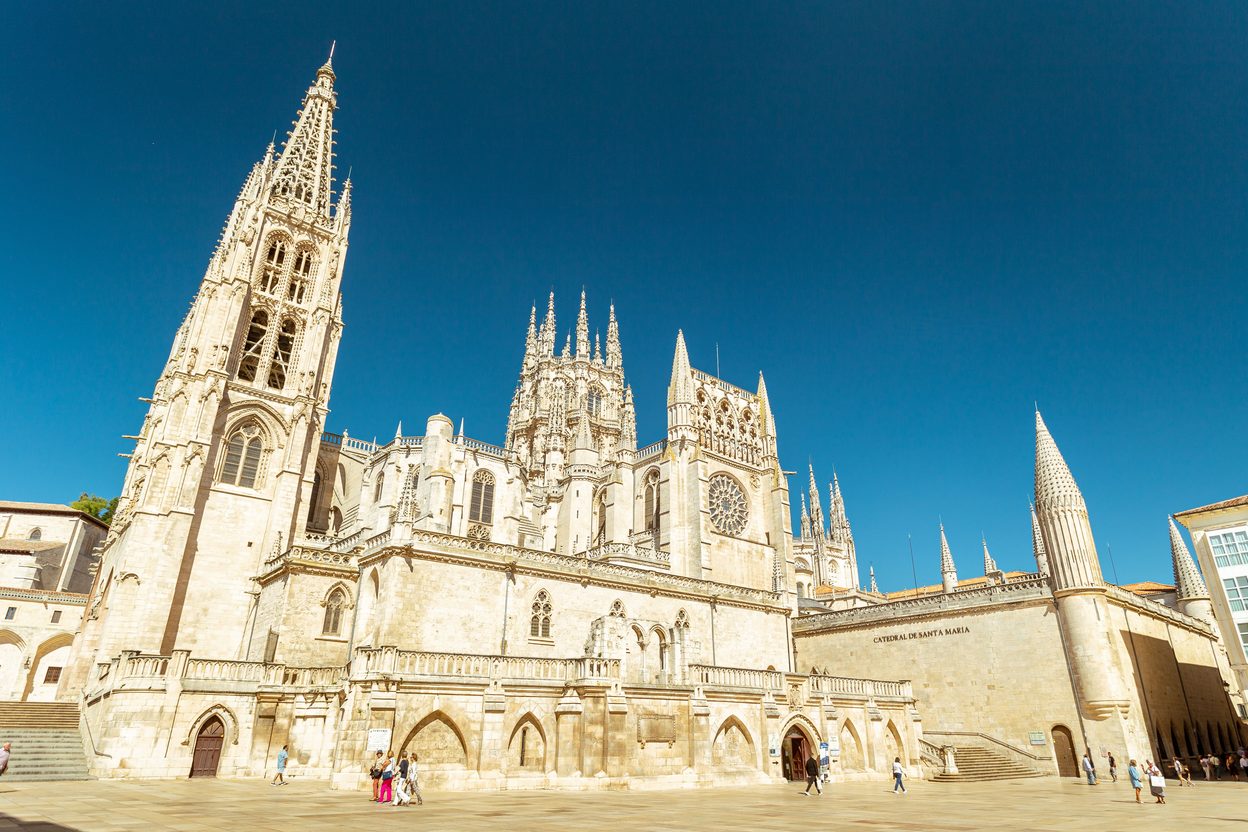
A French cathedral in Castile
In 1219 Bishop Maurice of Burgos escorted a German princess, Beatrice of Swabia, to Burgos to marry the young King Ferdinand III. Maurice had seen the new cathedrals of France, and in July 1221, with the king present, he laid the first stone of a Gothic cathedral to replace the Romanesque one. The body of the church went up quickly, in the French manner, and was in use by the middle of the 13th century.
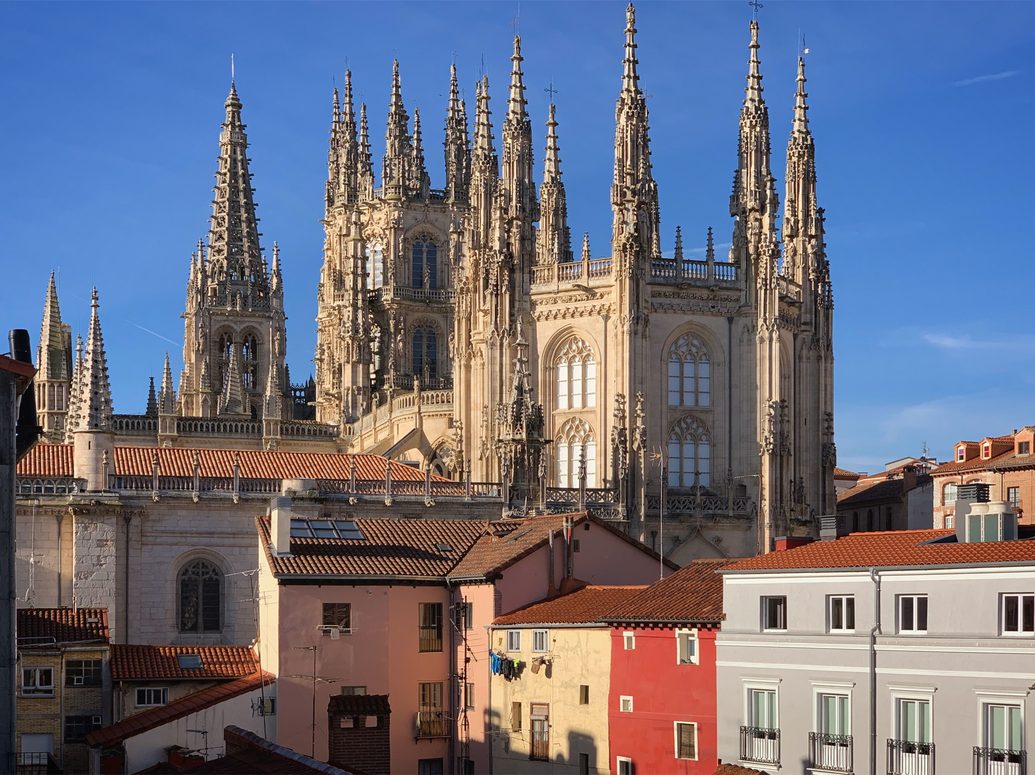
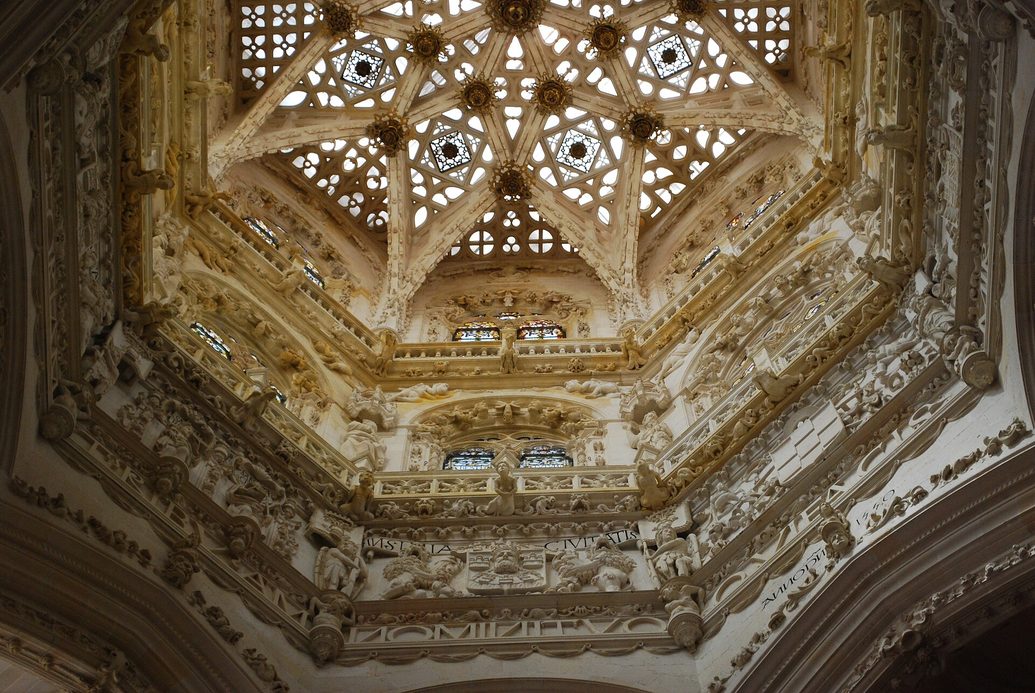
Two hundred years later the bishops brought in Juan de Colonia, Hans of Cologne, who built the lacy openwork spires on the west towers in the 1440s and 1450s. His son Simón built the Constable’s Chapel, and over the next century the cathedral filled with Renaissance work. Its first crossing lantern collapsed in 1539; the Chapter met the next morning and resolved to rebuild it, and the new lantern was finished in the 1560s.
The visitor’s cheat sheet
| Where | Plaza de Santa María, Burgos; visitors enter by the Puerta del Sarmental, on Plaza del Rey San Fernando |
|---|---|
| Opening hours | Daily from 9.30am; last entry 6pm from 1 November to 18 March, 6.30pm from 19 March to 31 October, and visitors may stay an hour longer. No tourist visits during the main services |
| Admission | €11; over-65s €10; pilgrims with credential €6; students 19–27 €5; ages 8–18 €3; under-8s free (since April 2026) |
| Free entry | Tuesdays 9.30–11.25am, tickets at the office only |
| Audio guide | Radio guide €1; free multimedia guide in the cathedral app |
| Photography | Allowed, without flash or tripod |
| How long | An hour and a half to two hours |
Hours and admission checked against the official site in October 2026. They change; the official site is always the last word.
Free on Tuesday mornings only. Since May 2026, free entry is limited to Tuesdays from 9.30 to 11.25am, with tickets collected at the office; the old free Tuesday afternoons have gone. Pilgrims on the Camino with a credential pay €6.
What to see
The Sarmental door
Visitors go in through the Puerta del Sarmental, the south transept door of about 1230–40. In its tympanum Christ sits in majesty among the four Evangelists, each writing at his desk, attributed to a French sculptor from the workshop of Amiens Cathedral.

The crossing and El Cid
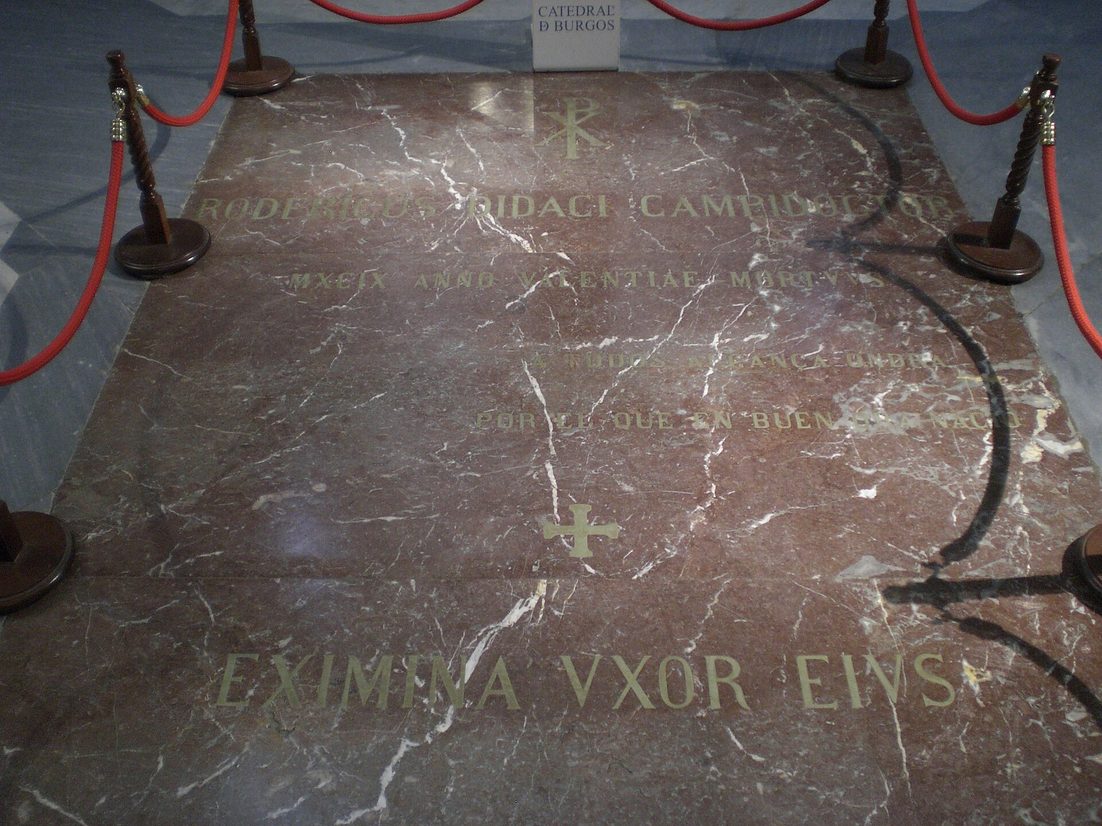
At the centre of the church, the crossing lantern rises 59 metres outside, a vault of openwork stone in the shape of an eight-pointed star, set on four massive round piers so that it would not fall again. In the floor beneath it, a plain marble slab marks the grave of El Cid, Castile’s great medieval warrior, and his wife Jimena, brought here in 1921.
The Golden Staircase
In the north transept the Coronería door, now kept closed, is set almost eight metres above the floor of the church. Commissioned in 1519, Diego de Siloé’s Golden Staircase links it to the nave, a double flight of Renaissance steps with gilded iron balustrades by the French smith Maestro Hilario. It is said to have inspired the grand staircase of the Paris Opéra.

The Constable’s Chapel
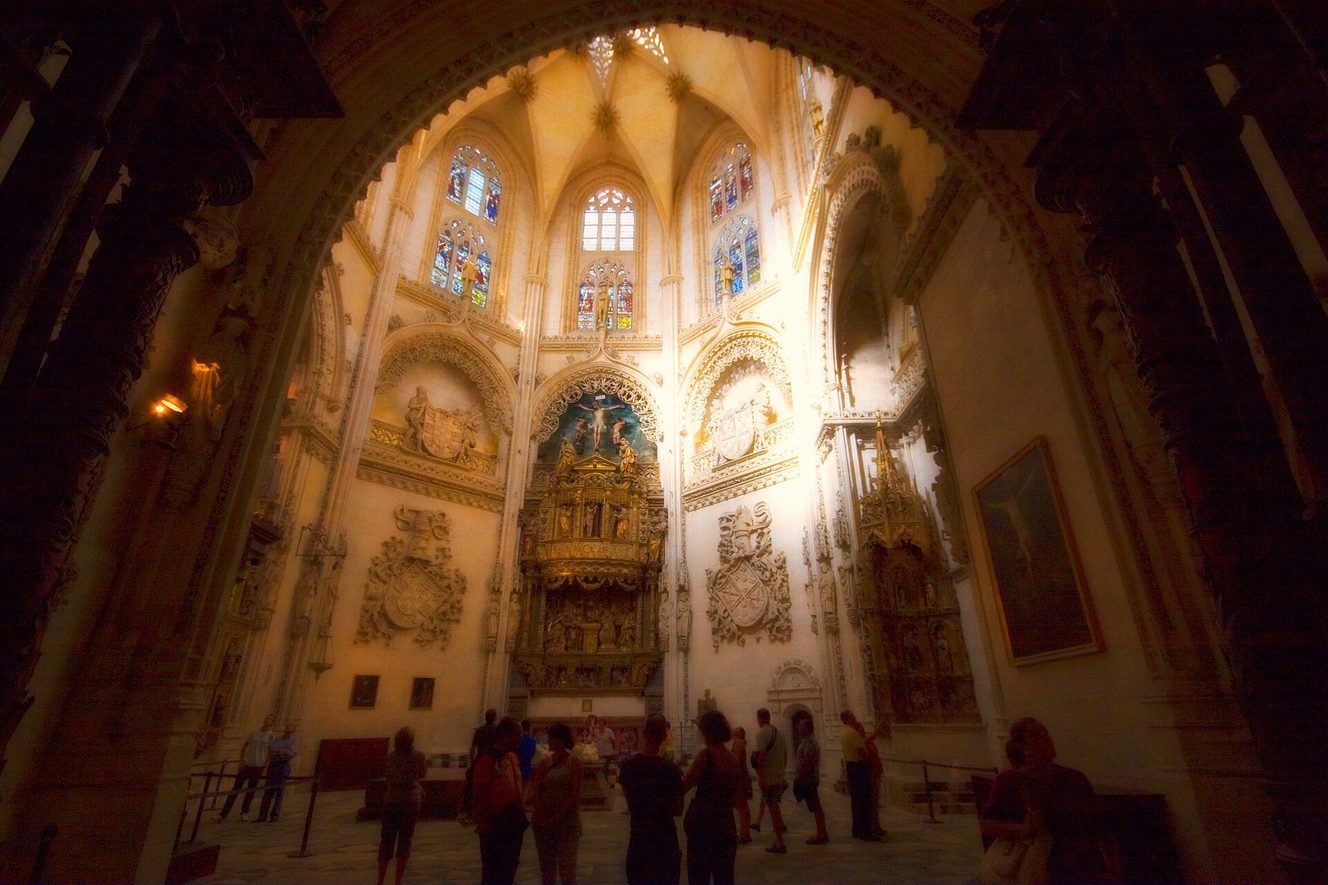
Behind the high altar, the Constable’s Chapel, begun in 1482 by Simón de Colonia for the Constable of Castile Pedro Fernández de Velasco and his wife Mencía de Mendoza, is almost a church in itself. Its octagonal star vault has an openwork centre that lets in light from above, and the founders lie in marble in the middle of the floor.
The Papamoscas and the Christ of Burgos
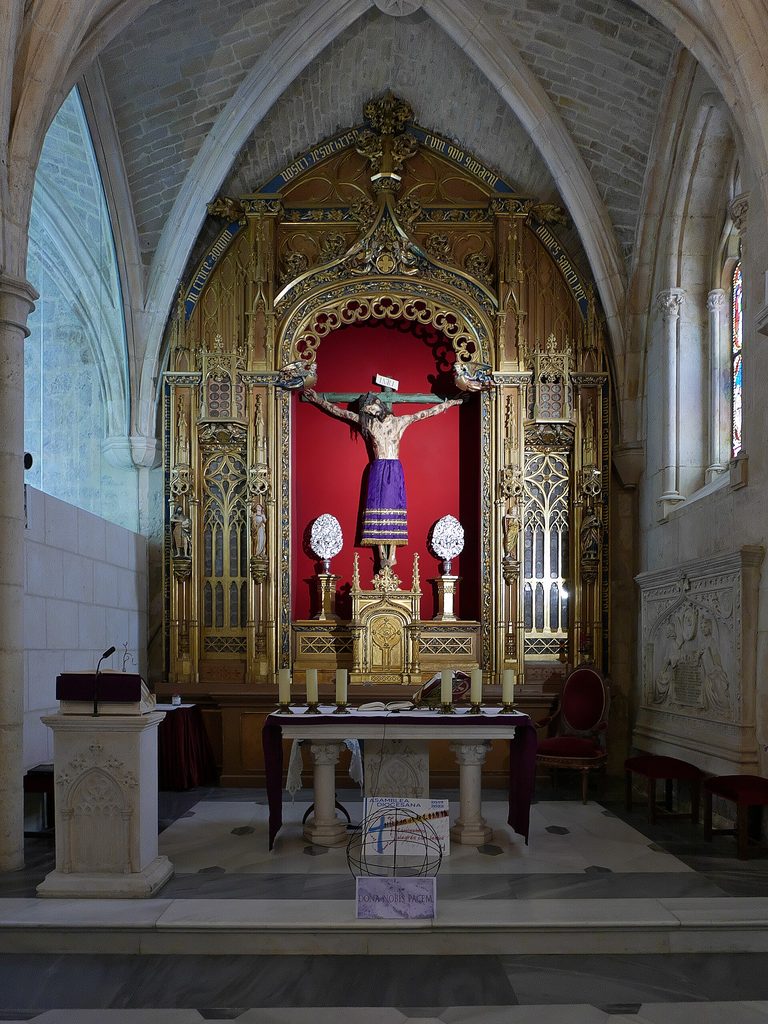
High in the nave, at the west end, the Papamoscas, the “flycatcher”, a figure in a red coat, strikes the hours on a bell and opens his mouth as he does so; noon is the time to see him. In the first chapel off the south aisle is the Christ of Burgos, a 14th-century crucifix with real hair, its body covered in animal hide, much venerated across Spain and Latin America.

The cloister and museum
The two-storey Gothic cloister, of the late 13th century, was heavily restored around 1900. Off it are chapels that hold the cathedral museum, with its altarpieces, tapestries and treasures.
Tickets, tours and where to stay
Tickets are sold at the cathedral ticket office and online. Burgos is about an hour and a half from Madrid by fast train; the station is about 5 km north of the centre, with city buses into town.
These links go to GetYourGuide and Booking.com. This site earns nothing from them at present — they are here because they are the quickest way to check what is actually available.
Don’t miss
- The lantern An eight-pointed star of stone.
- El Cid Under the crossing.
- The Golden Staircase Renaissance stairs to a door in the wall.
- The Papamoscas At noon.
- The Constable’s Chapel A church within the church.
Insider tips
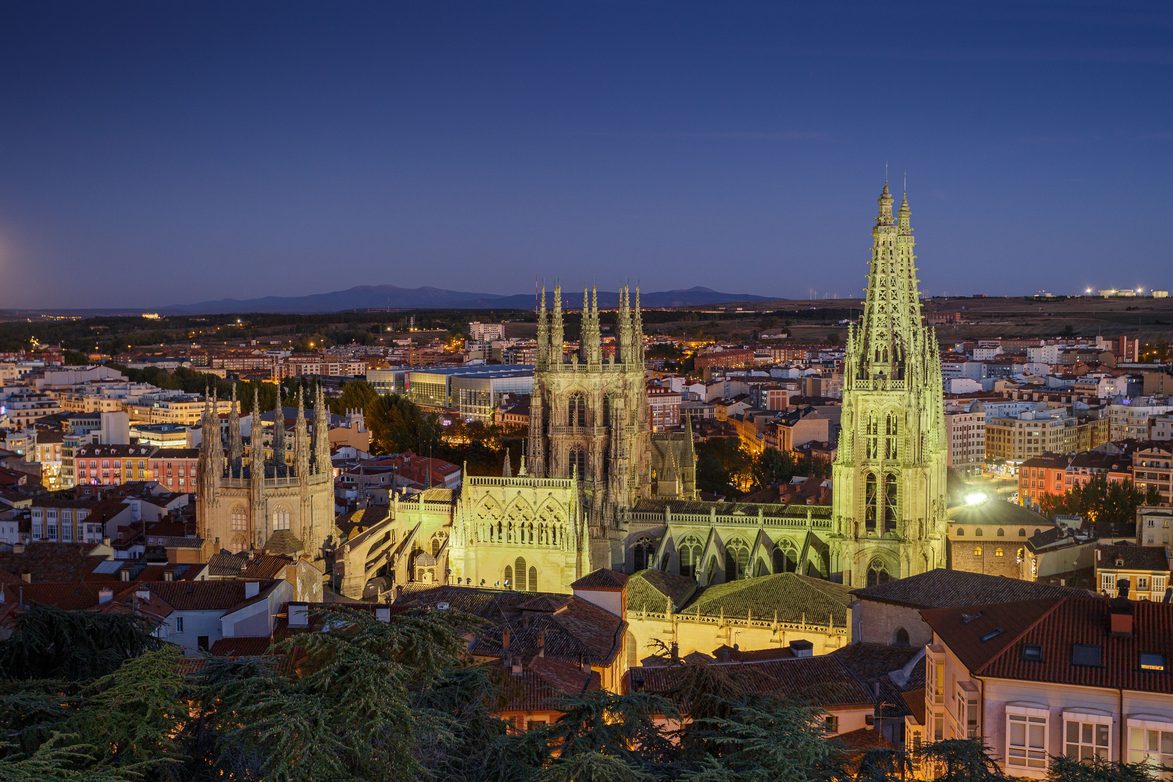
Climb above the cathedral. From the Mirador del Castillo, on the hill above the old town, you look down on the spires and the lantern together. And walk round to the west front, on Plaza de Santa María, for the towers and their spires straight on.
Common questions
How much does it cost to visit Burgos Cathedral?
Since April 2026, €11 for adults, €10 for over-65s, €6 for pilgrims with a credential, €5 for students aged 19–27, and €3 for ages 8–18; under-8s are free. A radio guide costs €1, and there is a free guide in the cathedral’s app.
Is Burgos Cathedral ever free?
For general visitors, only on Tuesday mornings (under-8s are always free), from 9.30 to 11.25am, since May 2026. Free tickets are collected at the ticket office until 11.15am and cannot be booked online. Older guides that mention free Tuesday afternoons are out of date.
When is Burgos Cathedral open?
Every day from 9.30am. From 1 November to 18 March it closes to new visitors at 6pm, from 19 March to 31 October at 6.30pm, and visitors may stay an hour after that. There are no tourist visits during the main services.
Is El Cid buried in Burgos Cathedral?
Yes. The remains of Rodrigo Díaz de Vivar, El Cid, and his wife Jimena were brought from the monastery of San Pedro de Cardeña in 1921 and lie under a marble slab in the floor of the crossing, beneath the lantern.
Can you take photographs in Burgos Cathedral?
Yes, without flash or tripod.
More churches in Spain
- Santiago de Compostela Cathedral — where the pilgrim road through Burgos ends.
- Toledo Cathedral — another great Gothic cathedral of Castile.
- Valencia Cathedral — the Gothic cathedral of the Mediterranean coast, with the Holy Chalice.