
Fountains Abbey
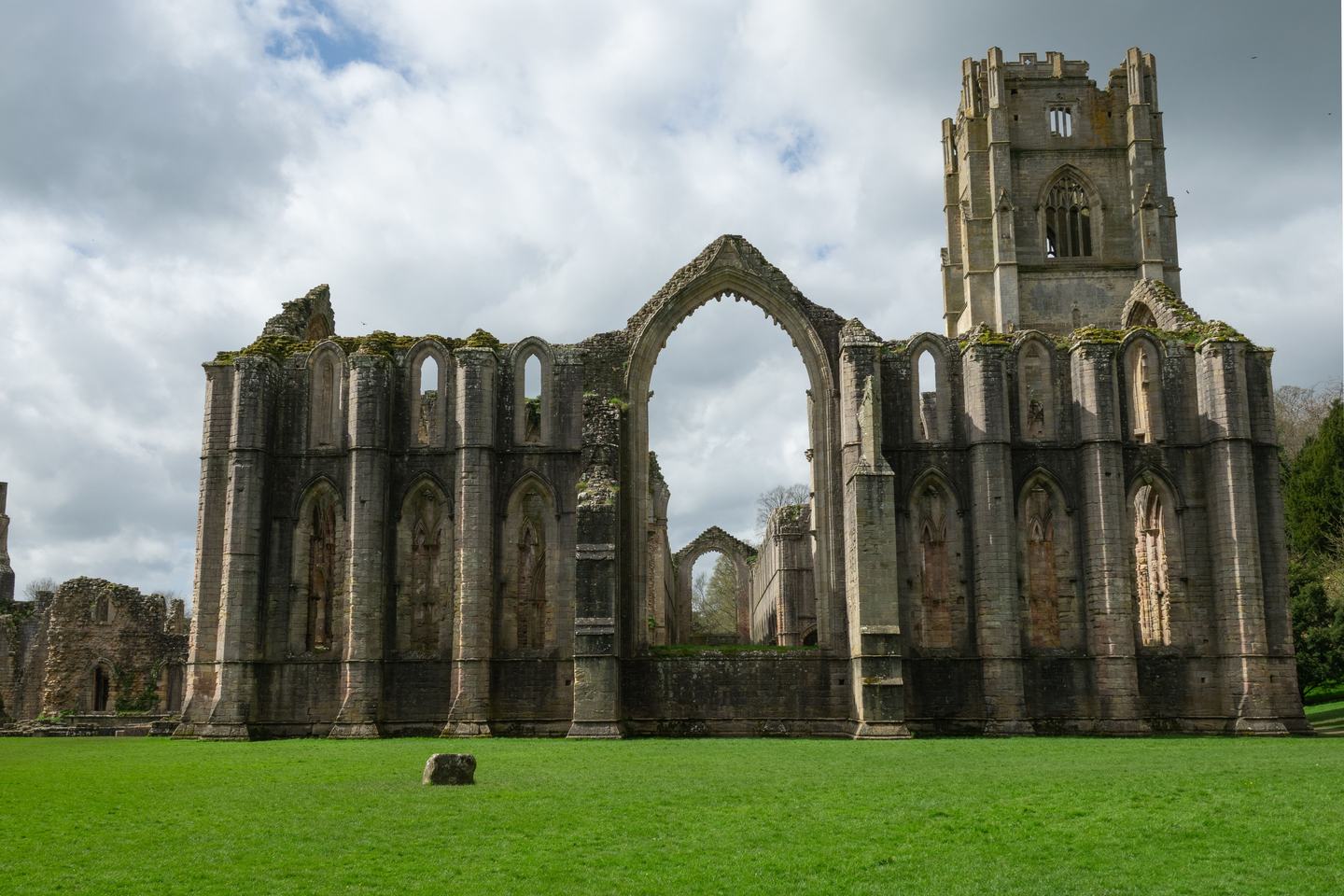
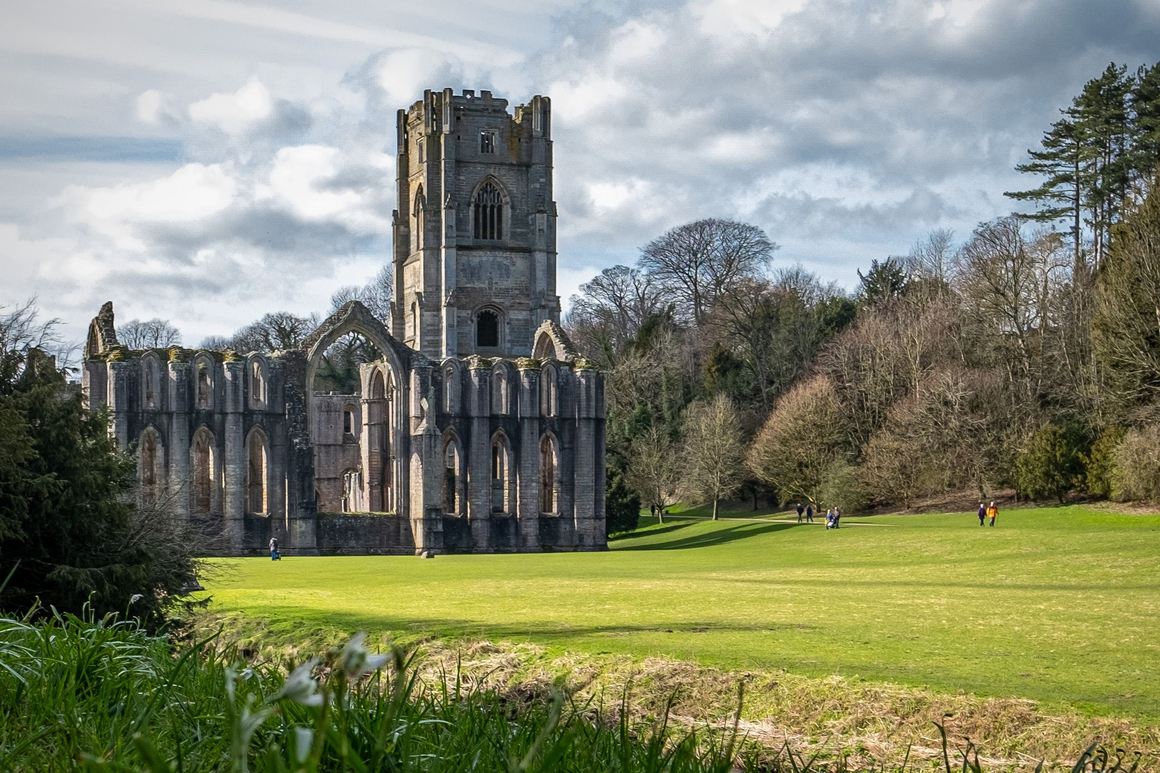
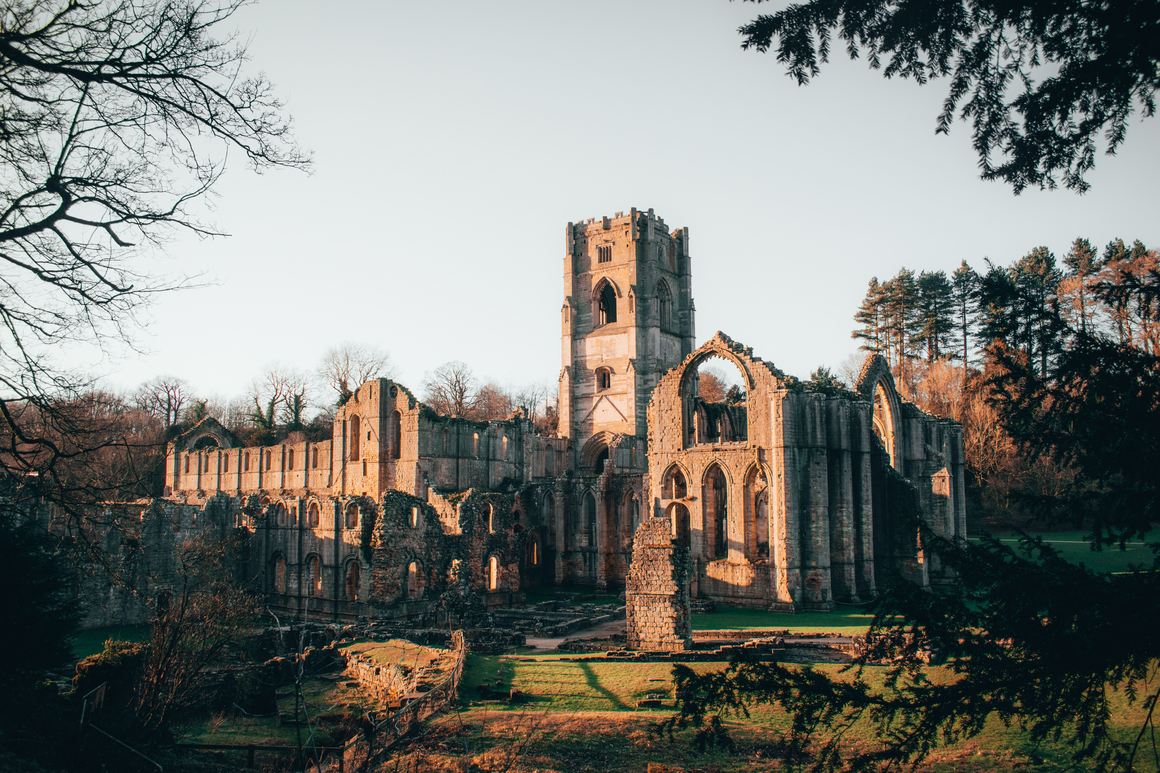
Fountains is the largest monastic ruin in England, and one of the best preserved: a great Cistercian abbey, roofless but almost complete, standing in a wooded valley outside Ripon. Founded by a handful of monks who walked out of York in protest, it became one of the richest monasteries in the country. Today it is the centrepiece of a World Heritage Site, together with the Georgian water garden of Studley Royal.
From thirteen monks to a great abbey
In 1132, after a dispute at St Mary’s Abbey in York, thirteen monks who wanted a stricter life left the abbey. The Archbishop of York, Thurstan, gave them land in the valley of the Skell. After a hard first winter they joined the Cistercian order in 1135, and Fountains grew into a vast community of monks and lay brothers, rich on sheep, wool and lead.
Most of the buildings went up between about 1170 and 1247. The last great addition was the tower, raised by Abbot Marmaduke Huby, who died in 1526. Thirteen years later, in 1539, the abbey was surrendered to Henry VIII. Stone from the ruins was used to build Fountains Hall at the end of the sixteenth century, and in 1767 William Aislabie bought the ruins and added them to the water garden his father had begun at Studley Royal. The estate was declared a World Heritage Site in 1986.
The visitor's cheat sheet
| Where | Fountains, Ripon, North Yorkshire, HG4 3DY |
|---|---|
| Getting there | By car from Ripon, about 4 miles; free car park at the visitor centre; nearest stations Harrogate and Thirsk |
| Opening hours | Open all year except around Christmas; hours vary by season (Oct 2026: 9.30am–4.30pm) |
| Admission | National Trust ticket £21 adult, £10.50 child (£23.10 and £11.60 with Gift Aid); free for National Trust and English Heritage members |
| How long | Half a day for the abbey and the water garden |
| Best time | Early morning or late afternoon, when the low sun lights the ruins |
| Dress code | Outdoor site; wear good shoes for grass and slopes |
| Tours | Free volunteer-led tours most days, subject to availability |
Hours and admission checked against the official site in October 2026. They change; the official site is always the last word.
Honour and glory to God alone. Abbot Huby’s tower, about 160 feet high, carries his motto, Soli Deo Honor et Gloria, carved high on its walls. It stands in an unusual place, at the end of the north transept rather than over the crossing.
What to see, in the order you meet it
The west range and the cellarium
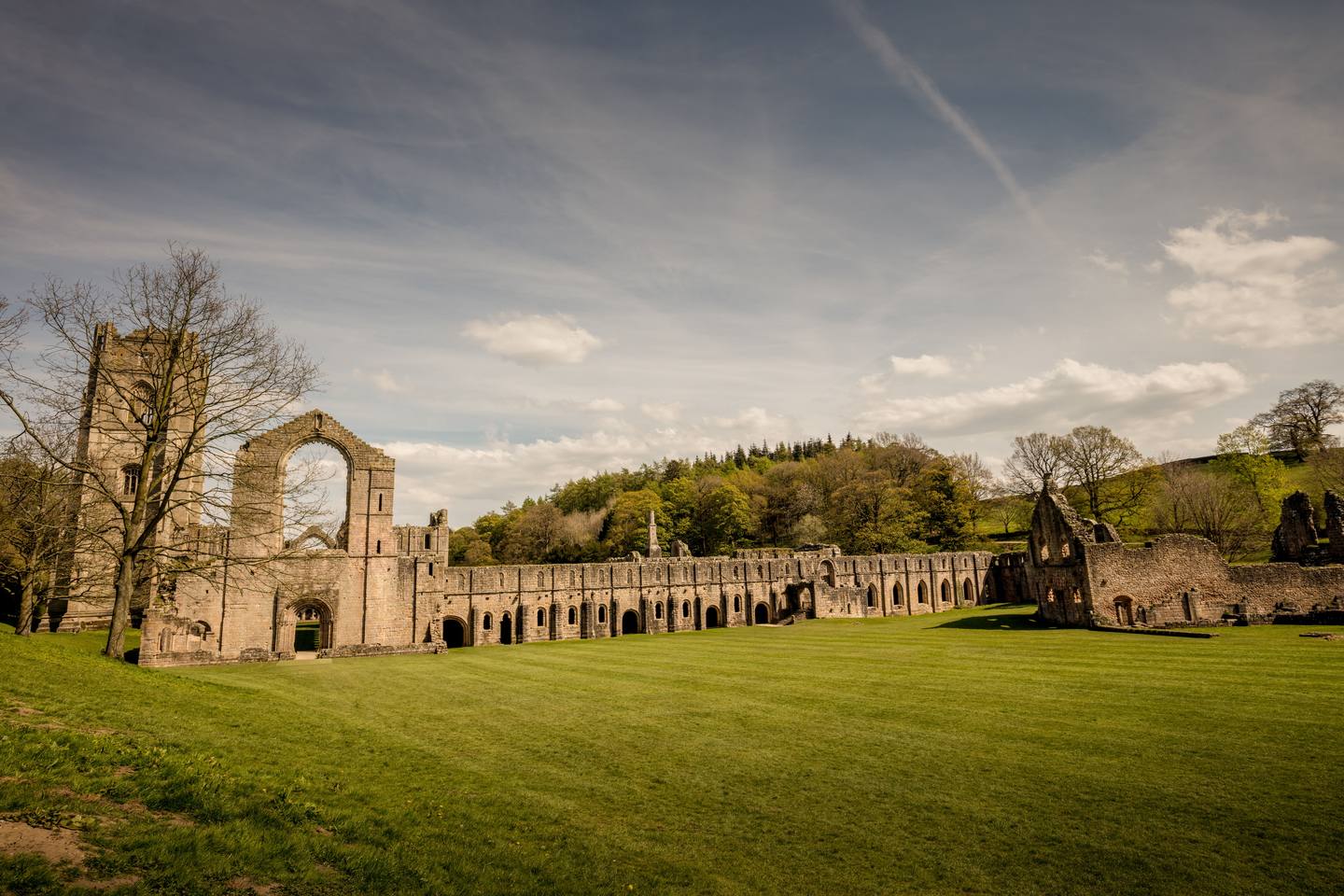
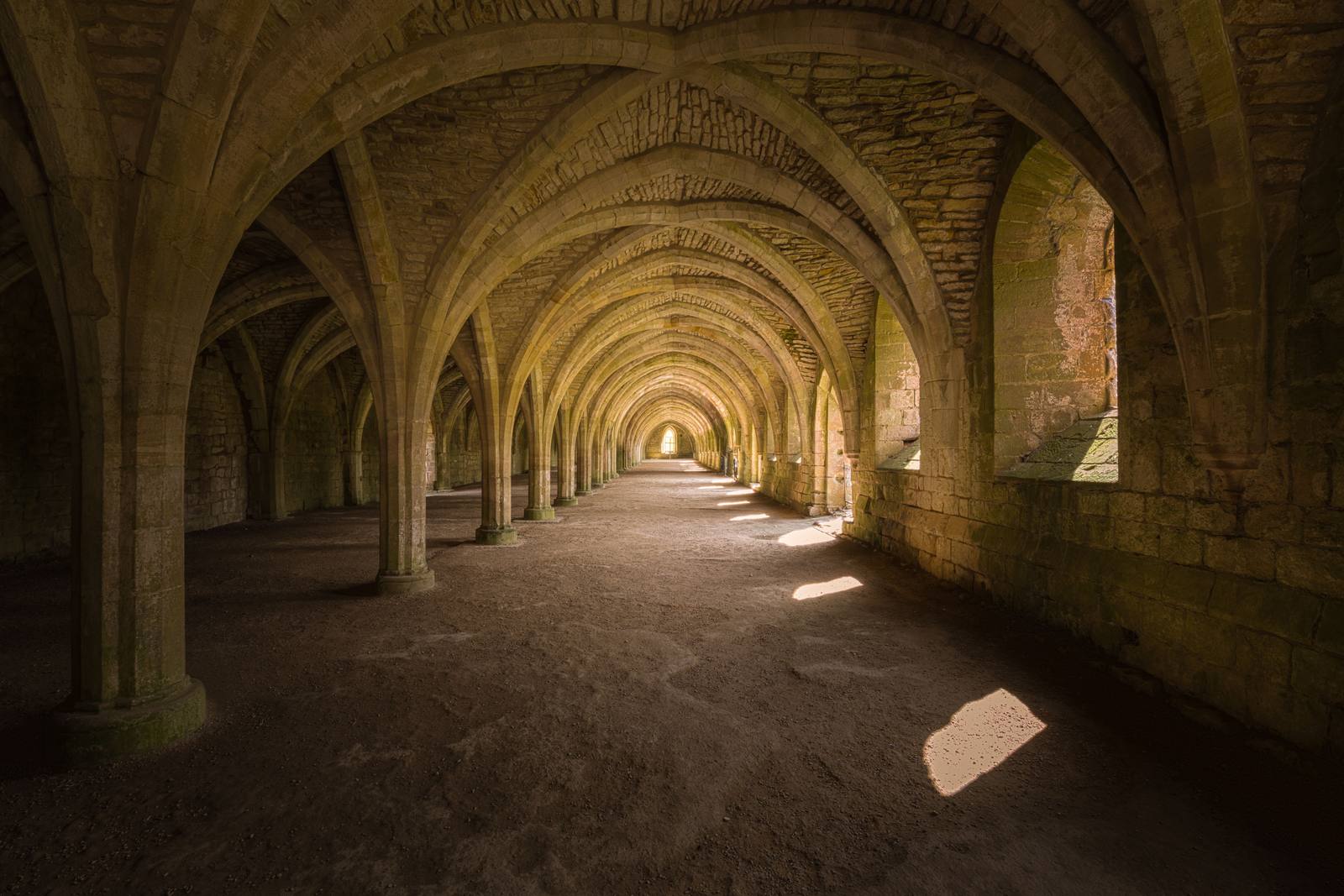
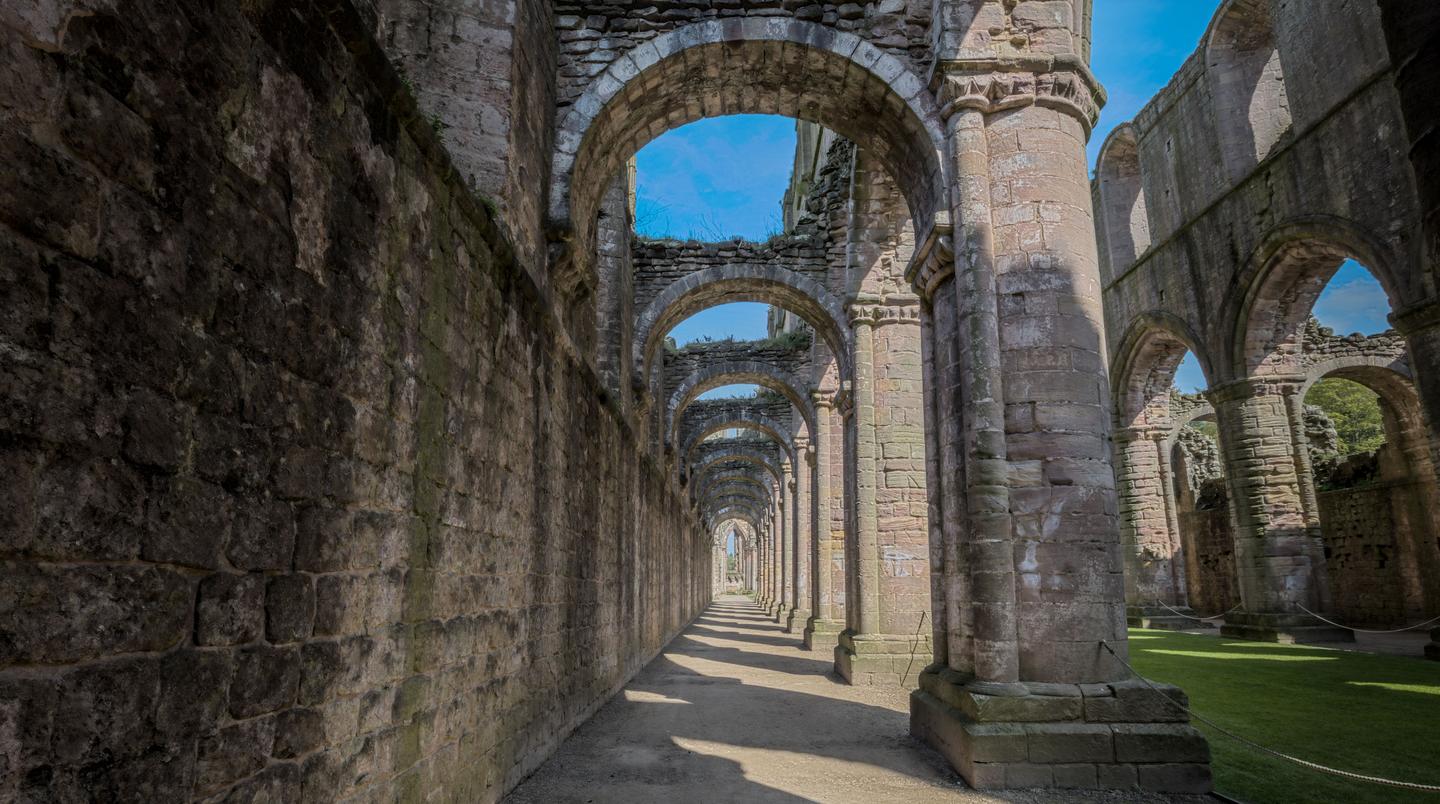
Coming down from the visitor centre, the first thing you meet is the immense west range, where the lay brothers slept above a long vaulted undercroft, the cellarium. Walk inside: the double row of columns and rib vaults stretches away for over 90 metres, and it is one of the most memorable spaces in England.
The church
The nave, with its massive round pillars, dates from the twelfth century; the east end, with its Chapel of the Nine Altars, from the thirteenth. Stand at the east end and look back down the whole length of the church, open to the sky.
The cloister and beyond
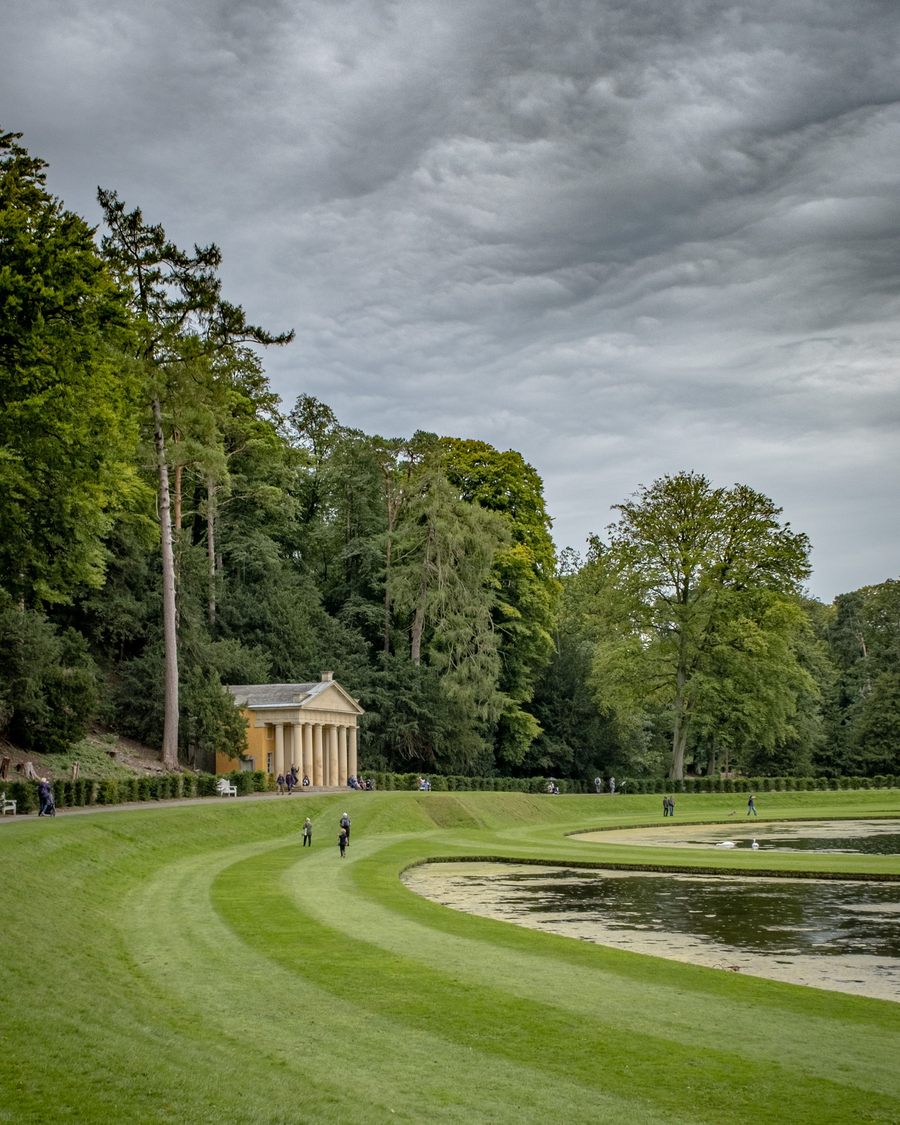
Around the cloister lie the chapter house, the refectory and the warming house. Beyond the abbey, walk to Fountains Hall, then along the river to the Studley Royal Water Garden, with its canals, temples and statues, and on to the deer park and St Mary’s Church, a Victorian masterpiece by William Burges.
Tickets and tours
National Trust ticket
One ticket covers the abbey, Fountains Hall, the water garden and the deer park: £21 for an adult and £10.50 for a child in October 2026, more with a Gift Aid donation. National Trust and English Heritage members go free. Free volunteer-led tours run most days. Prices and hours change, so check the National Trust website before you go.
The hotel link goes to Booking.com. This site earns nothing from it at present — it is here because it is the quickest way to check what is actually available.
Don't miss
- The cellarium A vaulted hall over 90 metres long.
- Huby’s tower With the abbot’s motto high on its walls.
- The Nine Altars The great east end of the church.
- Fountains Hall An Elizabethan house built from abbey stone.
- The water garden Georgian canals, temples and statues.
- The deer park Hundreds of red, fallow and sika deer.
Insider tips
Arrive early, and use the right gate. The path from the visitor centre down to the abbey is steep; for level access, use the West Gate. The main car park is free. Allow half a day: the walk from the abbey through the water garden to the lake is the best part of the visit. Dogs on short leads are welcome outdoors.
Ripon, with its cathedral and its nightly hornblower, is four miles away, and the two make a fine day together.
Common questions
How much does it cost to visit Fountains Abbey?
A National Trust ticket covers the abbey, the Studley Royal Water Garden, Fountains Hall and the deer park. In October 2026 it costs £21 for an adult and £10.50 for a child aged 5 to 17, or £23.10 and £11.60 including a Gift Aid donation. National Trust and English Heritage members go free. Prices change, so check the National Trust website.
When is Fountains Abbey open?
All year, except a few days around Christmas. Hours change with the seasons: in October 2026 the abbey and water garden are open 9.30am to 4.30pm. Check the National Trust website before you go.
Why is it called Fountains?
After the springs in the valley of the River Skell, where the monks settled in 1132. The springs gave the abbey its name and its water supply.
Are there free tours?
Yes. Volunteers lead free guided tours of the abbey and the water garden most days, subject to availability. Ask at the visitor centre when you arrive.
How do you get to Fountains Abbey?
The abbey is about four miles south-west of Ripon, signposted from the B6265. There is no station; the nearest are Harrogate and Thirsk. The main car park at the visitor centre is free. From the visitor centre there is a steep path down to the abbey, but the West Gate has level access.
Where to stay and eat nearby
There is a restaurant at the visitor centre and a tea room by the lake. Ripon and Harrogate have plenty of places to stay.
More English churches
- Ripon Cathedral — four miles away, with its Saxon crypt
- Rievaulx Abbey — the first Cistercian abbey in the north
- York Minster — in the city where Fountains began
See all the cathedrals and churches worth visiting in England →