
Iona Abbey
In 563 an Irish monk called Columba landed on a small island off the south-west tip of Mull with twelve companions and founded a monastery. From here Christianity spread across what is now Scotland and the north of England, and the Book of Kells was very probably made here. Iona is still a place of pilgrimage, and the abbey is still lived in and prayed in. Getting there is the whole point and the main difficulty: from Oban it takes a ferry, a bus across Mull and a second, very short crossing, and the one thing you cannot do is drive onto the island.
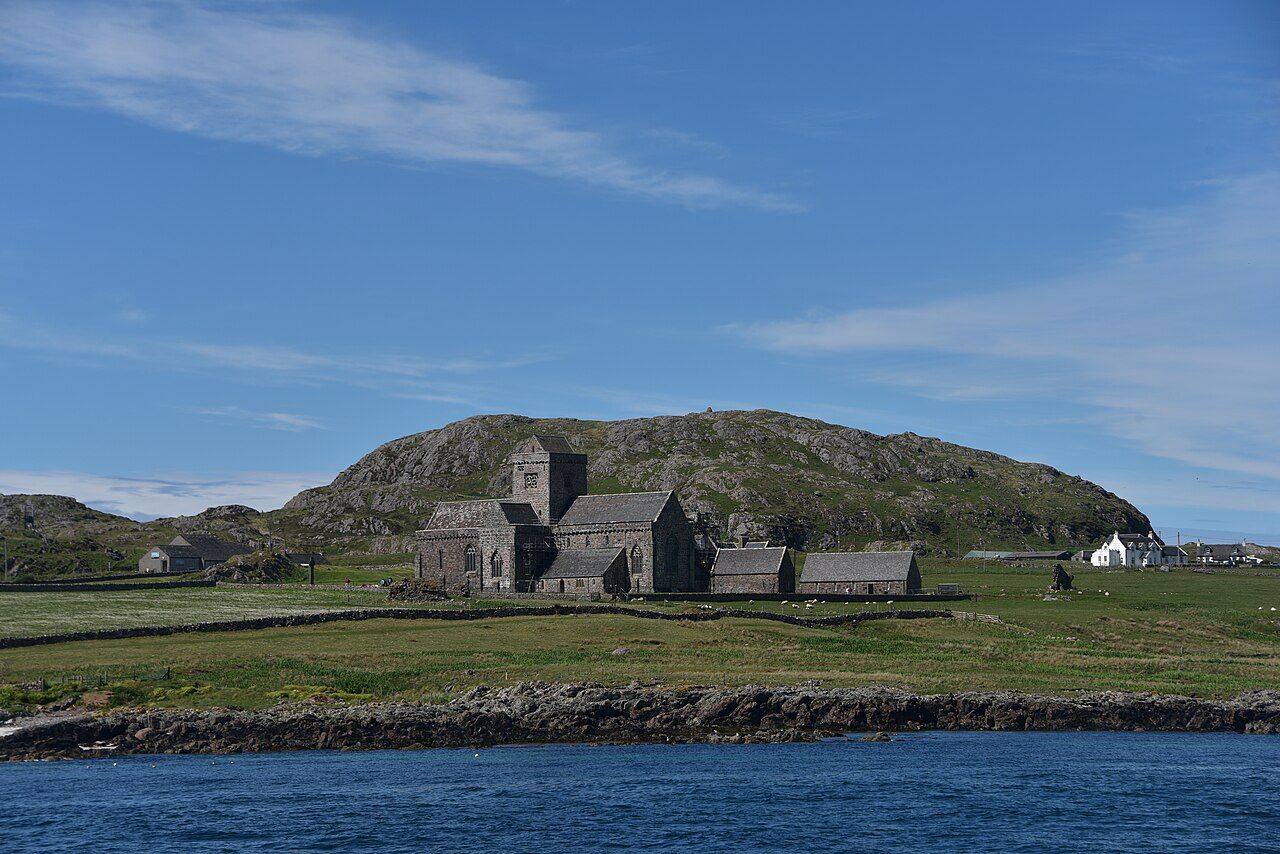
Columba’s island
Columba — Colum Cille, “dove of the church” — was an Irish prince and abbot who left Ireland in 563, and Iona, then within the Gaelic kingdom of Dál Riata, was where he settled. His monastery was built of timber and wattle inside an earthen bank, parts of which you can still see north-west of the abbey. On the little hill of Tòrr an Aba, beside the church, he is said to have had the hut where he wrote. He died here in 597, and about a century later Adomnán, the ninth abbot of Iona, wrote his life.
Iona became one of the most important monasteries in Europe. It sent missionaries to the Picts and, through St Aidan, to the English of Northumbria, where Aidan founded Lindisfarne. Its monks produced annals, manuscripts and the great carved crosses, and the Book of Kells, now in Dublin, was very probably begun here around 800. Then the Vikings came: the island was raided in 795, again in 802 and 806, when 68 monks were killed at what is still called Martyrs’ Bay, and in 825. Columba’s relics were divided and taken for safety to Kells in Ireland and Dunkeld in Scotland.
The visitor’s cheat sheet
| Where | Isle of Iona, Argyll PA76 6SQ, a few minutes by ferry from Fionnphort at the south-west tip of Mull |
|---|---|
| Opening hours | 1 April–30 September: Monday–Saturday 9.30am–5.30pm, Sunday 12.30pm–5.30pm. 1 October–31 March: Monday–Saturday 10am–4pm, closed on Sundays. Last entry 45 minutes before closing. Closed 25–26 December and 1–2 January |
| Admission | Adult £10 online, £11 in person; concession £8/£9; child (7–15) £6/£6.50. Free for Historic Scotland members and Explorer Pass holders |
| Ferry | Passenger ferry from Fionnphort, a few minutes’ crossing; the abbey can close at short notice if the ferry is disrupted |
| Cars | Not allowed on Iona without a permit; park at Fionnphort |
| Worship | Iona Community services in the abbey church, open to all, daily from March to early November |
| Toilets | None on the abbey site; the nearest are at the Iona Community shop |
| How long | Two hours for the abbey, nunnery and graveyard; a whole day from Oban |
Hours and admission checked against the official site in September 2026. They change; the official site is always the last word.
Plan the journey first, then the visit. The abbey is open daily until the end of September, 9.30am–5.30pm (Sunday from 12.30pm). From 1 October it closes at 4pm and does not open on Sundays at all, so a winter Sunday trip will end at a locked gate. Tickets are £10 online and £11 at the door. The abbey can also close at short notice when the ferry is not running, which on the west coast of Scotland happens.
From Columba’s monastery to the abbey you see
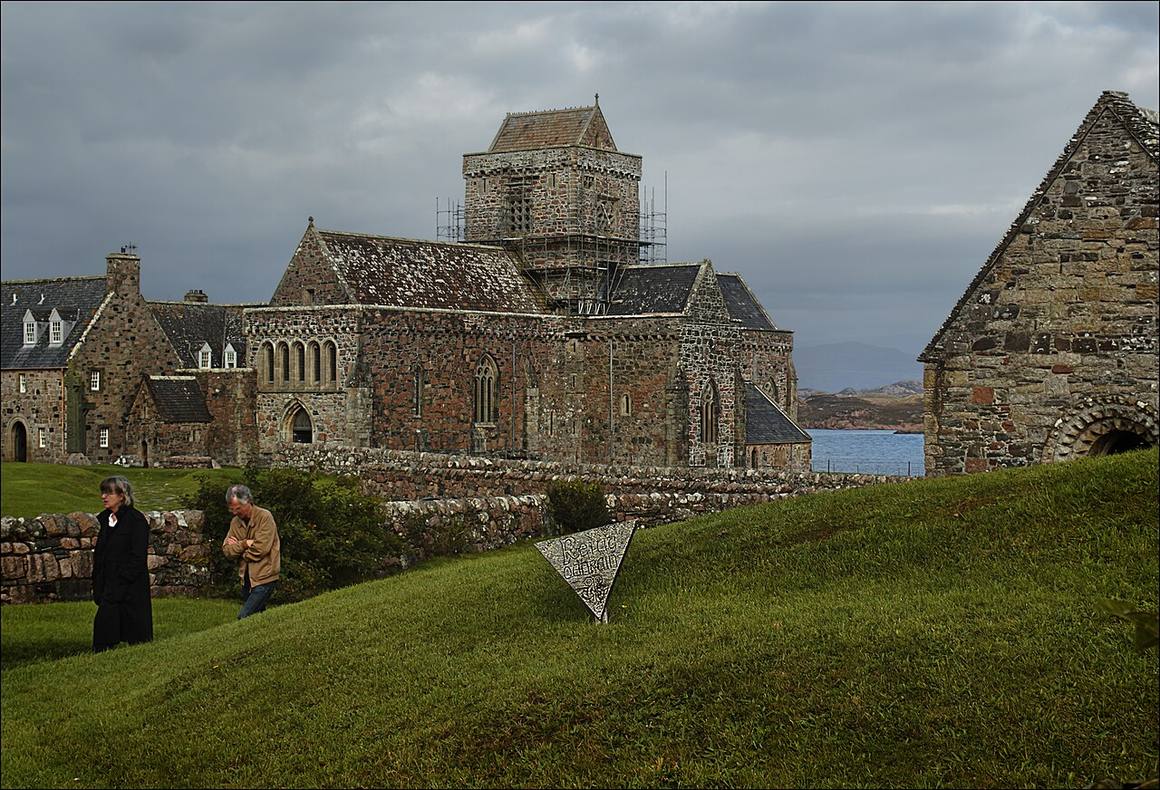
Nothing standing on Iona goes back to Columba. In the twelfth century the island came under the protection of Somerled, the Norse-Gaelic ruler who called himself King of the Isles, and his family. Somerled built St Oran’s Chapel as a family burial place. Around 1200 his son Ranald invited Benedictine monks to found a new abbey on the site of Columba’s church, and an Augustinian nunnery, whose first prioress was Ranald’s sister Bethag. The MacDonald Lords of the Isles, Somerled’s descendants, rebuilt and enlarged the abbey church in the fifteenth century, and treated it as the cathedral of their island kingdom.
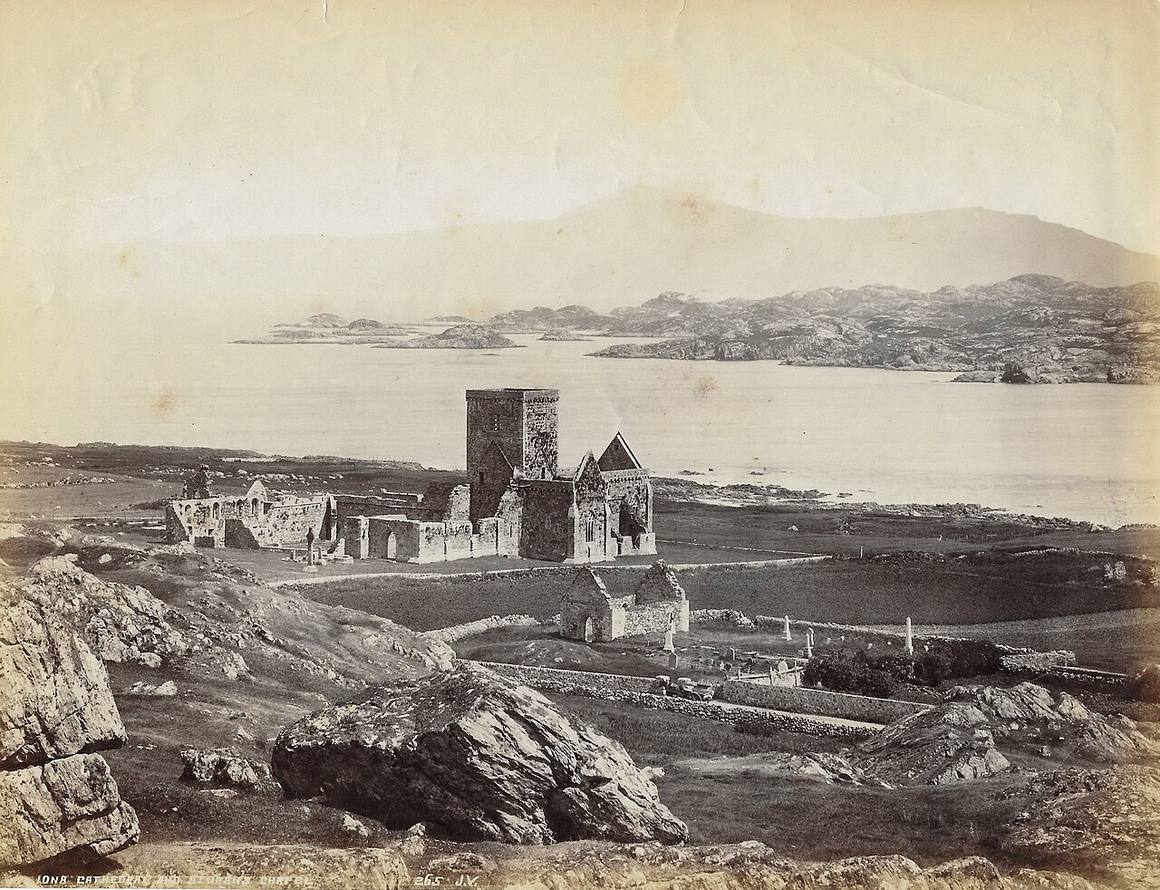
After the Reformation the monks left, and by the eighteenth century both the abbey and the nunnery were roofless ruins, visited by travellers such as Samuel Johnson and James Boswell, who came in 1773. In 1899 the 8th Duke of Argyll, who owned the island, gave the ruins to a trust, which restored the church for worship; it was reroofed and in use again early in the twentieth century. The monastic buildings round the cloister were rebuilt from 1938 by the Iona Community, founded that year by a Glasgow minister, George MacLeod, who brought trainee ministers and unemployed craftsmen from the city to live, work and worship together while they built. The community still lives in the abbey; Historic Environment Scotland has cared for the buildings since 2000.
What to see, in the order you meet it
The ferry, the village and the nunnery
The ferry lands you at Baile Mòr, the island’s only village. Walk up the road, and on the left, a couple of minutes from the pier, are the ruins of the nunnery: walls of pink Mull granite round a cloister garden, with the church still standing to its gables. It is free and always open, and most people walk straight past it on the way to the abbey. Stop.
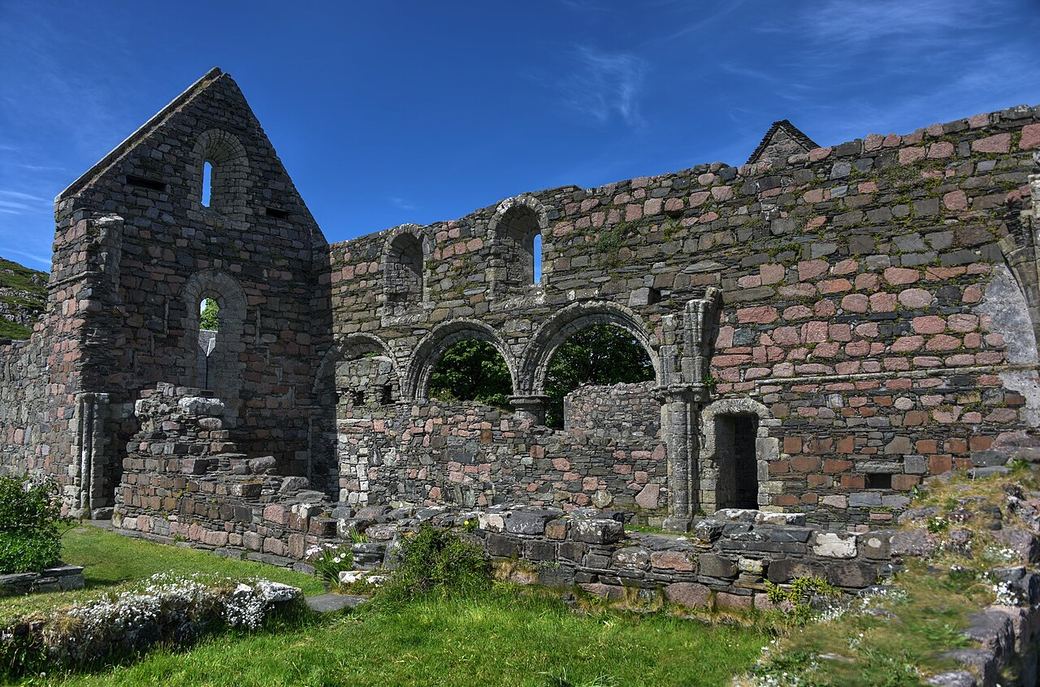
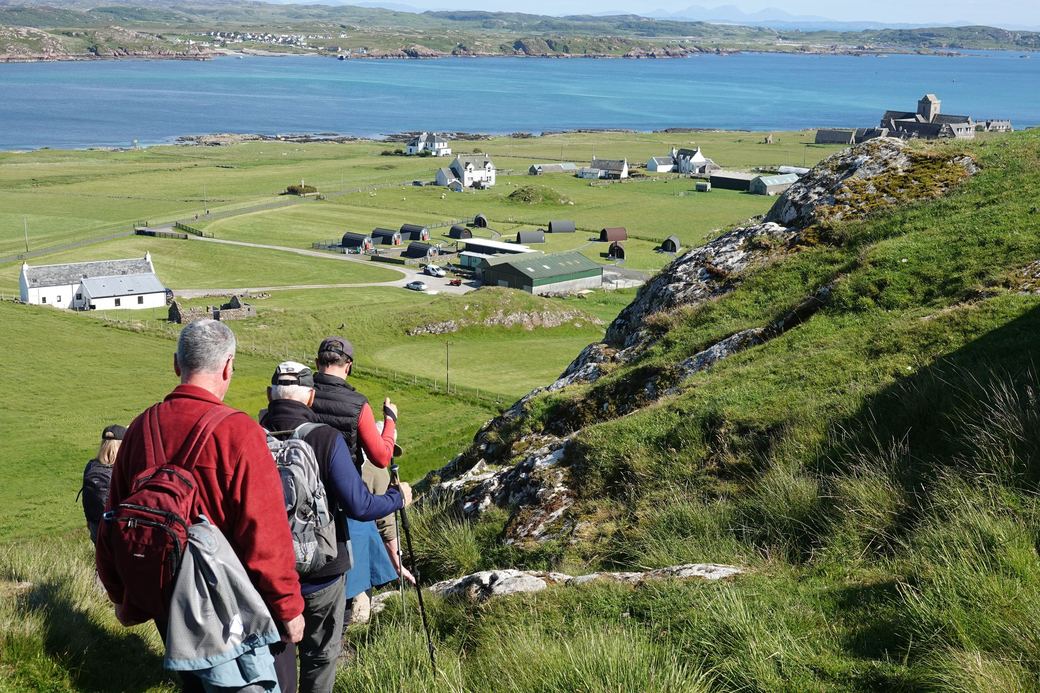
The single-track road goes on past MacLean’s Cross, a fifteenth-century carved cross by the wayside, towards the abbey, about 600 metres from the pier. The road you are on follows much the same line as the Sràid nam Marbh, the Street of the Dead, down which pilgrims and funerals came to the monastery.
St Oran’s Chapel and the Reilig Odhráin
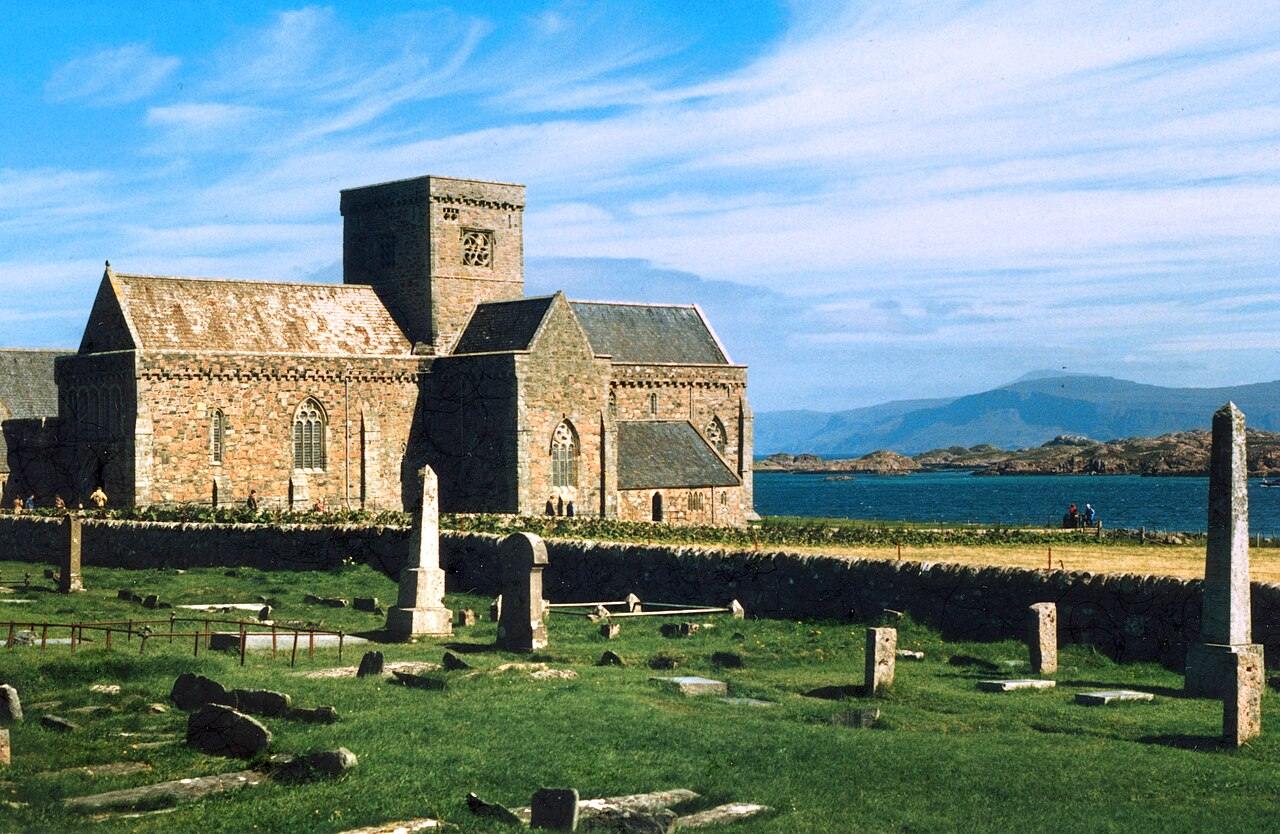
Before the abbey, on the left, is the graveyard called the Reilig Odhráin, and in it St Oran’s Chapel, a small plain Romanesque building of the twelfth century with a carved doorway, probably built by Somerled for his family. It is the oldest intact building on the island.
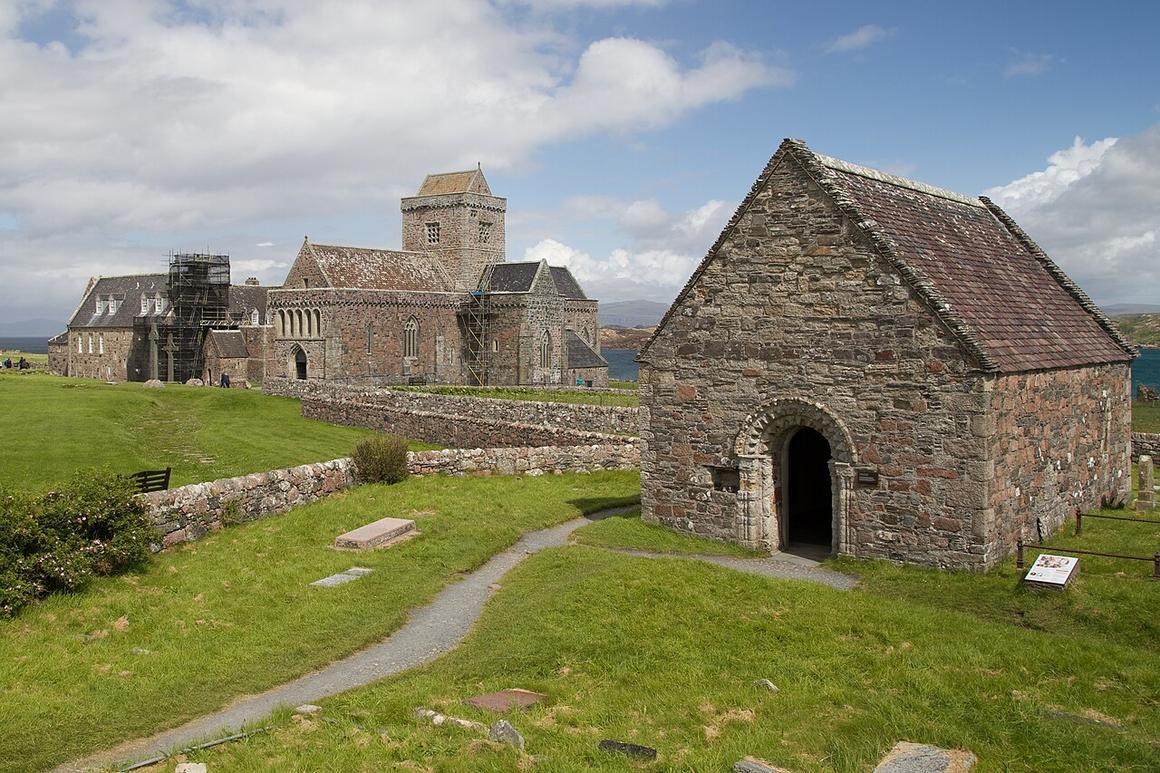
The graveyard has been used for well over a thousand years. Lords of the Isles and West Highland clan chiefs — a whole row of Maclean chiefs, and early MacLeods — were buried here, and their carved grave slabs, with galleys, swords and hunting scenes, are now under cover in the abbey. Tradition says that 48 Scottish kings are buried here too, Macbeth among them, along with kings of Ireland and Norway; modern historians are sceptical, since the claim did so much for Iona’s prestige. The Labour leader John Smith, who loved the island, was buried here in 1994.
The crosses
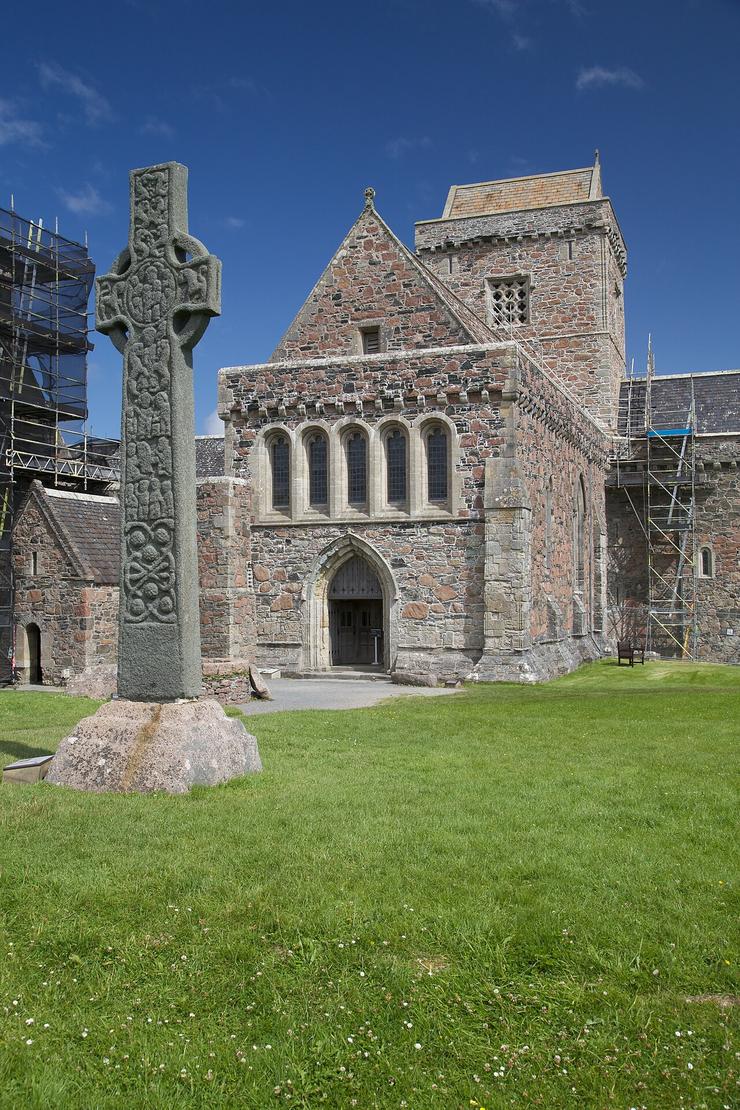
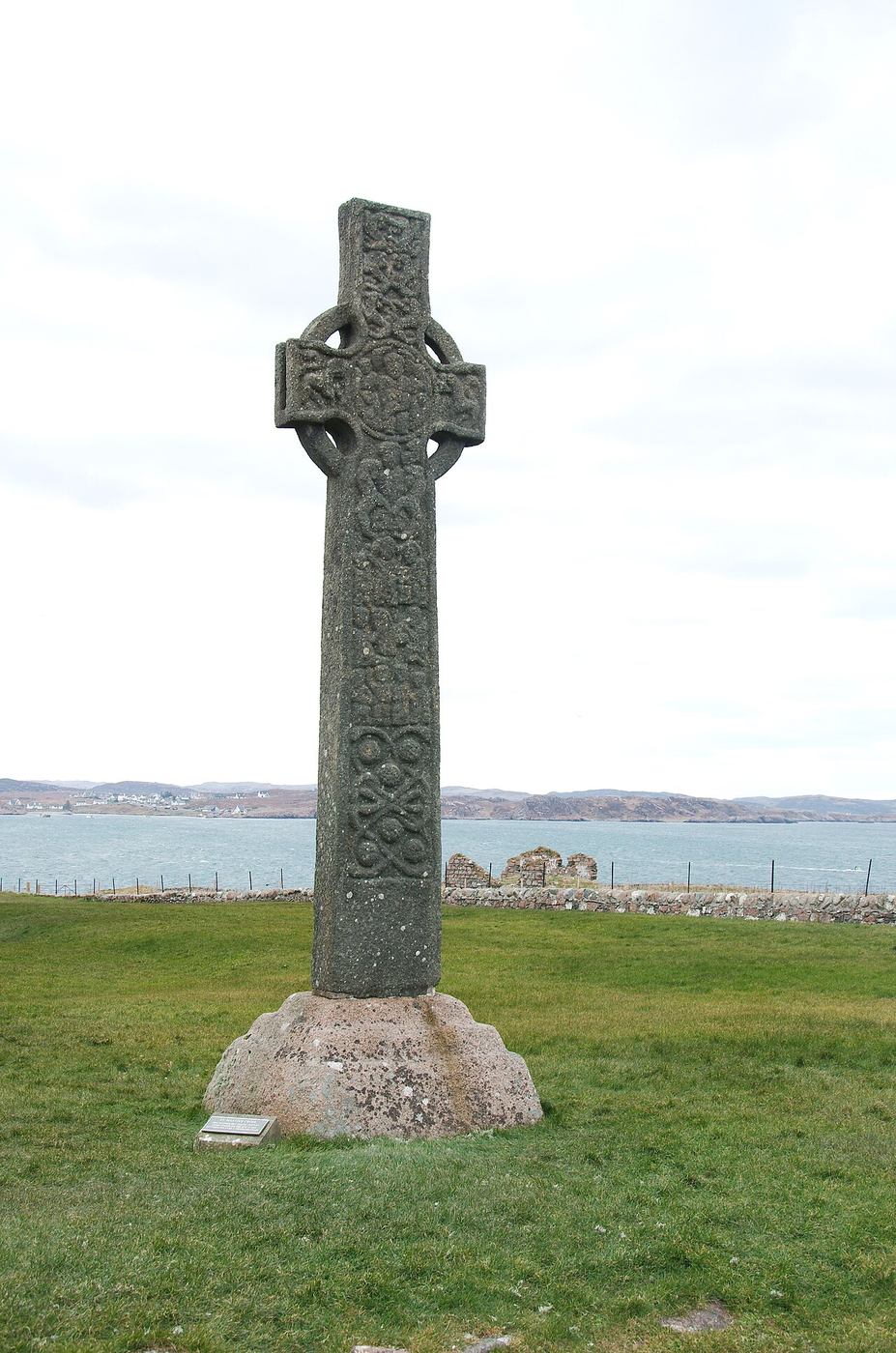
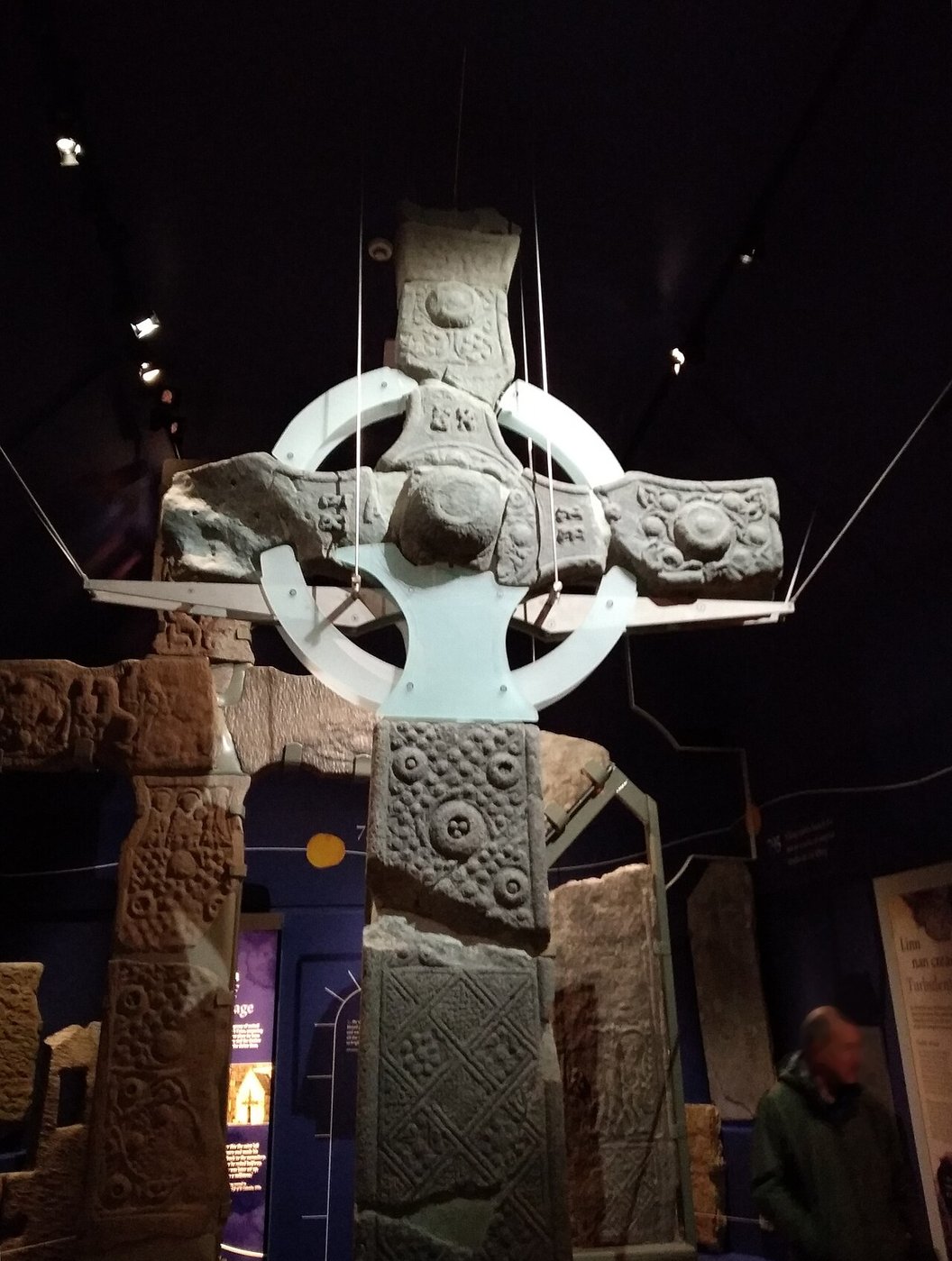
Four great high crosses of the eighth and ninth centuries once stood near the abbey. St Martin’s Cross, carved in the eighth century, still stands in its original place in front of the church, more than 1,200 years later: carved with the Virgin and Child, Daniel in the lions’ den, David and other scenes on one side and serpent-and-boss patterns on the other. Beside the abbey door is a replica of St John’s Cross, whose original, broken more than once, has been restored and put on display in the museum behind the abbey, with other carved stones.
St Columba’s Shrine
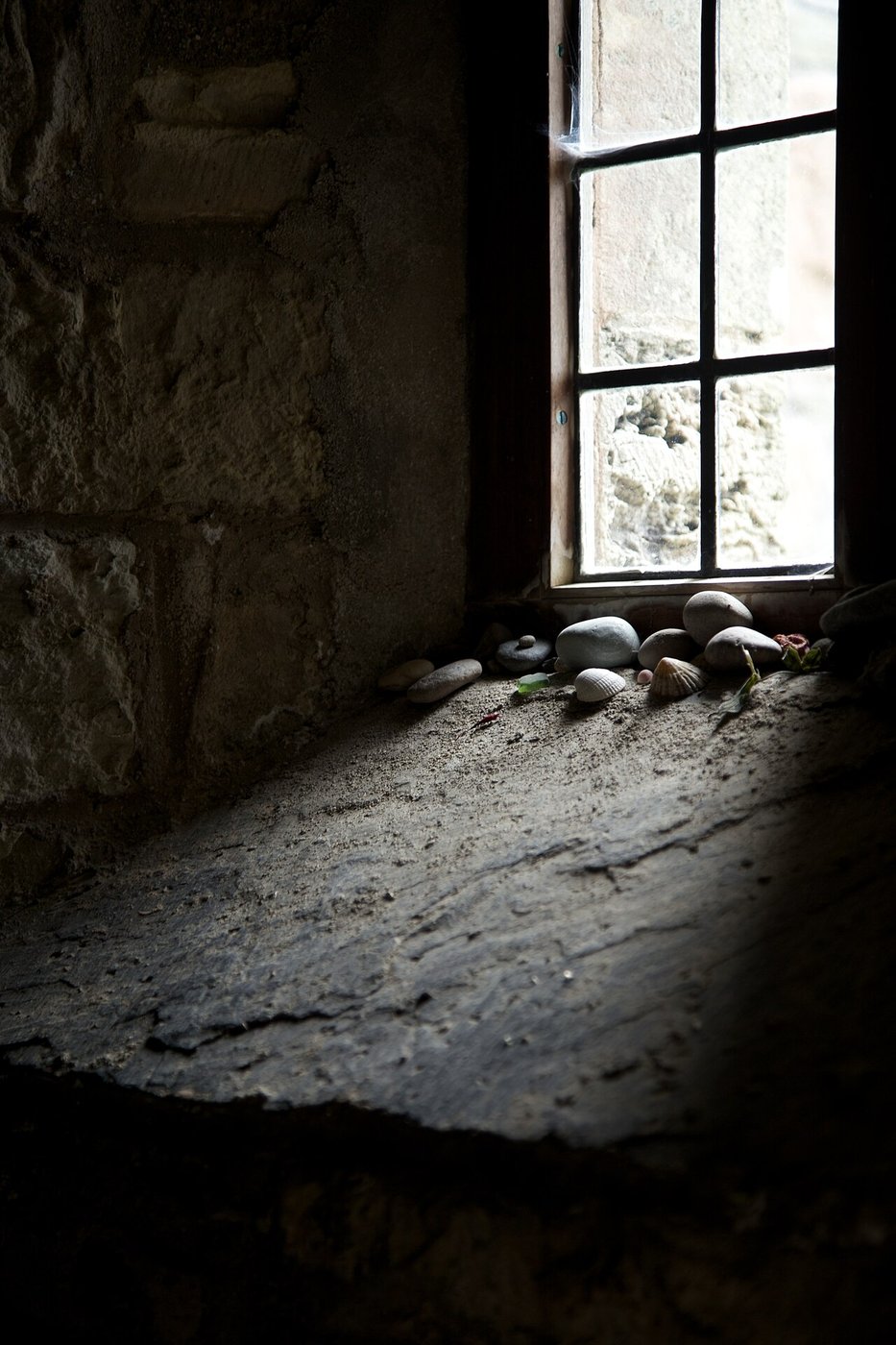
Just left of the abbey’s west door is a tiny stone chapel, St Columba’s Shrine. It may date from the ninth or tenth century and stands on the traditional site of the saint’s tomb. It was rebuilt in the twentieth century, and it is the quietest place on the island.
The abbey church
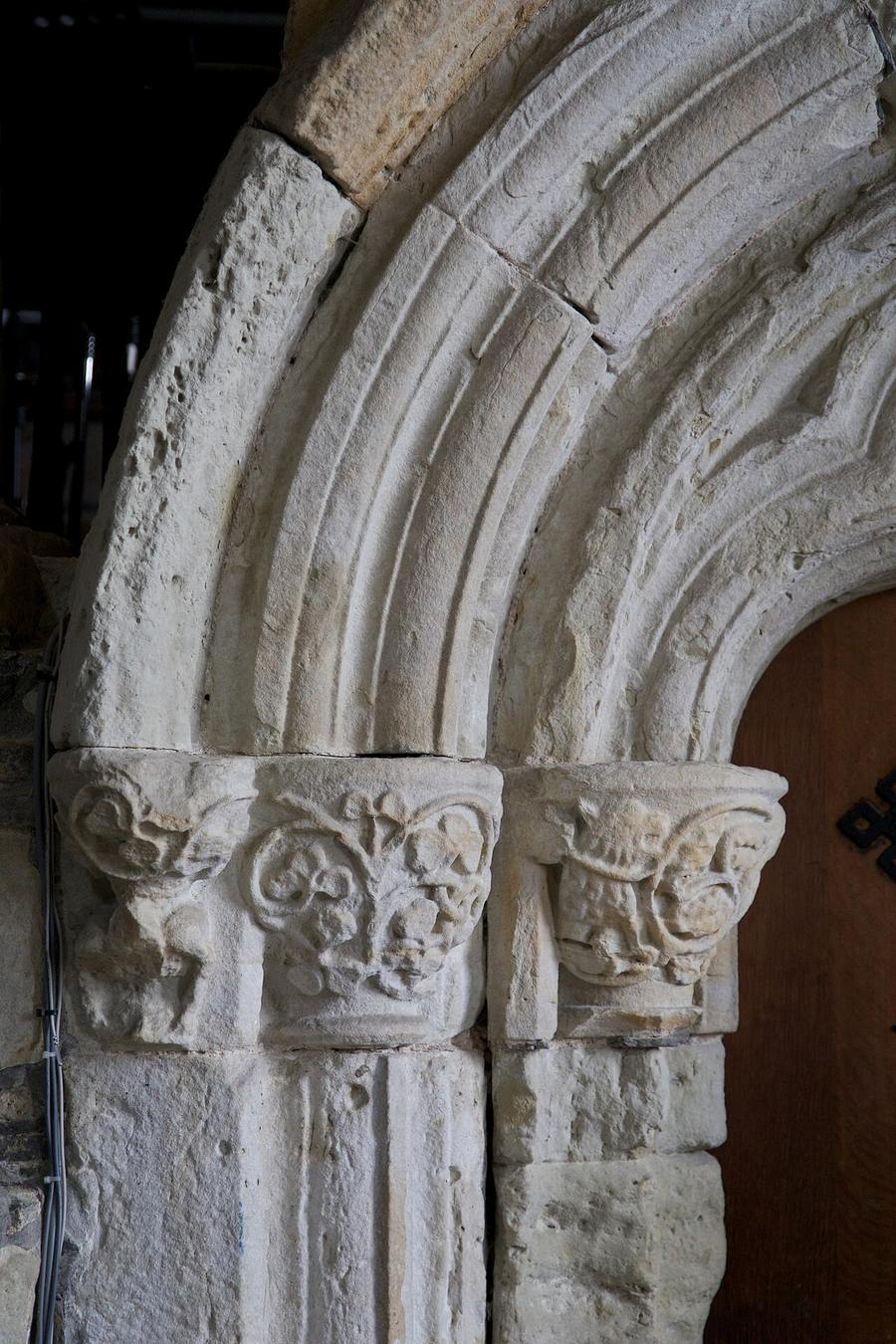
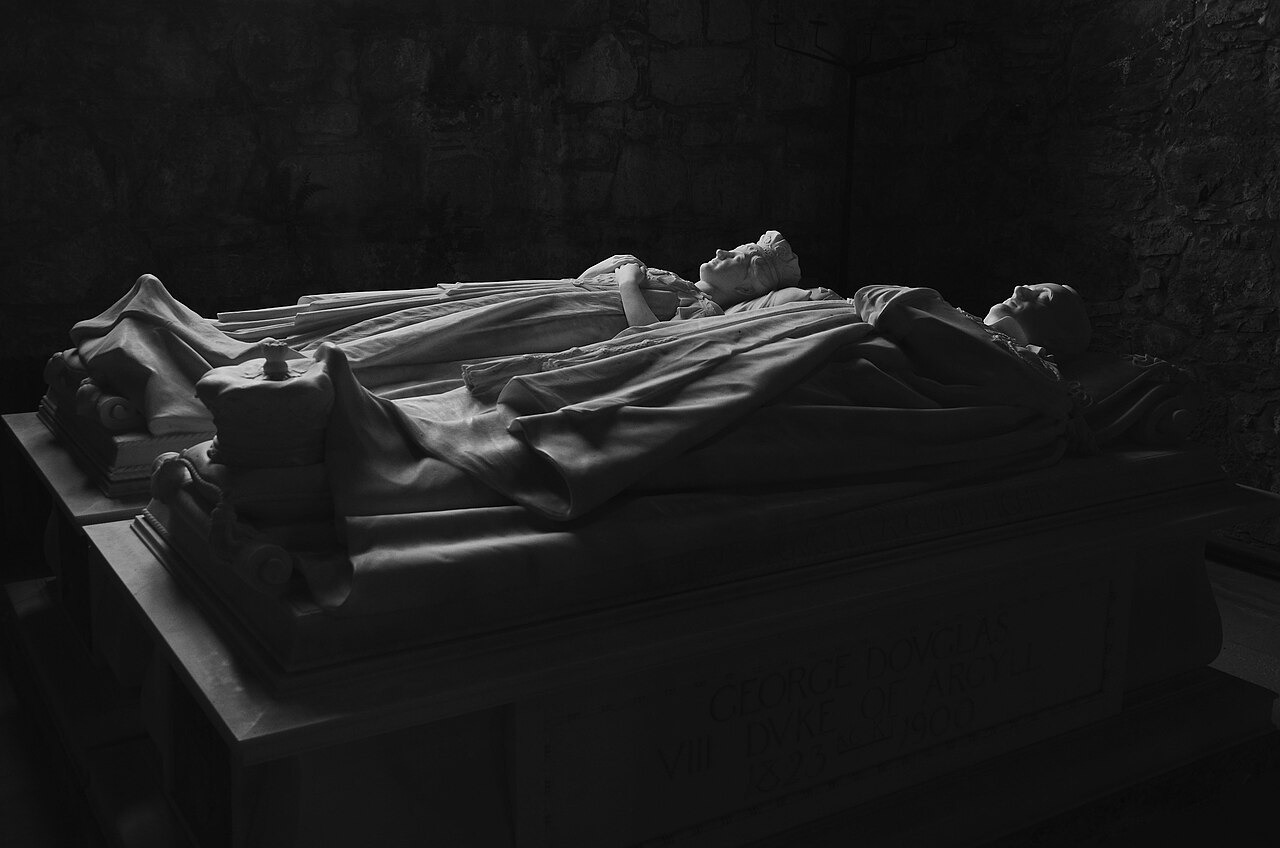
The church is plain, solid and grey-pink, with a square central tower, and it feels lived in, because it is: the Iona Community worships here every day. Look for the carved capitals of the medieval arcades in the choir and crossing, carved with plants, animals and figures, and for the graves and effigies, among them the white marble effigies of the 8th Duke of Argyll, who gave the ruins for restoration, and his wife.
The cloister
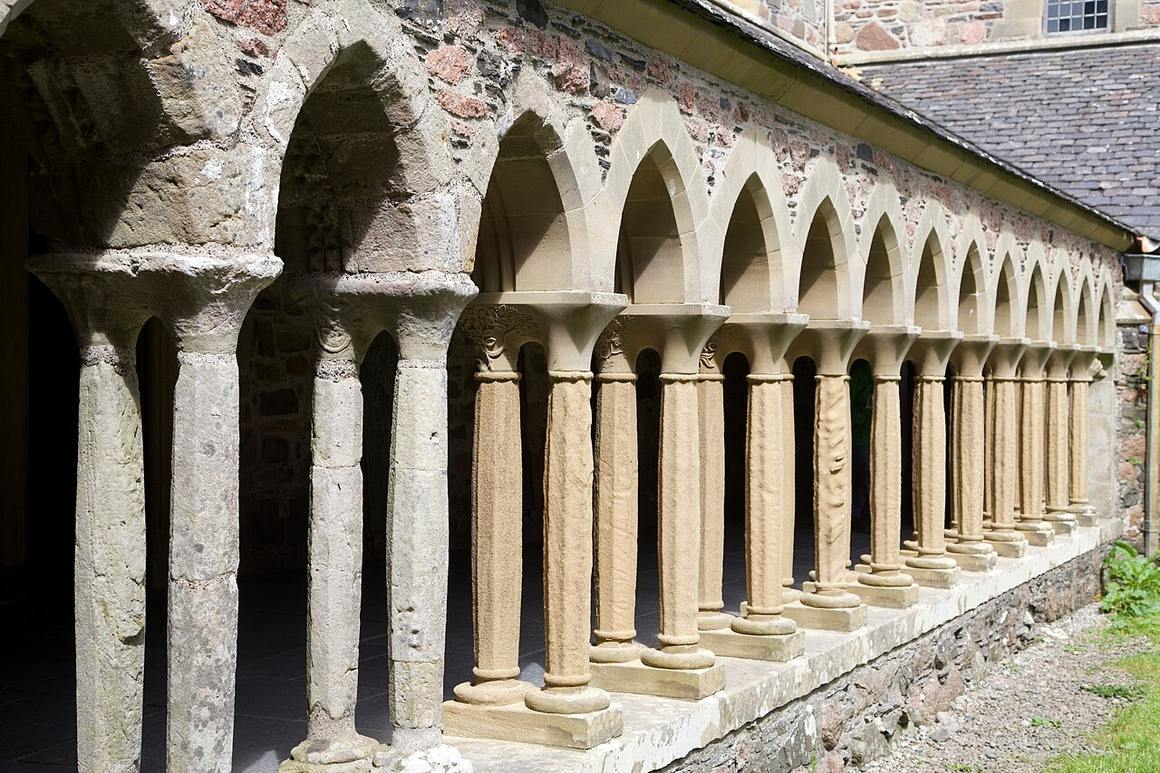
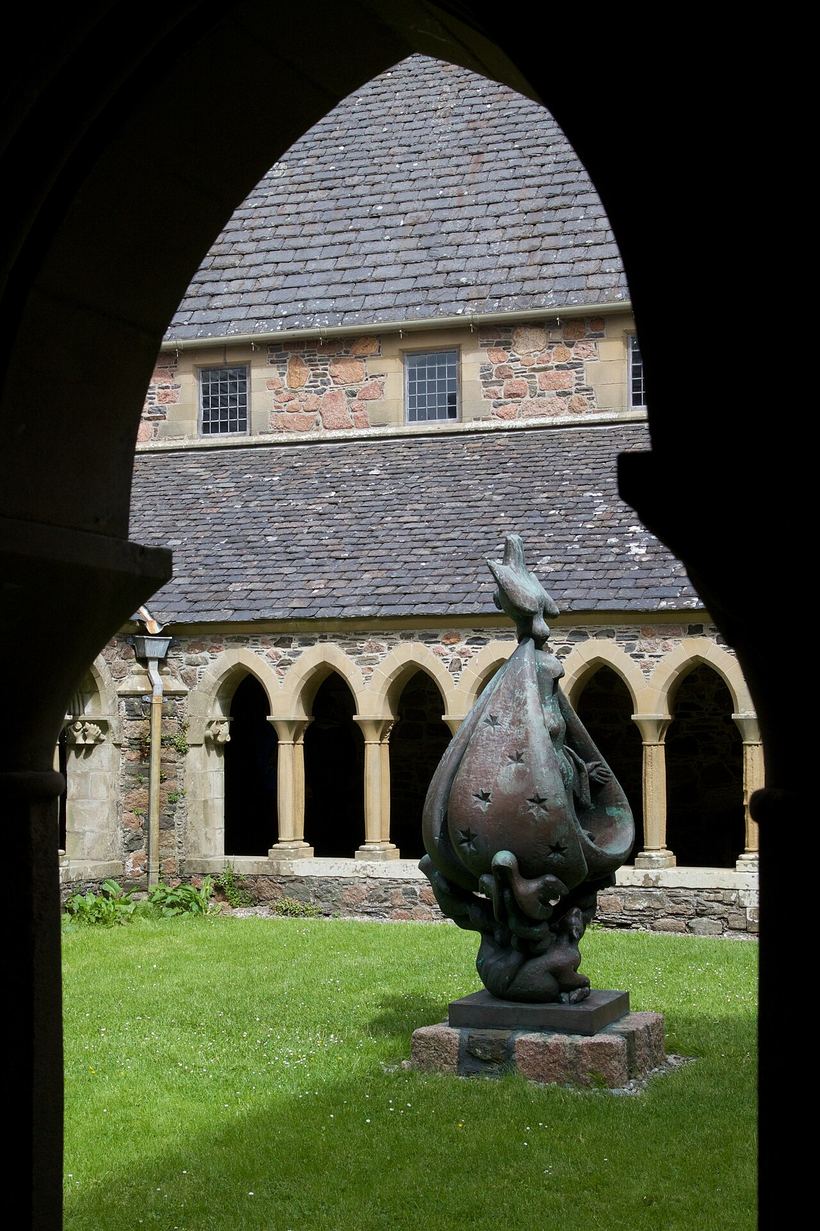
The cloister was rebuilt by the Iona Community. Its new capitals, carved over many years by the sculptor Christopher Hall, show the birds, flowers and plants of the island. In the middle of the garth stands a bronze by the Lithuanian-born sculptor Jacques Lipchitz, The Descent of the Spirit. The museum, in the old infirmary behind the abbey, holds St John’s Cross and a remarkable collection of carved stones from the island’s long history.
Tickets and tours
Buy online and save a pound
Tickets for the abbey are sold by Historic Environment Scotland: £10 online or £11 in person for adults, with concession and child rates. Members and Explorer Pass holders go in free. The ferry is separate. Organised day tours from Oban handle the ferries and the bus across Mull for you, and some combine Iona with a boat trip to Staffa and Fingal’s Cave.
Tour and hotel links go to GetYourGuide and Booking.com. This site earns nothing from them at present — they are here because they are the quickest way to check what is actually available.
Don’t miss
- St Martin’s Cross Eighth century, and still standing where it was put up.
- The nunnery ruins Free, beautiful and walked past by most visitors.
- The Reilig Odhráin And St Oran’s Chapel, the oldest building on the island.
- The museum’s carved stones Grave slabs of the Lords of the Isles and their warriors.
- St Columba’s Shrine The tiny chapel by the abbey door.
- Dùn Ì The island’s summit, a short climb north of the abbey.
Insider tips
Stay the night if you can. The day visitors arrive on the late-morning ferries and leave in the afternoon, and after that Iona goes quiet. Staying on the island, or at Fionnphort across the water, means you can go to the 9pm evening service in the abbey church and see the island without the crowds in the morning.
Check the weather and the ferries. West Highland weather changes quickly and ferries do not run in gales, and when the Iona ferry stops the abbey may close. Keep an eye on the CalMac service status on the day you travel.
Climb Dùn Ì. The island’s highest point, just north of the abbey, is barely a hundred metres high and gives a view over the abbey, the Sound and, on a clear day, the islands to the north and west.
Bring what you need. There are no toilets at the abbey, and the nearest are at the Iona Community shop beside it. There is a village shop and a couple of hotels with cafes, but on a busy day they fill up.
Common questions
How do you get to Iona Abbey?
By two ferries and a long road. Take the CalMac ferry from Oban to Craignure on Mull, cross Mull by car or by the bus to Fionnphort, and take the small passenger ferry across to Iona. From the Iona pier the abbey is about 600 metres’ walk. Visitors cannot take cars onto Iona without a permit.
How much does it cost to visit Iona Abbey?
Adult tickets are £10 online or £11 on the day, concessions £8 or £9, and children aged 7 to 15 £6 or £6.50. Historic Environment Scotland members and Explorer Pass holders go in free.
Can you do Iona as a day trip from Oban?
Yes, and many people do, but it is a long day: most of it is spent on ferries and on the road across Mull. Check the ferry timetables before you set off, and allow a couple of hours on Iona for the abbey, the nunnery and the graveyard.
Can you attend a service at Iona Abbey?
Yes. The Iona Community, which lives in the abbey, holds services open to everyone in the abbey church during its season, from March to early November: morning worship every day, and an evening service at 9pm on every night except Friday.
Is St Columba buried on Iona?
He was buried in his monastery here in 597, but his relics did not stay. During the Viking raids of the ninth century they were divided and carried away for safety to Kells in Ireland and Dunkeld in Scotland. The small St Columba’s Shrine beside the abbey door marks the traditional site of his tomb.
Getting there, and where to stay
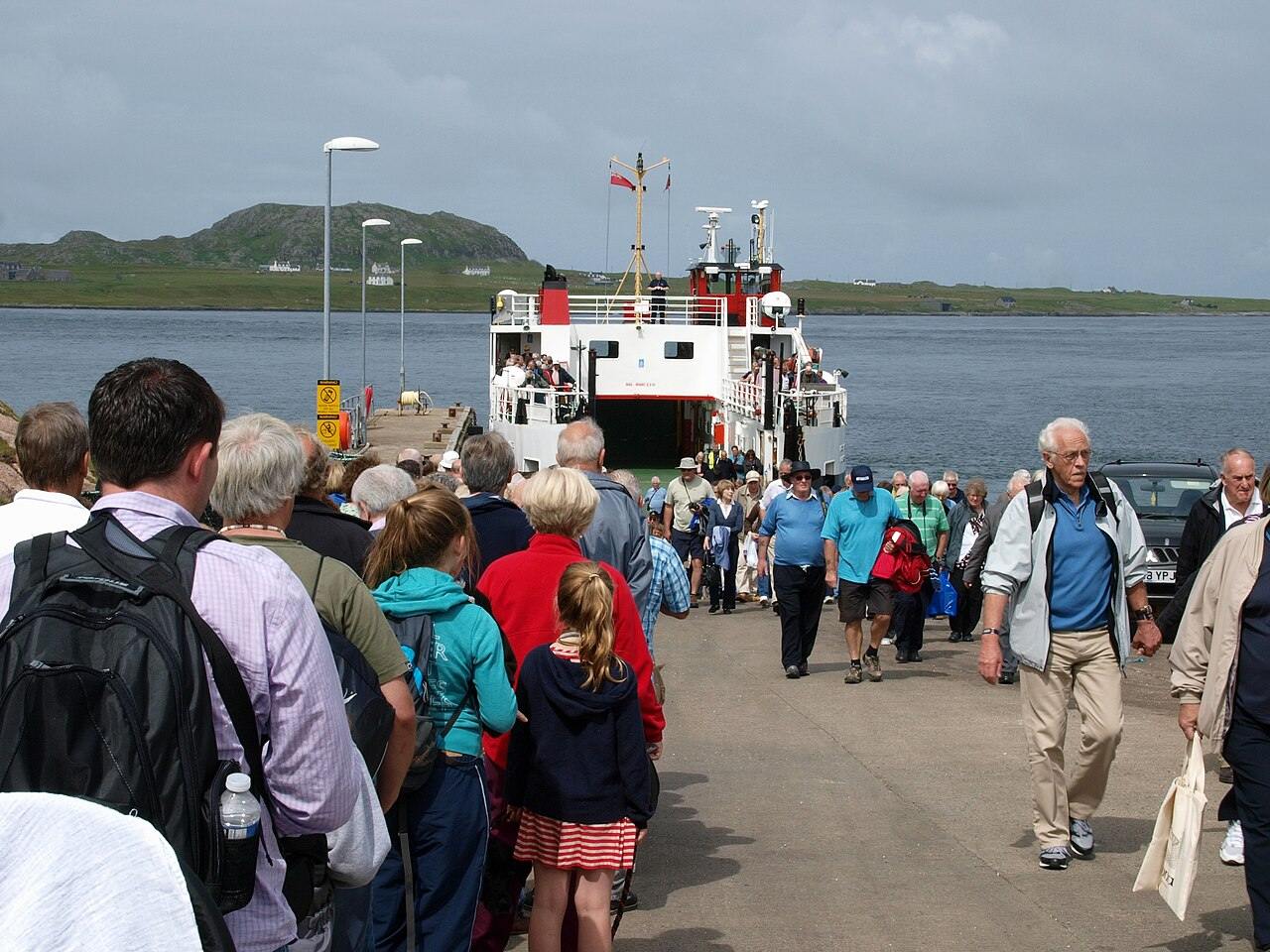
Iona is reached through Oban. Trains and buses run to Oban from Glasgow, and the CalMac car ferry crosses from Oban to Craignure on Mull. From Craignure, the West Coast Motors bus marked for the Iona Ferry runs across the island to Fionnphort, some 35 miles of mostly single-track road; by car, allow at least an hour and use the passing places. The passenger ferry to Iona crosses the Sound in a few minutes. Car parks at the Fionnphort pier charge during the day; the Columba Centre nearby has free parking. You cannot take a car onto Iona without a permit, and on an island this small you will not want one.
Oban has the widest choice of places to stay and makes an easy base for a day trip. On Iona there are a couple of hotels, guest houses and self-catering; the Iona Community also runs residential weeks in the abbey itself, booked well in advance.
More churches in Scotland and beyond
- Glasgow Cathedral — on the way, if you travel to Oban from Glasgow.
- St Giles’ Cathedral — the church of the Scottish Reformation that ended Iona’s monastery.
- Skellig Michael — the other great island monastery of the Irish tradition.
- Durham Cathedral — where St Cuthbert, a later heir of the Iona tradition, lies.