
Glasgow Cathedral
Most of Scotland’s medieval cathedrals are ruins — St Andrews, Elgin, Dunkeld’s roofless nave. Glasgow’s is the great exception: the only medieval cathedral on the Scottish mainland to come through the Reformation of 1560 virtually intact. It is free to visit, it is a short walk uphill from the city centre, and most visitors leave having missed the best part of it, which is downstairs. Under the choir is a second complete church, built in the thirteenth century round the tomb of the saint who founded Glasgow.
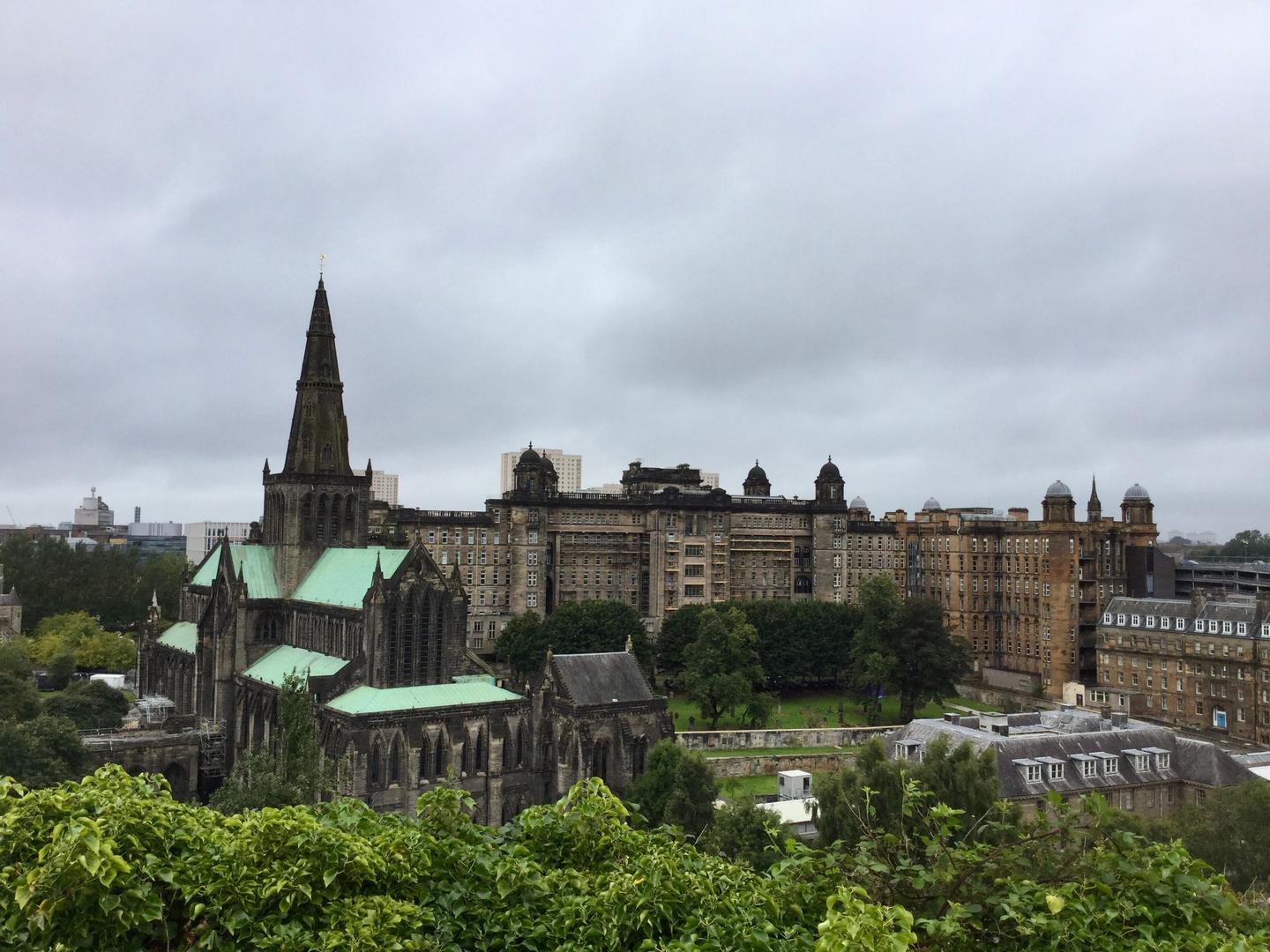
St Mungo, and the church built over his grave
Glasgow began here. According to tradition, St Kentigern — known by his pet name, Mungo, meaning something like “my dear one” — brought the body of a holy man named Fergus to a burial ground on the bank of the Molendinar Burn in the sixth century, founded a church there, and was buried in it himself in the early seventh. His tomb drew pilgrims from across medieval Scotland, and the city grew up around the place they came to.
The first stone cathedral was consecrated in 1136 in the presence of King David I. After a fire, Bishop Jocelin rebuilt it and dedicated a new church in 1197, and most of what you see was built during the thirteenth century, above all under Bishop William de Bondington between 1233 and 1258. His builders dealt with the steep slope of the site in a brilliant way: the choir stands on a full lower storey, and that lower storey became a church of its own, with St Mungo’s tomb at its centre.
The visitor’s cheat sheet
| Where | Cathedral Precinct, Castle Street, Glasgow G4 0QZ, at the top of the High Street |
|---|---|
| Opening hours | 1 April–30 September: Monday–Saturday 9.30am–5pm, Sunday 1pm–5pm. 1 October–31 March: Monday–Saturday 10am–4pm, Sunday 1pm–5pm. Last entry 45 minutes before closing. Closed 25 December–4 January, and for some services and events |
| Admission | Free; donations welcome. A free timed entry slot and an audio guide can be booked on the Historic Environment Scotland website |
| Services | Sunday worship 11am; daily prayers 1pm (Sunday 1.15pm) |
| Access | Stair lift at the west door and up to the choir. The Lower Church is down 25 steps, the Blacader Aisle 13 very steep ones |
| Toilets | None in the cathedral; use the St Mungo Museum next door |
| How long | An hour for the cathedral; add an hour for the Necropolis |
Hours and admission checked against the official site in September 2026. They change; the official site is always the last word.
It’s free, but check the date. Entry costs nothing. Opening hours change on 1 October, when the cathedral switches to 10am–4pm Monday to Saturday, and it is a working church: funerals, services and events close the building or the choir at short notice. Historic Environment Scotland publishes each closure on its plan-your-visit page — check it on the day. And there are no toilets in the building.
How it survived the Reformation
In 1560 Scotland became officially Protestant, and in the years that followed its cathedrals and abbeys were stripped, abandoned and quarried. Glasgow’s lost its altars, its images and the lead from its roof, and by 1574 the town council was warning that so great a monument would fall down altogether unless something was done. It survived because it stayed in use. In 1579 the craftsmen of Glasgow’s Trades House turned out to protect it from further damage, and the building was divided up to hold not one congregation but three: the Inner High Kirk in the choir, the Outer High Kirk in the nave, and the Barony Kirk down in the Lower Church.
It was also where Scottish Presbyterianism made one of its great stands. In November 1638 the General Assembly of the Church of Scotland met here, the year of the National Covenant, and abolished bishops in defiance of Charles I — a step that led to the Bishops’ Wars.
In the early nineteenth century people began to see the building as a medieval masterpiece rather than a set of parish churches. By 1835 the Outer High and Barony congregations had moved out, and by 1857 the whole building was in the care of the state, which still owns it. Not every intervention was a good one: in the 1840s the two medieval towers at the west end were pulled down, in the mistaken belief that they were later additions spoiling the view. The cathedral is now cared for by Historic Environment Scotland, while a Church of Scotland congregation still worships in the choir.
What to see, in the order you meet it
The outside, and the approach
The cathedral stands on a slope above the Molendinar valley at the top of the High Street. The central tower and stone spire were rebuilt in the fifteenth century after lightning struck the old wooden steeple in 1406; the green of the roofs is copper, put on when the medieval timber roofs were replaced between 1909 and 1912. The main visitors’ entrance is on the south side, up four stone steps; the west door, which has a stair lift, is opened on request.
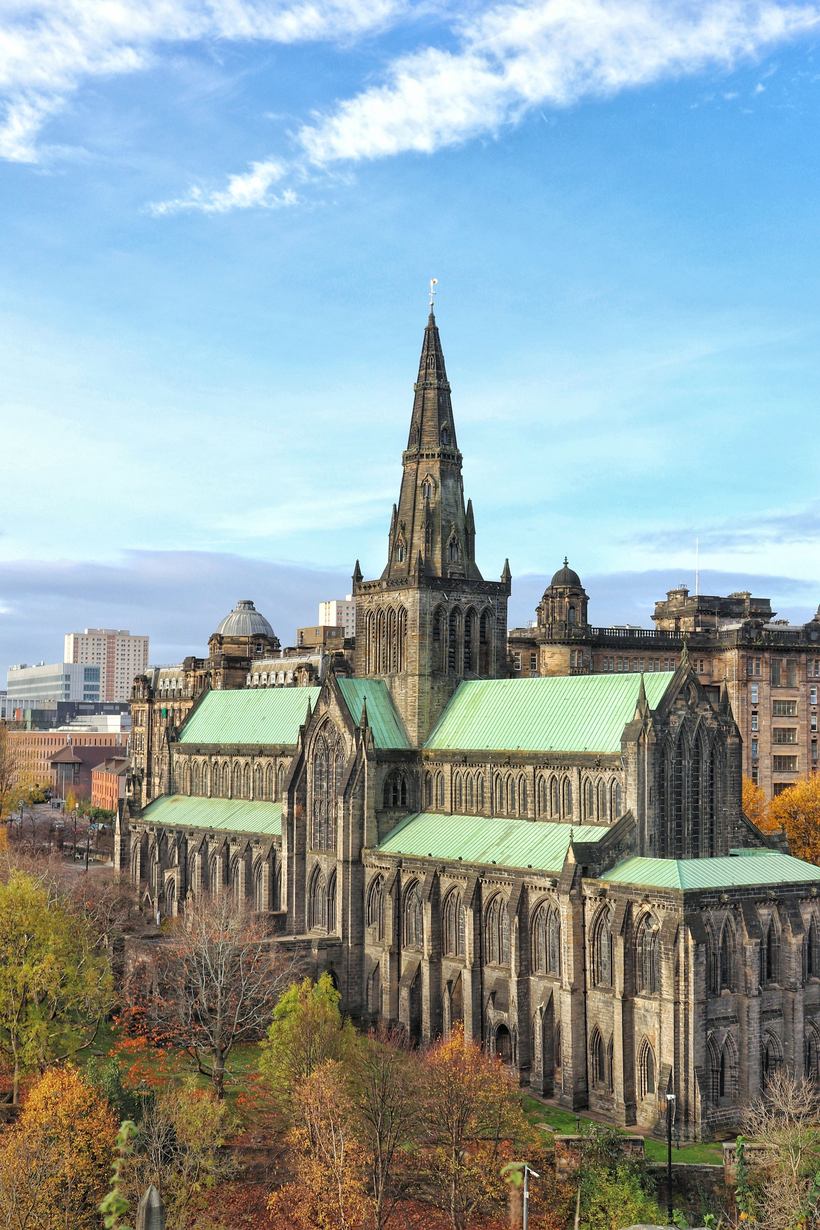
The nave
The nave is long, tall and plain in the best sense: pointed arches, a triforium, tall clerestory windows and an oak roof. What gives it colour is the glass. In the 1860s nearly every window was filled with glass from the Royal Bavarian works in Munich, one of the largest public art commissions of the Victorian age. It faded badly, and from the late 1930s the Society of Friends of Glasgow Cathedral set out to replace it with the work of the best modern artists. The result is one of the most varied collections of twentieth-century stained glass in Britain, the Trades of Glasgow window of 1951 among them. Queen Elizabeth the Queen Mother unveiled a window in 1954 to the dead of the four Scottish divisions in the two world wars.
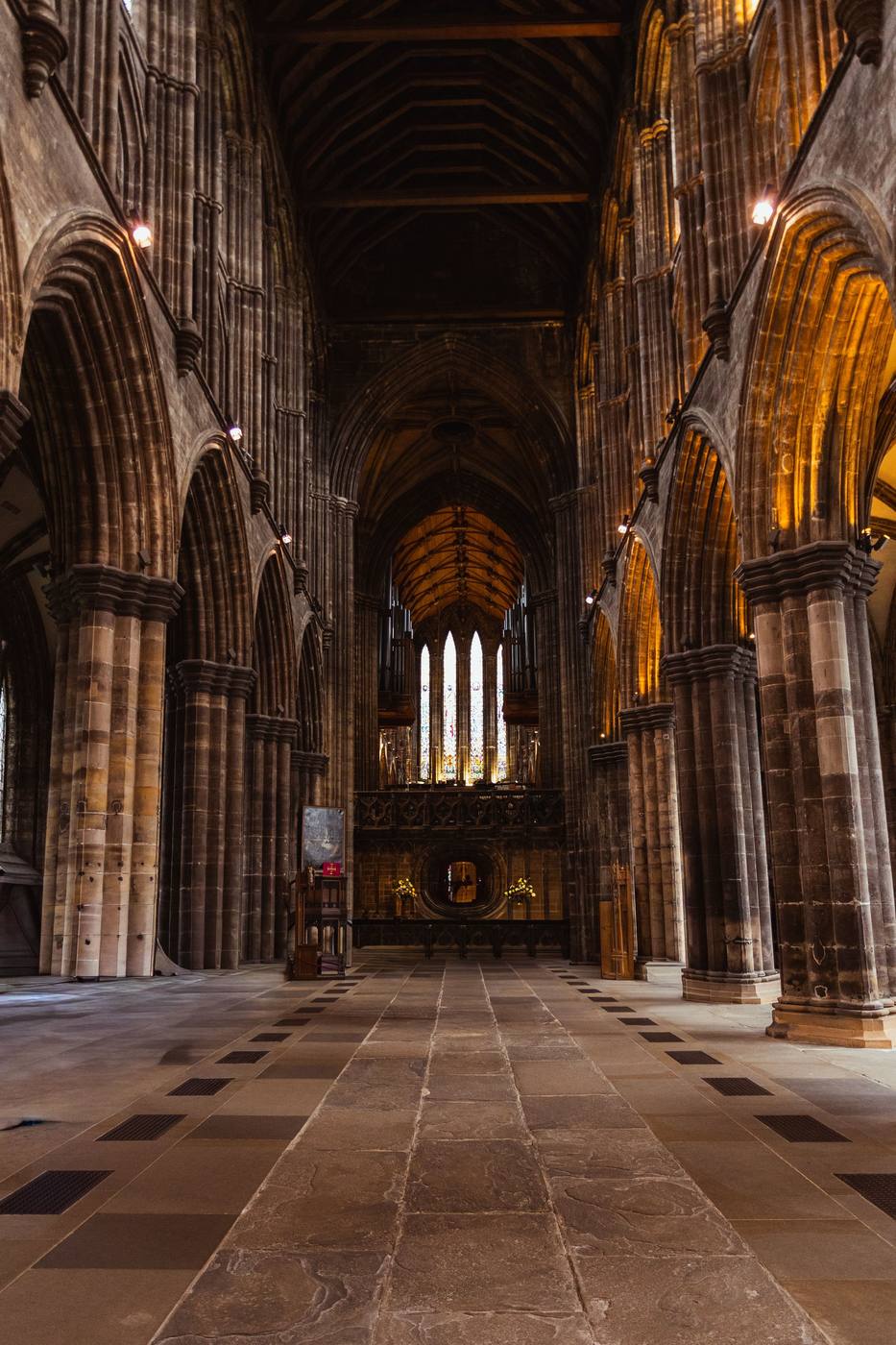
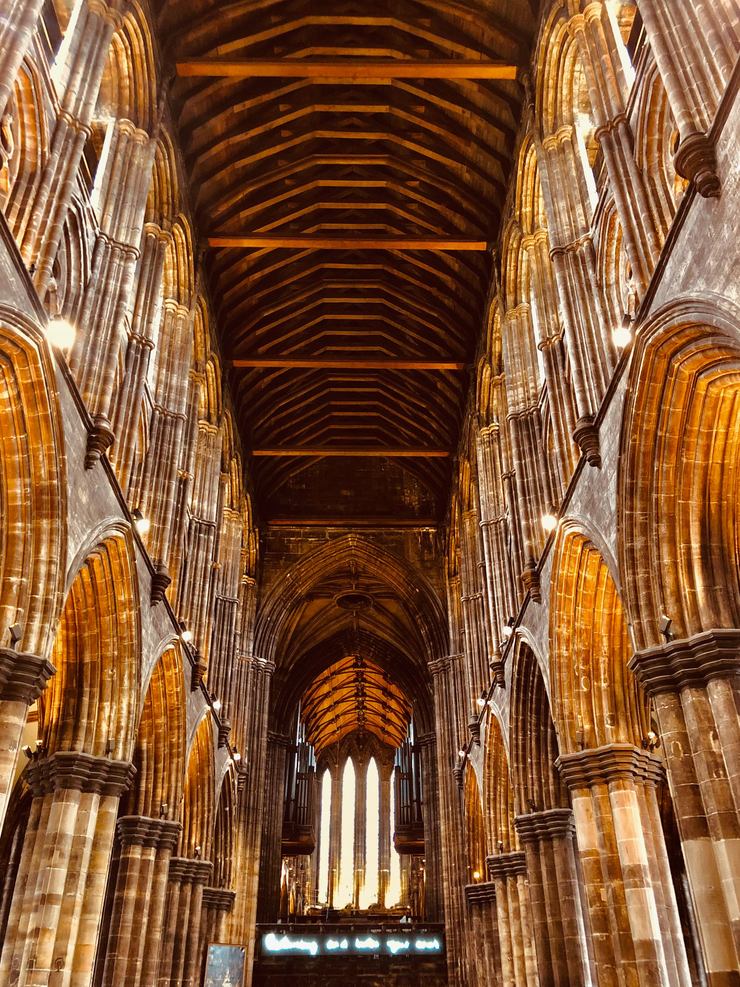
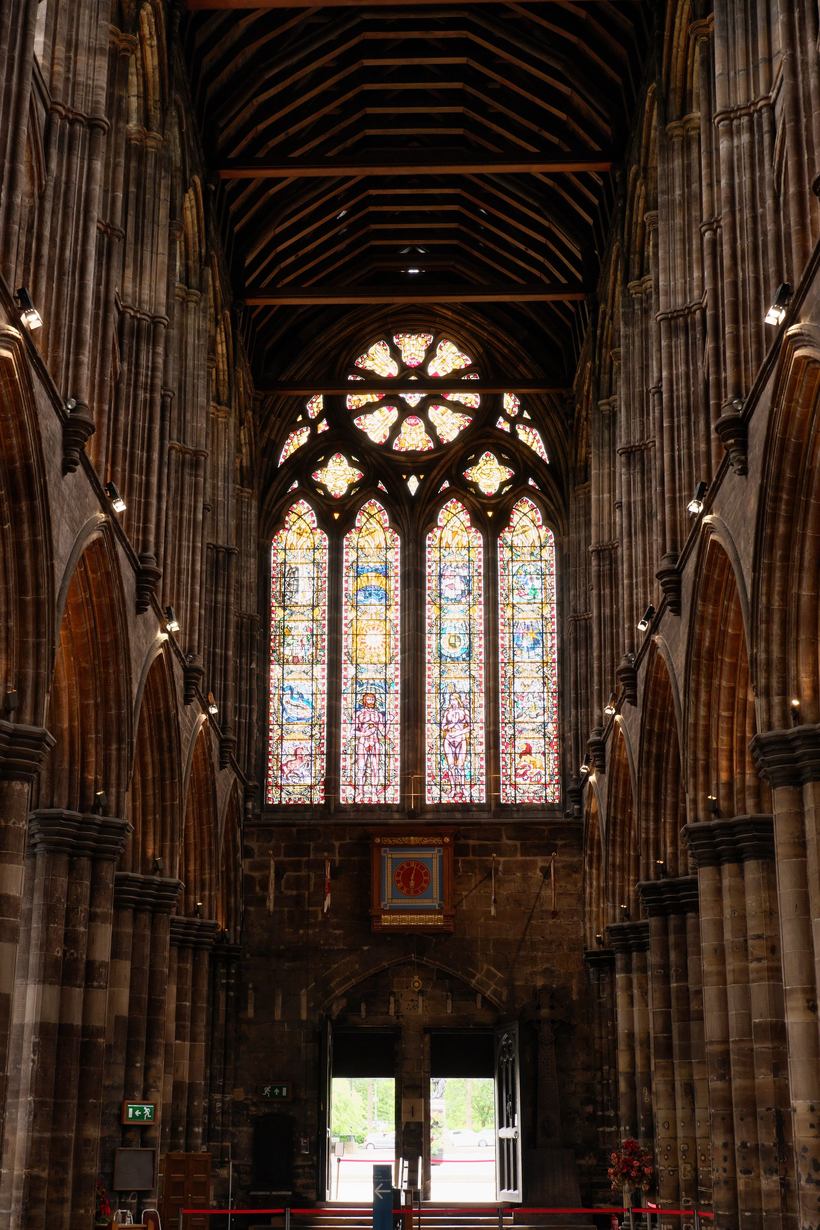
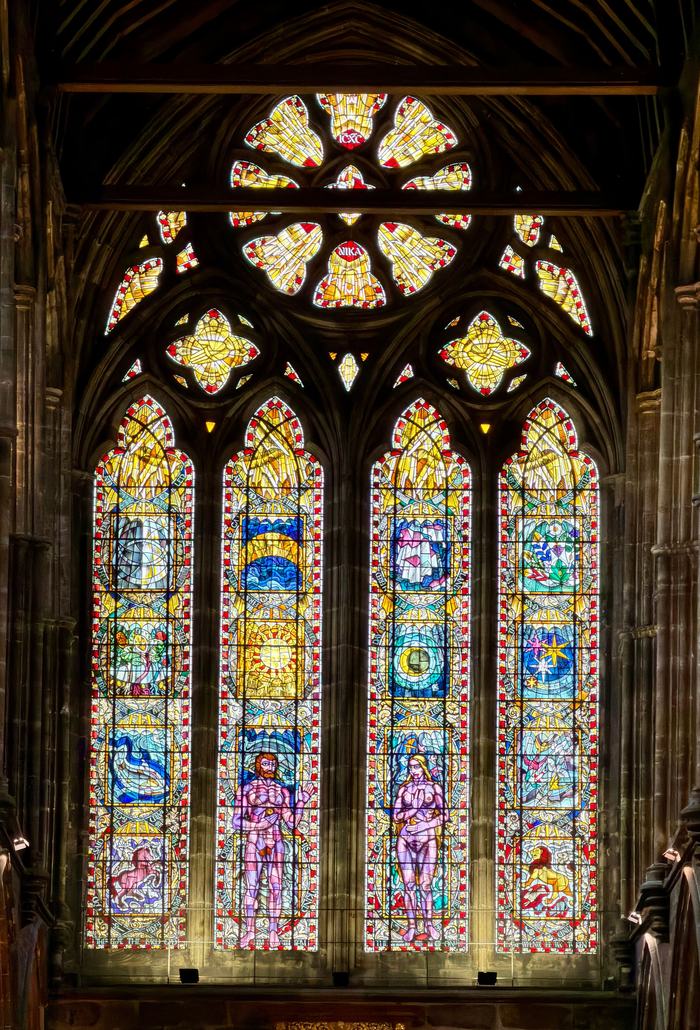
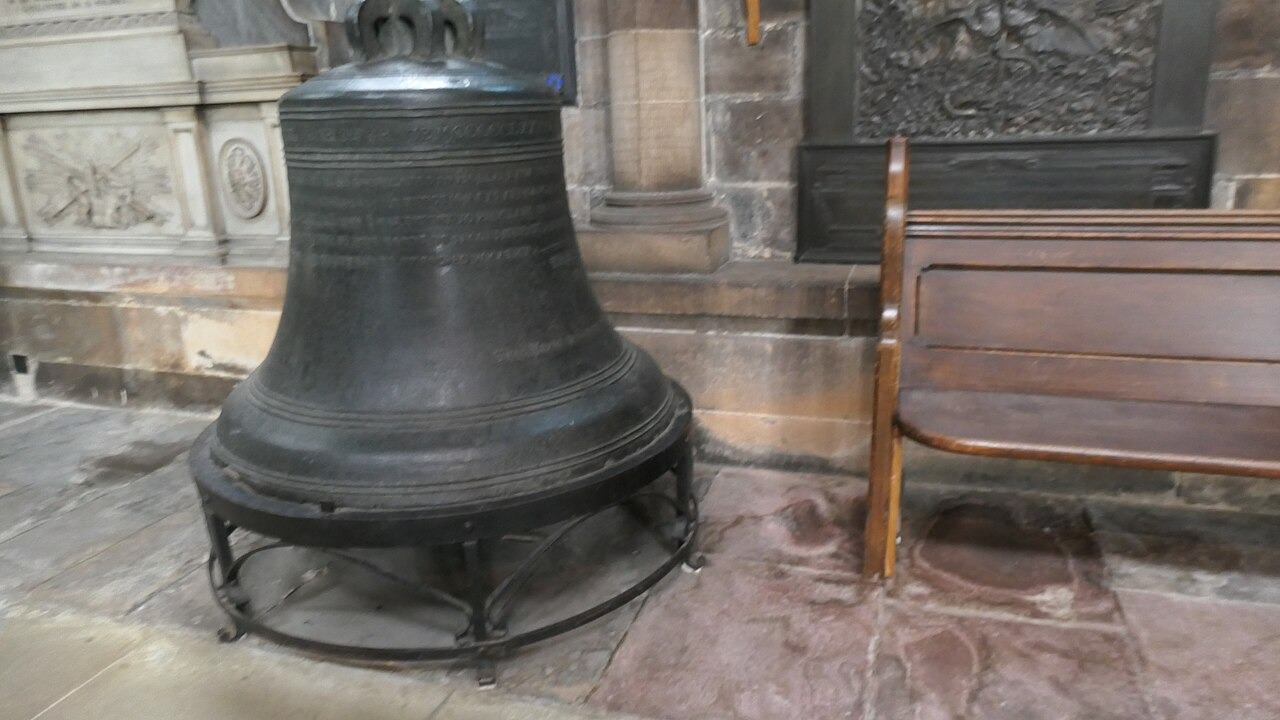
Look for the great bell standing on the floor. Its inscription says it was made in Holland in 1583 at the expense of a Glasgow merchant, Marcus Knox; it cracked in 1778 and was recast in London by Thomas Mears in 1790.
The pulpitum and the choir
At the east end of the nave is the pulpitum, the stone screen that divided the canons’ choir from the lay people’s nave. It dates from the early fifteenth century, and such screens were torn out almost everywhere in Scotland at the Reformation: this is a rare survivor of richly carved medieval stonework. Go up the steps through it into the choir.
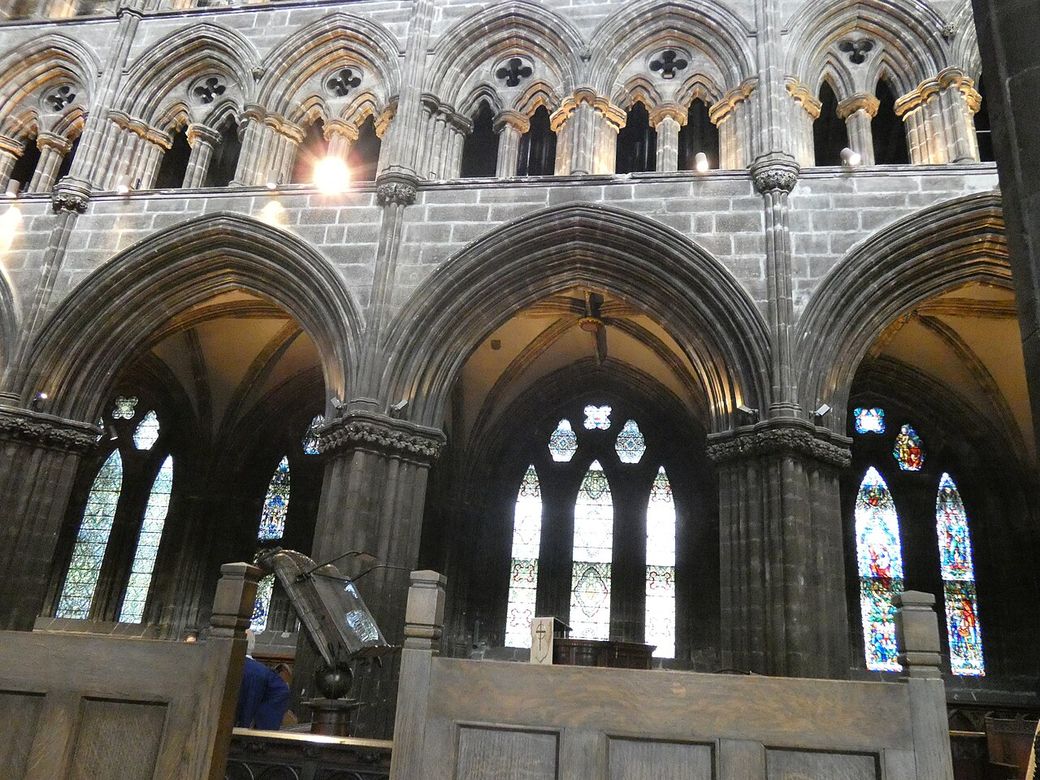
The choir is the finest part of the building, built in the 1240s and 1250s: a clear, rhythmic composition of pointed arcades, paired triforium openings and clerestory, lit from the east by four tall lancets. It is where the congregation worships, and it is sometimes closed to visitors for services. The organ, by Henry Willis, was installed high in the triforium in 1879, the first organ in the cathedral since the Reformation.
Off the north-east corner is the chapter house, reached up two steps and down eight. Rebuilt in the fifteenth century, it is where the University of Glasgow held its first classes after its foundation in 1451 — Bishop William Turnbull, who persuaded the pope to found it, was bishop here.
The Lower Church and St Mungo’s tomb
Now go down. Stairs from the aisles lead down to the Lower Church, and it is the reason to come. Because the ground falls away to the east, the builders put a whole storey under the choir, and rather than leave it as a store they made it a church: a forest of piers and ribbed vaults, with chapels round the edges and, at the centre, the tomb of St Mungo. It is one of the great spaces of medieval Scotland, and, because it is down 25 steps, most visitors on a tight schedule never see it.
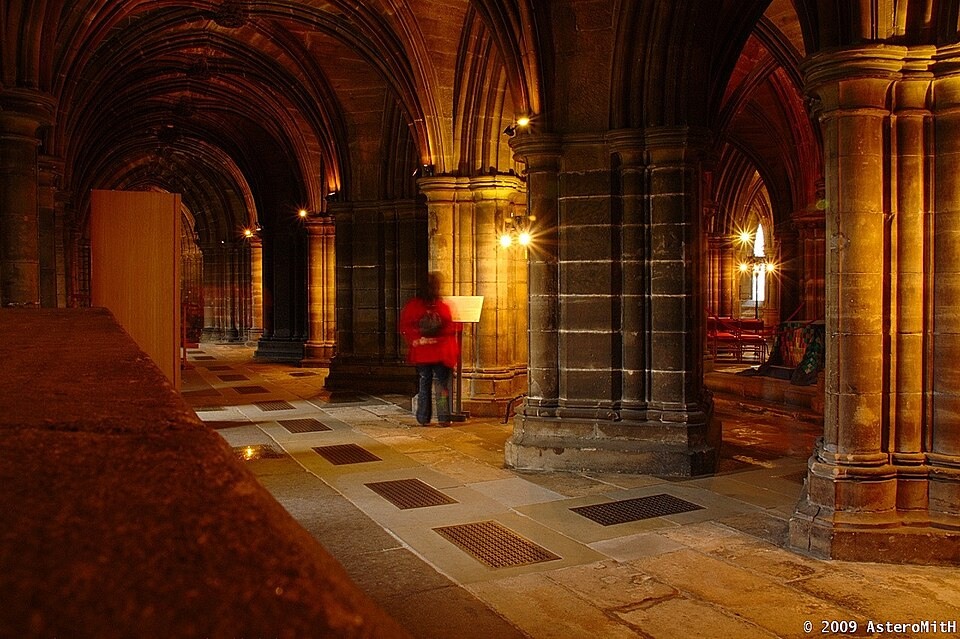
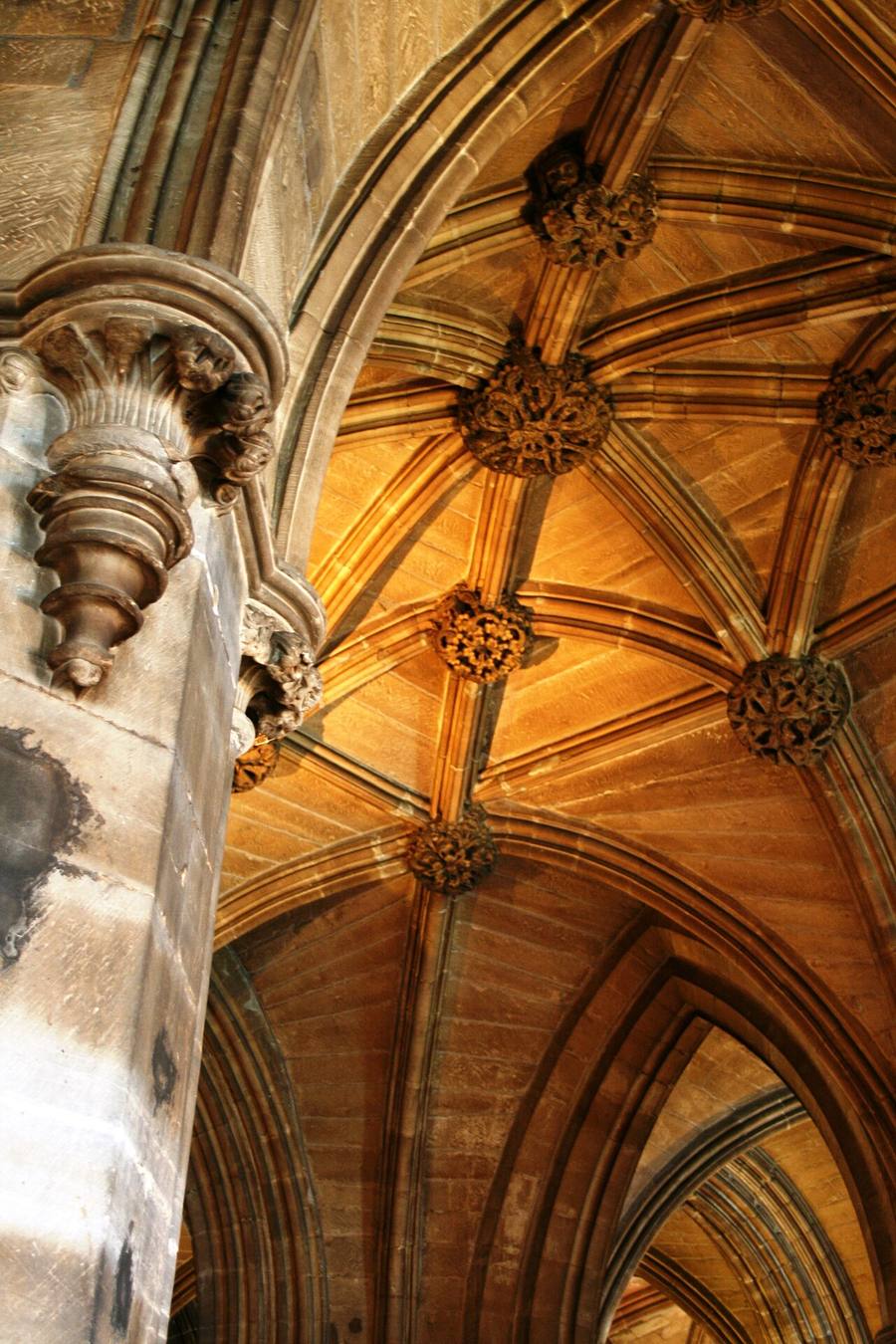
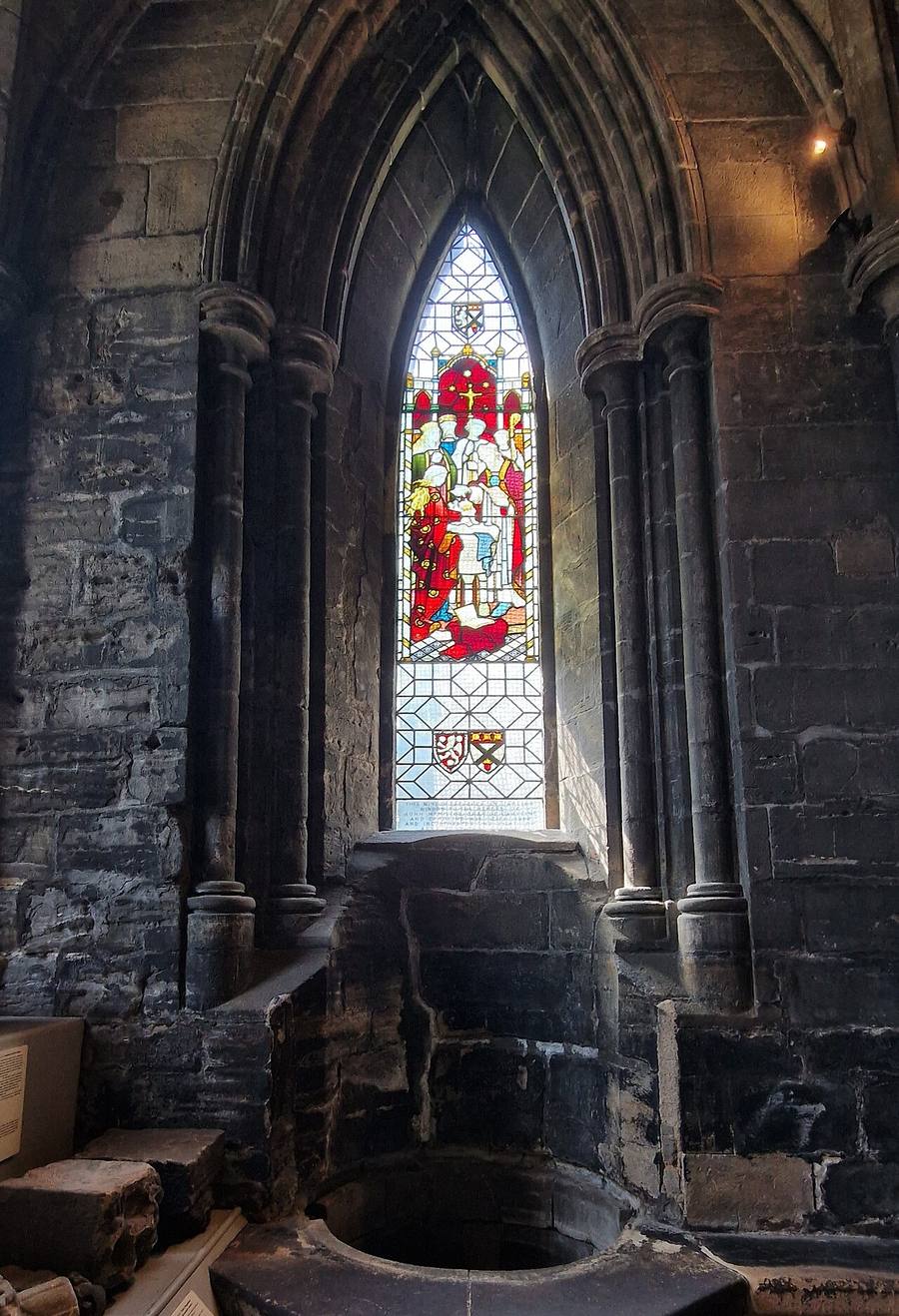
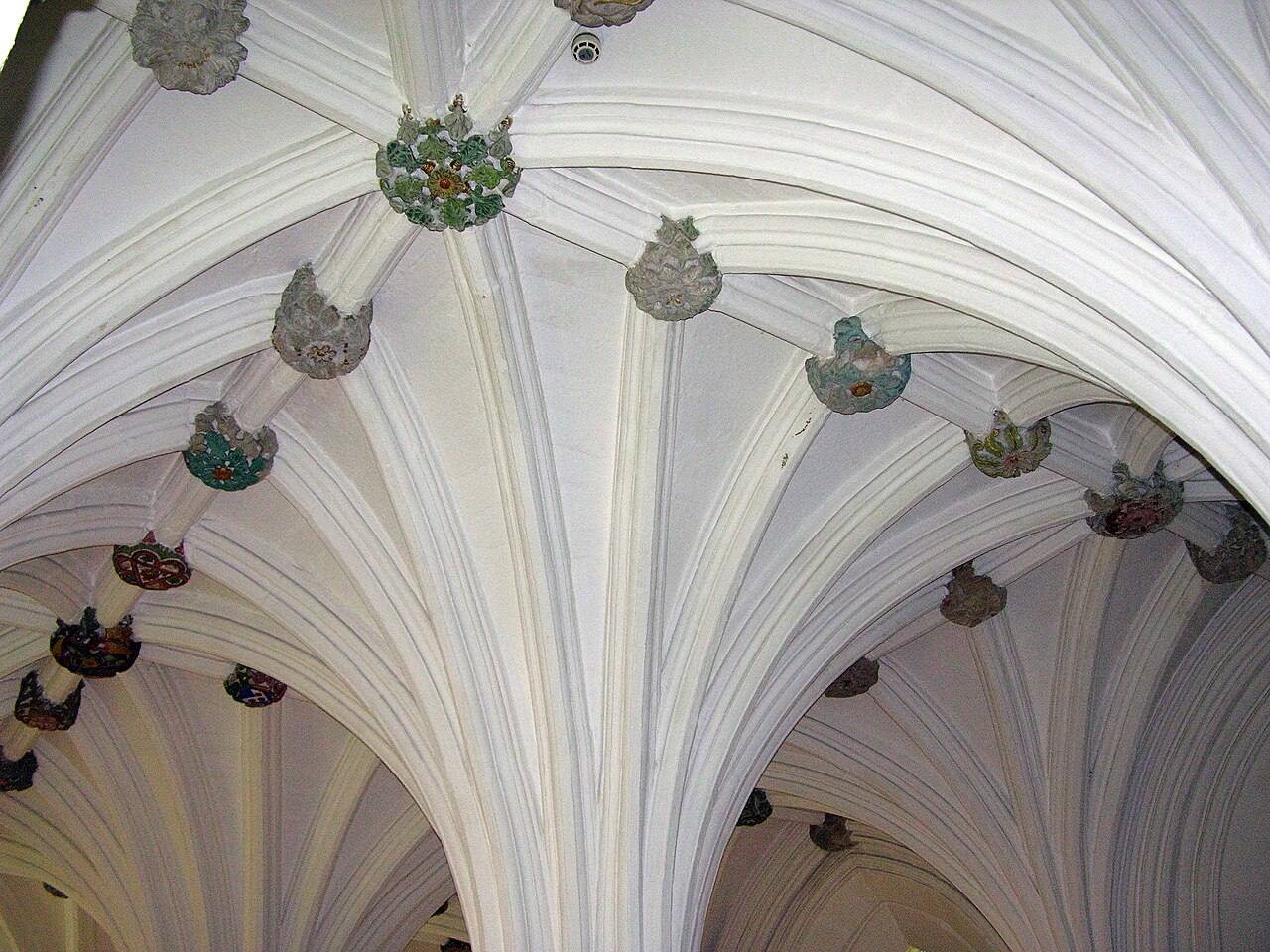
The tomb itself is simple. The vault above it is not: its ribs and carved bosses make the saint’s resting place the focus of the whole space. Also down here are the effigy of Robert Wishart, the warrior bishop who absolved Robert the Bruce after the killing of John Comyn in 1306 and took him to Scone to be crowned, its head defaced, probably at the Reformation; and St Mungo’s Well, in a corner of the Lower Church. In the eighteenth century the Barony congregation left, and the whole floor was covered in earth and used for burials, which were cleared again in the 1840s.
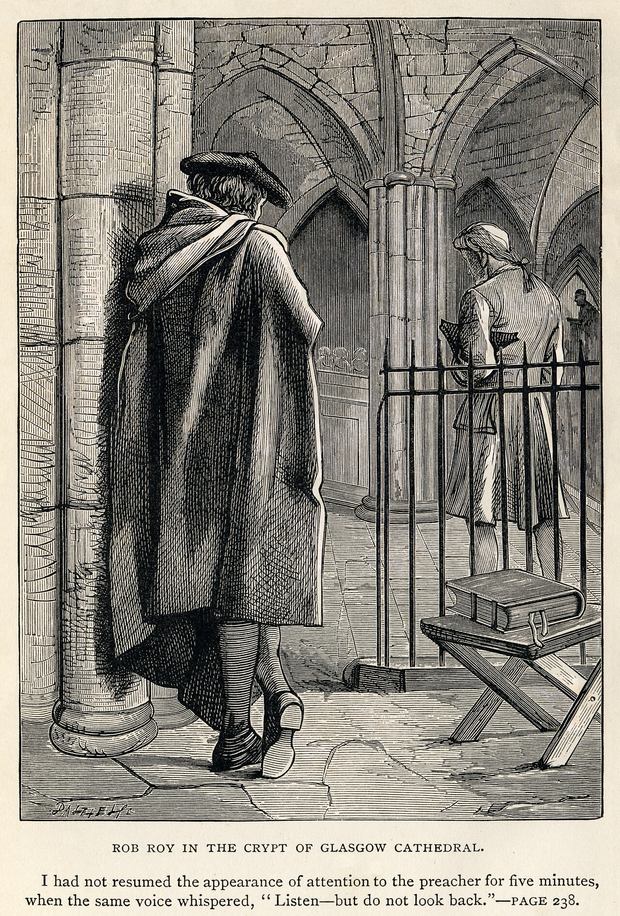
Walter Scott set one of the best scenes of Rob Roy here, in 1817: the hero, sitting through a sermon in the dim crowded crypt, is whispered a warning by a stranger behind a pillar, who turns out to be the outlaw himself. The Victorian illustrators loved it.
The Blacader Aisle
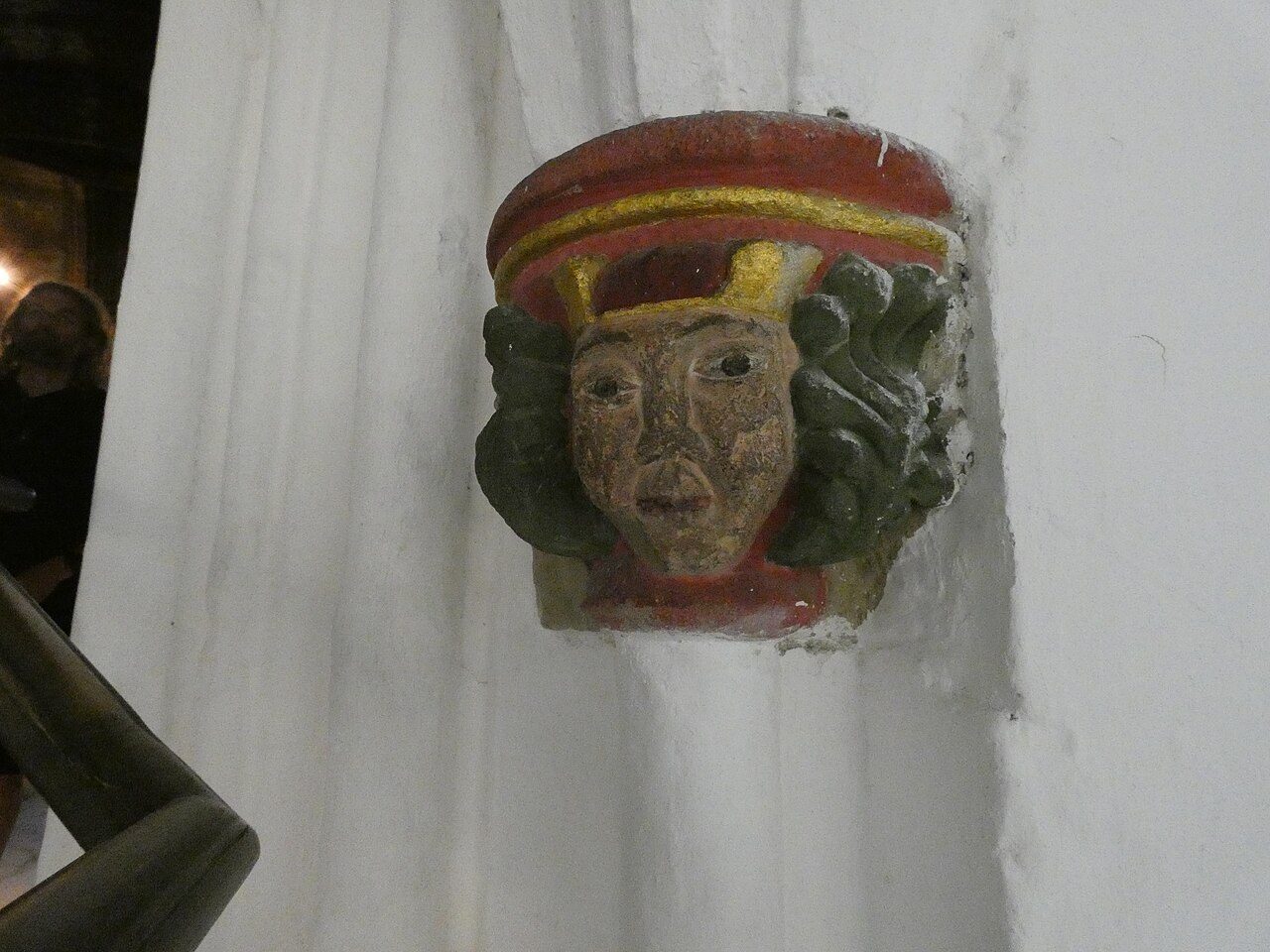
Off the south transept, down 13 very steep steps, is the Blacader Aisle, a low vaulted chapel projecting from the side of the church. It takes its name from Robert Blacader, who became the first Archbishop of Glasgow when the see was raised in 1492 and who vaulted this space. Its ribs are painted white and its bosses in colour, and it is thought to mark the burial ground where St Mungo buried Fergus. It was meant to carry a chapel above it, which was never built.
The Necropolis and the neighbours
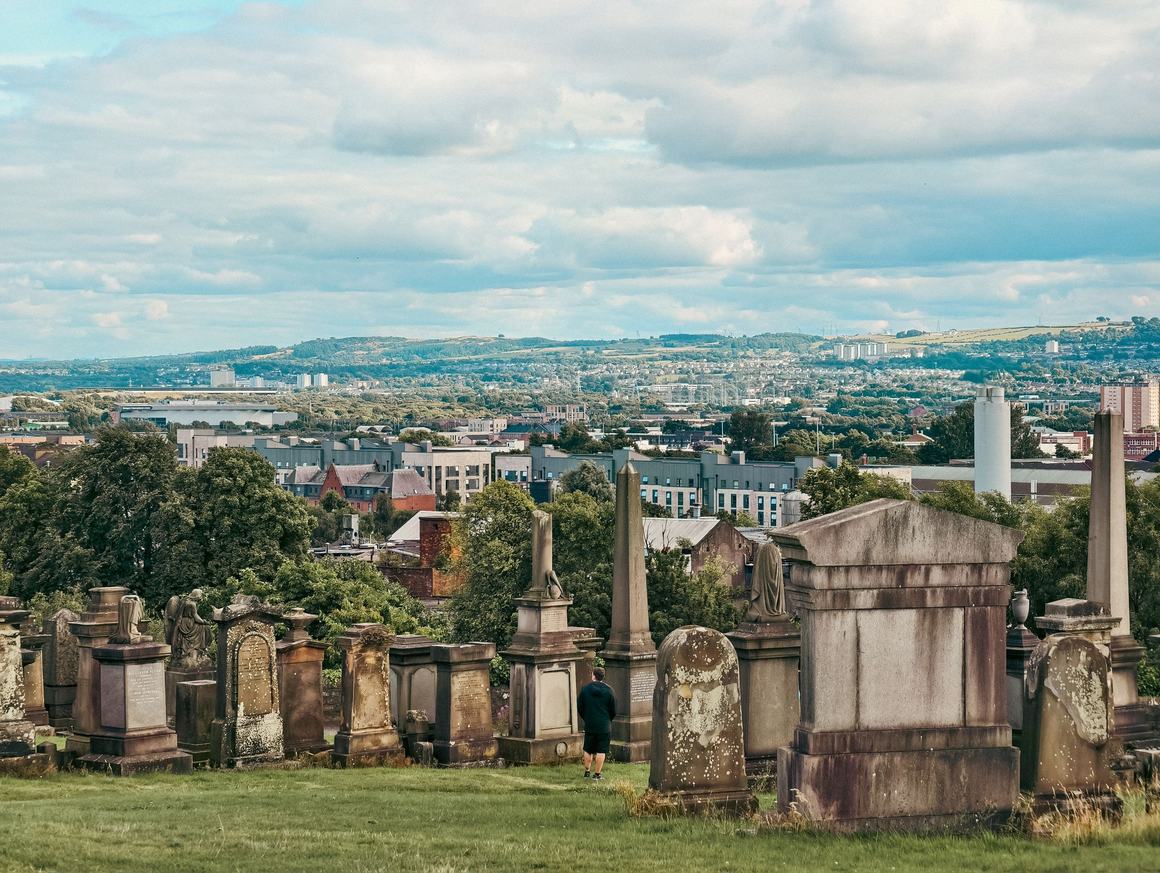
Across the Molendinar valley, now a road, is the Glasgow Necropolis, a Victorian garden cemetery laid out on the hill from 1833, with the monuments of the merchant city’s great families climbing to a column topped by John Knox. It is free, open every day, and gives the best view of the cathedral. Go up after your visit, not before: you will know what you are looking at.
On the square in front of the cathedral are two more free sights. The St Mungo Museum of Religious Life and Art has a small permanent collection about the world’s faiths and the only toilets nearby. Across Castle Street, Provand’s Lordship, built in the 1470s, is the oldest house in Glasgow and the one building of the medieval cathedral precinct still standing.
Tickets and tours
Free entry, with an optional audio guide
There is no charge to visit. Historic Environment Scotland’s website lets you book a free timed entry slot and pay for an audio guide, which accompanies you round the building with recordings of medieval music. The cathedral congregation can arrange tours for groups on request. Several city walking tours start or finish at the cathedral and the Necropolis.
Tour and hotel links go to GetYourGuide and Booking.com. This site earns nothing from them at present — they are here because they are the quickest way to check what is actually available.
Don’t miss
- The Lower Church A whole church under the choir, round St Mungo’s tomb.
- The pulpitum A medieval stone screen, a rare survivor in Scotland.
- The choir Thirteenth-century Gothic at its most assured.
- The Blacader Aisle Painted bosses under a low white vault.
- The twentieth-century glass Some of the best in Britain.
- The Necropolis For the view back across the valley.
Insider tips
Go downstairs first. The Lower Church and the Blacader Aisle are the parts people skip when they are short of time, and they are the parts you will not see anywhere else. If the choir is closed for a service, the Lower Church often is not.
Check the closures before you go. The cathedral is a working church and Historic Environment Scotland lists every early closing and every day the choir is shut. In autumn 2026, for example, it closed early on 24 September and 7 October.
Come in winter on a weekday morning. Glasgow Cathedral is never as crowded as the Edinburgh sights, but on a quiet morning the nave is yours.
Walk up from the city centre. The High Street runs uphill from the Tolbooth Steeple at Glasgow Cross to the cathedral, about twenty minutes, through the oldest part of the city.
Common questions
Is Glasgow Cathedral free to visit?
Yes. Entry is free and donations are welcome. Historic Environment Scotland, which looks after the building, lets you book a free timed entry slot online and pre-pay for an audio guide at the same time.
What are Glasgow Cathedral’s opening hours?
From 1 April to 30 September, Monday to Saturday 9.30am to 5pm and Sunday 1pm to 5pm. From 1 October to 31 March, Monday to Saturday 10am to 4pm and Sunday 1pm to 5pm. Last entry is 45 minutes before closing, and it closes from 25 December to 4 January.
Where is St Mungo’s tomb?
In the Lower Church, down the stairs from the choir. The Lower Church was built in the thirteenth century specifically to hold the tomb of St Mungo, also called St Kentigern, Glasgow’s founder and patron saint, who is thought to have been buried here in the early seventh century.
Is Glasgow Cathedral still a church?
Yes. The building belongs to the nation and is cared for by Historic Environment Scotland, but a Church of Scotland congregation worships in it, with Sunday worship at 11am and daily prayers at 1pm (1.15pm on Sundays). Services and private events can close the building or the choir at short notice.
Are there toilets at Glasgow Cathedral?
No. The nearest are in the St Mungo Museum of Religious Life and Art, a few metres away across the square, which is also free to enter.
Getting there, and where to stay
The nearest station is Glasgow Queen Street, less than half a mile away, and the nearest subway station is Buchanan Street, about a mile; several city buses stop close by. For drivers, there is a public car park about 80 metres from the west door, across the High Street. The cathedral is next to Glasgow Royal Infirmary, so do not be surprised by the ambulances.
Glasgow is under an hour from Edinburgh by train, and the cathedral is an easy half day from either city. The hotels are in the centre, around George Square, Buchanan Street and the Merchant City.
More churches in Scotland
- Rosslyn Chapel — whose plan follows the eastern end of Glasgow’s choir.
- St Giles’ Cathedral — the other great church of the Scottish Reformation.
- Iona Abbey — where Columba’s mission to the Picts began.
- Durham Cathedral — another cathedral built round a northern saint’s tomb.