
Sagrada Família
On 10 June 2026, a hundred years to the day after Antoni Gaudí died, Pope Leo XIV blessed the Tower of Jesus Christ, and the Sagrada Família became the tallest church in the world. Two things are worth knowing before you book on the strength of that. You cannot climb the tower that set the record — the tower tickets go up the older, shorter towers on either side. And the building still is not finished: its main façade, the one meant to be the front door, has not been built, and the ground it needs is still somebody’s home.
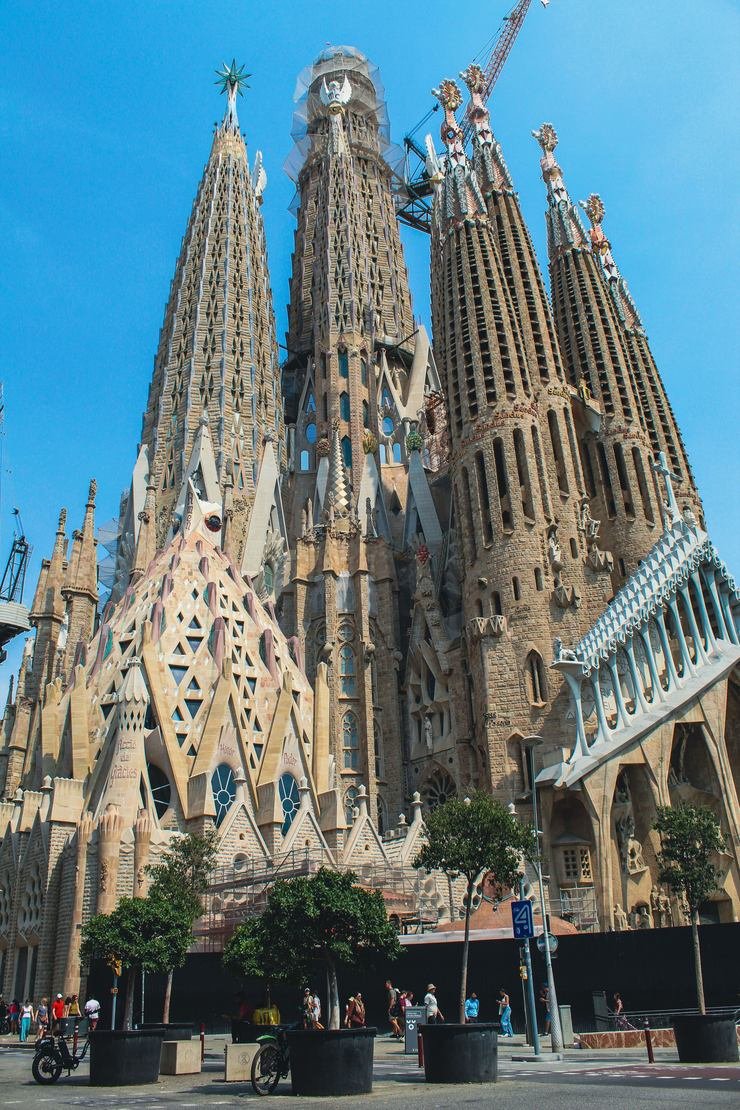
A church begun in 1882, and not done yet
Work started on 19 March 1882 to a conventional Gothic Revival design by Francisco de Paula del Villar. He resigned within a year, and in 1883 the job passed to a thirty-one-year-old architect called Antoni Gaudí, who threw most of the plan away. He worked on it for the rest of his life, and for the last years of it on almost nothing else, living on site. On 7 June 1926 he was knocked down by a tram on the Gran Via; he was so poorly dressed that he was taken at first for a vagrant, and he died three days later.
Gaudí had known he would not finish. What he left was a method rather than a full set of drawings — plaster models, geometric rules, and one façade built as a demonstration — and much of that was smashed when anarchists broke into the workshop in 1936. The reconstruction of his intentions from the fragments has been going on ever since, which is the source of most of the arguments about whether what stands now is really his.
It has always been paid for by the people who come to see it. The Sagrada Família is an expiatory temple, built from donations and, now, entirely from ticket sales. Pope Benedict XVI consecrated the interior as a basilica on 7 November 2010. The Tower of the Virgin Mary was finished in 2021, and the central Tower of Jesus Christ, at 172.5 metres, in 2026.
The visitor’s cheat sheet
| Where | Carrer de Mallorca 401, Barcelona. The visitor entrance is on the Nativity side, Carrer de la Marina. Metro Sagrada Família, lines L2 and L5 |
|---|---|
| Opening hours | November–February: Monday–Saturday 9am–6pm, Sunday 10.30am–6pm. March and October: Monday–Friday 9am–7pm, Saturday 9am–6pm, Sunday 10.30am–7pm. April–September: Monday–Friday 9am–8pm, Saturday 9am–6pm, Sunday 10.30am–8pm. Saturdays close at 6pm all year. 9–10am is a designated quiet hour |
| Admission | €26 with the audio guide app (seniors €21, under-30s and students €24). With a tower €36; with a guided tour €30; with both €40. Under-11s and visitors with a disability free. Online only — there is no ticket office |
| The towers | Nativity or Passion, chosen when you book. Lift up, stairs down. No under-6s; under-16s with an adult; not accessible for reduced mobility; no refund if the towers close for weather |
| How long | About an hour and a half with a tower; allow longer for the museum |
| Best time | Late afternoon for the west windows, which is when the colour inside is strongest. The first hour is the quietest, but it is a silent hour and you need earphones |
| Bring | Earphones and a charged phone — the audio guide is an app. No large bags in the towers |
| Dress | It is a church, and the rules ask for appropriate dress: shoulders covered, no beachwear |
Hours and admission checked against the official site in September 2026. They change; the official site is always the last word.
You cannot go up the Tower of Jesus Christ. The towers ticket buys a lift to the top of a tower on the Nativity façade or on the Passion façade, chosen when you book, and you walk down. There is no ticket office on site: everything is sold online, for a timed slot. Before you travel, check the basilica’s own site for notices — access has been disrupted at short notice in 2026.
What to see, in the order you meet it
The Nativity façade
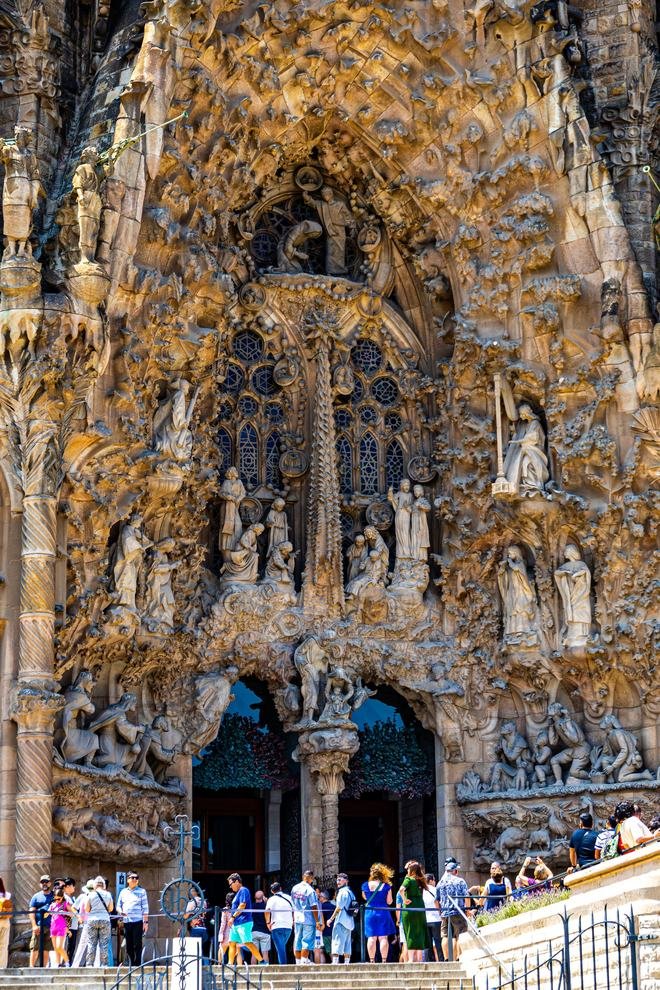
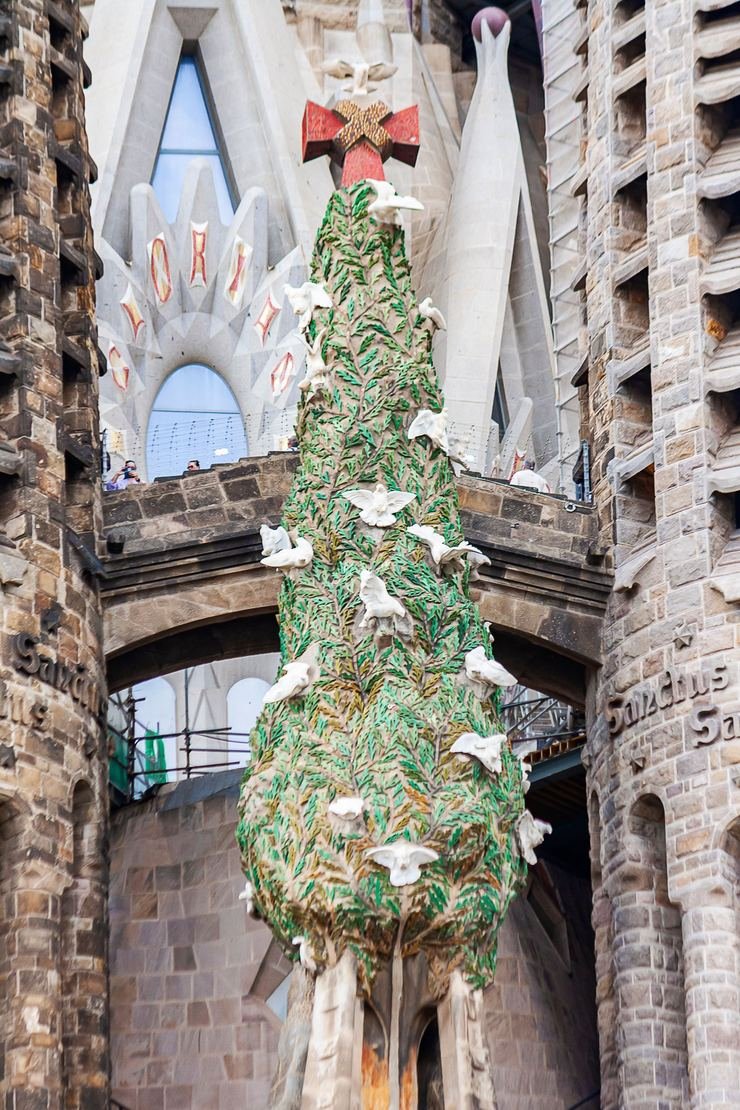
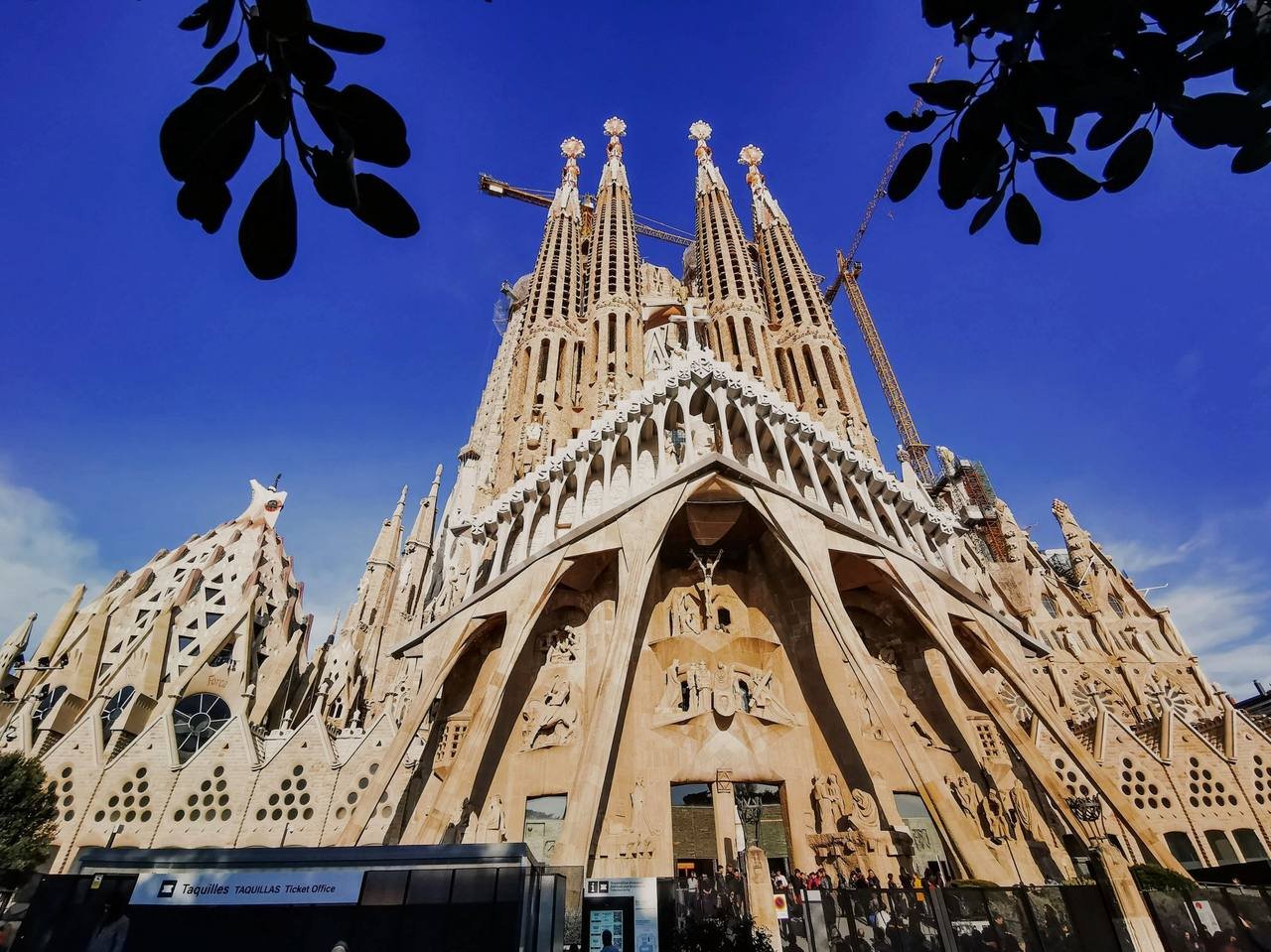
You go in on the east side, under the one part of the exterior Gaudí saw substantially complete. It is about the birth and childhood of Christ, and it is crowded with life: a tree of cypress at the top full of white doves, turtles bearing the columns, the stars at the Annunciation, the carpenter’s shop. The stone looks as if it has melted and re-set. Of its four towers only one, St Barnabas, was finished in his lifetime, in 1925. Stand back across the street in the little park and take it in before you queue, because once you are under it you can only see pieces.
The nave and the forest of columns
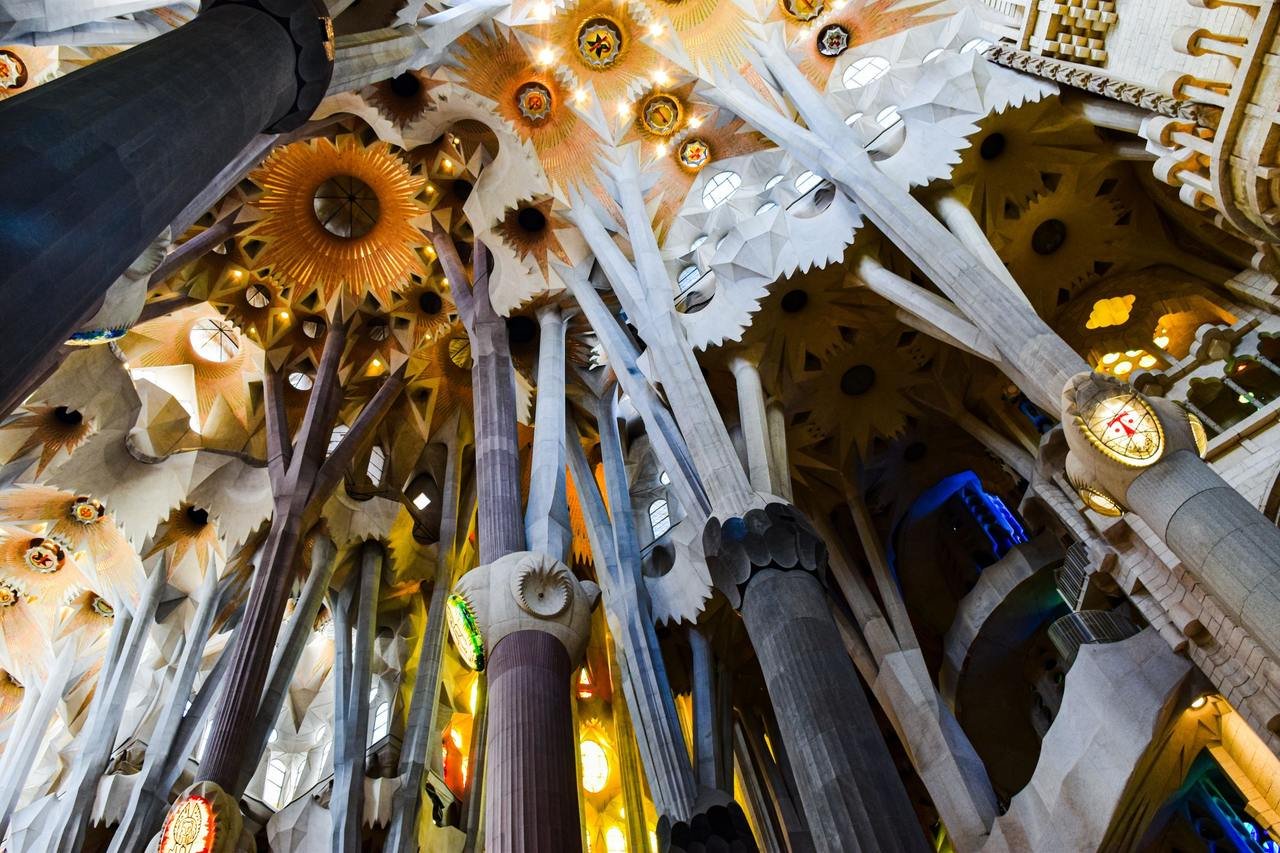
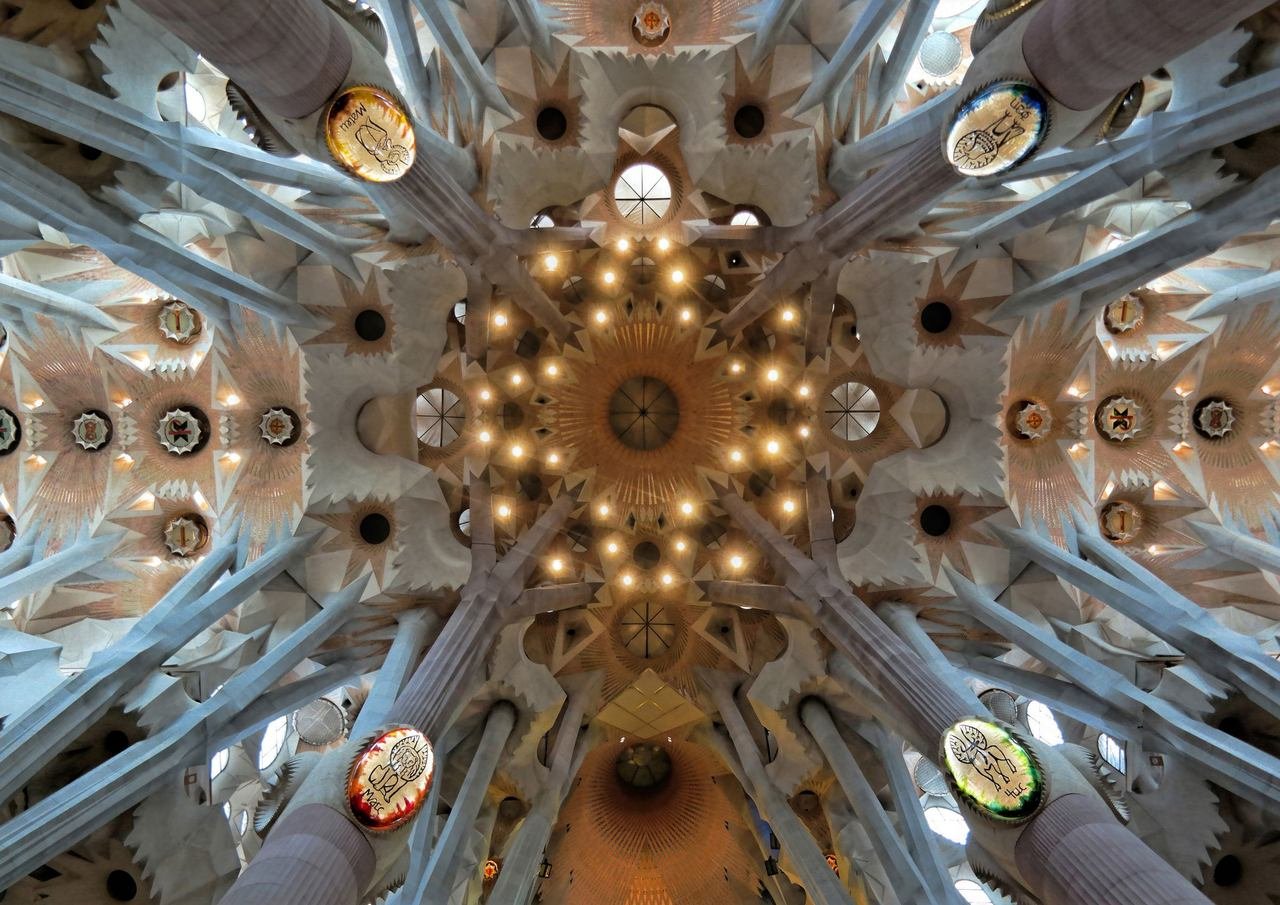
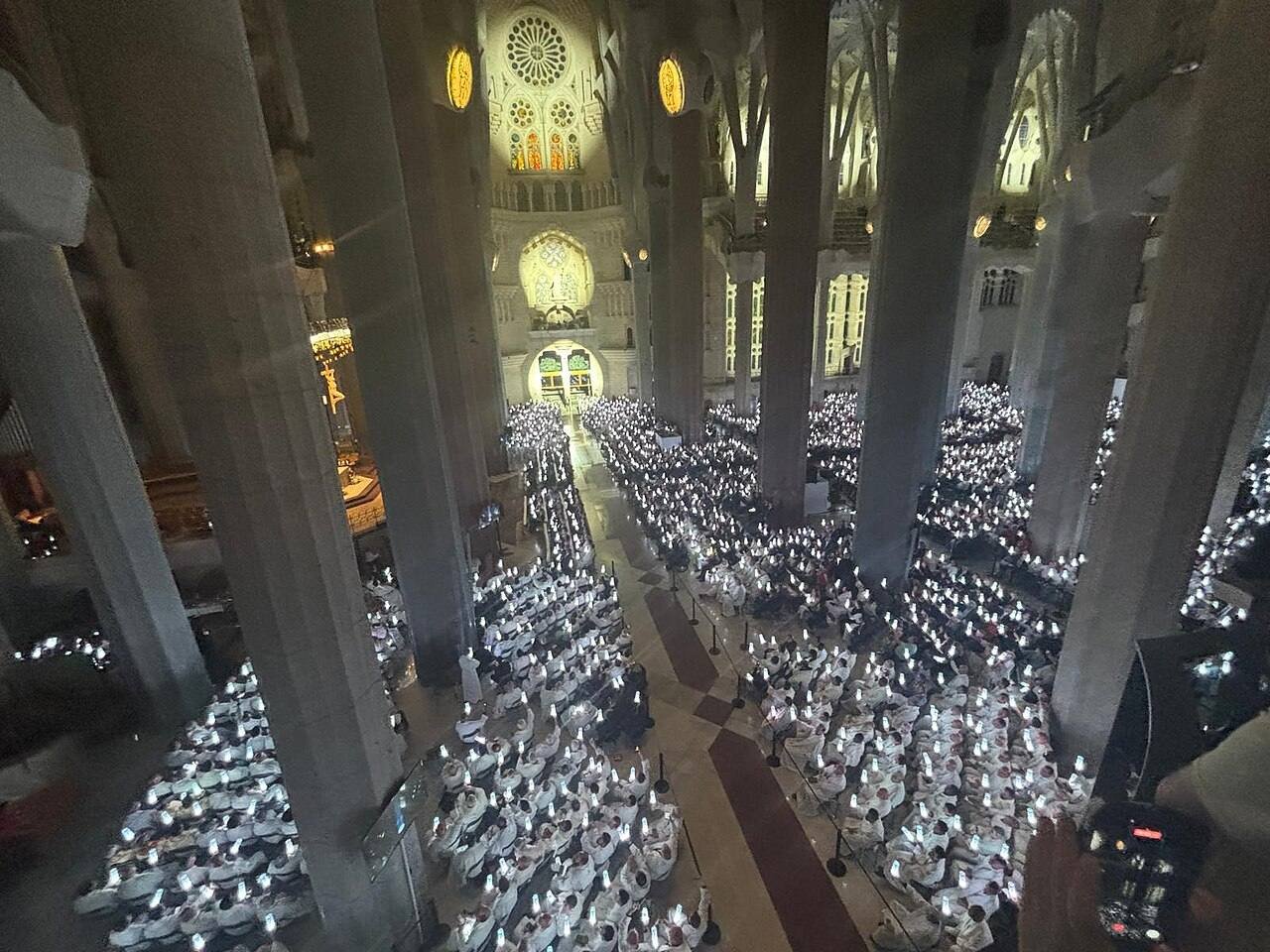
Inside, the building stops looking like anything else. Gaudí wanted a forest, and the columns are trees: they rise, lean slightly inwards, and split into branches that carry the roof. Because the columns lean along the lines of force, the building needs none of the flying buttresses that hold up a Gothic cathedral from outside. The columns are of different stones and different thicknesses depending on the load they carry — granite, basalt, porphyry — and the knots where they branch are elliptical, which is where the medallions sit.
The vaults overhead
Now look straight up. The ceiling is built from hyperboloids and hyperbolic paraboloids, curved surfaces made entirely from straight lines, which let the vault be pierced with openings and lit from above. It reads as a canopy of leaves with the sky coming through. The central vault over the crossing rises to 60 metres and the one over the apse to 75.
The light
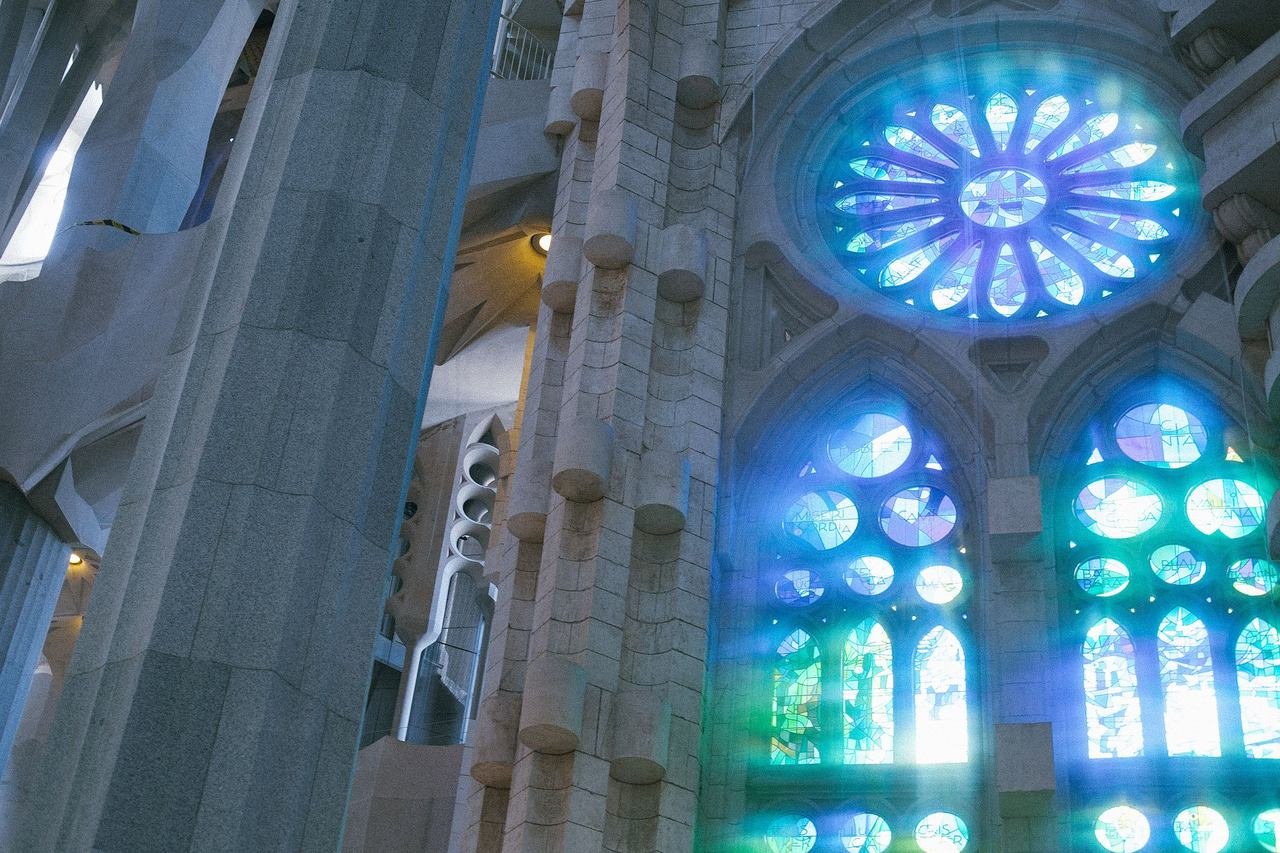
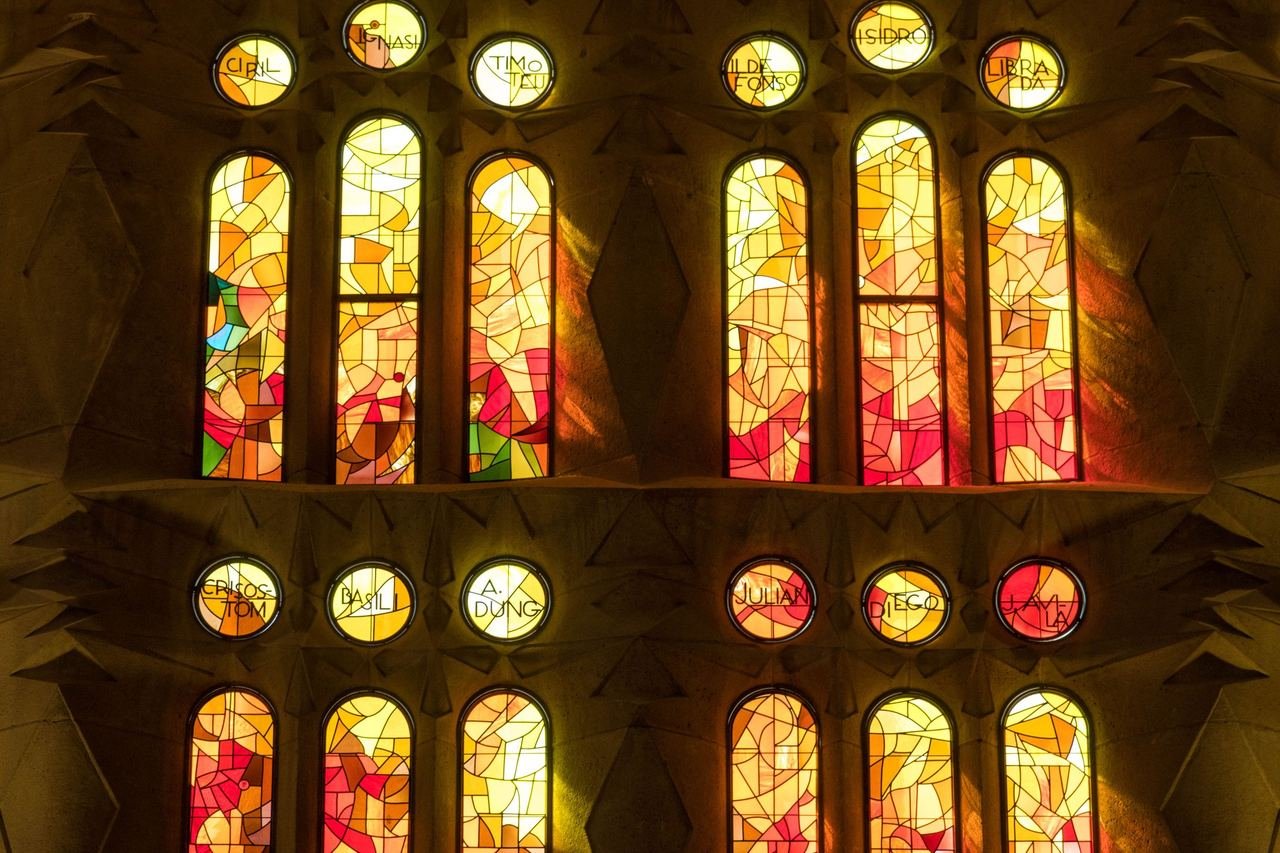
The windows are graded by side. Those on the east, towards the Nativity and the morning, run through blues and greens; those on the west, towards the Passion and the evening, through reds, oranges and yellows. The glass is by Joan Vila-Grau, and the lower windows are brighter and more coloured than the upper ones, which are kept clearer to light the vault. On a sunny afternoon the west side throws pools of red and gold across the floor and up the columns, and that is the picture everyone came for. If you have a choice of slot, pick one late in the day.
The altar and the baldachin
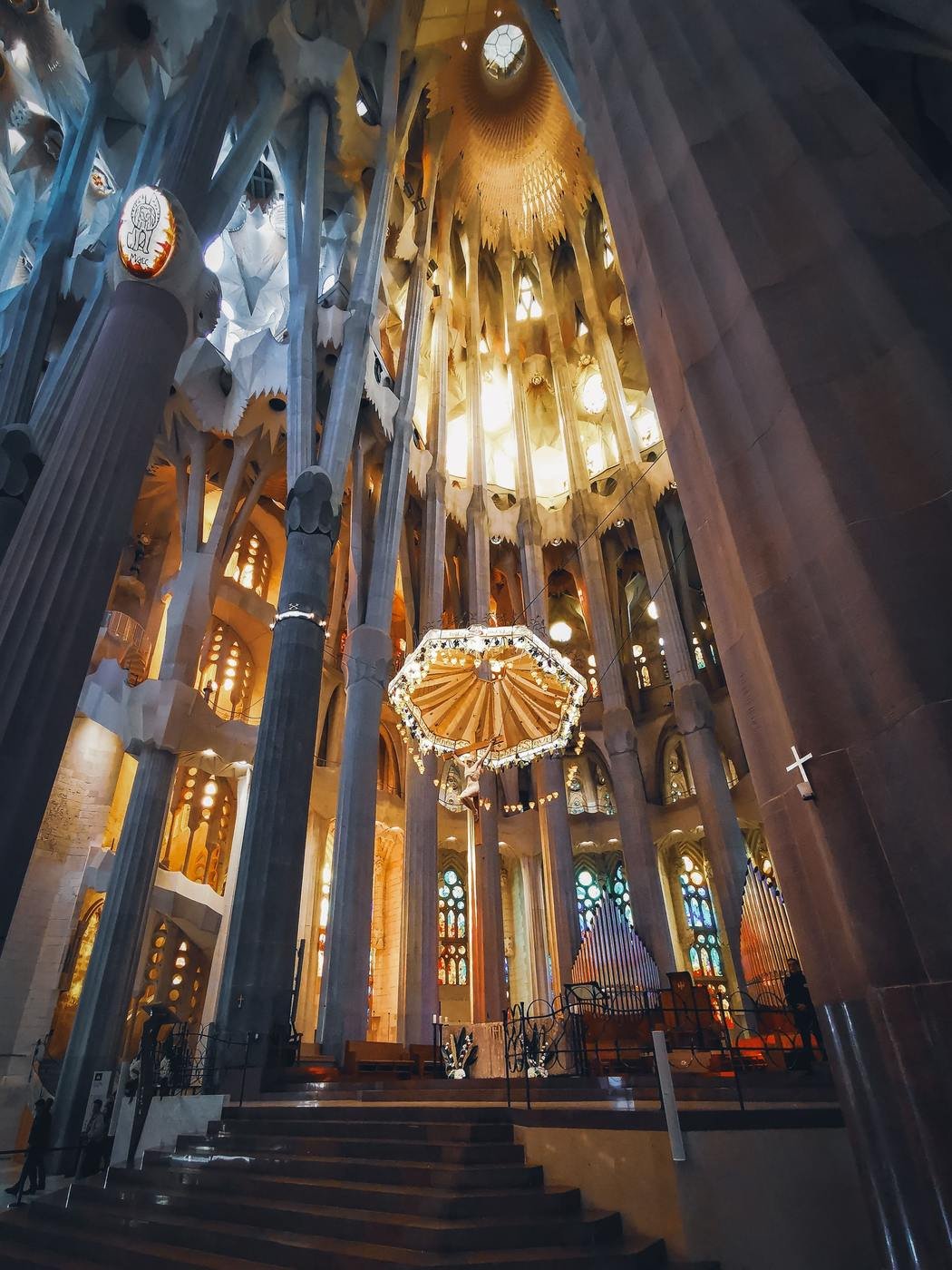
The altar sits under a baldachin, a suspended canopy hung with lamps and vine leaves, with a crucifix beneath it. Above the apse is the Tower of the Virgin Mary; above the crossing, the new Tower of Jesus Christ. It is a working church, and the basilica’s own calendar of Masses lists when services are held and how to attend them.
The Passion façade
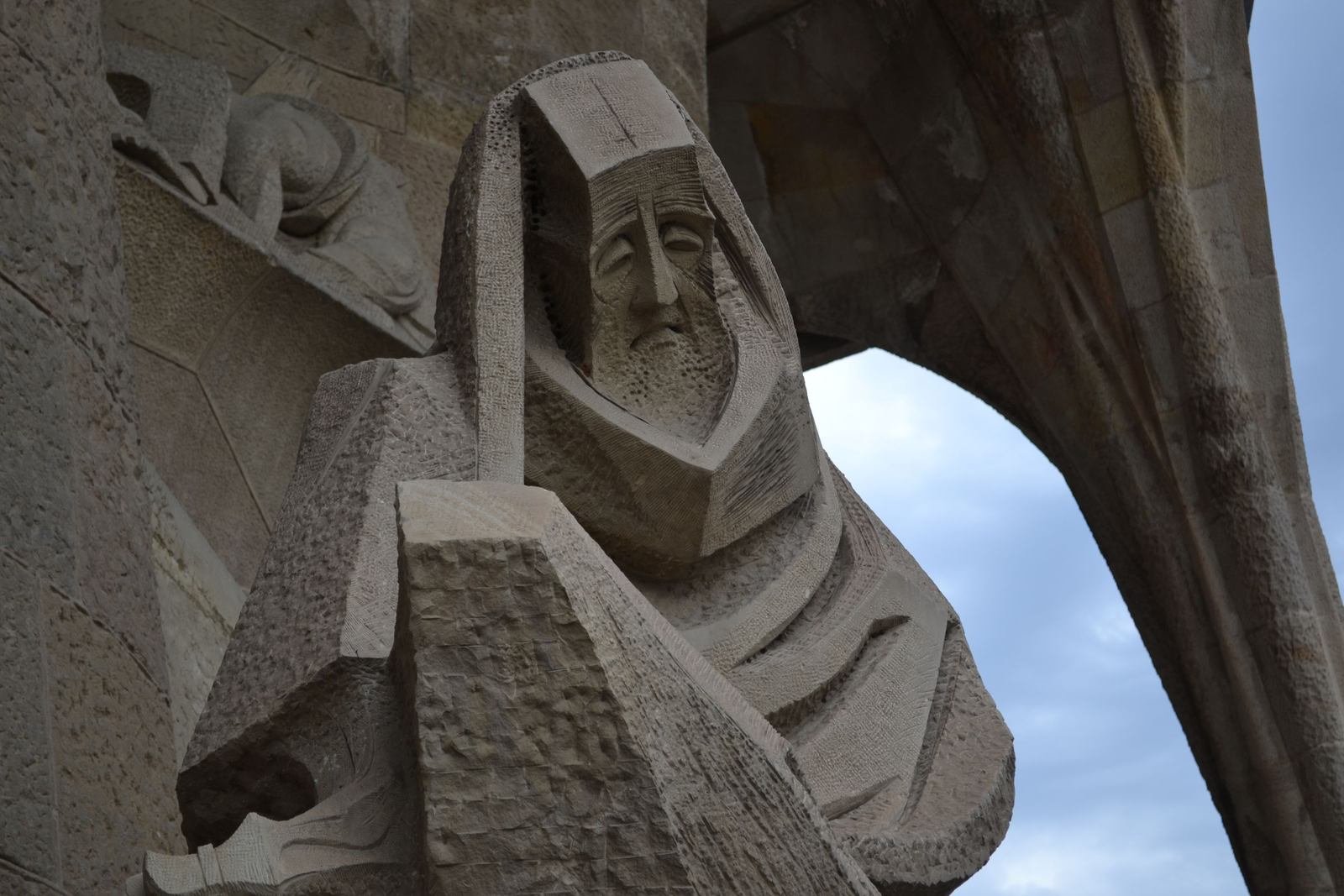
Leave by the west door and the mood changes completely. The Passion façade shows the last days of Christ, from the Last Supper to the burial, and Gaudí wanted it to be hard: bone-like columns and stripped stone, the opposite of the Nativity. The towers were finished in 1976. The sculpture was given to Josep Maria Subirachs, who began work in 1987 and cut his figures in angular planes, with no attempt to imitate Gaudí. It was controversial then and still is. Look for the magic square beside the kiss of Judas, whose rows add to 33, the age of Christ at his death.
The towers
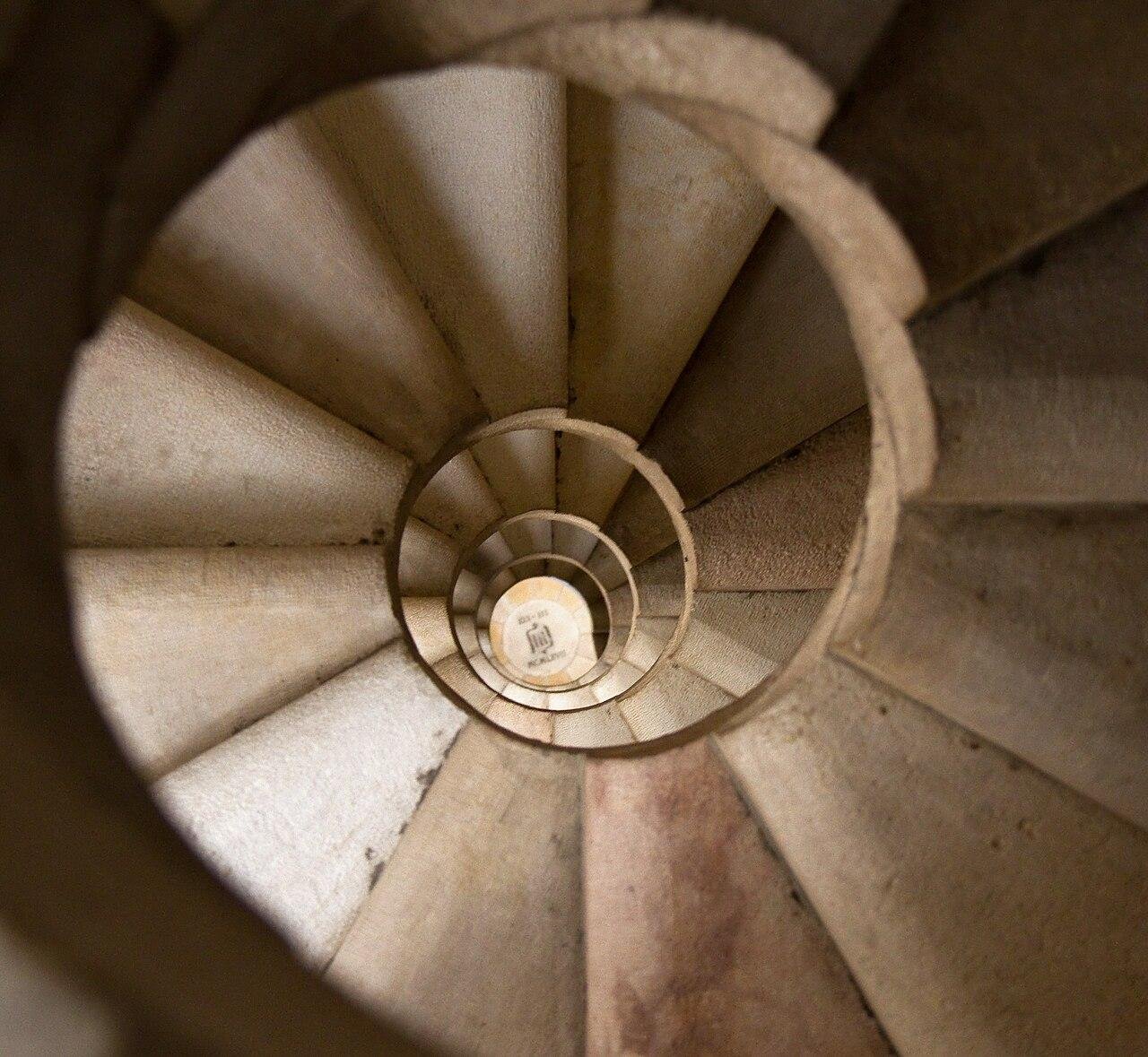
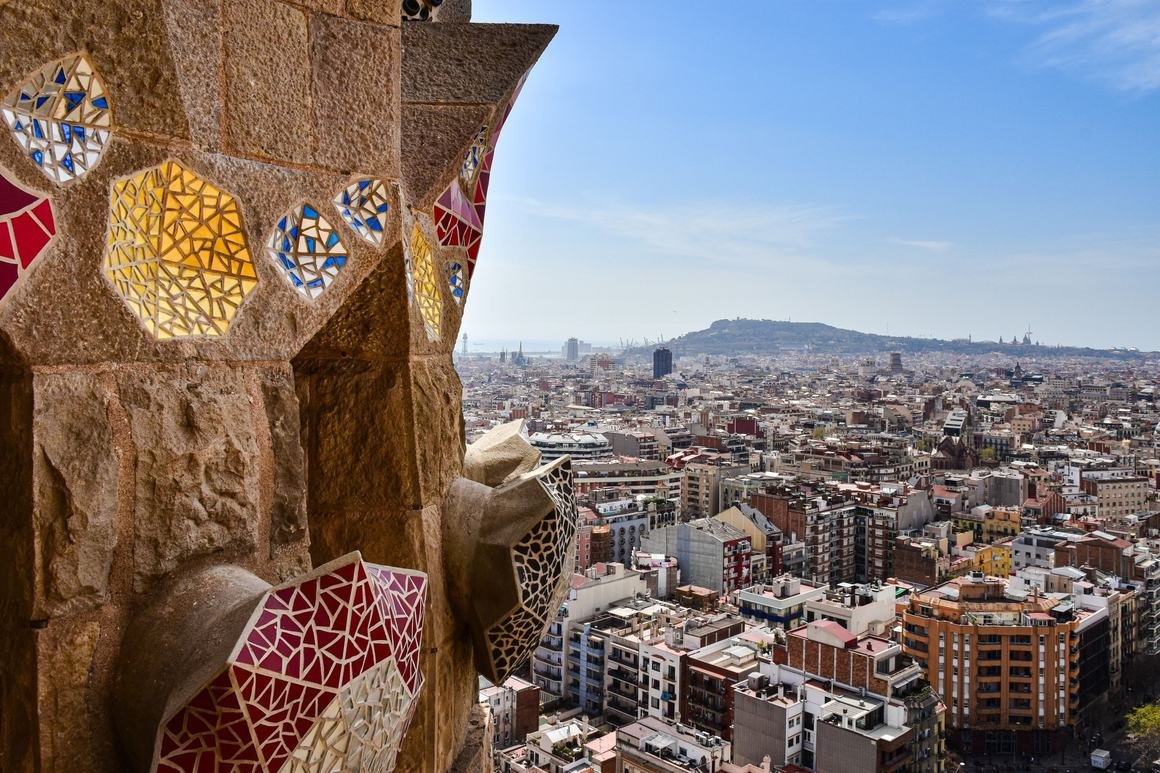
If you have a towers ticket, this is where your time slot matters: go up by lift, come down on foot, and the staircase is a tight spiral with a low wall and a long drop in the middle. From the Nativity side you look east over the city to the sea; from the Passion side, over the centre towards Montjuïc. Children under six cannot go up at all, bags have to go in a locker first, and if the towers close for wind or rain on the day, there is no refund for that part of the ticket.
The museum, the crypt and the hanging model
The museum runs underneath the building, and it is where the design finally makes sense. Its best exhibit is a reconstruction of one of Gaudí’s hanging models: strings weighted with small bags of shot, suspended upside down, so that the curves they form under gravity, turned the right way up, become arches that stand in pure compression. He developed the method for the church at the Colònia Güell, and it underlies the shape of everything here. There are also the plaster workshops, still in use, and a window looking down into the crypt, where Gaudí is buried.
The Schools building
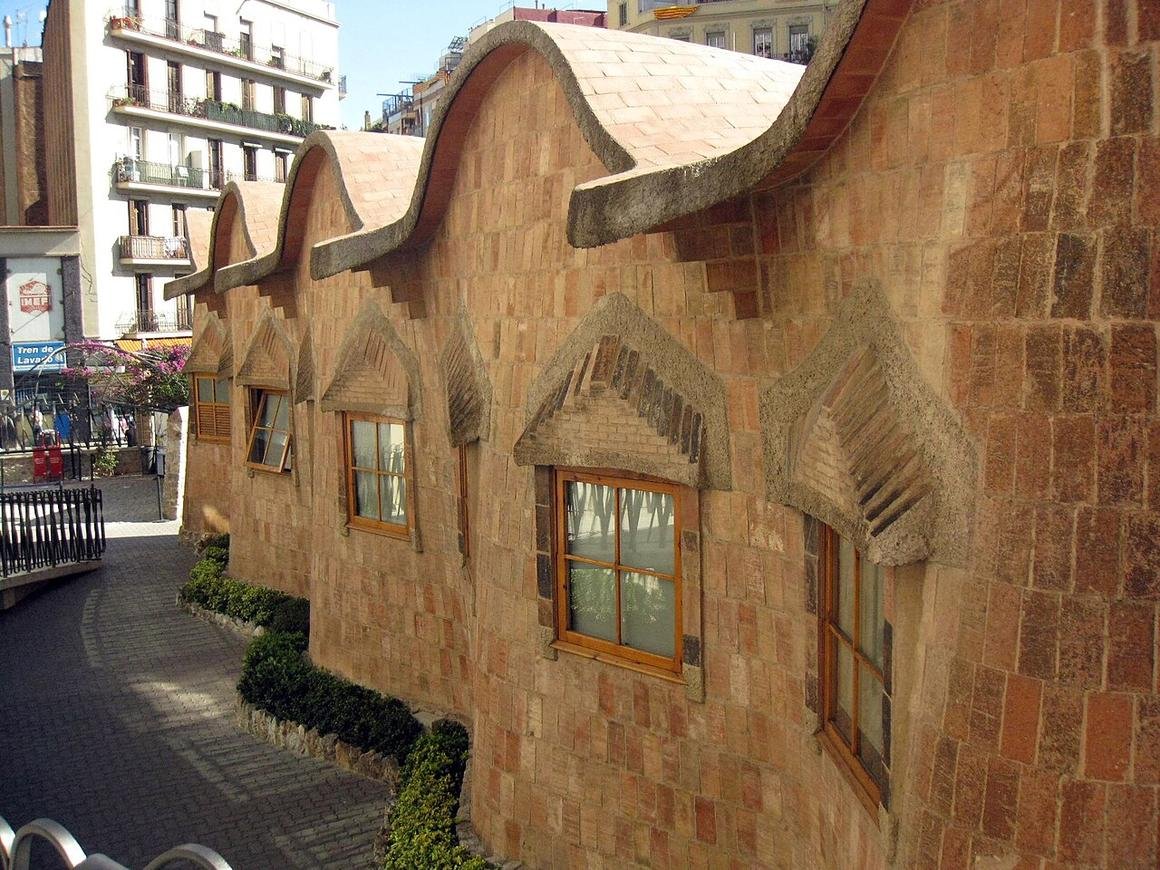
In the south-west corner stands a small brick building with a roof that ripples like a sheet in the wind. Gaudí built it in 1909 as a school for the children of the construction workers and of the neighbourhood. It was cheap and quick to build, and it is one of his cleverest designs: the wavy walls and roof are self-supporting because of the curve. Le Corbusier sketched it on a visit in 1928. It now holds an exhibition, and it sits on the visitor route.
The Tower of Jesus Christ
The central tower is what changed in 2026. It is 172.5 metres, topped with a four-armed cross, and it overtook Ulm Minster, 161.5 metres, which had held the record for more than a century. Gaudí set its height himself: slightly lower than Montjuïc, because he held that no work of man should rise above the work of God. You see it from all over Barcelona, and best from outside — from the park on Plaça de Gaudí, across the pond in front of the Nativity.
The Glory façade, and the argument over it
Walk round to Carrer de Mallorca and you are looking at the future main entrance: the Glory façade, the largest of the three, with its own four towers, under construction since 2002. Gaudí’s plan brings a monumental stairway out from it across the street. The problem is that the blocks opposite are full of flats, most of them built long after Gaudí drew the plan. Finishing the stairway means demolishing homes, and how many, and on what terms, is still being negotiated between the basilica, the city council and the residents, whose agreement in principle was reported in September 2026 to have stalled. The basilica itself speaks of finishing the Glory façade within about a decade, and it is honest to call that a hope rather than a date. This is a building still being made, in a city with a housing crisis, and that is part of what you are seeing.
Tickets and tours
Book the slot, then choose the tower
Everything is online and timed, and tickets open roughly two months ahead. The basic ticket is €26 with the audio guide app. Add a tower for €36 in total, choosing Nativity for the sea or Passion for the city. Turn up on time: the basilica does not let latecomers in on the same ticket. A resold or third-party ticket is only as good as the official booking behind it.
Tour and hotel links go to GetYourGuide and Booking.com. This site earns nothing from them at present — they are here because they are the quickest way to check what is actually available.
Don’t miss
- The west windows late in the day Red and gold light across the floor and up the columns.
- The hanging model in the museum Five minutes with it and the whole building makes sense.
- The magic square On the Passion façade beside Judas: every row adds up to 33.
- The tortoises At the foot of the Nativity columns, one from the land and one from the sea.
- The Schools building Gaudí’s cheapest building here and one of his best.
- The view from the pond Across Plaça de Gaudí, the only place you see the whole Nativity side and the new tower together.
- Gaudí’s tomb Seen from the museum, down in the crypt he built first.
Insider tips
Saturdays close at 6pm all year. In summer every other day runs to 8pm, which is why people book a late Saturday slot and find it does not exist. Check the day, not just the month.
Bring earphones. The audio guide is an app on your own phone, and from 9 to 10am the basilica is a quiet hour: earphones are compulsory and no one speaks aloud.
Pick the tower for the view you want, not at random. Nativity looks east over the Eixample to the sea; Passion looks across the centre towards Montjuïc and gets the afternoon light.
Dress for a church. The rules of entry ask for appropriate clothing, which in practice means shoulders covered and nothing that looks like the beach.
Go outside afterwards and walk right round the building. The three façades are three different buildings in mood, and the unfinished south side, with the flats facing it, is the part guidebooks leave out.
Common questions
Is the Sagrada Família the tallest church in the world?
Yes, since 2026. The Tower of Jesus Christ was blessed by Pope Leo XIV on 10 June 2026, the centenary of Gaudí’s death, and at 172.5 metres it took the record from Ulm Minster in Germany. Gaudí designed it to stop just short of Montjuïc, the hill above the city, on the principle that nothing made by people should be higher than something made by God.
Can you go up the Tower of Jesus Christ?
No. The towers ticket takes you up one of the towers on either the Nativity façade or the Passion façade, which you choose when you book. You go up by lift and walk down a spiral staircase. The new central tower is not part of the visit.
Is the Sagrada Família finished?
No. The centre tower is finished, but the Glory façade on Carrer de Mallorca, the main entrance, is still under construction, and the great stairway planned in front of it cannot be built without demolishing housing across the street. That is still being negotiated with the city and the residents. The basilica itself talks about another decade for the Glory façade.
How much does it cost to visit the Sagrada Família?
The basic ticket is €26 and includes the audio guide app. With a tower it is €36; with a guided tour €30; with both €40. There are reduced prices for seniors, under-30s and students, and under-11s go free. Tickets are sold online only.
Can you buy Sagrada Família tickets at the door?
No. The basilica sells tickets online only, for a timed slot, and they go on sale roughly two months ahead. In summer the popular times, and the tower tickets in particular, sell out well in advance.
Where is Gaudí buried?
In the crypt of the Sagrada Família, underneath the apse. He died in June 1926, three days after being hit by a tram, and was buried in the building he had spent more than forty years on. The crypt is a working parish church; the museum gives you a view into it.
Where to stay and eat nearby
The streets immediately around the basilica are full of places aimed at the queue. Walk ten minutes into the Eixample, or up Avinguda de Gaudí towards the Hospital de Sant Pau, Domènech i Montaner’s modernista hospital complex, and the food gets better and the prices lower. Most visitors stay in the Eixample or the Gothic Quarter; the metro gets you here from either in a few minutes.
More churches in Spain
- Seville Cathedral — the other extreme: the largest Gothic cathedral in the world, finished in the 1500s.
- Mosque-Cathedral of Córdoba — a building that has been two religions’ holiest place in turn.
- Santiago de Compostela Cathedral — the end of the Camino, and free to enter.
- Batalha Monastery — Portugal’s own great unfinished church, whose roofless chapels were abandoned for good.