
Palma Cathedral (La Seu)
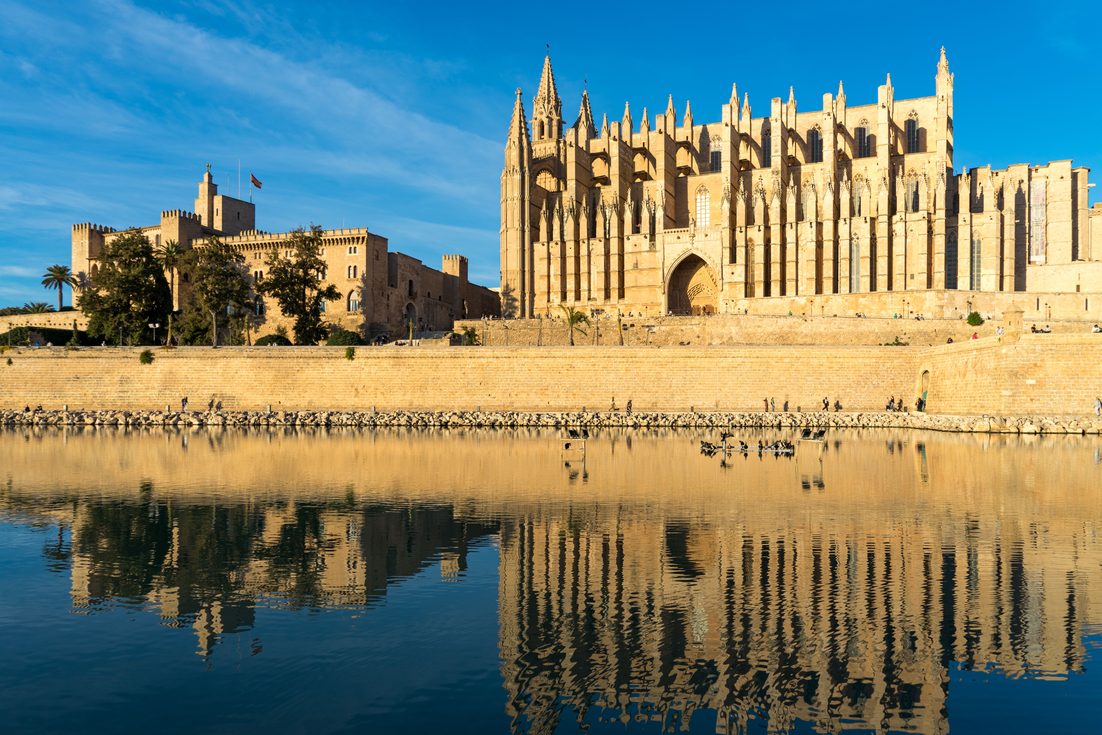
Palma’s cathedral, La Seu, stands on the old sea walls of Mallorca’s capital, a huge golden Gothic church built on the site of the city’s great mosque. Inside, the nave is one of the tallest in the Gothic world, lit by an immense rose window, and two artists of the modern age have left their mark: Antoni Gaudí, who rearranged the interior a century ago, and Miquel Barceló, whose ceramic chapel opened in 2007. Tickets include the museum; on Sundays it opens only for Mass.
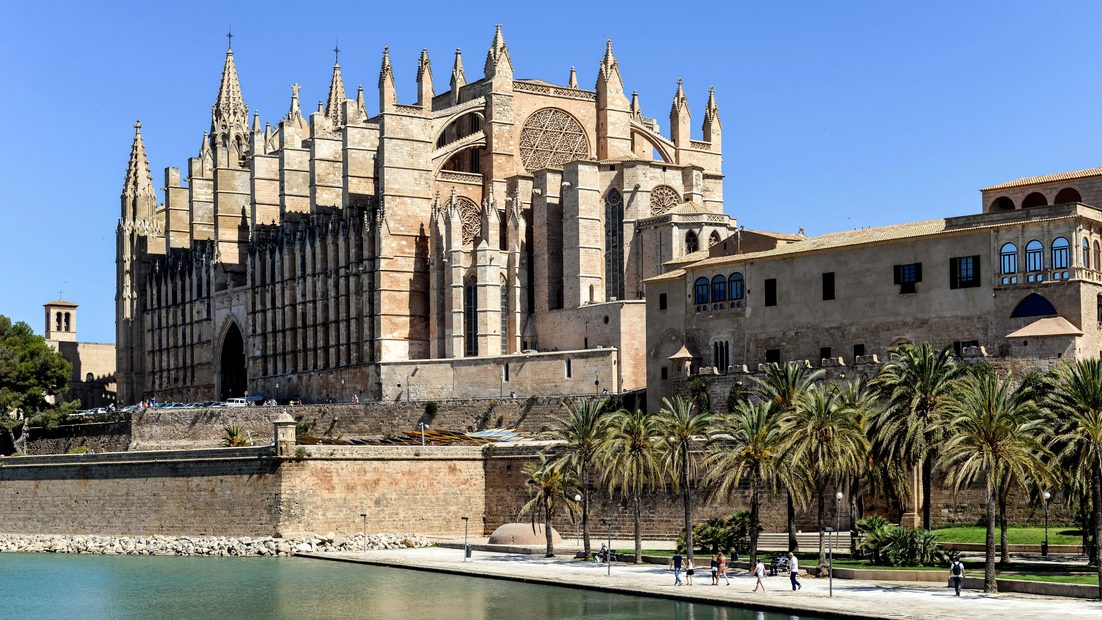
A cathedral on the sea
When King Jaume I of Aragon took Mallorca from the Moors in 1229, the great mosque of Madina Mayurqa was consecrated to the Virgin. The present cathedral was begun under King Jaume II around 1300, starting with the royal chapel at the east end, and building went on for three centuries: the last vaults were closed in 1587, and the main portal was finished in 1601. The bell tower was completed in 1498.
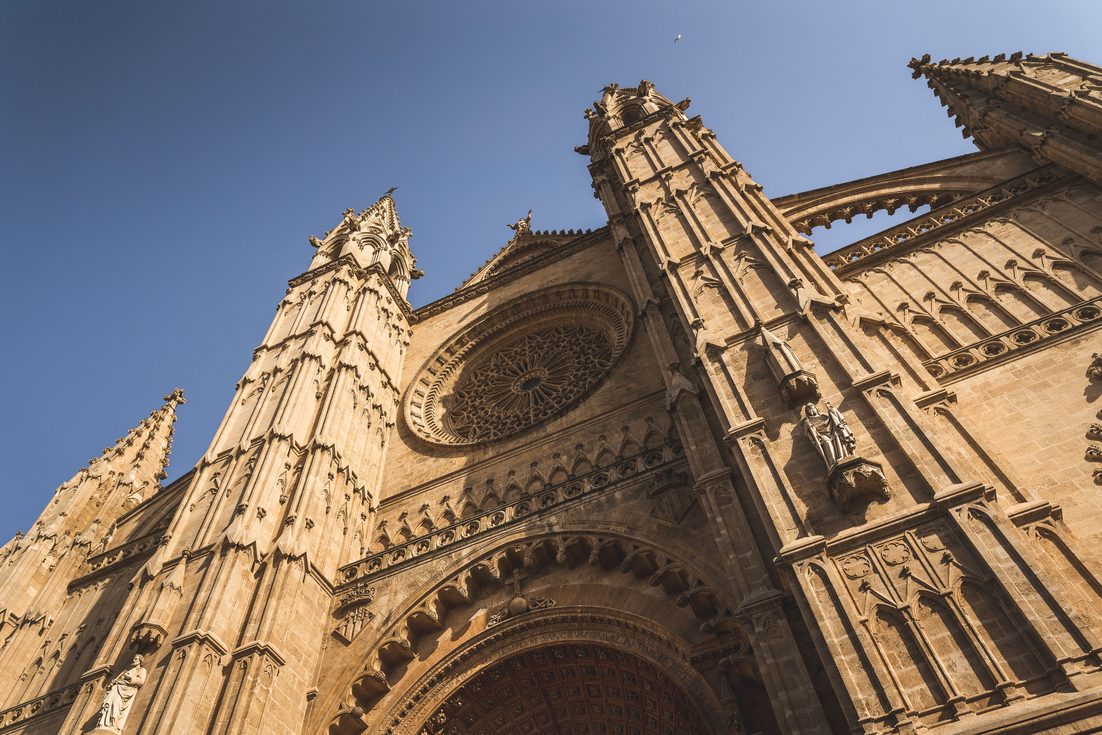
An earthquake in 1851 damaged the west front, which was rebuilt in neo-Gothic style. Bishop Campins invited Antoni Gaudí to bring the interior back to life, and between 1904 and 1914 moved the choir, opened up windows and hung his canopy over the altar. In 2007 Miquel Barceló completed his ceramic chapel of the Blessed Sacrament, unveiled in the presence of the King and Queen of Spain.
The visitor’s cheat sheet
| Where | Plaça de l’Almoina, 07001 Palma; tickets at the museum entrance on Plaça de la Seu |
|---|---|
| Opening hours | April–October: Monday–Friday 10am–5.15pm, Saturday 10am–2.15pm. November–March: Monday–Saturday 10am–3.15pm. Closed to visitors on Sundays and some holidays; short hours on others |
| Admission | €11 with the museum; over-65s €9; students and some others €8; with audio guide €16; terraces with the museum €25. Free at the ticket office for Balearic residents and children of nine and under |
| Terraces | April–November, timed one-hour visits, over-9s only; book ahead |
| Dress code | No bare shoulders, short shorts or skirts, swimwear or see-through clothing |
| Getting there | On the sea front of the old city, above the Parc de la Mar; airport bus A1 to the centre |
| How long | An hour, two with the terraces |
Hours and admission checked against the official site in October 2026. They change; the official site is always the last word.
Not on Sundays, and dress for the door. On Sundays and some holidays the cathedral is open only for Mass, and on Saturdays it closes in the early afternoon. Tickets are sold at the museum entrance on Plaça de la Seu; online tickets get a faster entrance at the Portal del Mirador. Shoulders must be covered, and short shorts, swimwear and beachwear are turned away.
What to see, in the order you meet it
The Museum of Sacred Art
The visit starts in the museum, in the chapter houses beside the cathedral, with Gothic altarpieces, silver and the cathedral’s treasures, before you enter the church.
The nave and the rose windows
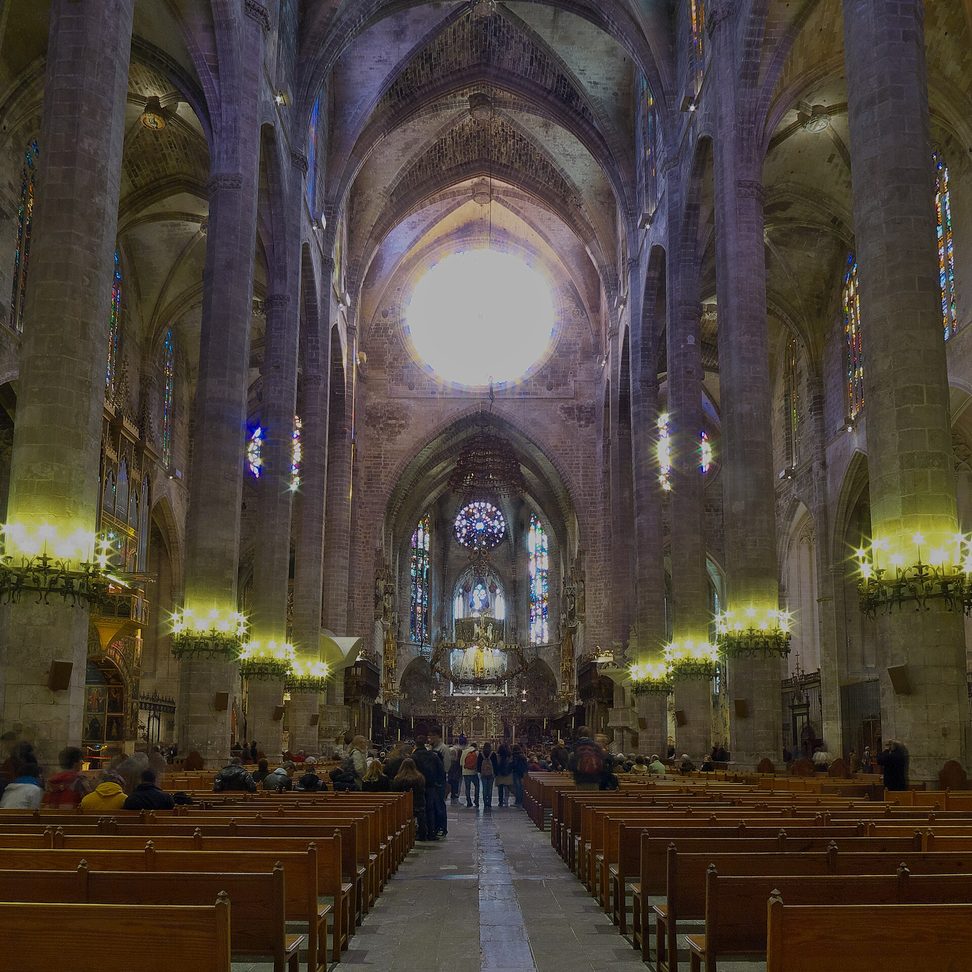
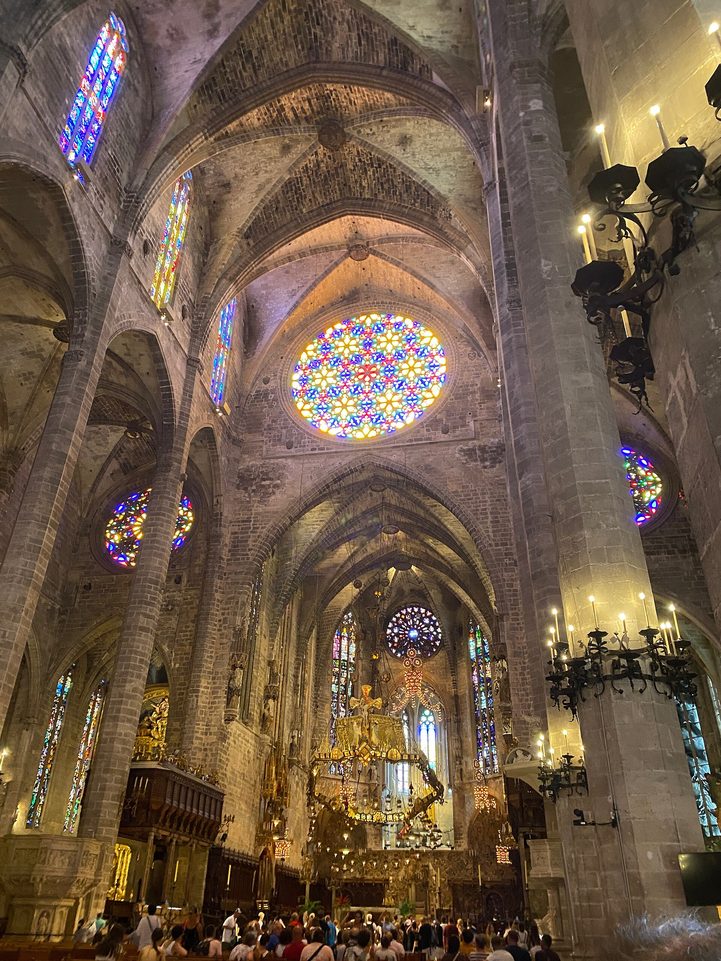
The nave rises some 44 metres, on slender octagonal pillars, and is one of the tallest Gothic naves anywhere. At the east end, above the royal chapel, is the great rose window, one of the largest in Gothic architecture, with more than a thousand pieces of coloured glass. On sunny mornings it throws pools of colour across the nave.
The royal chapel and Gaudí’s canopy
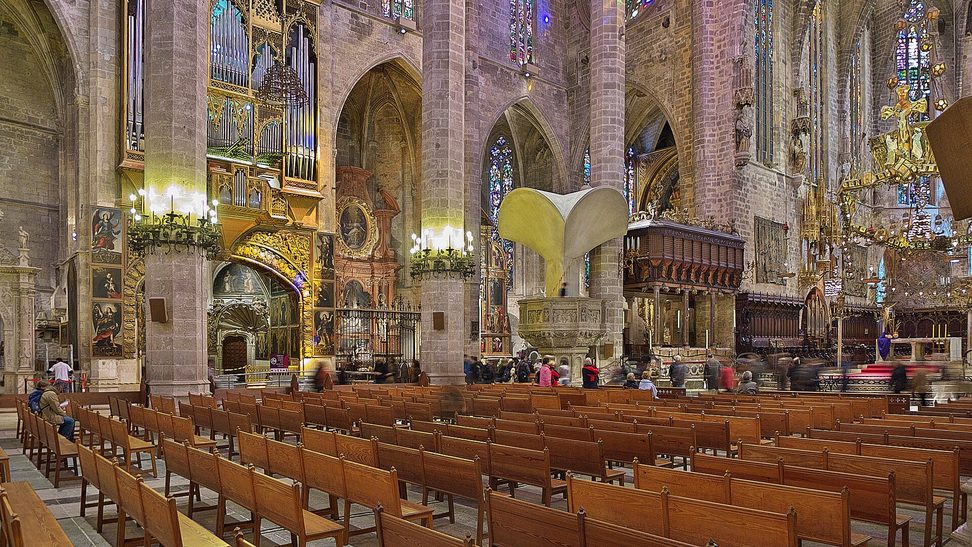
Gaudí moved the choir stalls out of the middle of the nave and set them against the walls of the royal chapel, so that the whole length of the church could be seen at once. Over the high altar hangs his canopy, a seven-sided crown of iron, wood, card and cloth hung with lights, which was largely a full-size provisional model. Behind the altar, the Trinity Chapel, not normally open on the visit, holds the tombs of Jaume II and Jaume III, kings of Mallorca.
Barceló’s chapel
To the right of the royal chapel, the Mallorcan artist Miquel Barceló covered the walls of the Chapel of the Blessed Sacrament with 300 square metres of ceramic, telling the story of the loaves and fishes: a wall of fish, bread, fruit and skulls that is either the highlight of the visit or a shock, depending on taste.
The Portal del Mirador
Outside, on the side facing the sea, the Portal del Mirador is the finest of the cathedral’s doors, carved in the late fourteenth and fifteenth centuries with the Last Supper.
Tickets and where to stay
Tickets and hotels
Tickets are sold on the cathedral’s own website and at the museum entrance; book the terrace visit ahead, as places are limited. In summer the old city is busiest in the late morning, when cruise passengers arrive.
The hotel link goes to Booking.com. This site earns nothing from it at present — it is here because it is the quickest way to check what is actually available.
Don’t miss
- The great rose window At the east end, best on a sunny morning.
- Gaudí’s canopy Over the high altar.
- Barceló’s chapel To the right of the royal chapel.
- The Portal del Mirador The sea-facing door.
- The terraces Among the buttresses, if you book.
Insider tips
See it from outside too. The classic view is from the Parc de la Mar, below the cathedral, where it is reflected in the lake; it is at its best in the late afternoon and lit up at night. On 11 November and 2 February, come by about 7.30am for the Festa de la Llum, when the sun makes a figure eight of the two rose windows.
Next door is the Almudaina, the royal palace built on the Moorish fortress, and a few streets away the Arab Baths. The old city behind the cathedral is a maze of lanes and courtyards.
Common questions
How much does Palma Cathedral cost?
€11 for adults, including the Museum of Sacred Art; €9 for over-65s and €8 for students and some other groups; €16 with an audio guide. The terrace visit, with the museum, is €25. Residents of the Balearic Islands and children of nine and under can claim free entry at the ticket office.
Is Palma Cathedral open on Sundays?
Not for sightseeing: on Sundays it opens only for Mass. It is also closed to visitors on a number of holidays, and on Saturdays it closes early in the afternoon.
What is the “Festa de la Llum”?
Twice a year, on 2 February and 11 November, the morning sun shines through the great east rose window and projects its image onto the west wall just below the other rose window, so that the two circles form a figure eight. It lasts only minutes, at around 8–8.30am, and only if the sky is clear; the doors open early, and well over a thousand people come to watch.
What did Gaudí do in Palma Cathedral?
Between 1904 and 1914 he reorganised the interior: he moved the choir stalls from the middle of the nave to the sides of the sanctuary, opened up blocked windows, and hung a great canopy, a crown of iron and lights, over the high altar.
Can you go up on the roof of Palma Cathedral?
Yes, on the terrace visit from April to November: an hour on the roofs, past the flying buttresses and the bell tower to the rose window, in timed slots. It is for over-9s, with an adult, and is not suitable for people with vertigo or reduced mobility. Book ahead.
Is there a dress code?
Yes: no bare shoulders, no shorts or skirts above mid-thigh, no swimwear or see-through clothing. There is no left luggage, but bags can be left at the museum.
Where to stay and eat nearby
The old city around the cathedral has small hotels in converted palaces, and tapas bars and restaurants in the lanes of La Llotja and around the Born, ten minutes’ walk away.
More churches in Spain
- Barcelona Cathedral — another great Gothic cathedral of the Crown of Aragon.
- Montserrat — the mountain monastery above Barcelona.