
Montserrat Monastery
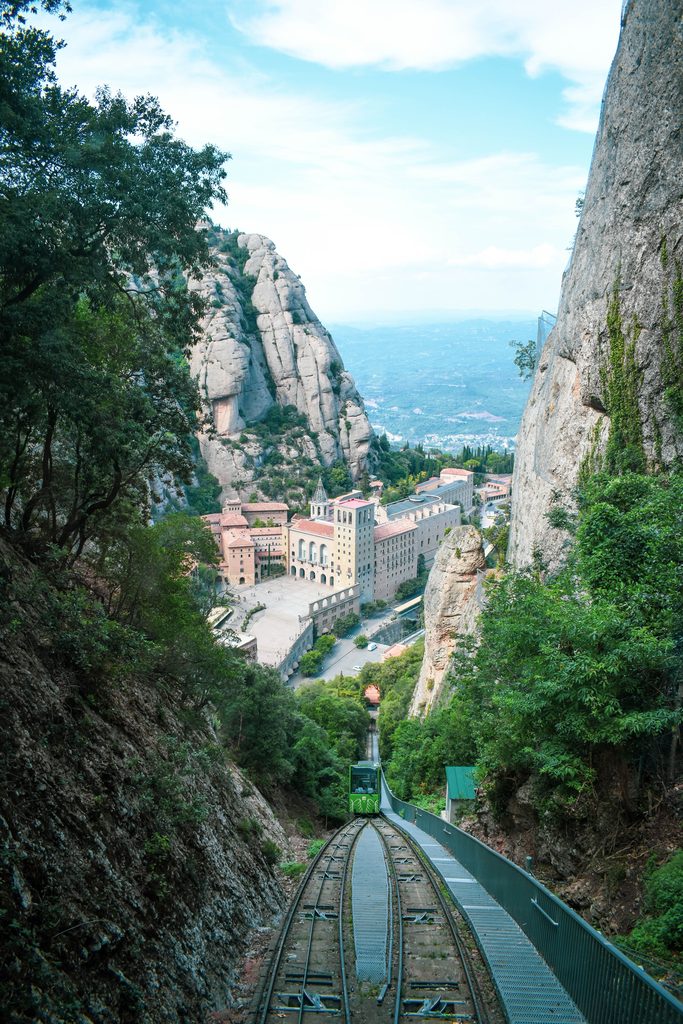
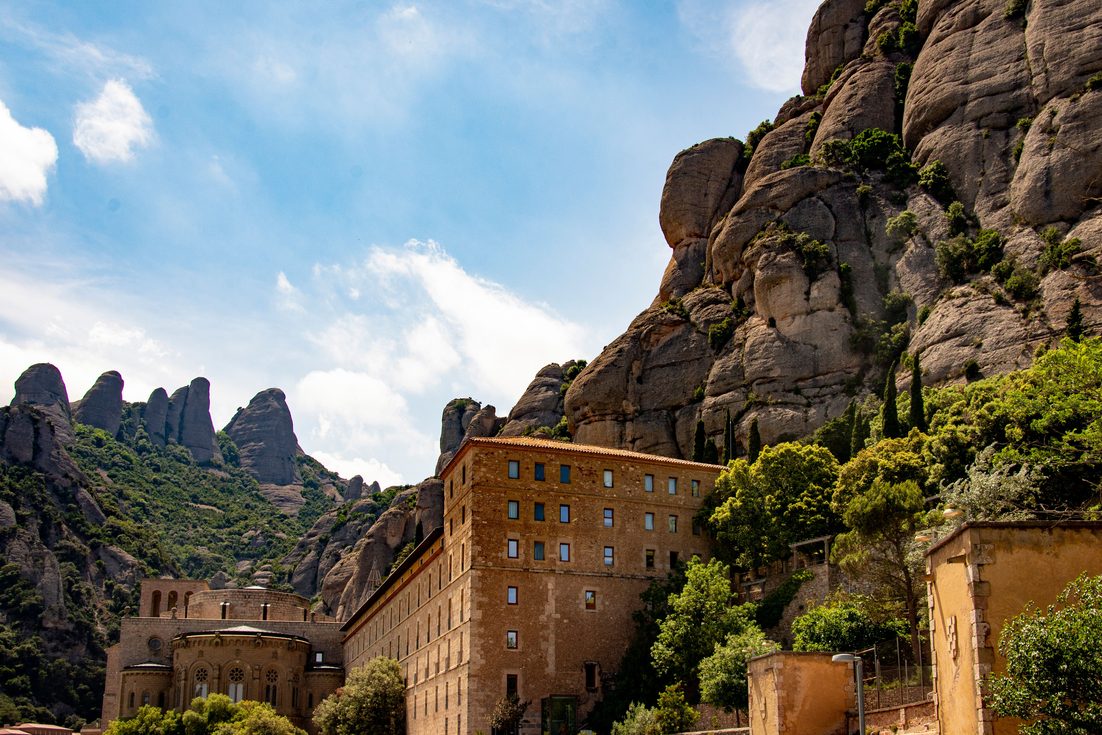
Montserrat is a Benedictine monastery on a ledge of a jagged mountain an hour from Barcelona, and the spiritual heart of Catalonia. Pilgrims climb behind the high altar of its basilica to touch La Moreneta, the dark twelfth-century statue of the Virgin; at 1pm on weekdays the boys of the Escolania sing. Founded in 1025, the monastery has just celebrated its thousandth anniversary. Visitors from outside Spain and the EU now need a tourist ticket for the basilica.

A thousand years on the mountain
Hermits lived in caves on Montserrat in the early Middle Ages, and legend says that in 880 shepherds found a statue of the Virgin in a cave on the mountain, the Santa Cova. In 1025 Abbot Oliba of Ripoll founded a small monastery on the site of one of the hermitages, and the Virgin of Montserrat became one of the great pilgrimages of the Mediterranean.
In 1811 and 1812 Napoleon’s troops sacked and burned the monastery, and the monks returned to rebuild it in the nineteenth century, the young Antoni Gaudí, then assisting the architect Villar, among them. Leo XIII declared the Virgin patron of Catalonia in 1881. Under Franco, when Catalan was suppressed, the monastery kept the language alive. Its millennium was celebrated in 2025, and in June 2026 Pope Leo XIV came to Montserrat to lead the Rosary in the basilica.
The visitor’s cheat sheet
| Where | Montserrat mountain, about 50km north-west of Barcelona |
|---|---|
| Opening hours | Basilica 7am–8pm; the Virgin’s throne 8–10.30am and noon to about 6.25pm; museum 10am to 5.45pm on weekdays, to 6.45pm at weekends |
| Admission | Tourist ticket for the basilica and throne for visitors from outside Spain and the EU, booked online; museum €12; Trans Montserrat combined ticket with the train from Barcelona €50 |
| The Escolania | Monday–Friday 1pm; Monday–Thursday and Sundays also 6.45pm vespers; Sundays about noon; never Saturdays; breaks in the school holidays |
| Getting there | R5 train from Plaça Espanya, then the cable car (€15 return) or rack railway (€15 return); by car, paid parking at the monastery |
| Dress code | Shoulders and knees covered in the basilica |
| How long | A full day from Barcelona |
Hours and admission checked against the official site in October 2026. They change; the official site is always the last word.
Book the tourist ticket, and plan around 1pm. Visitors from outside Spain and the EU need a tourist ticket for the basilica and the Virgin’s throne, booked online up to a month ahead; most come in a combined ticket with the train. The Escolania sings at 1pm on weekdays, never on Saturdays, and takes breaks in the school holidays. Coach parties arrive from about 11am, so take an early train.
What to see, in the order you meet it
The square and the basilica
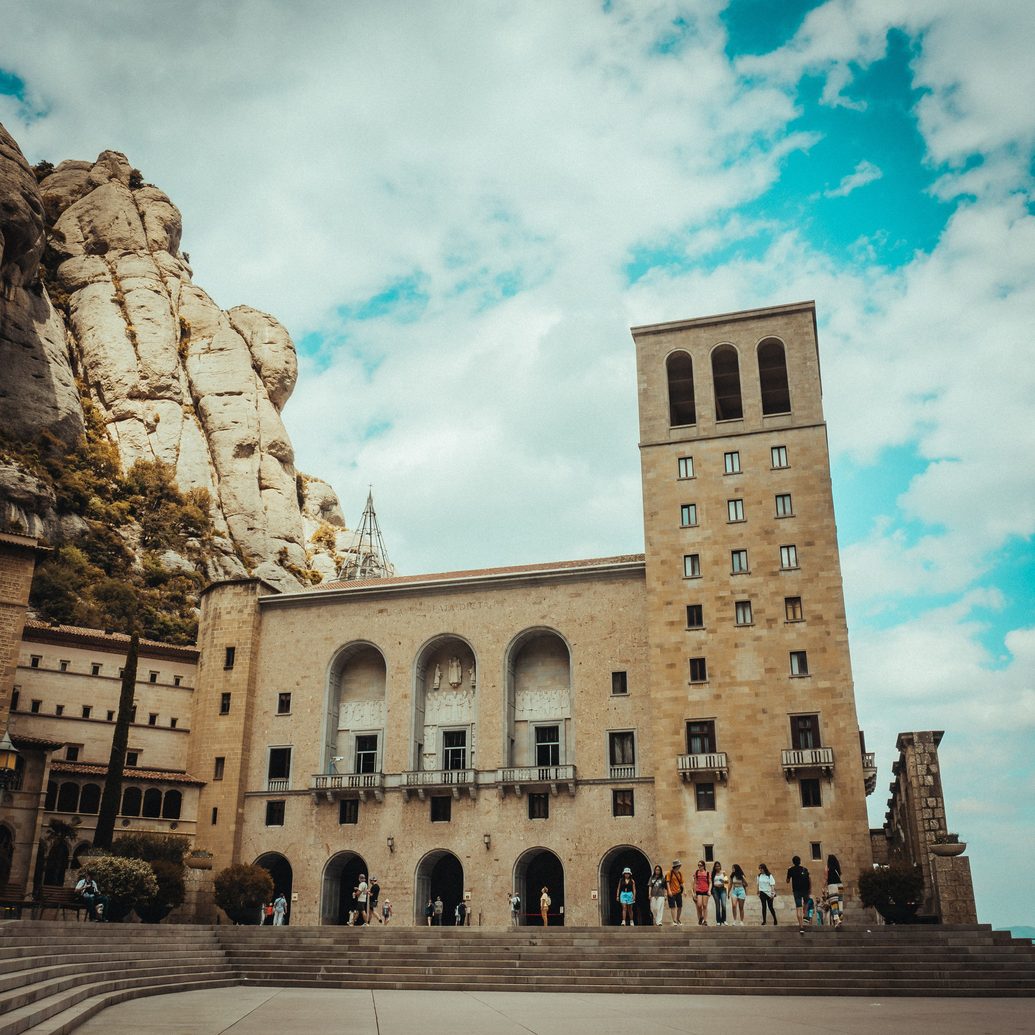
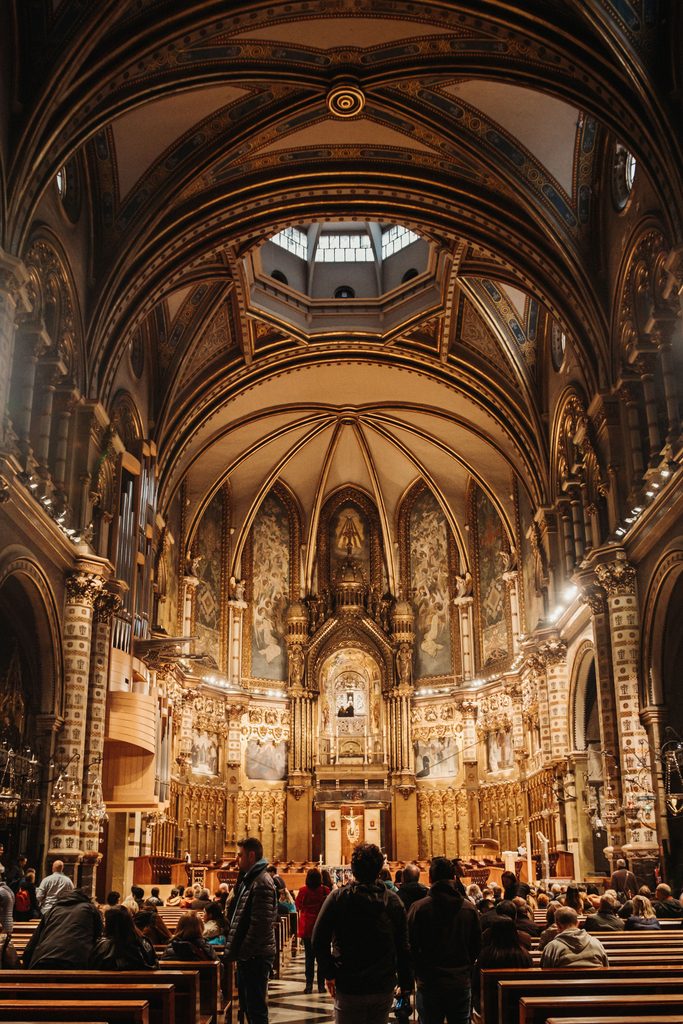
From the cable car or the rack railway you walk up to the main square, with the monastery buildings wedged against the cliffs. Through the atrium is the basilica, its facade of 1901 carved with Christ and the apostles. Inside it is dark and gilded, with hanging lamps given by the towns of Catalonia, and high above the altar, the throne of the Virgin.

La Moreneta
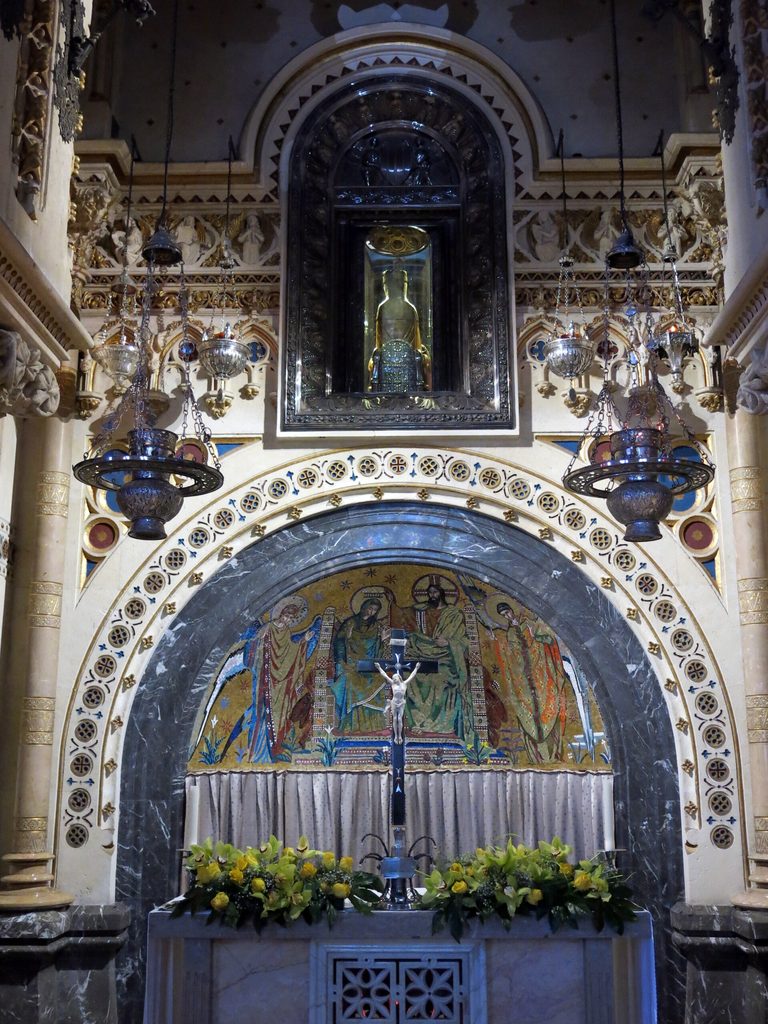
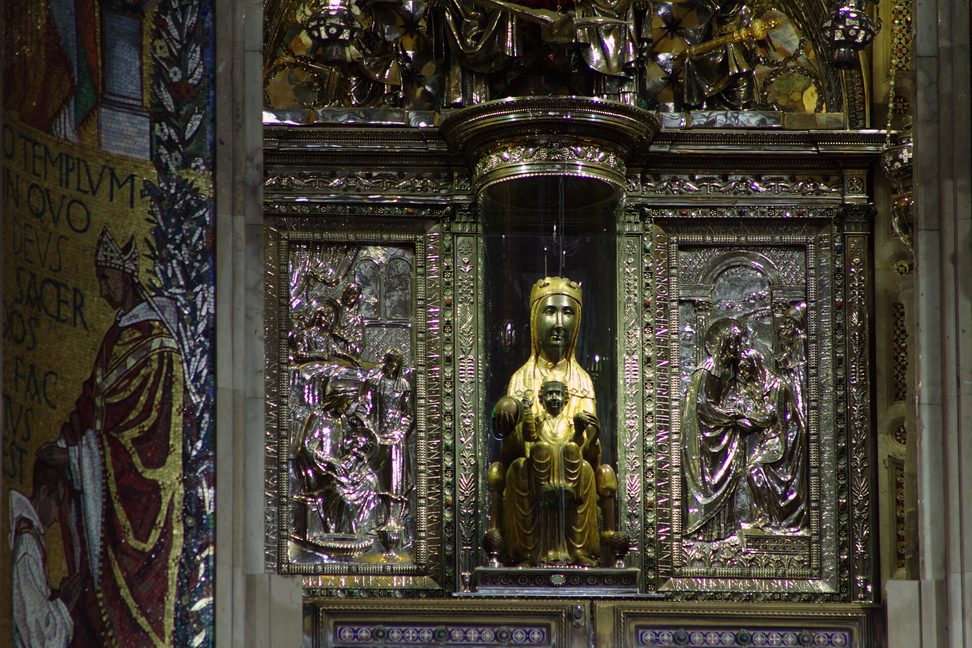
A staircase from the right side of the basilica, lined with mosaics and chapels, leads up through the Cambril to the throne. The statue, of polychrome wood, is Romanesque, of the twelfth century; her face and hands darkened over the centuries and were later painted black. She sits behind glass, but her right hand, holding an orb, is left uncovered for pilgrims to touch.
The Escolania
The Escolania is one of the oldest boys’ choirs in Europe, with a music school at the monastery. On weekdays at 1pm the boys sing the Salve Regina and the Virolai, the hymn to the Virgin of Montserrat, in the basilica; they also sing at vespers from Monday to Thursday and on Sundays, and never on Saturdays. The singing lasts only a few minutes, and the basilica fills well beforehand.

The museum and the mountain
The Museu de Montserrat, under the square, has paintings from El Greco and Caravaggio to Picasso and Dalí, and antiquities from the Holy Land. Above the monastery, the Sant Joan funicular climbs to paths among the peaks; below it, a path lined with the sculpted mysteries of the Rosary, one of them designed by Gaudí, leads down to the Santa Cova, the cave where the Virgin was found.
Tickets and where to stay
Tickets and hotels
Combined tickets from Barcelona, sold by the railway and the monastery, include the train, the cable car or rack railway, the Sant Joan funicular and access to the Virgin; dearer ones add the museum and lunch. Staying the night on the mountain lets you hear vespers and see the monastery after the day visitors have gone.
The hotel link goes to Booking.com. This site earns nothing from it at present — it is here because it is the quickest way to check what is actually available.
Don’t miss
- La Moreneta The Black Madonna, behind the altar.
- The Escolania 1pm on weekdays, never Saturdays.
- The basilica Dark, gilded and full of lamps.
- The museum El Greco, Caravaggio, Picasso, Dalí.
- The mountain The Sant Joan funicular and the paths.
Insider tips
Take an early train, and go to the Virgin first. The first trains from Plaça Espanya beat the coaches; head straight for the throne, which closes from 10.30am to noon, then come back to the basilica in good time for the choir. Bring a layer: it is cooler on the mountain than in Barcelona.
The cable car is the more dramatic ride; the rack railway runs more often and in all weathers. Paths lead from the monastery to viewpoints and old hermitages, and the summit, Sant Jeroni, is about an hour’s walk from the top of the Sant Joan funicular.
Common questions
Do I need a ticket to visit Montserrat?
Since 2023 visitors from outside Spain and the EU need a tourist ticket for the basilica and the Virgin’s throne, booked online up to a month ahead, usually as part of a combined ticket. Residents of Spain and the EU, people coming for services and guests staying at the monastery do not, though residents book free places online. The mountain, paths and square are free.
When does the Escolania sing?
On weekdays at 1pm, when the boys sing the Salve and the Virolai in the basilica; also at the 6.45pm vespers from Monday to Thursday and on Sundays, and on Sundays at about noon. They never sing on Saturdays, and there are breaks in the school holidays, so check the calendar. Arrive early for a seat.
How do I see the Black Madonna?
From a side door of the basilica a staircase leads up behind the altar to the Virgin’s throne, where pilgrims touch the orb in her hand. It is open 8–10.30am and noon to about 6.25pm; at busy times the queue can take an hour.
How do I get to Montserrat from Barcelona?
Take the R5 train from Plaça Espanya, hourly, about an hour, and change either at Aeri de Montserrat for the cable car (5 minutes) or at Monistrol de Montserrat for the rack railway, the Cremallera (about 15 minutes). Returns on either cost €15. Combined tickets include the train.
Is the Santa Cova funicular running?
No: in 2026 the funicular down to the Holy Grotto is out of service until further notice. You can walk down the path, lined with sculptures of the Rosary, in about 40 minutes. The Sant Joan funicular, up the mountain, is running.
How long should I spend at Montserrat?
A full day from Barcelona: half a day for the basilica, the Virgin, the choir and the museum, and the rest for a walk on the mountain.
Where to stay and eat nearby
The monastery has a hotel and apartments for pilgrims and visitors, as well as cafeterias and a restaurant. Most visitors come for the day from Barcelona.
More churches in Spain
- Barcelona Cathedral — in the Gothic Quarter, an hour away.
- Palma Cathedral — where Gaudí also worked.