
St Magnus Cathedral, Kirkwall
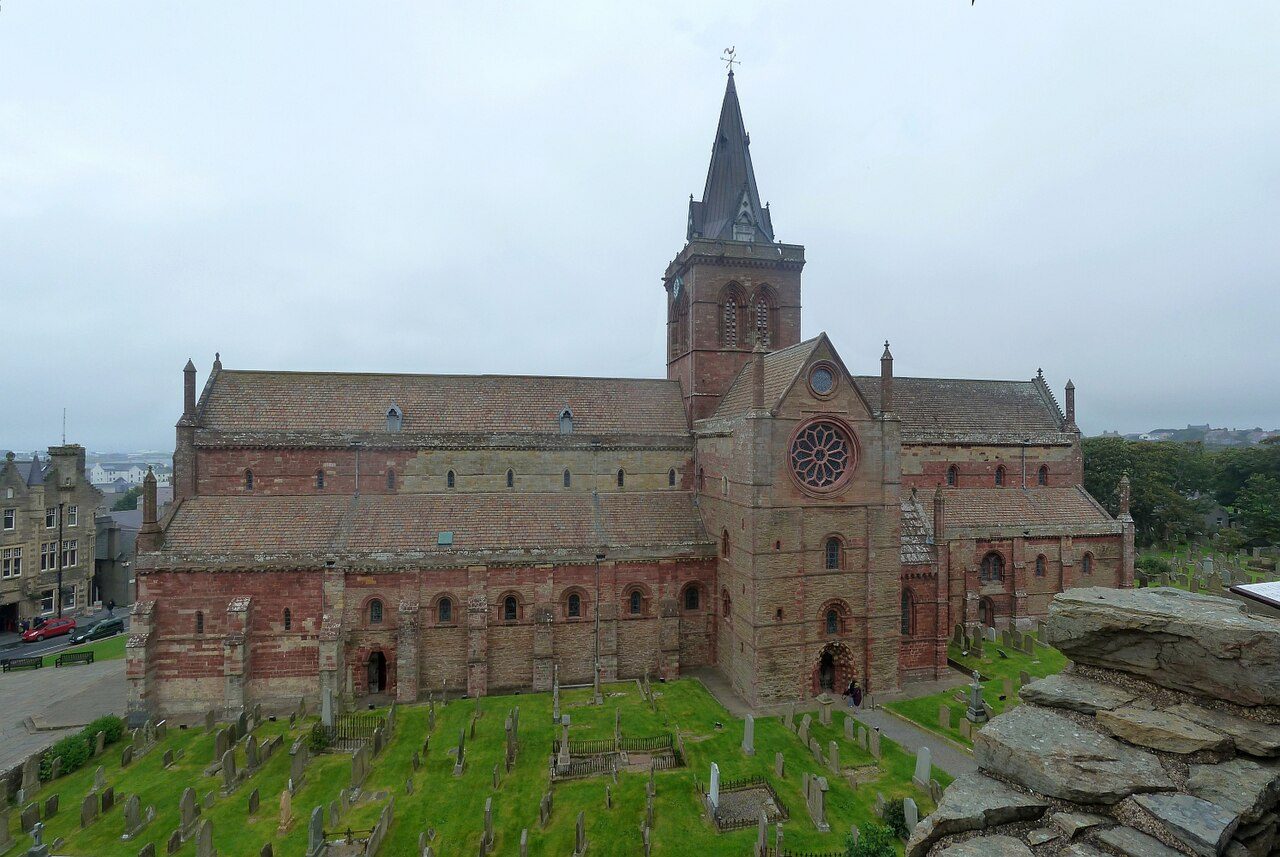
The most northerly cathedral in Britain was built by a Norse earl, in a Norwegian diocese, for the bones of a murdered saint. Nine centuries later St Magnus is still the heart of Kirkwall: a red and yellow sandstone church of startling height, owned not by any Church but by the people of Orkney, and full of memorials to the islanders, explorers and sailors who lie in and around it.
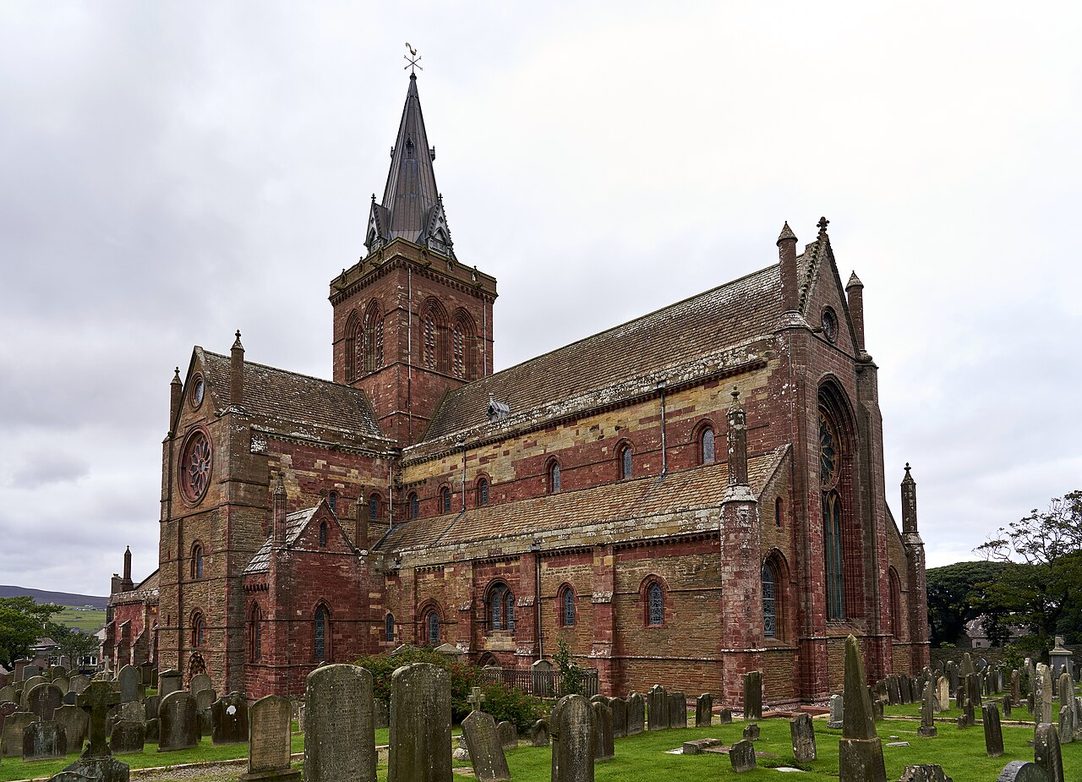
A Norse saint and his nephew
In the early twelfth century Orkney was ruled by Norwegian earls. Two cousins, Magnus and Håkon, shared the earldom until Håkon had Magnus killed on the island of Egilsay, traditionally on 16 April 1117. Magnus soon had a reputation for miracles, and was declared a saint.
His nephew Rognvald, who wanted the earldom for himself, promised a great stone church in his uncle’s honour if he succeeded. Work began in 1137, and Magnus’s relics were moved there from Birsay. The cathedral belonged to the Norwegian archdiocese of Nidaros, at Trondheim, until Orkney passed to Scotland in 1468. In 1486 James III gave the cathedral to the burgh of Kirkwall, which is why it belongs to the people of Orkney today.
The visitor's cheat sheet
| Where | Broad Street, Kirkwall, Orkney, KW15 1NX |
|---|---|
| Getting there | In the centre of Kirkwall; ferries to Kirkwall (Hatston), Stromness and St Margaret’s Hope, and flights to Kirkwall airport |
| Opening hours | April–September: Monday–Saturday 9am–5pm, Sunday 1pm–5pm. October–March: Monday–Saturday 9am–5pm (may close 1pm–2pm), Sunday service only |
| Admission | Free; the council asks for a £5 donation. Upper levels tour £15.60 (ages 12 and over, book ahead) |
| How long | An hour, or two with the upper levels tour |
| Best time | A weekday morning, and a bright day for the colours of the stone |
| Dress code | None, but it is a working church |
| Tours | Upper levels tours (book on 01856 874894); graveyard tours in summer; a free film at the St Magnus Centre on Palace Road |
Hours and admission checked against the official site in October 2026. They change; the official site is always the last word.
The bones in the pillars. In 1848 workmen found a box of bones in one of the choir pillars, believed to be Rognvald’s. In 1919 a second box was found in the opposite pillar, holding a skull with a wound like the blow of an axe — just as the saga describes Magnus’s death. Both are still in the pillars.
What to see, in the order you meet it
The west front and the stone
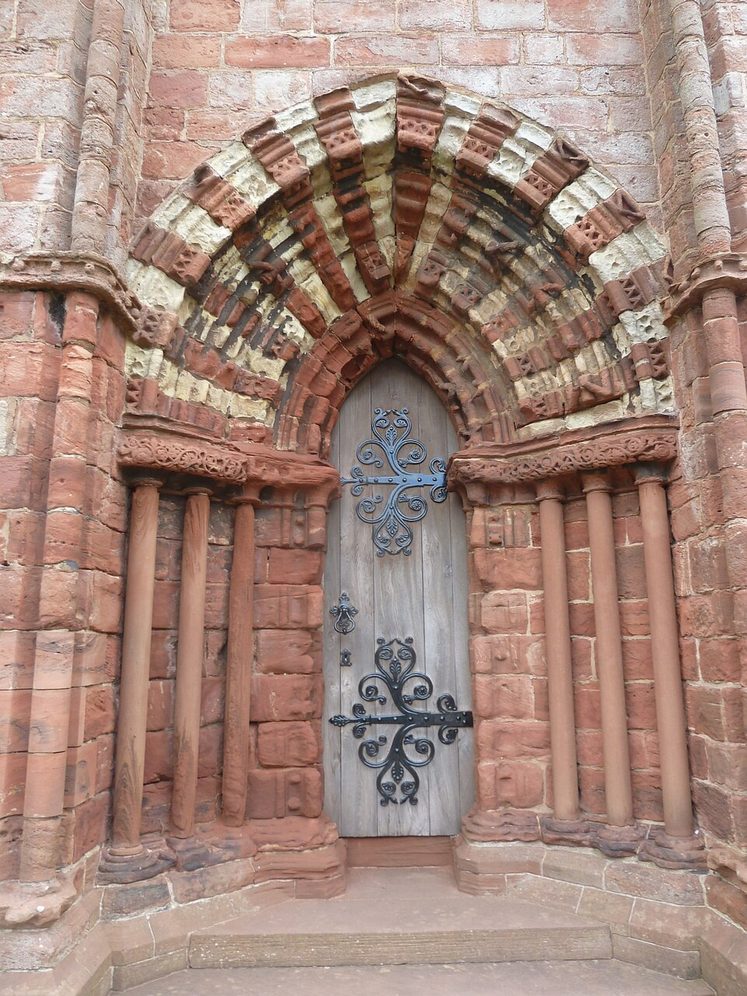
The cathedral is built of local sandstone: red from Head of Holland, near Kirkwall, and yellow from the island of Eday. The builders laid the two colours in bands and alternating patterns, most strikingly in the arches of the doorways in the west front.
The nave
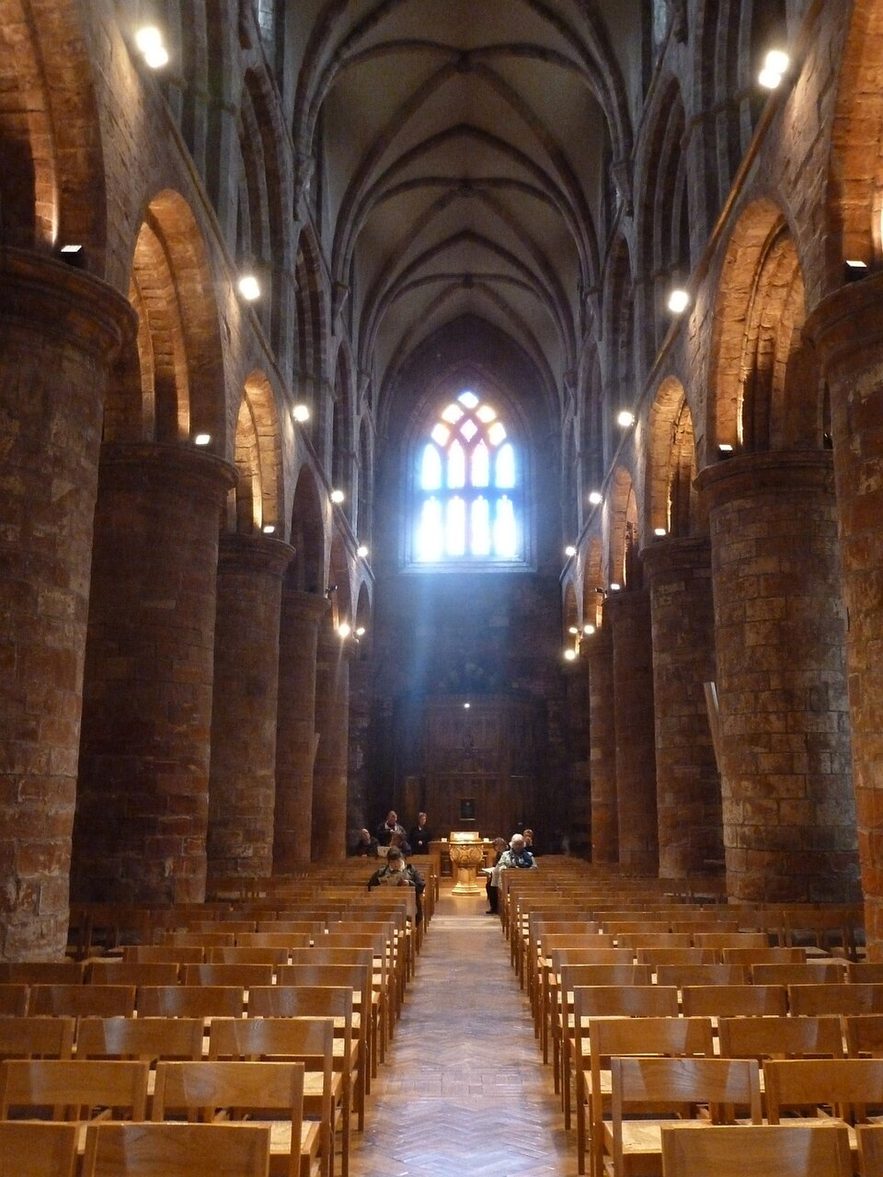
Inside, the Romanesque nave is narrow and very tall, lined with massive round pillars. Along the walls are seventeenth-century gravestones carved with skulls, crossed bones and hourglasses, reminders of death that are among the best collections of their kind in Scotland.
Memorials
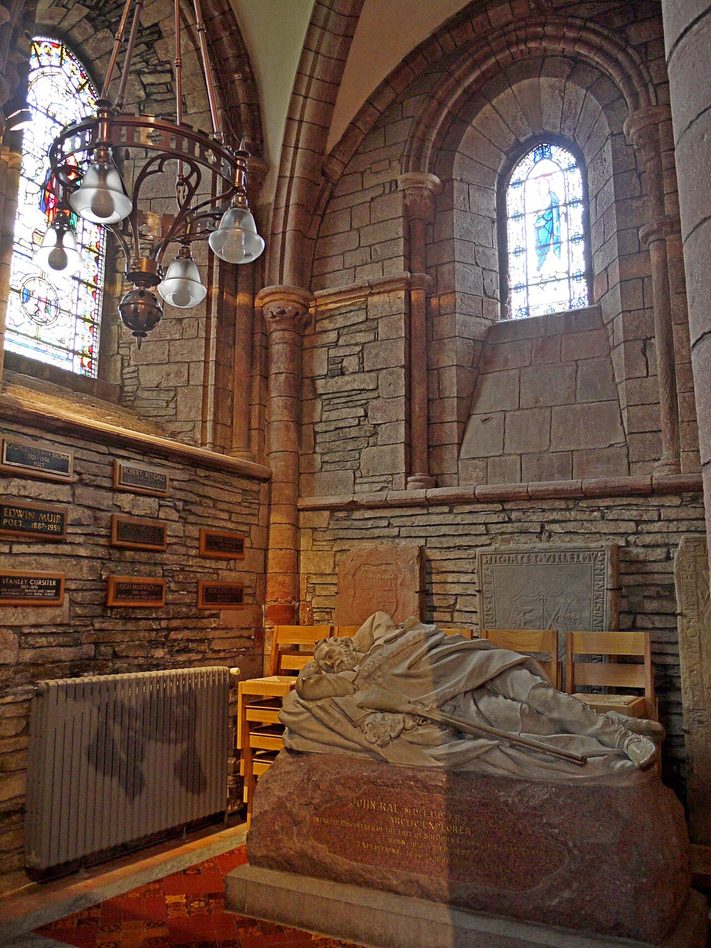
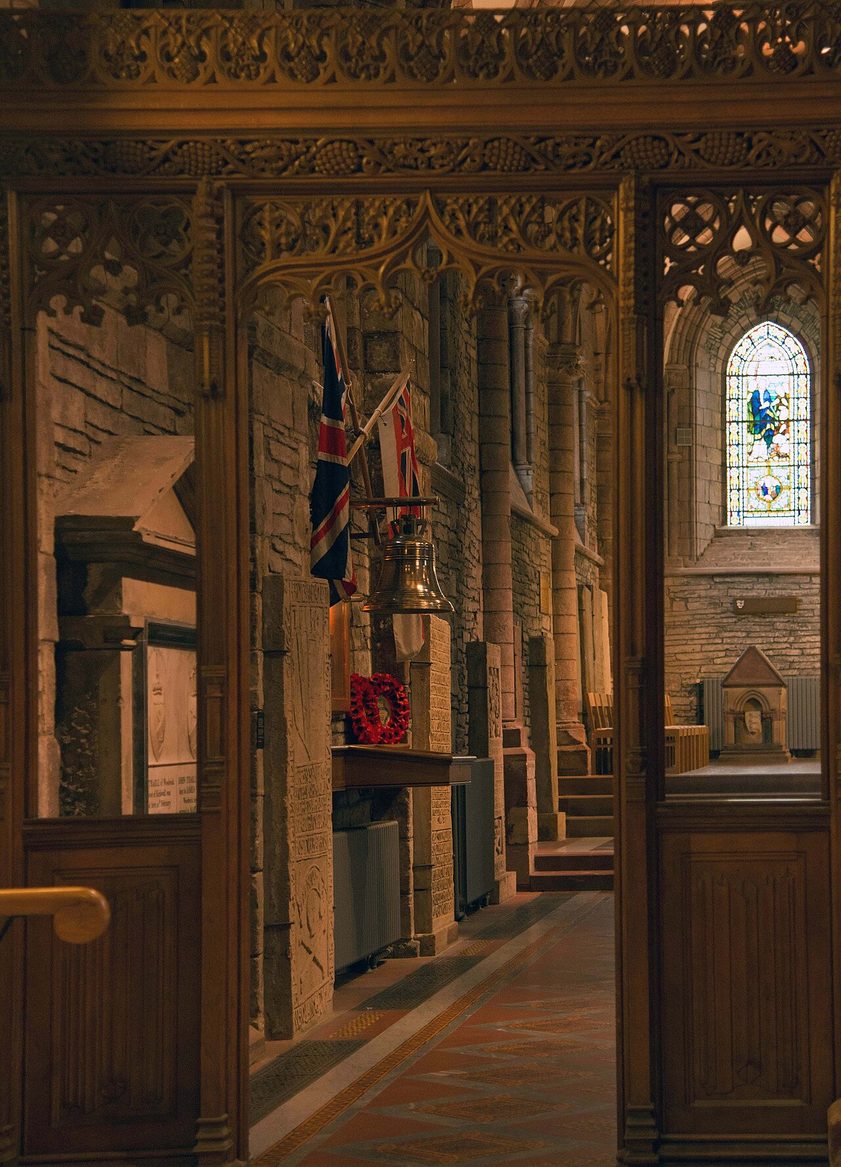
The cathedral is Orkney’s national memorial. Look for the carved figure of John Rae, the Arctic explorer who discovered the fate of the Franklin expedition, shown asleep with his rifle and book; he is buried in the graveyard outside. In the north choir aisle is the bell of HMS Royal Oak, sunk by a U-boat in Scapa Flow in October 1939 with the loss of more than 800 men. There are memorials, too, to the writers George Mackay Brown, Edwin Muir and Eric Linklater.
St Rognvald’s Chapel and the relic pillars
In the choir, look for the two pillars that hold the bones of Magnus and Rognvald. St Rognvald’s Chapel, furnished in 1965 with carved figures of Rognvald, his father Kol and Bishop William, is currently open only in part while maintenance work goes on.
The palaces across the road
Opposite the cathedral are the ruins of the Bishop’s Palace, where King Håkon IV of Norway died in 1263 after the Battle of Largs, and the Earl’s Palace, built around 1600 for the tyrannical Earl Patrick Stewart. Both are in the care of Historic Environment Scotland.
Visiting
Free to visit
There is no charge to go in; the council asks for a donation of £5. Book the upper levels tour in advance with the custodians.
The hotel link goes to Booking.com. This site earns nothing from it at present — it is here because it is the quickest way to check what is actually available.
Don't miss
- The coloured stone Red and yellow sandstone in patterns.
- The memorial stones Skulls, bones and hourglasses.
- John Rae Asleep with his rifle and book.
- The Royal Oak bell In the north choir aisle.
- The relic pillars Magnus and Rognvald, face to face.
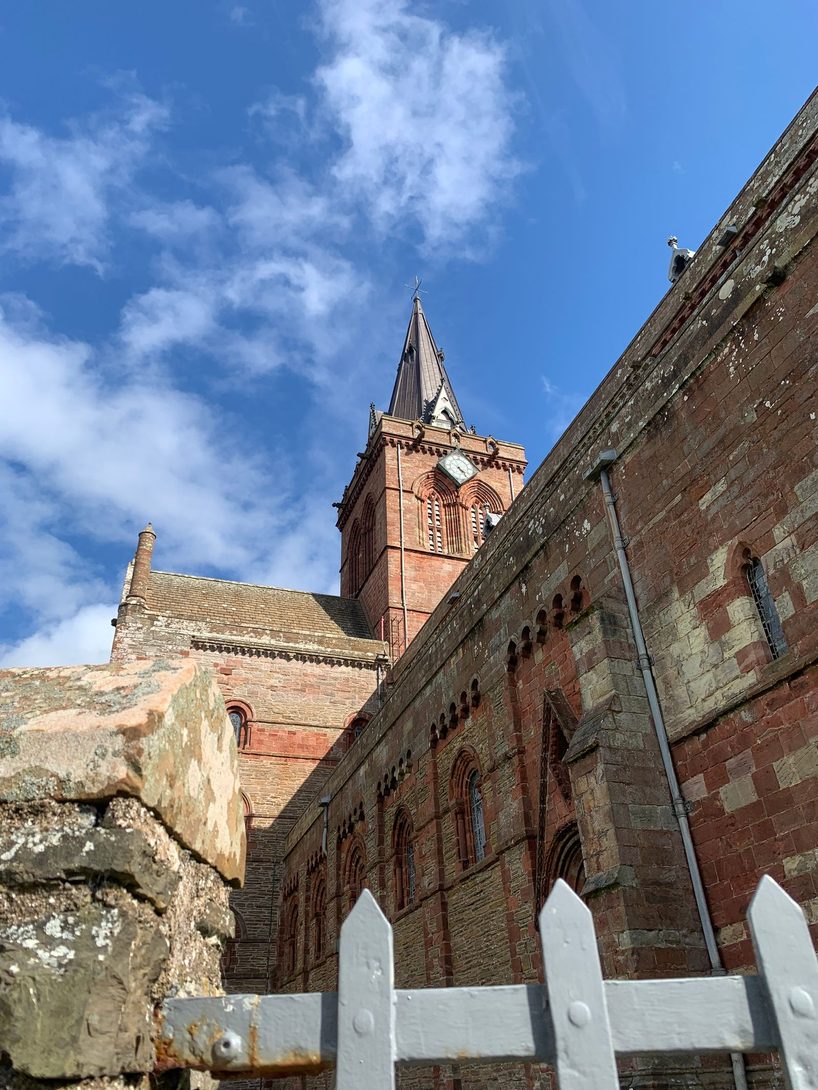
- The upper levels The bells, the clock and the view.
Insider tips
Book the upper levels early. Tours are small and fill up, especially when cruise ships are in. On the same day you can see the Bishop’s and Earl’s Palaces opposite, and the Orkney Museum is opposite, in Tankerness House.
Common questions
Is St Magnus Cathedral free to visit?
Yes. Entry is free, and Orkney Islands Council, which looks after the building, asks visitors for a donation of £5. The guided tour of the upper levels is extra, at £15.60, and must be booked.
When is St Magnus Cathedral open?
From April to September it is open Monday to Saturday from 9am to 5pm, and on Sunday from 1pm to 5pm. From October to March it is open Monday to Saturday, 9am to 5pm, and may close for lunch from 1pm to 2pm; on winter Sundays it is open only for the morning service. It can close at short notice for weddings and funerals.
What is the upper levels tour?
A guided climb of about an hour and a quarter into the parts of the cathedral visitors don’t normally see: the clock mechanism, the bells and the view from the base of the spire. In winter it runs on Thursdays and Saturdays at 11am and 2pm. It is for ages 12 and over; book with the custodians on 01856 874894.
Who owns St Magnus Cathedral?
Not the Church. In 1486 a charter of James III gave the cathedral to the burgh of Kirkwall, and today Orkney Islands Council looks after it on behalf of the people of Orkney. The Church of Scotland congregation worships in it.
How do you get to Kirkwall?
NorthLink ferries sail to Kirkwall’s Hatston terminal from Aberdeen, and to Stromness from Scrabster; Pentland Ferries cross from Gills Bay to St Margaret’s Hope. Kirkwall also has an airport with flights from mainland Scotland. The cathedral is on Broad Street, in the centre of the town.
Where to stay and eat nearby
Kirkwall has hotels, guest houses and restaurants within a few minutes’ walk of the cathedral.
More churches in Scotland
- Iona Abbey — another island cathedral, in the Hebrides
- Glasgow Cathedral — the mainland’s complete medieval cathedral
- Dunfermline Abbey — another Romanesque nave