
Vézelay Abbey
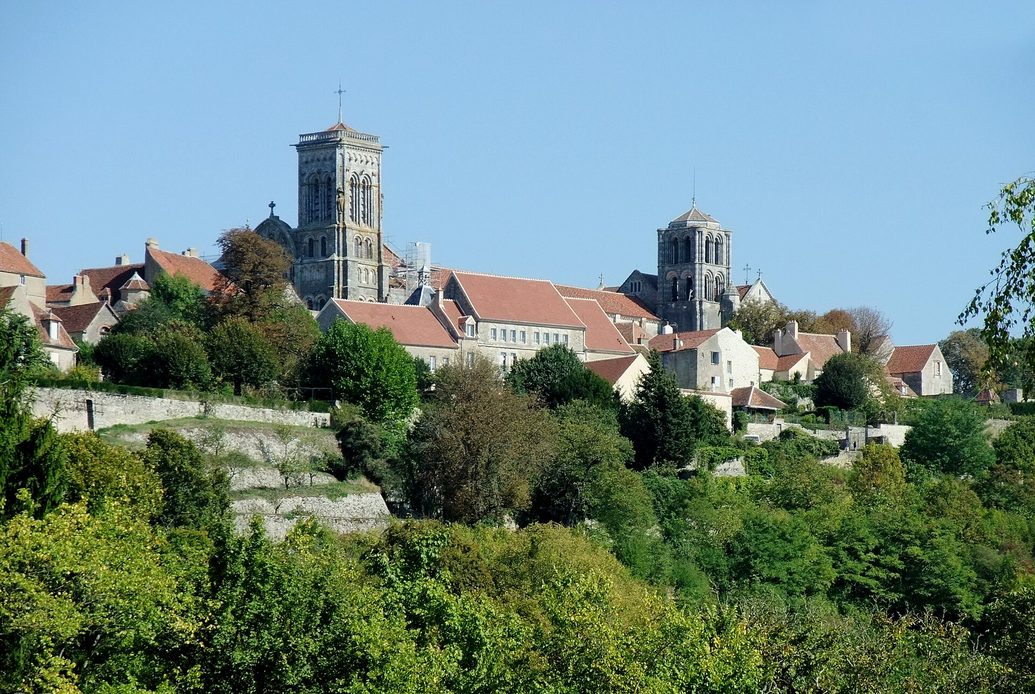
The basilica of Sainte-Marie-Madeleine stands at the top of the hill of Vézelay in Burgundy, at the end of a steep village street. It was one of the great pilgrimage churches of the Middle Ages, claiming the relics of Mary Magdalene; inside are a Romanesque nave of striped arches, a hundred carved capitals and one of the masterpieces of Romanesque sculpture, the tympanum of the narthex. St Bernard preached the Second Crusade here. It is free, and with its hill a UNESCO World Heritage Site.
Magdalene, crusades and Viollet-le-Duc
The abbey was founded in the 9th century by Count Girart de Roussillon, first in the valley and then on the hill. In the mid-11th century the monks began to claim the relics of Mary Magdalene, and pilgrims poured in; Vézelay became the starting point of one of the four main French roads to Santiago. A new church was begun around 1096; after a fire in 1120 the nave was rebuilt, and the narthex and its sculpture followed from the 1120s to about 1150. The Gothic choir was added at the end of the 12th century.
On 31 March 1146 St Bernard of Clairvaux preached the Second Crusade on the hillside before King Louis VII, and in 1190 Richard the Lionheart and Philip Augustus met here before leaving on the Third. After 1279, when the rival relics of the Magdalene were “discovered” at Saint-Maximin in Provence, the pilgrims fell away. Huguenots sacked the abbey in 1569 and the Revolution defaced its sculpture. By 1840 the church was close to collapse, and Prosper Mérimée gave its restoration to the 26-year-old Eugène Viollet-le-Duc, his first great commission. Church and hill were among the first places in France on the World Heritage list, in 1979.
The visitor’s cheat sheet
| Where | Place de la Basilique, Vézelay (Yonne), at the top of the village |
|---|---|
| Opening hours | Daily 7am–8pm, from 8am on Mondays; please don’t walk around during services |
| Admission | Free. Free guided visits at 2.30pm on Sundays from Easter to mid-October and daily in July and August (donation); groups of 10 or more €8 per adult, booked. Musée de l’Œuvre Viollet-le-Duc €4 (Easter–September) |
| Services | Mass weekdays 12.15pm, Sundays 11am; Vespers 6pm most days; Lauds in the morning |
| Restoration | Work on the nave and aisles is due to finish in 2027; some bays may be screened |
| Getting there | Park at the foot of the village and walk up; Sermizelles-Vézelay station is 10 km away |
| How long | An hour, plus the walk up and down |
Hours and admission checked against the official site in October 2026. They change; the official site is always the last word.
What to see
The west front
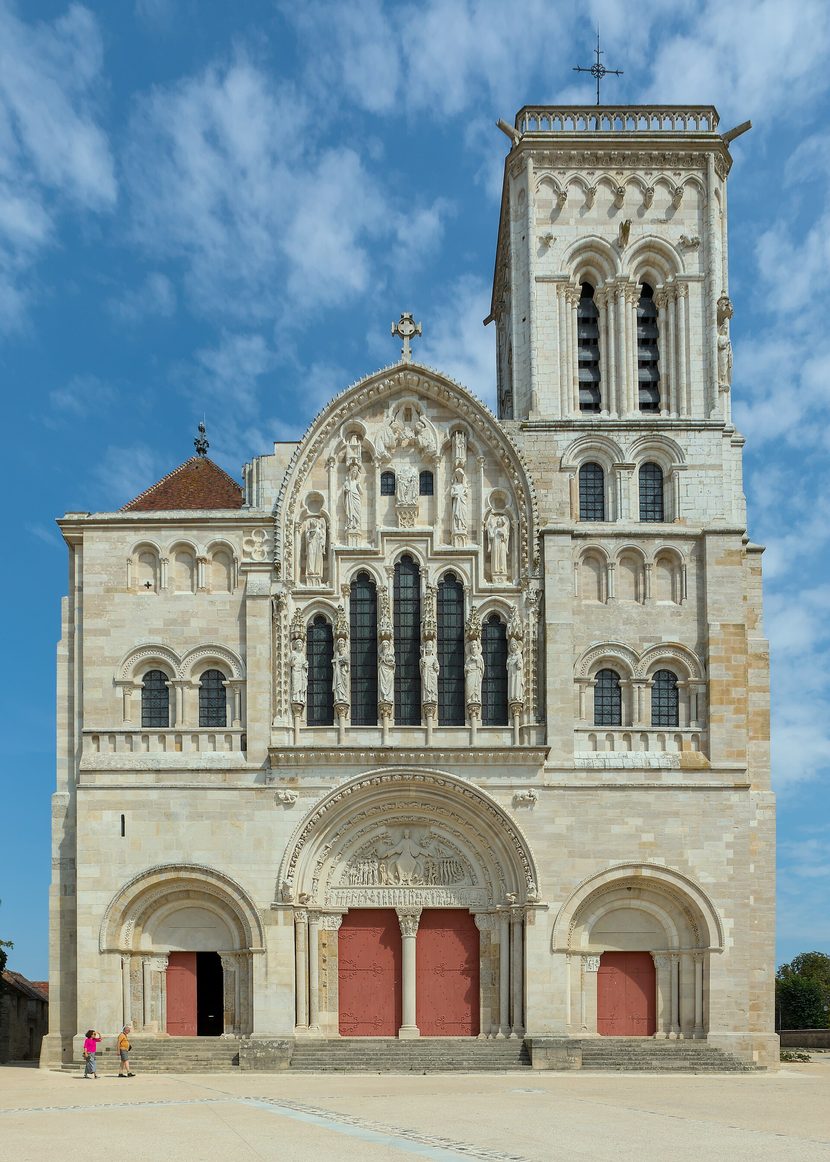
The facade is Romanesque below and Gothic above, with a single tower (the second was never built). Much of what you see is Viollet-le-Duc’s: the Last Judgement over the main door was carved in 1856 by Michel-Pascal, replacing the mutilated original.
The narthex and its tympanum
Go through the doors into the narthex, the great porch built for pilgrims, and turn round to face the church. Over the central doorway is the tympanum, carved around 1120–35: Christ, huge and seated, sends rays of the Holy Spirit to the apostles, who are to carry the Gospel to the world; around them the peoples of the earth, real and fabulous, wait to hear it — among them people with dogs’ heads, people with enormous ears and a pygmy climbing onto a horse by a ladder. The side doorways show Christ’s infancy and his appearances after the Resurrection.

The nave
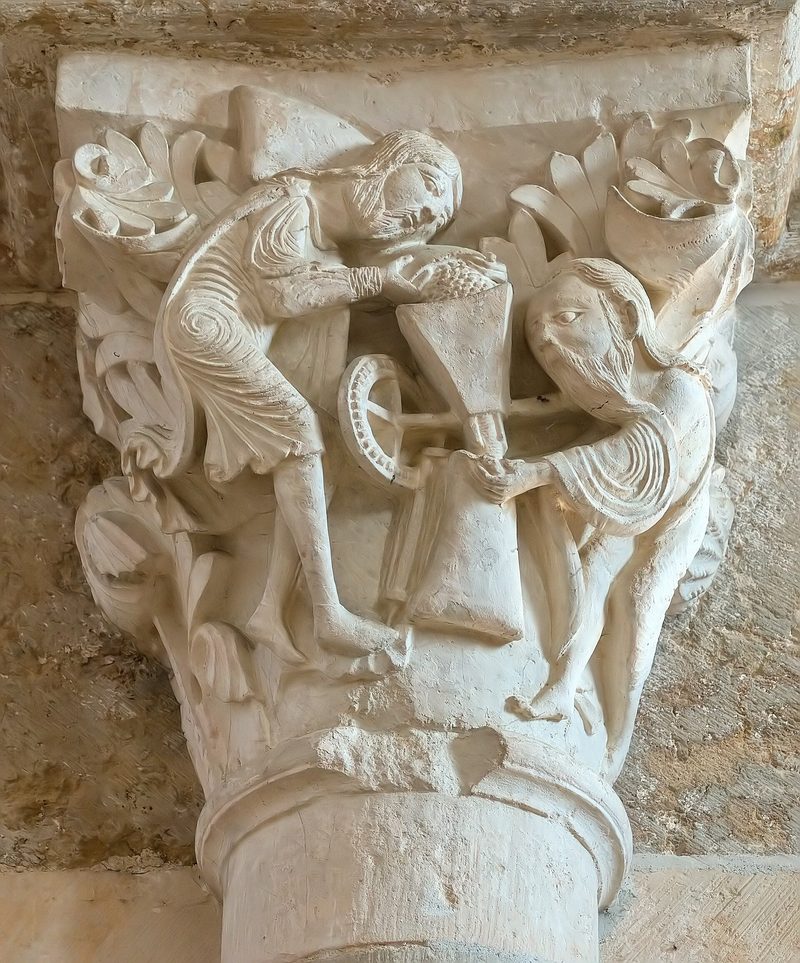
The Romanesque nave is famous for its transverse arches of alternating pale and darker stone and for its light. Some hundred capitals are carved with Bible stories, saints’ lives and fables; look for the “mystic mill”, where Moses pours grain into a mill and St Paul collects the flour, a picture of the Old Testament turned into the New. A handful, eight in all, were recarved in the 19th century.
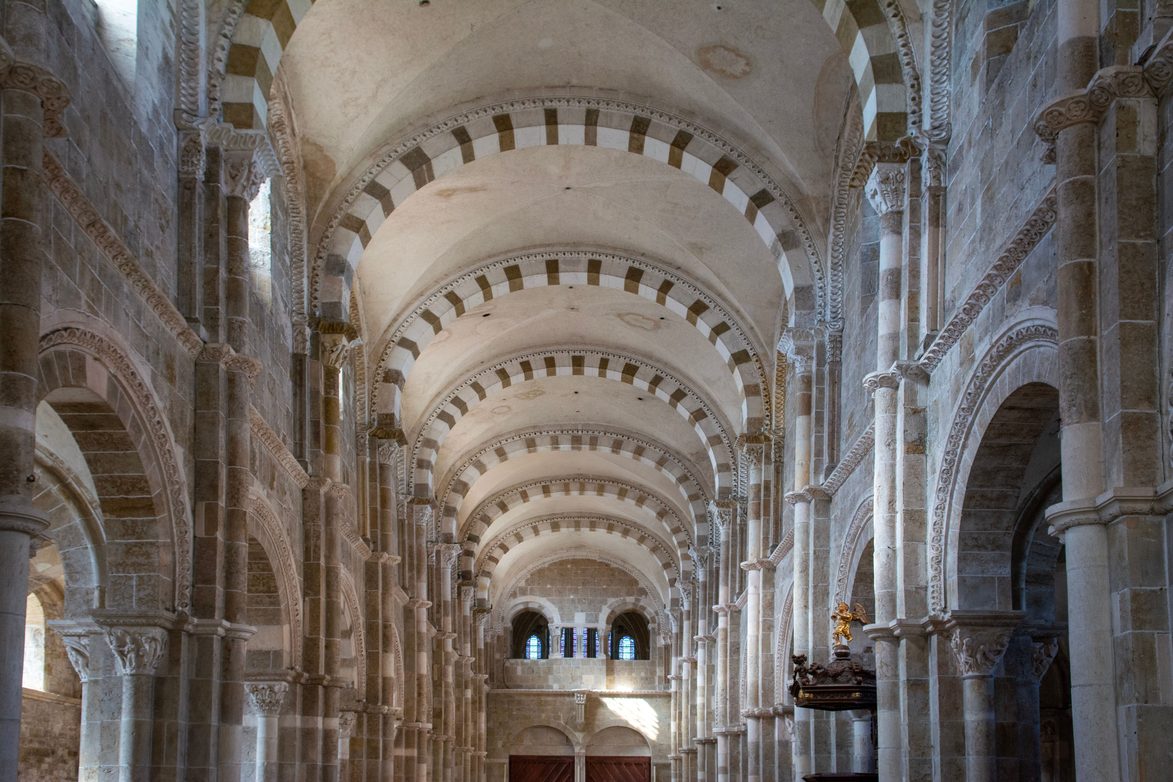
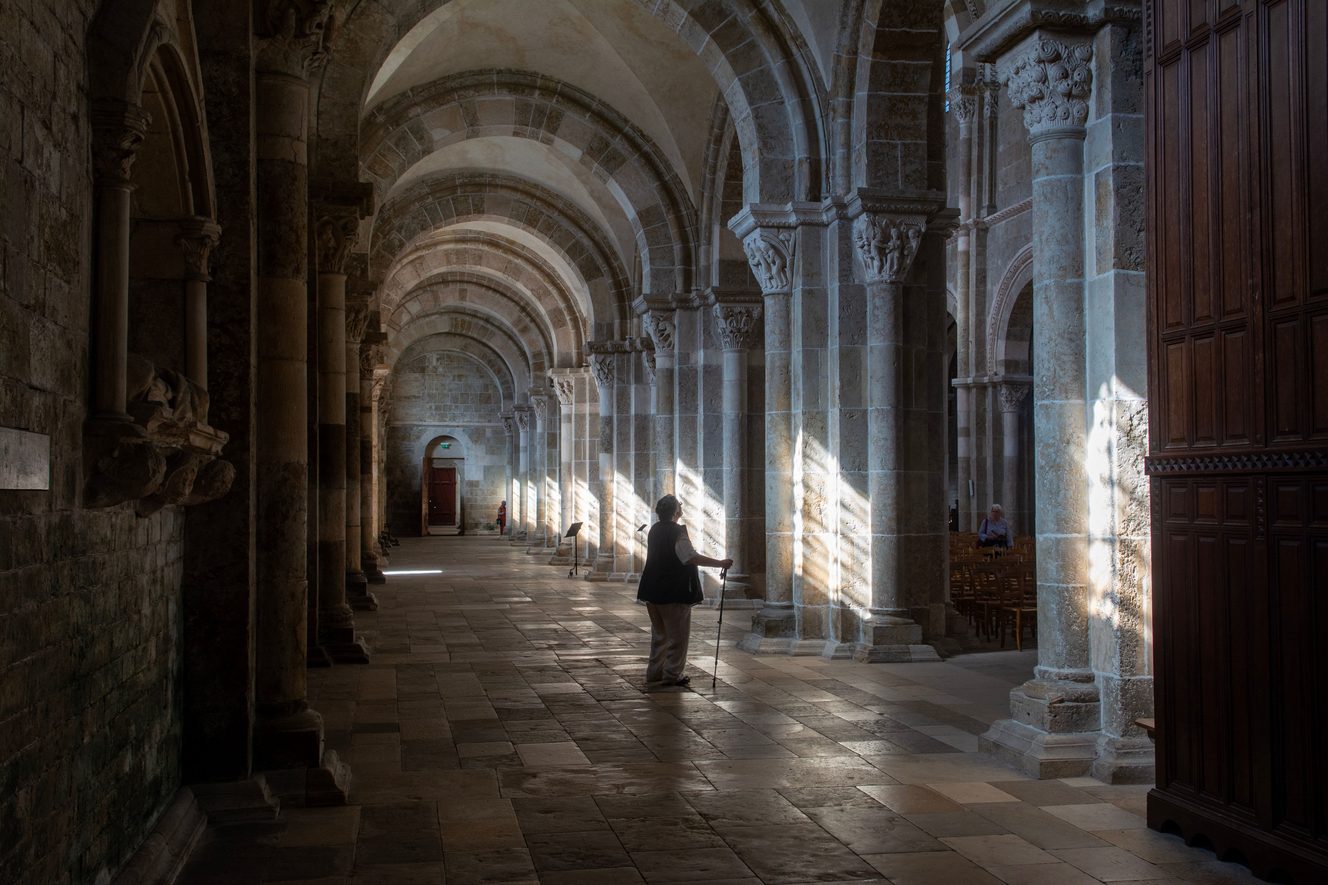
Around the summer solstice, at solar noon, the sun through the south windows lays a path of pools of light down the centre of the nave towards the choir; the effect was first noticed in 1976.
The choir and the crypt
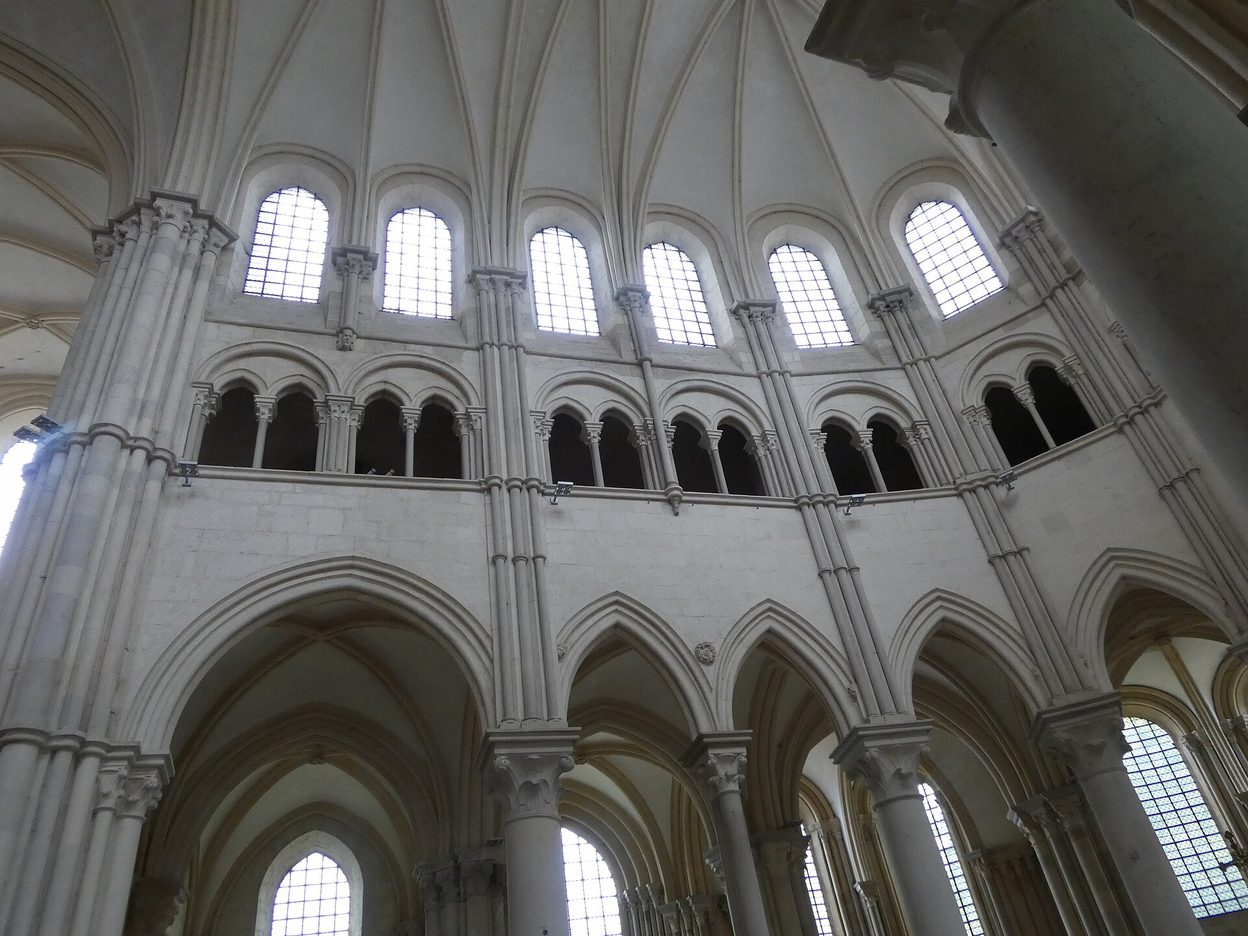
Beyond the crossing, the choir is early Gothic, lighter and taller, built at the end of the 12th century. Below it, the crypt keeps relics venerated as those of Mary Magdalene. The basilica is now cared for by the Fraternités monastiques de Jérusalem, whose sung offices are open to all.
Getting to Vézelay
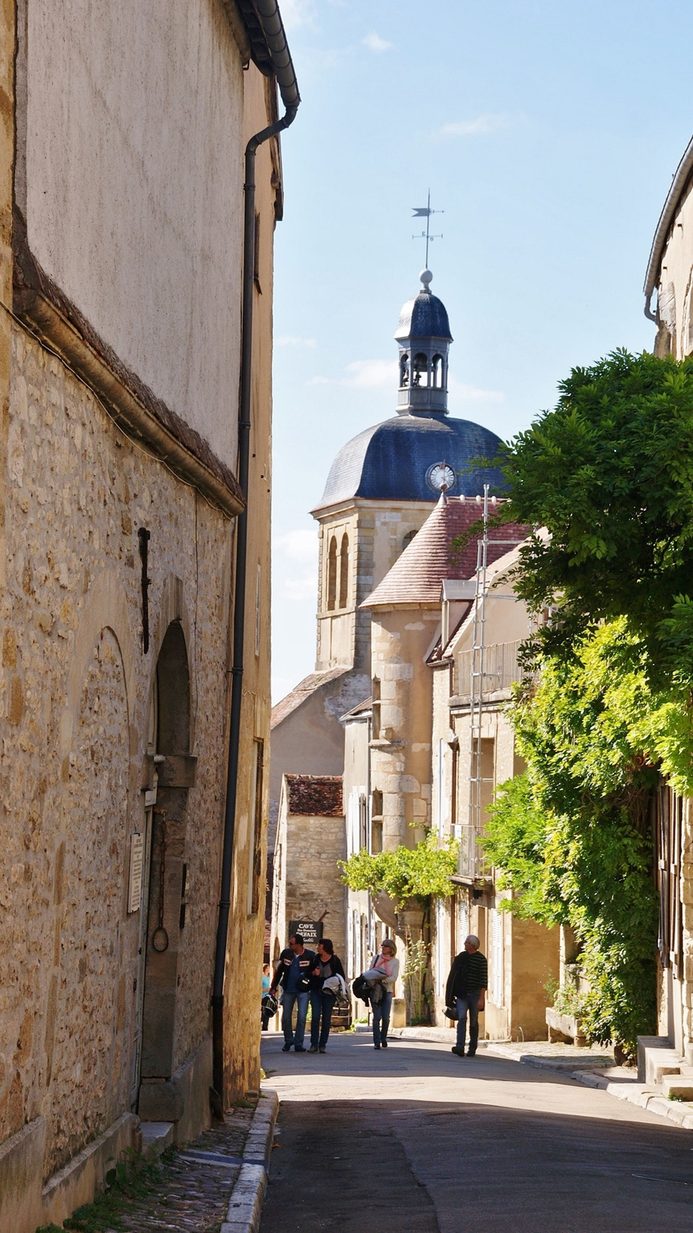
Vézelay is in the Yonne, about 2–2½ hours from Paris by the A6 (exit 21 or 22), 15 km from Avallon. Park at the foot of the village and walk up the main street, steep and cobbled in places, to the basilica at the top. By train, go to Sermizelles-Vézelay (about 2 hours 45 minutes from Paris Bercy), 10 km away; a shuttle bus runs twice a day (at weekends only if booked by phone the day before), or take a taxi.
Where to stay
Vézelay has a handful of hotels and guest houses on the hill; staying overnight lets you hear Vespers and see the basilica without the coach groups. Avallon, 15 km away, has more choice.
These links go to Booking.com. This site earns nothing from them at present — they are here because they are the quickest way to check what is actually available.
Don’t miss
- The narthex tympanum Christ sending out the apostles.
- The mystic mill The best-known capital.
- The striped arches Pale and dark stone, end to end.
- The view from the terrace Behind the choir, over the Cure valley.
- The solstice light Around 21 June, at solar noon.
Insider tips
Stay for Vespers. The community sings the evening office at 6pm, and the basilica empties of day-trippers by then. Walk round behind the choir to the terrace for the view over the valley. The Musée de l’Œuvre, with sculpture removed in the restoration, opens from Easter to September, at weekends and on public holidays (daily in July and August), 2.30–6.30pm.
Common questions
Is Vézelay Abbey free to visit?
Yes, the basilica is free, and so are the guided visits for individuals led by the community in the season (a donation is welcome). The small Musée de l’Œuvre Viollet-le-Duc next door costs €4.
When is the basilica open?
Every day from 7am (8am on Mondays) to 8pm. Please don’t walk around during the services: Mass at 12.15pm on weekdays and 11am on Sundays, and Vespers at 6pm most days.
What is the light effect at the summer solstice?
Around the summer solstice, at solar noon (about 1.45pm summer time), the sun through the south windows lays a line of pools of light down the middle of the nave towards the choir. It is visible on sunny days for a few days either side of the solstice.
Is Vézelay on the Camino?
Yes. Vézelay is the starting point of one of the four great French routes to Santiago de Compostela, the Via Lemovicensis, and pilgrims still set out from the basilica.
Can you get to Vézelay by train?
The nearest station is Sermizelles-Vézelay, about 10 km away, on the line from Paris Bercy (about 2 hours 45 minutes). A shuttle bus runs from the station twice a day (at weekends only if booked the day before); otherwise take a taxi.
More churches in France
- Chartres Cathedral — another great pilgrimage church, Gothic rather than Romanesque.
- Mont-Saint-Michel Abbey — another abbey on a hill that pilgrims walked to.
- Basilica of Saint-Denis — where Gothic began, some forty years before Vézelay’s choir.