
Basilica of Saint-Denis
A short metro ride north of Paris stands the church where Gothic architecture began and where the kings of France were buried for twelve centuries. Abbot Suger’s choir of the 1140s, with its walls of glass, was copied across Europe; round it lie more than 70 royal tombs and effigies, from Dagobert to Louis XVI and Marie Antoinette. Few visitors make the trip, which is half the pleasure. The nave is free; the tombs, which are the reason to come, need a ticket, and there is now a spire being rebuilt in the open, stone by stone.
The saint, the abbot and the kings
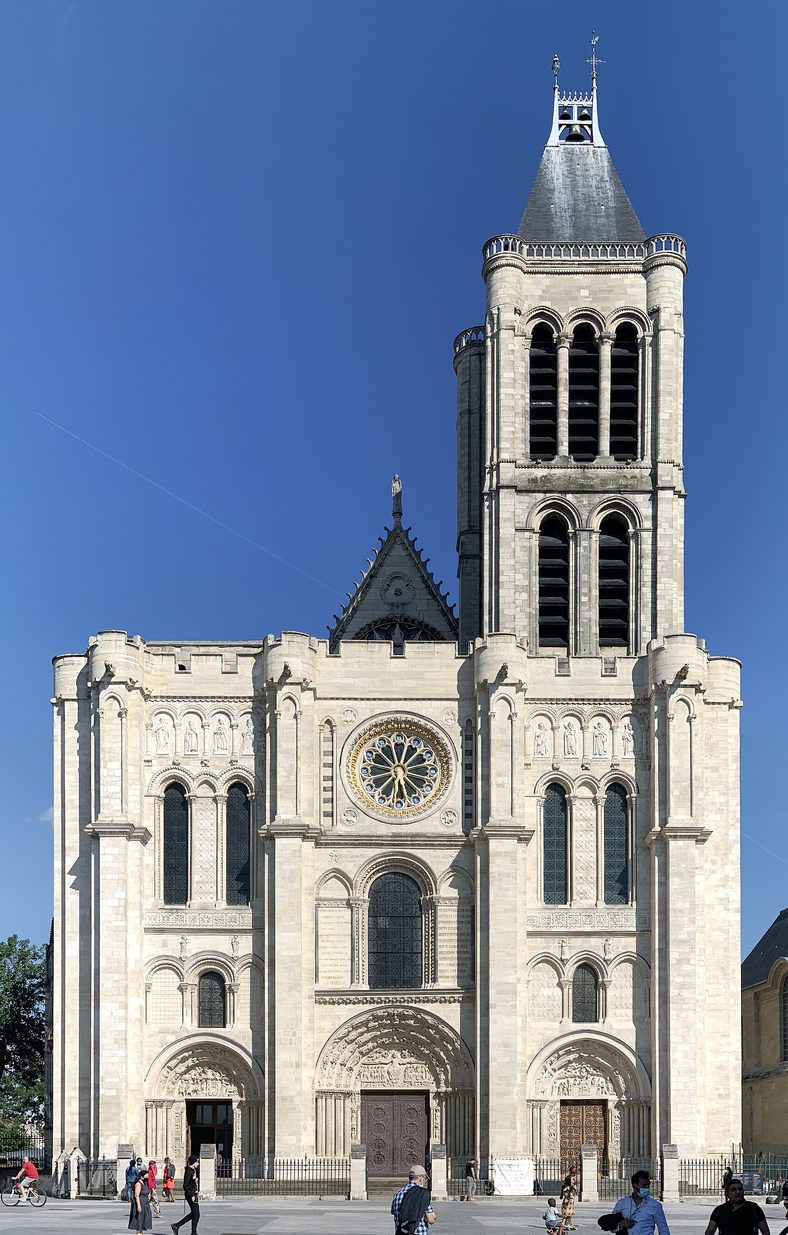
Denis, the first bishop of Paris, was beheaded around 250; the legend says he picked up his head and walked north from Montmartre to the spot where he wished to be buried. An abbey grew over his tomb, and King Dagobert I, buried here in 639, made it royal. In the 1130s Abbot Suger, adviser to two kings, began rebuilding it. His west front was consecrated in 1140 and his choir in 1144. The choir, with pointed arches, ribbed vaults and slender columns carrying great windows, combined for the first time the elements that define Gothic, and within a generation the cathedrals of northern France were being built on its model.
The nave and transepts were rebuilt from 1231, and it became the necropolis of the French monarchy: 40 kings, 26 queens and some 60 princes and princesses. In 1793 the Revolution emptied the tombs, threw the bodies into pits beside the church and melted down the lead coffins; many monuments were saved by Alexandre Lenoir for his museum and later returned. In 1815 Louis XVIII had his brother Louis XVI and Marie Antoinette reburied here. The north tower and spire, weakened by lightning and storms, were taken down in 1846–47. The church has been a cathedral since 1966.
The visitor’s cheat sheet
| Where | 1 rue de la Légion d’Honneur, 93200 Saint-Denis, just north of Paris |
|---|---|
| Opening hours | Royal necropolis April–September Monday–Saturday 10am–5.45pm, Sunday noon–5.45pm; October–March Monday–Saturday 10am–4.45pm, Sunday noon–4.45pm. Closed 1 January, 1 May and 25 December, during services and on frequent exceptional dates |
| Admission | Free to the nave. Royal necropolis and spire worksite €17; free for under-18s, EU citizens and residents of France aged 18–25 and Paris Museum Pass holders. With the Panthéon €26 |
| Guided tours | Free with a ticket, about 90 minutes; in English on Fridays at 3.30pm. Sign up at reception. The spire worksite is closed on Mondays |
| Audio guide | €4, in English and four other languages |
| Getting there | Metro 13 to Basilique de Saint-Denis (branch to Saint-Denis–Université), about 25 minutes from central Paris; or RER D to Saint-Denis, then tram T1 |
| Bags | No bags larger than 40 × 20 × 20 cm, and no cloakroom |
| How long | An hour and a half to two hours |
Hours and admission checked against the official site in October 2026. They change; the official site is always the last word.
The nave is free; the tombs are not. You can walk into the nave through the west door at no charge, but the royal necropolis — the transept, the choir, the ambulatory and the crypt — is a ticketed visit run by the Centre des monuments nationaux, €17, with its own entrance. On Sundays it opens only at noon. It also closes at short notice for funerals and services, so check the list of exceptional closures on the official website before you go.
What to see, in the order you meet it
The west front
Suger’s west front is still recognisably his: three portals, round arches, and above them a rose window, one of the first ever set in a façade. The single tower on the south side is a reminder of the missing north one, which is now being rebuilt.
The nave
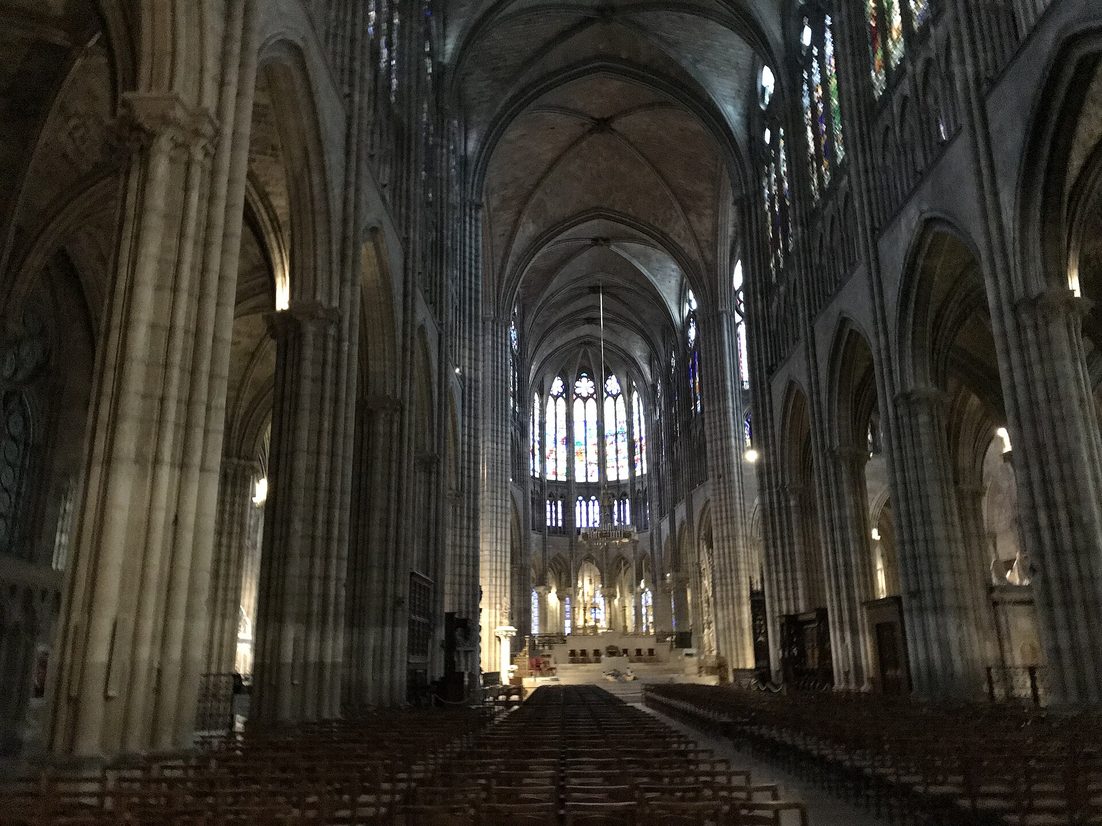
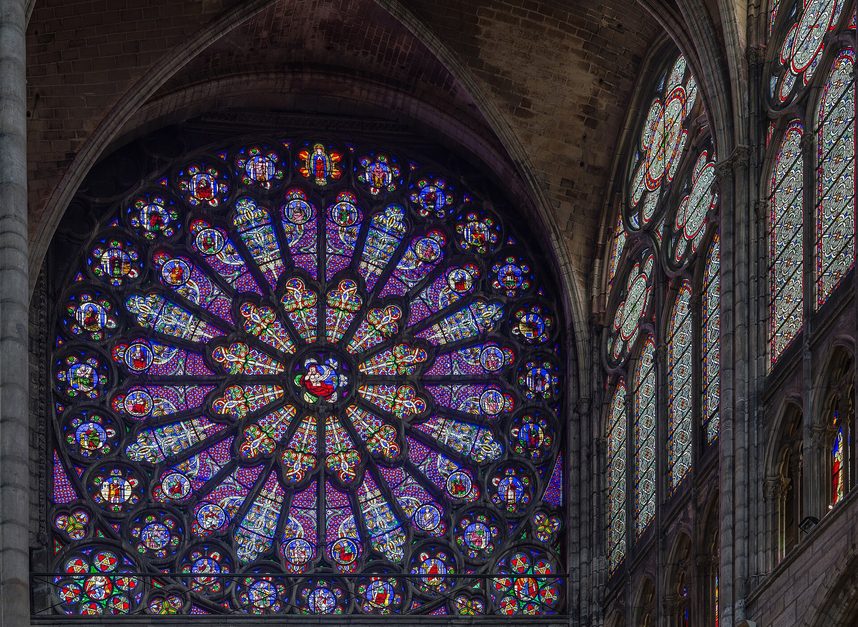
The free part of the church is the nave of the 1230s onwards, tall and light, a fine example of the Rayonnant Gothic of Saint Louis’s reign, with great rose windows in the transepts beyond. It is used for services, and the organ is by Aristide Cavaillé-Coll.
The ambulatory
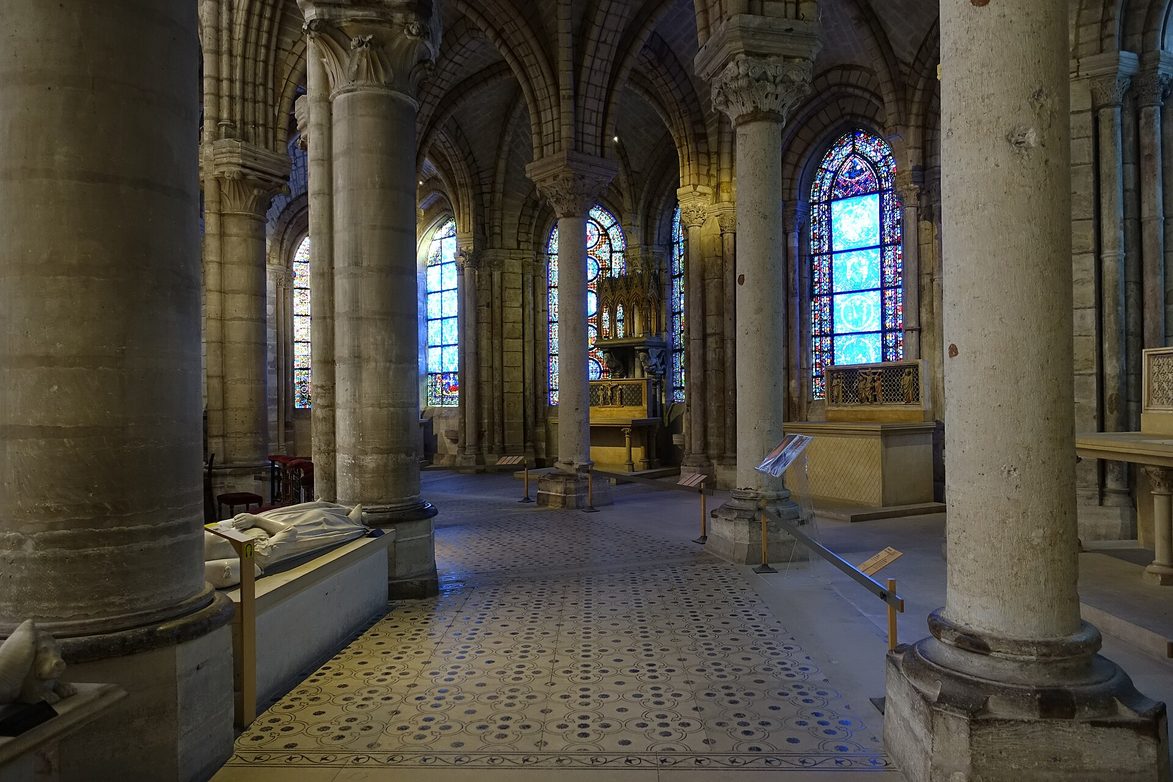
Behind the altar, the ambulatory is Suger’s choir: a double row of slender columns, and radiating chapels that run into one another so that, in his words, the whole church shines with ‘wonderful and uninterrupted light’. The chapel windows hold exact copies of his twelfth-century glass, among them the earliest known Tree of Jesse window; the fragile originals were removed for safekeeping.
The royal tombs
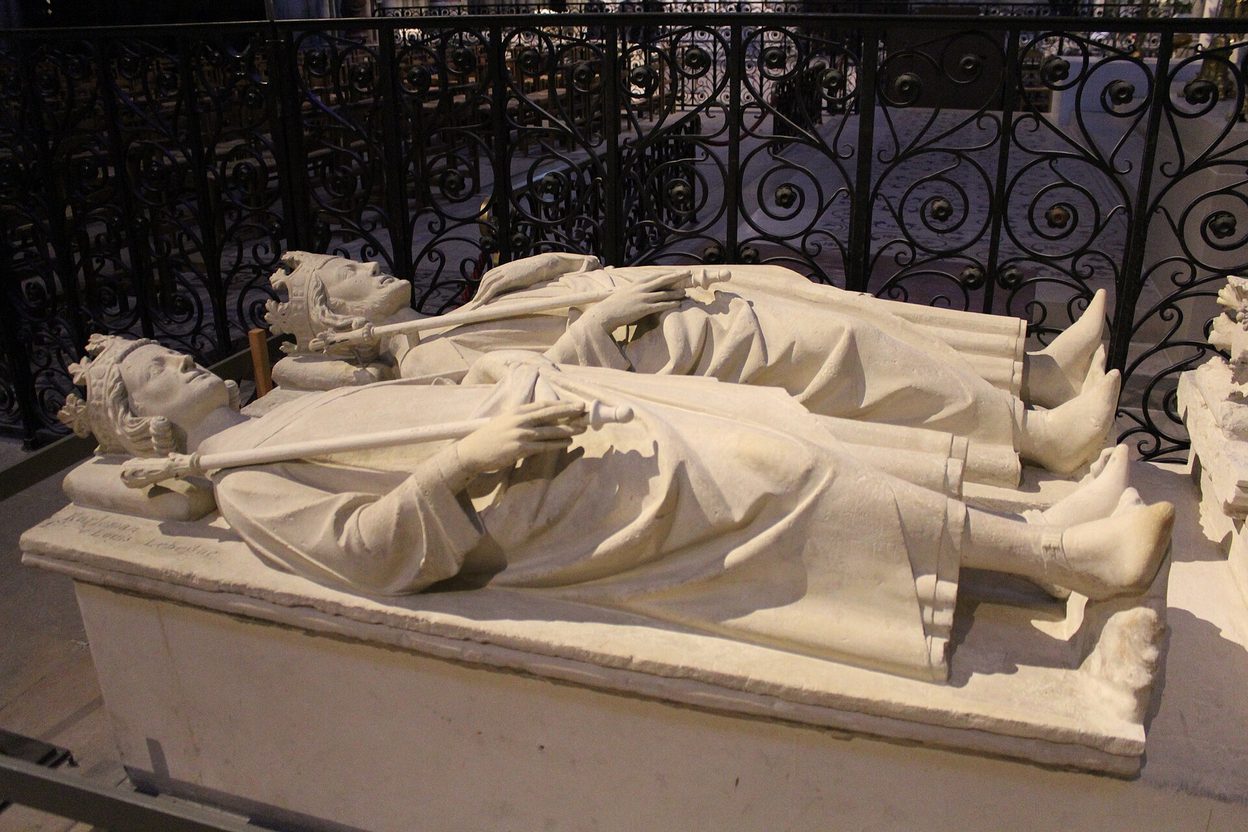
The necropolis is a history of French sculpture as well as of the monarchy. The oldest effigies are a set commissioned by Louis IX in the 1260s to honour his predecessors. The Renaissance tombs are the grandest: Louis XII and Anne of Brittany, Francis I and Claude of France, and Henry II and Catherine de’ Medici, each a marble temple with the couple kneeling in prayer on top and lying naked in death below. The kneeling statues of Louis XVI and Marie Antoinette were commissioned by Louis XVIII.

The crypt
Below the choir, the crypt holds the vault of the Bourbons, the ossuary into which Louis XVIII had the bones from the revolutionary pits gathered, and, since 2004, a crystal urn containing the heart of Louis XVII, the boy king who died in prison in 1795, identified by DNA.
The spire worksite
In 2025 work began to rebuild the north tower and spire, about 90 metres high, as they stood before 1846, using traditional methods. The worksite, the Fabrique de la flèche, is open to visitors as part of the necropolis ticket: you can watch stonemasons and blacksmiths at work. Completion is expected around 2030. The worksite is closed on Mondays, when the necropolis stays open.
Tickets and tours
Book the royal necropolis
Tickets for the necropolis and the spire worksite are sold by the Centre des monuments nationaux; booking ahead is recommended. The free guided tours in English run on Fridays. Tour operators sell skip-the-line tickets and guided visits from Paris.
Tour and hotel links go to GetYourGuide and Booking.com. This site earns nothing from them at present — they are here because they are the quickest way to check what is actually available.
Don’t miss
- Suger’s ambulatory The birthplace of Gothic, behind the high altar.
- The Renaissance tombs Louis XII, Francis I and Henry II, with their queens.
- Louis XVI and Marie Antoinette Kneeling in marble, and buried in the crypt.
- The heart of Louis XVII In the crypt.
- Dagobert’s tomb A thirteenth-century monument to the first king buried here.
- The spire worksite Medieval building methods, live.
Insider tips
Come on a Friday afternoon. The free guided tour in English, included in the ticket, starts at 3.30pm and takes you round the tombs with the stories behind them. Avoid Sunday mornings, when the necropolis is shut, and check the exceptional closures first.
Saint-Denis has a rough reputation, and it puts some visitors off. The walk from the metro to the basilica is short and busy; take the usual big-city care with bags and phones, as you would anywhere in Paris. On Stade de France match days the metro and RER are packed.
The ticket is free for anyone under 18, for EU citizens and residents of France aged 18 to 25 and with the Paris Museum Pass. There is no cloakroom, and bags must be small.
Common questions
Is the Basilica of Saint-Denis free?
The nave is free. The royal necropolis — the tombs in the transept, choir and crypt — and the spire worksite cost €17, and are free for under-18s, EU citizens and residents of France aged 18 to 25 and Paris Museum Pass holders.
Which kings are buried in the Basilica of Saint-Denis?
Most of the kings of France, from Dagobert I, who died in 639, to Louis XVIII in 1824: 40 kings and 26 queens in all, among them Louis XVI and Marie Antoinette. Their remains were thrown into pits during the Revolution, but most of the tombs survived.
How do you get to the Basilica of Saint-Denis from Paris?
Take Metro line 13 to Basilique de Saint-Denis, on the branch towards Saint-Denis–Université; the basilica is 100 metres from the station. Or take the RER D to Saint-Denis and then tram T1.
How long should I allow?
About an hour and a half to two hours for the nave, the tombs and the spire worksite. The free guided tours last about an hour and a half.
Can I visit the Basilica of Saint-Denis on Sunday?
Yes, but the royal necropolis opens only at noon on Sundays, after the morning services. It also closes at short notice for funerals and services, so check the official list of exceptional closures the day before.
Why is Saint-Denis called the birthplace of Gothic?
Because Abbot Suger rebuilt its west front and choir between about 1135 and 1144 with pointed arches, ribbed vaults and big windows, combined for the first time to flood a church with light. The style spread from here across Europe.
Where to stay and eat nearby
Most visitors come out from Paris for the morning or afternoon, and there is no need to stay in Saint-Denis itself. The Café de la Flèche, at the end of the visit, and the cafés on the square are handy for lunch; the big covered market nearby runs on Tuesdays, Fridays and Sundays.
More churches in France
- Notre-Dame de Paris — begun less than twenty years after Suger’s choir.
- The Sainte-Chapelle — Saint Louis’s chapel, Gothic as a jewel box.
- Chartres Cathedral — where the light Suger wanted reached its height.
- Reims Cathedral — where most of the kings buried here were crowned.