
Mont-Saint-Michel Abbey
Mont-Saint-Michel is a granite island in the bay where Normandy meets Brittany, crowned by a medieval abbey that seems to grow out of the rock. Pilgrims have climbed to it for more than a thousand years, and the abbey church, the Gothic halls of the Merveille and the cloister are open every day. Monks and nuns still pray there. This guide covers the abbey visit, tickets, the tides and how to get across.

A thousand years on the rock
According to tradition, in 708 the archangel Michael appeared to Aubert, bishop of Avranches, and told him to build a sanctuary on the rock. In 966 Benedictine monks settled there, and in 1023 they began the abbey church on the summit, propped up on crypts built round the rock. In the 13th century they added the Merveille, the “marvel”: three storeys of Gothic halls on the steep north side, with the cloister at the top.
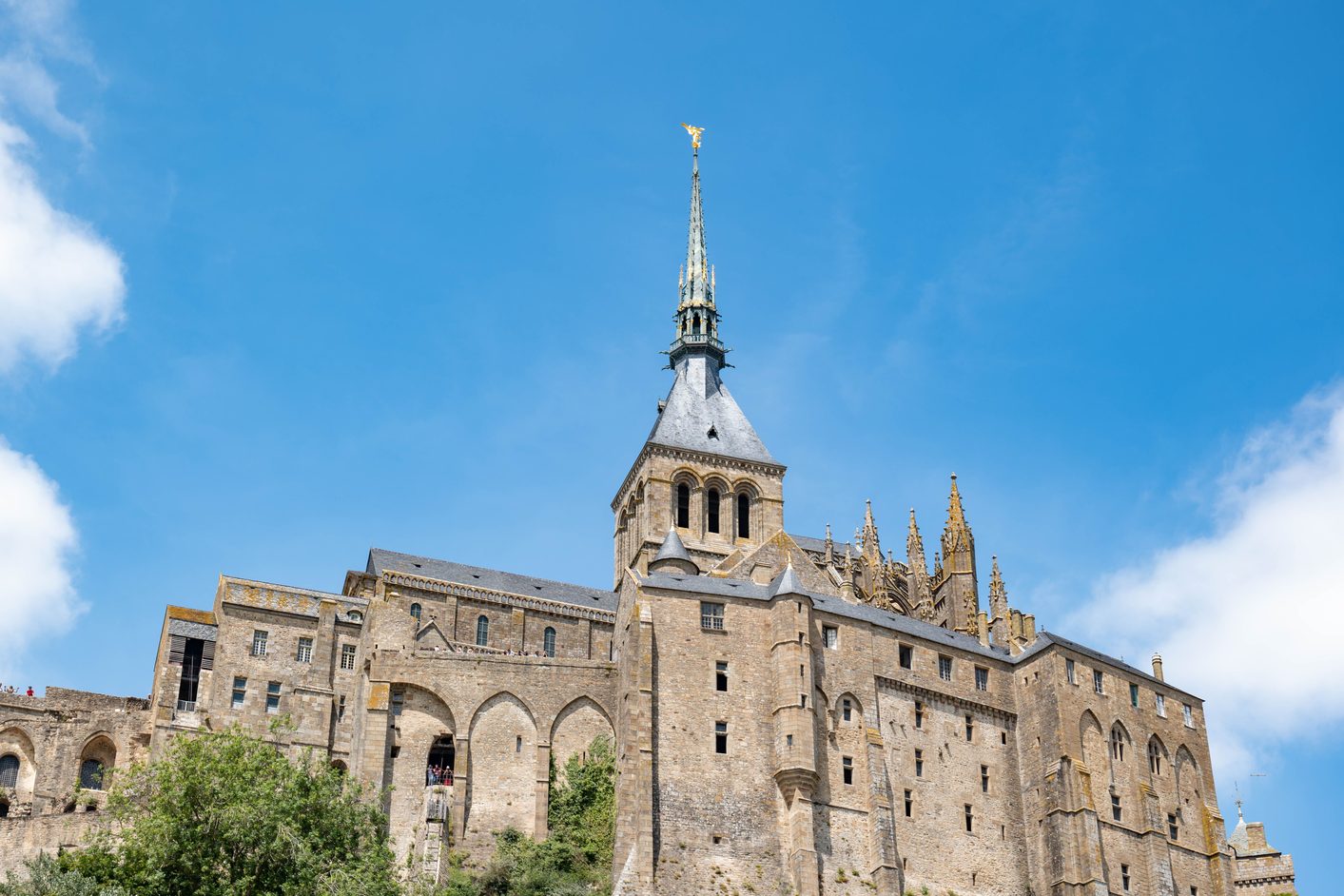
During the Hundred Years’ War the fortified island held out against the English. After the Revolution the monks were expelled, and from 1793 until 1863 the abbey was a prison. Restoration followed, and the spire, topped by Emmanuel Frémiet’s gilded statue of St Michael, was added at the end of the 19th century. In 2014 a light bridge replaced the old causeway, so that the sea can flow freely round the island again.

The visitor’s cheat sheet
| Where | Mont-Saint-Michel, Manche, Normandy; car parks on the mainland, with a free shuttle to the island |
|---|---|
| Opening hours | Abbey daily 9am–7pm from 2 May to 31 August, 9.30am–6pm the rest of the year; last entry an hour before closing. Closed 1 January, 1 May and 25 December |
| Admission | €16 from April to September, €14 from October to March (the abbey’s own site still shows €13); free under 18 and for EU citizens aged 18–25 (2026). Night visits in July and August, €21 in 2026 |
| Parking | Mainland car parks, from €14 a day for cars in low season, up to €28 in July and August; free shuttle bus or a 3 km walk |
| Mass | Usually Tuesday–Saturday 12.15pm, Sunday 11.30am, in the abbey church |
| Access | About 350 steps, no lift; no luggage in the abbey |
| How long | Ninety minutes for the abbey, half a day with the village and walls |
Hours and admission checked against the official site in October 2026. They change; the official site is always the last word.
Climb early. The Grande Rue, the narrow street up through the village, is packed in the middle of the day. Arrive for the abbey’s opening, or in the late afternoon. The climb is steep, about 350 steps in all, and there is no lift.
What to see
The abbey church
The visit climbs to the west terrace, with its view over the bay, and into the abbey church: a sober Romanesque nave of the 11th century and a soaring Gothic choir, rebuilt from 1446 after the Romanesque one collapsed during the Hundred Years’ War.

The Merveille
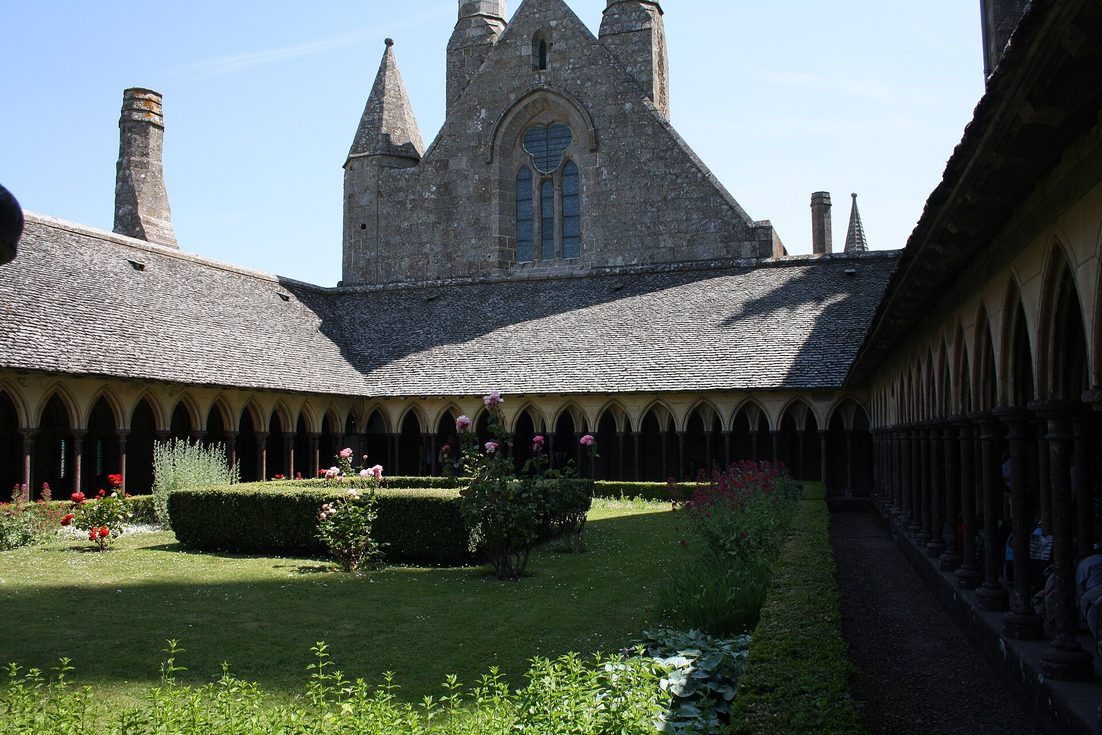
From the church you go down through the Merveille. At the top is the cloister, its slender double arcades framing a garden that seems to hang between sky and sea. Next to it is the monks’ refectory, lit by narrow windows hidden between the columns. Below are the Guests’ Hall, where the abbot received kings and noble pilgrims, and the Knights’ Hall, the monks’ workroom, with its great fireplaces.


The crypts and the great wheel
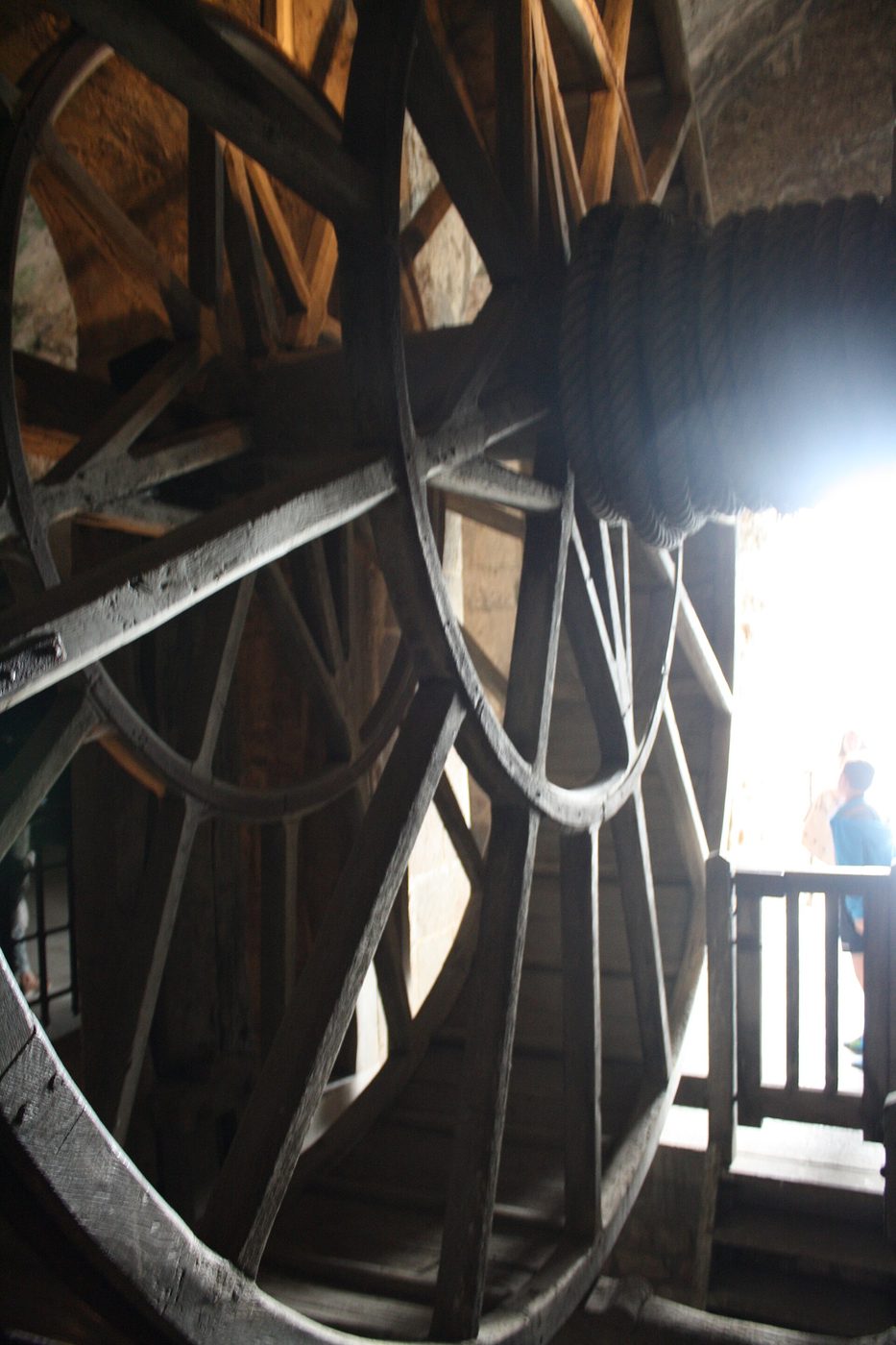
The route winds down through the crypts that hold up the church, including the crypt of the great pillars under the choir. Near the end is the great wooden wheel, installed when the abbey was a prison: prisoners walked inside it to haul supplies up the steep ramp from below.
Getting there and the tides
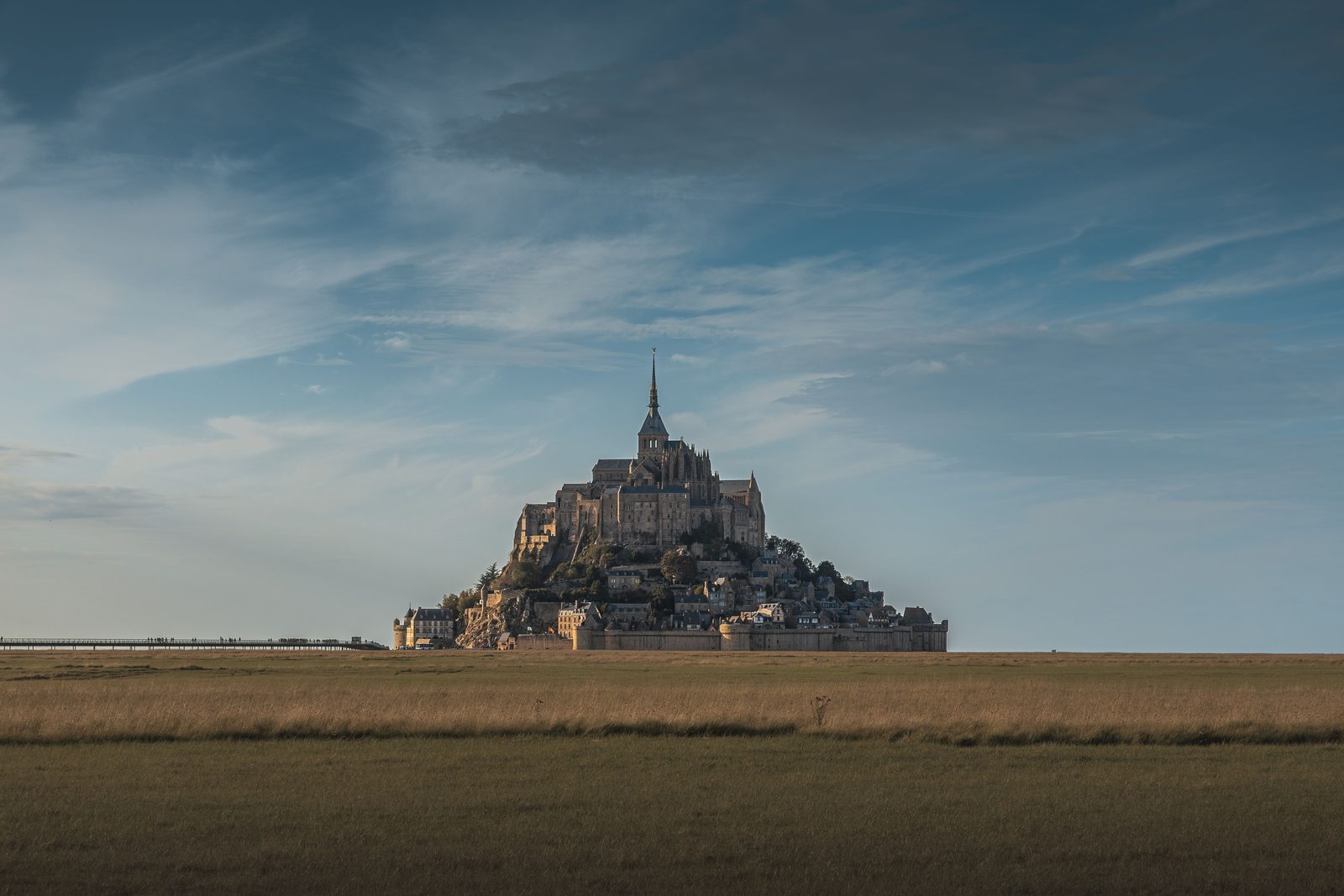
Cars and coaches stop at the large car parks on the mainland, about 3 kilometres away. From there a free shuttle bus, the Passeur, runs to just short of the island, or you can walk along the road and bridge. By public transport, take the train to Pontorson, or the TGV to Rennes, and then a bus.
The tides in the bay are among the highest in Europe. At the biggest spring tides the sea surrounds the island completely, which is a spectacle worth timing your visit for. Never walk on the sands without a qualified guide: there are quicksands, and the tide comes in fast.
Tickets, tours and hotels
Abbey tickets are sold on the official website and at the abbey. Day tours run from Paris, Rennes and Bayeux, and guided walks across the bay leave from the mainland. Staying on or near the island lets you see it at dawn and dusk, when the crowds have gone.
Tour and hotel links go to GetYourGuide and Booking.com. This site earns nothing from them at present — they are here because they are the quickest way to check what is actually available.
Don’t miss
- The cloister Between sky and sea.
- The west terrace The view over the bay.
- The refectory Light from hidden windows.
- The great wheel From the prison years.
- A spring tide When the sea surrounds the island.
Insider tips
Go to Mass, or stay the night. The midday Mass in the abbey church, sung by the monks and nuns, is the best way to feel the abbey as a living place. And if you can, stay overnight: in the evening, after the day visitors leave, the village is quiet and the island is floodlit.
Common questions
How much does the Mont-Saint-Michel abbey cost?
In 2026, €16 from April to September and €14 from October to March (the abbey’s own pages still show €13). It is free for under-18s and for EU citizens aged 18 to 25, and on the first Sunday of the month from November to March. Getting onto the island itself is free.
How many steps are there up to the abbey?
About 350 steps from the village to the end of the visit, with no lift. Wear good shoes, and leave large bags behind: luggage is not allowed in the abbey.
How do you get to Mont-Saint-Michel?
Cars and coaches stop at the car parks on the mainland. From there a free shuttle bus, the Passeur, runs to just short of the island, or you can walk about 3 kilometres. By public transport, take the train to Pontorson or Rennes and then a bus.
Is Mont-Saint-Michel still a monastery?
Yes. Since 2001 the Monastic Fraternities of Jerusalem have lived and prayed in the abbey. Mass is celebrated in the abbey church, usually at 12.15pm from Tuesday to Saturday and at 11.30am on Sunday, and visitors are welcome.
When is the abbey open?
Every day except 1 January, 1 May and 25 December: from 9am to 7pm from 2 May to 31 August and 9.30am to 6pm the rest of the year. Last entry is an hour before closing.
More churches in France
- Rouen Cathedral — Normandy’s great Gothic cathedral.
- Chartres Cathedral — its medieval glass, on the way from Paris.