
Holy Trinity, Blythburgh
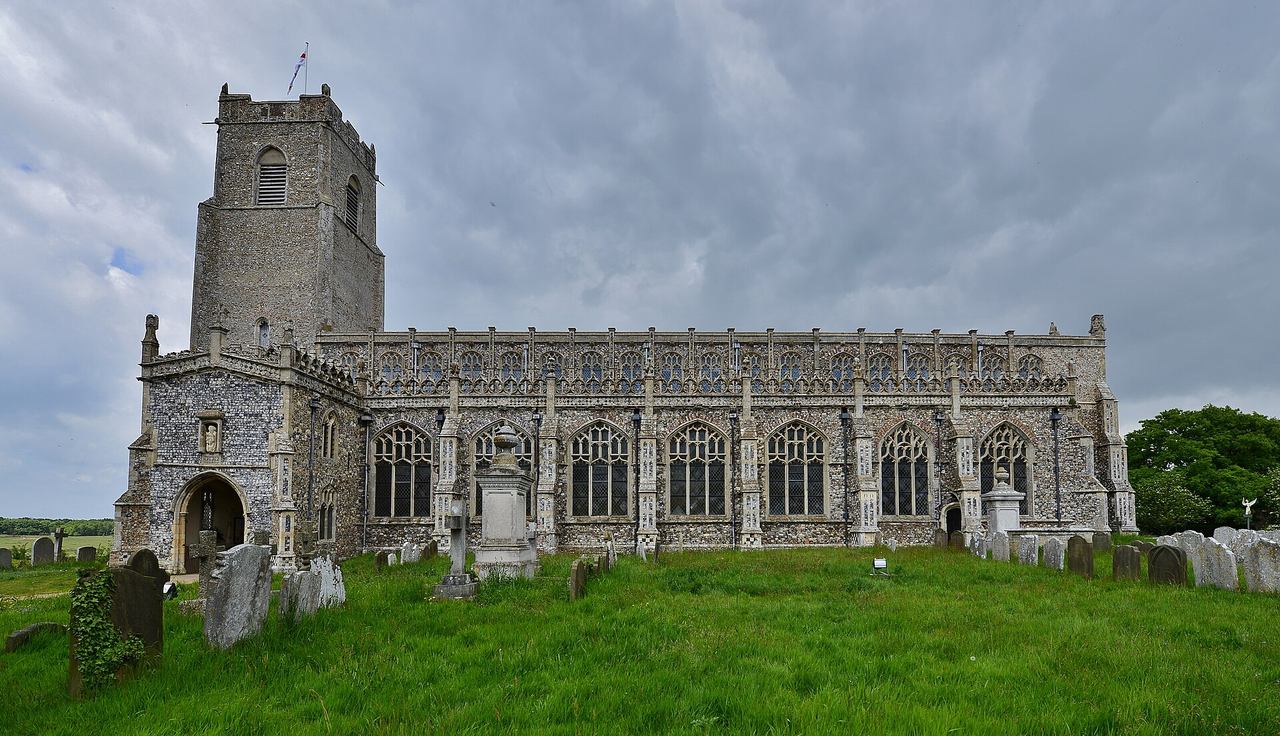
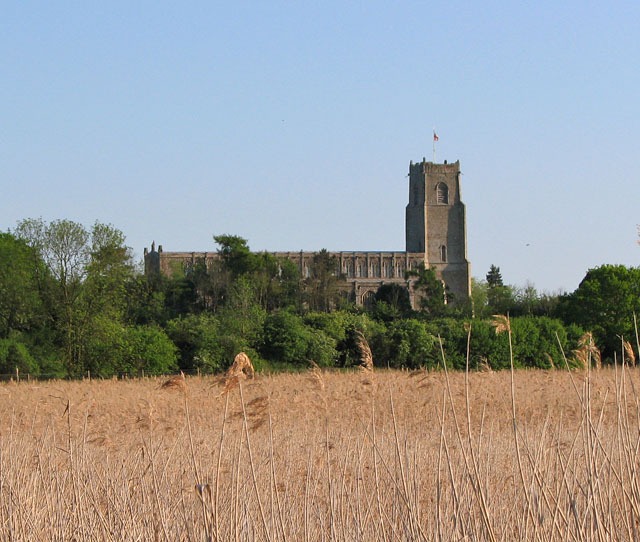
Seen across the reed beds from the A12, Holy Trinity looks far too big for the small village beside it. The “Cathedral of the Marshes” was rebuilt in the fifteenth century when Blythburgh was a busy port, and inside it is one of the most beautiful churches in England: a vast, pale space full of light, under a roof of carved angels that survived lightning, Puritans and three centuries of neglect.
A port, a priory and a great church
Blythburgh is one of the oldest Christian sites in East Anglia. In 654 the body of Anna, King of the East Angles, killed in battle against the Mercians nearby, is said to have been brought to a church here. In the Middle Ages the town had a priory of Augustinian canons and a harbour on the Blyth, and its merchants paid for the present church in the fifteenth century, in the great age of Suffolk church building.
Then the river silted up, the trade went, and the priory was dissolved in 1537. On 4 August 1577 lightning struck the church during a Sunday service and brought down the spire, and in 1644 the Puritan William Dowsing ordered the “superstitious” images removed. By the nineteenth century the building was close to ruin. It was repaired and reopened in 1884, after a long argument in which William Morris’s Society for the Protection of Ancient Buildings fought to stop it being over-restored.
The visitor's cheat sheet
| Where | Blythburgh, near Halesworth, Suffolk, IP19 9LL, just off the A12 |
|---|---|
| Getting there | By car on the A12, about 4 miles from Southwold; nearest stations Halesworth and Darsham |
| Opening hours | Every day from 9am until dusk |
| Admission | Free; donations welcome |
| How long | 45 minutes |
| Best time | A sunny afternoon, when light pours through the clear windows |
| Dress code | No formal code; respectful dress as in any working church |
| Tours | Occasional church tours; see the church calendar |
Hours and admission checked against the official site in October 2026. They change; the official site is always the last word.
Black Shuck. East Anglia’s legendary devil dog is said to have burst into the church in the storm of 1577. Look at the north door: the scorch marks on it are, so the story goes, the marks of his claws.
What to see, in the order you meet it
The outside
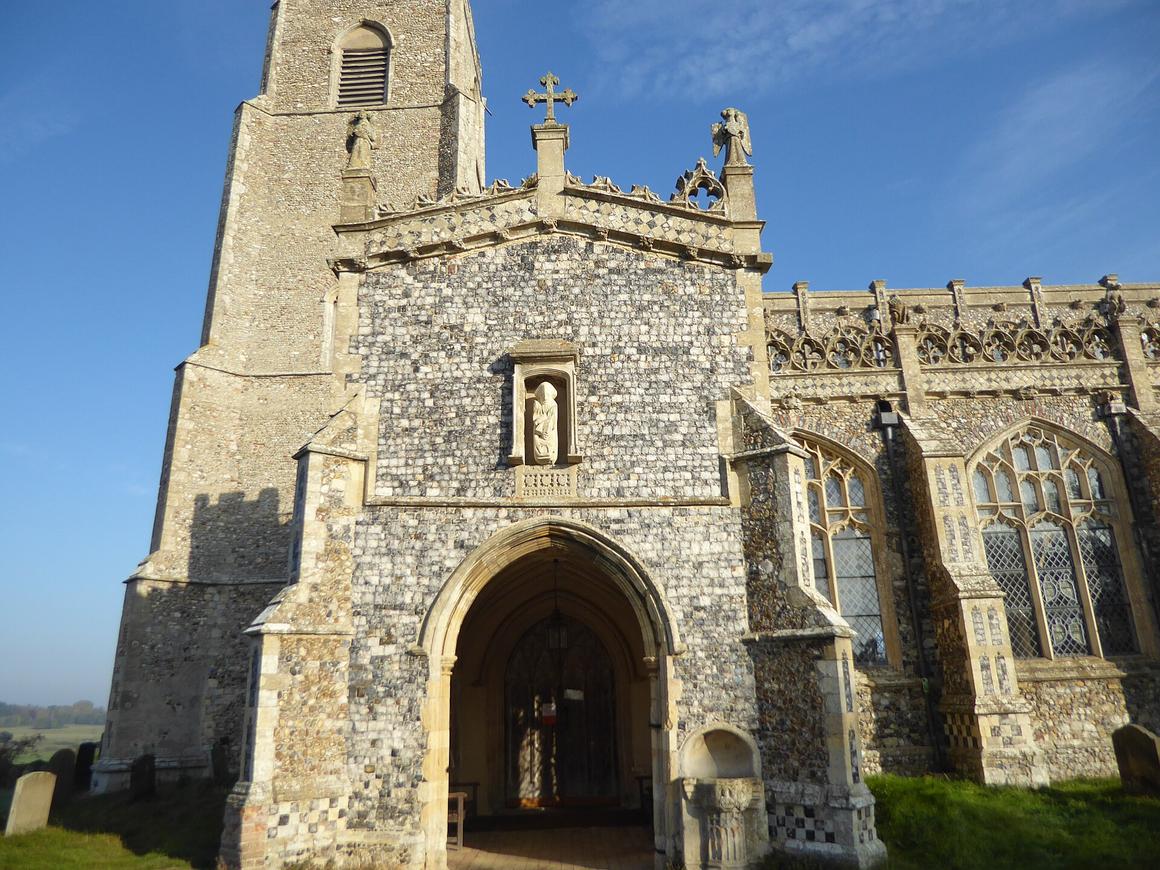
Walk along the south side, with its long run of clerestory windows and its parapets of flint flushwork. The south porch has a room above it, once used by the priest.
The nave
Inside, the medieval glass is almost all gone, and the clear windows fill the nave with light. The brick floor, plain walls and old benches make it feel much as it must have done after the Reformation.
The angel roof
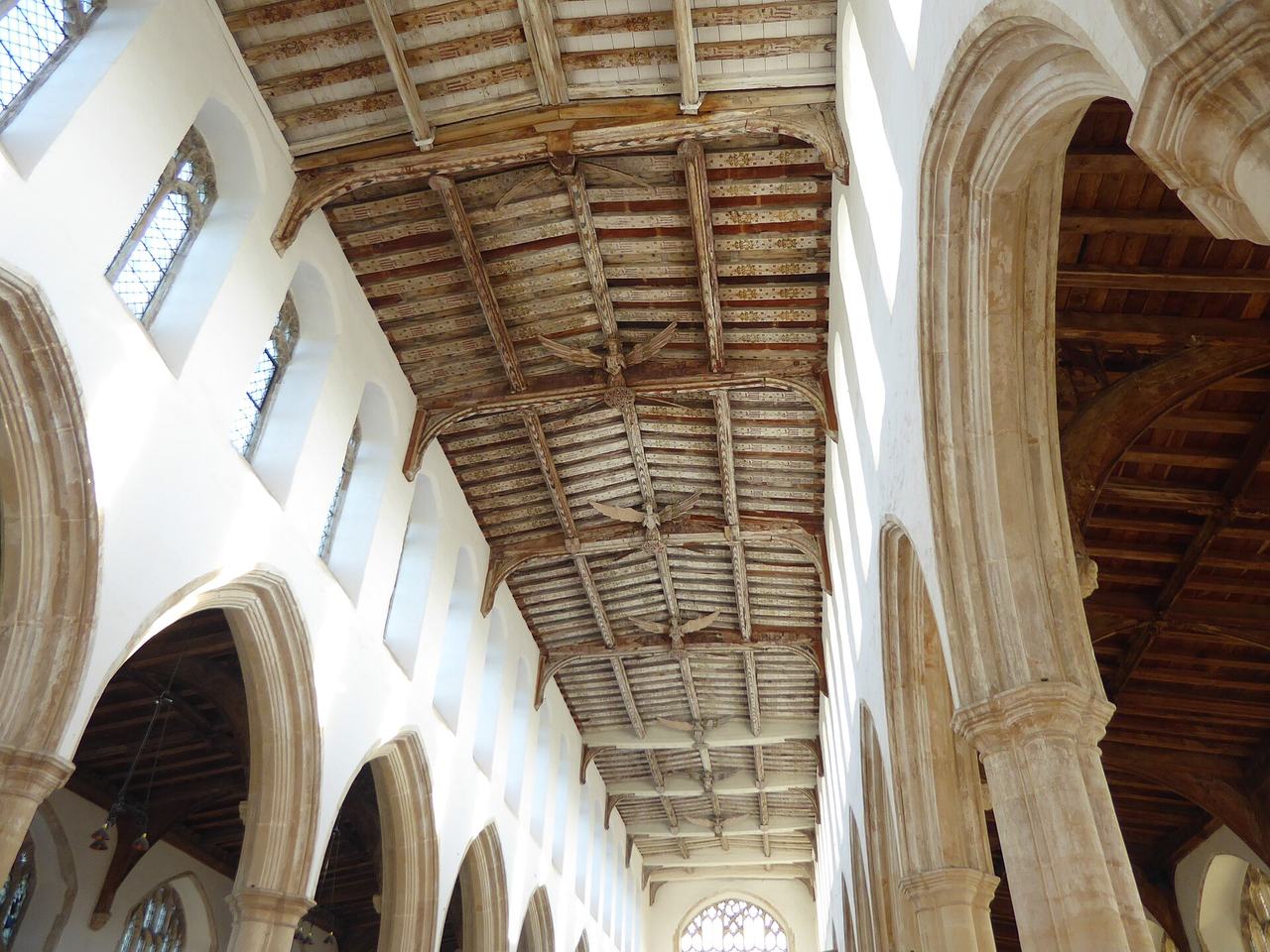
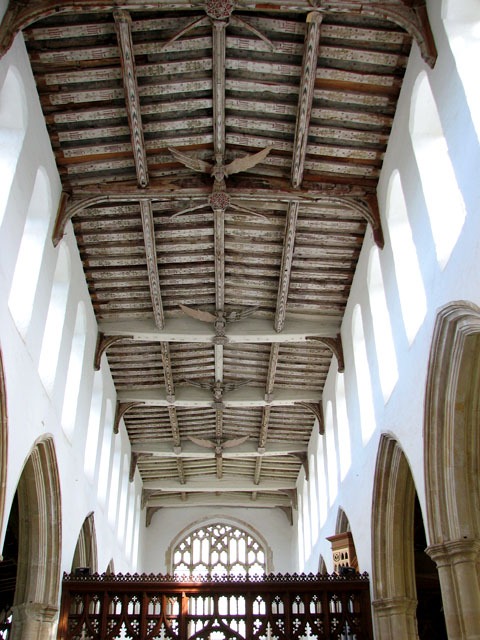
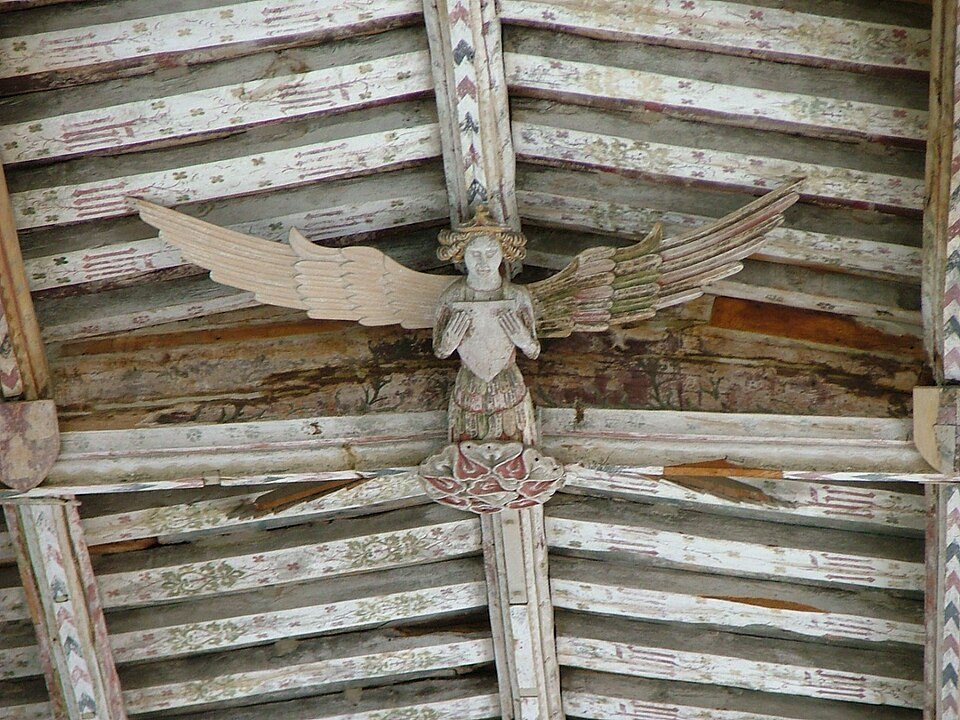
Look up. Pairs of carved wooden angels, wings spread, fly along the beams of the fifteenth-century roof. They were once brightly painted, and traces of colour remain. Dowsing’s men ordered them down; local tradition says Puritan soldiers shot at them instead. Shot has indeed been found in the roof timbers, though it probably comes from eighteenth-century jackdaw shooting.
The bench ends and the Jack
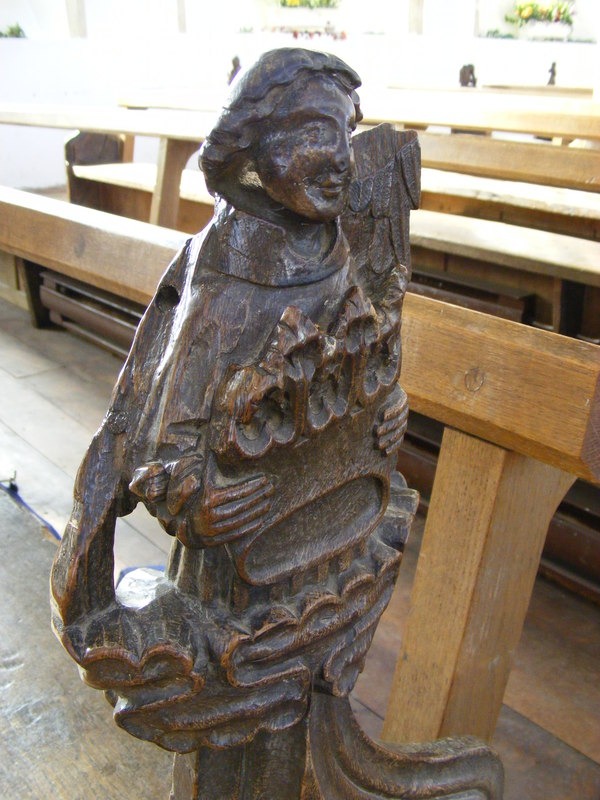
The fifteenth-century bench ends are carved with figures, including some of the deadly sins. The church’s painted wooden Jack o’ the Clock of 1682 still strikes a bell to start services.
Tickets and tours
Free, every day
Holy Trinity is open every day from 9am until dusk, with no entry fee. Occasional tours, concerts and services are listed on the church calendar. There are toilets inside, one fully accessible.
The hotel link goes to Booking.com. This site earns nothing from it at present — it is here because it is the quickest way to check what is actually available.
Don't miss
- The angel roof Carved angels flying along the beams.
- The north door Black Shuck’s scorch marks.
- The bench ends Medieval carvings, sins included.
- The Jack o’ the Clock A painted figure of 1682.
- The view From the marshes, looking back at the church.
- The light Pouring through the clear windows.
Insider tips
See it from the marshes. The best view of the church is from the footpaths along the Blyth estuary and the old railway line, looking back at it across the reeds. Benjamin Britten discovered its acoustics in the 1960s, and Aldeburgh Festival concerts are still held here.
Southwold, Walberswick and Dunwich are all close, so Blythburgh fits easily into a day on the Suffolk coast. The White Hart inn is just across the road.
Common questions
Is Blythburgh church free to visit?
Yes. Holy Trinity is open every day from 9am until dusk and there is no entry fee. Donations help keep the building in repair.
Why is it called the Cathedral of the Marshes?
Because of its size and its setting: a huge fifteenth-century church standing over the reed beds of the Blyth estuary, visible for miles across the marshes and from the A12.
What is the legend of Black Shuck?
On Sunday 4 August 1577, during a violent storm, lightning struck the church during morning service, bringing down the spire and killing two people. Legend says it was Black Shuck, the devil dog of East Anglia, and that the scorch marks on the north door are the marks of his claws.
Are dogs allowed?
Yes. As the home of the Black Shuck legend, the church says it welcomes dogs, and photography is welcome too.
How do you get to Blythburgh?
Blythburgh is on the A12 about four miles west of Southwold. There is no station; the nearest are Halesworth and Darsham. The church is just off the main road, on the edge of the village.
Where to stay and eat nearby
Southwold and Walberswick, a few miles away, have hotels, pubs and places to eat.
More English churches
- Lavenham Church — another great Suffolk church of the fifteenth century
- St Edmundsbury Cathedral — Suffolk’s cathedral
- Norwich Cathedral — the great Norman cathedral of East Anglia
See all the cathedrals and churches worth visiting in England →