
Chora Church (Kariye Mosque), Istanbul
The Chora Church holds some of the finest late Byzantine mosaics and frescoes to survive: gold-ground scenes of the lives of Christ and the Virgin, and a painted funerary chapel with one of the great images of Christian art, the Anastasis. Made a museum in 1945, it reopened as Kariye Mosque in May 2024 after four years of restoration. Foreign visitors can still see nearly all of it, for a fee, outside prayer times.
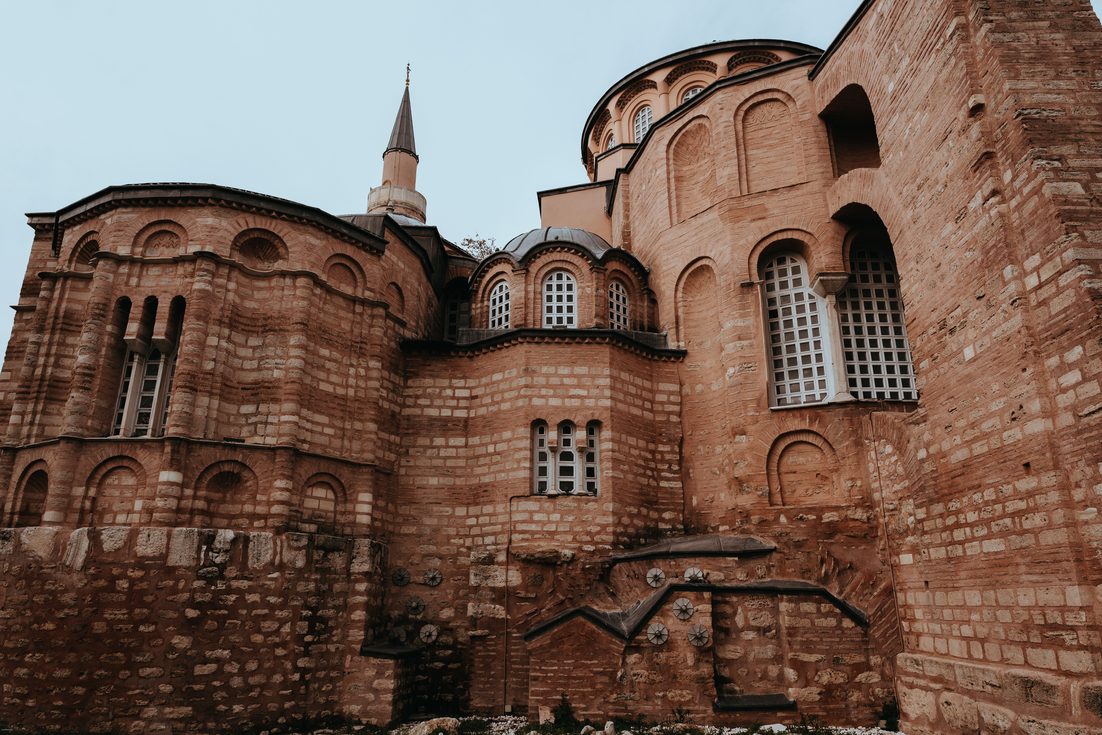
The church “in the country”
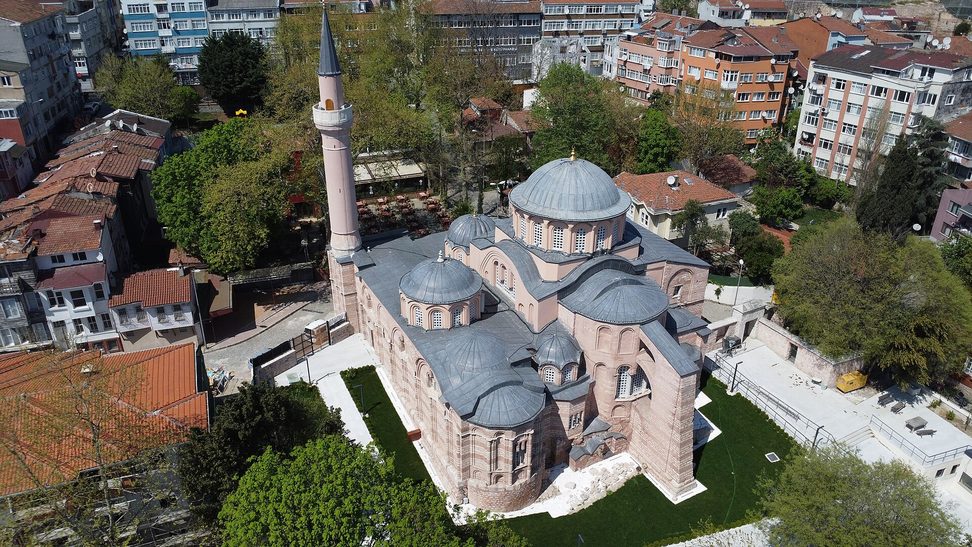
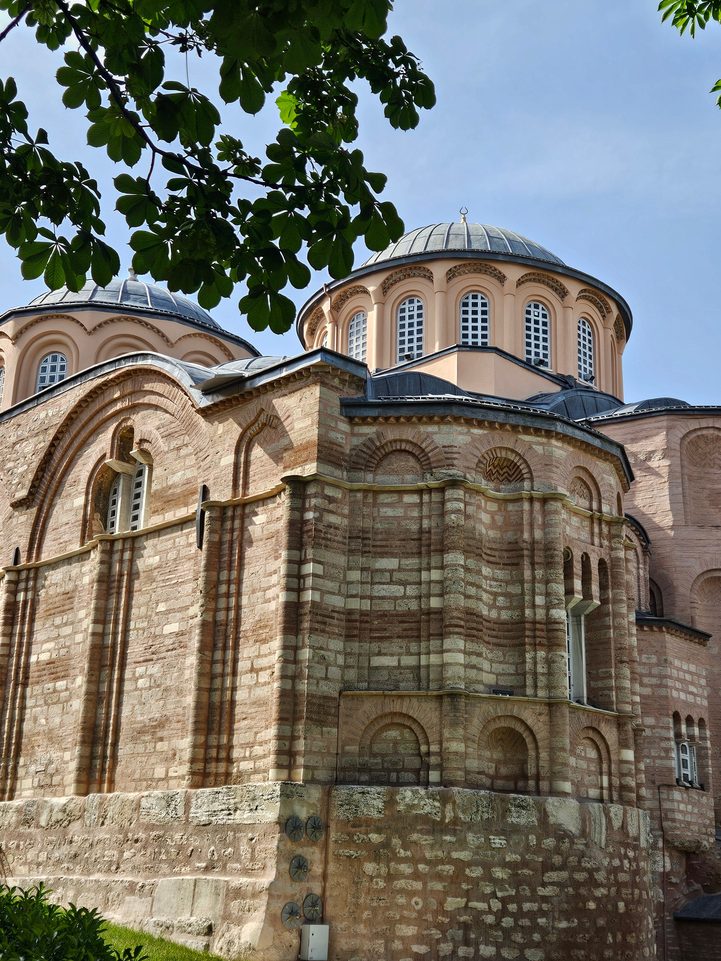
“Chora” means “in the country”: a monastery stood here outside Constantine’s city before the Theodosian Walls brought it inside in the early 5th century. The present church was rebuilt between 1077 and 1081 by Maria Doukaina, mother-in-law of the emperor Alexios I, and repaired in the 12th century.
Its glory dates from about 1315–21, when the statesman and scholar Theodore Metochites paid for the two narthexes, the side chapel called the parecclesion, and the mosaics and frescoes that cover them. Some decades after the Ottoman conquest of 1453 it became a mosque. In 1945 it was made a museum, and from 1948 the Byzantine Institute of America uncovered and restored the mosaics. In 2020 it was reconverted to a mosque, and it reopened in May 2024. It lies within the Historic Areas of Istanbul World Heritage Site.
The visitor’s cheat sheet
| Opening hours | Sat–Thu 9am–6pm; closed to tourists on Fridays; no entry from 15 minutes before each prayer |
|---|---|
| Admission | €20 for foreign visitors (2026); free for children aged 8 and under. Museum Pass not accepted |
| Dress | No shorts; women cover their hair; coverings sold at the booth |
| Not allowed | Luggage of any size, umbrellas, pushchairs, food and drink |
| Photography | Allowed, without flash or extra lighting |
| Getting there | Tram to Edirnekapı, then 10–15 minutes’ walk; buses from Eminönü |
| How long | 45 minutes to an hour and a quarter |
Hours and admission checked against the official site in November 2026. They change; the official site is always the last word.
What to see
The mosaics of the narthexes
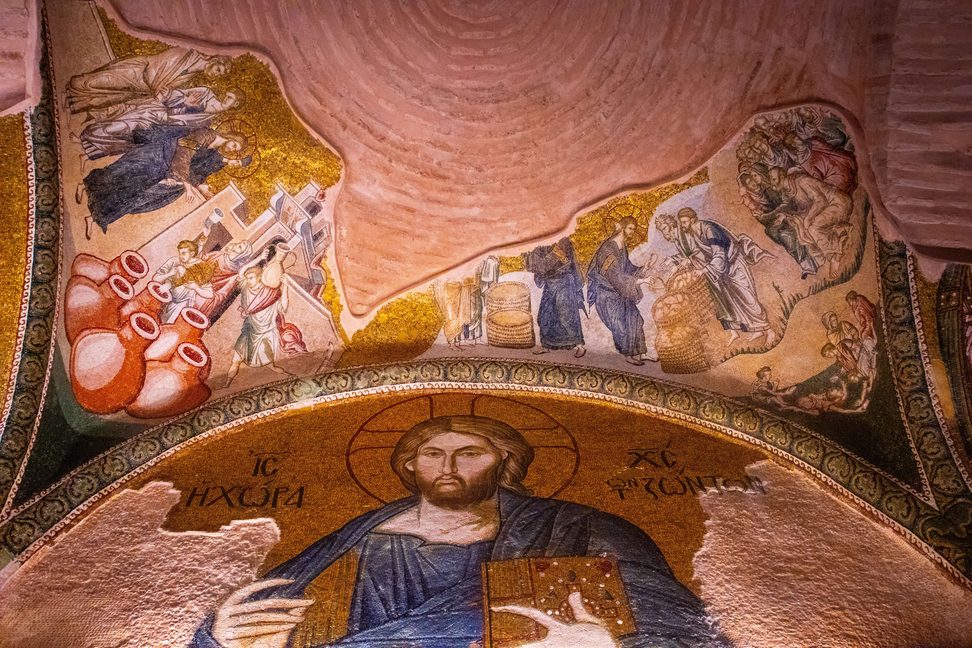
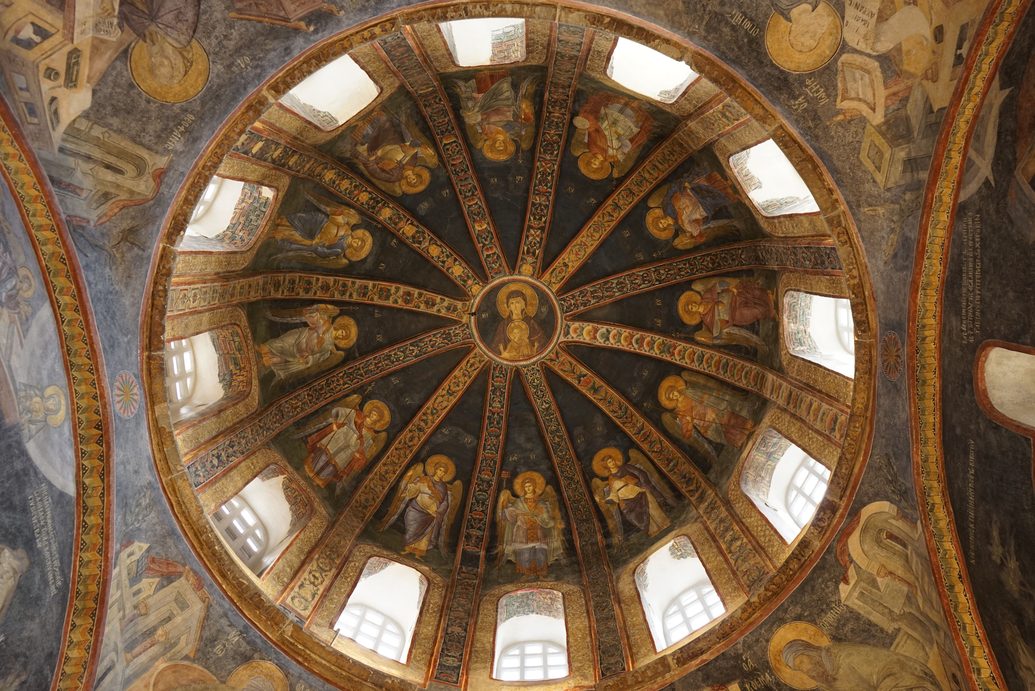
The tourist route begins in the two entrance halls. Over the door into the inner narthex is Christ as “the land of the living”, a play on the church’s name. The outer narthex tells the infancy of Christ, from Joseph’s dream and the journey to Bethlehem to the return from Egypt, with his miracles on the vaults; the inner narthex tells the life of the Virgin, from her parents Joachim and Anne to her betrothal to Joseph and the Annunciation at the well. Its two domes are filled with the ancestors of Christ around the Virgin and Child and Christ Pantokrator.
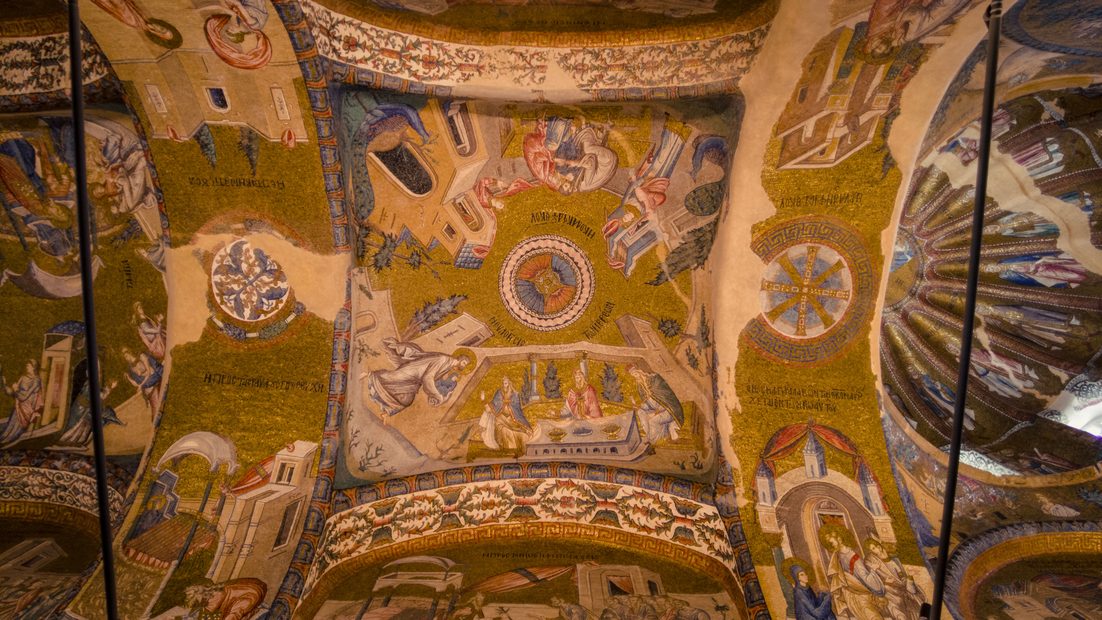
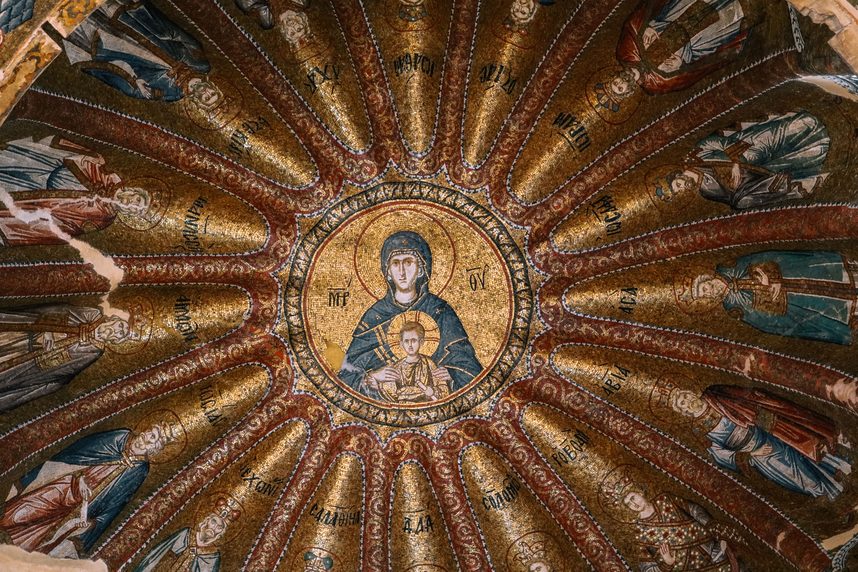
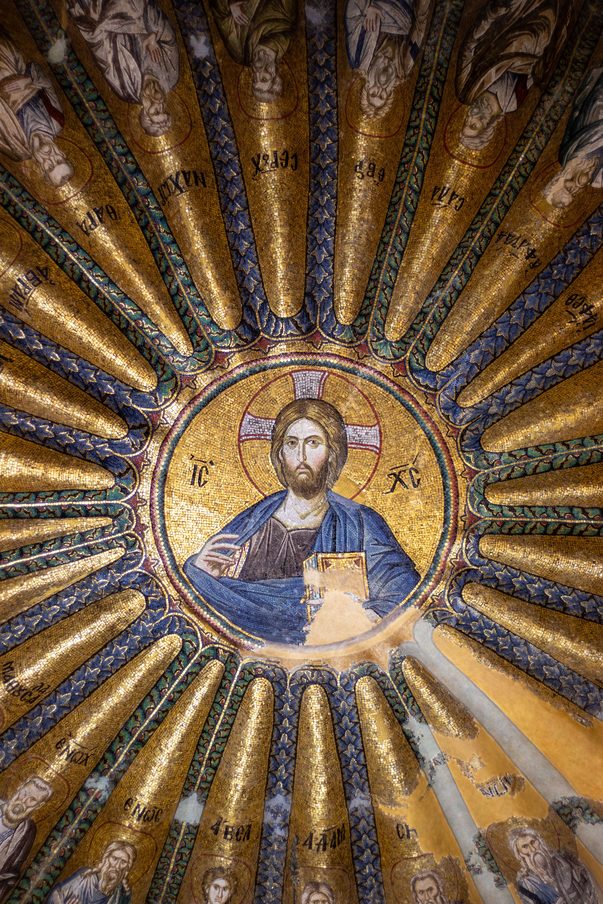
Above the door into the main church, Theodore Metochites kneels in a great turban-like hat and offers a model of the church to the enthroned Christ. To its right is a large Deesis, Christ and the Virgin without St John the Baptist, with two earlier donors below: Isaac Komnenos and the nun Melane, “Lady of the Mongols”.
The parecclesion and the Anastasis
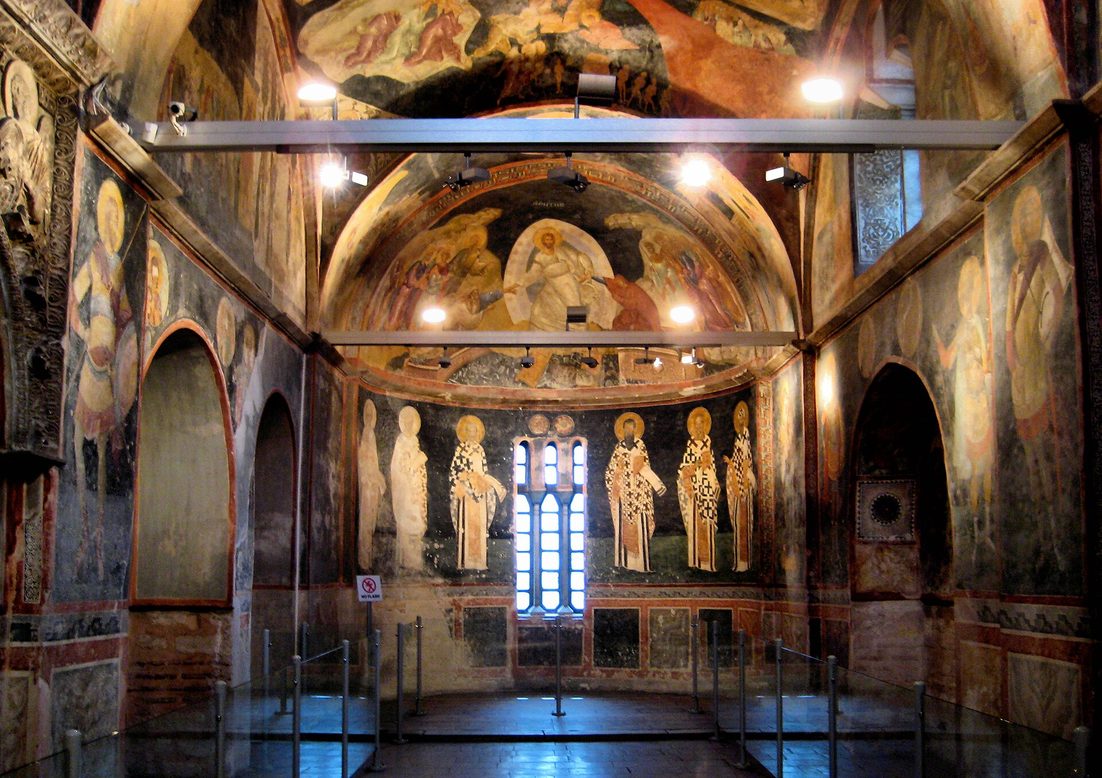
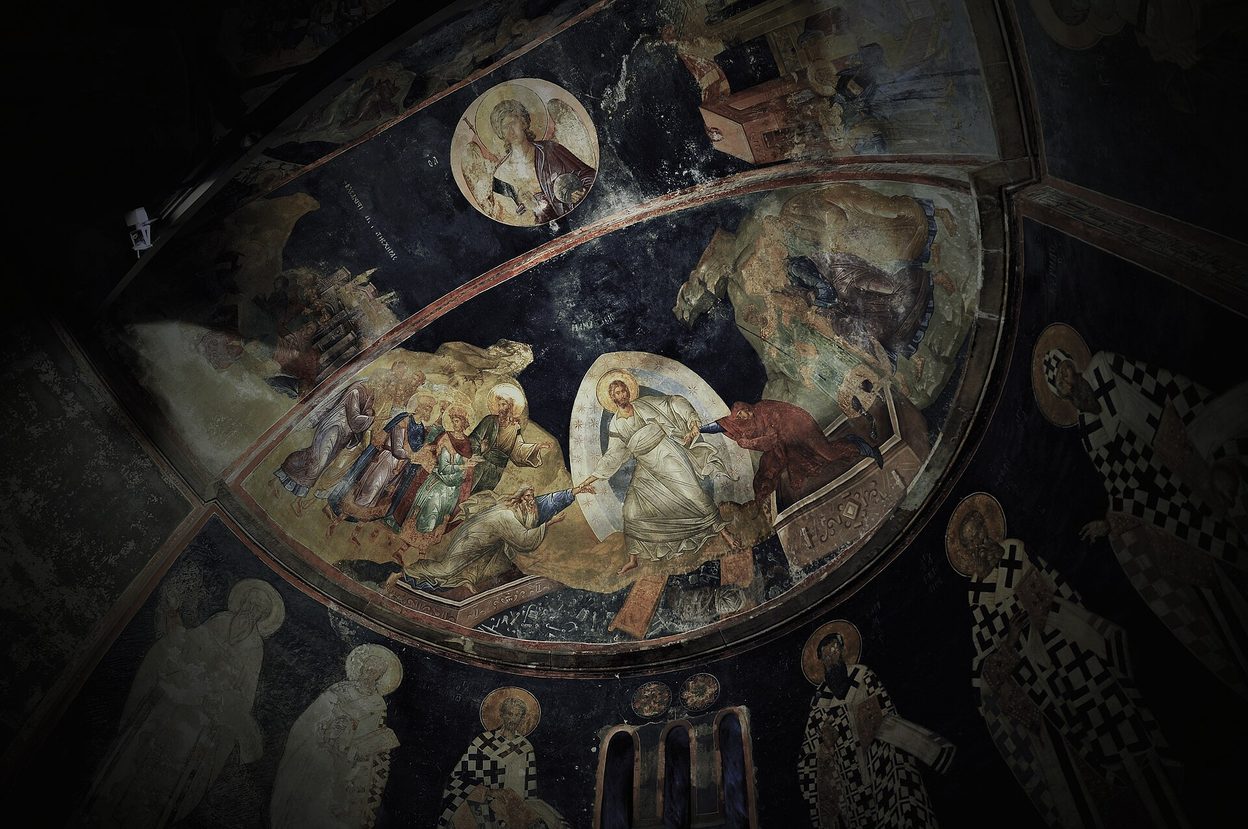
Along the south side runs the parecclesion, a funerary chapel painted in fresco, with tomb niches in its walls. Its vault shows the Last Judgement, and in the half-dome of the apse is the Anastasis: Christ in shining white, having broken the gates of hell, pulls Adam and Eve bodily out of their tombs. It is the scene most visitors come for.
The prayer hall
The main hall, the naos, is now the prayer hall, with a minbar and mihrab. Its three remaining mosaics, including the Dormition of the Virgin over the entrance, are screened by curtains. Whether visitors may step inside outside prayer times has varied; expect at least a view from the doorway.
Visiting a working mosque
Tourist visits are not allowed on Fridays. On other days, visitors are kept out from 15 minutes before each of the daily prayers and may not stay inside during them, so allow for a wait around the midday and afternoon prayers. Women cover their hair, nobody wears shorts, and you take off your shoes on the carpets. Luggage, umbrellas, pushchairs, food and drink are not allowed, and there is a security check in the garden. Photography is allowed without flash; do not photograph people at prayer.
Getting there
The church is in the Edirnekapı district of Fatih, close to the Theodosian land walls and well away from Sultanahmet. Take tram T1 to Topkapı and change to tram T4 for Edirnekapı, then walk 10 to 15 minutes; the Metrobus also stops at Edirnekapı, and buses 31E and 37E run from Eminönü. Approach from Kariye Türbesi Sokağı on the north side and walk round to the visitor entrance on the south.
Combine the visit with a walk along the land walls, about 100 metres away, or down through the old streets of Balat and Fener to the Golden Horn.
Tickets, tours and where to stay
Tickets are sold at the booth and online through the official DEM Museums site.
These links go to GetYourGuide and Booking.com. This site earns nothing from them at present — they are here because they are the quickest way to check what is actually available.
Don’t miss
- The Anastasis In the apse of the parecclesion.
- The narthex domes The ancestors of Christ in gold.
- Theodore Metochites The donor in his turban-like hat, over the door.
- The land walls A short walk away.
Insider tips
Arrive at 9am. The narthexes are quiet before about 10.30am, giving you time with the Anastasis before tour groups arrive.
Never on a Friday. The mosque is open only to worshippers all day on Fridays.
Common questions
Can tourists visit the Chora Church now it is a mosque?
Yes. Since it reopened as Kariye Mosque in May 2024, foreign visitors pay €20 and follow a route through the outer and inner narthex and the parecclesion, where nearly all the mosaics and frescoes are on view. It is closed to tourists on Fridays, and visits stop for prayers.
Which mosaics are covered?
Three mosaics in the main prayer hall, among them the Dormition of the Virgin over the entrance, are covered with curtains. The narthex mosaics and the parecclesion frescoes, including the Anastasis, are all visible.
What are the opening hours?
9am to 6pm daily except Friday, all year; the ticket office closes at 5.55pm. Visitors are not let in from 15 minutes before each prayer and must leave during it.
What should I wear?
No shorts, for men or women. Women cover their hair; scarves and coverings are sold at the ticket booth. Shoulders should be covered, and shoes come off on the carpeted prayer area.
Does the Museum Pass Istanbul cover it?
No. The Museum Pass is not accepted here; buy a ticket at the booth or online.
More churches nearby
- Churches in Greece — including Meteora and Mount Athos.
- San Vitale, Ravenna — earlier Byzantine mosaics, from the age of Justinian.