
Basilica of San Vitale, Ravenna
San Vitale is a plain brick octagon on the outside and, on the inside, some of the finest sixth-century mosaics in the world: the Emperor Justinian and the Empress Theodora with their courts, a young Christ on a blue globe, and Old Testament scenes in gold and green. It was consecrated in 547, and Charlemagne copied it for his chapel at Aachen. There are no single tickets: San Vitale is sold with Ravenna’s other mosaic monuments, from €10.50, and the Mausoleum of Galla Placidia next door needs a timed slot.

Justinian’s church
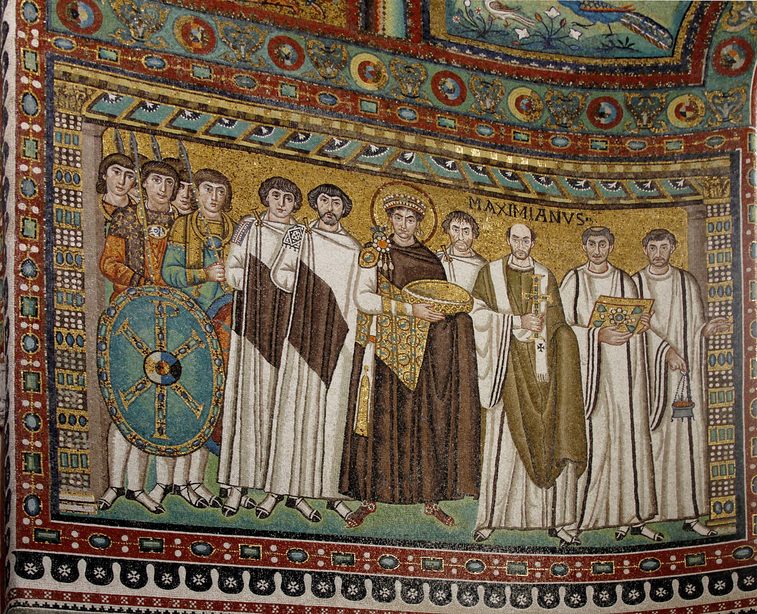
When San Vitale was begun, around 526, Ravenna was the capital of the Gothic kingdom of Italy. Bishop Ecclesius started the church on his return from Constantinople, and a banker, Julius Argentarius, paid for it. By the time Archbishop Maximian consecrated it in 547, Justinian’s armies had taken Ravenna for the Eastern Empire, and the mosaics celebrate the new order: the emperor and empress bring gifts to the altar, though neither ever came to Ravenna.
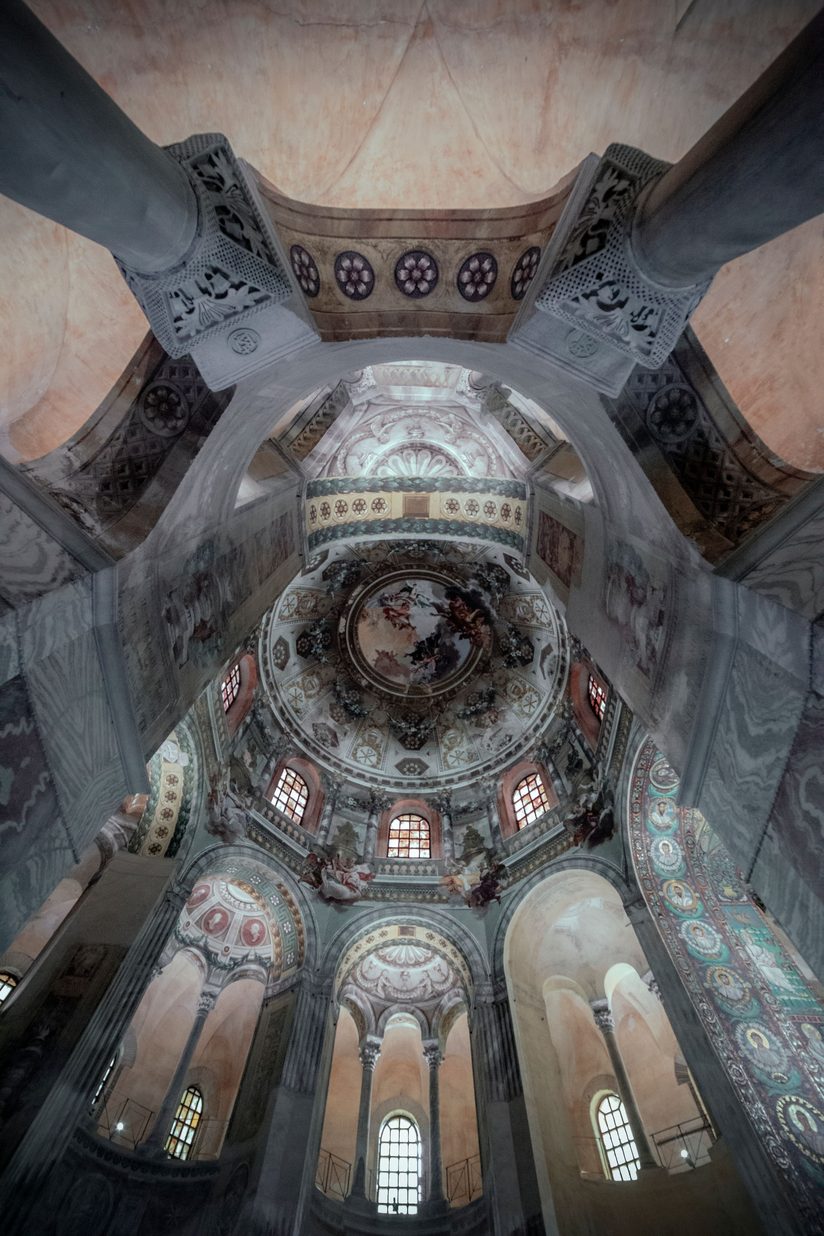
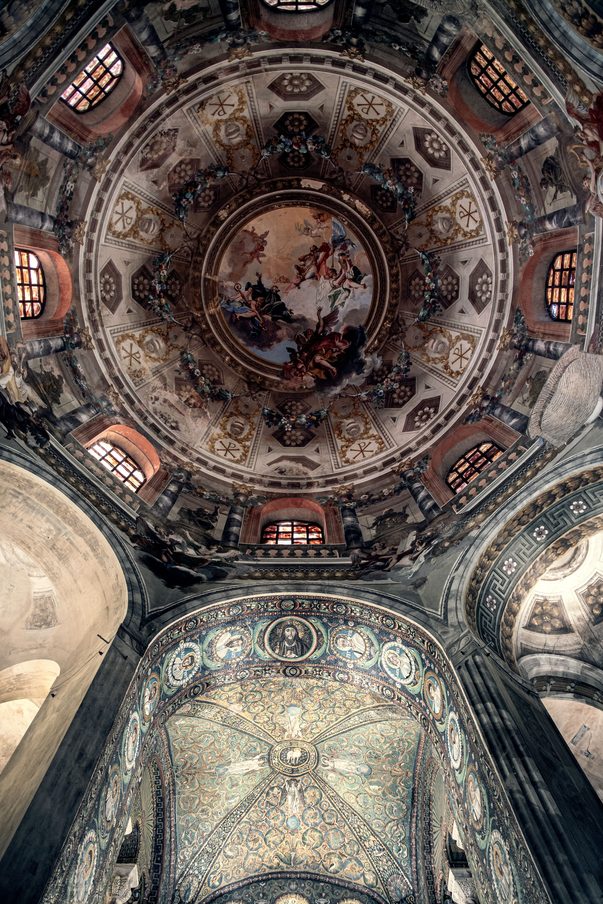
The plan is an octagon within an octagon, with a two-storey ambulatory and gallery around a high central space, close to the churches of Constantinople. The dome was painted in the Baroque style in 1778–82, but the presbytery and apse keep their original mosaics. In 1996 San Vitale became one of the eight Early Christian Monuments of Ravenna on the World Heritage list.
The visitor’s cheat sheet
| Where | Via San Vitale 17, 48121 Ravenna; the Mausoleum of Galla Placidia is in the same garden |
|---|---|
| Opening hours | 8 March–2 November daily 9am–7pm, last entry 6.30pm; 3 November–6 March daily 10am–5pm, last entry 4.30pm. Closed 25 December and 1 January |
| Admission | Combined tickets only: two monuments €10.50, four €12.50, five €14.50 (reduced €9.50, €11.50, €13.50). Valid seven days. No cash: card or other electronic payment |
| Galla Placidia | On the four- and five-monument tickets only. Timed slot compulsory all year, free to book online; five minutes inside |
| Rules | Visitors must be properly dressed (cover shoulders and knees to be safe); silence; no flash, tripods or selfie sticks; no dogs except assistance dogs |
| Getting there | 15–20 minutes’ walk from Ravenna station; trains from Bologna take about an hour to an hour and a quarter |
| How long | About 45 minutes for San Vitale and Galla Placidia; three hours for all five monuments |
Hours and admission checked against the official site in October 2026. They change; the official site is always the last word.
Book Galla Placidia before anything else. The mausoleum is on the four- and five-monument tickets only, and entry is by a timed slot, all year. Slots are free to book online with your ticket and sell out first, especially when tour groups are in town. Inside, you have five minutes. San Vitale needs no timed slot, though you choose a visit date when you buy.
What to see, in the order you meet it
The octagon
You come in through the narthex, set at an odd angle to the church, and into the octagon. Eight great piers carry the dome, with curved arcades opening into the ambulatory and the women’s gallery above. In the floor in front of the presbytery is a round marble labyrinth, laid when the floor was repaved in the sixteenth century. Overhead, the dome is an eighteenth-century fresco.
The presbytery
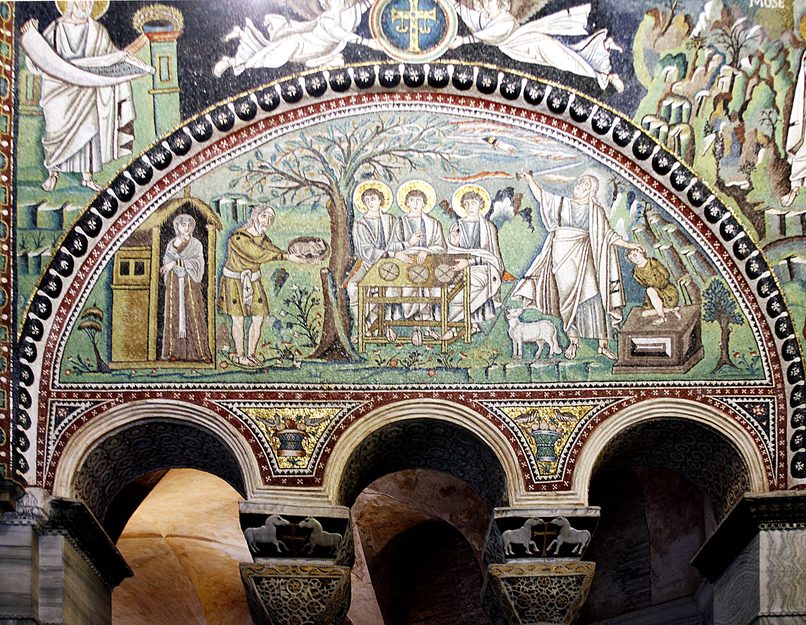
Walk towards the altar and the mosaics begin. On the arch are medallions of Christ and the apostles. In the lunettes, Abraham welcomes three angels and prepares to sacrifice Isaac; Abel and Melchizedek make their offerings; above them, Moses tends his flock, sees the burning bush and receives the Law. In the vault above, four angels hold up a wreath with the Lamb of God, among birds, peacocks and flowers.
The apse
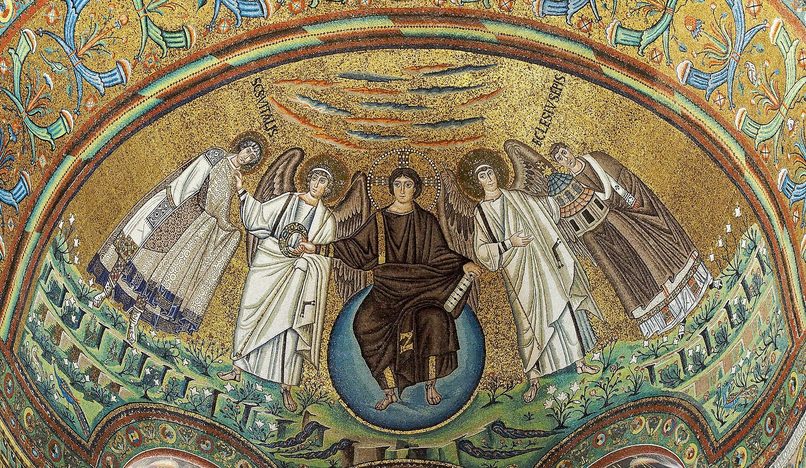
In the apse a beardless Christ in purple sits on a blue globe between two archangels. He hands the crown of martyrdom to St Vitalis, and on the other side Bishop Ecclesius offers a model of the church.
Justinian and Theodora
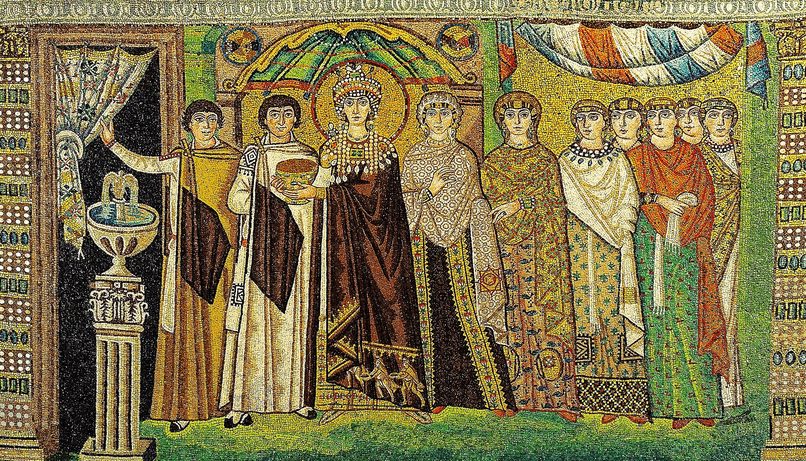
On the walls below are the two most famous mosaics in Ravenna. On the left, Justinian, haloed and in purple, carries a gold paten, with Archbishop Maximian, named above his head, clergy, officials and soldiers. On the right, Theodora holds a jewelled chalice among her ladies; it is the only certain portrait of her.
The Mausoleum of Galla Placidia
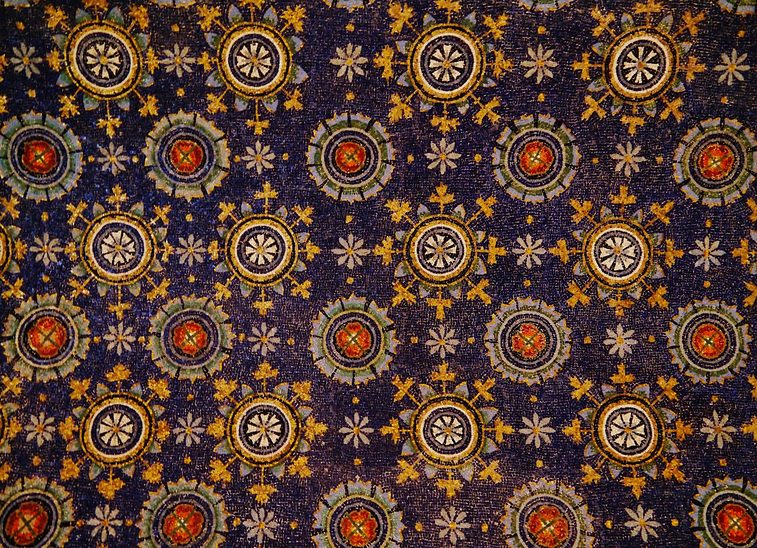
Across the lawn is a small cross-shaped brick building, about a century older than San Vitale and built in the first half of the fifth century. Inside, the vault is deep blue covered with gold stars around a cross, with the symbols of the four evangelists. Over the entrance is the Good Shepherd among his sheep; opposite, a saint, usually identified as St Lawrence, strides towards a burning gridiron. Alabaster panes in the windows let in a dim light. The building has sunk about a metre and a half over the centuries.

Tickets and tours
Tickets and guided tours
Tickets are sold online on the diocese’s Ravenna Mosaici site, where you also book the Galla Placidia slot, and at the ticket offices, which take no cash. Guided tours of the UNESCO monuments run from the city; a guide is the easiest way to read the mosaics.
Tour and hotel links go to GetYourGuide and Booking.com. This site earns nothing from them at present — they are here because they are the quickest way to check what is actually available.
Don’t miss
- Justinian and Theodora The imperial panels either side of the apse.
- Christ on the globe In the apse conch.
- The Lamb of God In the vault of the presbytery, held up by four angels.
- Abraham and the angels The lunette on the presbytery wall.
- The starry vault In the Mausoleum of Galla Placidia.
Insider tips
Buy the five-monument ticket and spread it out. It costs only €4 more than the basic ticket, adds Galla Placidia, the Neonian Baptistery and the Archiepiscopal Museum with St Andrew’s Chapel, and lasts seven days. Book the timed slots for Galla Placidia, the Baptistery and the Archiepiscopal Museum first, then fit San Vitale and Sant’Apollinare Nuovo round them.
Three of Ravenna’s eight World Heritage monuments are not on the diocesan ticket: the Arian Baptistery, the Mausoleum of Theodoric and Sant’Apollinare in Classe, about 5km south, which is state-run with its own ticket. Classe is 20–30 minutes by bike, mostly on cycle paths.
The National Museum of Ravenna, in the cloisters of the old monastery beside San Vitale, has a separate ticket, is closed on Mondays and has shortened afternoon hours. Dante’s tomb, in the centre, is free.
Common questions
Can I buy a ticket for San Vitale alone?
No. The diocesan monuments are sold only as combined tickets; in 2026 these are San Vitale and Sant’Apollinare Nuovo for €10.50, four monuments including the Mausoleum of Galla Placidia for €12.50, or five for €14.50. Tickets are valid for seven days, one entry per monument.
Do I need to book the Mausoleum of Galla Placidia?
Yes, all year. Entry is by timed slot, booked free online with your ticket; otherwise you can only take a slot at a ticket office on the day, if any are left. Visits inside are limited to five minutes.
What are the opening hours of San Vitale?
From 8 March to 2 November daily 9am to 7pm, last entry 6.30pm; from 3 November to 6 March daily 10am to 5pm, last entry 4.30pm. It is closed on Christmas Day and New Year’s Day.
Is Galla Placidia buried in her mausoleum?
No. Galla Placidia died in Rome in 450 and was almost certainly buried there. The tradition that she lies in Ravenna goes back to the Middle Ages, and none of the three sarcophagi in the mausoleum can be securely linked to her.
Can I take photos inside San Vitale?
Yes, for private use and without flash. Tripods and selfie sticks are not allowed.
How long do I need for Ravenna's mosaics?
About 25 minutes in San Vitale and five in Galla Placidia. To see all five diocesan monuments, allow about three hours; the seven-day ticket means you can spread them out.
Where to stay and eat nearby
Ravenna’s centre is small, flat and largely closed to traffic, and everything is within a short walk or bike ride. It is an easy day trip from Bologna, but staying a night lets you see the monuments early and late, when the groups have gone.
More churches in Italy
- St Mark’s Basilica, Venice — Byzantine gold mosaics on a far larger scale.
- Monreale Cathedral, Sicily — the Norman kings’ cathedral of gold mosaic, six centuries later.
- Santa Croce, Florence — where Dante has a monument but no grave.
- Aachen Cathedral — Charlemagne’s chapel, modelled on San Vitale.