
Basilica of St Francis, Assisi
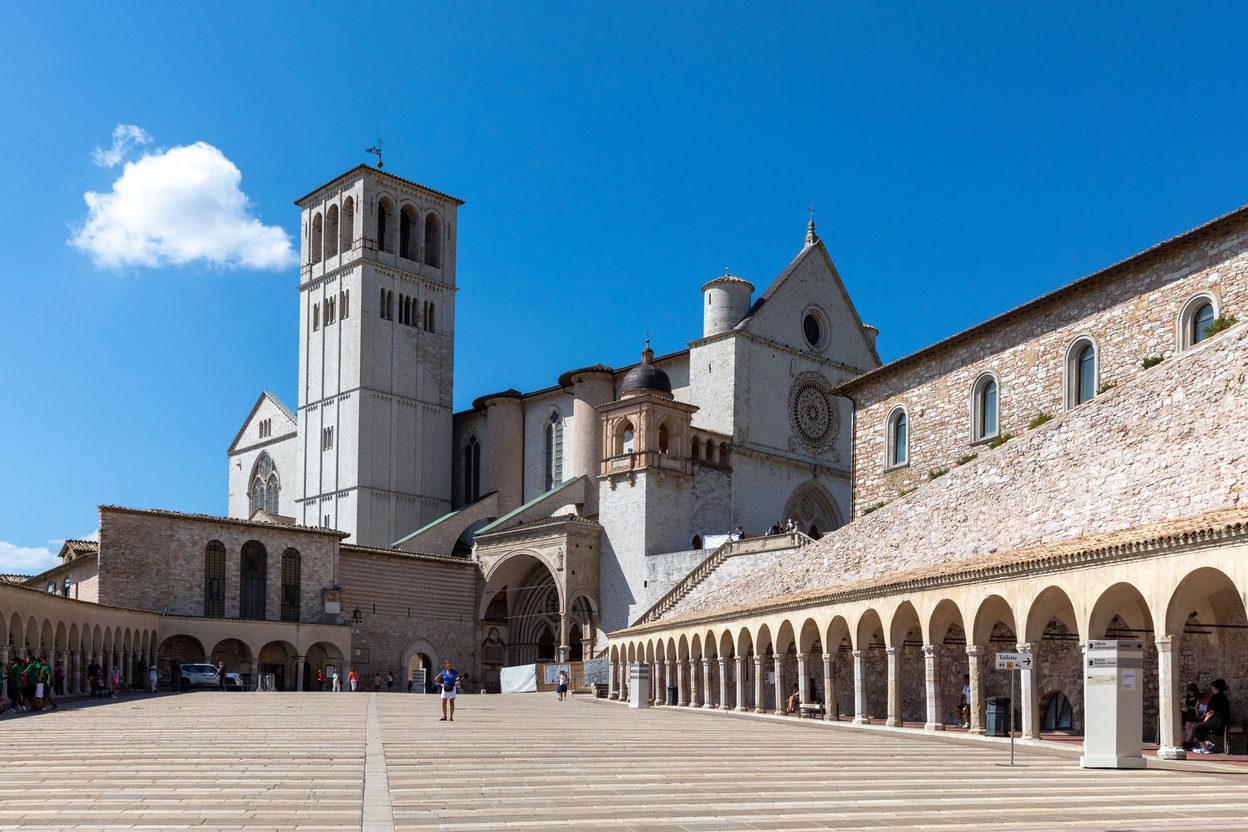
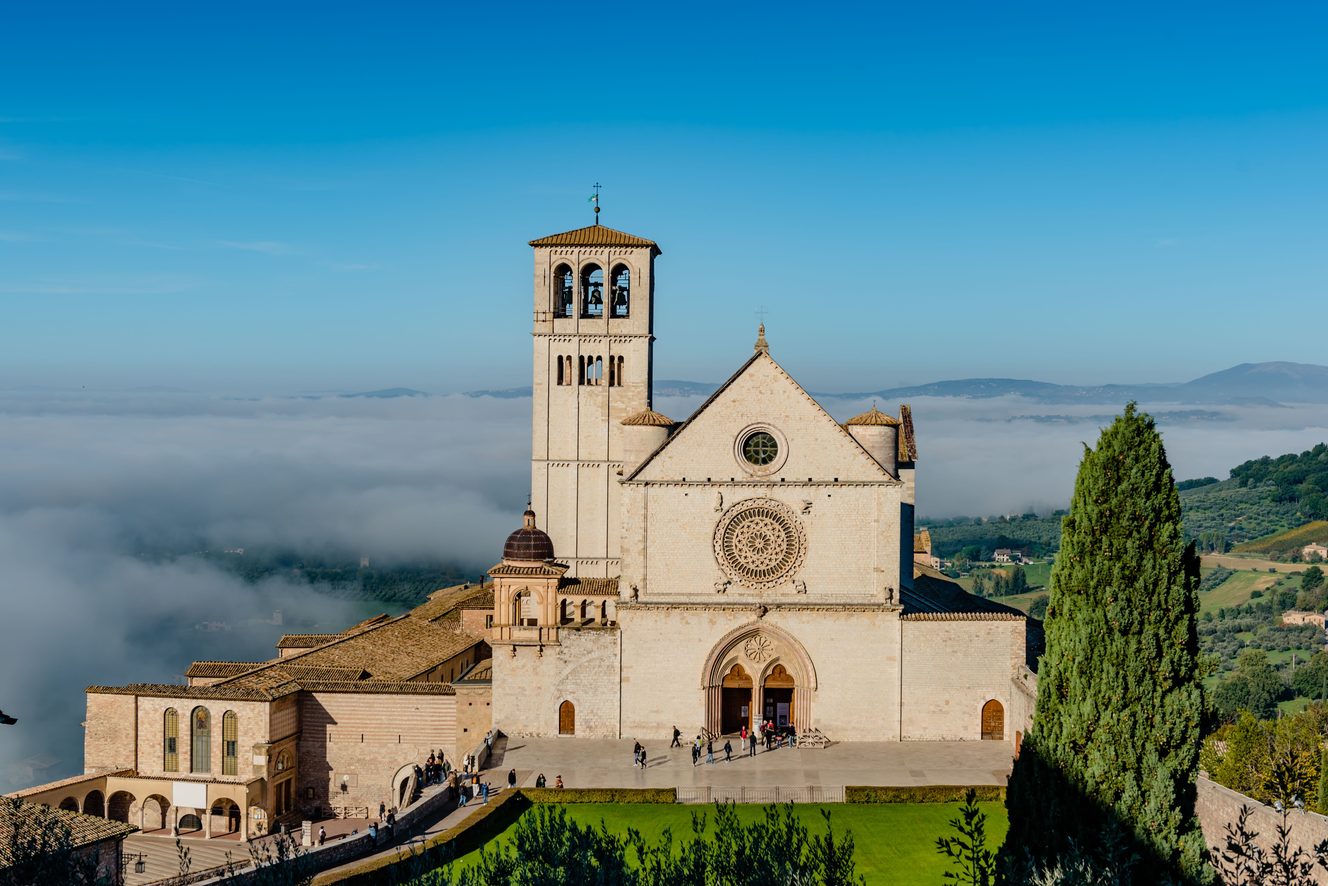
The Basilica of St Francis is two churches, one built on top of the other, over the tomb of the saint who died in Assisi in 1226. The Upper Church is tall, light and Gothic, painted with the famous scenes of his life; the Lower Church is low, dark and covered in frescoes by Cimabue, Simone Martini and Pietro Lorenzetti. Below both is the tomb. Entry is free, and 2026, eight hundred years after his death, is a Franciscan jubilee year that runs until January 2027.
A church for a poor man
Francis, the son of a rich Assisi cloth merchant, gave up everything to live in poverty, and founded the order of friars that bears his name. He died on 3 October 1226 and was made a saint less than two years later. The day after his canonisation in July 1228, Pope Gregory IX laid the first stone of a great church on the hill at the west end of the town, and Brother Elias, one of Francis’s companions, oversaw the building. In 1230 the body was brought to the Lower Church and hidden deep in the rock, and Pope Innocent IV consecrated the basilica in 1253.
For centuries no one knew exactly where the body lay. It was found in 1818, and the crypt was built round it. On 26 September 1997 two earthquakes struck; during an aftershock part of the Upper Church’s vault fell, killing two friars and two experts inspecting the damage, and shattering frescoes into tens of thousands of fragments. The church reopened in November 1999. It has been a World Heritage site, with the rest of Assisi, since 2000. In February and March 2026, for the anniversary of his death, the saint’s remains were shown publicly for the first time, and more than 370,000 people came.
The visitor’s cheat sheet
| Where | Piazza San Francesco 2, 06081 Assisi, at the western end of the town |
|---|---|
| Opening hours | Summer: Lower Church 6am–7pm (6pm on Wednesdays), Upper Church 8.30am–6.45pm, tomb 6am–6.15pm. Winter: Upper Church 8.30am–6pm, Lower Church to 5.30pm on Wednesdays. No sightseeing during services |
| Admission | Free; Treasury Museum by free-will offering (closed Mondays, and from mid-January to late February) |
| Mass | Lower Church on weekdays at 7.15, 10, 11am and 6pm in summer, 7.15, 11am and 5pm in winter; several Masses on Sundays |
| Dress code | Shoulders and knees covered; silence inside |
| Photography | Not in the Lower Church or crypt; no flash anywhere |
| Getting there | Train to Assisi station (Santa Maria degli Angeli), about two hours from Rome and 25–30 minutes from Perugia, then the local bus up to the town, every 30 minutes |
| How long | An hour and a half to two hours for both churches and the tomb |
Hours and admission checked against the official site in October 2026. They change; the official site is always the last word.
Free, but dress and behave as in church. No ticket is needed, but cover your shoulders and knees, keep your voice down, and do not take photographs in the Lower Church or the tomb. Sightseeing stops during services. The Upper Church opens at 8.30am; the Lower Church and the tomb open at 6am, for prayer. On papal visits and great feasts, such as St Francis’s day on 4 October, expect crowds and closures.
What to see, in the order you meet it
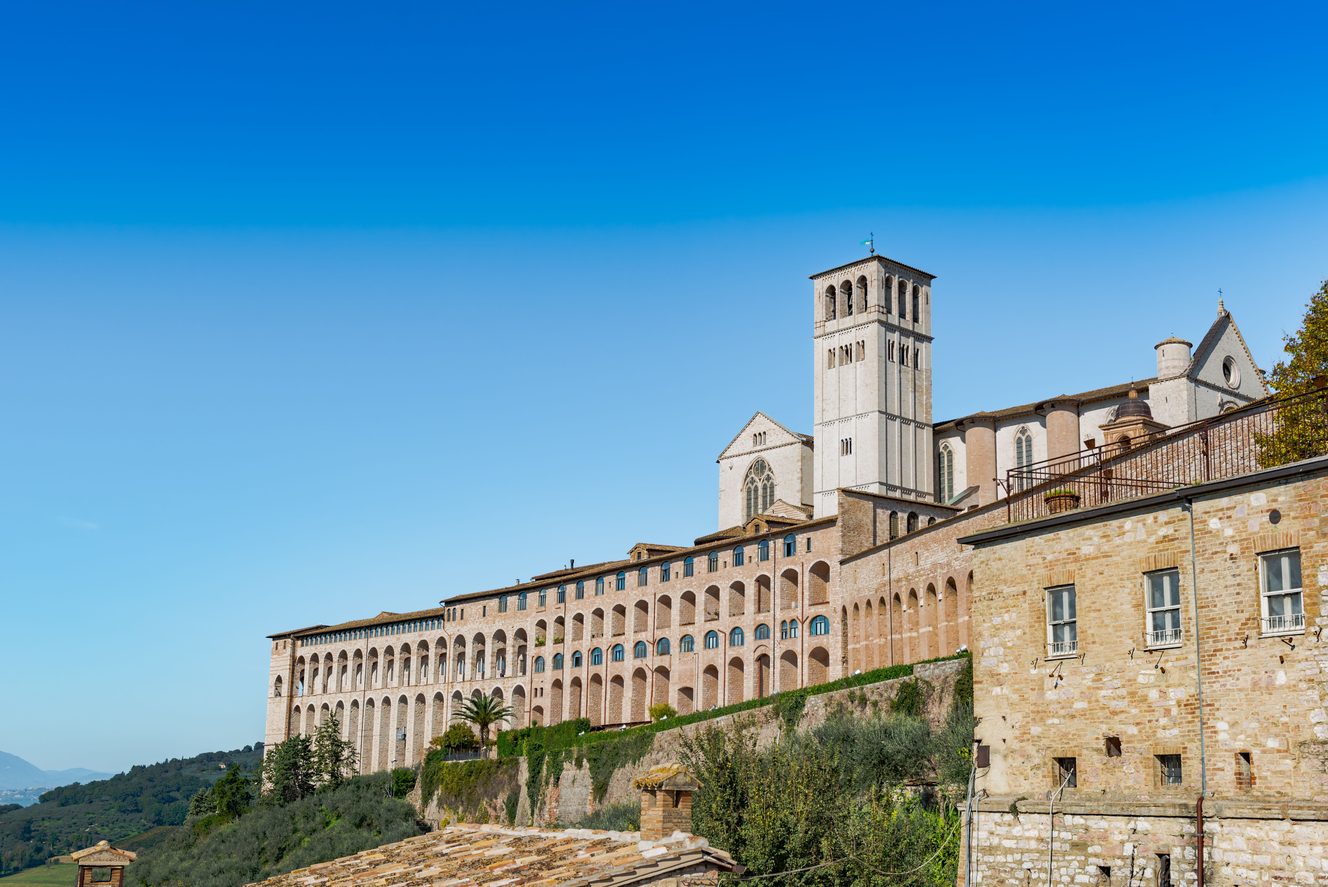
Most visitors arrive on the lower piazza, with its arcades, and enter the Lower Church first; stairs inside lead down to the tomb and up to the Upper Church, whose main door faces the upper piazza.
The Lower Church
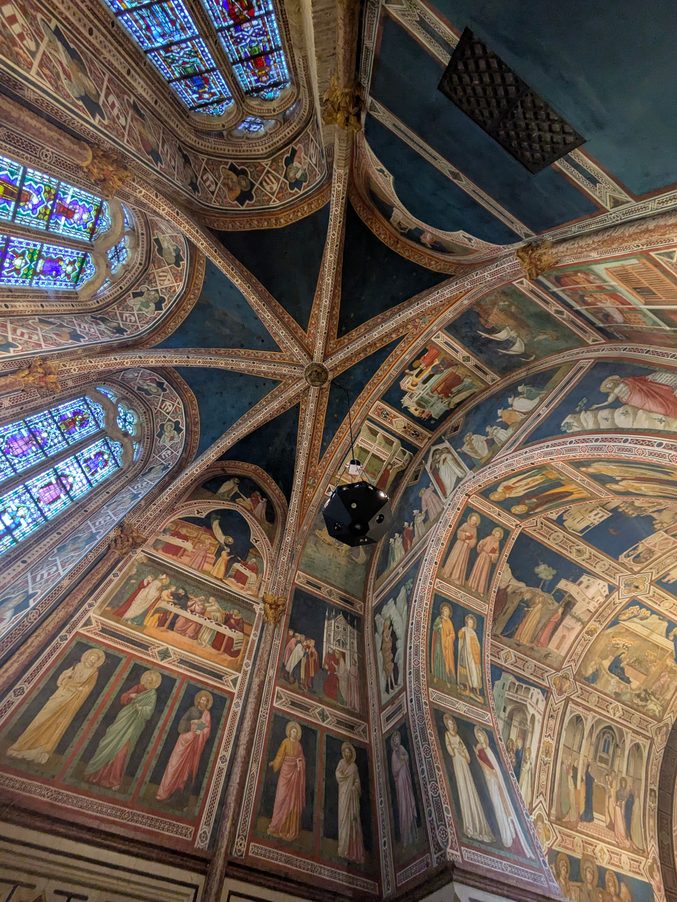
Low, vaulted and dim, the Lower Church is painted from floor to ceiling. The first chapel on the left, St Martin’s, was painted by Simone Martini in about 1317–19. Across the nave, the third chapel on the right, the Magdalen chapel, was painted by Giotto and his workshop early in the fourteenth century. Over the high altar, the vault is painted with allegories of Poverty, Chastity and Obedience and St Francis in glory, by a follower of Giotto known as the Maestro delle Vele, around 1315–20. In the right transept is Cimabue’s Virgin and Child with St Francis, of about 1280, which may show his true likeness; in the left transept, Pietro Lorenzetti’s Passion cycle, with his Madonna dei Tramonti, the “Madonna of the Sunsets”. Among the relics kept here are the rule of the order approved by the pope in 1223 and a blessing written by Francis for Brother Leo.


The tomb
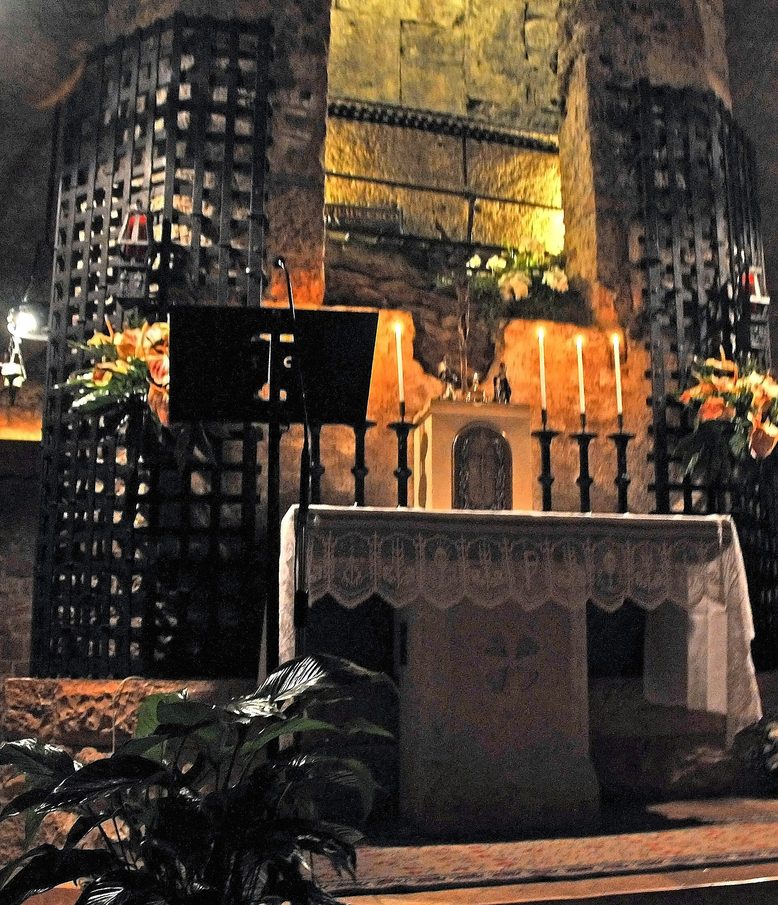
Stairs from the middle of the Lower Church lead down to the crypt, where the saint’s stone coffin is seen through a grille above the altar. Four of his companions, Rufino, Angelo, Masseo and Leo, are buried in the walls around him, and at the entrance lies Jacopa dei Settesoli, the Roman noblewoman who was with him when he died. People come here to pray: keep silent.
The Upper Church
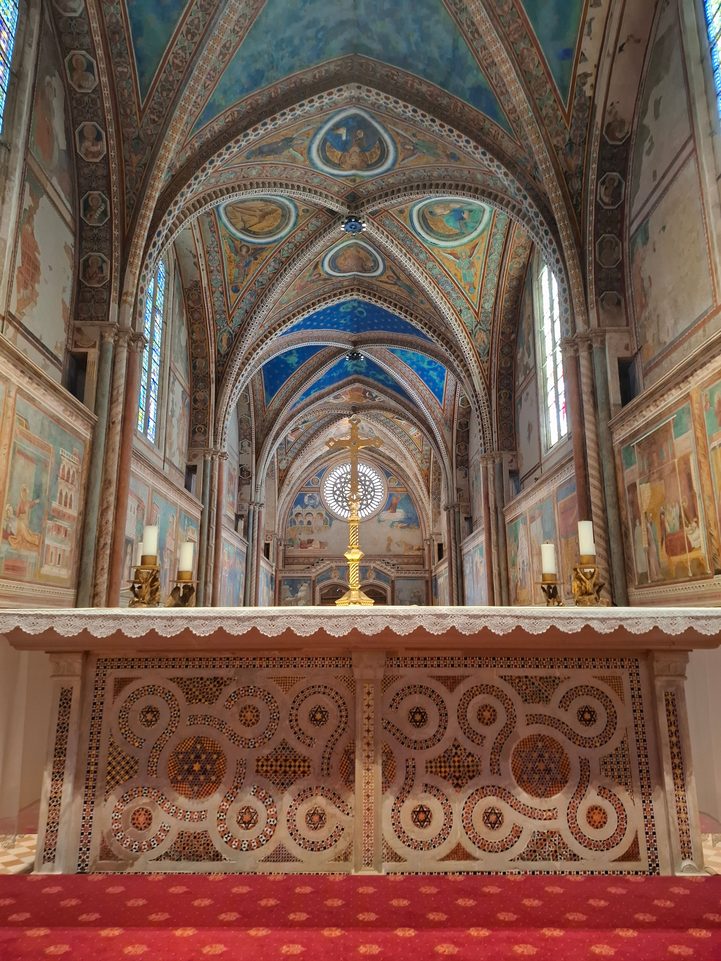
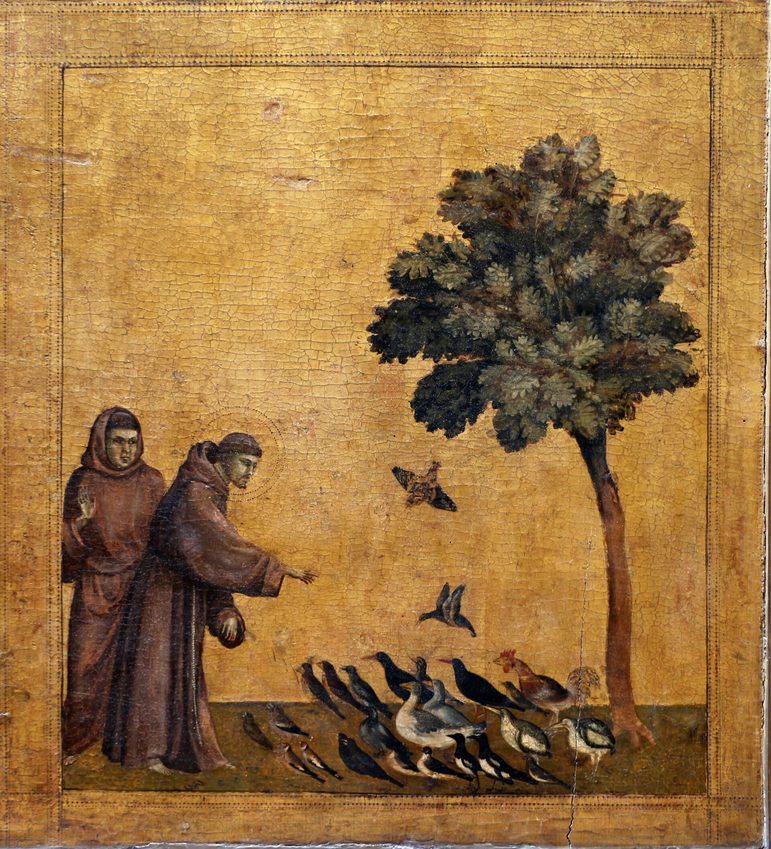
The Upper Church is one of the first Gothic churches in Italy: one wide, high, light space with tall windows and a blue vault painted with stars. Along the lower walls run the twenty-eight scenes of the Legend of St Francis, painted around 1295–1305, among them his renunciation of his father’s wealth, the sermon to the birds and the stigmata. Above them are scenes from the Old and New Testaments, and in the apse and transepts Cimabue’s frescoes of about 1280, now dark and ghostly, among them a great Crucifixion. Parts of the vault damaged in 1997 have been rebuilt, and the shattered fragments are still being reassembled.
The Treasury Museum
Upstairs off the cloister of Sixtus IV, the Treasury Museum shows the basilica’s chalices, vestments and tapestries, including a chalice of about 1290 by the Sienese goldsmith Guccio di Mannaia, and a collection of Italian paintings left to the friars by the American collector Frederick Mason Perkins. Entry is by free-will offering; it is closed on Mondays.
Tours and where to stay
Guided visits and hotels
The basilica’s information office arranges visits with authorised guides, and rents radioguides; there is also an official audio guide app. Many day tours from Rome and Florence include the basilica, but Assisi is at its best early and late, after the day visitors have gone.
Tour and hotel links go to GetYourGuide and Booking.com. This site earns nothing from them at present — they are here because they are the quickest way to check what is actually available.
Don’t miss
- The tomb of St Francis In the crypt below the Lower Church.
- The Legend of St Francis Twenty-eight scenes in the Upper Church.
- Cimabue’s St Francis In the right transept of the Lower Church.
- Simone Martini’s chapel The life of St Martin, in the Lower Church.
- Lorenzetti’s Passion In the left transept of the Lower Church.
Insider tips
Come early or stay the night. The Lower Church and tomb open at 6am for prayer, and are quiet until the coaches arrive mid-morning. On Friday and Saturday evenings in summer the tomb reopens from 9 to 10pm for personal prayer.
The nearest car park to the basilica is the underground Giovanni Paolo II; the Mojano car park has escalators up into the town. The centre is a limited-traffic zone enforced by cameras.
Assisi has more Franciscan places: the Basilica of Santa Chiara at the other end of the town, the little church of San Damiano below the walls, the hermitage of the Carceri on Monte Subasio, and the Porziuncola chapel inside the great church of Santa Maria degli Angeli by the station; Francis died beside it. Since 2026, 4 October, the feast of St Francis, is again a national holiday in Italy.
Common questions
Is the Basilica of St Francis free to visit?
Yes. No ticket is needed for the Upper Church, the Lower Church or the tomb. The Treasury Museum asks for a free-will offering. Guided visits and radioguides can be booked through the basilica’s own information office.
Where is St Francis buried?
In the crypt below the Lower Church. His body was brought here in 1230 and hidden in the rock; it was found again only in 1818, and the crypt was then built round it. Four of his companions are buried near him.
Did Giotto paint the frescoes in the Upper Church?
Perhaps. The twenty-eight scenes of the life of St Francis were traditionally given to Giotto, but the attribution has been argued over for more than a century, and several painters probably worked on them.
Can I take photographs inside?
Photography is not allowed in the Lower Church or the crypt; in the Upper Church follow the signs, and never use flash. Silence is asked for throughout.
Is there a dress code?
Yes: cover your shoulders and knees. It is a working church and a place of pilgrimage, and the friars expect visitors to dress and behave accordingly.
Is Carlo Acutis buried in the basilica?
No. St Carlo Acutis, canonised in 2025, is buried in the Sanctuary of the Spogliazione at the church of Santa Maria Maggiore, a short walk away in the town.
Where to stay and eat nearby
Assisi has hotels and guest houses of every kind inside the walls, many run by religious orders, and trattorias serving Umbrian food. Staying in the town lets you see the basilica before and after the day visitors.
More churches in Italy
- Santa Croce, Florence — the great Franciscan church of Florence, with Giotto’s chapels.
- Siena Cathedral — about two hours away by road.
- Orvieto Cathedral — another Umbrian hill town, with Signorelli’s frescoes.
- Basilica of St Anthony, Padua — the tomb of Francis’s most famous follower.