
Shrewsbury Abbey
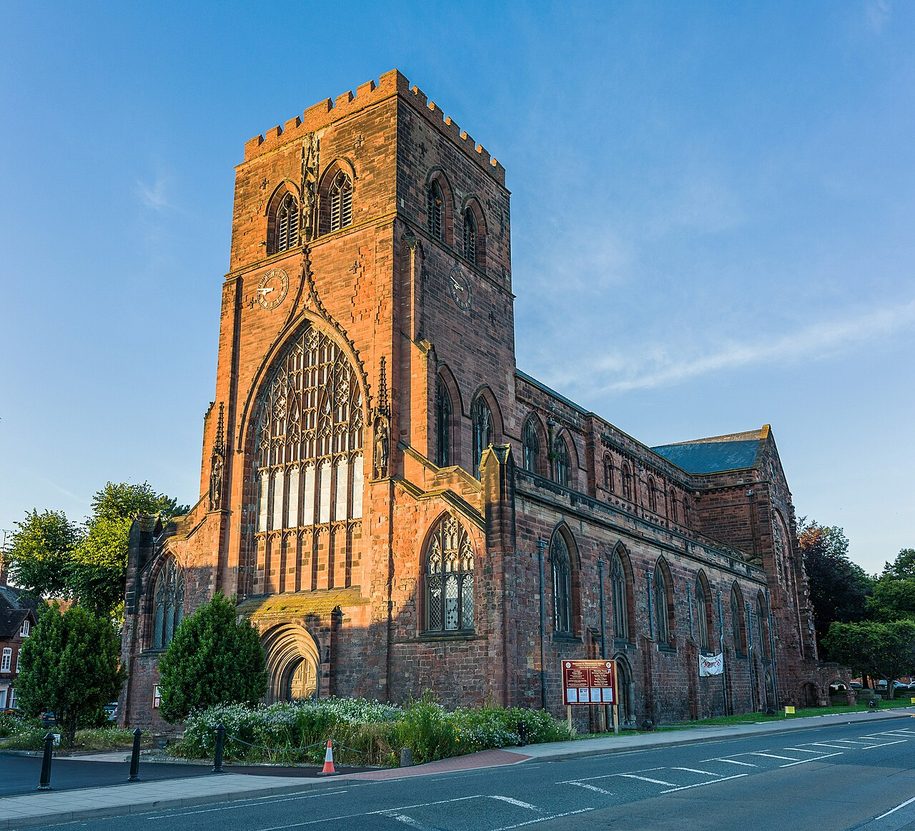
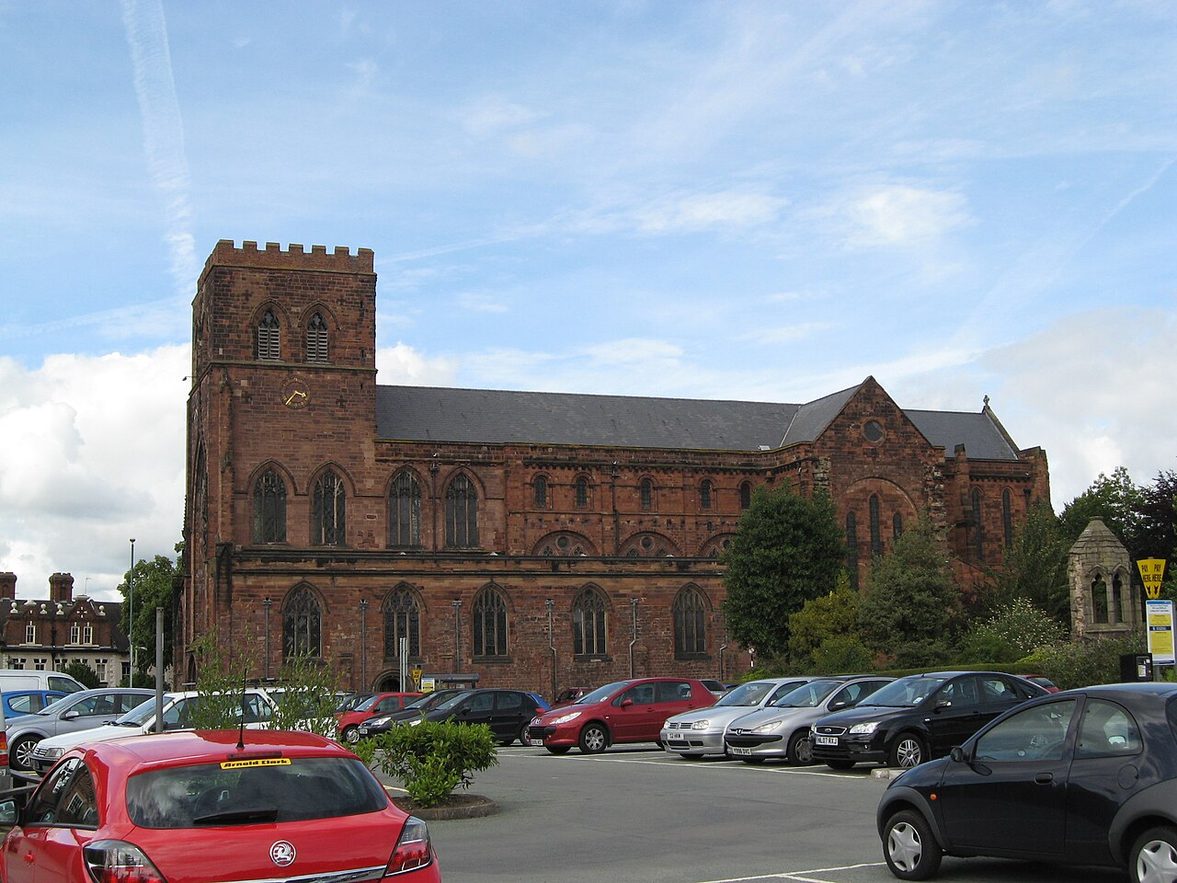
Across the English Bridge from the centre of Shrewsbury stands the great red sandstone church of a Benedictine abbey founded in 1083. Much of the monastery was swept away at the Dissolution and later by a main road, but the nave survived as the parish church of Holy Cross, with its massive Norman piers, a fourteenth-century west tower and a great west window. To readers around the world it is the home of Brother Cadfael.
Earl Roger’s abbey
On 25 February 1083 Roger de Montgomery, the Norman Earl of Shrewsbury, pledged to found an abbey on the site of a small Saxon church outside the town’s east gate. Monks came from Sées in Normandy, and the abbey grew into one of the most important in the west of England. Its abbots sat in Parliament, and in about 1138 the monks brought the remains of the Welsh saint Winifred from north Wales, making the abbey a centre of pilgrimage.
At the Dissolution in 1540 the eastern parts of the church and most of the monastic buildings were lost, but the nave, aisles, porch and west tower were kept for the parish. In the 1830s Thomas Telford’s London-to-Holyhead road was driven through the abbey precinct, and in the 1880s and 1890s the architect J. L. Pearson built a new chancel at the east end.
The visitor's cheat sheet
| Where | Abbey Foregate, Shrewsbury, Shropshire, SY2 6BS |
|---|---|
| Getting there | Across the English Bridge from the town centre; Shrewsbury station about 15 minutes’ walk; Abbey Foregate car park opposite |
| Opening hours | Usually Monday to Saturday from 10am, closing 4pm on weekdays (April–October) and 3pm on Saturdays and in winter; Sundays around services |
| Admission | Free; donations welcome |
| How long | 45 minutes to an hour |
| Best time | Between 11am and 3pm, when guides are usually on hand |
| Dress code | No rule; respectful dress in a working church |
| Tours | Volunteer guides most days; group tours by arrangement; level access by the south door |
Hours and admission checked against the official site in October 2026. They change; the official site is always the last word.
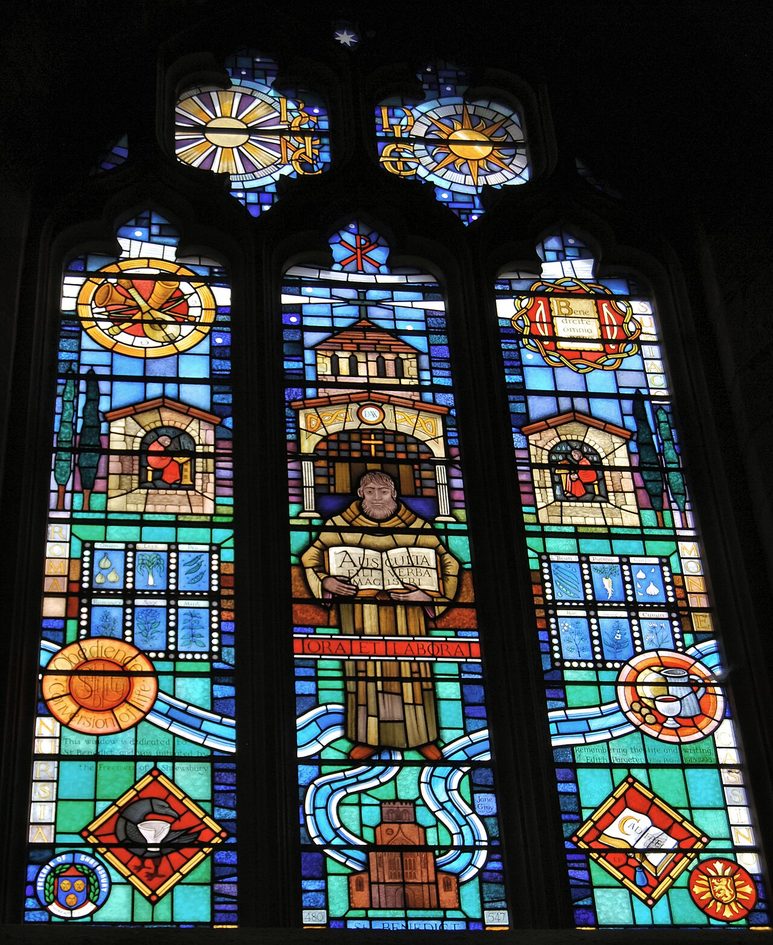
Brother Cadfael. Between 1977 and 1994 Ellis Peters (Edith Pargeter) wrote twenty novels about a Welsh herbalist monk at Shrewsbury Abbey in the 1130s and 1140s. They made the abbey famous around the world, and the church now has a window in her memory.
What to see, in the order you meet it
The west front and the tower
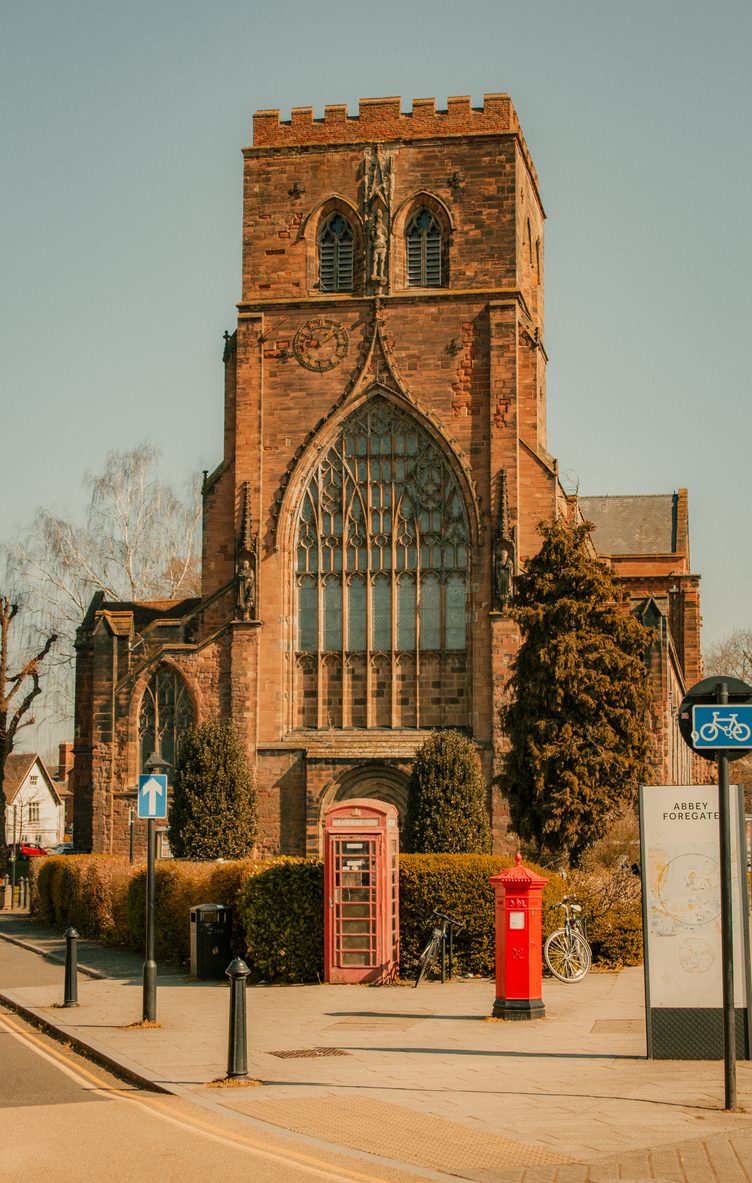
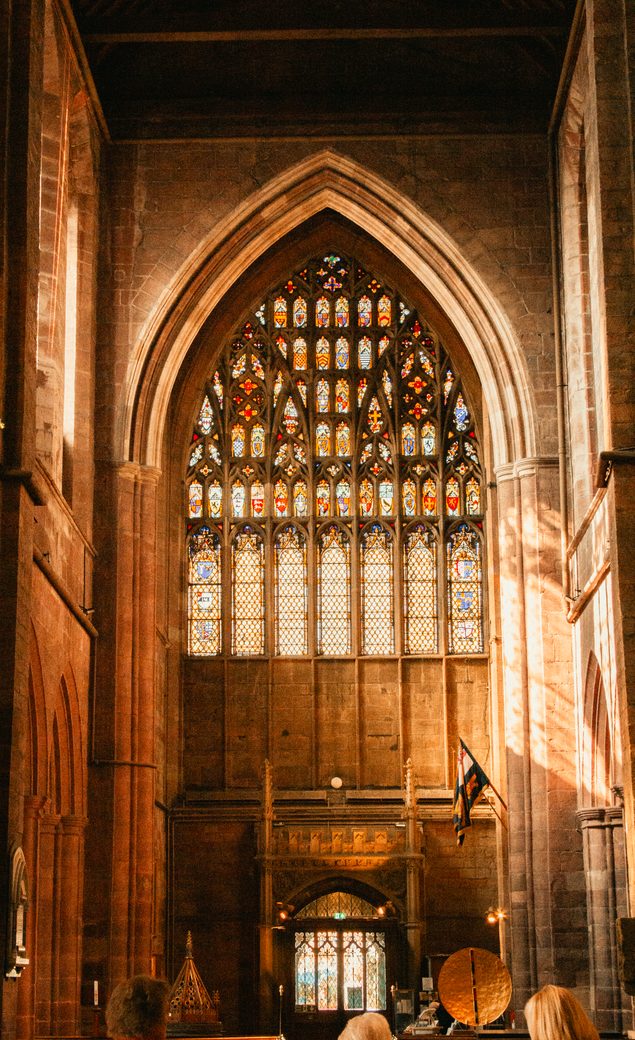
The west tower was rebuilt in the fourteenth century around the Norman doorway, with a great window that fills most of the west front. Above the window is a statue thought to be of Edward III.
The nave
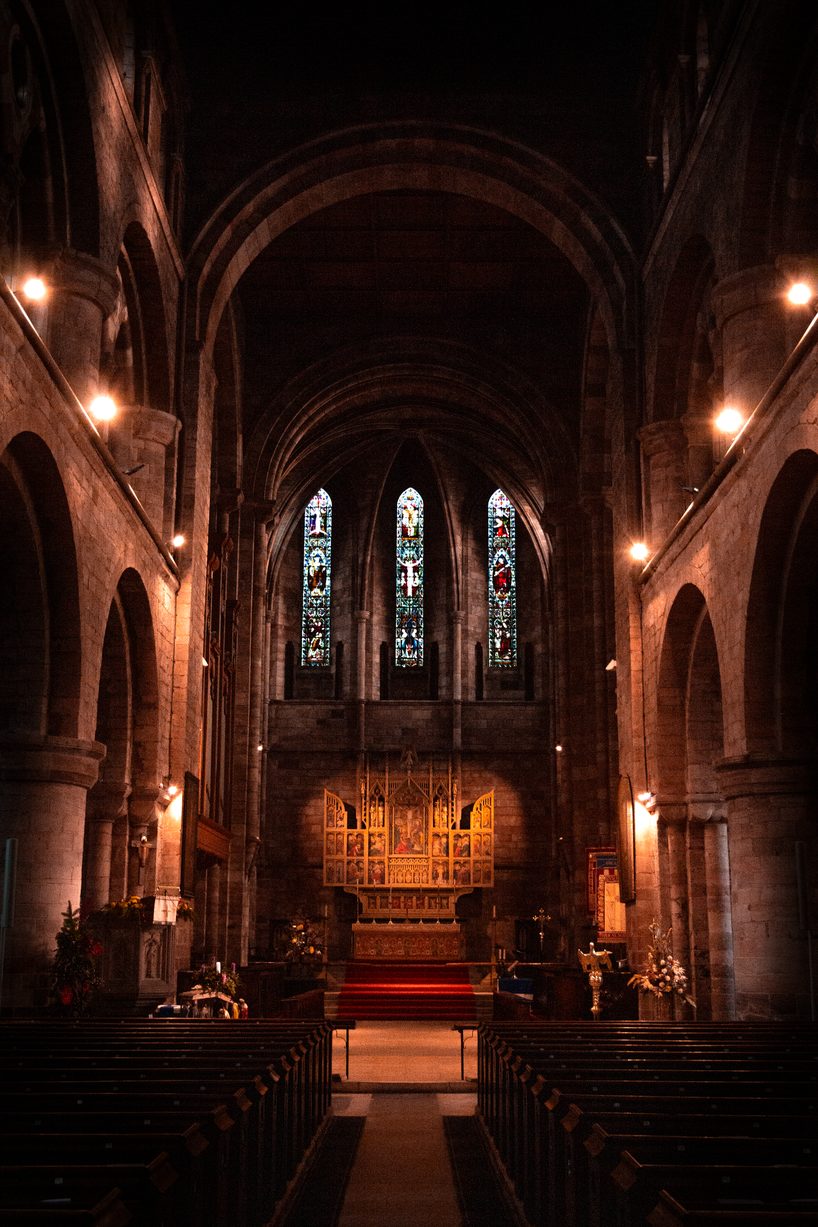
Inside, the eastern half of the nave keeps its short, thick Norman piers from the first building of the 1080s; the western bays were rebuilt later in the Middle Ages. Look back at the west window from inside, and find the war memorial tablets, which include the name of the poet Wilfred Owen.
The east end and St Winifred
Pearson’s chancel of the 1880s replaced the lost monastic east end. In the north aisle are the remains of St Winifred’s fourteenth-century shrine, with carved figures of St Winifred, St Beuno and St John the Baptist, and monuments including an effigy long said to be Earl Roger himself. Look for the Ellis Peters window.
The refectory pulpit
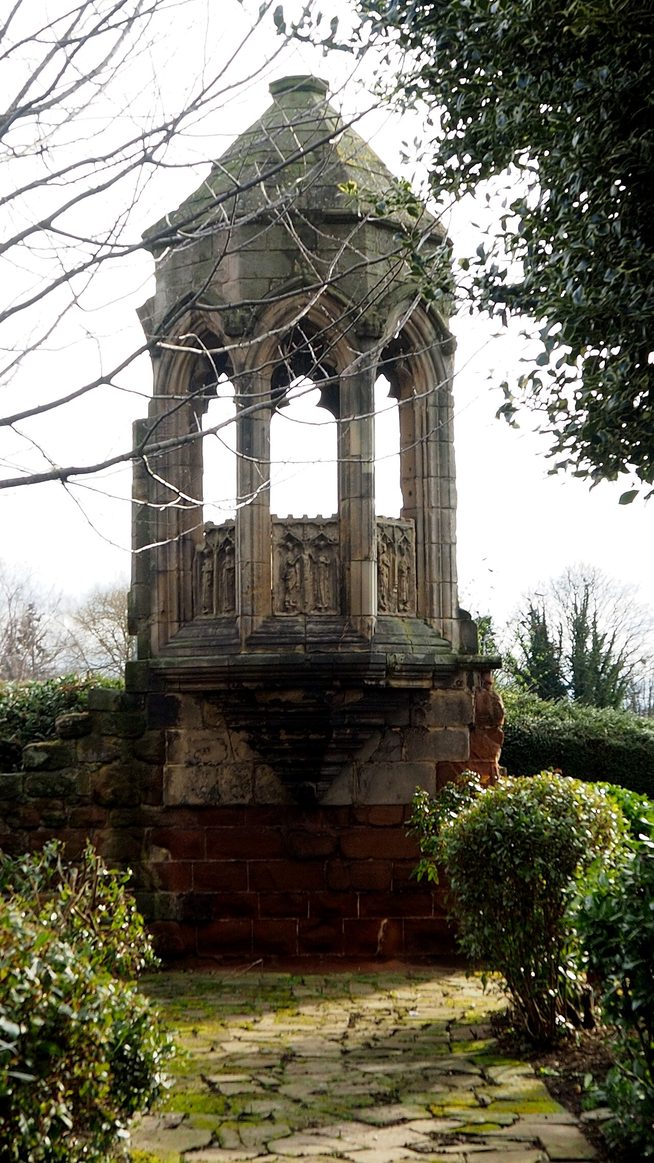
Across the main road, in a car park, stands the stone pulpit from which a monk read aloud to the others during meals in the refectory. It is one of the few fragments of the monastic buildings to survive Telford’s road.
Visiting
Free to visit
There is no entrance charge. The abbey is usually open Monday to Saturday from 10am (closing at 4pm on summer weekdays, 3pm otherwise), and volunteer guides are often there from 11am to 3pm.
The hotel link goes to Booking.com. This site earns nothing from it at present — it is here because it is the quickest way to check what is actually available.
Don't miss
- The Norman piers From the 1080s.
- The west window Filling the tower.
- The Ellis Peters window For the creator of Cadfael.
- The shrine fragments With St Winifred and St Beuno.
- The refectory pulpit Across the road.
- Wilfred Owen Named on the war memorial.
Insider tips
Walk in over the English Bridge. The approach from the town centre crosses the Severn and gives the best view of the abbey. In Shrewsbury itself, St Mary’s has some of the finest stained glass in England, and the round church of St Chad looks over the Quarry park.
Common questions
Does it cost anything to visit Shrewsbury Abbey?
No. There is no entrance charge, but donations are welcome, in cash or by card.
When is Shrewsbury Abbey open?
It is usually open Monday to Saturday from 10am, closing at 4pm on weekdays from April to October and at 3pm on Saturdays and in winter; on Sundays it is open around services. Volunteer guides are on hand most days from 11am to 3pm.
Is this the abbey in the Cadfael books?
Yes. Ellis Peters set her Brother Cadfael mysteries at Shrewsbury Abbey in the 1130s and 1140s, during the civil war between Stephen and Matilda. Cadfael is fictional, but the abbey, its abbots and the cult of St Winifred are real, and the church has a window in memory of the author.
Who was St Winifred?
A Welsh saint, linked with the holy well at Holywell in Flintshire. Her remains were brought to Shrewsbury from Gwytherin in north Wales in about 1138, and her shrine made the abbey a place of pilgrimage. The story of the translation is the basis of the first Cadfael novel.
How do you get to Shrewsbury Abbey?
The abbey is on Abbey Foregate, just across the English Bridge from the town centre. Shrewsbury station is about 15 minutes’ walk away. Abbey Foregate car park, directly opposite, is charged Monday to Saturday.
Where to stay and eat nearby
Shrewsbury is a handsome market town with plenty of pubs, cafés and hotels, all within walking distance of the abbey.
More English churches
- St Laurence’s, Ludlow — the cathedral of the Marches
- Hereford Cathedral — the Mappa Mundi
- Tewkesbury Abbey — another Norman abbey saved by its parish
See all the cathedrals and churches worth visiting in England →