
Tewkesbury Abbey
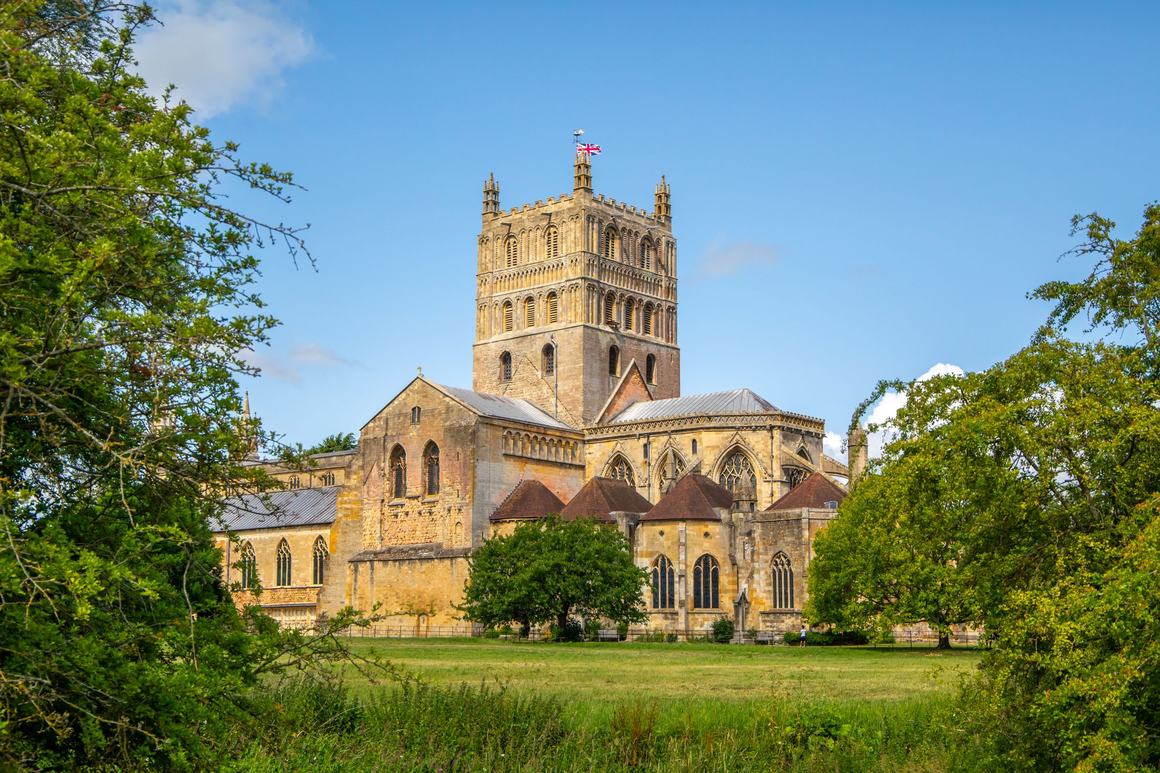
In 1540, when Henry VIII’s commissioners closed the monastery at Tewkesbury, the great abbey church was due to be stripped and demolished. The townspeople stepped in and bought it from the king for £453, the value of its lead roofs and bells, to use as their parish church. That is why one of the finest Norman churches in England is still standing in a small Gloucestershire market town, with one of the largest Norman towers anywhere rising over the meadows where the Avon meets the Severn.
Normans, Despensers and the Wars of the Roses
There may have been a monastery at Tewkesbury from the eighth century, but the abbey we see was founded by Robert Fitzhamon, a cousin of William the Conqueror, and the present church was begun in 1102 and consecrated in 1121. It was built of Caen stone brought from Normandy, and the nave, the central tower and the great arch of the west front are all of this first campaign.
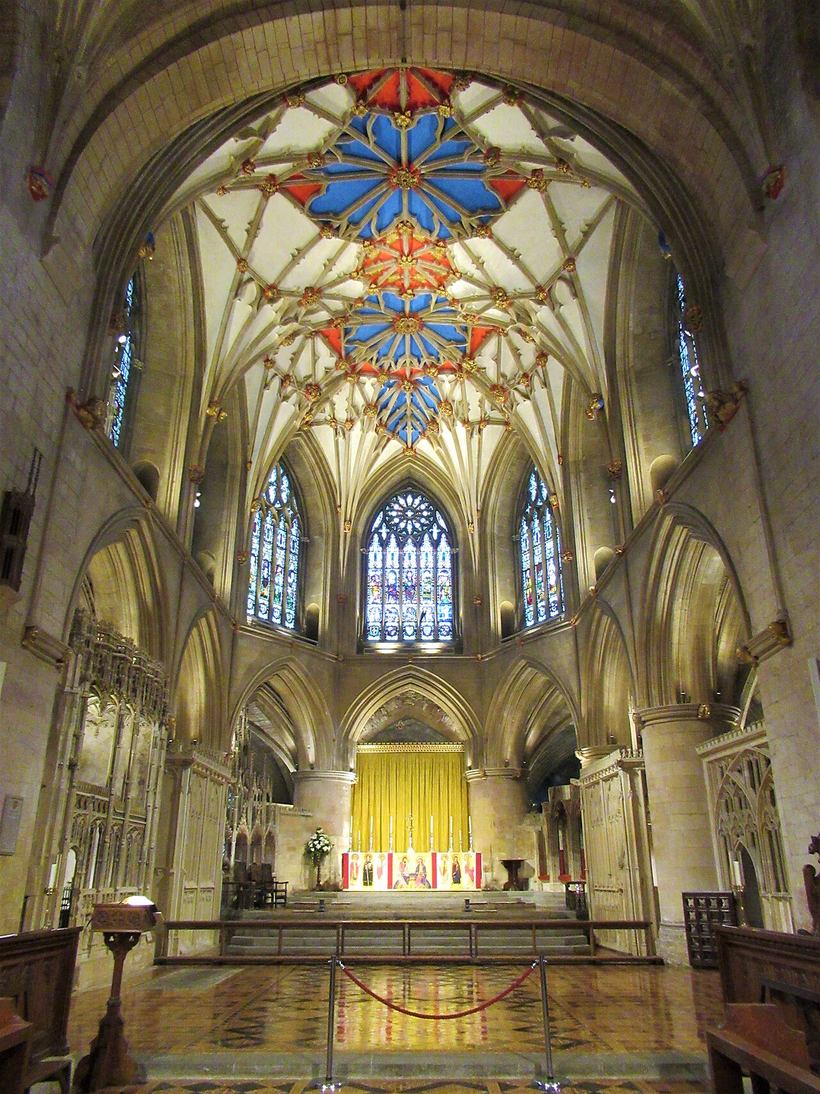
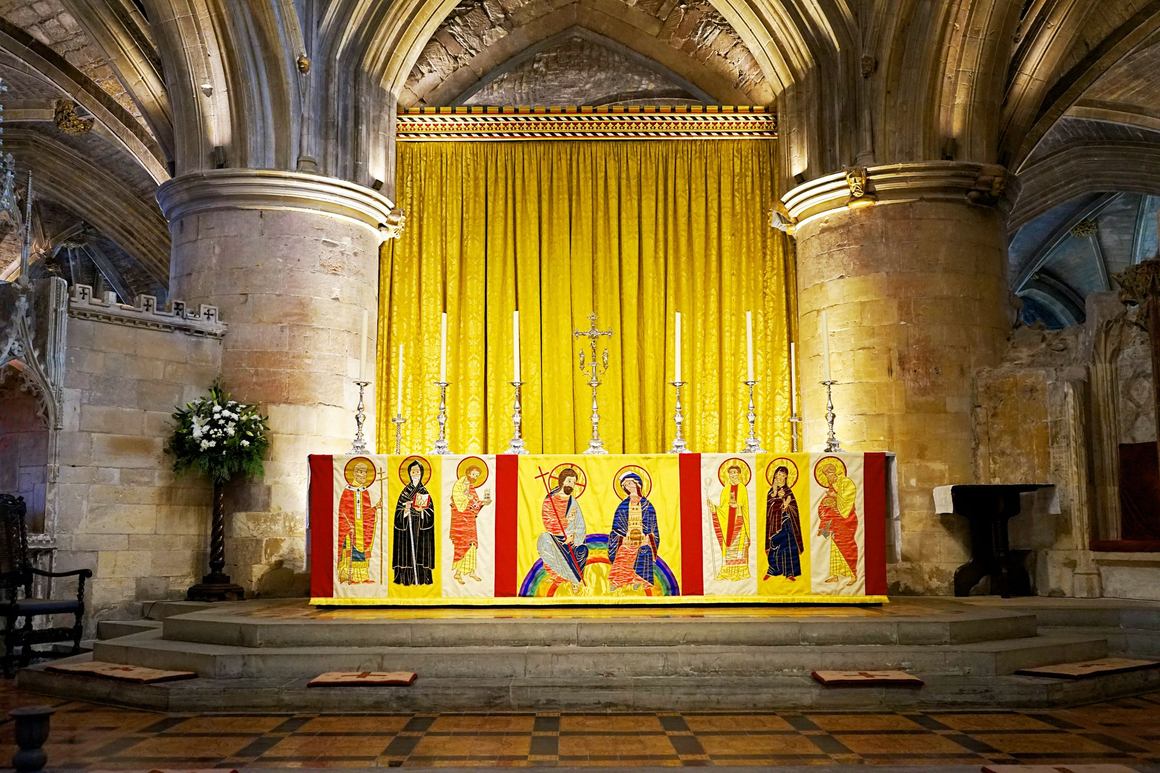
In the fourteenth century the abbey became the burial place of the Despensers, one of the most powerful and most hated families in England. Hugh Despenser the younger, the favourite of Edward II, was executed in 1326, and the east end of the church, begun in the 1320s, was rebuilt largely under his widow, Eleanor de Clare, as a family mausoleum, with a new vault and windows of brilliant glass. The chantry chapels of the Despensers and their heirs, the Beauchamps, crowd round the high altar.
On 4 May 1471 the Battle of Tewkesbury was fought just south of the abbey. Edward IV destroyed the Lancastrian army, and Henry VI’s seventeen-year-old son, Edward, Prince of Wales, was killed and buried here. Lancastrian survivors who fled into the church were dragged out and executed, and the building was so defiled that it had to be reconsecrated. Seven years later Edward IV’s own brother, George, Duke of Clarence, executed for treason, was buried in a vault behind the high altar.
After the townspeople bought it in 1540 the abbey became a parish church, which it still is. Its Victorian restoration, from 1875 under George Gilbert Scott, so dismayed William Morris that it prompted him to found the Society for the Protection of Ancient Buildings in 1877.
The visitor's cheat sheet
| Where | Church Street, Tewkesbury, Gloucestershire, GL20 5RZ, where the Avon meets the Severn |
|---|---|
| Getting there | Ashchurch for Tewkesbury station is about two miles away, then bus or taxi; buses from Cheltenham and Gloucester; junction 9 of the M5 is a few minutes’ drive |
| Opening hours | Open daily, usually from 9.30am to 4pm for visitors; parts of the church may be closed during services — check the abbey’s website before a special trip |
| Admission | Free; donations welcome. Highlights tours about £7 (under-16s free); Tower and Hidden Spaces tours about £10 |
| How long | About 1 hour; 2 hours with the tower tour |
| Best time | A weekday morning, then lunch in the town’s timber-framed streets |
| Dress code | No formal code; respectful dress as in any working church |
| Tours | Highlights tours most days; the tower tour runs daily except on special dates, for over-8s only |
Hours and admission checked against the official site in October 2026. They change; the official site is always the last word.
Not a cathedral, but bigger than most. Tewkesbury is a parish church, run by its parish, without a bishop or a cathedral’s budget. Entry is free and donations keep it open. It is longer than several English cathedrals, and its central tower, about 45 metres high, is often described as the largest Romanesque crossing tower in Europe.
What to see, in the order you meet it
The west front
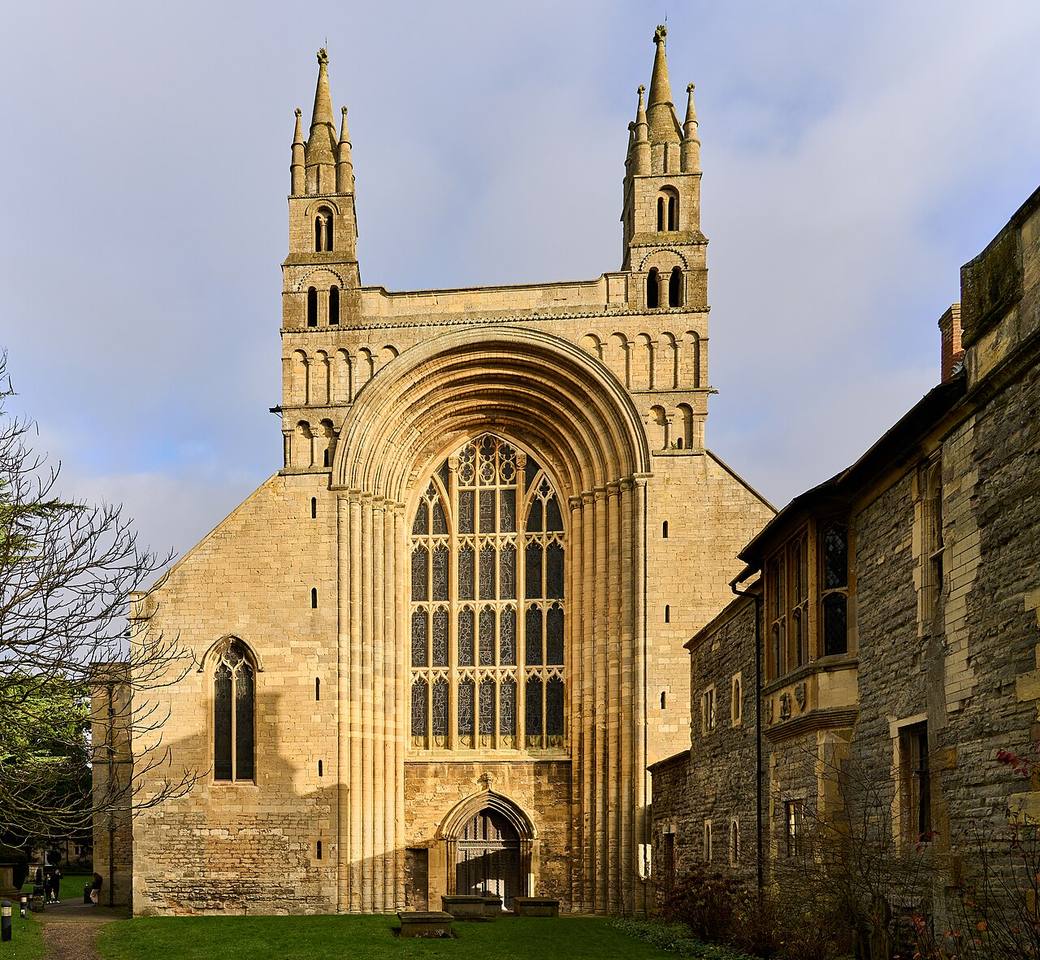
Approach from the west, along Church Street. The west front is dominated by a single recessed arch about twenty metres high, a piece of Norman architecture with nothing quite like it in England. The window inside the arch is a replacement of 1686, after the original was blown in by a storm.
The nave
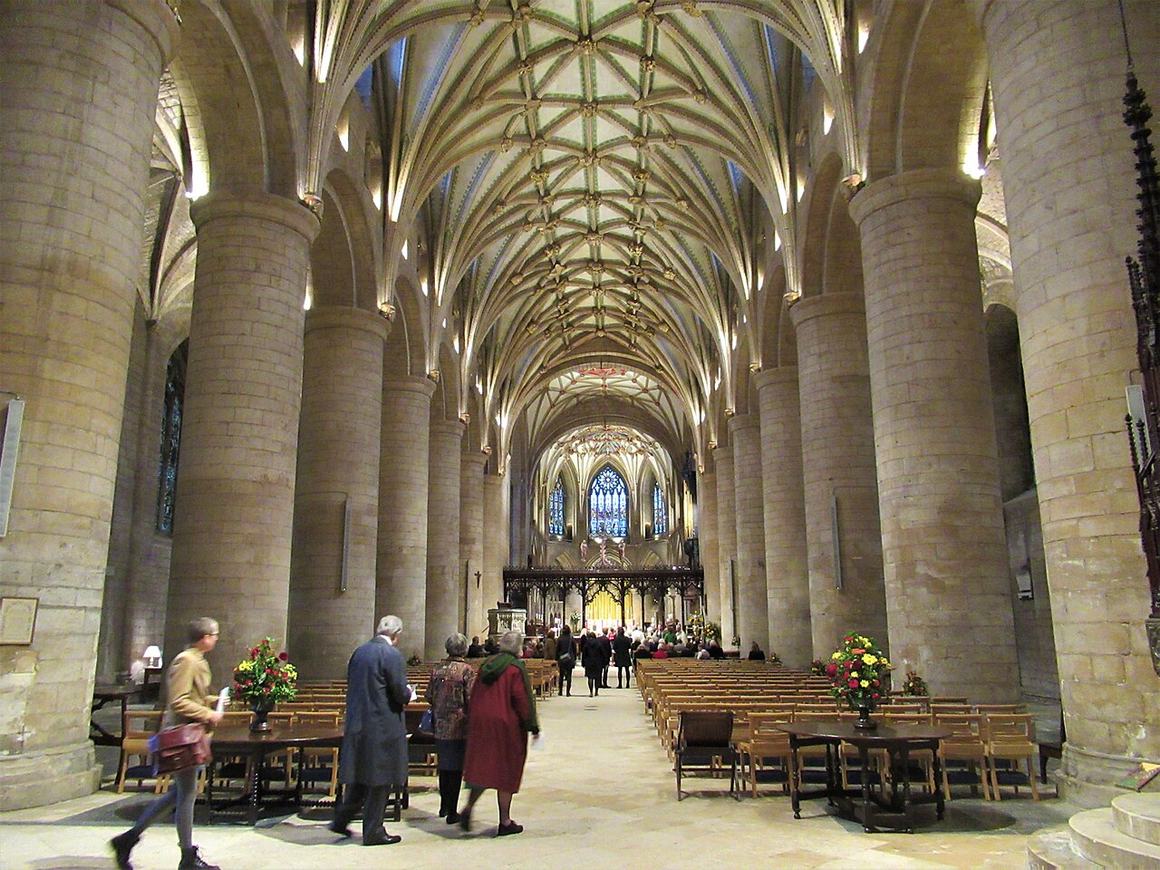
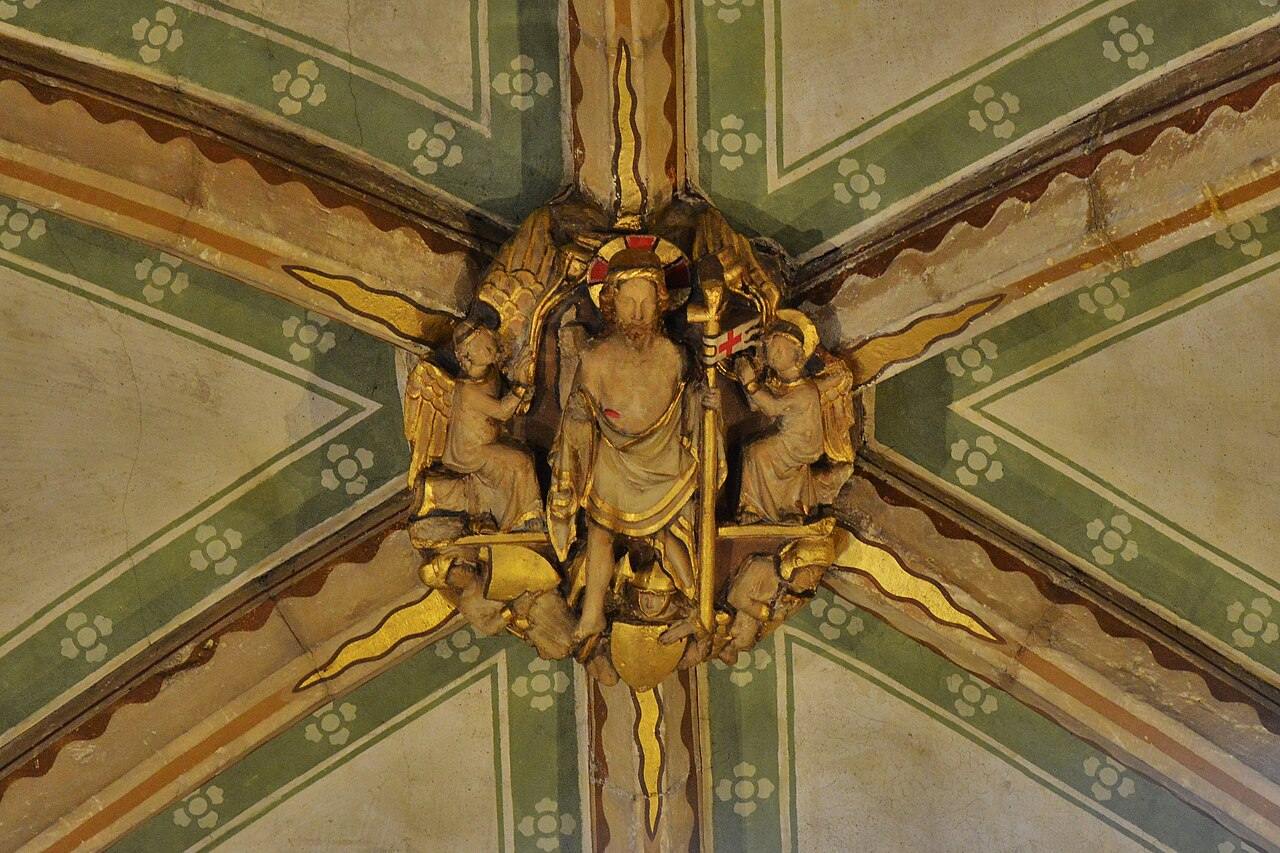
Inside, the nave is lined by fourteen enormous round pillars, each about nine metres high and as thick as an oak tree. They were built in the early twelfth century to carry a Norman timber roof; in the fourteenth century the Despensers added the stone vault above, with a line of carved bosses down the middle that tell the life of Christ. Binoculars help, but the abbey also puts out a mirror.
The crossing and the presbytery
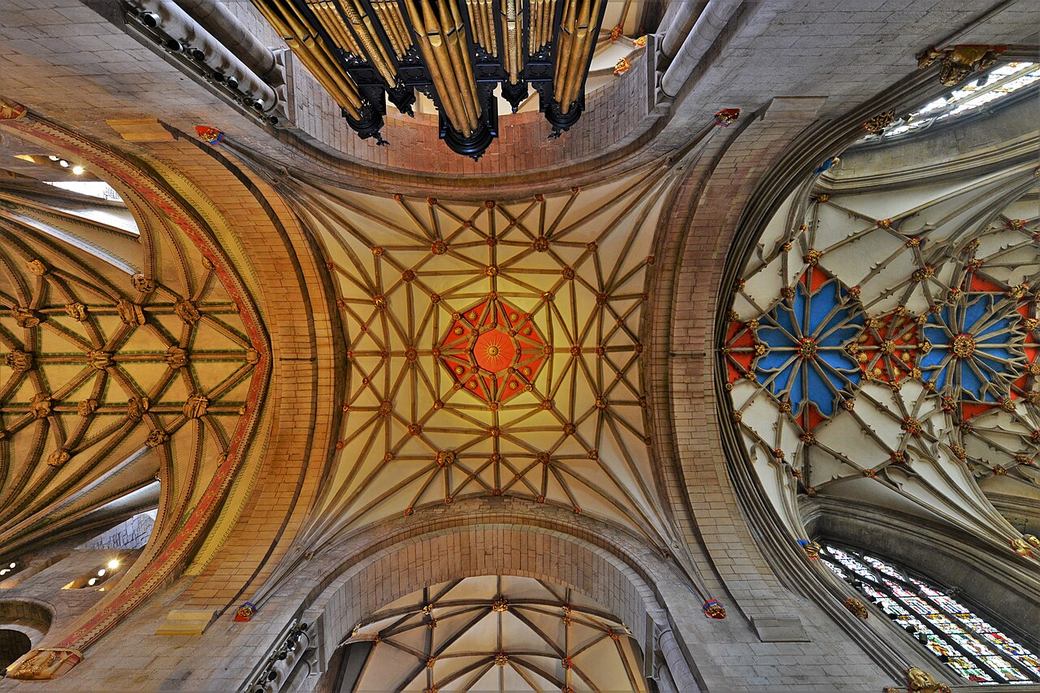
At the crossing, look up into the vault under the tower. Then go east into the presbytery, Eleanor de Clare’s rebuilding of the 1330s. Its seven windows contain some of the finest fourteenth-century glass in England, with armoured knights of the Despenser and Clare families standing in the lights. On the vault above are golden suns: the “sun in splendour” badge of Edward IV, added after his victory in 1471. In the floor of the choir a brass plate marks the grave of Edward, Prince of Wales, the last of the direct Lancastrian line.
The chantry chapels
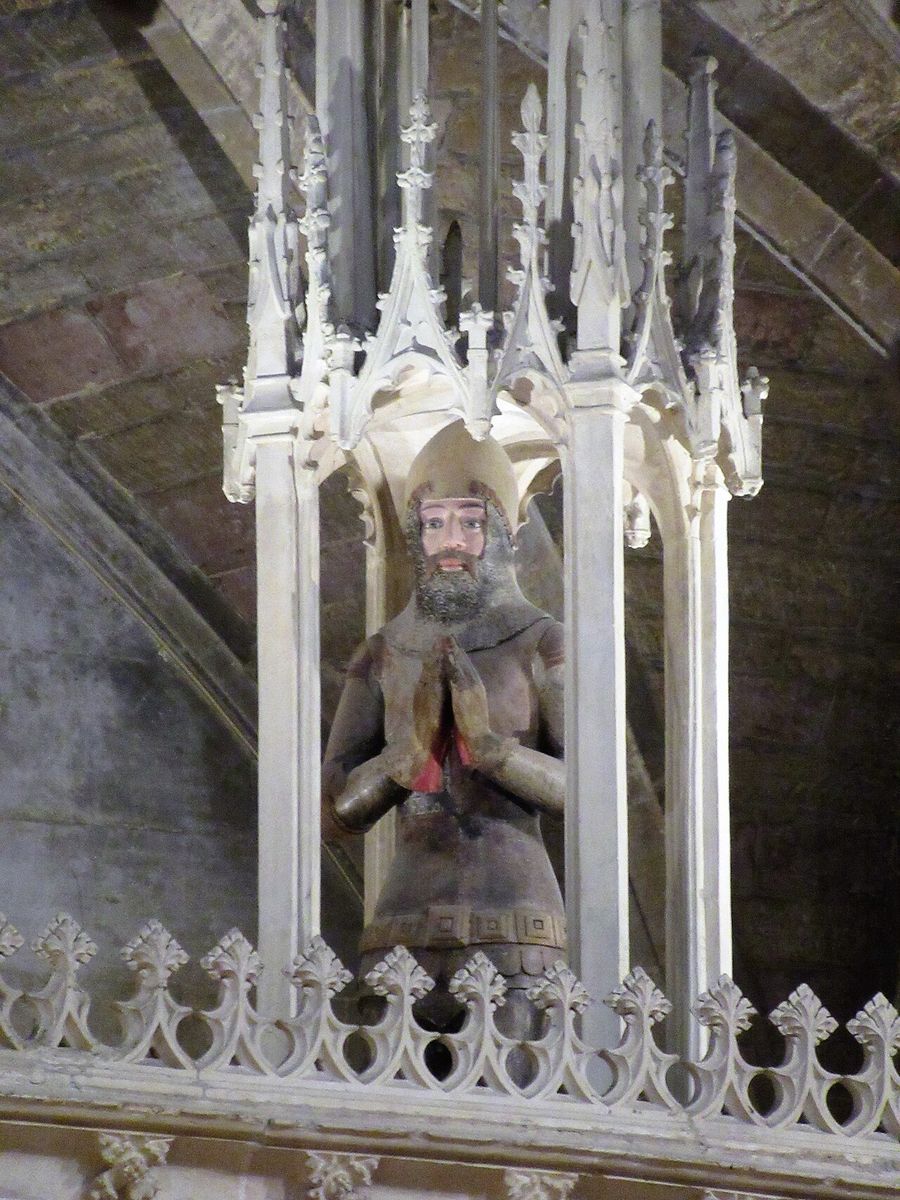
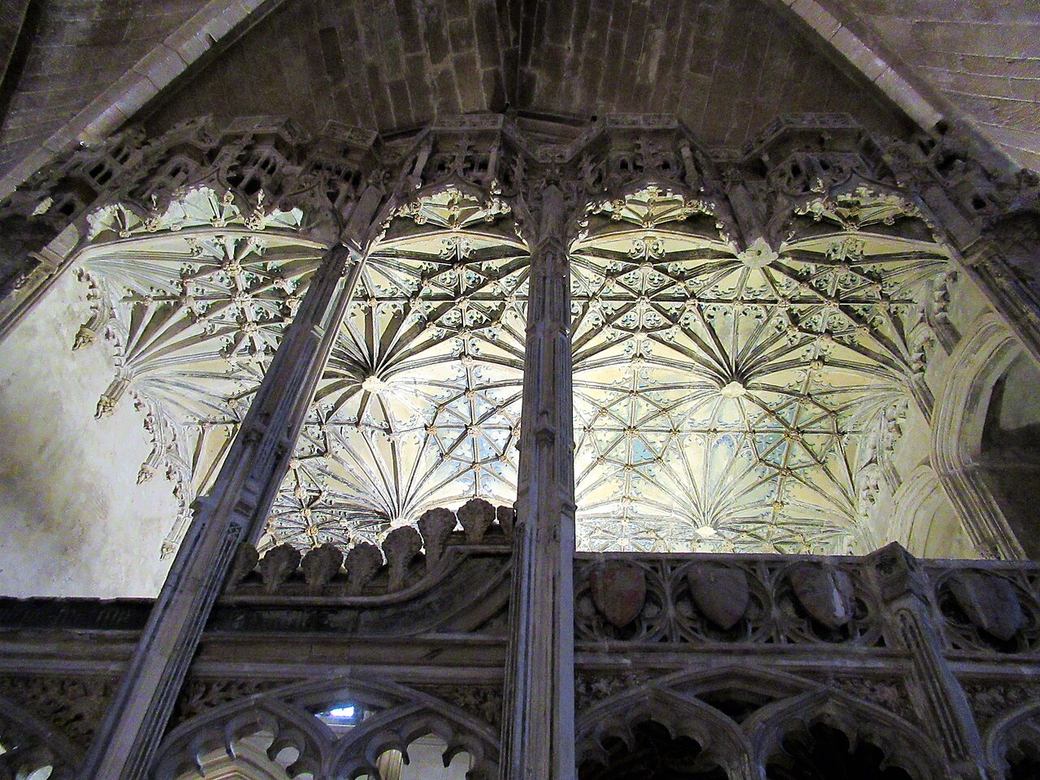
Around the presbytery are the tombs and chantries that make Tewkesbury one of the richest collections of medieval monuments in England. Look up at the roof of the Trinity Chapel to see Edward Despenser, who died in 1375, kneeling in armour under a canopy, turned towards the high altar — a painted figure with almost no parallel in England. The Beauchamp Chantry, built in the 1420s by Isabel Despenser for her first husband, the Earl of Worcester, has a delicate stone vault of almost lace-like intricacy.
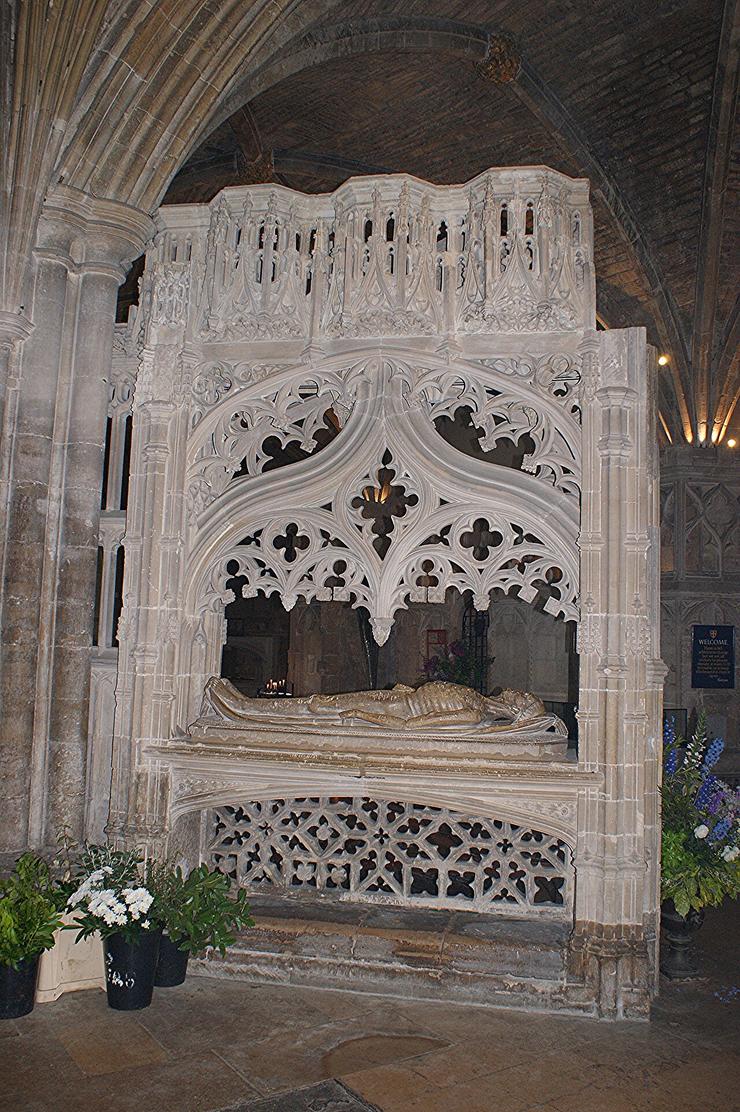
In the north ambulatory is the strangest monument of all, the Wakeman Cenotaph: a carved stone corpse, half decayed, with a worm, a snake, a frog, a snail and a mouse crawling over it. It is named after John Wakeman, the last abbot, who surrendered the abbey in 1539 and became the first bishop of Gloucester; he is buried elsewhere, and the tomb may not be his at all.
The Milton Organ and the sacristy door
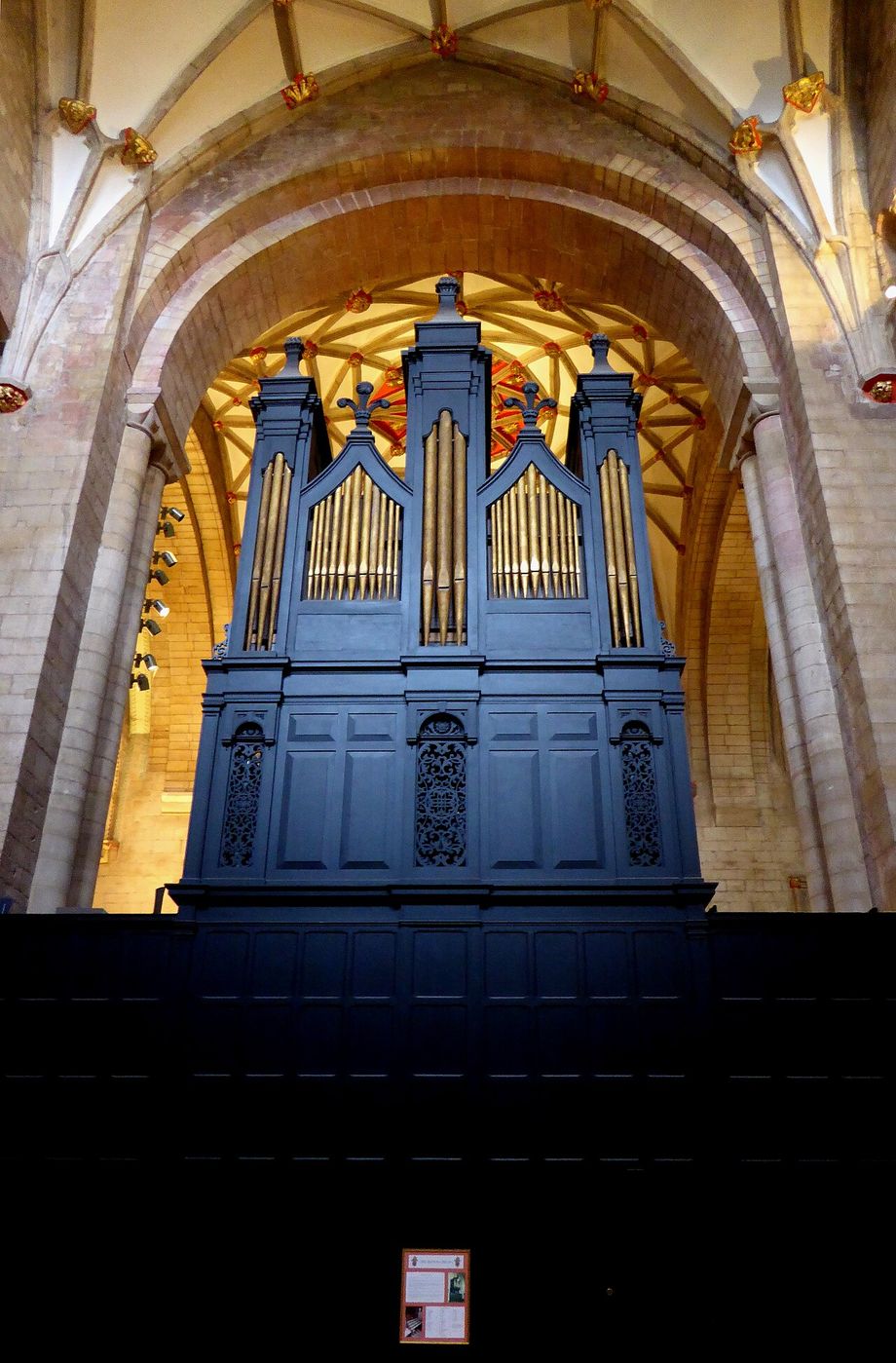
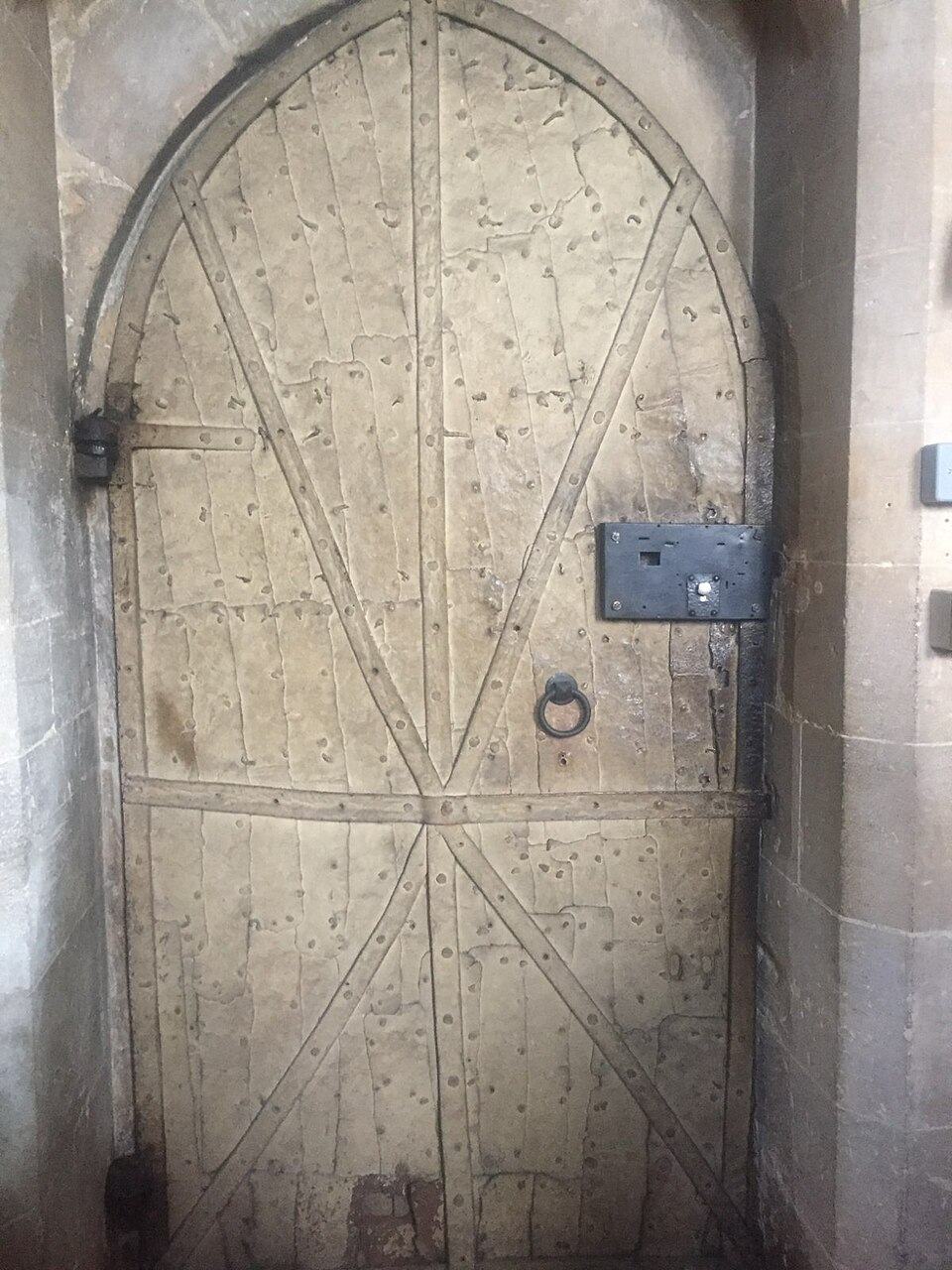
The abbey’s oldest organ, known as the Milton Organ, was built in the 1630s for Magdalen College, Oxford. In the Commonwealth it was taken to Hampton Court, where John Milton is said to have played it, and it came to Tewkesbury in 1737. Nearby, the old door of the sacristy is said to be lined on its inside with plates of armour picked up from the battlefield in 1471.
Tickets and tours
Climb the tower
The Tower and Hidden Spaces tour climbs more than 200 steps to the top of the Norman tower, with views over the two rivers and the battlefield. It costs about £10, is for over-8s only, and can be booked online until 9am on the day. Sixty-minute highlights tours of the church cost about £7, with under-16s free.
Tour and hotel links go to GetYourGuide and Booking.com. This site earns nothing from them at present — they are here because they are the quickest way to check what is actually available.
Don't miss
- The west front arch A Norman arch some twenty metres high.
- The nave pillars Fourteen of them, nine metres tall, under a painted vault.
- The presbytery glass Fourteenth-century knights in armour, and the Yorkist suns above.
- The kneeling knight Edward Despenser at prayer on the roof of his chantry.
- The Wakeman Cenotaph A stone corpse and its attendant vermin.
- Prince Edward's grave The brass in the choir floor for the prince killed in 1471.
- The tower More than 200 steps, and the best view in Gloucestershire.
Insider tips
Walk the battlefield. A waymarked trail leads from the abbey across the fields south of the town where the battle was fought in 1471. Every July the town’s medieval festival re-enacts it.
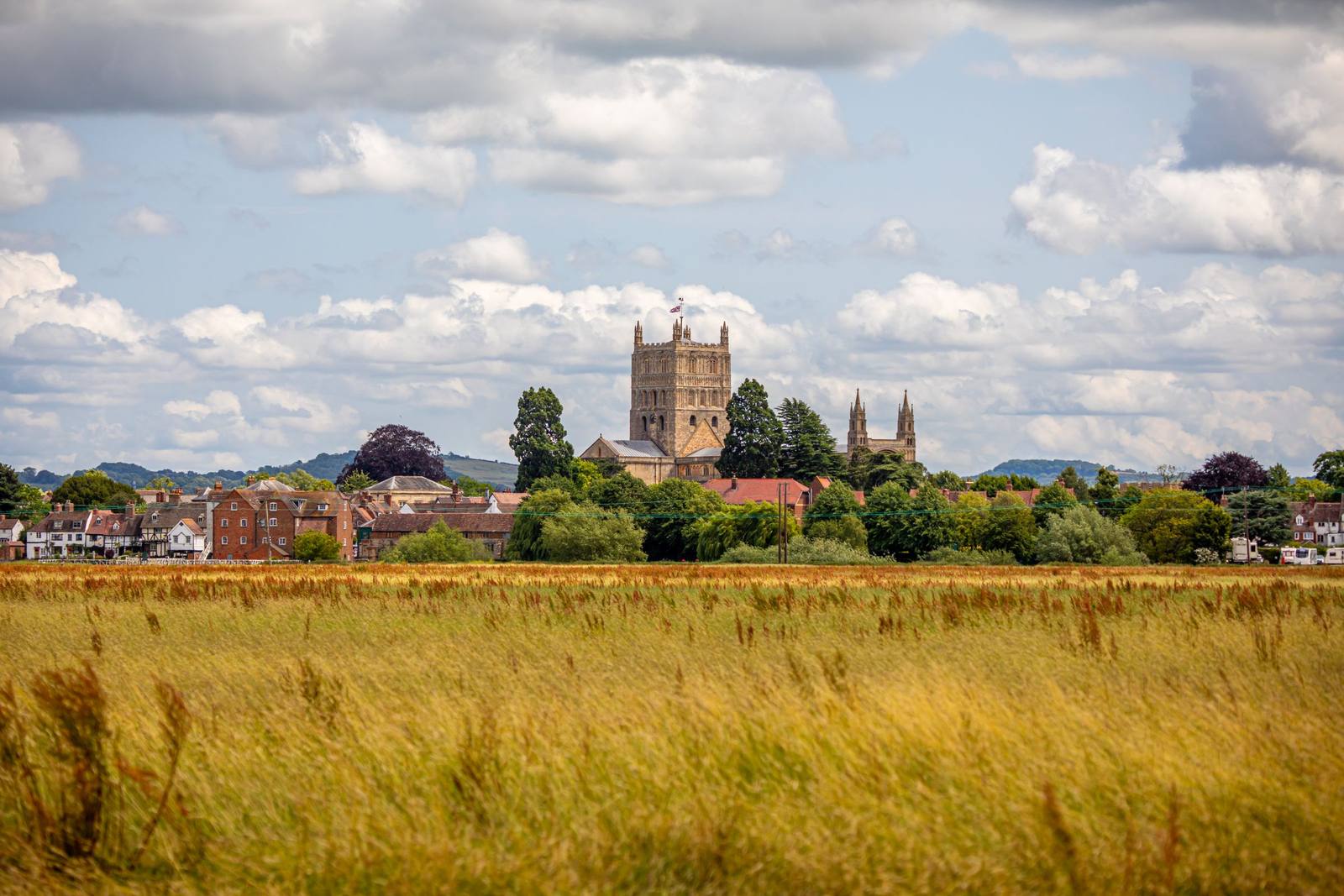
Tewkesbury is built on low ground between two rivers, and it floods. In the great floods of July 2007 the abbey stood on a small island of dry land while the town around it was under water, in a photograph seen around the world.
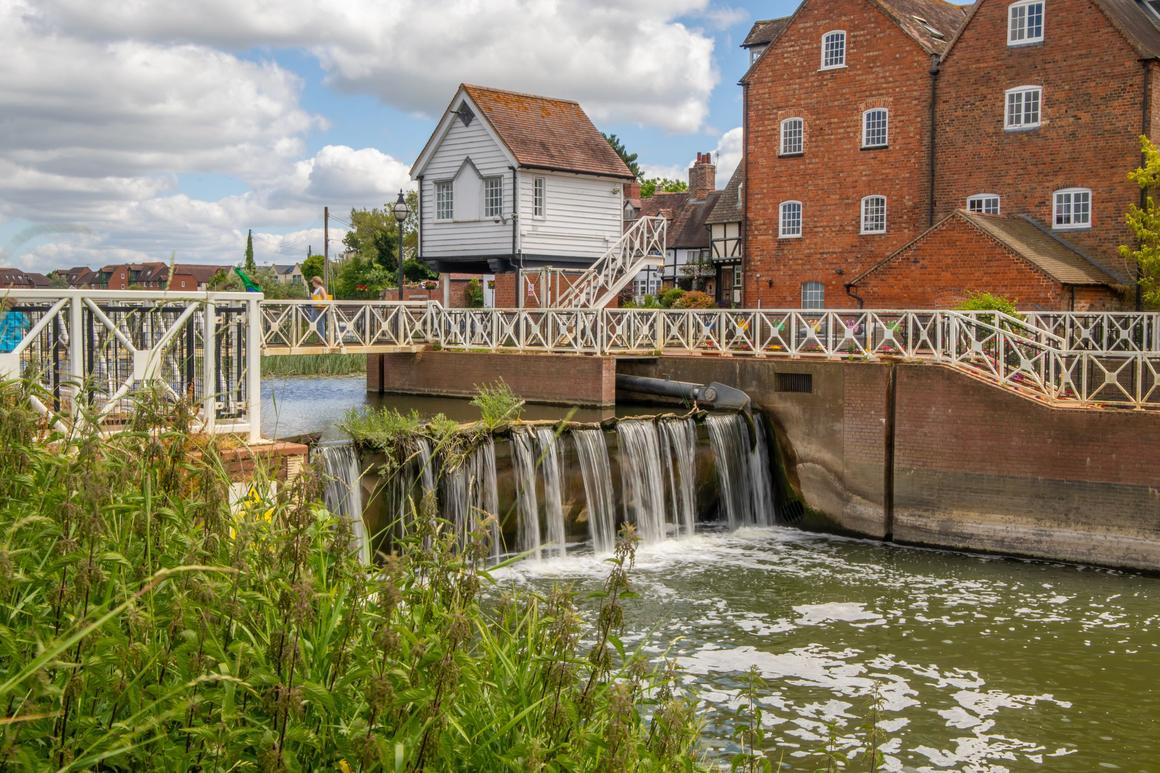
The town itself is one of the best-preserved in England, with timber-framed houses, narrow alleys and old inns. Abbey Mill, on the river behind the abbey, is a short walk.
Common questions
Is Tewkesbury Abbey free to visit?
Yes. There is no admission charge and donations are welcome. Guided highlights tours cost about £7 (under-16s free) and the Tower and Hidden Spaces tour about £10.
Is Tewkesbury Abbey a cathedral?
No. It is a parish church, and has been since 1540, when the people of Tewkesbury bought the abbey church from Henry VIII after the monastery was dissolved. It is larger than many English cathedrals, and its Norman tower is one of the biggest in Europe.
What happened at Tewkesbury in 1471?
On 4 May 1471 the Yorkist king Edward IV defeated the Lancastrians just south of the town in one of the decisive battles of the Wars of the Roses. Henry VI’s only son, Edward, Prince of Wales, was killed and is buried in the abbey. Some of the defeated took refuge in the church and were dragged out; the abbey had to be reconsecrated afterwards.
Can you go up the tower?
Yes, on the Tower and Hidden Spaces tour, which climbs more than 200 steps. It is open to children over eight with an adult, but not suitable for anyone with heart or breathing problems. Tickets can be bought online until 9am on the day, then at the welcome desk.
How do you get to Tewkesbury Abbey?
The nearest station is Ashchurch for Tewkesbury, about two miles away, with buses and taxis into town. Buses also run from Cheltenham and Gloucester. By car it is a few minutes from junction 9 of the M5, with car parks near the abbey.
Where to stay and eat nearby
The abbey has a refectory café. Church Street and the High Street, running north from the abbey, have pubs, tearooms and restaurants in old timber-framed buildings. Cheltenham, twenty minutes away, has a wider choice of hotels.
More English churches
- Gloucester Cathedral — another Norman abbey, twenty minutes away, whose first bishop was Tewkesbury’s last abbot
- Worcester Cathedral — up the Severn, with King John’s tomb
- Bath Abbey — another great abbey church that became a parish church
See all the cathedrals and churches worth visiting in England →