
Bourges Cathedral
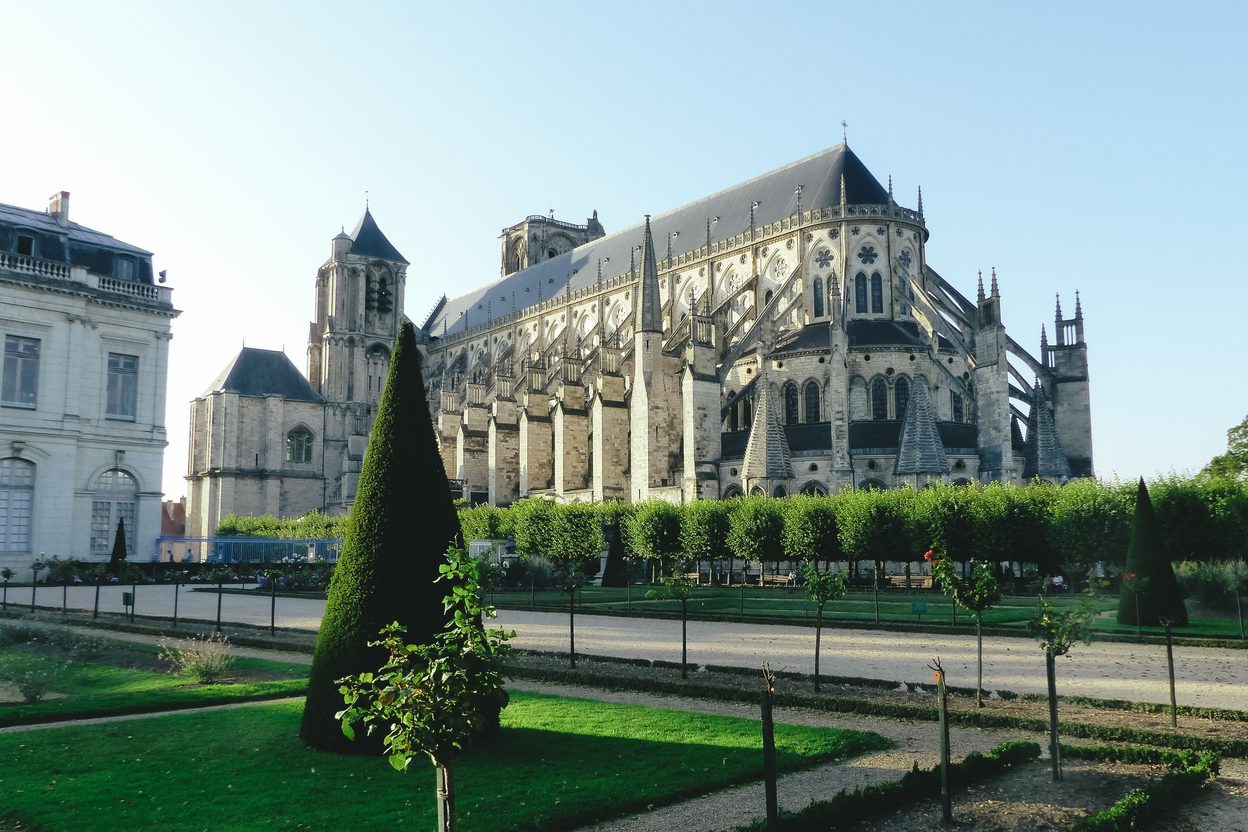
Bourges Cathedral, the Cathédrale Saint-Étienne, is the great Gothic cathedral of central France and one of the most original: no transept, a nave and four aisles stepping up towards the centre, and a vast unbroken interior lit by some of the finest 13th-century stained glass anywhere. It is a UNESCO World Heritage Site, entry is free, and the city around it, in the heart of the Berry, is well worth a night.
A different kind of Gothic
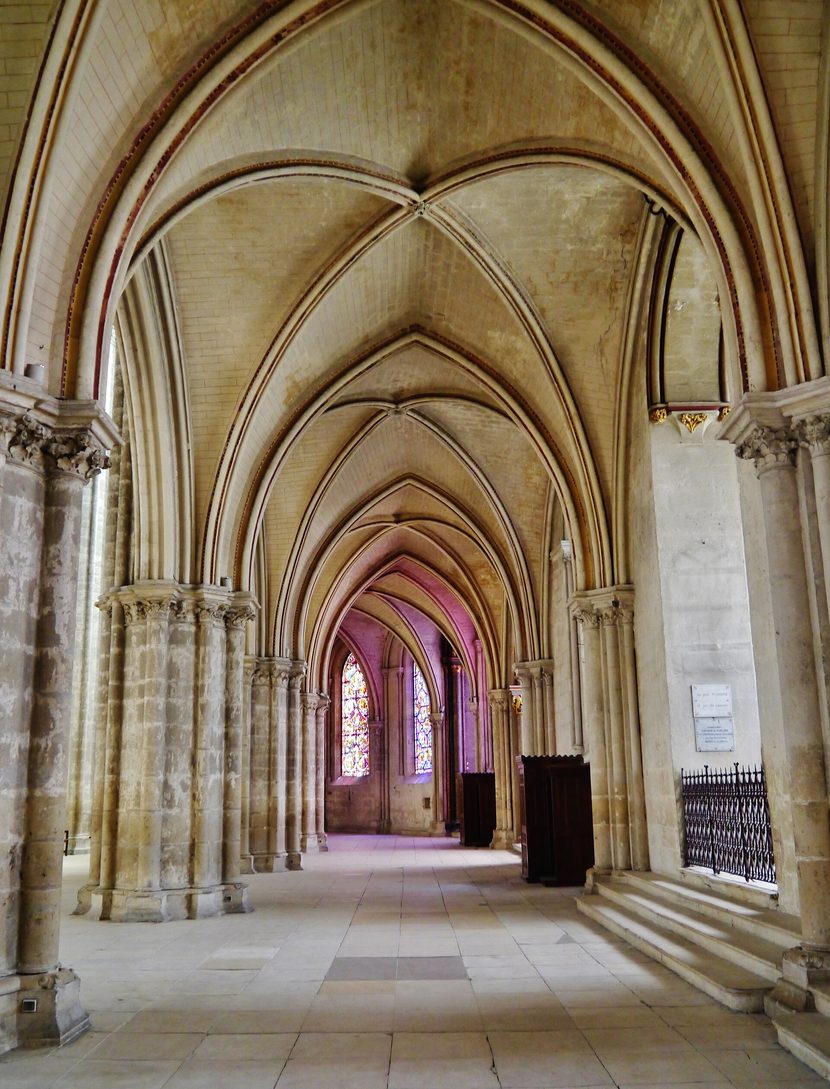
Work on the cathedral began in 1195 under Archbishop Henri de Sully, at almost the same moment as the rebuilding of Chartres. Its anonymous master builder took another path. Instead of a cross-shaped plan, Bourges has a single long body with double aisles running right round the choir as a double ambulatory. The inner aisles are taller than the outer ones, so the building rises in steps, like a pyramid in cross-section. The main body was largely finished by the 1230s, and the cathedral was dedicated in 1324.
On the last day of 1506 the north tower collapsed; it was rebuilt from 1508 with Renaissance ornament and is known as the Tour de Beurre, the butter tower, traditionally because it was paid for by people buying permission to eat butter in Lent. The south tower was never finished and is propped by a huge buttress. UNESCO listed the cathedral in 1992, and it is also part of the Routes of Santiago de Compostela in France.
The visitor’s cheat sheet
| Where | Place Étienne Dolet, 18000 Bourges; about 15 minutes’ walk from the station |
|---|---|
| Opening hours | Usually daily from about 8.30am to early evening (earlier in winter); not for visits during Sunday morning Mass |
| Admission | Free. Crypt by guided tour €9; tower €7 (July–August); crypt and Palais Jacques-Cœur €14. Under-18s free |
| Crypt tours | About 45 minutes, in French with leaflets in English; several a day; tickets on the north side of the cathedral |
| Tower | 396 steps; accompanied visits Thursday–Sunday afternoons in July and August only |
| Closed | Crypt and tower closed Sunday mornings, 1 January, 1 May, 1 and 11 November and 25 December |
| Access | Ramp at the south porch; the crypt is down steps, with no lift |
| How long | An hour; add 45 minutes for the crypt |
Hours and admission checked against the official site in October 2026. They change; the official site is always the last word.
What to see
The west front
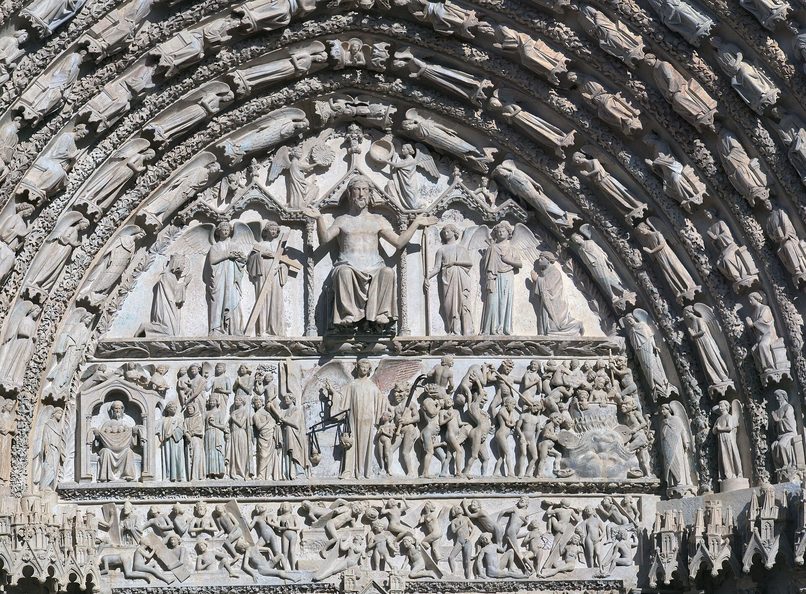
The west front has five portals. The central one is the Last Judgement, with Christ in majesty above, St Michael weighing souls, and the dead climbing from their tombs; some of its sculpture was damaged in the Wars of Religion in 1562 and restored in the 19th century.
The nave and the glass
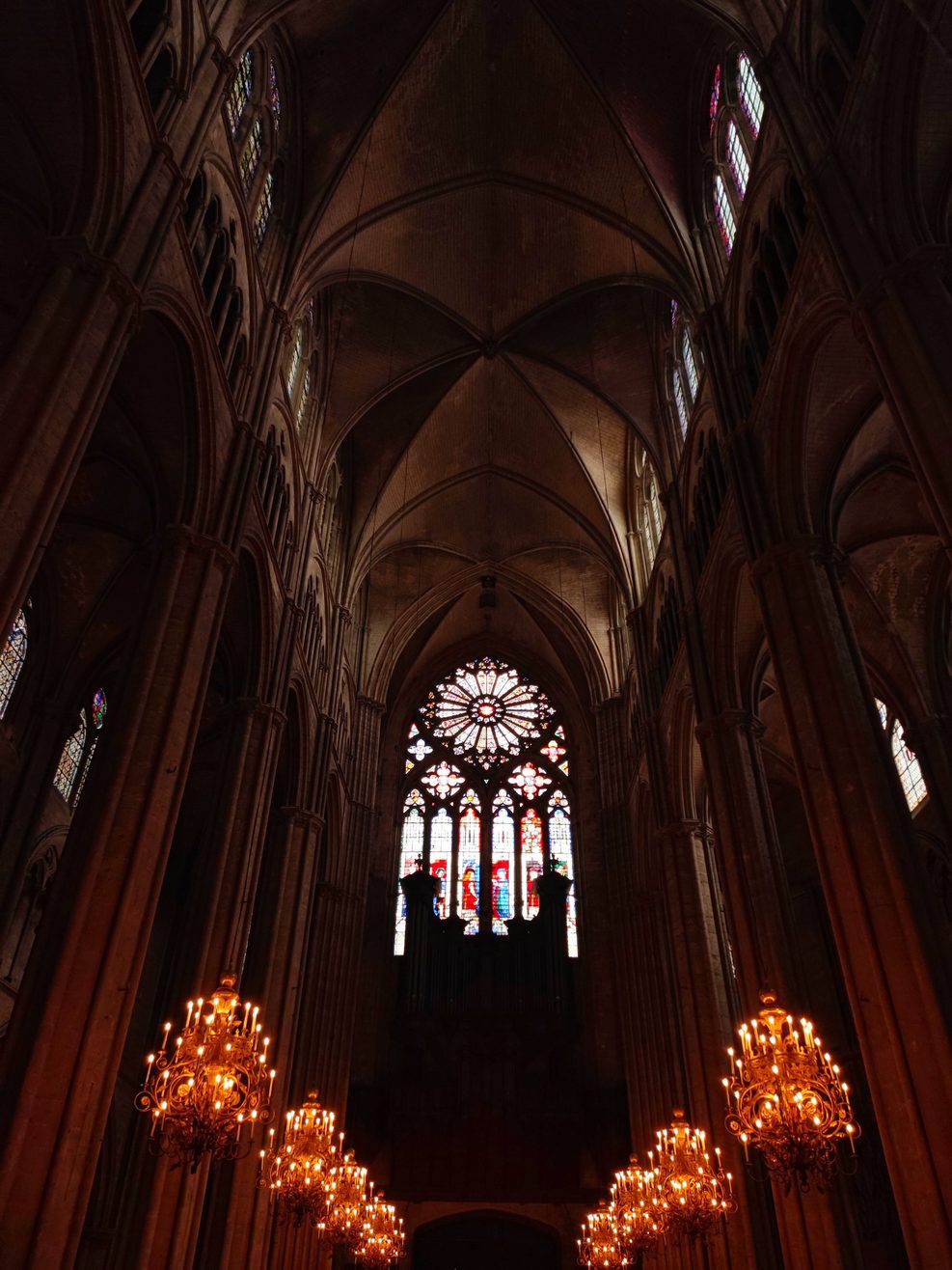
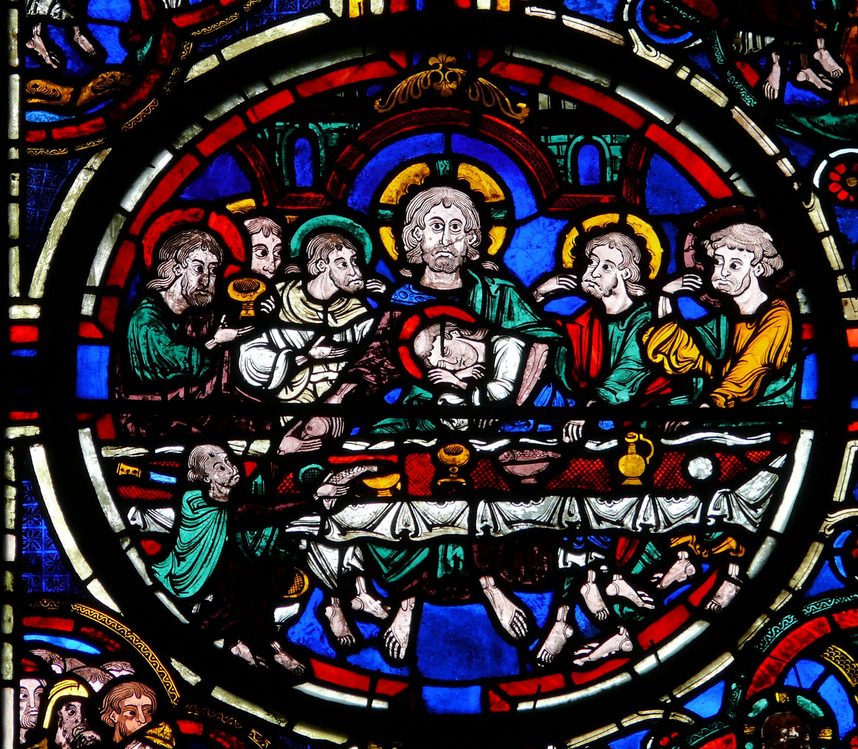
Inside, the nave rises about 37 metres, and without a transept your eye runs uninterrupted for more than 100 metres to the apse. The great treasure is the glass of the ambulatory and its chapels, made around 1210–15: narrative windows of the Passion, the Last Judgement, the Apocalypse and the Prodigal Son, in deep blues and reds, comparable with Chartres. Later windows include the Annunciation of the 1450s in the chapel of Jacques Cœur, the merchant prince of Bourges.
The astronomical clock
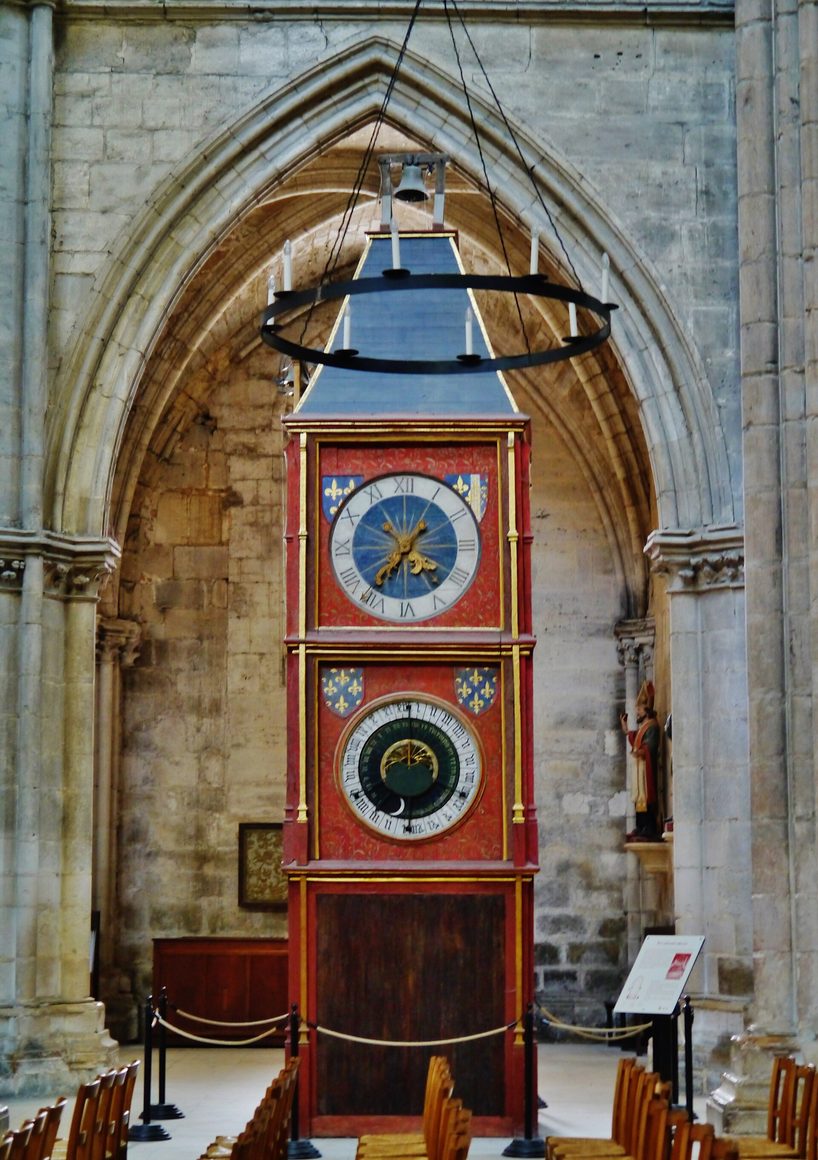
Inside the cathedral stands an astronomical clock installed in November 1424, designed by the canon and mathematician Jean Fusoris. It was damaged by fire in 1986, restored, and put back in place in 1994.
The crypt and the Duc de Berry
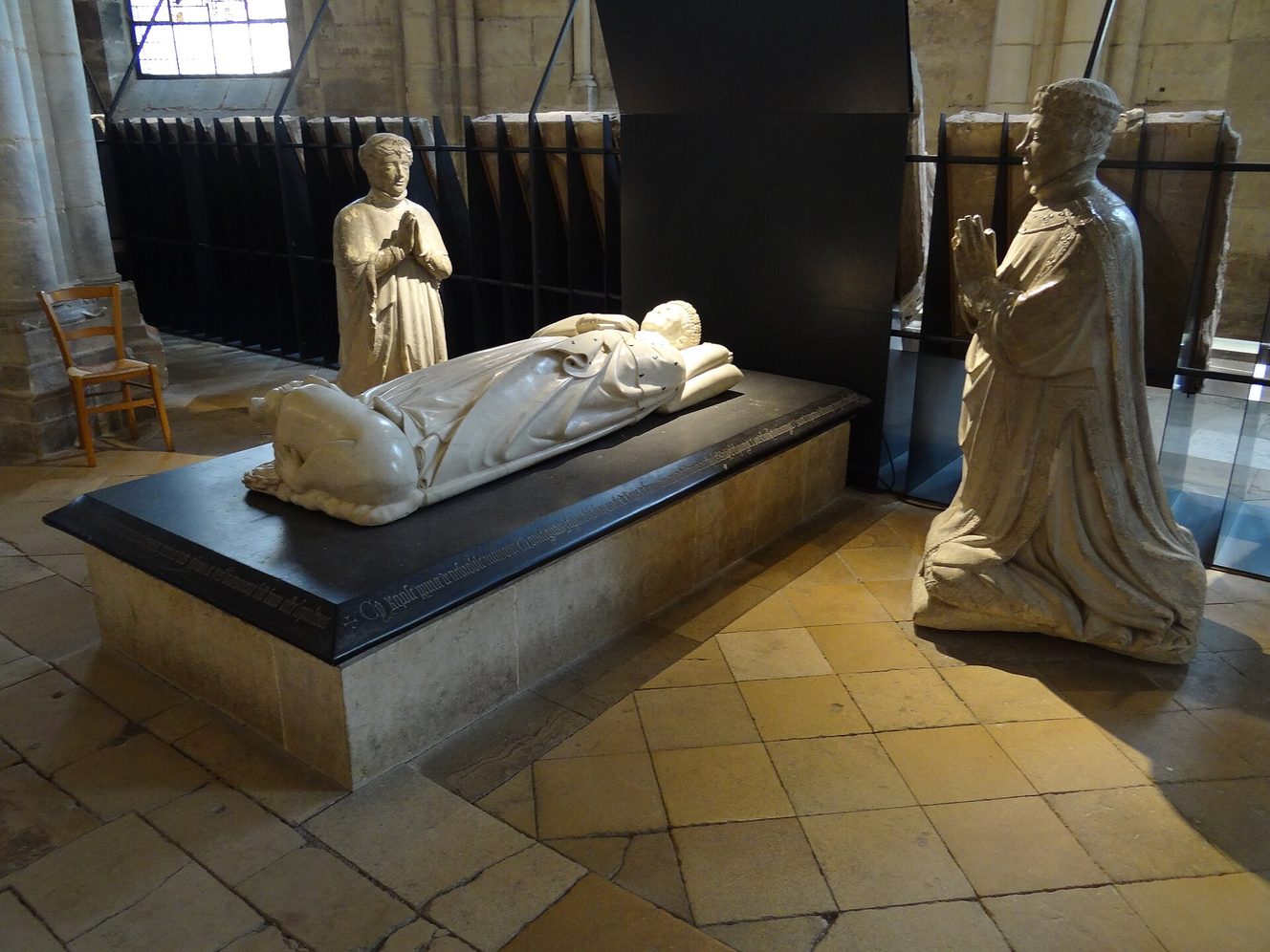
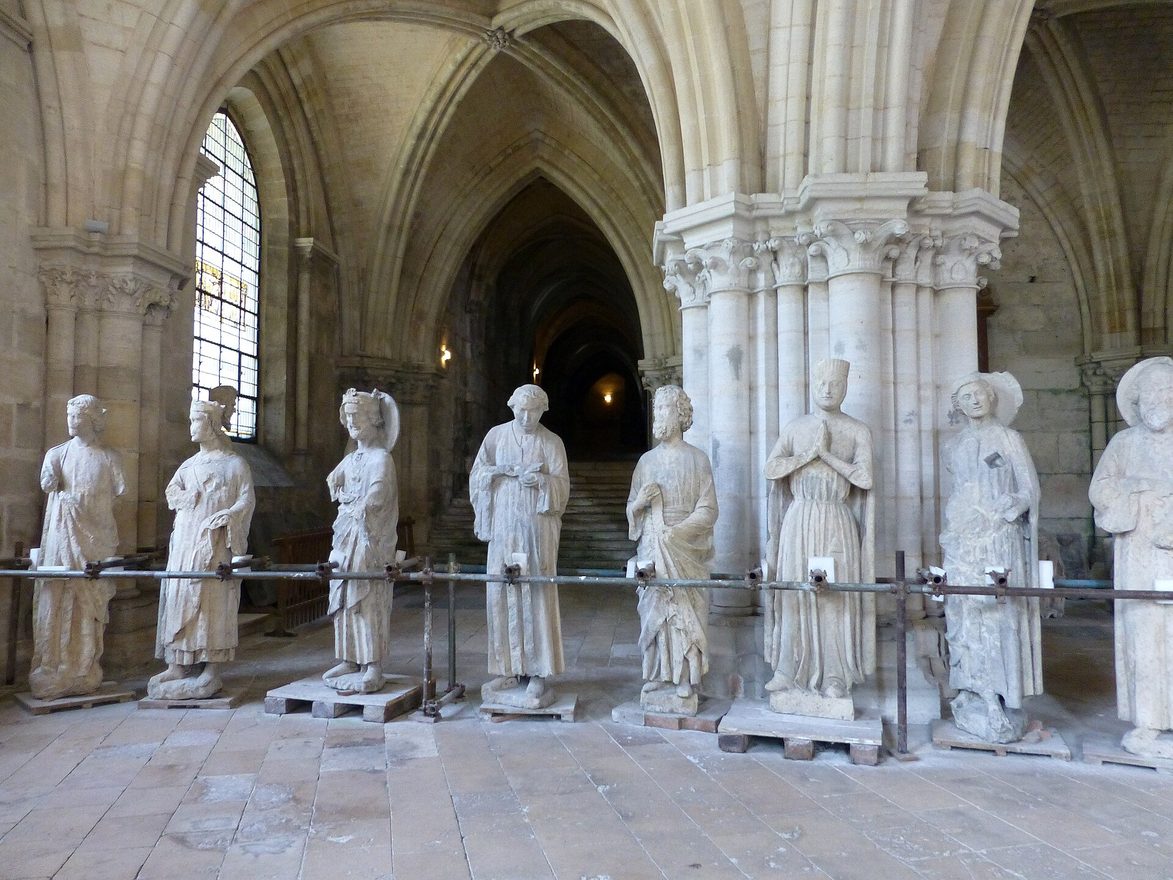
Because the ground falls away to the east, the builders put a lower church under the choir. It can only be seen on a guided tour, and it is worth it. Here lies the white marble effigy of Jean, Duc de Berry, the great patron of the Très Riches Heures, from the tomb begun for him in his lifetime and moved here from his demolished Sainte-Chapelle in 1757. Around it are a 16th-century Entombment, fragments of the 13th-century rood screen, stained glass from the Sainte-Chapelle and, on the floor, the builders’ full-size setting-out drawing for the west rose.
Getting there
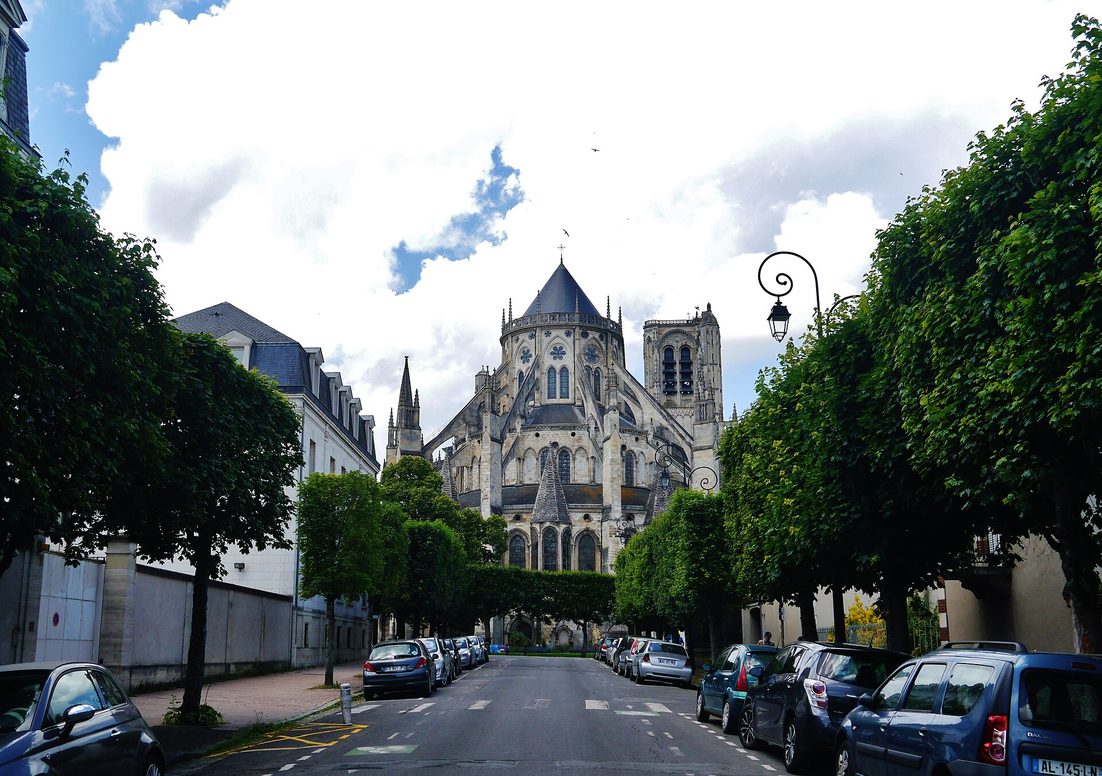
Bourges station is about 15 minutes’ walk north of the cathedral. Direct regional trains from Paris Austerlitz take about two hours, a few times a day; otherwise change at Vierzon. Orléans-Les Aubrais is about an hour away and Tours under two hours. By car, leave the A71 at exit 7 and use car parks such as Séraucourt and Avaricum. Walk round to the Jardin de l’Archevêché behind the apse for the classic view of the buttresses.
Tours and where to stay
Crypt and tower tickets are sold only at the cathedral. For tours of the old town and the Berry, and for hotels near the cathedral, try these.
These links go to GetYourGuide and Booking.com. This site earns nothing from them at present — they are here because they are the quickest way to check what is actually available.
Don’t miss
- The ambulatory glass Early 13th century, in the chapels round the choir.
- The Duc de Berry On the crypt tour.
- The astronomical clock Six centuries old.
- The Last Judgement portal In the middle of the west front.
- The Palais Jacques-Cœur A few minutes’ walk away; joint ticket with the crypt.
Insider tips
Bring binoculars and come in the afternoon. The ambulatory windows are high and full of detail, and the low afternoon sun lights the south side. If you can, buy the joint ticket for the crypt and the Palais Jacques-Cœur, the late-Gothic mansion of the king’s treasurer. On summer evenings the Nuits Lumière illuminated walk sets off from the cathedral square.
Common questions
Is Bourges Cathedral free?
Yes, the cathedral itself is free. The crypt (the lower church) can only be seen on a guided tour, which costs €9, and the north tower costs €7 in summer. Under-18s, and EU nationals (or non-EU residents of France) aged 18 to 25, go free.
When is Bourges Cathedral open?
The cathedral is usually open daily from about 8.30am into the early evening, closing earlier in winter. Avoid Sunday mornings, when Mass is celebrated and the crypt tours do not run.
Can you climb the tower at Bourges?
Only in summer. The north tower, the Tour de Beurre, opens for accompanied visits on Thursday to Sunday afternoons in July and August; there are 396 steps.
What is in the crypt?
The lower church holds the marble effigy of Jean, Duc de Berry, a 16th-century Entombment, fragments of the medieval rood screen and stained glass from the duke’s lost Sainte-Chapelle. The tour is in French, with leaflets in English.
How does Bourges compare with Chartres?
The two were begun within a year of each other in the 1190s. Chartres has a cross-shaped plan; Bourges has no transept and a nave with four stepped aisles, which gives it a much broader, more unified interior. Both keep superb 13th-century glass.
More churches in France
- Chartres Cathedral — its exact contemporary, with the most complete set of medieval glass in France.
- Albi Cathedral — another single-bodied cathedral, in brick, in the south.
- Amiens Cathedral — the largest Gothic cathedral in France.