
St Bartholomew the Great, London
Hidden behind a half-timbered gatehouse on West Smithfield, St Bartholomew the Great is the oldest surviving parish church in London: the Norman choir of a great priory founded in 1123. Dark, solemn and heavy with round arches, it survived the Dissolution, the Great Fire and the Blitz, spent years as a workshop and a printing house, and has become one of the most filmed churches in the country.
Rahere’s priory
In 1123 Rahere, a courtier of Henry I, founded a priory of Augustinian canons here, together with the hospital of St Bartholomew next door, which is still a working hospital today. The church he began, and his successors finished, was one of the great Norman buildings of London.
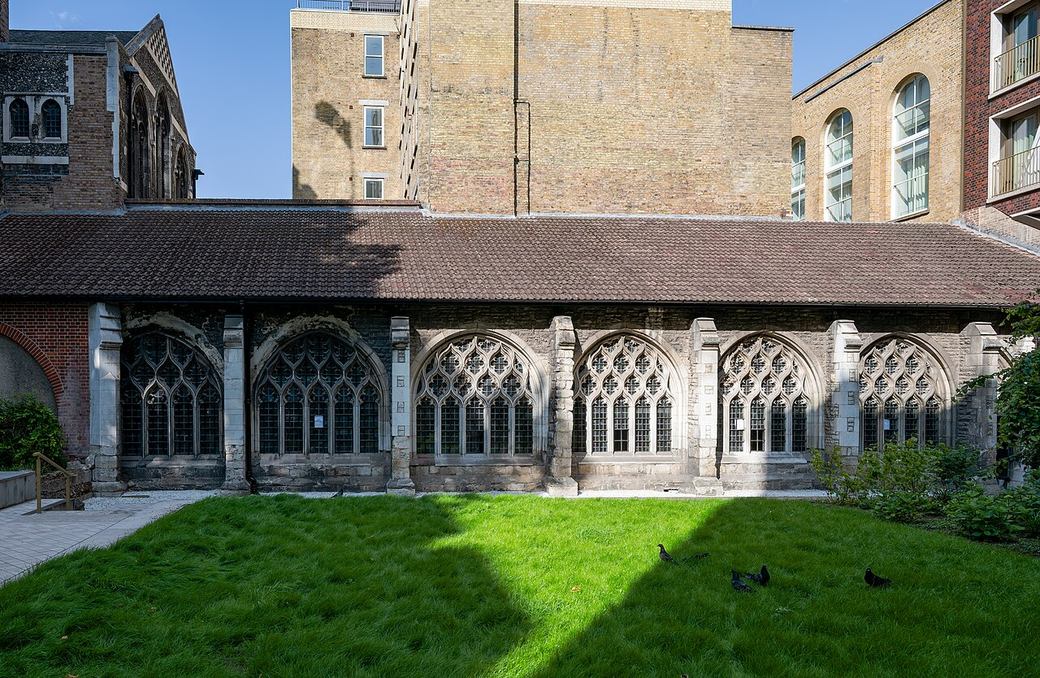
When the priory was dissolved in 1539, the nave was pulled down and only the choir and crossing were kept as the parish church. Over the next centuries parts of the building were used for other trades; the Lady Chapel became a printing works, where the young Benjamin Franklin worked in 1725. The church was rescued and restored in the late nineteenth century, largely by the architect Aston Webb.
The visitor's cheat sheet
| Where | West Smithfield, London, EC1A 9DS |
|---|---|
| Getting there | Barbican, Farringdon or St Paul’s Underground, about 10 minutes’ walk; enter through the Tudor gatehouse on West Smithfield |
| Opening hours | Mon–Sat 10am–5pm; Sundays between services; may close for weddings, concerts and filming |
| Admission | Free; donations welcome |
| How long | 30 minutes to an hour |
| Best time | A weekday morning, or a Sunday service with the choir |
| Dress code | No rule; respectful dress in a working church |
| Tours | Group tours by arrangement |
Hours and admission checked against the official site in October 2026. They change; the official site is always the last word.
Saved by its walls. The Great Fire of 1666 stopped short of the church, and in the Blitz the curate climbed onto the roof to remove incendiary bombs. Its survival is why London still has a Norman church of this size.
What to see, in the order you meet it
The gatehouse
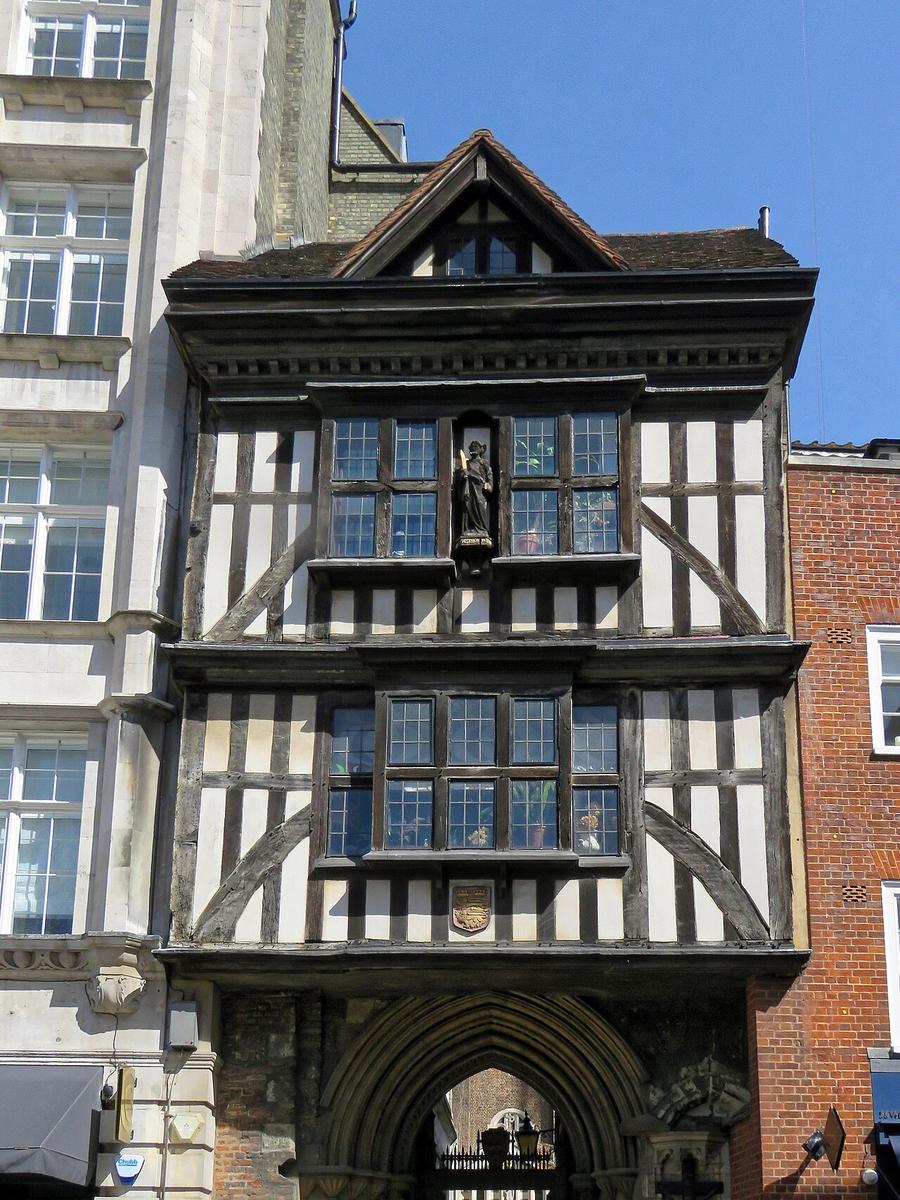
The way in from West Smithfield is through a Tudor half-timbered house built over a thirteenth-century stone archway. The arch was once an entrance to the nave; the path behind it runs where the nave used to stand.
The choir
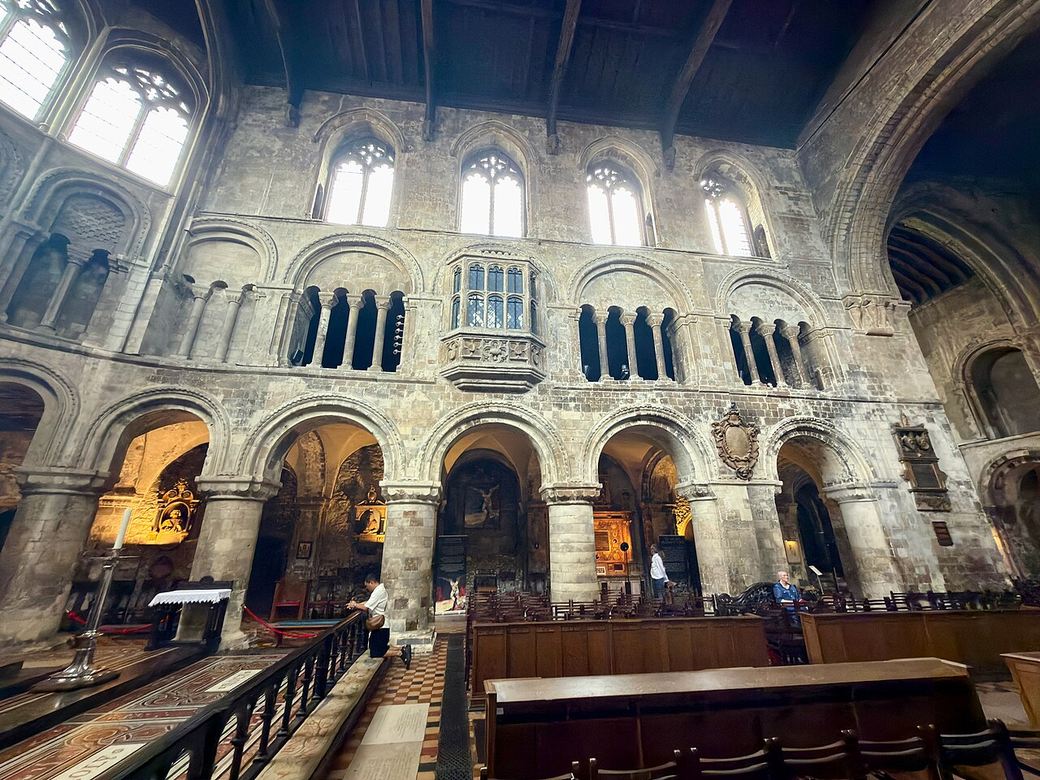
Inside, the massive round piers and arches of the Norman choir support a gallery. High on the south side is the oriel window put in by Prior William Bolton in the early sixteenth century, so that he could watch the services from his lodging.
Rahere’s tomb and the Lady Chapel
On the north side of the sanctuary is the tomb of Rahere, with a painted effigy under a medieval canopy. Beyond the altar is the Lady Chapel, restored after its centuries as a workshop.
The modern art
Look out for Damien Hirst’s gilded statue Exquisite Pain, which shows St Bartholomew, who was flayed alive, holding his own skin.
Visiting
Free to visit
There is no admission charge; donations help look after the building. The church is open Monday to Saturday from 10am to 5pm and on Sundays between services, but it can close for weddings, concerts and filming.
The hotel link goes to Booking.com. This site earns nothing from it at present — it is here because it is the quickest way to check what is actually available.
Don't miss
- The Norman choir London’s finest Romanesque interior after the Tower.
- Prior Bolton’s window The oriel high in the south gallery.
- Rahere’s tomb The founder, under his canopy.
- The gatehouse Tudor timber over a medieval arch.
- Exquisite Pain Damien Hirst’s golden St Bartholomew.
- Cloth Fair Some of the City’s oldest houses, beside the church.
Insider tips
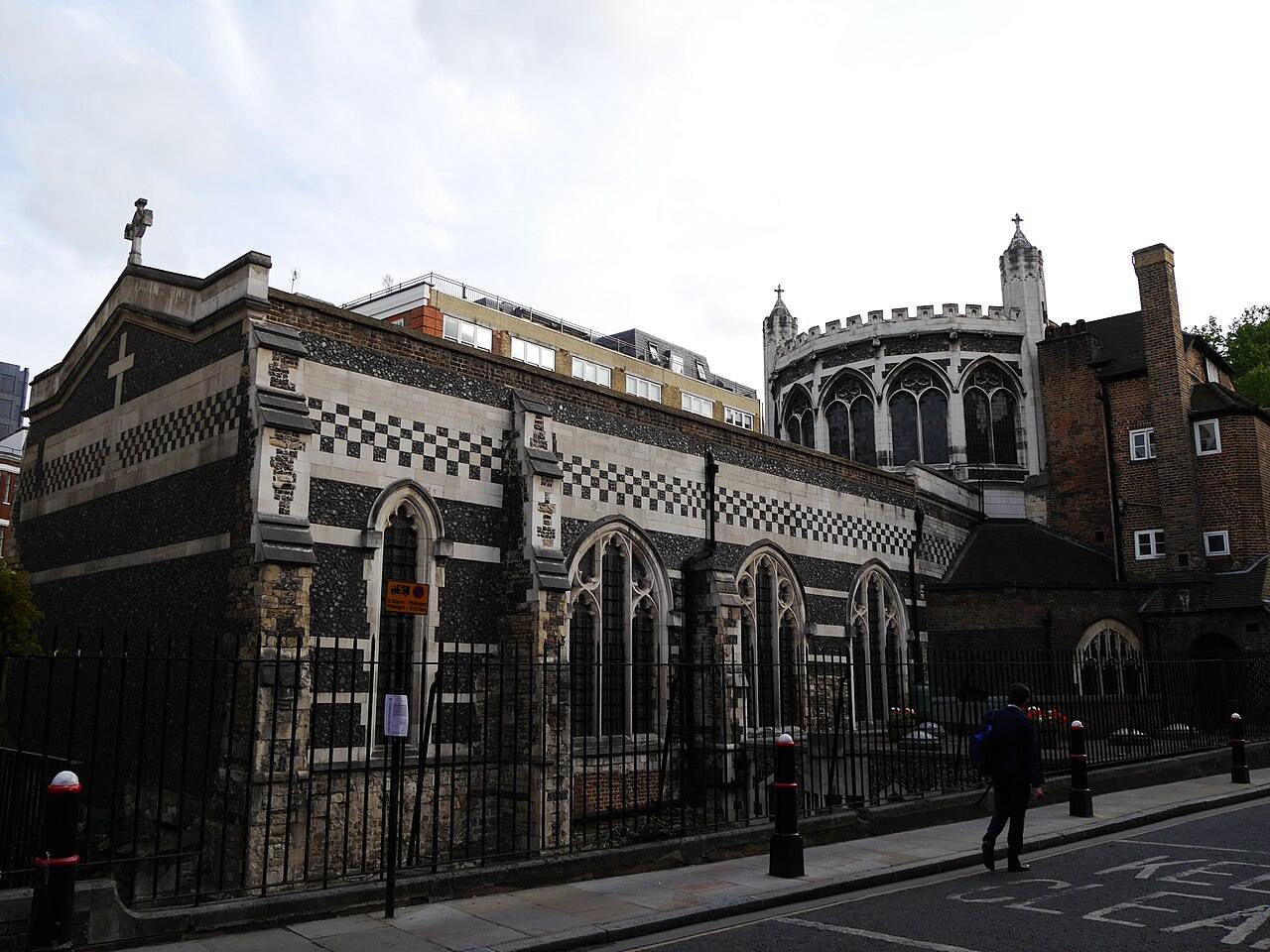
Walk round the outside. The churchyard between the gatehouse and the church marks the site of the lost nave. Then go round into Cloth Fair, where the church’s flint walls stand beside some of the few houses in the City to survive the Great Fire.
Common questions
Does it cost anything to visit St Bartholomew the Great?
No. The church says there is no admission charge, though donations are welcome to help look after the building. Services are open to all.
When is the church open?
Monday to Saturday from 10am to 5pm, and on Sundays between services. It can close for weddings, funerals, concerts and filming, so check the church’s website if you are making a special journey.
Which films were made here?
Many. The best known is Four Weddings and a Funeral, in which the fourth wedding takes place here. Its dark Norman interior is a favourite with film-makers.
Who was Rahere?
A courtier of Henry I who, according to the church’s own story, fell ill on a pilgrimage to Rome and vowed to found a hospital if he recovered. He founded both St Bartholomew’s Hospital and this priory in 1123, became its first prior, and is buried in the church.
How do you get to St Bartholomew the Great?
The church is in West Smithfield, beside Smithfield Market and Bart’s Hospital. Barbican, Farringdon and St Paul’s Underground stations are all within about ten minutes’ walk. Enter through the Tudor gatehouse from West Smithfield.
Where to stay and eat nearby
Smithfield and Clerkenwell are full of restaurants and pubs, and there are hotels around Farringdon and the Barbican.
More English churches
- St Paul’s Cathedral — about ten minutes’ walk south
- Temple Church — the round church of the Knights Templar
- Southwark Cathedral — across the river
See all the cathedrals and churches worth visiting in England →