
Cartmel Priory
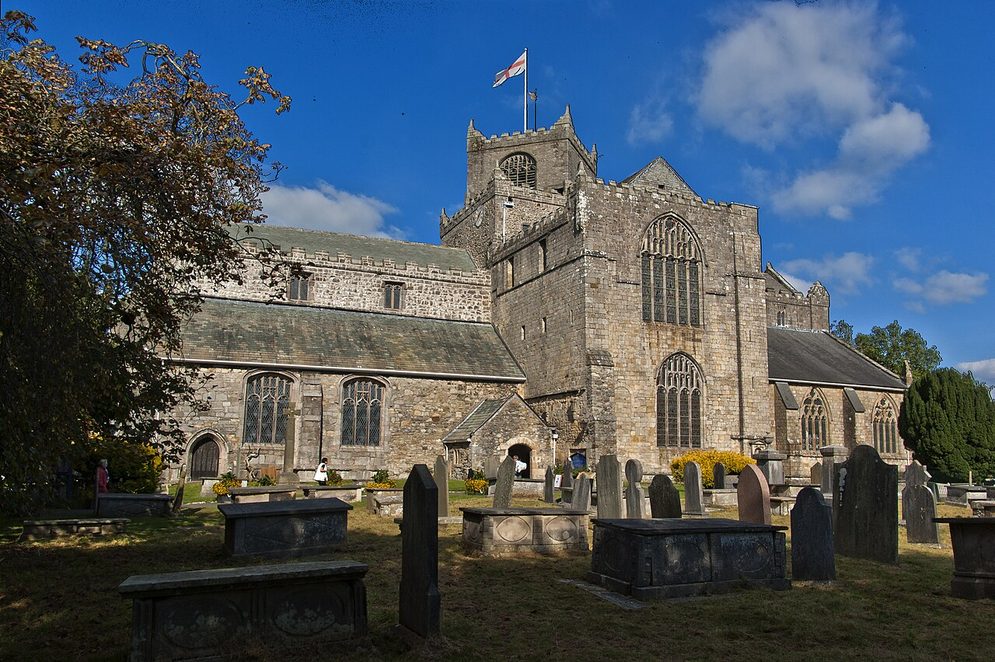
In a small village on the edge of the Lake District stands a priory church as big as a cathedral, founded in about 1190 by William Marshal, the greatest knight of his age. When Henry VIII closed the priory, the villagers argued that the church was theirs, and won. Inside are some of the finest medieval choir stalls in the north, a great east window with fifteenth-century glass, and the tomb of a fourteenth-century lord; outside, a tower whose upper half is turned at forty-five degrees.
The greatest knight’s priory
William Marshal, Earl of Pembroke, was a younger son with no inheritance who rose to be regent of England for the boy-king Henry III. He founded the priory in about 1190 for Augustinian canons, giving them the whole district of Cartmel. The church was begun on a grand scale, in a style that mixes round-headed Norman arches with the new pointed Gothic, but Marshal died in 1219, and the nave was not finished until the fifteenth century, in rougher stone.
At the Dissolution in 1536 the canons were turned out. During the Pilgrimage of Grace they were briefly restored, and when the rising failed four of them, with ten villagers, were hanged. The priory was pulled down, but because Marshal had given the parish its own altar in the church, the villagers were allowed to keep it. The lead was stripped from the nave roof, and for eighty years they worshipped in the choir, until George Preston of Holker Hall paid for a new roof in 1618.
The visitor's cheat sheet
| Where | The Priory Church of St Mary and St Michael, Cartmel, Cumbria, LA11 6QD |
|---|---|
| Getting there | About 2 miles from Grange-over-Sands station, by bus or taxi; M6 junction 36, then the A590; racecourse car park on weekdays |
| Opening hours | Monday to Saturday 10am–4pm; Sundays for services; occasional closures for events |
| Admission | Free; donations welcome |
| How long | 45 minutes to an hour, longer with the village |
| Best time | A weekday morning, before the village fills up |
| Dress code | No rule; respectful dress in a working church |
| Tours | Self-guided; guided tours by arrangement; gift shop |
Hours and admission checked against the official site in October 2026. They change; the official site is always the last word.
Cromwell’s door. In 1643, during the Civil War, Parliamentary troops stabled their horses in the nave. The door in the south-west corner of the church still has holes said to have been made by the villagers’ bullets.
What to see, in the order you meet it
The tower and the south door
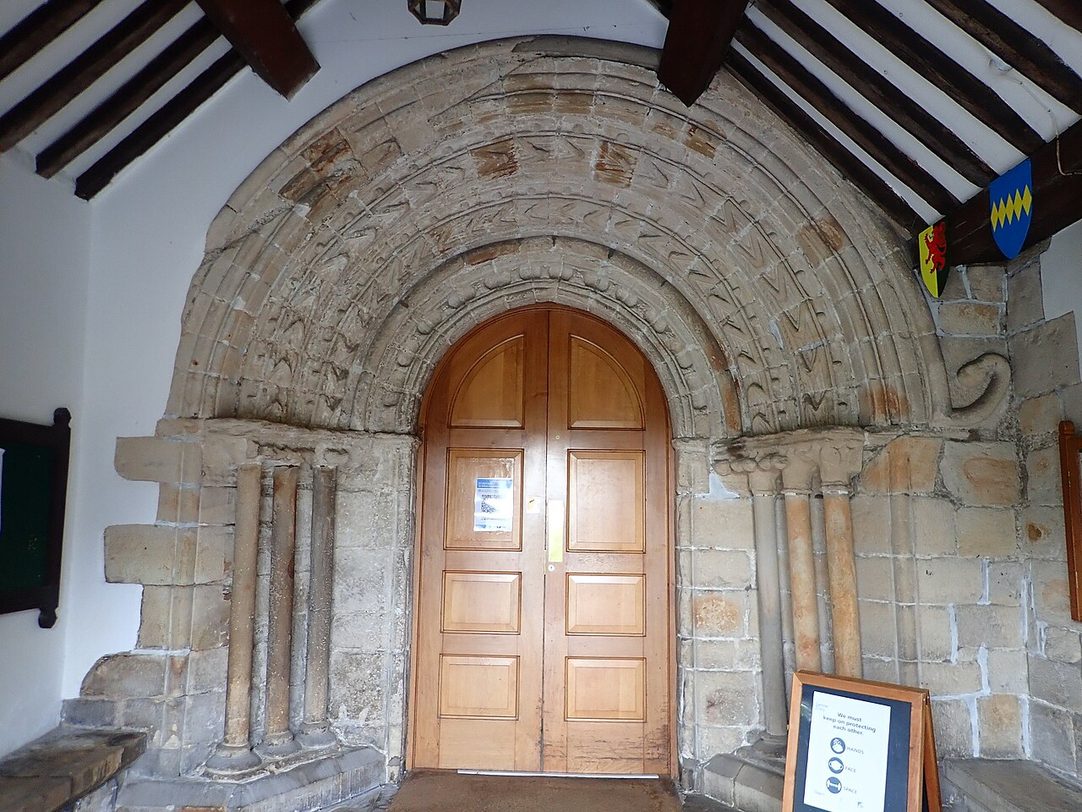
Outside, look up at the tower. The low lantern over the crossing belongs to the first church; the belfry above it was added in the fifteenth century and set diagonally, a feature thought to be unique in England. The south doorway, with its late Norman carving, is one of the oldest parts of the building.
The chancel and the east window
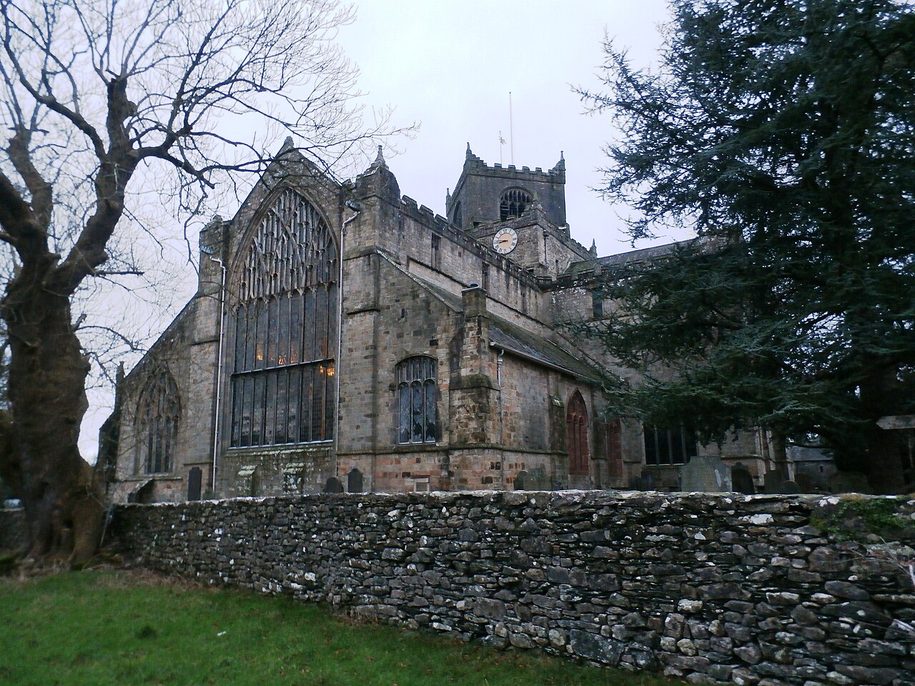
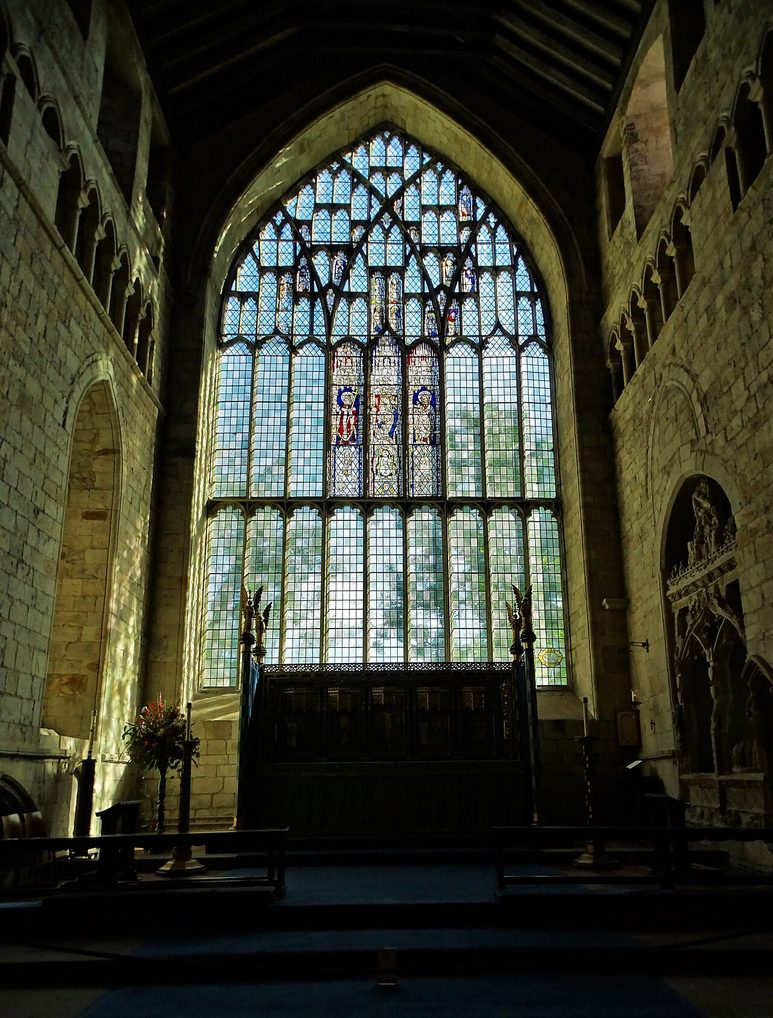
The chancel, the oldest part of the church, rises in three storeys like a cathedral. Its great east window, put in during the fifteenth century, almost fills the east wall, and still holds medieval glass, pieced back together from fragments.
The choir stalls
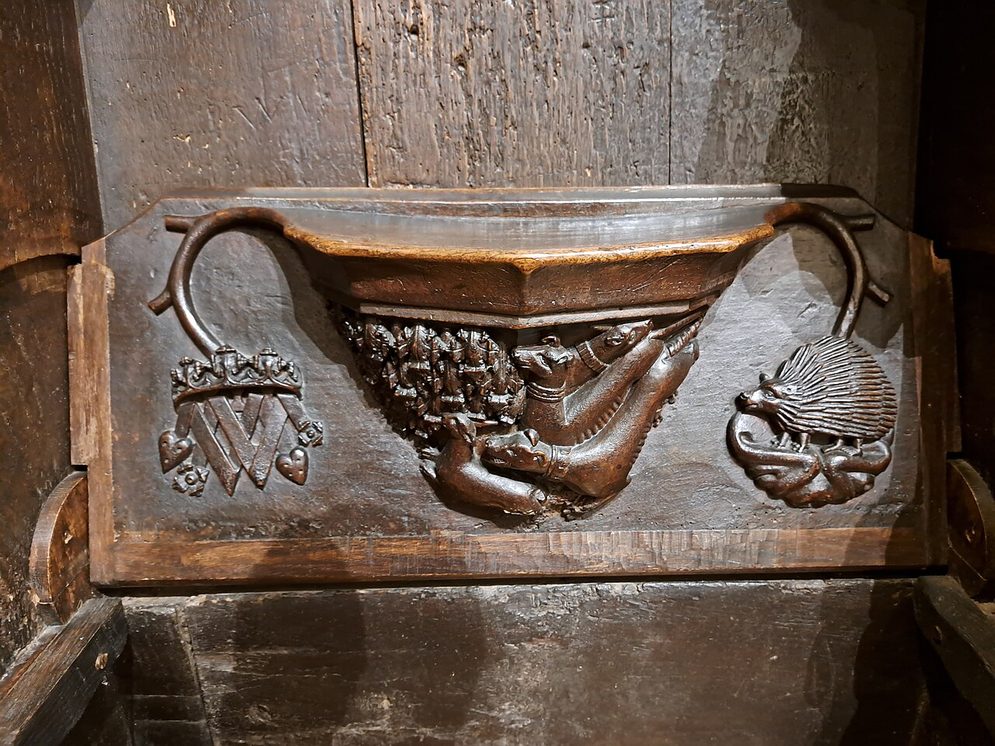
The canons’ stalls date from about 1440, and their misericords, the carved ledges under the tip-up seats, are some of the best in the north, among them a Green Man with three faces sprouting leaves. The carved screens and canopies above them were added in the seventeenth century by George Preston.
The Harrington tomb and the Town Choir
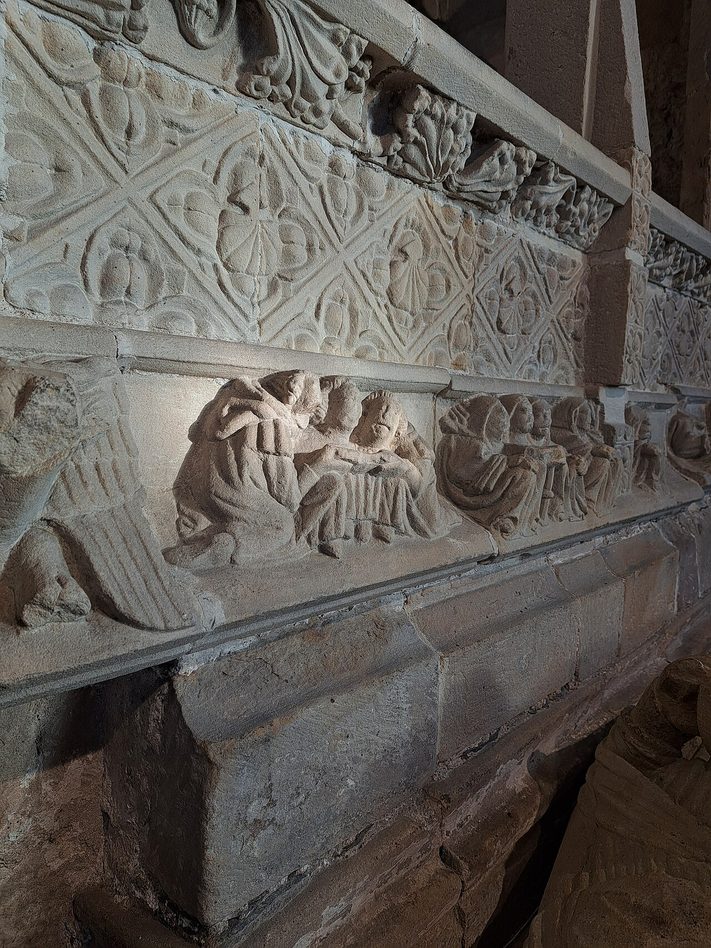
The south aisle of the chancel, the Town Choir, holds the tomb of John Harington, the first Lord Harington, made in the 1330s or 1340s, which he shares with his wife, Joan. It is one of the finest tombs of its date in the north, with little carved figures of mourning canons along its sides. Nearby are sculptures by Josefina de Vasconcellos, among them They Fled by Night, the Holy Family on the flight into Egypt.
The gatehouse
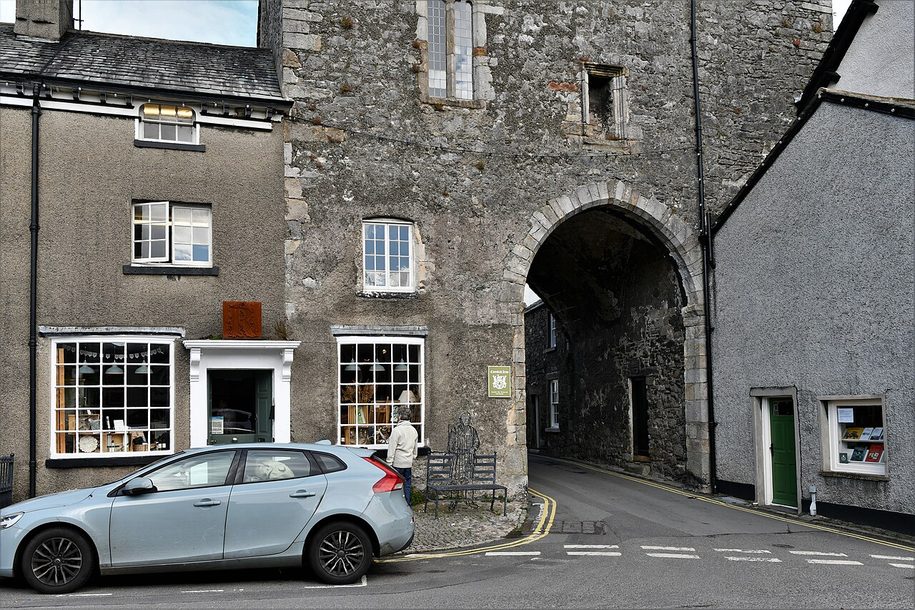
In the village square stands the priory gatehouse, built in the fourteenth century, the only other part of the priory to survive. It belongs to the National Trust.
Visiting
Free to visit
There is no admission charge. The priory is open to visitors from 10am to 4pm, Monday to Saturday, and on Sundays for services.
The hotel link goes to Booking.com. This site earns nothing from it at present — it is here because it is the quickest way to check what is actually available.
Don't miss
- The diagonal tower A belfry turned through forty-five degrees.
- The misericords Carved around 1440, including a three-faced Green Man.
- The east window Fifteenth-century glass, pieced together.
- The Harrington tomb A lord and his lady, with mourning canons.
- Cromwell’s door Said to be marked by Civil War bullets.
- The gatehouse The priory’s gate, still spanning the square.
Insider tips
Avoid race days. Cartmel has a racecourse, and on its race days in spring and summer the village is packed and the car park is closed to visitors. Come on another day, and leave time for the village itself, which is famous for its sticky toffee pudding.
Common questions
Does it cost anything to visit Cartmel Priory?
No. The priory is free to visit, though donations are welcome to help look after the building.
When is Cartmel Priory open?
It is open to visitors from 10am to 4pm, Monday to Saturday. On Sundays it is open for services. It is sometimes closed for weddings, funerals and events, which the priory announces on its social media.
Why was Cartmel Priory not destroyed at the Dissolution?
Because part of it had always been the parish church. When William Marshal founded the priory he gave the people of Cartmel an altar and a priest in the church, and when Henry VIII’s commissioners came, the villagers petitioned to keep it as their place of worship. The rest of the priory was pulled down, but the church survived.
Why is the tower set at an angle?
In the fifteenth century the canons added a belfry to the low central tower, and they set it diagonally across the old one, turned through forty-five degrees. Nobody knows quite why. The result is thought to be unique in England.
How do you get to Cartmel?
Cartmel is about two miles from Grange-over-Sands, which has the nearest railway station; from there it is a short bus or taxi ride. By car, leave the M6 at junction 36 and follow the A590 towards Barrow. On weekdays you can park at the racecourse car park in the village.
Where to stay and eat nearby
Cartmel has pubs, restaurants and places to stay, and Grange-over-Sands, on the shore of Morecambe Bay, is two miles away.
More English churches
- Furness Abbey — the great Cistercian ruin across the estuary
- Carlisle Cathedral — another Augustinian priory church
- Lanercost Priory — Augustinian canons by Hadrian’s Wall
See all the cathedrals and churches worth visiting in England →