
Svatá Hora, Příbram
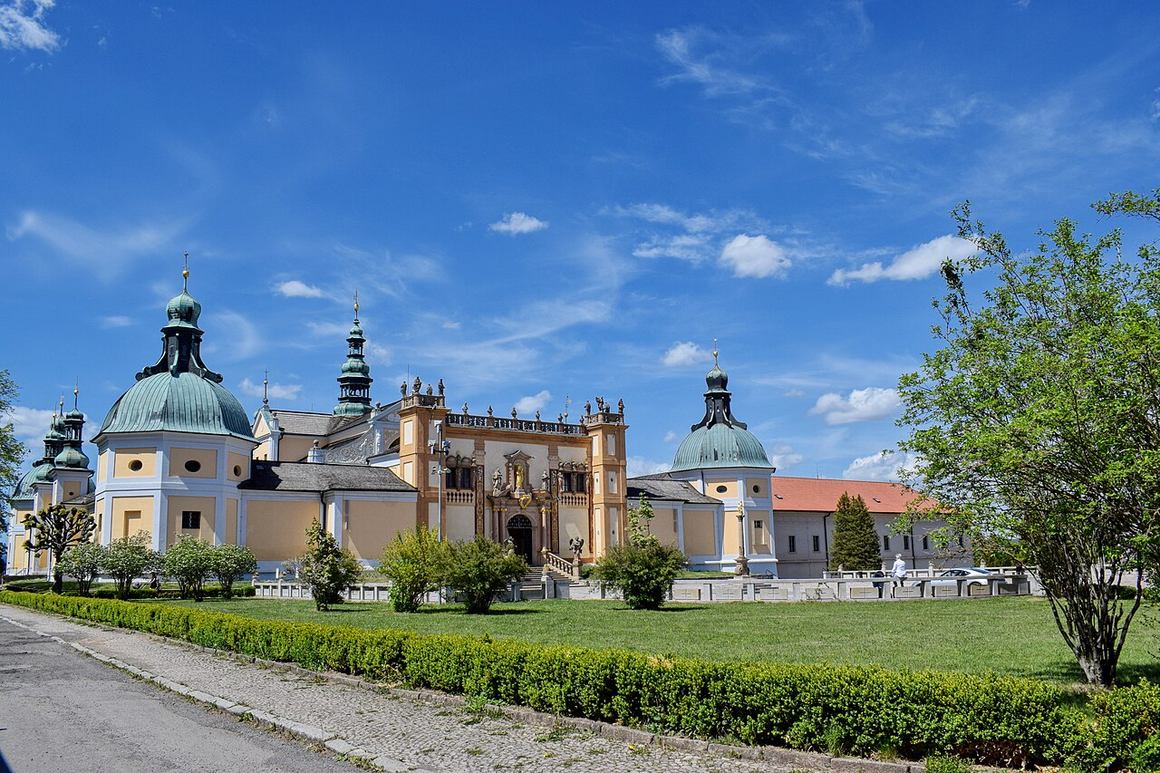
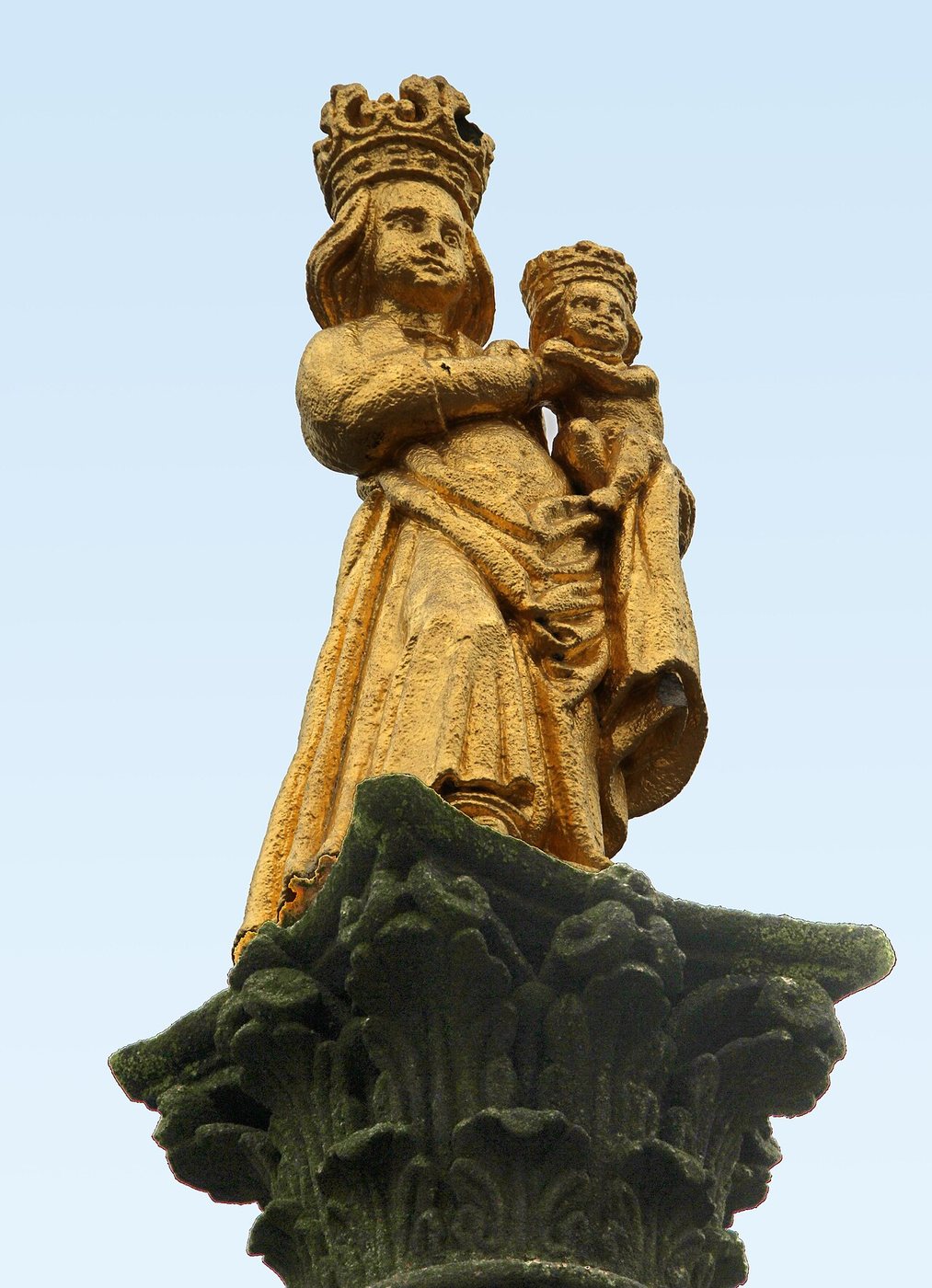
Svatá Hora, the Holy Mountain, is the most visited place of pilgrimage in Bohemia: a Baroque hilltop shrine above the old mining town of Příbram, an hour from Prague. A rectangle of painted cloisters with domed chapels at the corners surrounds a small basilica on a high terrace, and at its heart, on a silver altar, is a little wooden statue of the Virgin, crowned in 1732. It is free and open every day. Most visitors drive up; the best way in is on foot, by the covered stairway that climbs from the town.
A hermit, a blind man and the Jesuits
Nobody knows exactly when the first chapel was built on the hill. By the sixteenth century there was a simple chapel here, looked after by hermits, and the local silver miners had brought to it a small late Gothic wooden statue of the Virgin. Tradition says it was carved by Ernest of Pardubice, the first Archbishop of Prague, who had a residence in Příbram in the fourteenth century.
The shrine’s fame began in 1632, in the middle of the Thirty Years’ War. A blind beggar from Nymburk, Jan Procházka, told again and again in dreams to go to the Holy Mountain, arrived on 10 June 1632 to become its hermit, and within days recovered his sight. The cure was attested by witnesses and a doctor, and the news reached Vienna: Emperor Ferdinand II came to Svatá Hora in 1634. In 1647 the town handed the shrine to the Jesuits, who set out to make it the greatest Marian pilgrimage site in the kingdom.
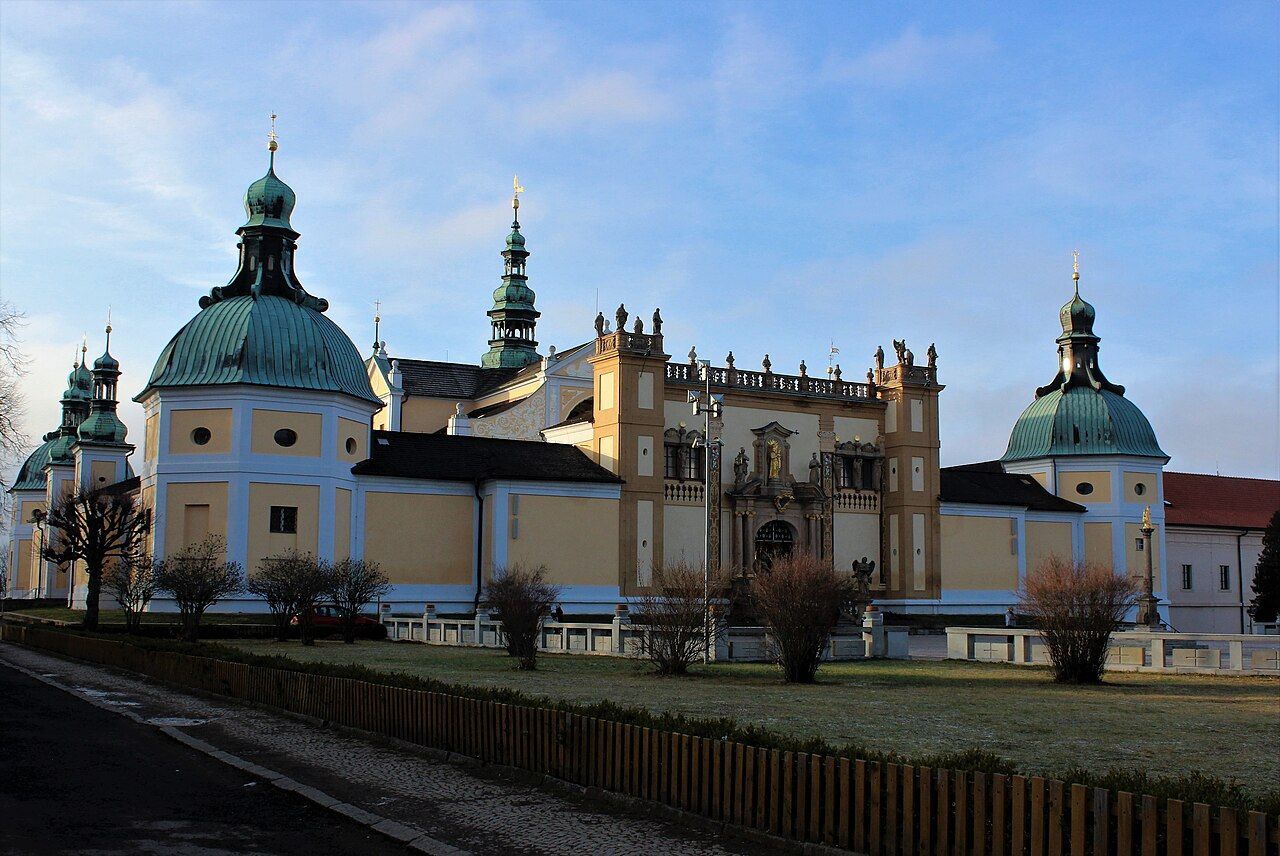
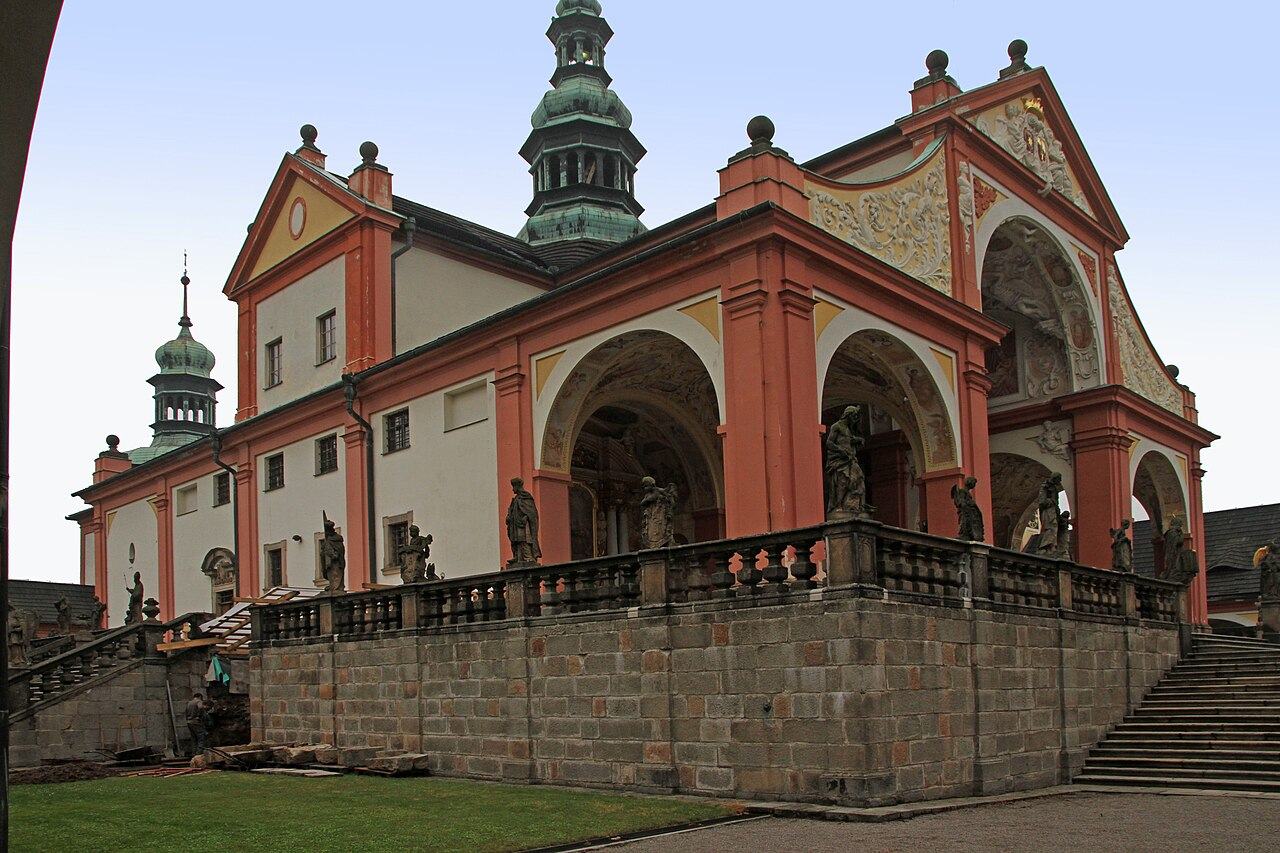
From the late 1650s the Jesuits rebuilt it to a plan by the Italian architect Carlo Lurago: the old chapel was enlarged into a church and raised on a terrace, and around it rose a rectangle of cloisters, about 80 by 72 metres, with octagonal chapels at the corners. Nobles, the towns of Prague, Plzeň, Mníšek and Březnice, and thousands of pilgrims paid for the chapels and their decoration. The two great gateways, the Prague Portal (1702–05) and the Březnice Portal (1707), came later, and the stairway from the town was rebuilt in 1727–28. On 22 June 1732 the statue of the Virgin was solemnly crowned. The layout became a model for Czech pilgrimage sites for a century.
Joseph II tried to stop the pilgrimages, without success. In 1861 the shrine passed to the Redemptorists, who kept it until the communist regime expelled them in 1950; they returned in 1990. Pilgrims fell from 80,000 in 1948 to 5,000 four years later, but they came back, and the complex was restored in 2015–16. The shrine today belongs to the Archdiocese of Prague.
The visitor’s cheat sheet
| Where | Svatá Hora, Příbram II, on the hill above the town, about 60 km south-west of Prague |
|---|---|
| Opening hours | The cloister and the basilica are open every day, 7am–6pm |
| Admission | Free |
| Guided tours | 150 Kč (Czech); 200 Kč in English or German, booked in advance by email. Short tours of the belfry (70 Kč), cellars (70 Kč) and clock tower (120 Kč) |
| Museum | 100 Kč. Monday–Saturday 9am–4pm (October–April) or 9am–5pm (May–September); Sunday 9am–5pm |
| Accessibility | Step-free entry by the Březnice gate and a lift to the basilica |
| Parking | No cars in the complex; pay car park in Balbínova street, then walk up |
| How long | An hour; two with the museum and the stairs |
Hours and admission checked against the official site in September 2026. They change; the official site is always the last word.
Free, and open all day. The cloister and the basilica are open every day from 7am to 6pm, and you can walk round both on your own. Guided tours are for those who want the full story: 150 Kč in Czech, 200 Kč in English or German, booked by email in advance. Watch for services: this is a working shrine with Mass several times a day, and a live stream from the basilica.
Climbing the covered stairs
The most memorable approach is the one the pilgrims used: the covered stairway from the town. It was first built open in 1658 and roofed soon afterwards, and in 1727–28 it was rebuilt to a simplified design by Kilián Ignác Dientzenhofer, as a long vaulted gallery that climbs the hill in stages under a red roof. Pilgrims once climbed it on their knees. Tradition says it has 365 steps, one for each day of the year; the parish, honestly, counts 343 on the stairway and 22 more into the basilica.
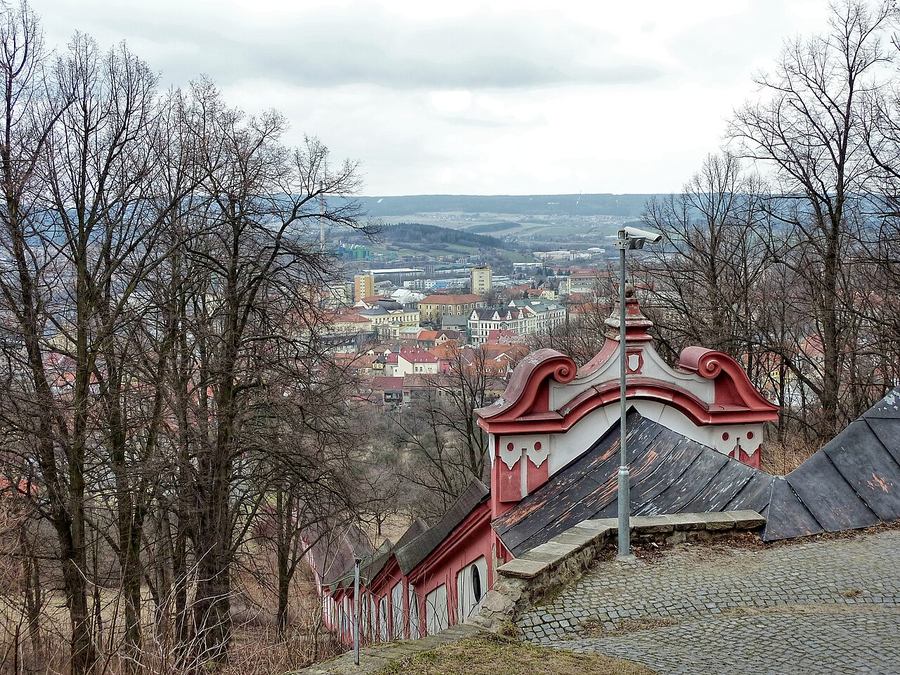
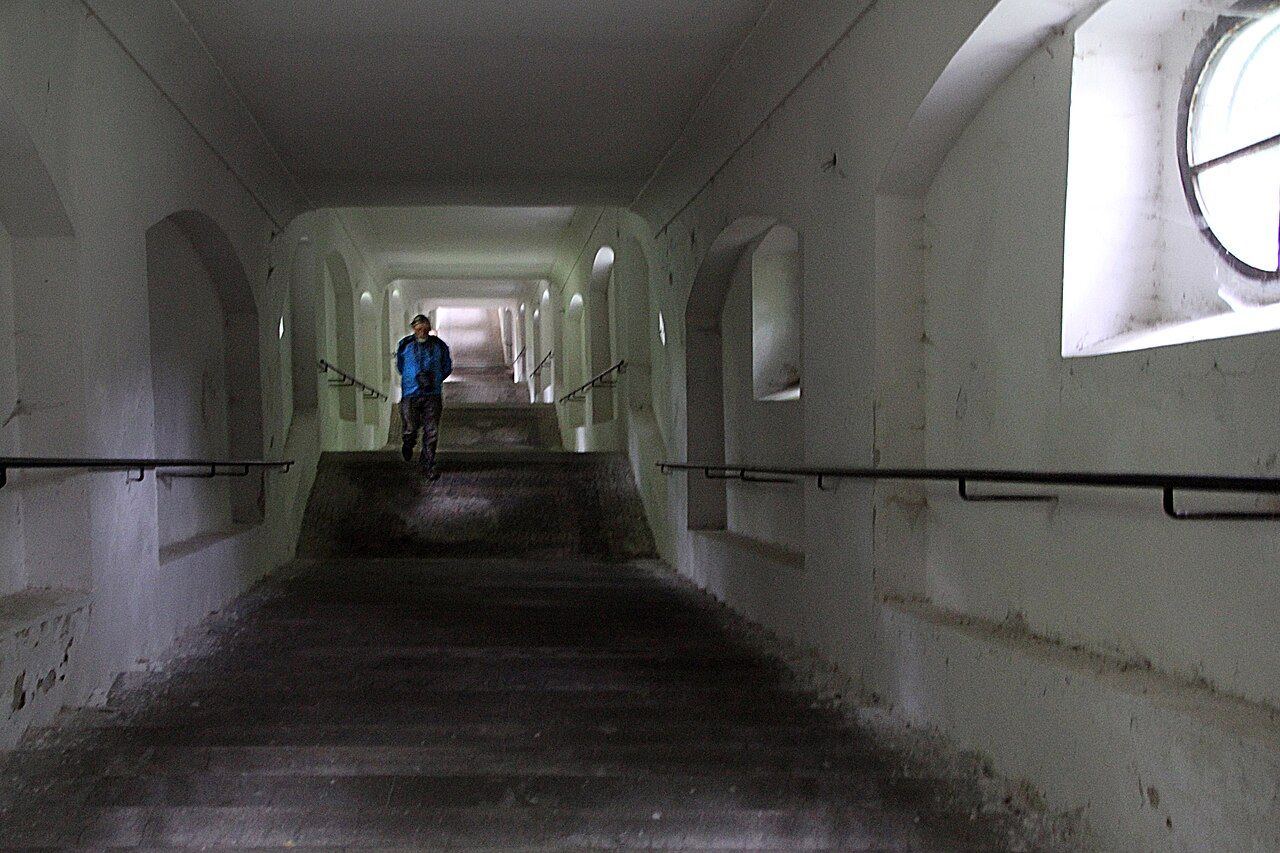
The stairway starts near Balbínova street and the old oak of St Wenceslas, and brings you out at the north side of the cloister.
The cloister
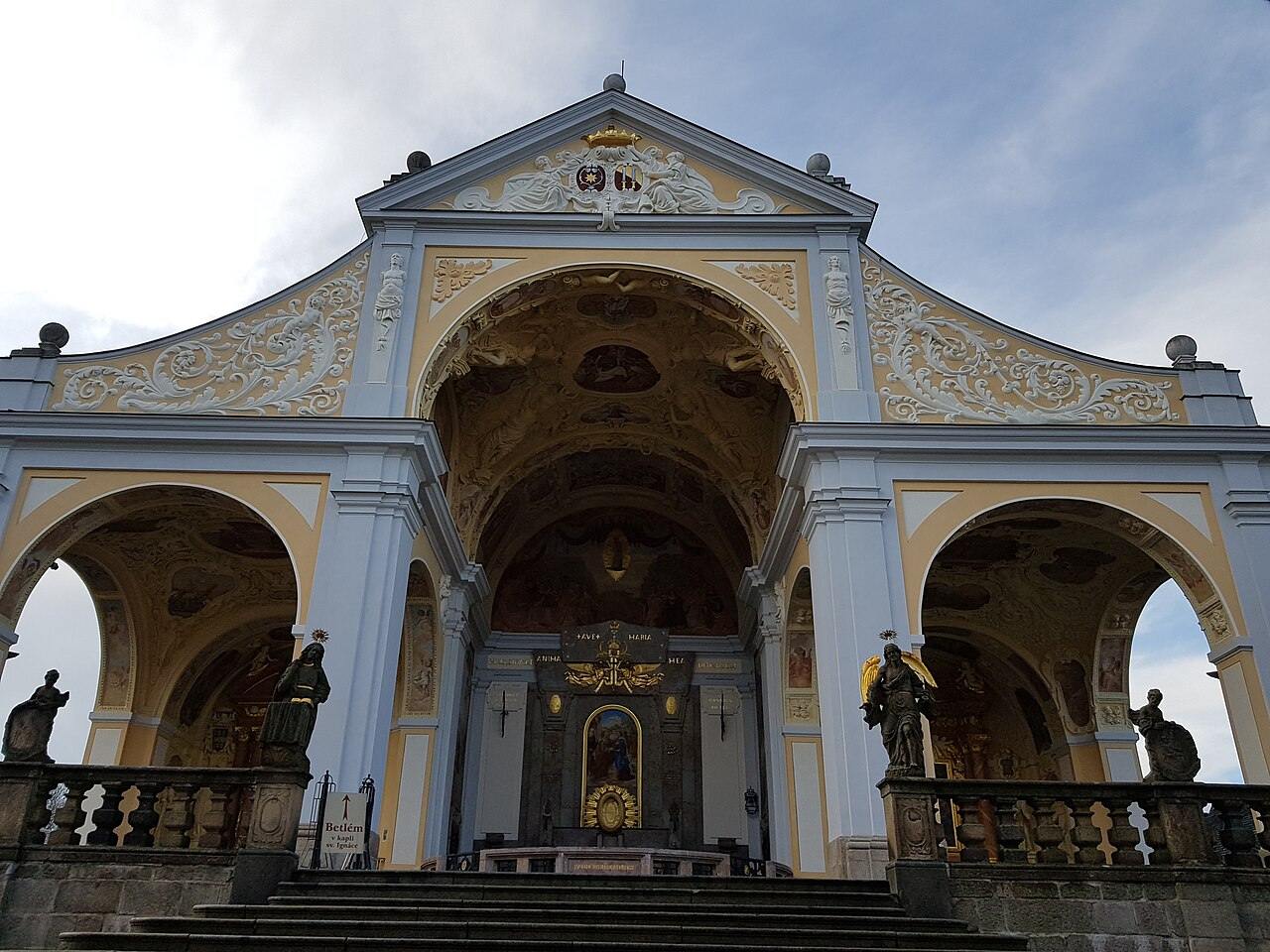
The cloister is the most remarkable part of the shrine. On the east side the Prague Portal, with statues of prophets and Czech saint-kings by Jan Brokoff and a statue of the Virgin above, opens onto the square with its Marian column of 1661. The south gate, the Březnice Portal, has sculpture by Ondřej Filip Quitainer.
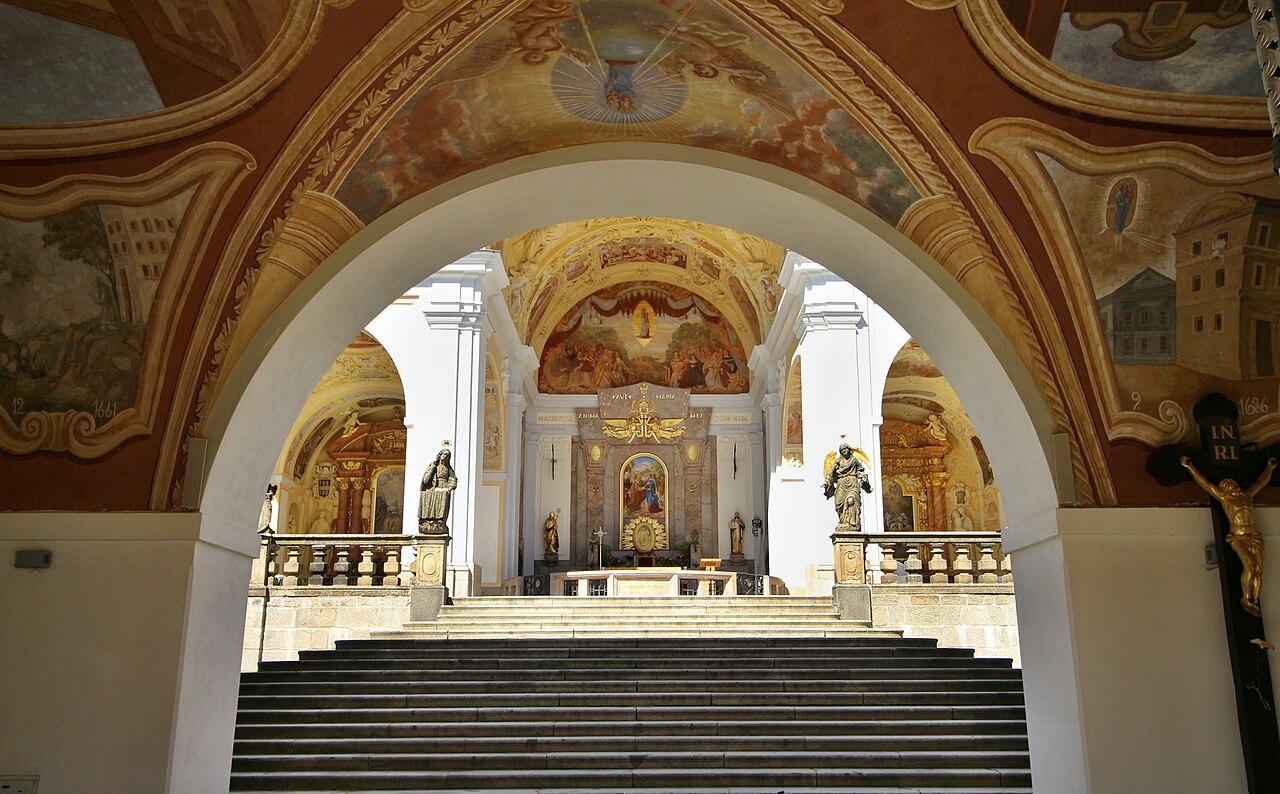
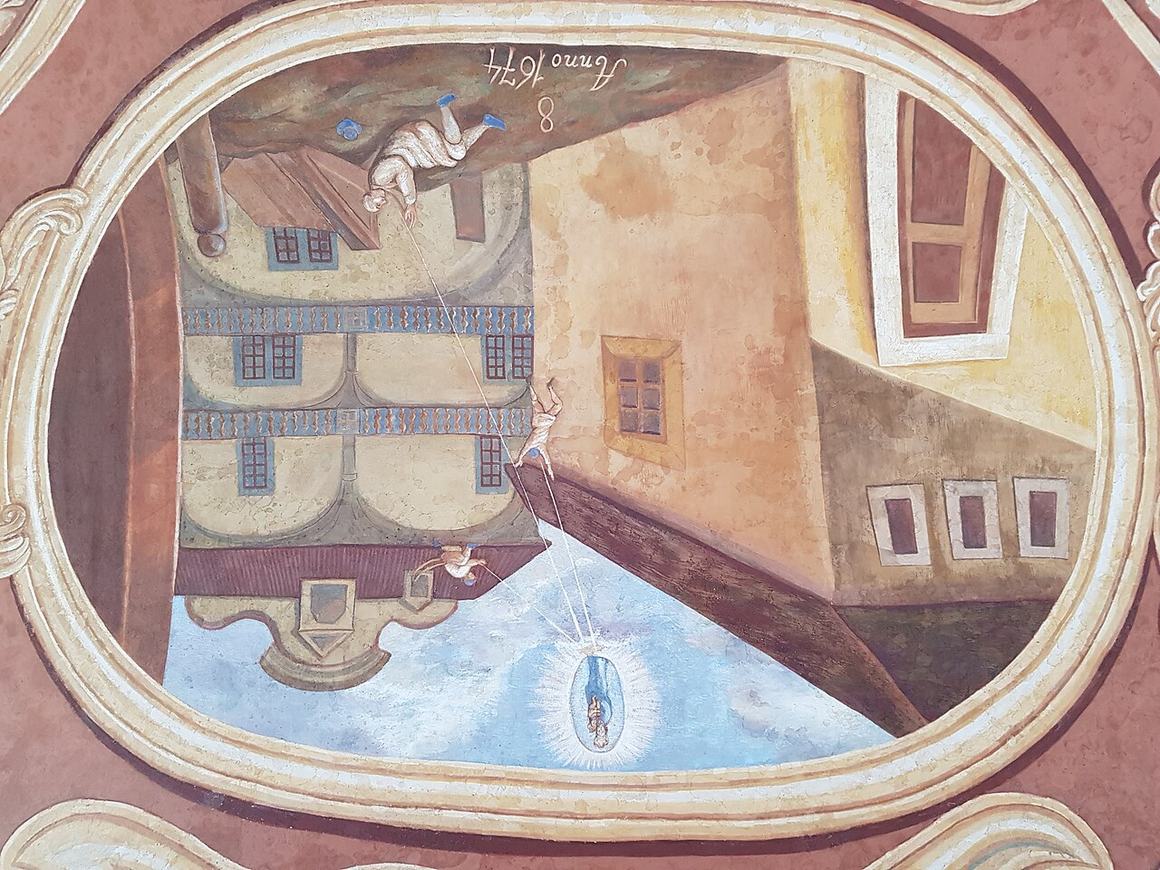
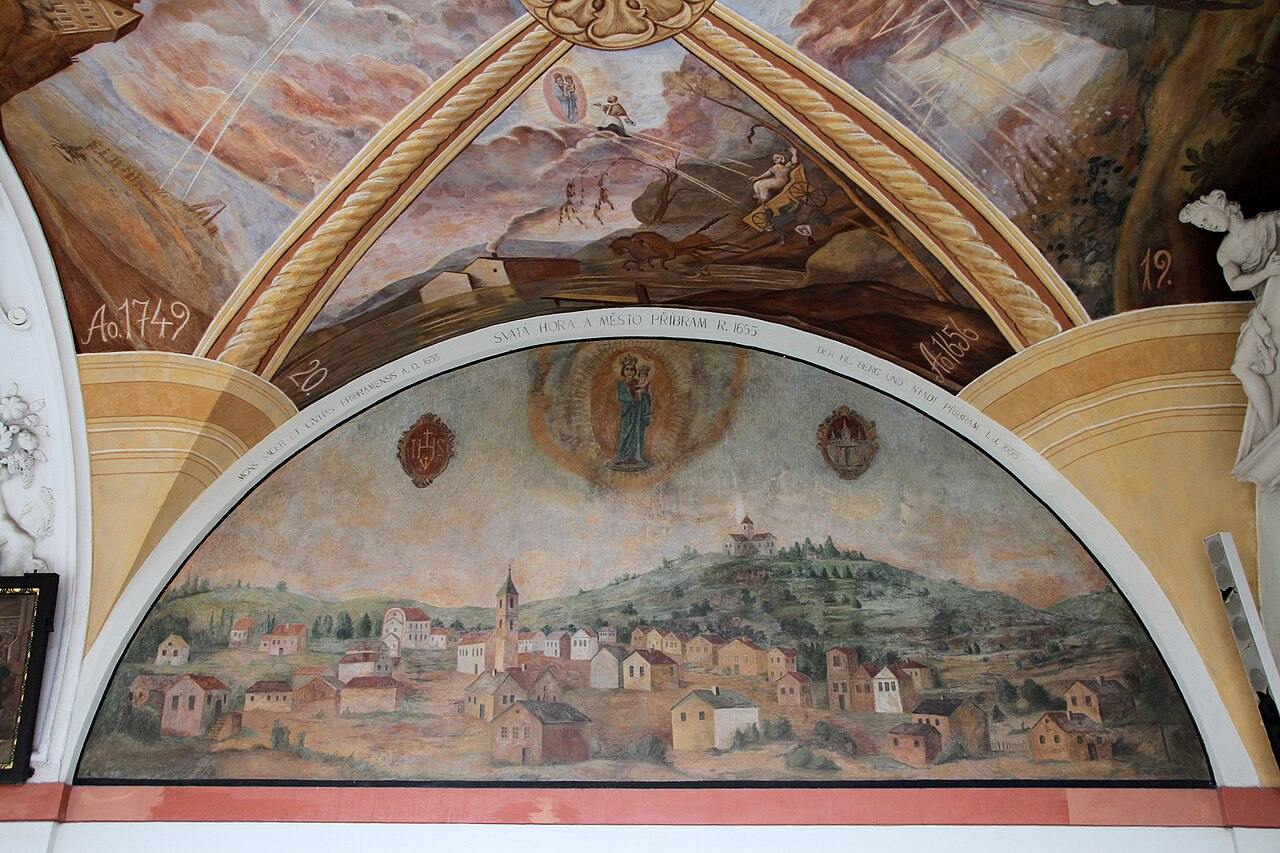
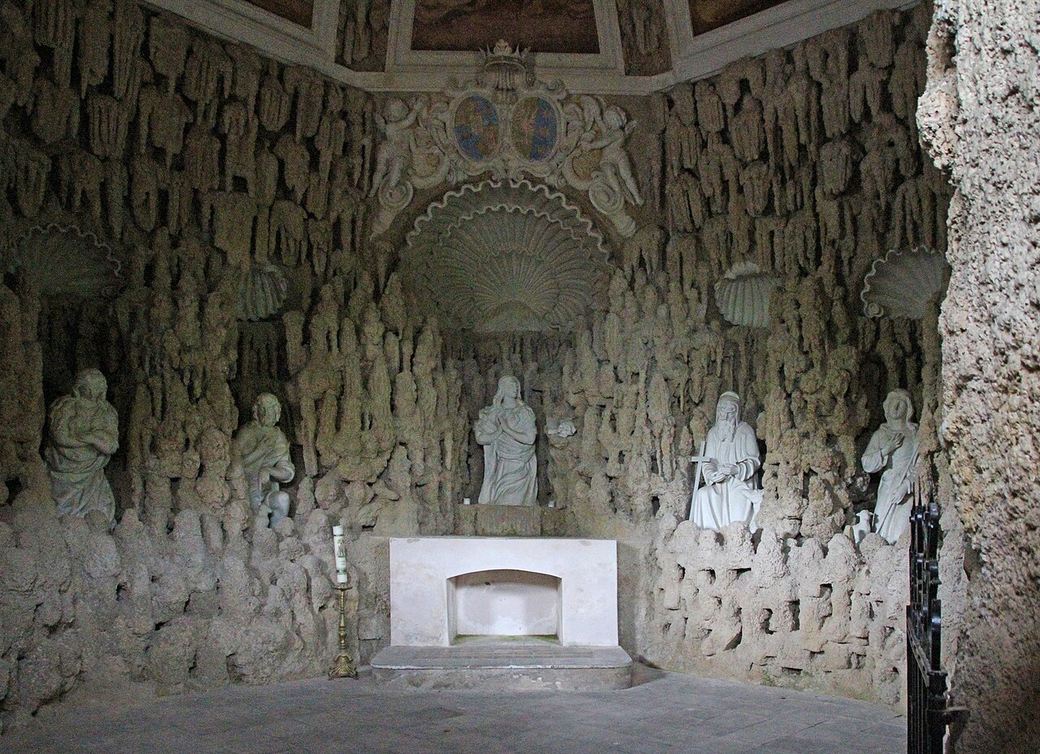
The four corner chapels, named after Prague, Plzeň, Mníšek and Březnice, are octagons with lanterns, richly stuccoed by Italian craftsmen in the 1660s. The walls and vaults of the cloister are covered with paintings of the favours granted by the Virgin of Svatá Hora: cures, rescues from fire and flood, the victories of noble donors. Beneath the Plzeň chapel is the strangest room of all, the chapel of St Mary Magdalene, made to look like a cave with artificial stalactites, paid for by General Johann de Lacron and built in 1665–66.
The basilica
In the middle of the cloister, on a stone terrace with balustrades and four stairways, stands the basilica of the Assumption. At its core is the old chapel, which Balbín described as about 13 metres long, with rough walls and an earth floor; the Jesuits enlarged it, surrounded it with chapels and raised its roof, and on the east side added a row of open arcaded chapels in the 1670s.
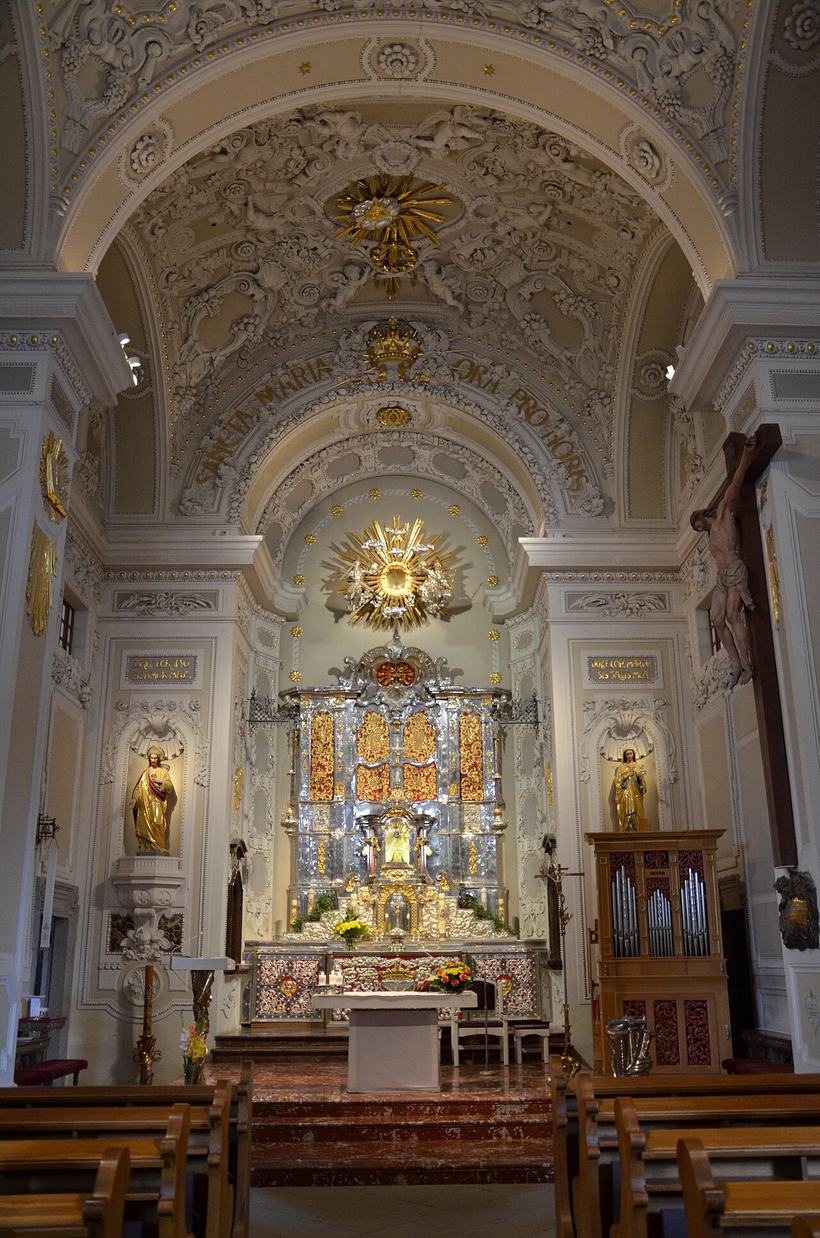
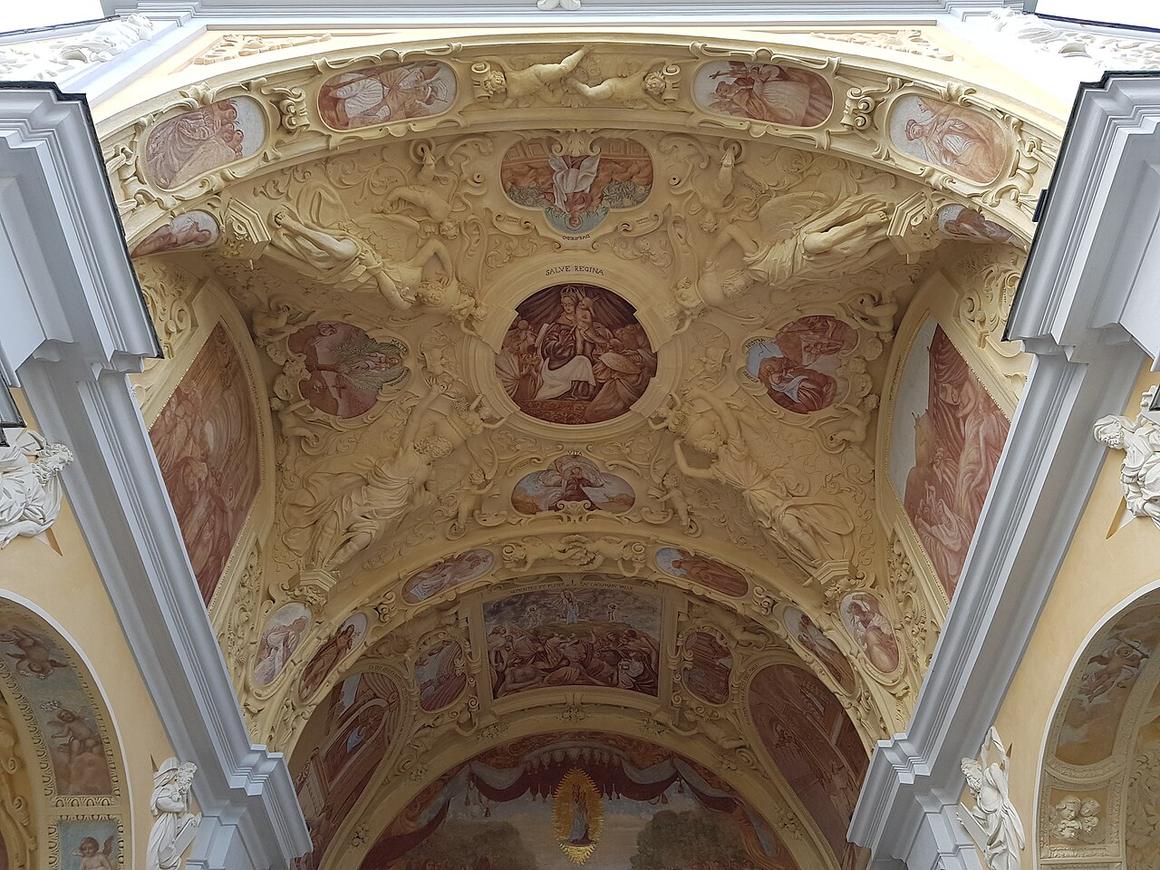
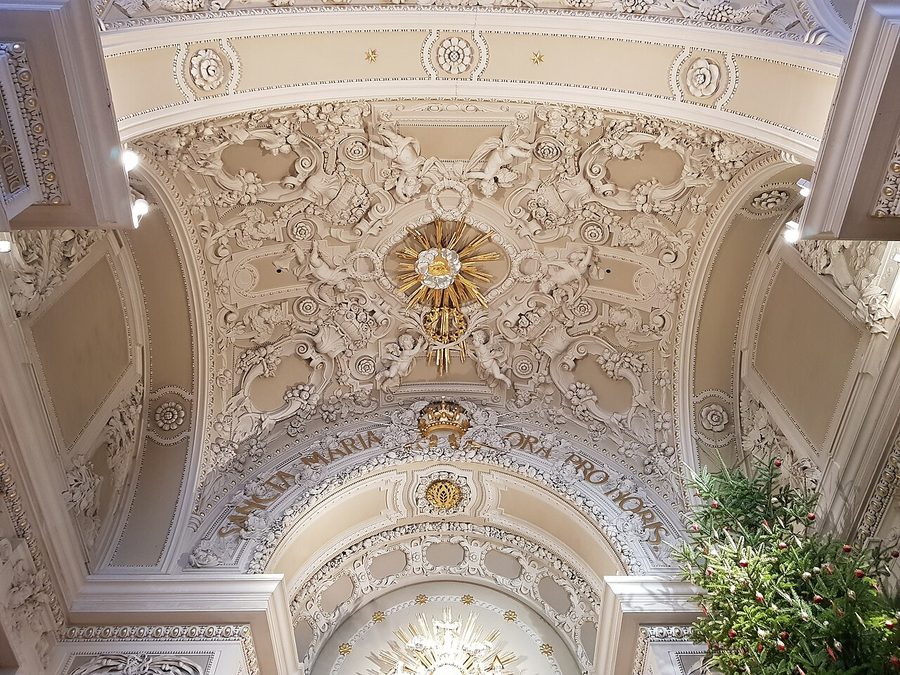
Inside, the ceiling is covered in stucco of 1665 by Santino Cereghetti, and the eye goes to the high altar, built of beaten silver in stages from 1684 to 1775 — a thing almost unknown in Bohemia at the time. At its centre, very small among so much silver, is the wooden statue of the Virgin of Svatá Hora. It is dressed in robes, and the parish keeps a large collection of them: some historic dresses are on show in the museum, down to a camouflage robe designed by children in a competition in 2012.
The museum, the belfry and the carillon
The shrine museum, in a space the Jesuits built as a crypt and never used, tells the history of the place, with archaeological finds from the cemetery around the first chapel, a Baroque bakery oven for making hosts, and the Virgin’s dresses. It costs 100 Kč.
In the low belfry hang eight bells cast in 1934–35, the largest weighing more than two tonnes. Before every odd hour the carillon plays the refrain of the Svatá Hora Hail Mary, and a short visit (70 Kč, 25 minutes, steep steps) takes you up to them, with a view over Příbram. Other short tours open the Jesuit cellars and the clock tower in the roof of the north cloister.
Getting there
Příbram is about 60 km south-west of Prague, roughly an hour by bus and a little longer by train. The bus and railway stations are next to each other, and the shrine is visible from both. Town buses go up to the complex, or you can walk through the town to the covered stairs. Cars may not enter the complex; there is a pay car park in Balbínova street. Visitors with limited mobility can enter by the Březnice gate, where a lift goes up to the basilica.
Svatá Hora makes an easy half-day from Prague, and pairs well with the mining museum in Příbram, or with a visit to Prague’s churches on the same trip.
Plan your visit
Svatá Hora needs no ticket. Guided tours in English are booked by email through the parish.
Some links are affiliate links. They cost you nothing extra and help keep this guide independent.
Frequently asked questions
Common questions
Is Svatá Hora free to visit?
Yes. The cloister and the basilica are open every day from 7am to 6pm and free to enter. Guided tours cost 150 Kč in Czech, or 200 Kč in English or German if booked in advance, and the pilgrimage museum is 100 Kč.
How many steps are the Svatá Hora stairs?
Tradition says 365, one for each day of the year. The parish itself says there are 343 on the covered stairway from the town, with 22 more leading into the basilica.
How do you get to Svatá Hora from Prague?
Příbram is about an hour from Prague by bus, a little longer by train. From the station, town buses go up to the shrine, or you can walk up through the town and climb the covered stairs. Cars cannot drive into the complex; park in Balbínova street below.
Is Svatá Hora accessible?
Yes. There is step-free entry through the Březnice gate on the south side and a self-service lift up to the upper cloister and the basilica.
What is the Svatá Hora carillon?
The belfry has eight bells from 1934–35, and before every odd hour the carillon plays the refrain of the Svatá Hora Hail Mary. The belfry can be climbed on a short guided visit for 70 Kč.