
Basilica of the Assumption and Saints Cyril and Methodius, Velehrad
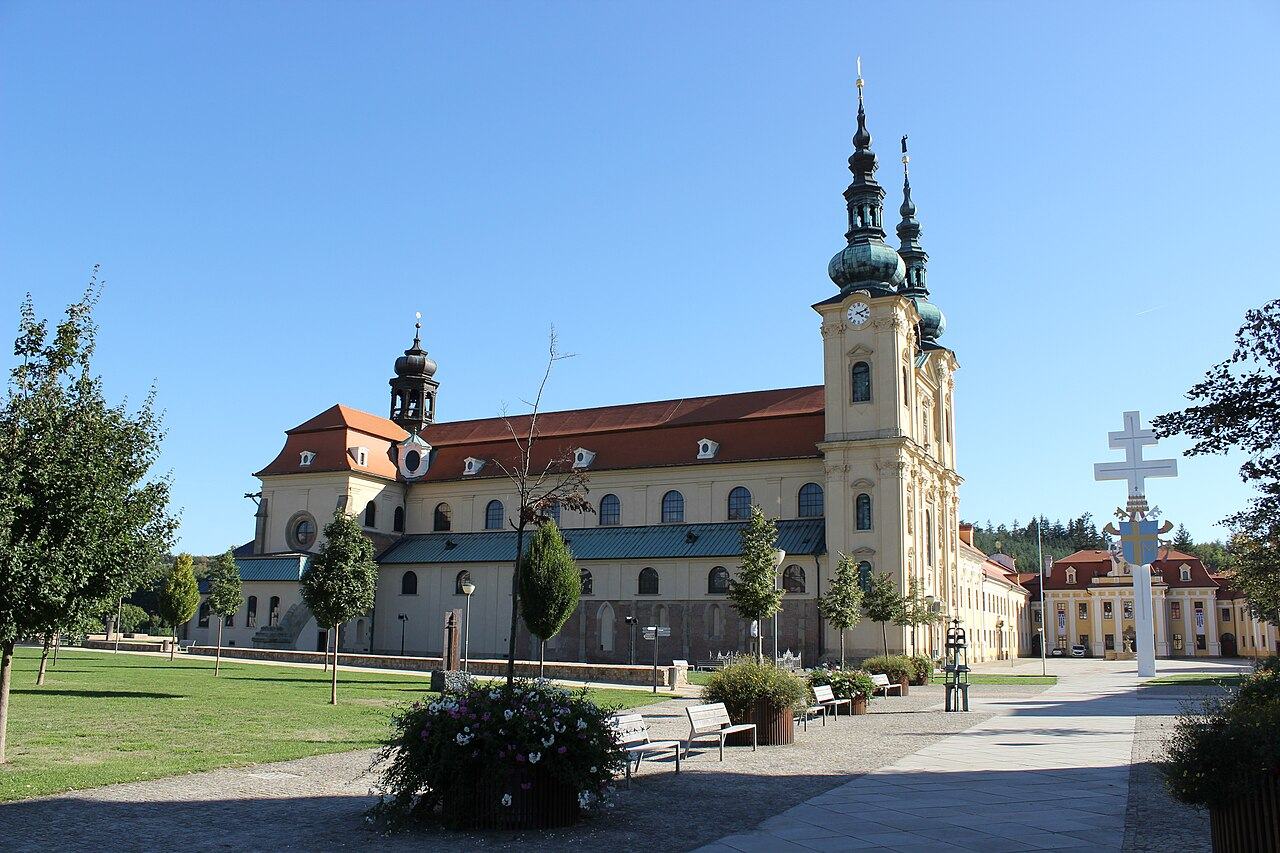
Velehrad is the most important pilgrimage church in the Czech Republic, and one of the least visited by foreign travellers. A Cistercian abbey church of the thirteenth century, rebuilt in the Baroque style and enriched with stucco, frescoes and carved choir stalls, it became in the nineteenth century the national shrine of Cyril and Methodius, the brothers who brought Christianity and writing to the Slavs. The basilica is free and open all year. Underneath it, for a small fee, are the remains of the medieval church, buried when the Baroque builders raised the floor two metres.
A Cistercian abbey and a national legend
In 863 two brothers from Thessalonica, Constantine (later Cyril) and Methodius, came to Great Moravia at the invitation of Prince Rostislav. They preached in the Slavonic language, translated the liturgy, and devised an alphabet to write it. Methodius became archbishop, and died in 885; where he was buried has never been established.
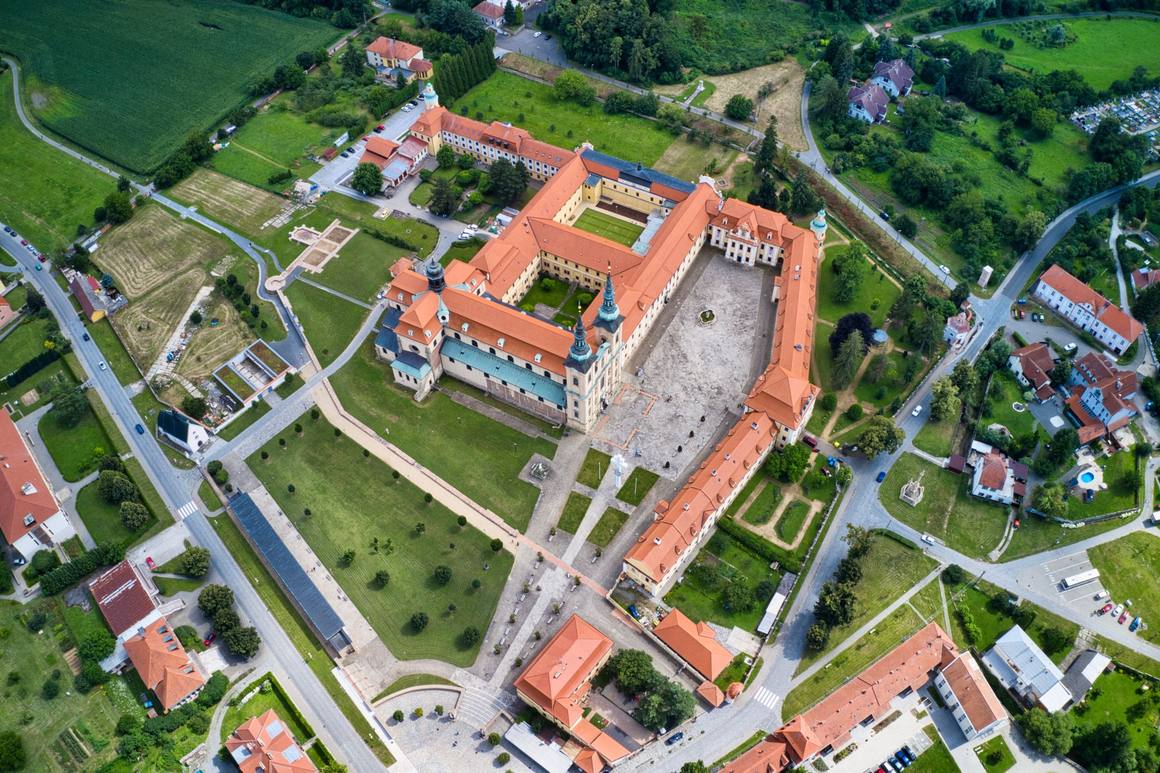
Velehrad is not itself Great Moravian. In 1205 the margrave of Moravia, Vladislaus Henry, founded a Cistercian monastery here, and named it after Veligrad, the old name of the town of Staré Město nearby, which was long taken to be the Great Moravian capital. The abbey church was consecrated on 27 November 1228 in the presence of King Ottokar I of Bohemia, the founder’s brother. It was a huge Romanesque and early Gothic church, about a hundred metres long.
In January 1421 Hussite troops sacked and burned the monastery, and by tradition killed the abbot and several monks; the destruction is painted on the nave vault. The abbey recovered slowly, and after a fire in 1681 the church was rebuilt in the Baroque style over half a century, with a second fire in 1719 in the middle of the work. It was consecrated again on 2 October 1735. The monastery was dissolved by Joseph II in 1784, and the church became the village parish church.
Its revival came with the Czech national movement. The tradition that Methodius had been buried at Velehrad made it the natural focus of devotion to the two saints, and in 1863 the thousandth anniversary of their mission drew great crowds. The Jesuits took over in 1890; Pope Pius XI made the church a basilica in the late 1920s, and in 1932 the names of Cyril and Methodius were added to its dedication. Under communism the monastery was closed in 1950 and the pilgrimages restricted, but in 1985, for the 1100th anniversary of Methodius’s death, well over 150,000 people came to Velehrad, and the rally became an open demonstration of faith. In April 1990, months after the Velvet Revolution, Pope John Paul II celebrated Mass here.
The visitor’s cheat sheet
| Where | Velehrad, near Uherské Hradiště, in south-east Moravia. Information centre at U Lípy 302, at the main crossroads |
|---|---|
| Opening hours | April–October: Monday–Thursday 7.30am–5.30pm, Friday 9am–5.30pm, Saturday 10am–5.30pm, Sunday 11.30am–2.30pm and 4pm–5pm. November–March: the same, but closing at 2.30pm on Monday and Wednesday, and no Sunday afternoon opening. No visits during Mass |
| Admission | Free |
| Underground and lapidarium | 150 Kč adults, 100 Kč reduced, 250 Kč family; the ticket is valid all day |
| Guides and audioguides | Guided tours for groups of ten or more, booked ahead through the information centre. Audioguide to the basilica and grounds in English and five other languages, 100 Kč |
| Dress | Clothing suitable for a church; quiet during visits |
| How long | An hour for the basilica and the underground; half a day with the grounds and exhibitions |
Hours and admission checked against the official site in September 2026. They change; the official site is always the last word.
Free, but not on 4 and 5 July if you want peace. The basilica is open every day of the year and costs nothing. The paid part is the exhibition underground, 150 Kč. The one time to avoid, unless you want to see it, is the national pilgrimage: 5 July is the public holiday of Saints Cyril and Methodius, and the evening concert on 4 July and the Mass the next day bring tens of thousands of people.
The outside
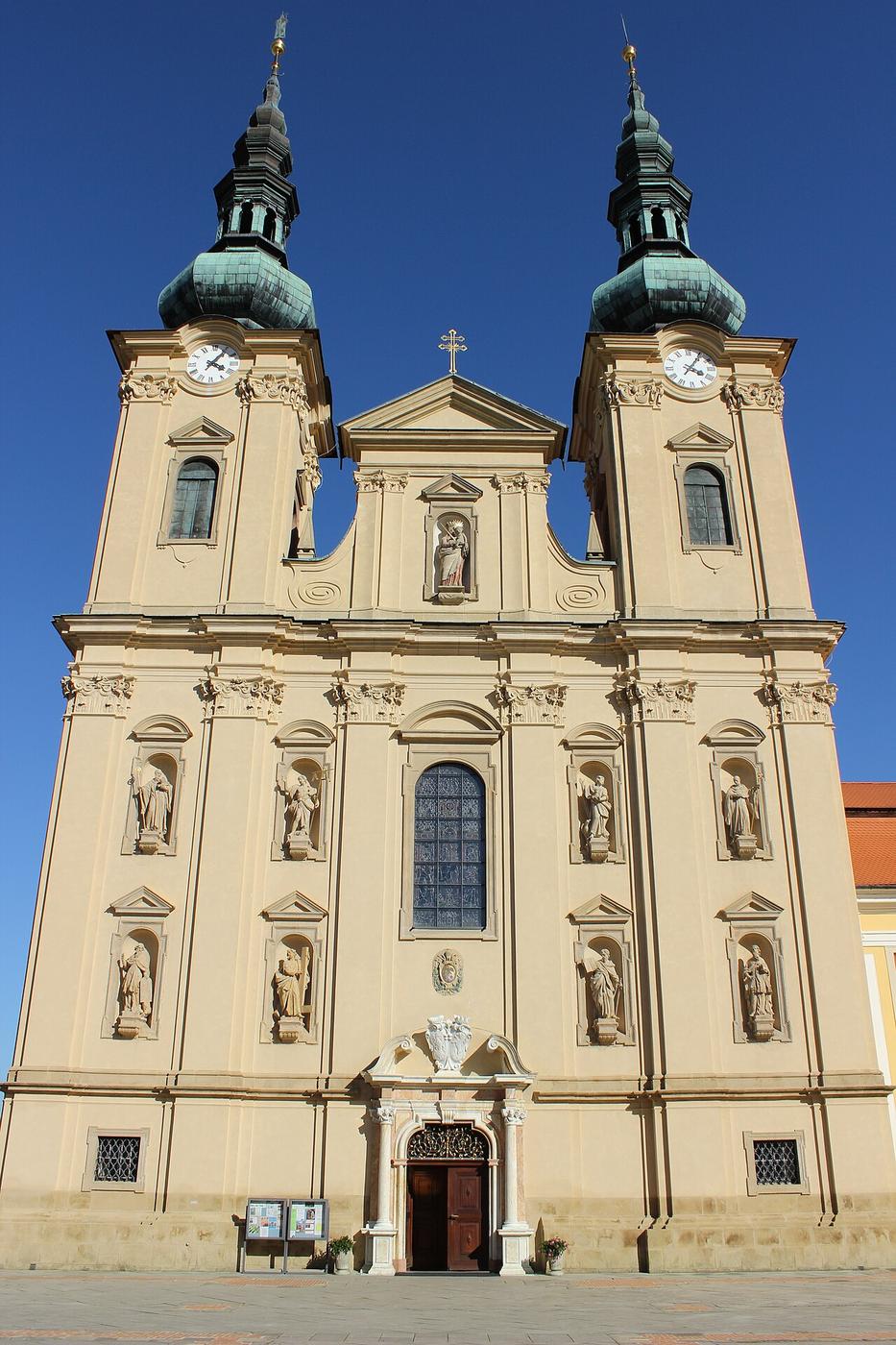
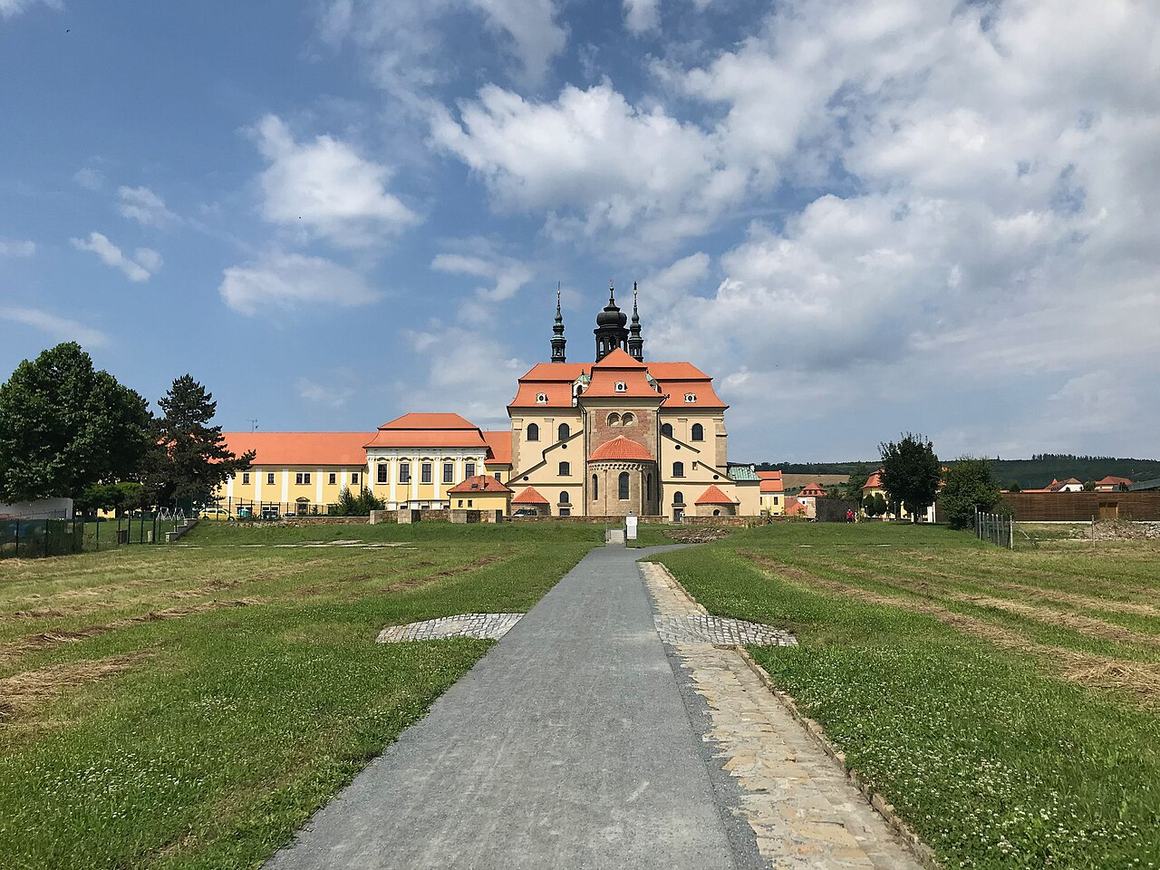
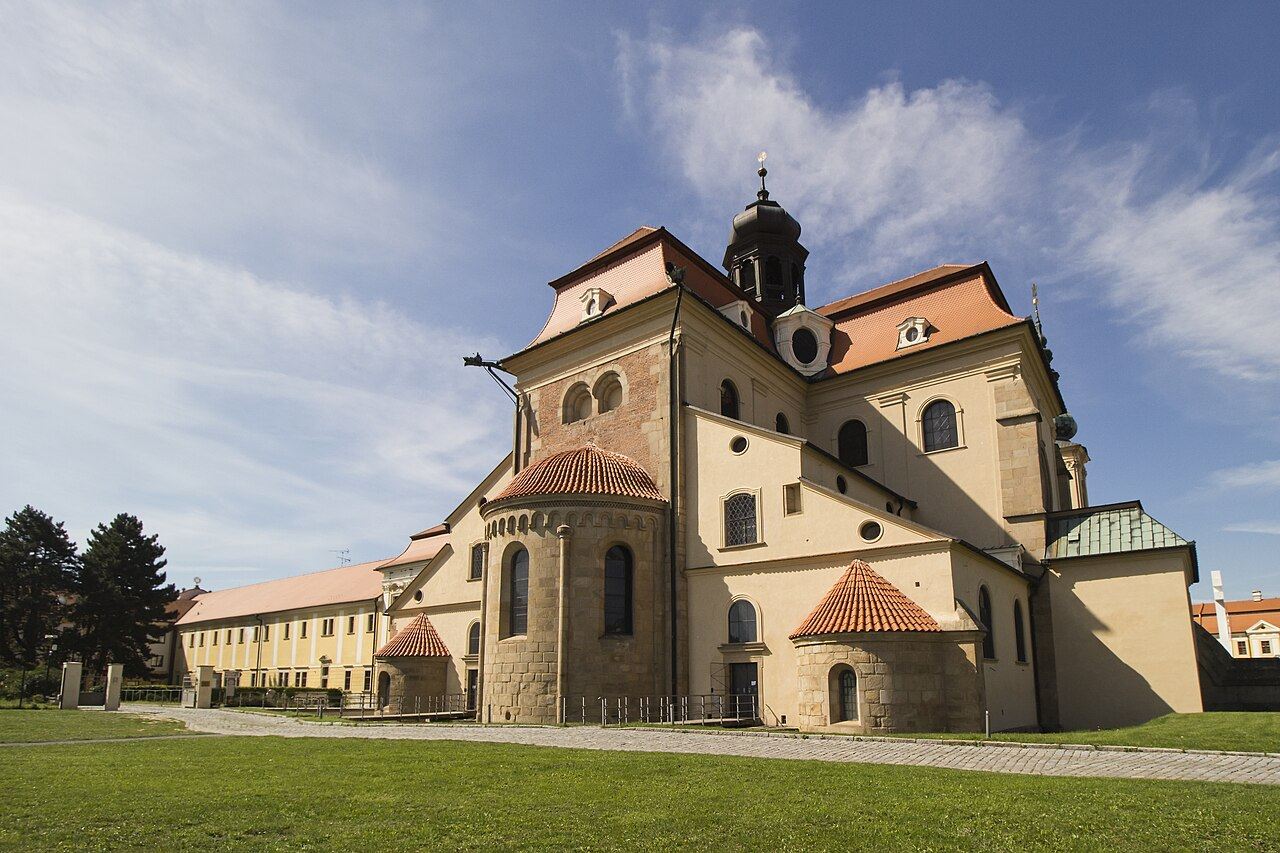
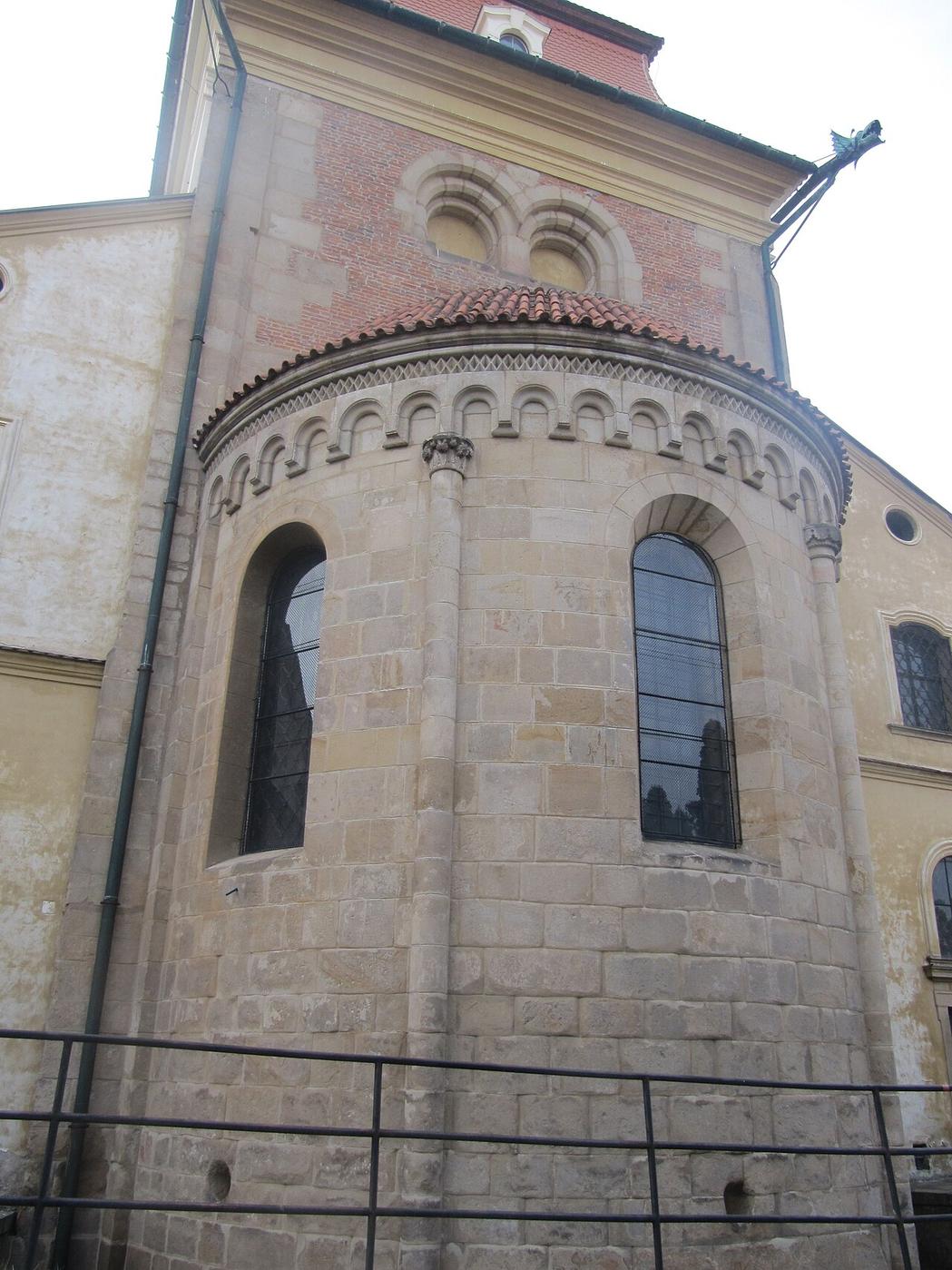
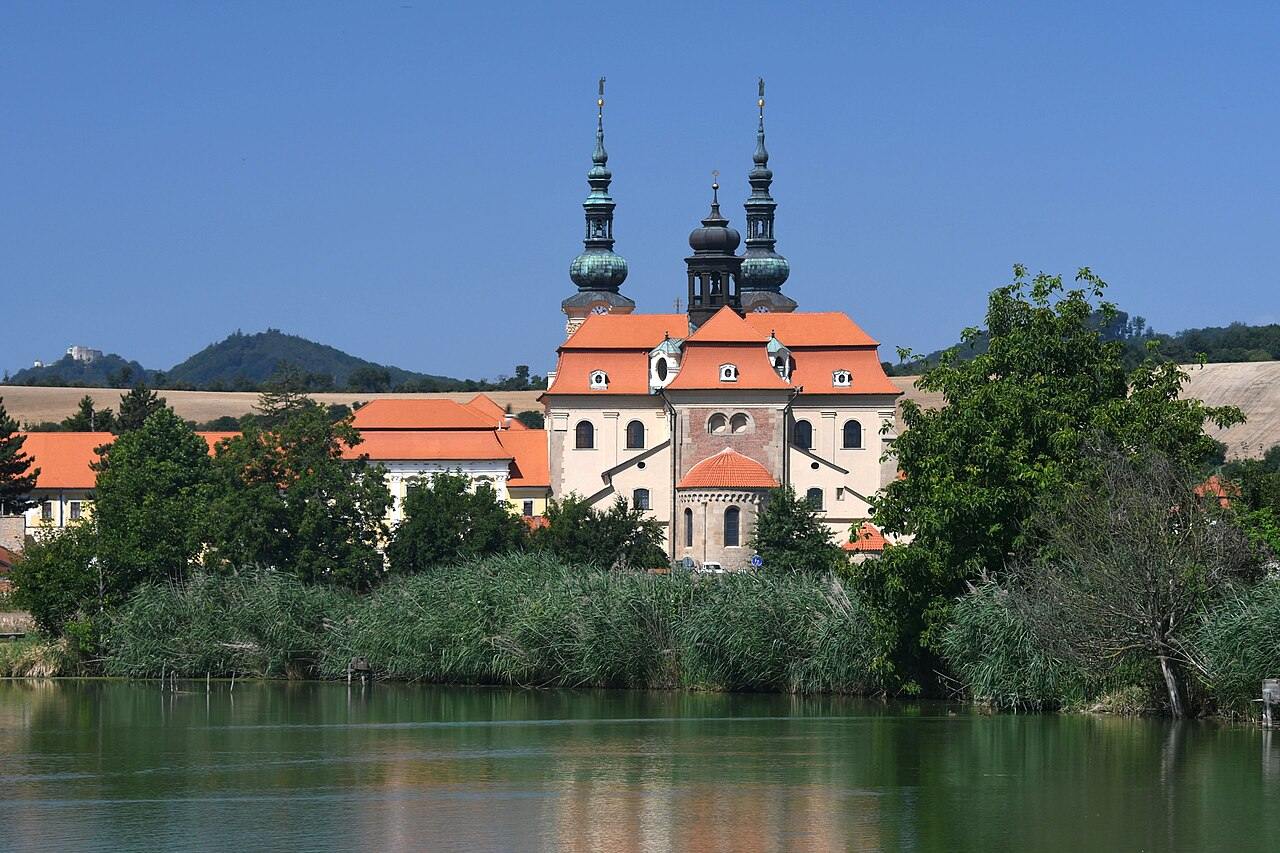
The basilica is 86 metres long, shortened by some thirteen metres when the Baroque builders demolished the medieval porch and west front. The present front, with its two onion-topped towers, faces west into the great courtyard of the former monastery. Walk round to the east end, though: the three round apses there still show the Romanesque church of the 1220s, with its original windows and stonework.
Inside the basilica
The interior is a Baroque church of the 1720s and 1730s built inside a medieval one. The side aisles were walled off into fourteen chapels, and the whole space was plastered, painted and gilded: the stucco by Baldassare Fontana, the ceiling paintings by František Eckstein, and most of the altarpieces by Ignaz Raab, the last abbey painter. The paintings on the nave vault include the destruction of the monastery in 1421.
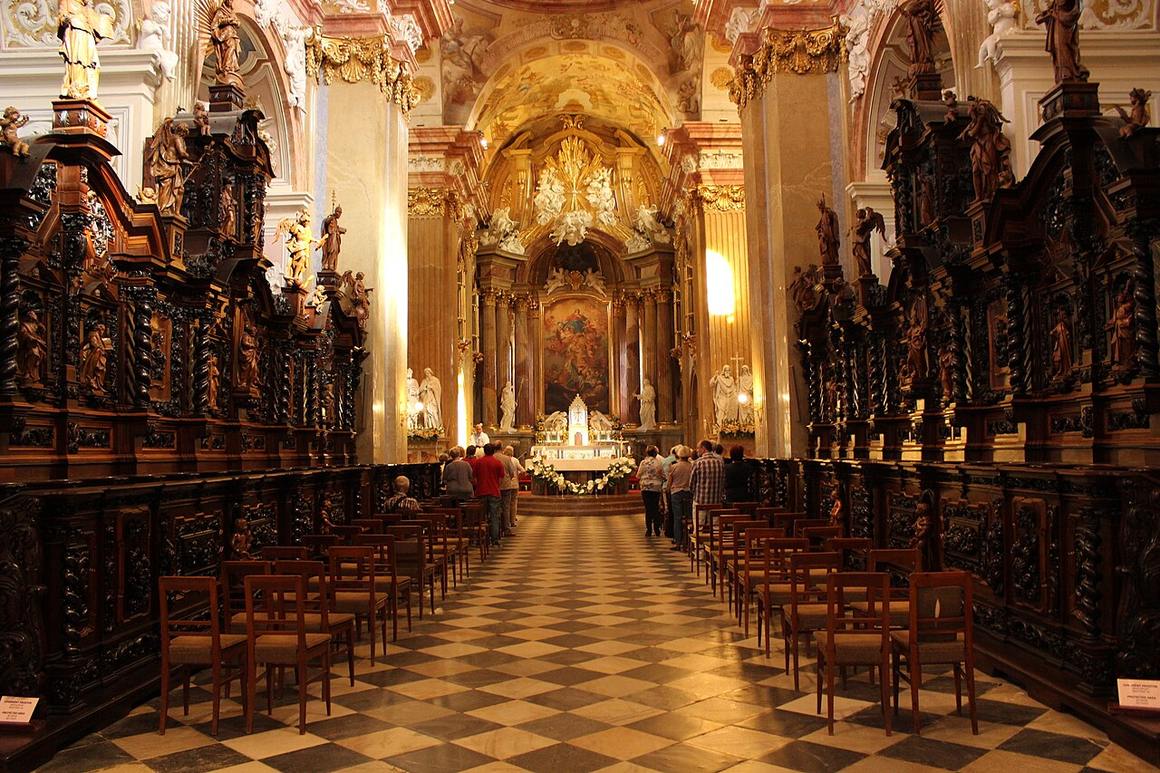
- The choir stalls, carved in the 1690s by an unknown local craftsman, with sixty statues of saints and angels among vines and fruit.
- The dome over the crossing, 25 metres high, painted by Eckstein with an illusionistic heaven and the founders of the abbey.
- The high altar of white marble, installed in 1864, with reliefs of the death of Methodius and the brothers in Rome. Behind it is the tomb of Cardinal Tomáš Špidlík, the Czech Jesuit theologian, who died in 2010.
- The chapel of the Mother of Christian Unity, with a copy of the ancient icon from Santa Maria Maggiore in Rome, made in 1919.
- The King’s Chapel, off the north transept, where the founder Vladislaus Henry was buried, and where Archbishop Antonín Cyril Stojan, the great promoter of Velehrad, lies in a tomb of the 1930s.
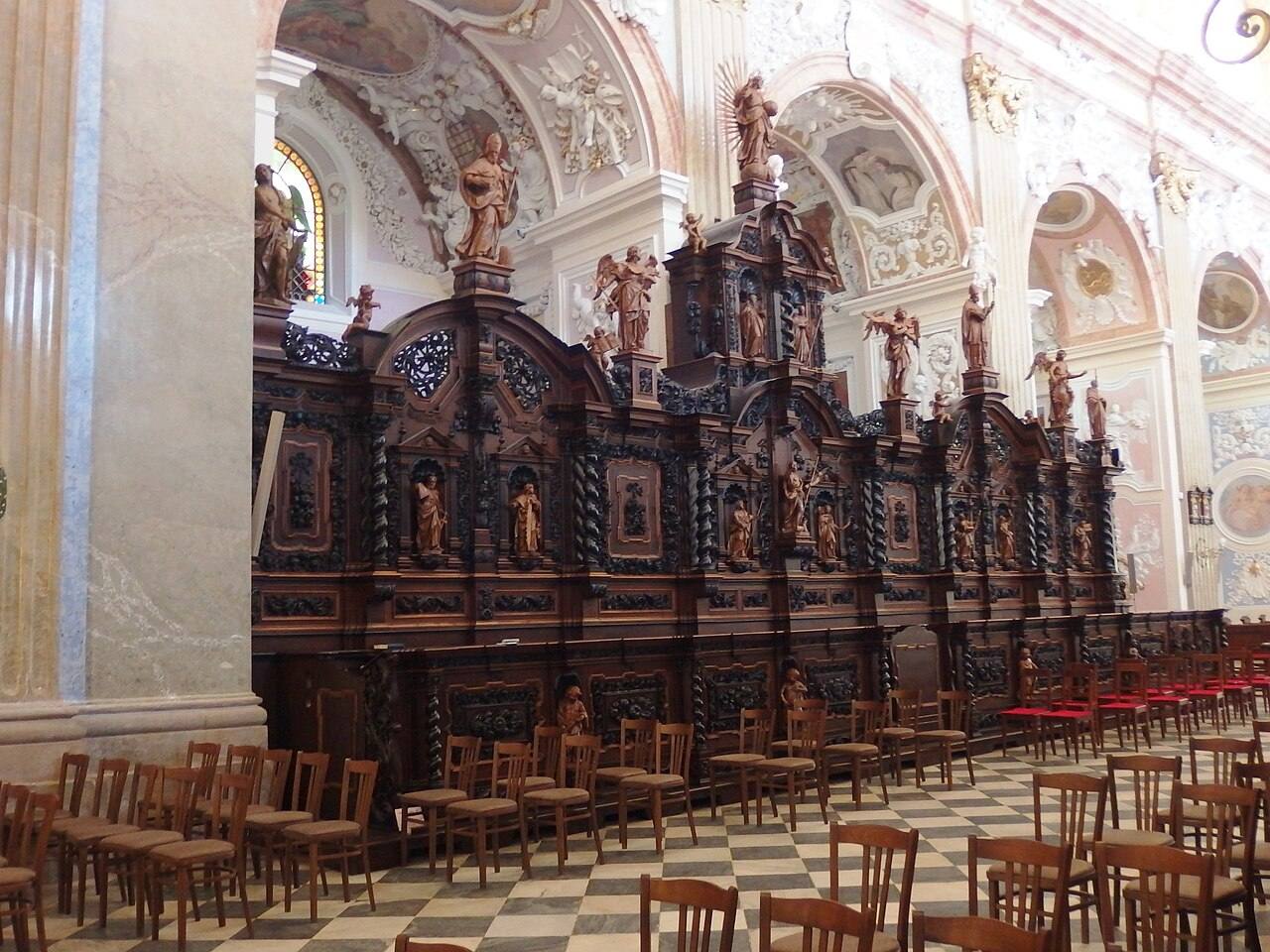
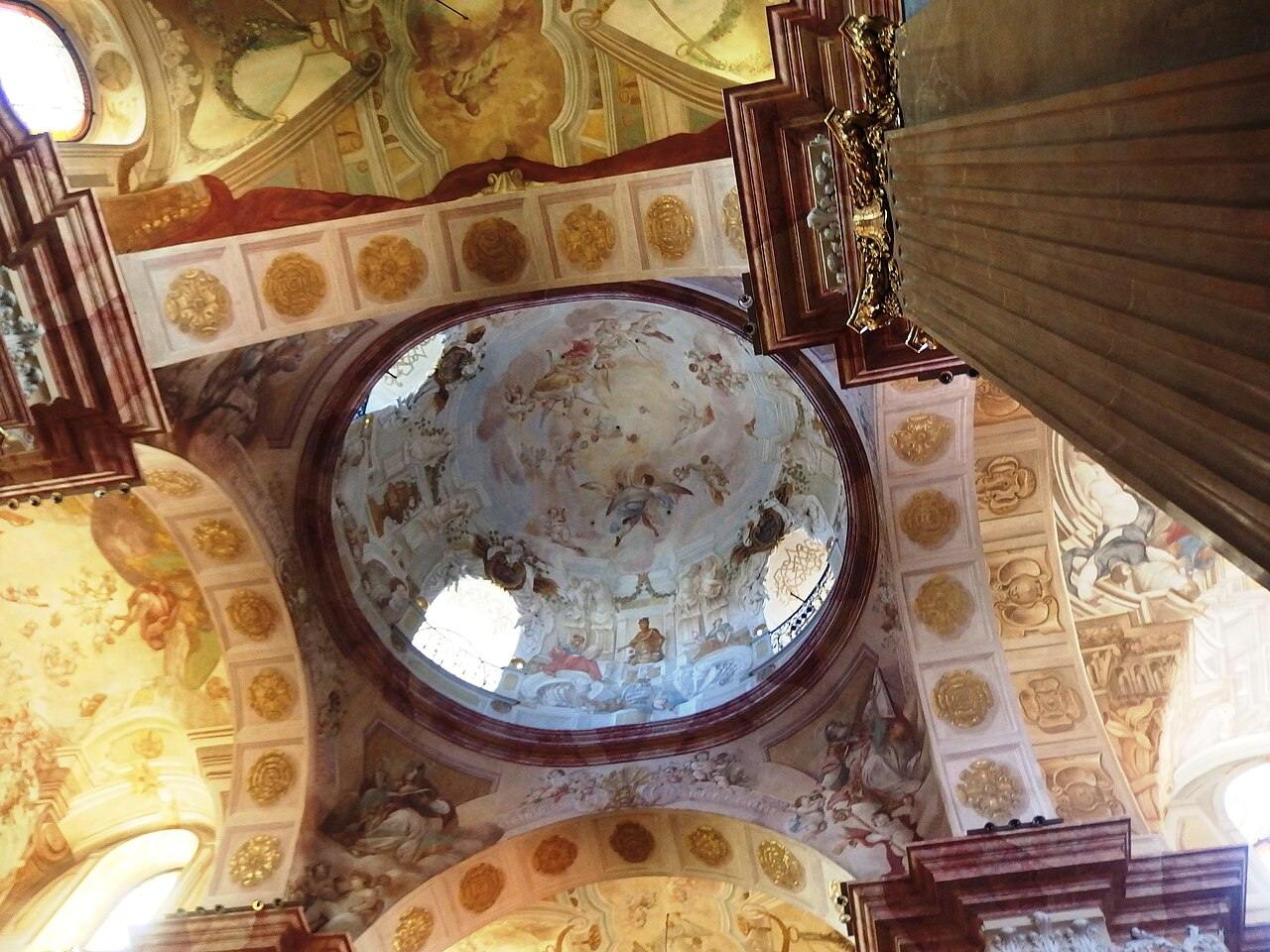
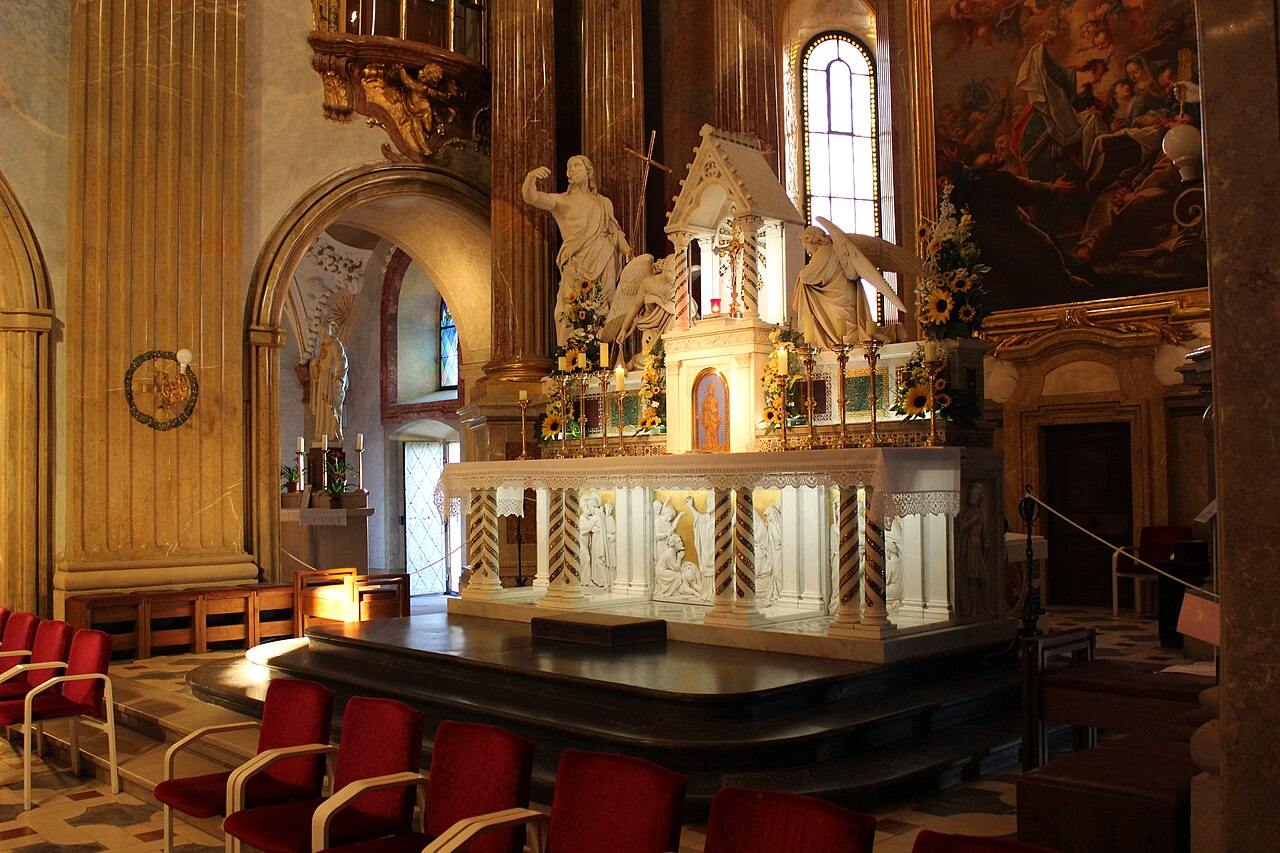
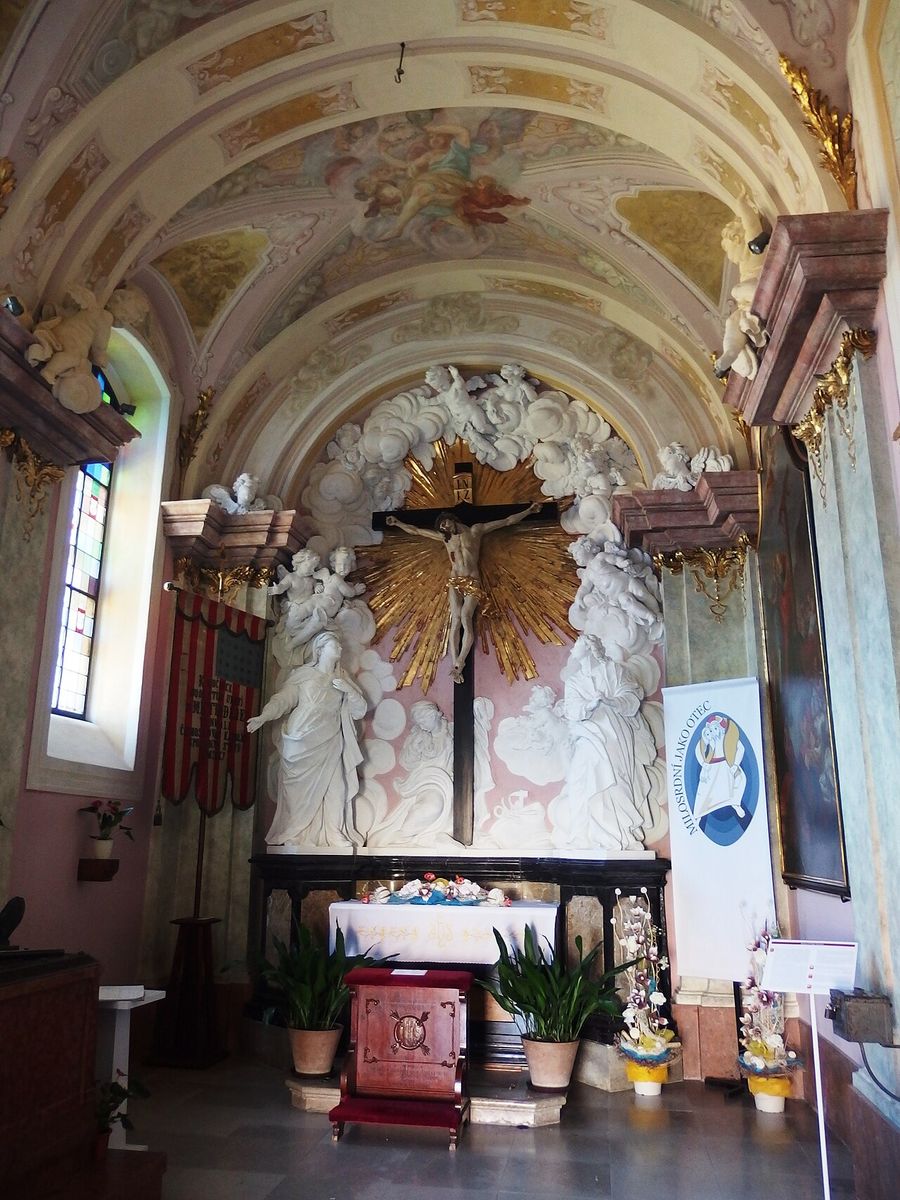
There are information panels in the church, and an audioguide in English.
The underground
When the Baroque builders raised the floor of the church by about two metres to match the ground outside, they filled the old nave with rubble and built burial vaults under the new chapels. During restoration in the 1930s and again in 2008–09 the space below was explored and opened. The underground exhibition now combines a lapidarium of carved stones from the Romanesque church, destroyed in 1421, with Martyrion, an exhibition about Christian witnesses of the twentieth century. It also holds the Golden Rose given to Velehrad by John Paul II in 1985.
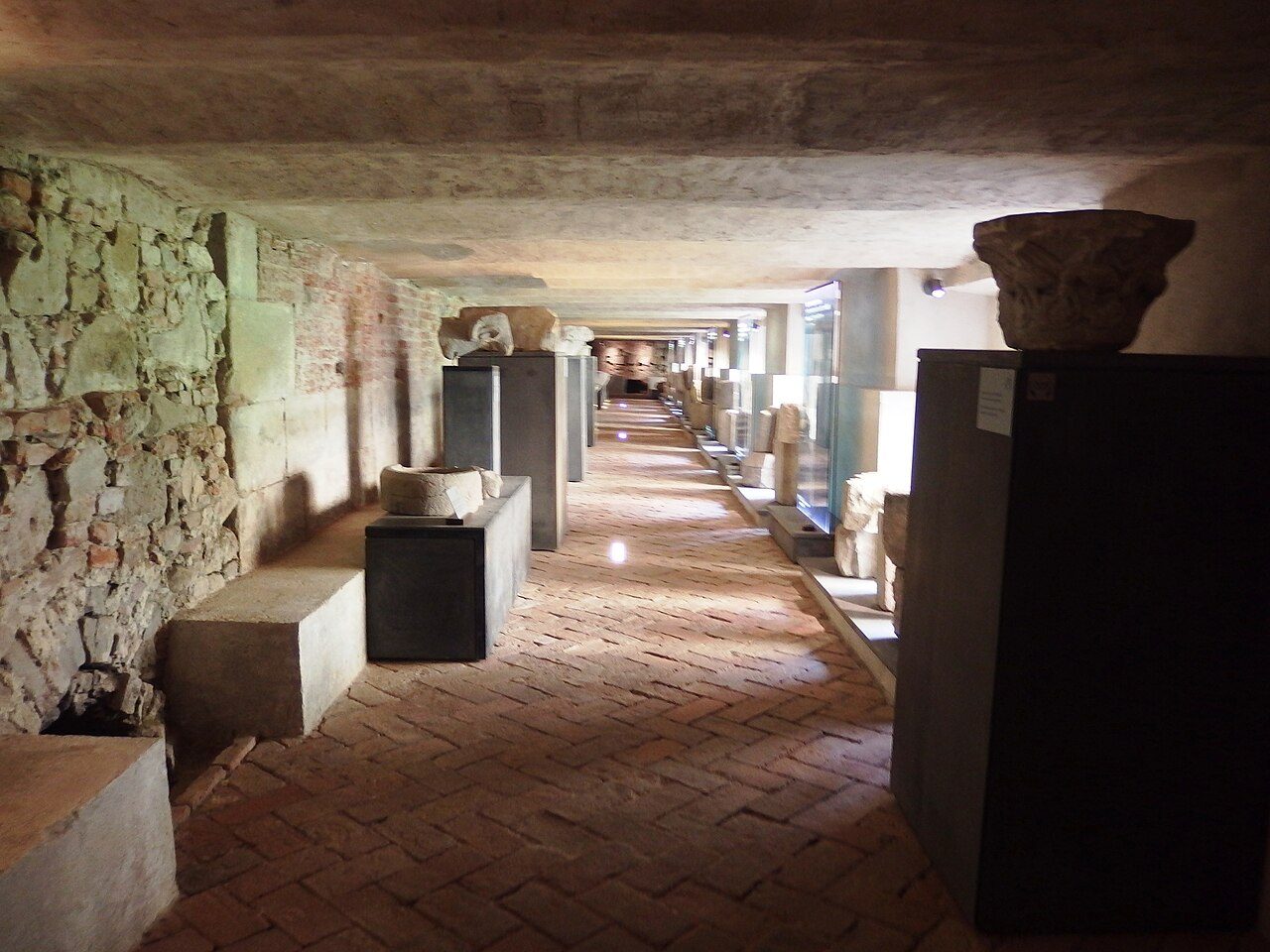
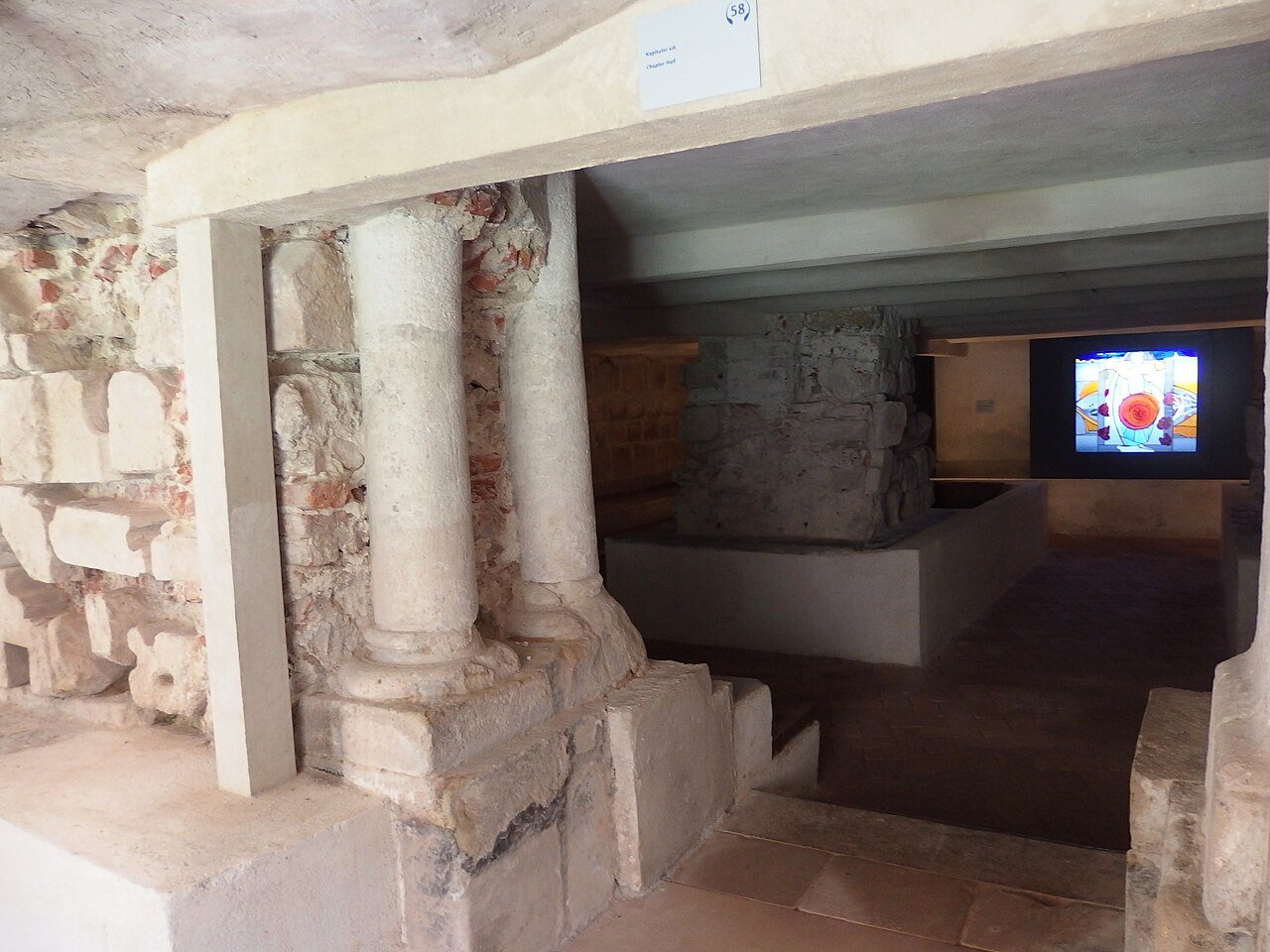
Tickets are 150 Kč for adults and 100 Kč reduced, valid all day. The information centre at the crossroads has details of the other exhibitions in the village, including the museum Velehrad at the Crossroads of European History.
The pilgrimage
Every year on 4 and 5 July Velehrad hosts the Days of People of Good Will: an open-air concert on the evening of the 4th and the national pilgrimage Mass on the 5th, the public holiday of Saints Cyril and Methodius. It is the largest religious event in the country, a remarkable sight and a very crowded one. Smaller pilgrimages come throughout the summer.
Getting there
Velehrad is a village in south-east Moravia, 6 km north-west of Uherské Hradiště. It has no railway: take the train to Staré Město u Uherského Hradiště, on the line from Brno and Olomouc, and a bus from there. By car it is about an hour from Olomouc and an hour and a quarter from Brno. In Staré Město the Památník Velké Moravy shows the excavated foundations of a real Great Moravian church.
Plan your visit
The basilica is free. Information, audioguides and underground tickets are at the information centre.
Some links are affiliate links. They cost you nothing extra and help keep this guide independent.
Frequently asked questions
Common questions
Is Velehrad basilica free to visit?
Yes. The basilica is open all year and free to enter, outside the times of services. The exhibition in the underground lapidarium beneath it costs 150 Kč for adults and 100 Kč reduced.
When is the Velehrad basilica open?
From April to October, Monday to Thursday 7.30am to 5.30pm, Friday from 9am, Saturday from 10am, and Sunday 11.30am to 2.30pm and 4pm to 5pm. From November to March it closes at 2.30pm on Mondays, Wednesdays and Sundays. Visits stop during Mass.
Is St Methodius buried at Velehrad?
Nobody knows where Methodius, who died in 885, was buried. Velehrad took its name from Veligrad, the old name for the nearby town of Staré Město, which was long identified with the capital of Great Moravia, and the Cistercian abbey inherited that tradition. It became the national shrine of the two saints in the nineteenth century.
When is the Velehrad pilgrimage?
The national pilgrimage is on 5 July, the Czech public holiday of Saints Cyril and Methodius, with an open-air concert on the evening of 4 July. Tens of thousands of people come; if you want a quiet visit, avoid those two days.
How do you get to Velehrad?
Velehrad has no railway. Take the train to Staré Město u Uherského Hradiště and a local bus for the last 6 km, or drive: it is about an hour from Olomouc and an hour and a quarter from Brno.