
Cathedral of Saints Peter and Paul, Brno
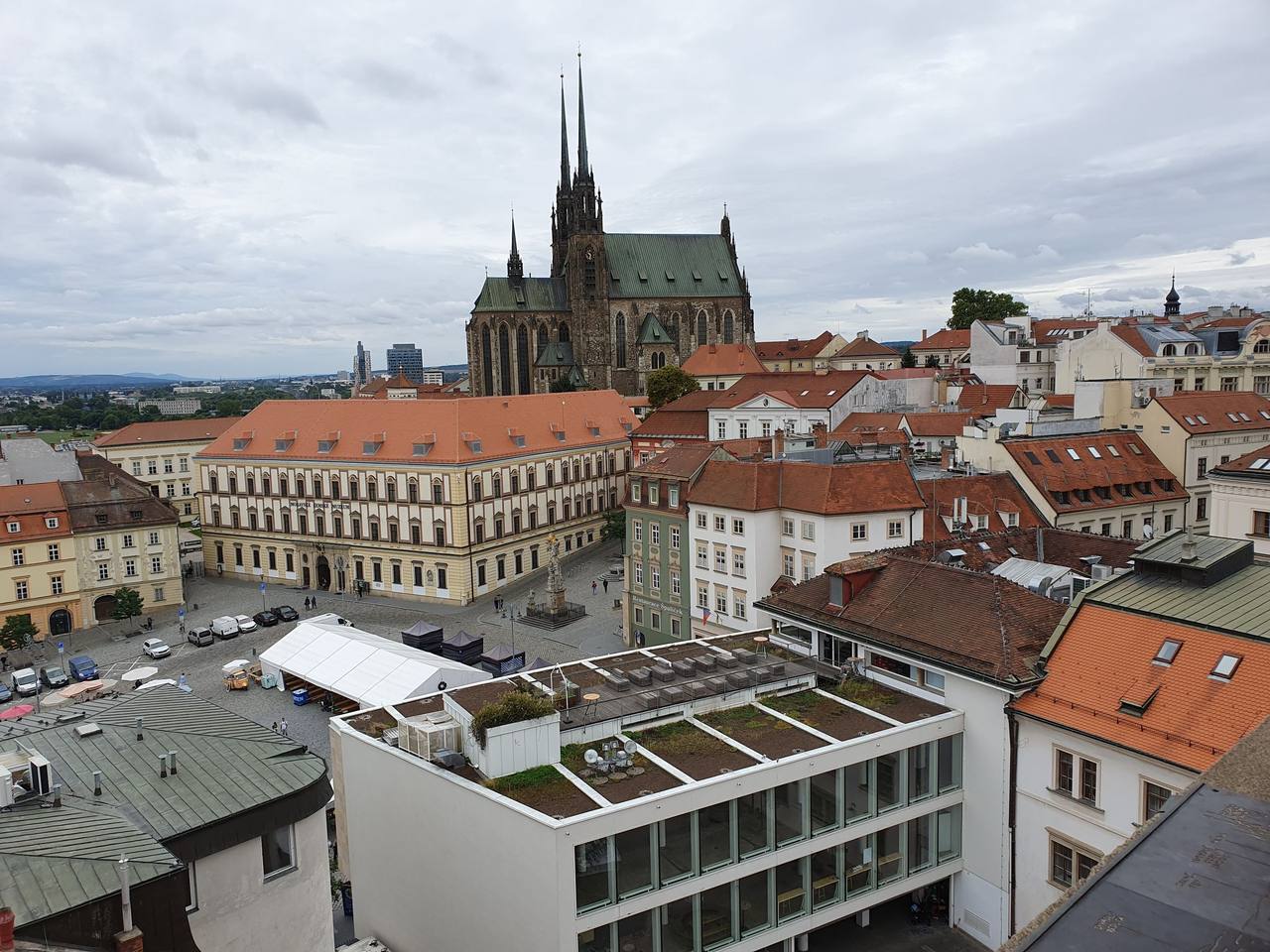
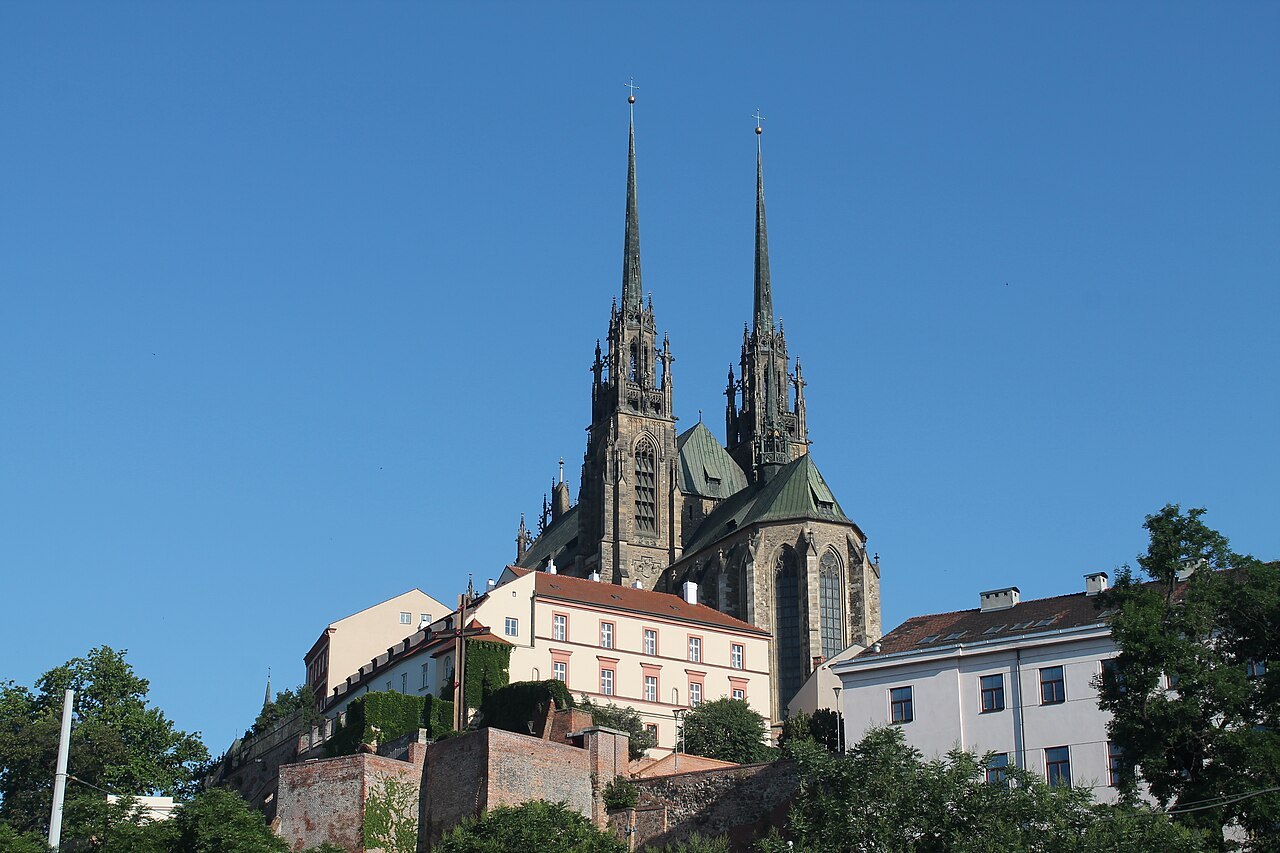
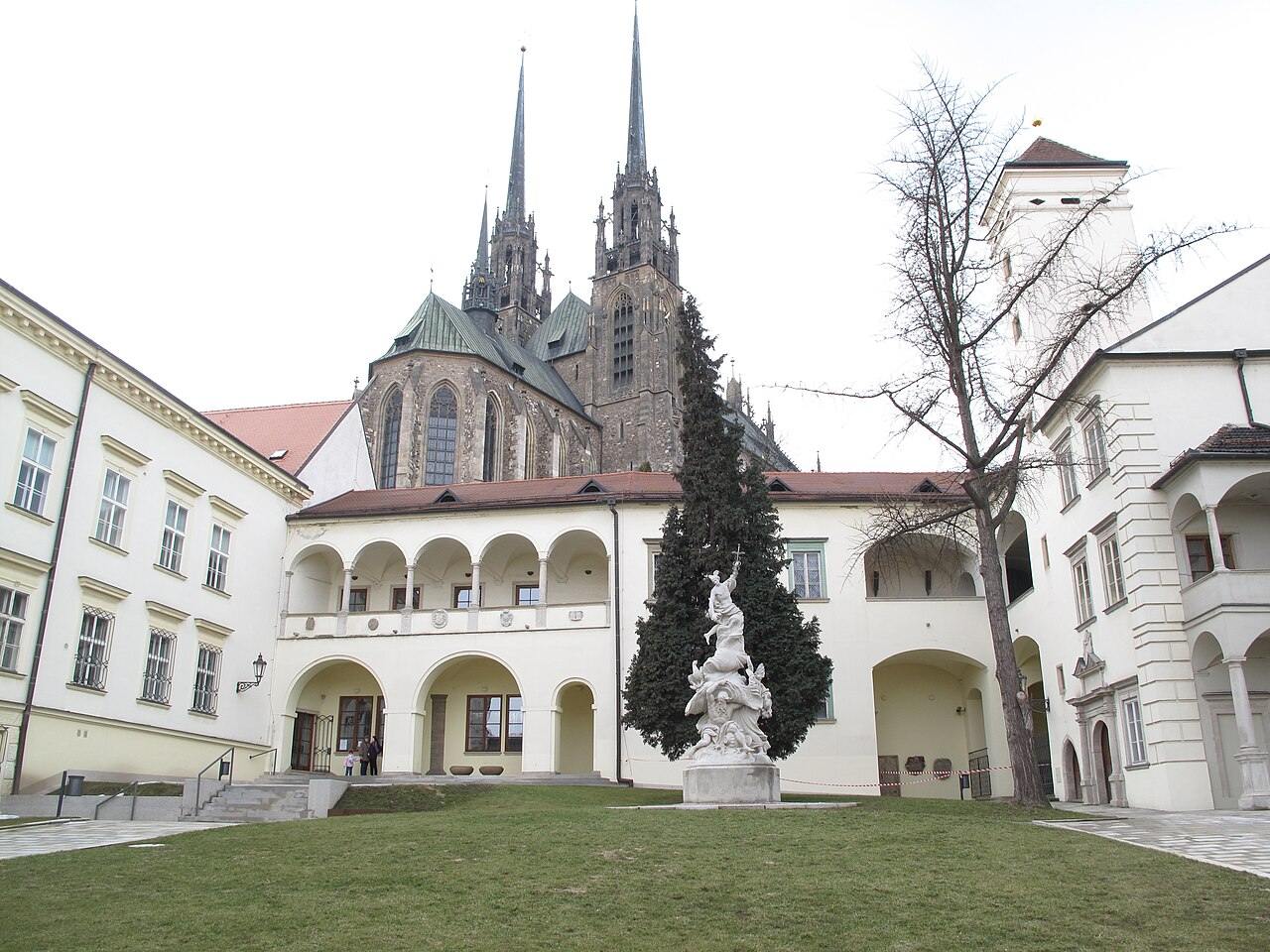
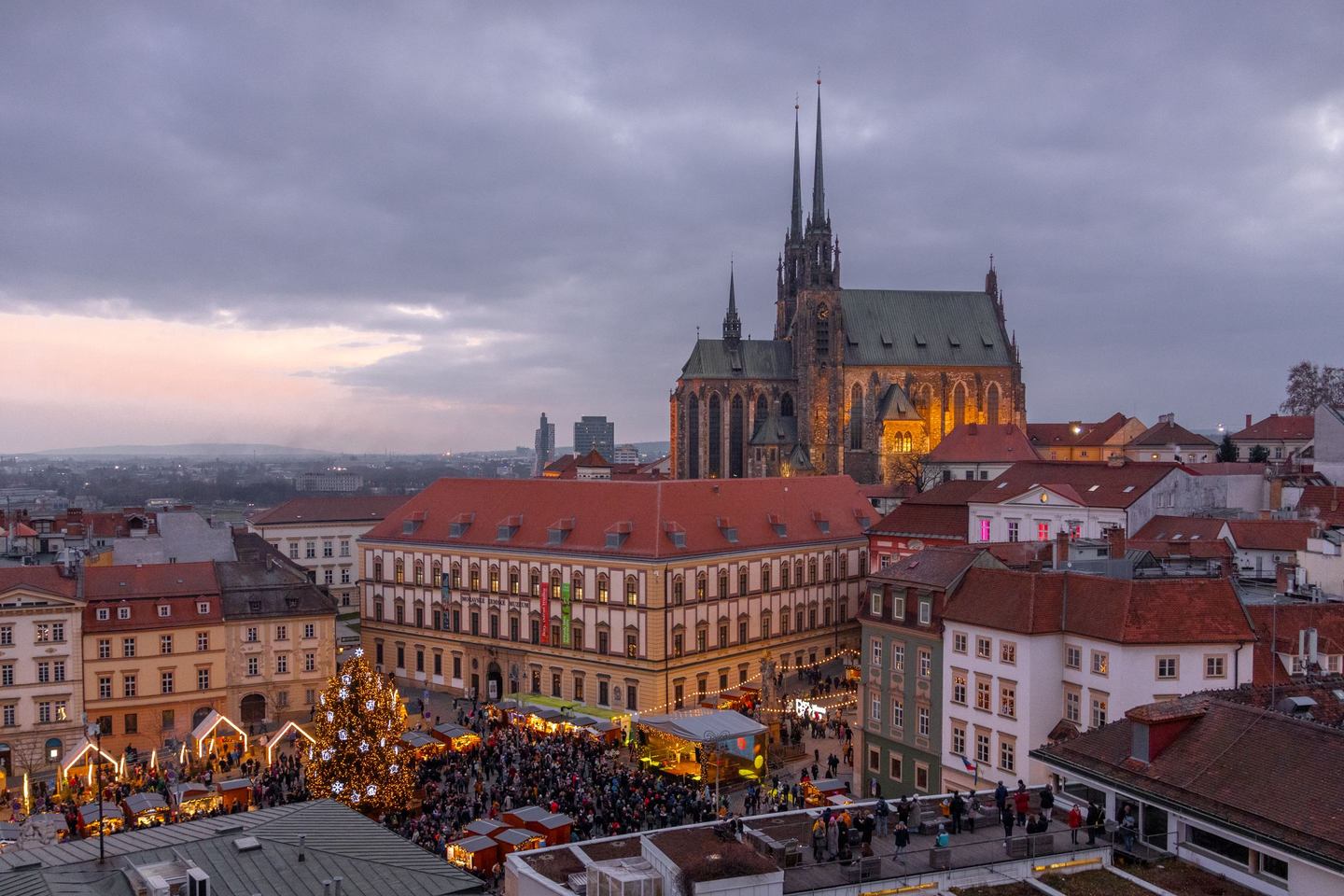
Brno’s cathedral stands on Petrov, the hill where the city began, and its two black spires are the city’s signature: they are on the Czech ten-crown coin. Inside is a white Baroque nave and a Gothic choir blazing with coloured glass. The cathedral is free; the towers and treasury are a small extra. And if you are anywhere nearby at 11 o’clock in the morning you will hear its best-known custom: the bells ring noon an hour early, as they have since the Swedish siege of 1645.
From castle chapel to cathedral
There was a chapel on Petrov by the late eleventh or twelfth century, close to the castle of the Přemyslid princes of Brno. At the end of the twelfth century the margrave Conrad Otto built a small church here dedicated to St Peter, with its own crypt, and in the thirteenth century it was rebuilt as a Romanesque basilica. The church became collegiate in 1296, and was rebuilt in the Gothic style; by the fifteenth century it was dedicated to Saints Peter and Paul.
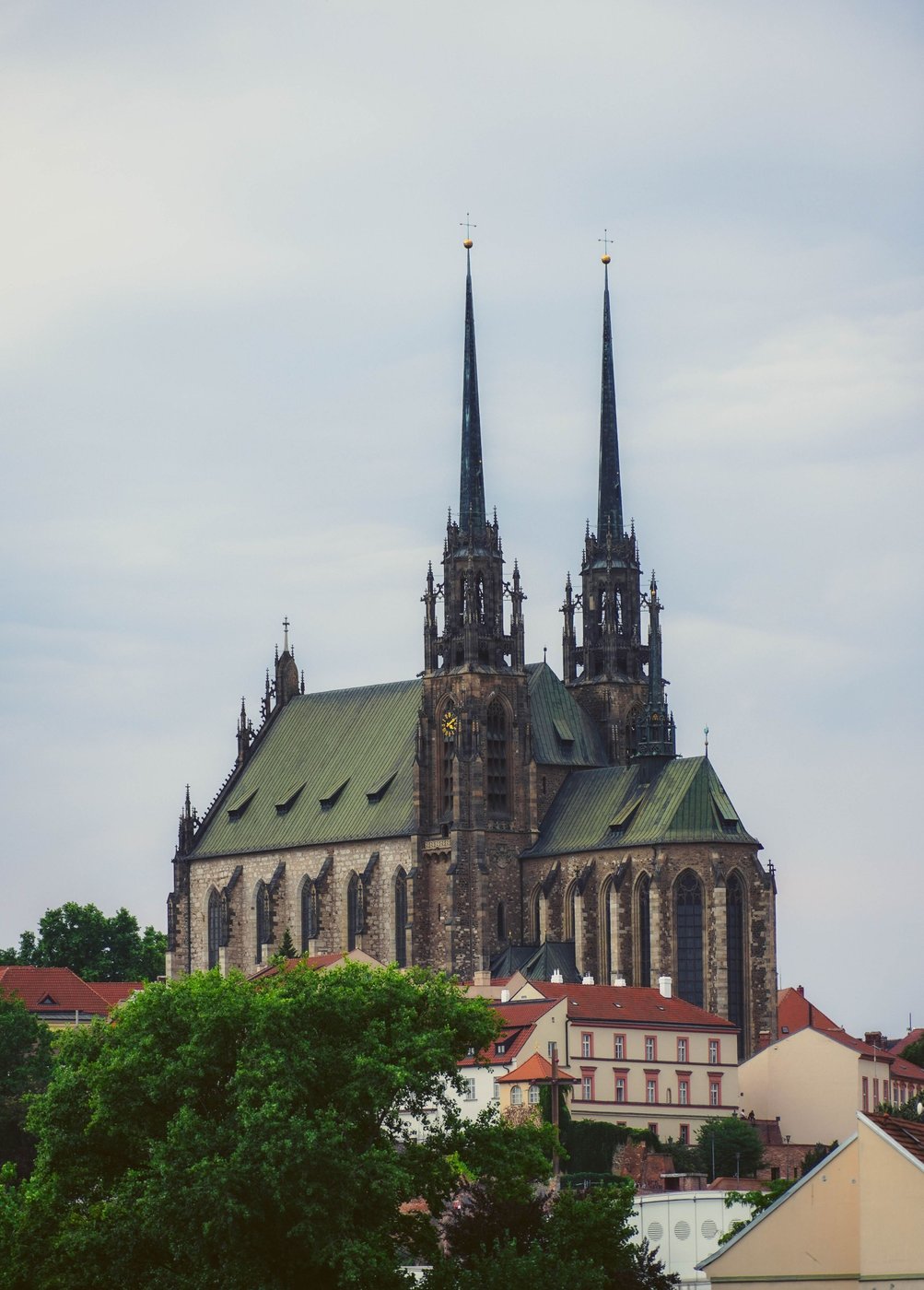
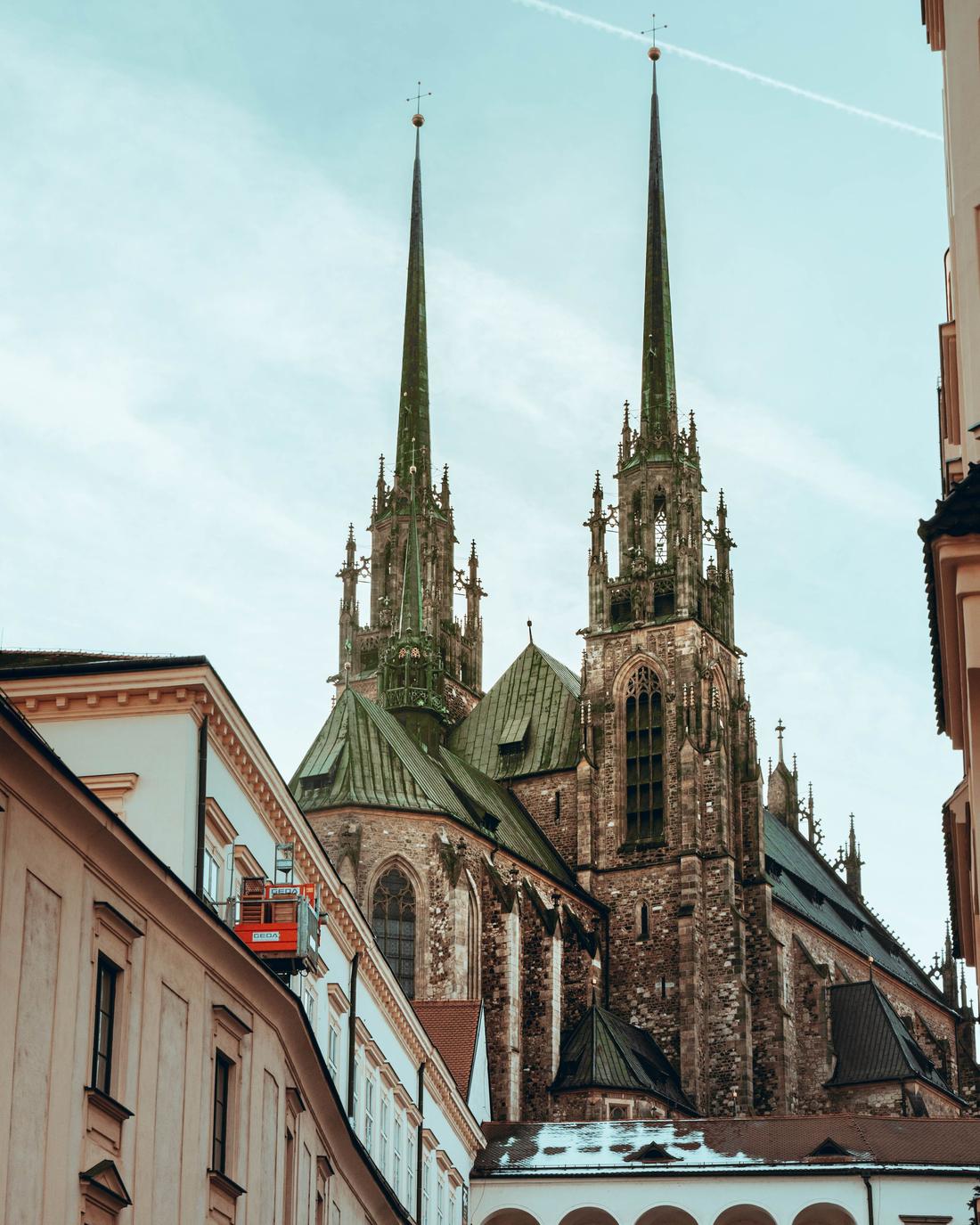
It suffered badly in the Thirty Years’ War, when the Swedes besieged Brno in 1643 and 1645, and it was rebuilt in two Baroque campaigns in the seventeenth and eighteenth centuries, which gave the nave its present white, plastered look. In 1777 Pope Pius VI created the diocese of Brno, and the church became its cathedral. The last great change came in 1904–09, when the two neo-Gothic spires, by the Viennese architect August Kirstein, were added after a competition.
The visitor’s cheat sheet
| Where | Petrov, 602 00 Brno, on the hill above the old town. Ten minutes’ walk from the main station |
|---|---|
| Opening hours | Monday–Thursday and Saturday 8.15am–6.15pm; Friday 10.30am–6.30pm; Sunday 7am–6.15pm. No sightseeing during services |
| Admission | Free |
| Towers and treasury | 60 Kč adults, 40 Kč students and children, 130 Kč family. May–September Monday–Saturday 10am–6.15pm, Sunday noon–6.15pm; October–April Monday–Saturday 11am–4.45pm, Sunday noon–4.45pm |
| Crypt | Open with the Diocesan Museum’s current exhibition, usually 10am–5pm (Thursday to 4pm) |
| The 11 o’clock bells | The cathedral rings noon at 11am every day |
| Access | Step-free through the main entrance; stairs only to the crypt and the towers |
| How long | Half an hour inside; an hour with the towers |
Hours and admission checked against the official site in September 2026. They change; the official site is always the last word.
Free inside; 60 Kč to go up. The cathedral is open every day and costs nothing. The towers and the treasury are sold as one ticket at the tower entrance and are open from 10am in summer and 11am in winter, and from noon on Sundays. Watch the Friday hours: the cathedral opens only at 10.30am on Fridays.
The bells that ring noon at eleven
The story is Brno’s favourite. In 1645, during the Thirty Years’ War, a Swedish army under General Lennart Torstensson besieged the city for more than three months. According to tradition, Torstensson declared that if he had not taken Brno by noon on the next day, he would withdraw. The defenders heard of it, and the bell-ringer at Petrov rang midday an hour early, at 11 o’clock. The Swedes, as good as their word, gave up the siege.
Whether or not it happened like that, the cathedral has rung the noon bell at 11am ever since. Be in the old town at eleven and you will hear it. The event is also remembered in Brno’s astronomical clock on Náměstí Svobody, a large black stone column that releases a glass marble at 11 o’clock each day.
The outside
Walk up to Petrov from the Cabbage Market (Zelný trh) or through the Denis Gardens along the old city walls, which give the best views of the spires. On the north side of the cathedral is an outdoor pulpit named after the Franciscan preacher John of Capistrano, who preached in Brno in 1451; it was built later in his memory. Over the main door is a Latin inscription from St Matthew’s Gospel, ‘Come to me, all you who labour and are burdened.’
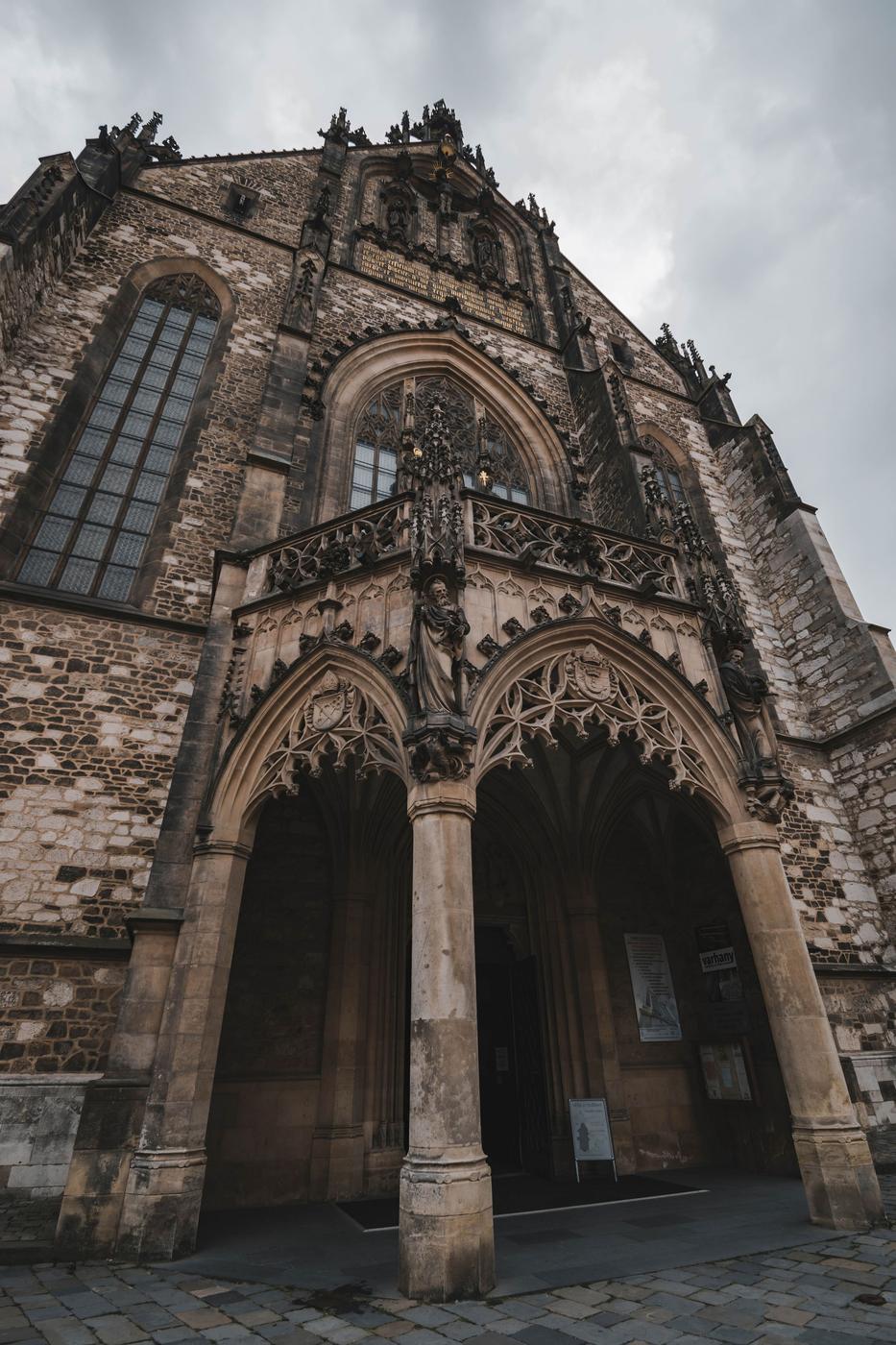
Below the cathedral, on the hillside, is the Bishop’s Court, a group of Renaissance buildings with an arcaded courtyard that now houses part of the Moravian Museum, and on the hill itself the Diocesan Museum, with its permanent exhibition Vita Christi of Gothic and Baroque art.
Inside the cathedral
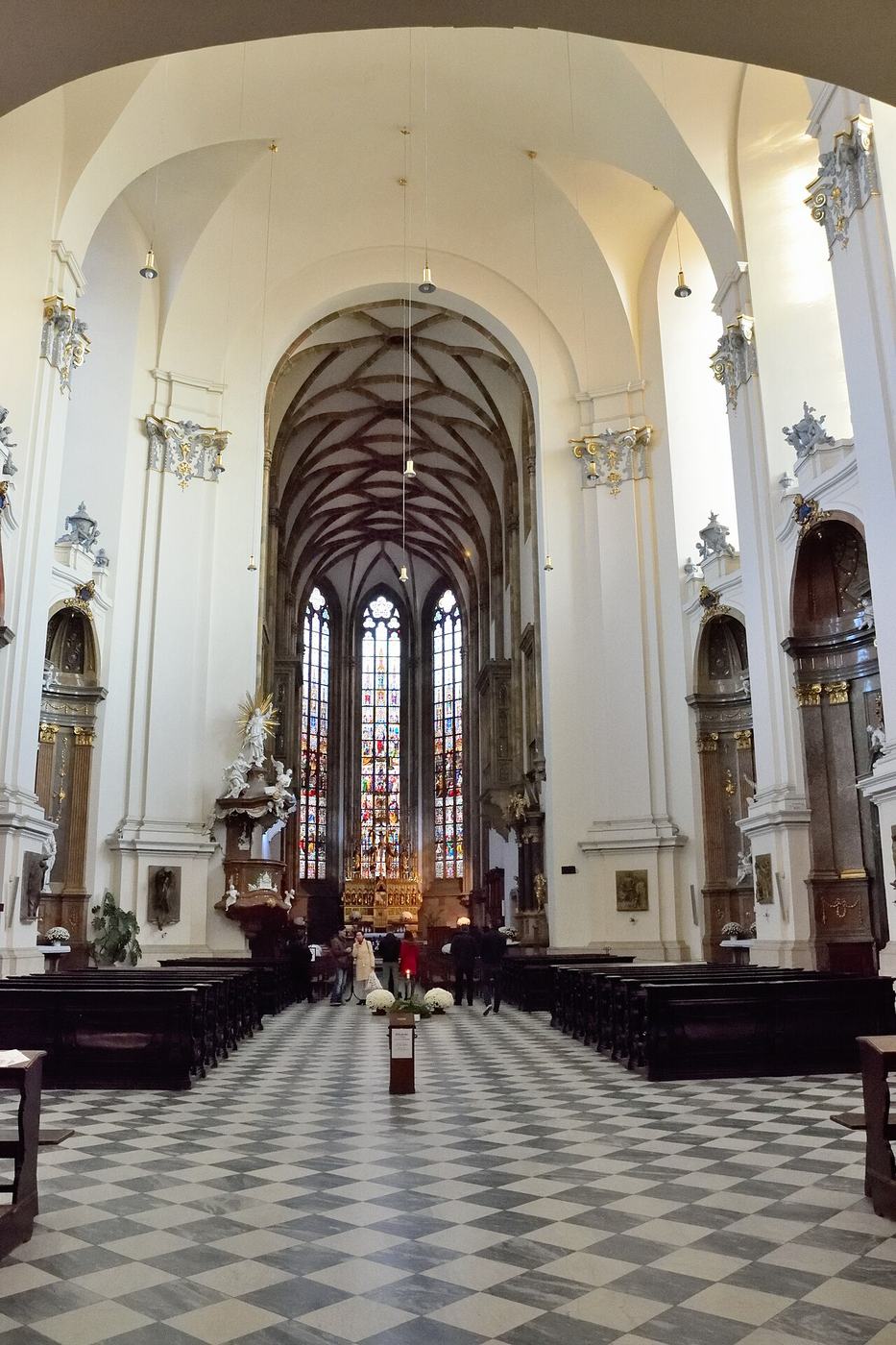
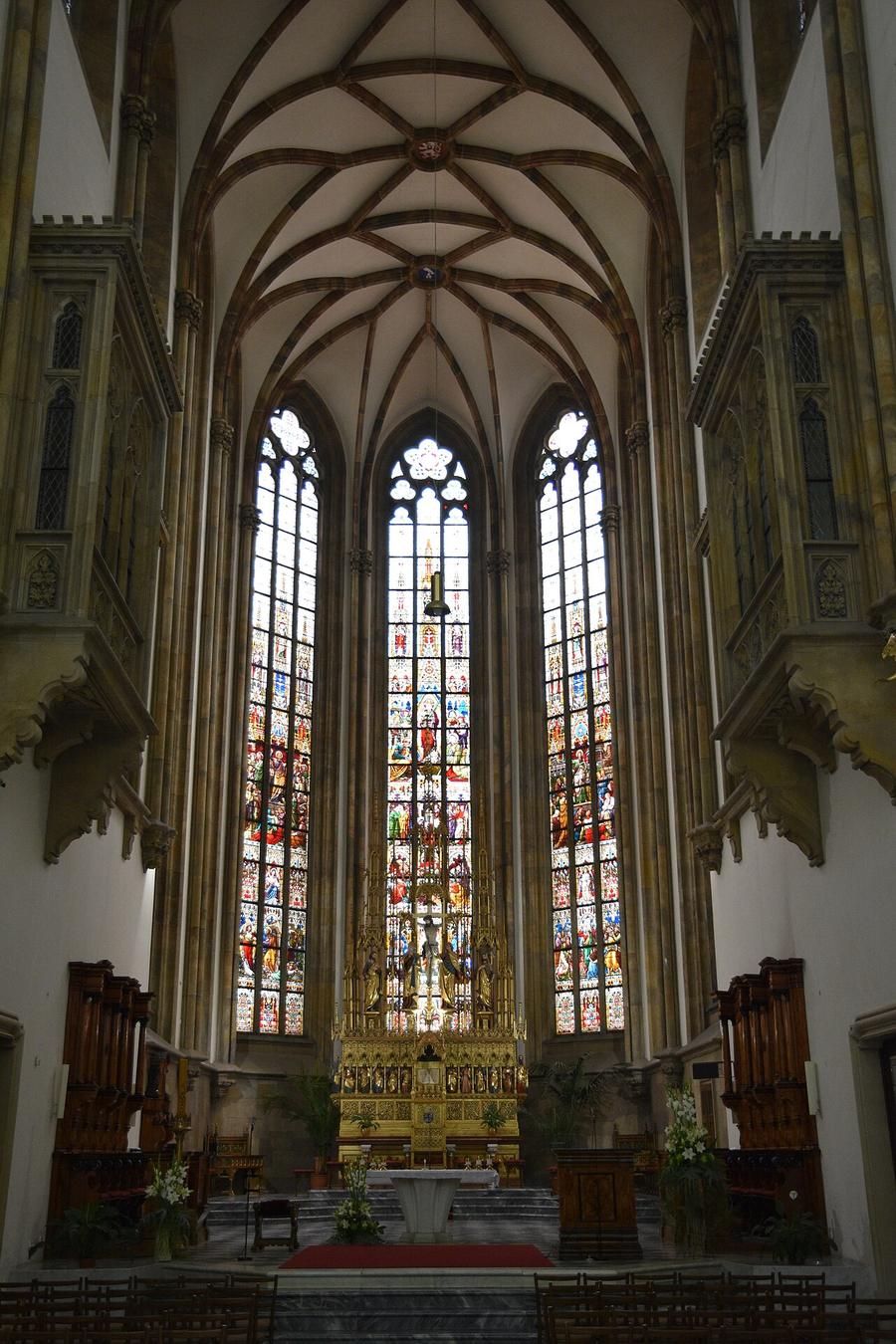
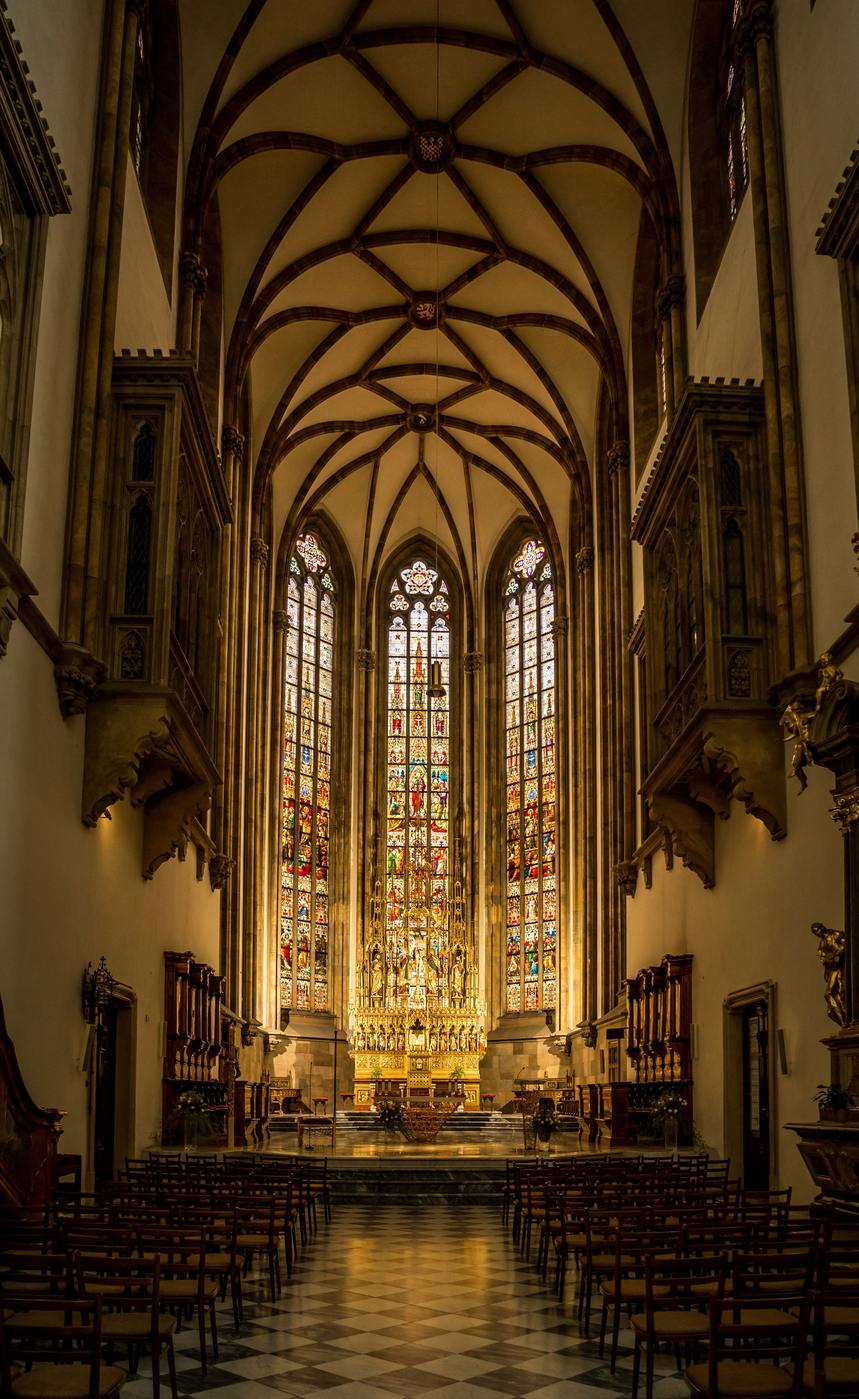
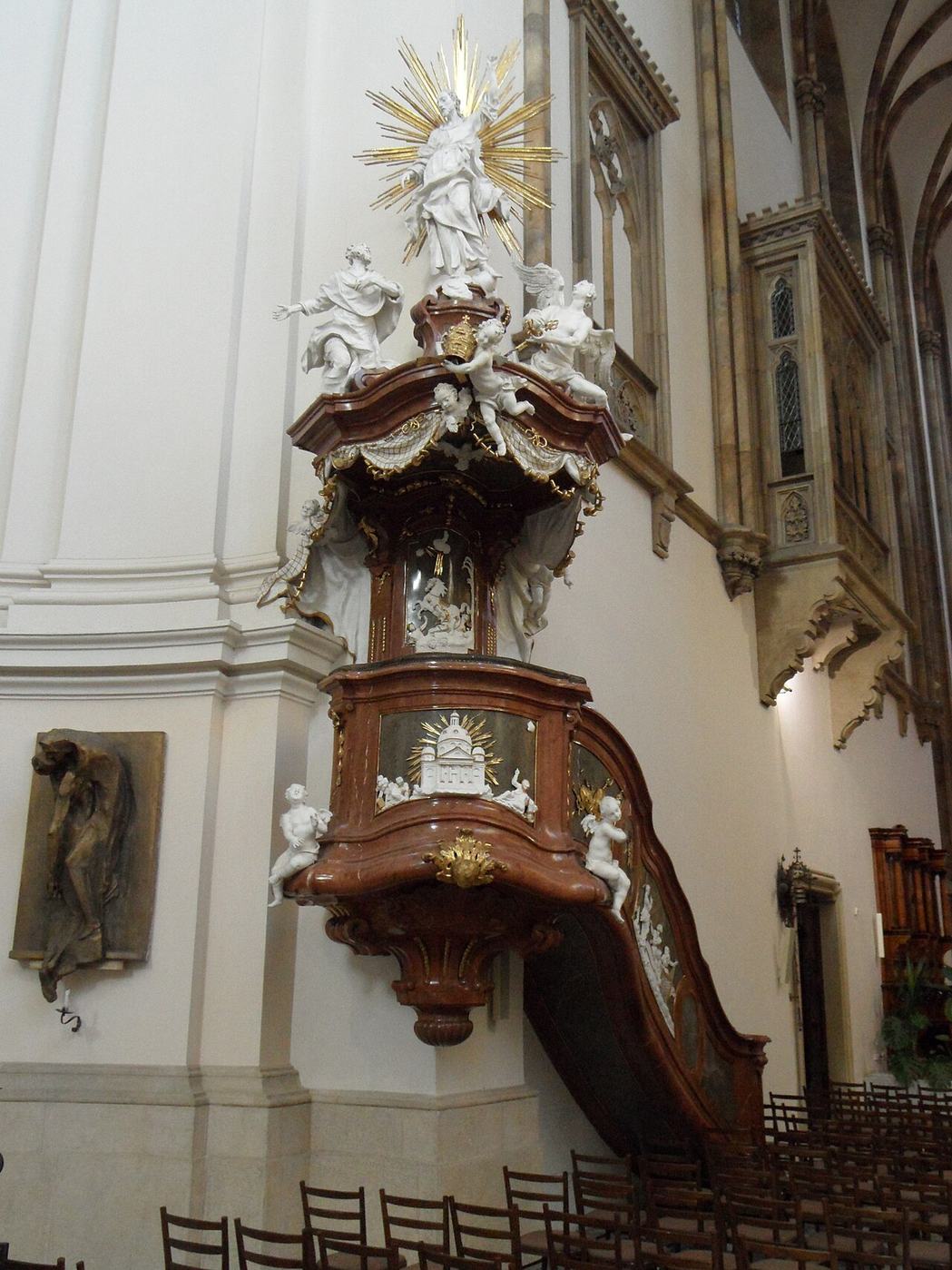
The inside is a surprise after the dark Gothic exterior. The nave is white, lit by large windows and furnished with late-Baroque altars and a pulpit, with sculpture by Ondřej Schweigl from the late 1770s. At the far end the space changes completely: the choir keeps its Gothic vault and tall windows filled with deep-coloured glass, and on a sunny afternoon it glows.
The high altar in the choir is neo-Gothic, made in Vienna in 1891: eleven metres high, with the Crucifixion above and the twelve apostles below.
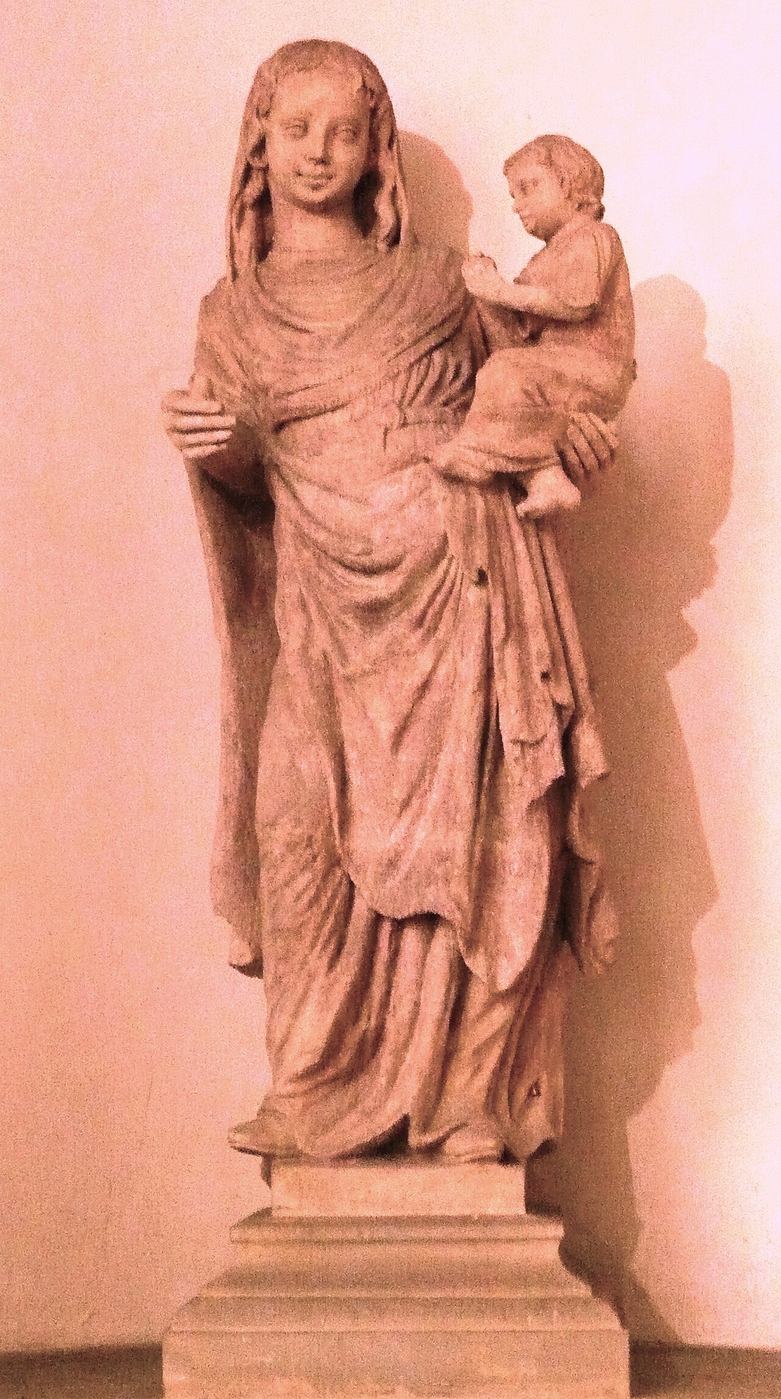
- The Madonna and Child, a stone statue of the early fourteenth century, is the oldest work of art in the cathedral and one of the finest Gothic sculptures in Moravia.
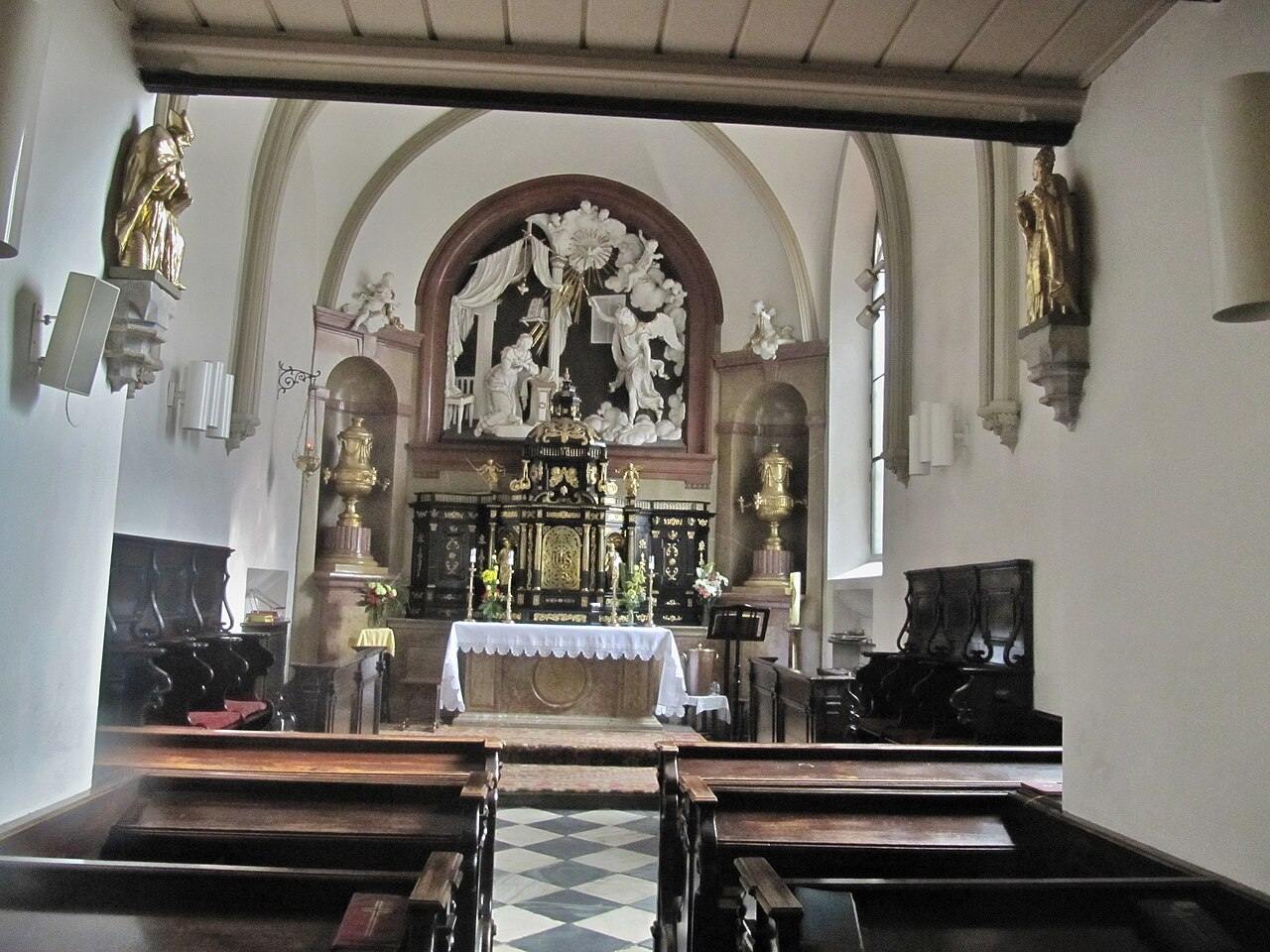
- The chapel of the Annunciation, off the north side, keeps a rare Renaissance altar.
- The Chapel of the Body of Christ, at the north entrance, is a modern chapel of adoration designed by the sculptor Otmar Oliva.
- The font, of marble, dates from 1656, a decade after the great siege.
- The nativity scene, shown at Christmas, was carved in limewood in 1950–53 by Heřman Kotrba.
The towers, the treasury and the crypt
The two spires are 84 metres high, and the viewing galleries give views south over the old town and towards the Pálava hills, and north over the city. The tower ticket includes the treasury, opened in 2005, with liturgical vestments, monstrances and chalices. Tickets are 60 Kč for adults and 40 Kč for students and children, and the stairs are steep, with no lift.
Beneath the cathedral is the crypt, where archaeologists working in the early 2000s uncovered the remains of the Romanesque basilica. It is opened with the Diocesan Museum’s exhibitions, usually from 10am to 5pm.
Music and the seasons
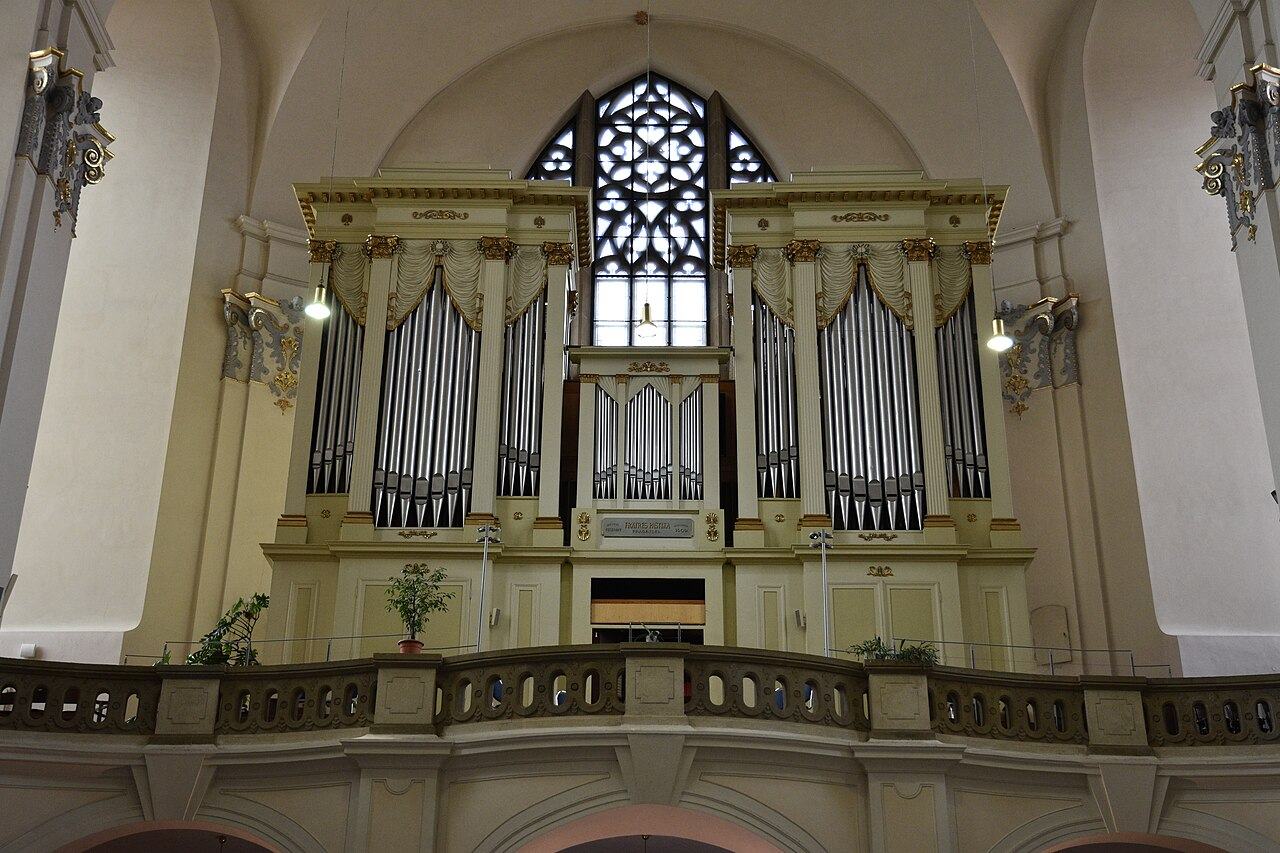
Petrov is a working cathedral with a strong musical life. Through the summer there are organ recitals in the series Varhanní léto na Petrově, which also raise money for the completion of the cathedral organ, and the cathedral choir sings at the main Sunday Mass. In December the Christmas market fills the Cabbage Market square below, and the cathedral is lit up above it.
Getting there
Brno is the Czech Republic’s second city, about two and a half hours by train from Prague and an hour and a half from Vienna. From the main station the cathedral is about ten minutes’ walk up the hill; trams 5, 6 and 12 stop at Šilingrovo náměstí, five minutes away. There is no parking on Petrov itself. From Brno it is about an hour and a half to Olomouc and an hour to the Santini church at Zelená Hora.
Plan your visit
The cathedral is free. For somewhere to stay in Brno:
Some links are affiliate links. They cost you nothing extra and help keep this guide independent.
Frequently asked questions
Common questions
Is Brno cathedral free to visit?
Yes, the cathedral itself is free. The towers and the treasury are a separate visit, 60 Kč for adults and 40 Kč for students and children, and the Diocesan Museum below the cathedral has its own ticket.
Why do Brno’s bells ring noon at 11 o’clock?
By tradition, during the Swedish siege of 1645 the Swedish commander promised to give up if he had not taken Brno by noon. The bell-ringer at Petrov rang midday an hour early, the Swedes withdrew, and the cathedral has rung noon at 11am ever since.
What are the opening hours of Brno cathedral?
Monday to Thursday and Saturday 8.15am to 6.15pm, Friday 10.30am to 6.30pm, and Sunday 7am to 6.15pm. Visits stop during services, weddings, funerals and concerts.
Can you climb the towers of Brno cathedral?
Yes. The towers and the treasury are open May to September from 10am (Sundays from noon) until 6.15pm, and October to April from 11am (Sundays from noon) until 4.45pm. There are stairs only, no lift.
How long does it take to get to Brno from Prague or Vienna?
About two and a half hours by train from Prague and an hour and a half from Vienna. The cathedral is a ten-minute walk up from the main station.