
Pilgrimage Church of St John of Nepomuk, Zelená Hora
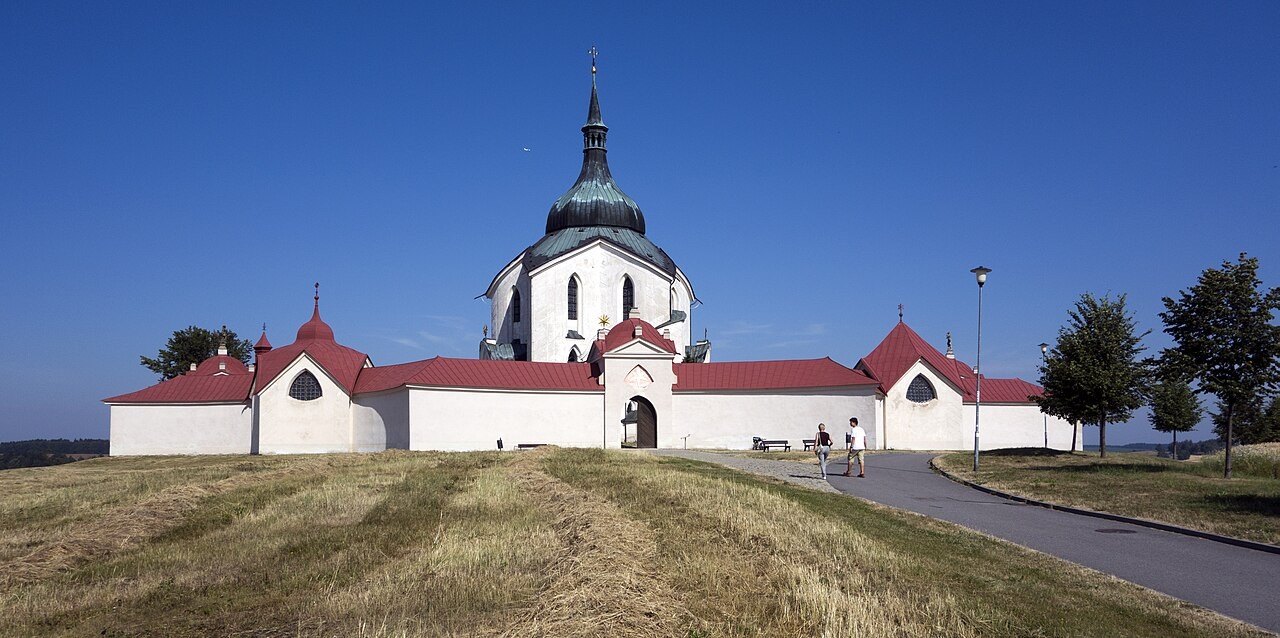
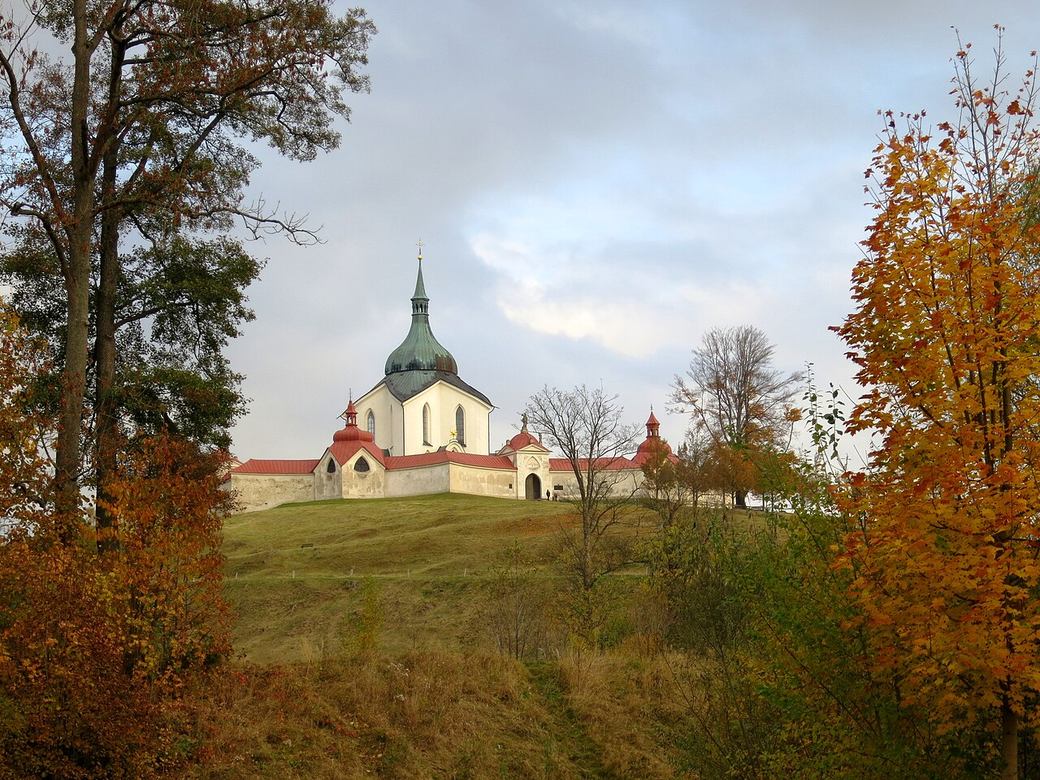
On a small green hill outside Žďár nad Sázavou stands one of the strangest and most beautiful buildings in Europe: a white church in the shape of a five-pointed star, inside a ring of cloister shaped like a ten-pointed one, built in the 1720s by an architect who liked to mix Baroque curves with Gothic pointed arches. It has been a UNESCO World Heritage Site since 1994. The one thing to know before you go is that you cannot simply walk in. The church is shown only on guided tours, on the hour, and in winter only on two days a week.
A church for a saint’s tongue
John of Nepomuk was vicar-general of the Archbishop of Prague, and in 1393, after a quarrel between the archbishop and King Wenceslas IV, he was tortured and thrown from the Charles Bridge into the Vltava. By legend, five stars appeared over the water where he drowned, and a later tradition held that he died for refusing to betray the secrets of the queen’s confession. In the Counter-Reformation he became the great popular saint of Bohemia.
On 15 April 1719, when his tomb in St Vitus Cathedral was opened, the commission found what it took to be his tongue, incorrupt. Among those who took the news most to heart was Václav Vejmluva, abbot of the Cistercian monastery at Žďár, who had long venerated John — and whose monks traced their origins to Nepomuk, the saint’s home town. Within months he was planning a pilgrimage church on a hill above the monastery, which he named Zelená Hora, the Green Hill, after the hill at Nepomuk. Preparations began that summer, and the church was consecrated on 27 September 1722, a year after John’s beatification and seven years before he was made a saint. Its architect was Jan Blažej Santini-Aichel, who had already rebuilt the monastery church below. It was one of his last works: he died in 1723.
The visitor’s cheat sheet
| Where | Zelená hora, Žďár nad Sázavou, on the Bohemian–Moravian border, about halfway between Prague and Brno |
|---|---|
| Opening hours | May–September daily 9am–5pm; April and October weekends and holidays 9am–5pm; November weekends 9am–4pm; November–March Tuesday and Thursday tours at 10am, noon and 2pm. Check the official site for weddings and services |
| Admission | Guided tour only: 150 Kč adults, 120 Kč students under 26, seniors and children, 400 Kč family; under-6s free |
| Tours | On the hour from the main gate, 45 minutes, in Czech with printed texts. English or German for booked groups of more than ten, 300 Kč a person. The last tour is at 4pm (3pm on Saturdays) |
| To the top | July and August only: a 15-minute visit to the upper galleries at 10am, noon and 2pm, 100 Kč. 60 steps; not for under-5s |
| Rules | No dogs anywhere in the grounds. Bring cash as a back-up; card payment is possible |
| How long | An hour for the tour and the grounds; half a day with the monastery and chateau in the town below |
Hours and admission checked against the official site in September 2026. They change; the official site is always the last word.
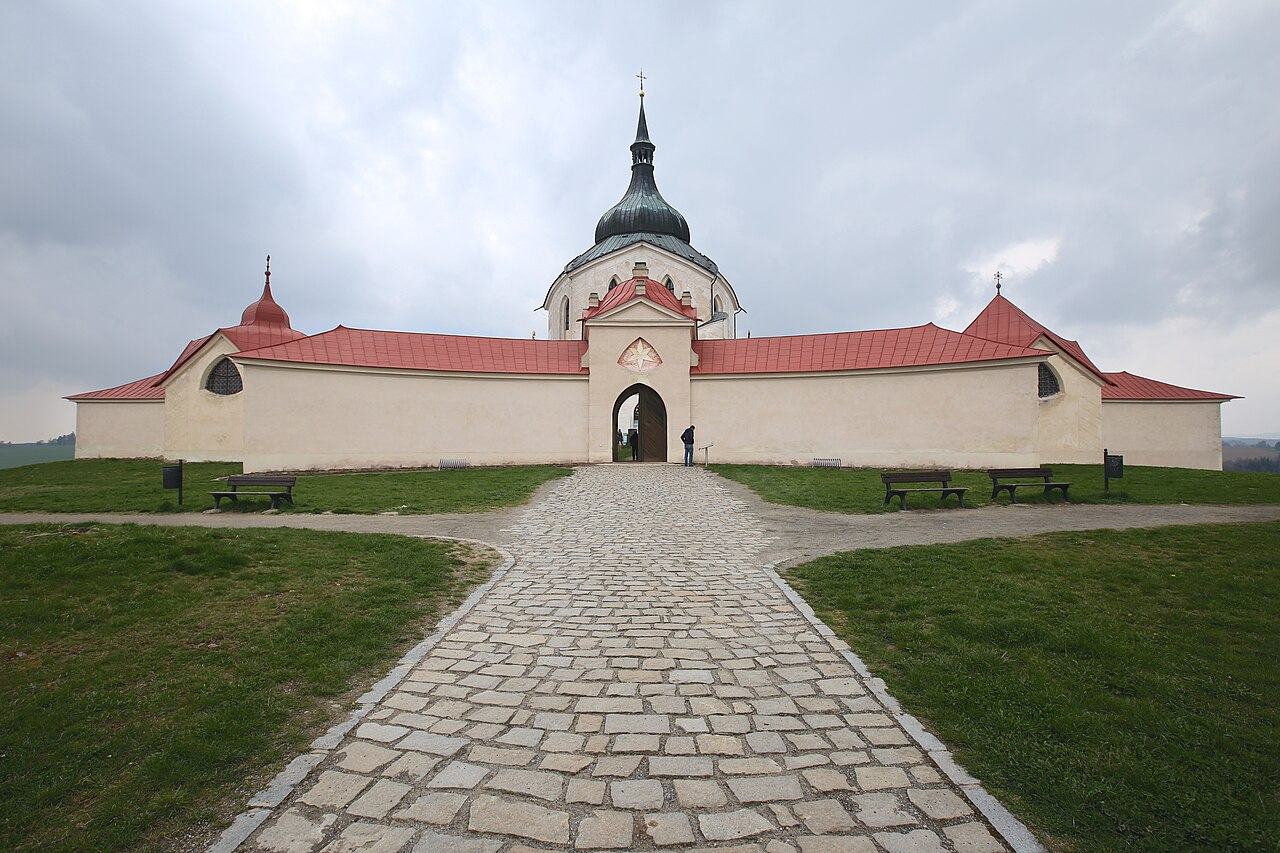
Guided tours only, on the hour. Tours leave from the main gate every hour from 9am, last 45 minutes and cost 150 Kč. From May to September they run every day; in April, October and November only at weekends; and from November to March there are short winter tours on Tuesdays and Thursdays only. Tours are in Czech, with printed texts for other visitors. Check the notices on the official website before you go: weddings and services cut tours at short notice.
Built on the number five
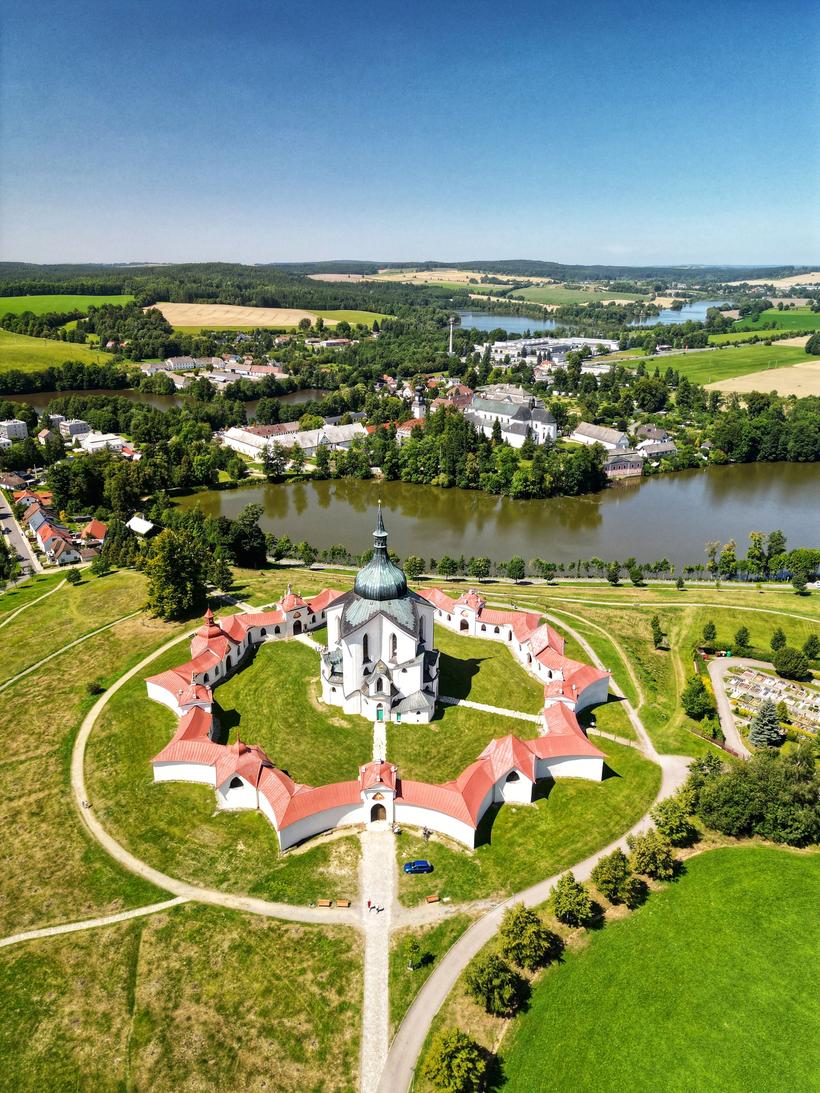
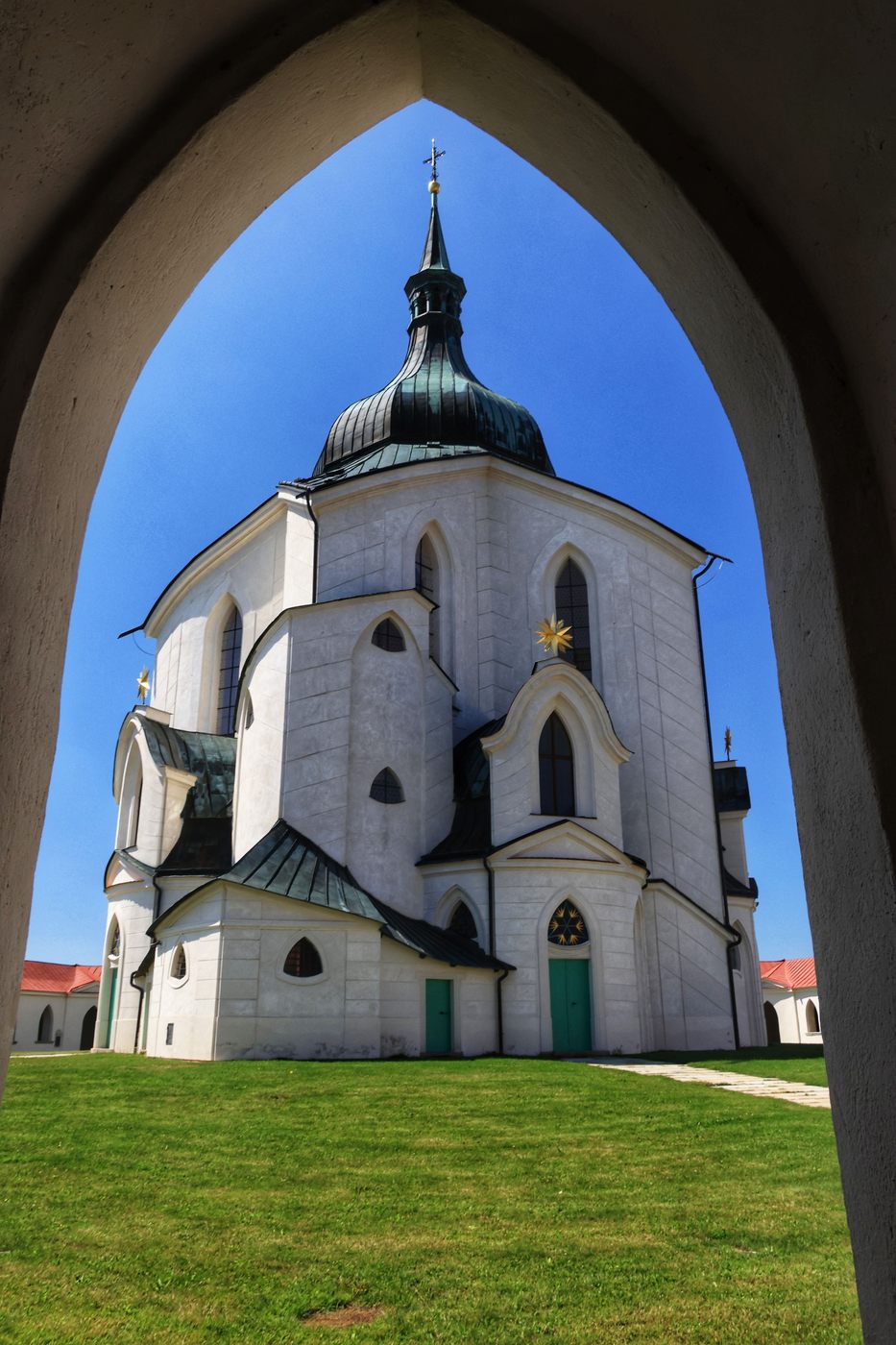
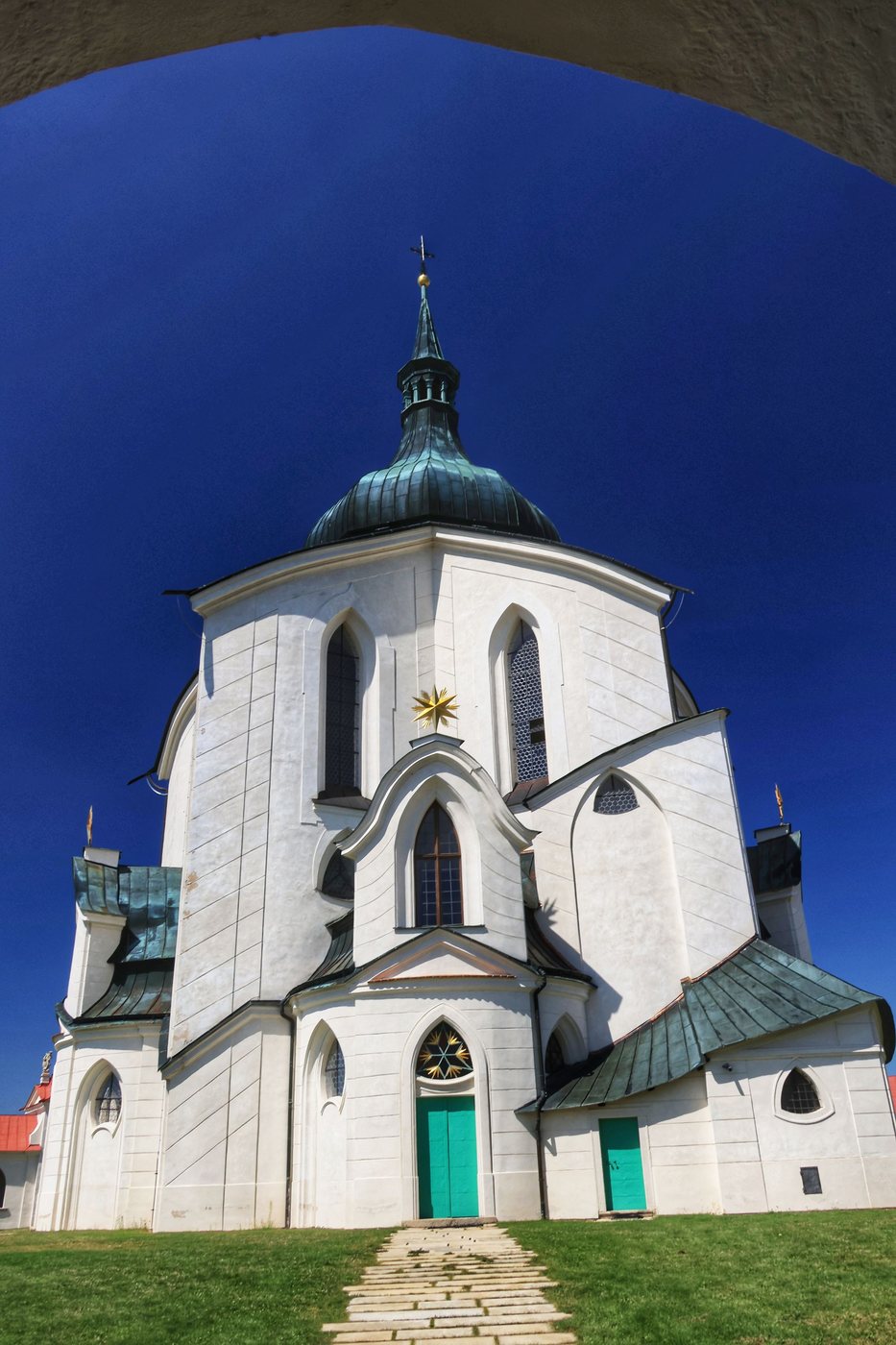
Santini designed the whole complex around the five stars of the legend. The church is a five-pointed star in plan, its points formed by five chapels alternating with five oval spaces around a central cylinder. Around it runs a cloister with five gates and five chapels, following a ten-pointed outline. The numbers three and six also recur: the Trinity, and the Virgin, whom John was believed to have served especially.
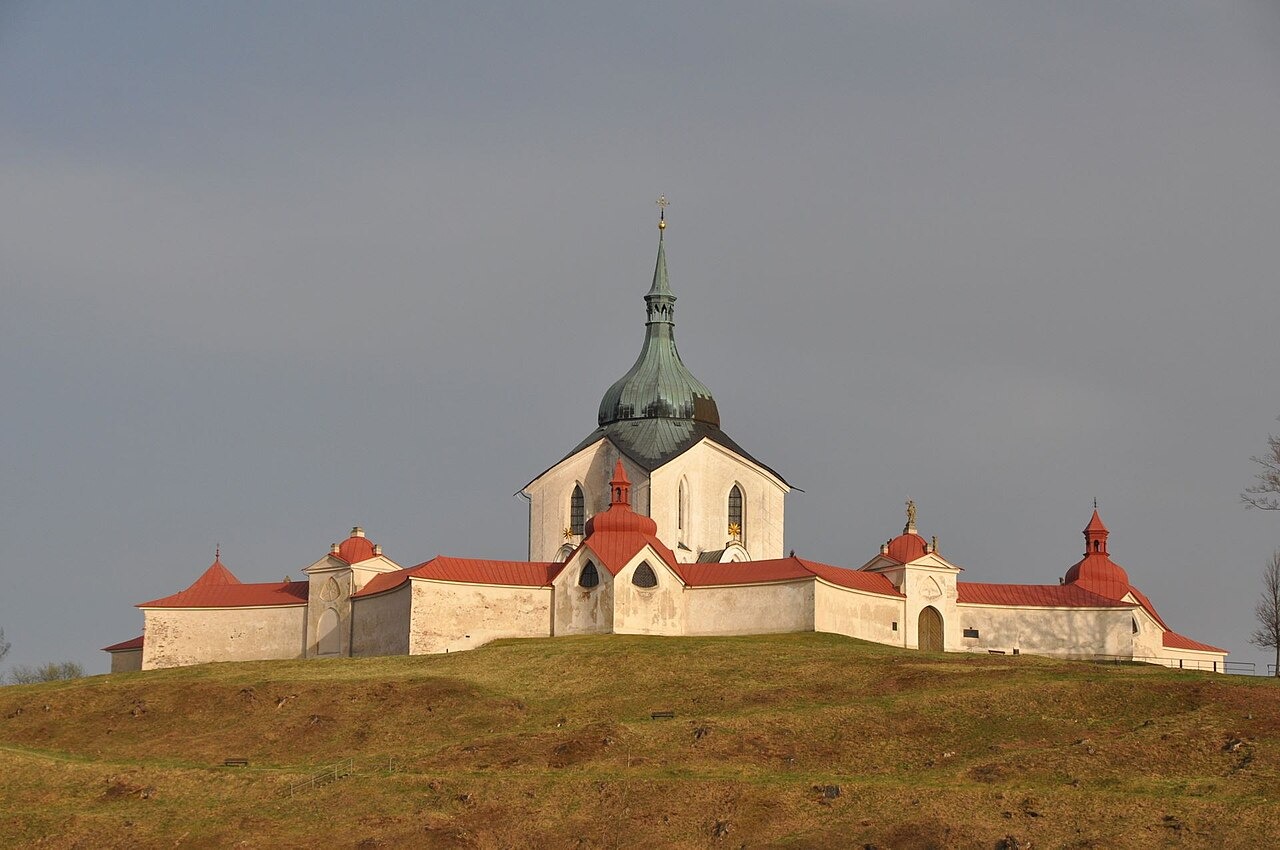
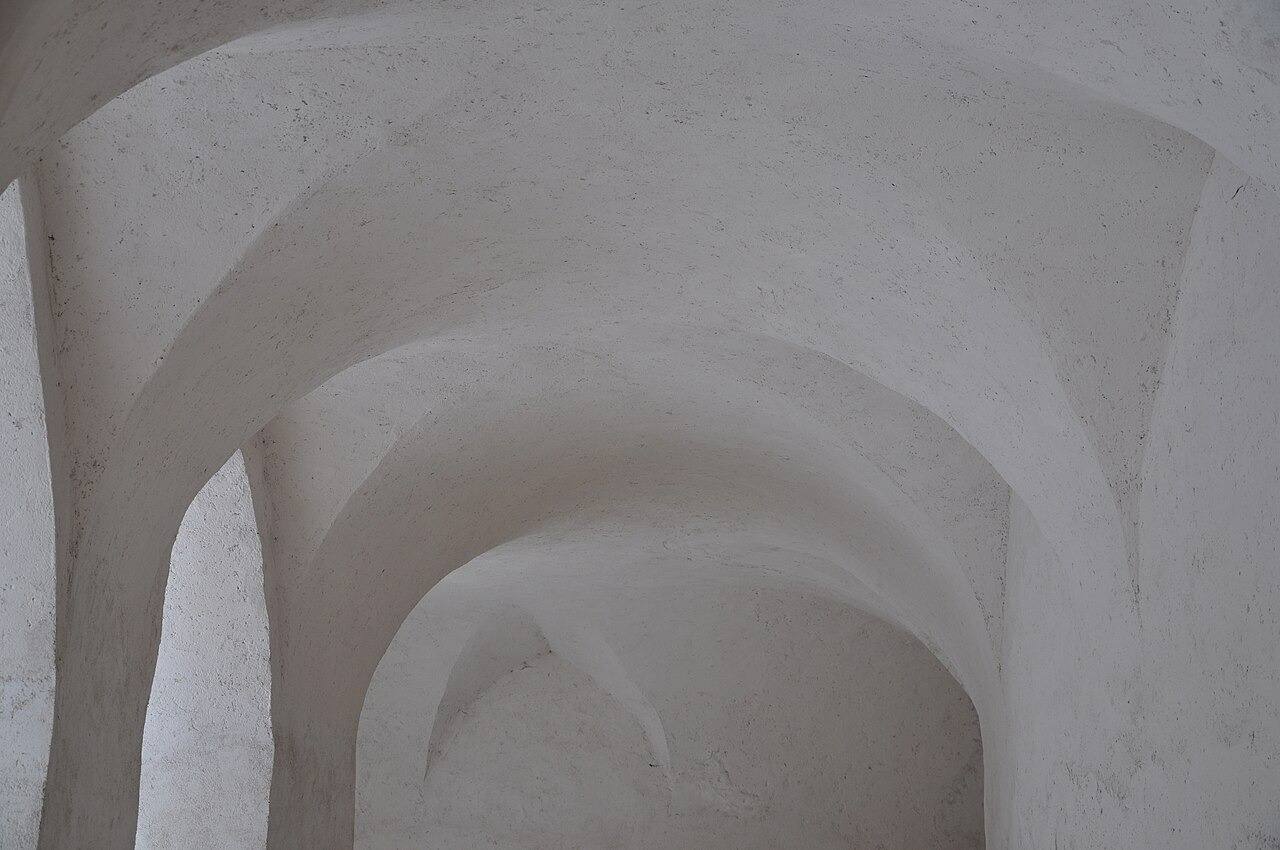
Santini was fascinated by the Gothic, and he made his Baroque buildings out of Gothic forms: pointed windows and arches, ribs that cross and break off, walls that seem to be only a shell. At Zelená Hora he used them to make the building feel like a reliquary for the tongue. The central space is lit only indirectly, while the chapels around it are full of light, so that light seems to come from the edges of the building inwards.
Inside the church
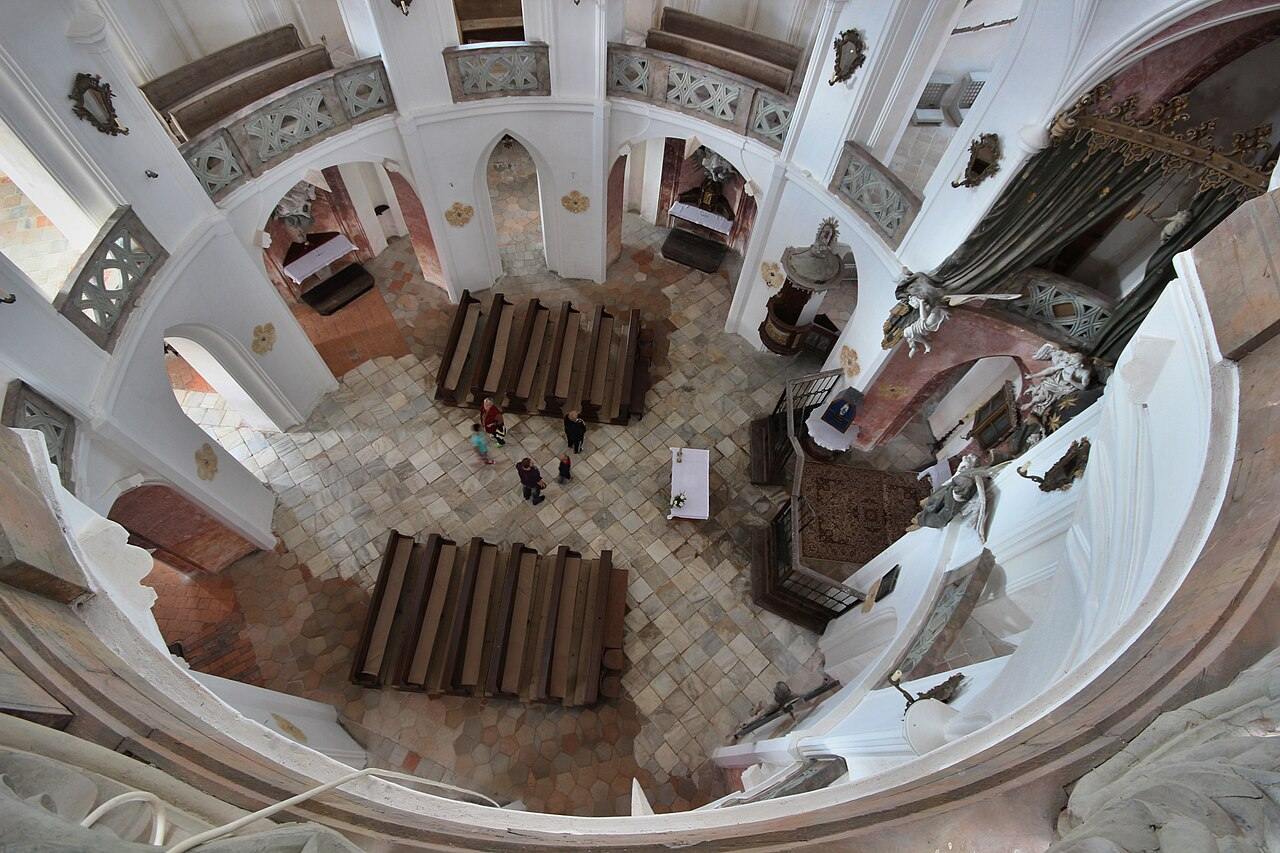
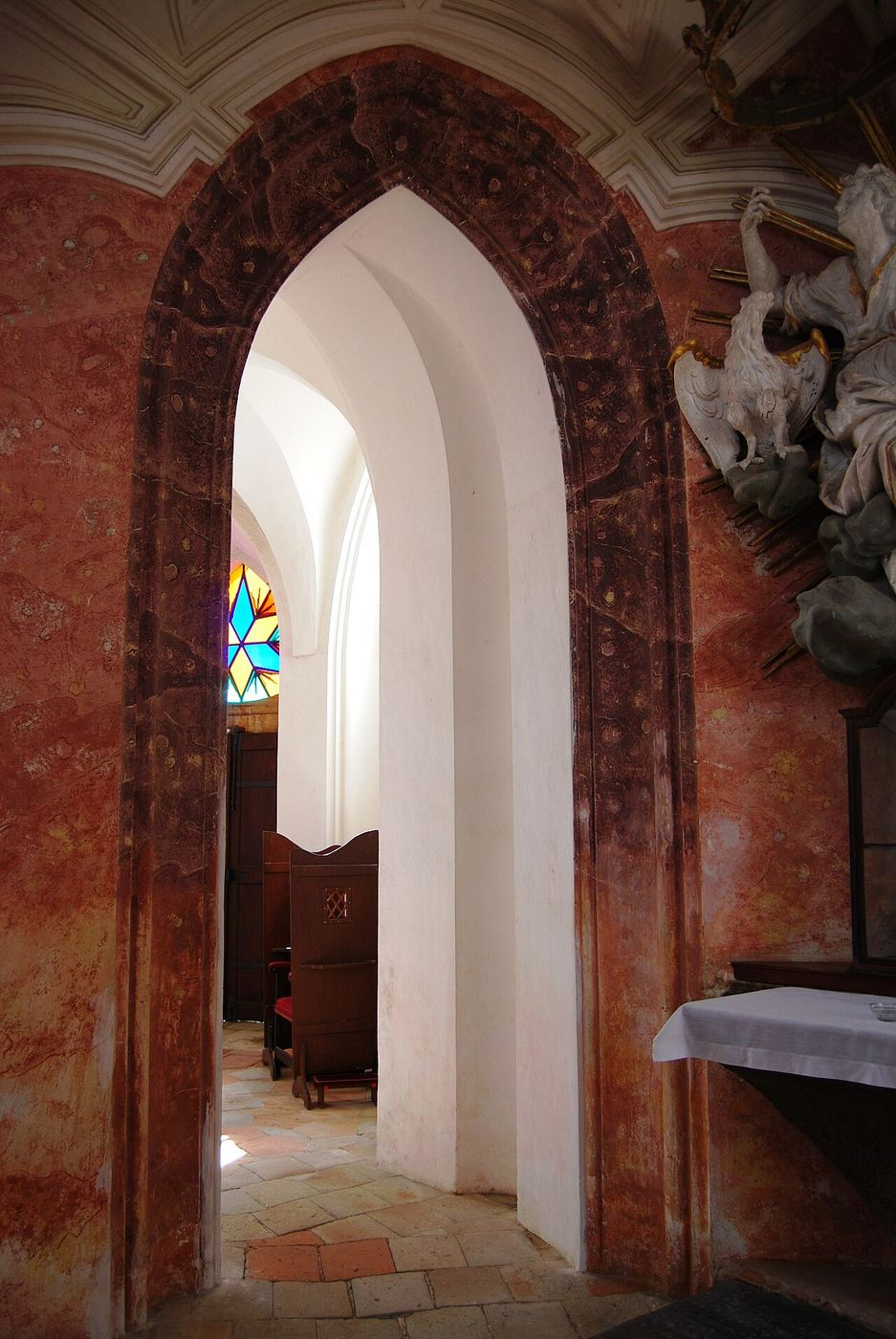
The tour takes you through the cloister and into the church. The inside is pale and quiet, with the central space rising through two tiers of galleries to a vault of ribs in the form of a star. The high altar, designed by Santini himself, shows St John on a globe carried by angels, surrounded by stars; the carved angels and the four evangelists are by Jan Pavel Čechpauer, and the statue of the saint by Řehoř Theny.
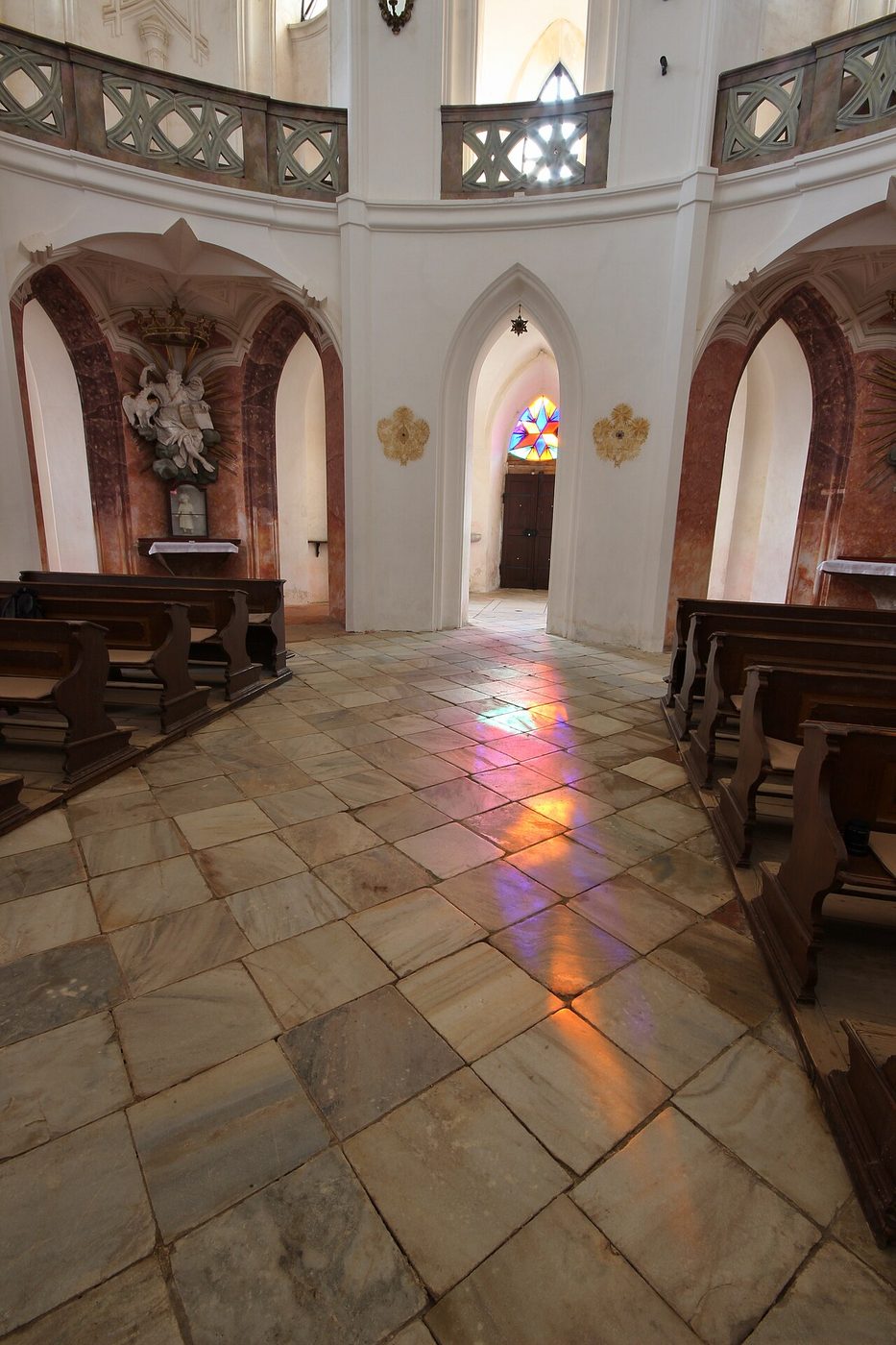
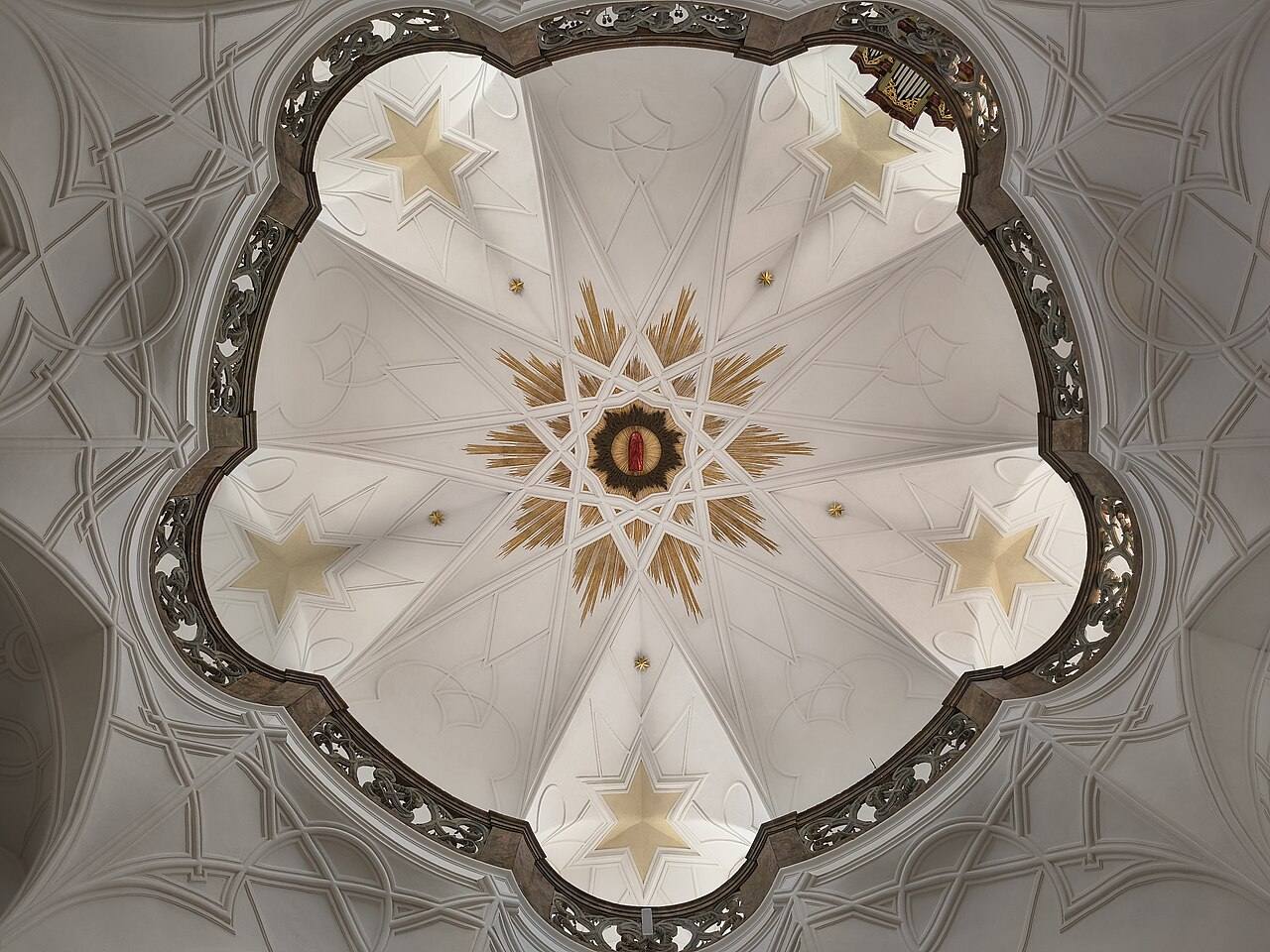
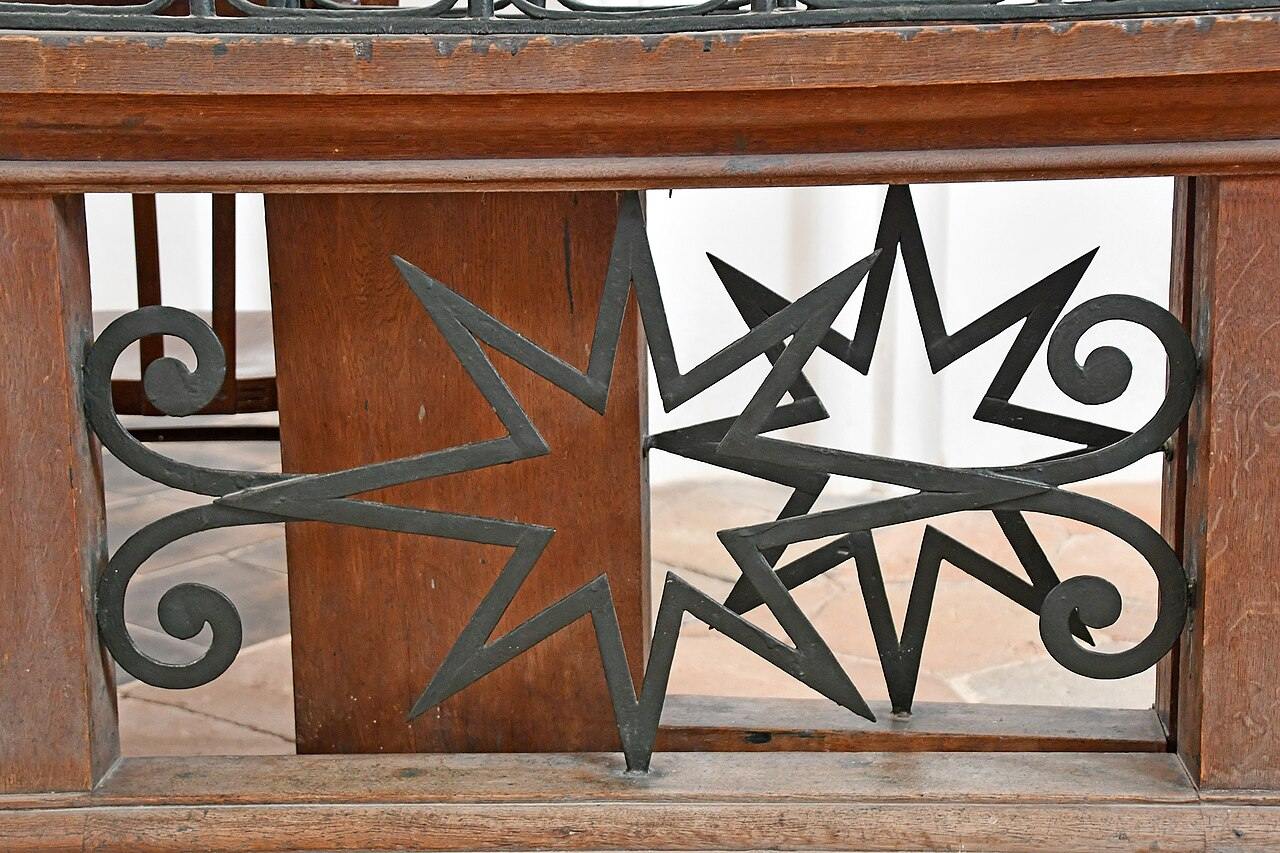
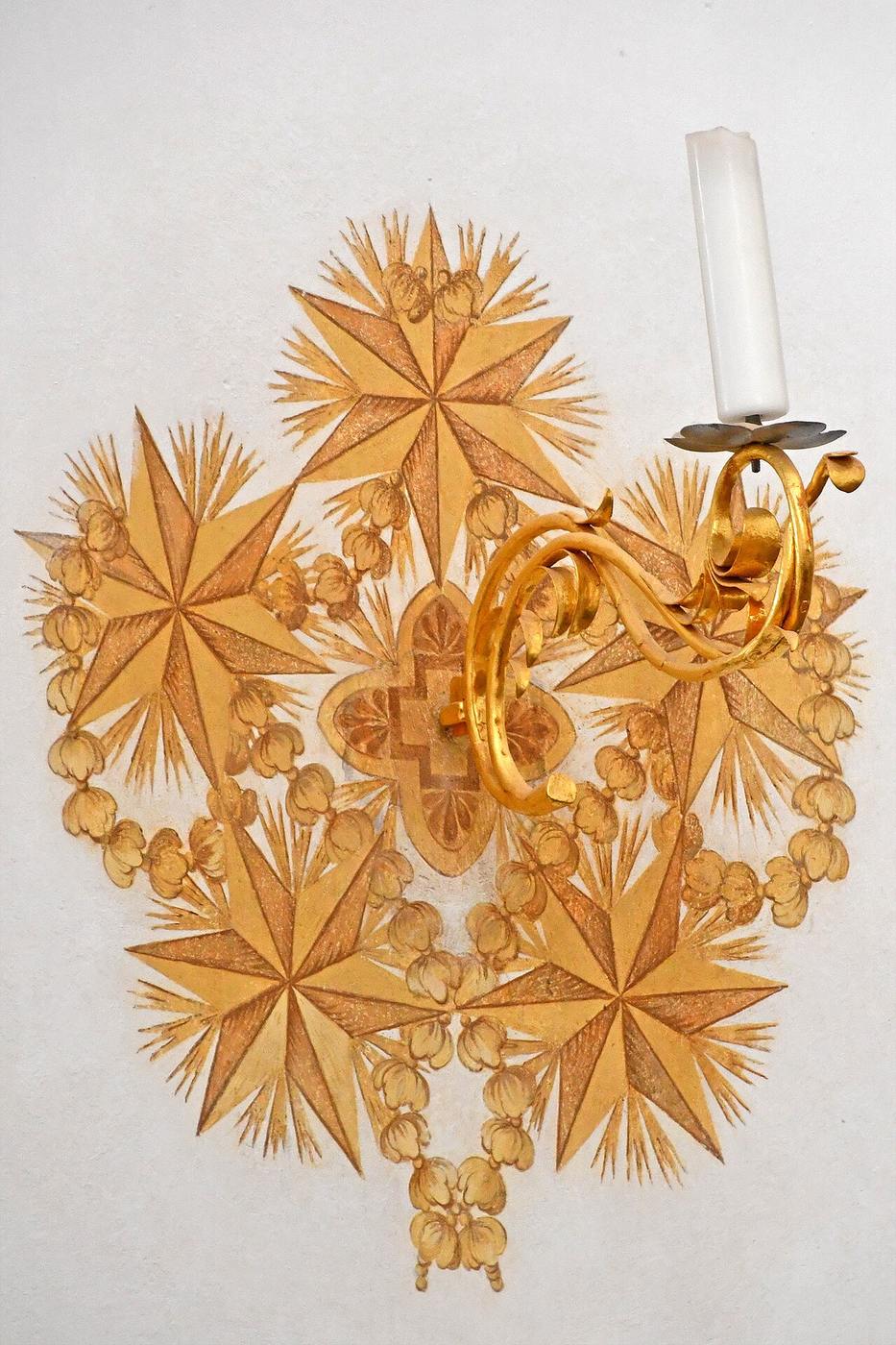
Stars appear everywhere once you start looking for them: in the railings of the galleries, in the metalwork of the candlesticks, in the plasterwork. In July and August a separate short visit, ‘To the top’, takes you up 60 steps to the first and second-floor galleries, for the view down into the church, the organ, and the landscape outside.
Fire, a cemetery, and restoration
The pilgrimage church flourished for barely sixty years. On 16 July 1784 a fire in the monastery spread to the hill and destroyed the roof of the church and the cloister, and two months later the monastery was dissolved under Joseph II’s reforms. Local people covered the church with boards to save it, and it was later re-roofed through the efforts of the priest Matěj Sychra, but the authorities allowed repairs only on condition that it served as the town’s cemetery church, and the cloister was used for burials. The roof was rebuilt in a simpler form.
The hill was planted with trees in the nineteenth century, and the church was hidden in woodland until the trees were cleared in 2006–07. The church passed to the state under communism; it was returned to the parish in 2014, and between 2016 and 2024 the church and cloister were restored, the cloister roofs renewed and copies of the angels over the main gate, lost in 1784, put back.
Žďár and the Santini trail
Below the hill is the former Cistercian monastery, now the Žďár chateau of the Kinský family, with its basilica of the Assumption, which Santini rebuilt in his Baroque-Gothic style, a museum and a Santini exhibition. The same parish also runs the Lower Cemetery, another Santini design. With a car, the Santini trail continues to his churches at Obyčtov, Horní Bobrová and Zvole nearby, all on the official website.
Getting there
Žďár nad Sázavou is on the railway between Prague and Brno, about an hour from Brno and two to two and a half hours from Prague, some trains needing a change at Havlíčkův Brod. The church is about 4 km from the station, on the far side of the town; town buses run from the bus station to the stops Sychrova or Zelená hora, hřbitov. By car, there is room for only five cars at the church; park at the chateau and walk.
It is an easy detour between Prague and Brno, and a natural pairing with the Santini church at Sedlec in Kutná Hora, his other great Baroque-Gothic work.
Plan your visit
Tickets are sold at the gate; groups book on the official website.
Some links are affiliate links. They cost you nothing extra and help keep this guide independent.
Frequently asked questions
Common questions
Can you visit Zelená Hora without a guide?
No. The church is shown only on guided tours, which leave from the main gate on the hour and last 45 minutes. Tickets are 150 Kč for adults and 120 Kč for students under 26, seniors and children. You can walk the grounds outside the cloister freely.
When is Zelená Hora open?
Daily from May to September, 9am to 5pm, with the first tour at 9am and the last at 4pm (3pm on Saturdays). In April and October it opens at weekends and on holidays, 9am to 5pm, and in November at weekends until 4pm. From November to March there are short 30-minute tours on Tuesdays and Thursdays at 10am, noon and 2pm.
Are tours of Zelená Hora in English?
Regular tours are in Czech, with printed texts for visitors who do not speak it. Groups of more than ten can book a tour in English or German in advance, at 300 Kč a person.
Why is the church shaped like a star?
By legend, five stars appeared over the water where John of Nepomuk was drowned in Prague in 1393. The architect, Jan Blažej Santini-Aichel, built the whole church on the number five: a five-pointed star inside a cloister with five gates and five chapels.
How do you get to Zelená Hora?
It is on the edge of Žďár nad Sázavou, on the railway between Prague and Brno. The church is about 4 km from the station; town buses stop at Sychrova or Zelená hora, hřbitov, a short walk away. There is only a very small car park at the church.