
Chartres Cathedral
For many people who love medieval churches, Chartres is the one. It was rebuilt almost entirely in a single campaign after a fire in 1194, and it has come down to us with more of its original stained glass than any other great cathedral: whole walls of the deep ‘Chartres blue’, the sculpture of three great porches, and a labyrinth in the floor. It is free, open all day, and an hour by train from Paris. What visitors miss is the timing: the labyrinth is only uncovered on certain Fridays, and the treasury and the tour of the roofs are run separately, for a small fee.
A cathedral built around a relic
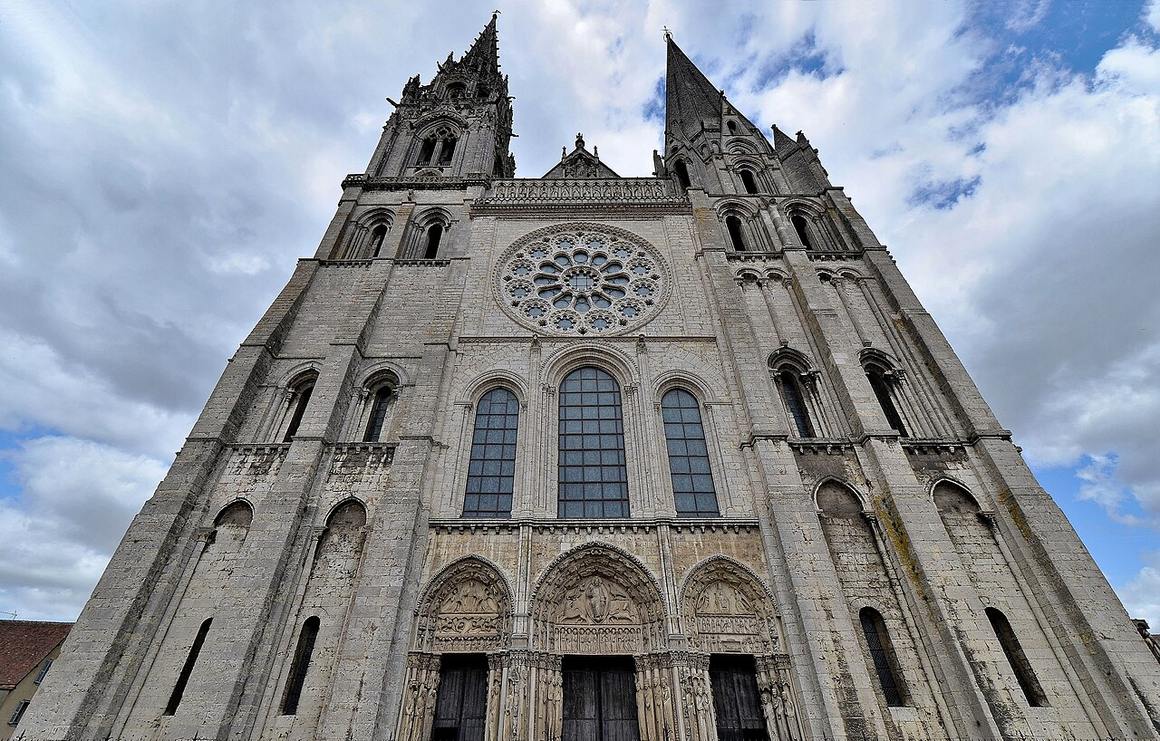
There was a cathedral at Chartres by the fourth century, and it was rebuilt again and again after fire. In 876 the emperor Charles the Bald gave it the relic that made its fortune: the Sancta Camisa, a length of silk venerated as the tunic or veil worn by the Virgin Mary. Pilgrims came from all over Europe. In 1020 Bishop Fulbert began a great Romanesque cathedral on the site, with a vast crypt underneath, and in the twelfth century its west front was rebuilt with the Royal Portal and the two towers.
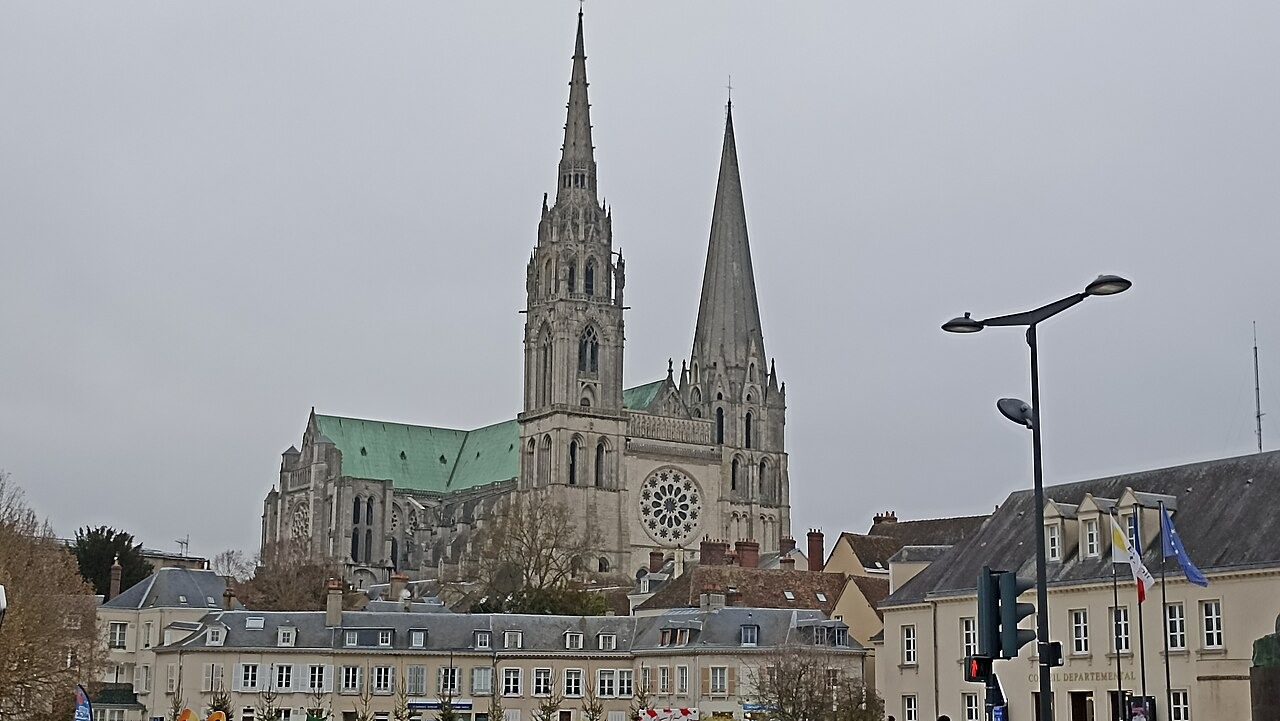
On the night of 10 June 1194 fire destroyed the town and almost all of the cathedral. Only the crypt, the west towers and the Royal Portal between them survived. For three days it was thought that the Sancta Camisa had been lost; then the clergy who had carried it into the crypt came out with it unharmed. The survival was taken as a sign that the Virgin wanted a new and grander church, and it was built with astonishing speed. Most of the present cathedral went up between 1194 and about 1220, which is why it is so coherent: one design, one generation, and glass and sculpture made for it from the start. It was consecrated in 1260.
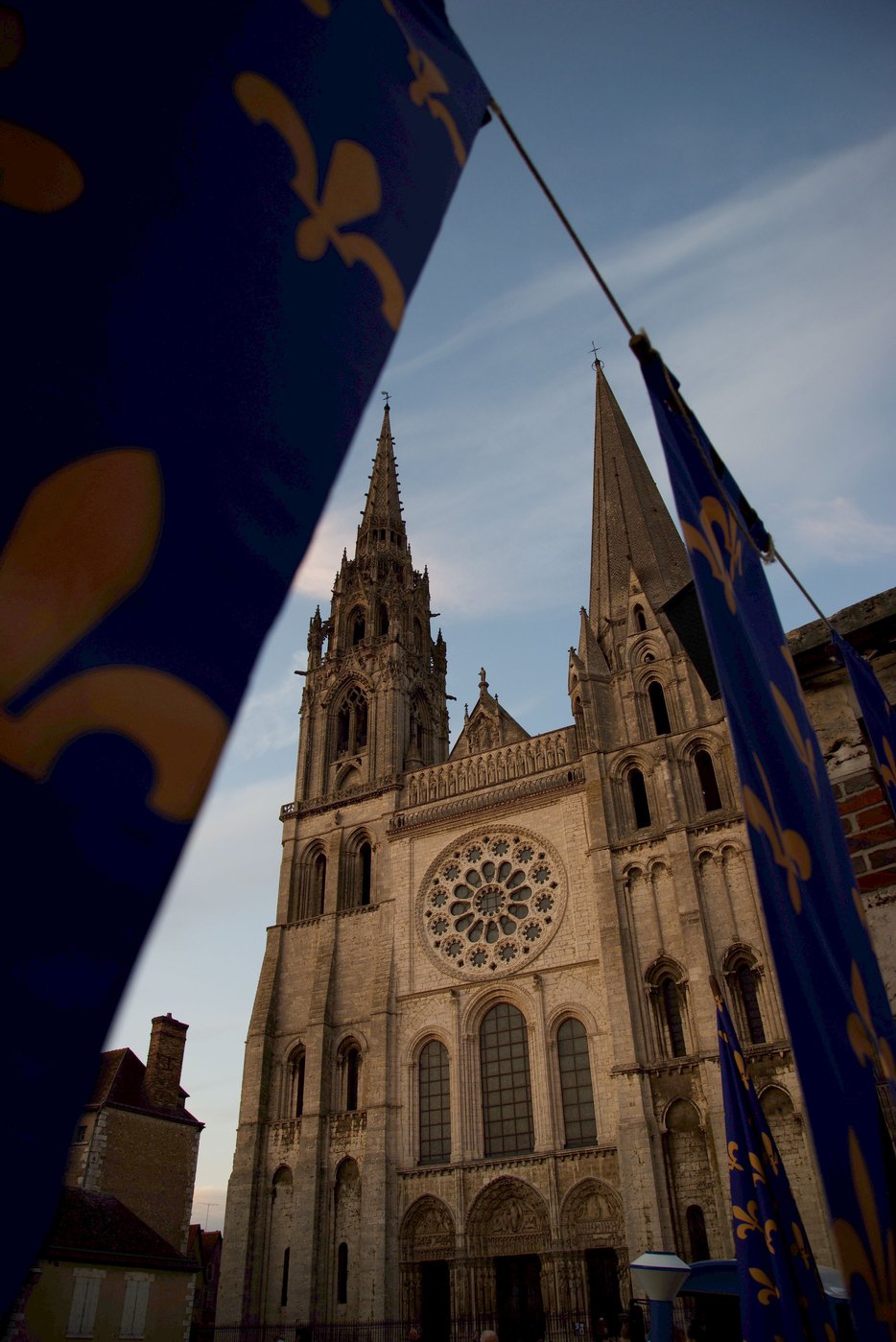
Chartres was spared the worst of what happened to other French cathedrals. The Wars of Religion passed it by, the Revolution damaged it less than most, and in 1594 it was the scene of the coronation of Henri IV, the only French king crowned here, because Reims was held by his enemies. A fire in 1836 destroyed the timber roof, which was replaced by the iron frame and the green copper roof you see now. In the Second World War the glass was taken out and hidden, and put back afterwards. The cathedral has been on the UNESCO World Heritage list since 1979.
The visitor’s cheat sheet
| Where | 16 Cloître Notre-Dame, 28000 Chartres, a ten-minute walk from Chartres station |
|---|---|
| Opening hours | Every day, 8.30am–7.30pm. Last access 7.15pm. Some later summer evenings, until 10pm |
| Admission | Free. Visitors are asked not to walk about the nave during Mass |
| Treasury and tours | €7 with the Centre des monuments nationaux, free for under-18s and EU residents aged 18–25. Treasury in the Saint-Piat chapel, closed Sunday mornings. Heights tour in English Tuesday, Thursday and Saturday at 10.30am |
| Labyrinth | Uncovered on Fridays, 10.30am–5pm, from Lent to All Saints |
| Getting there | Train from Paris-Montparnasse, a little over an hour |
| How long | Two hours at least; half a day with the treasury, a tour and the old town |
Hours and admission checked against the official site in September 2026. They change; the official site is always the last word.
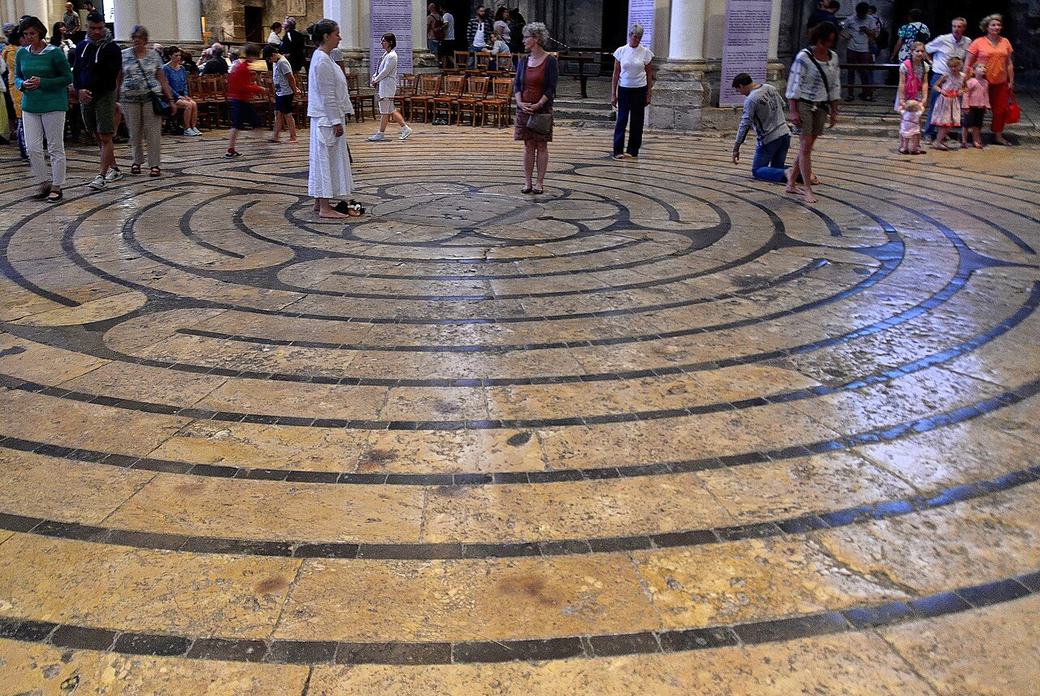
Go on a Friday if you want the labyrinth. The cathedral is free and open every day from 8.30am to 7.30pm, and needs no booking. But the labyrinth in the nave floor is covered with chairs most of the time and is uncovered only on Fridays, from 10.30am to 5pm, between Lent and All Saints. For the treasury and the roofs, the Centre des monuments nationaux sells a €7 ticket; the tour of the heights in English is on Tuesday, Thursday and Saturday mornings.
The two spires and the Royal Portal
From the square the first thing you notice is that the spires do not match. The south spire, on the right, is Romanesque, of about 1160: a plain stone octagon 105 metres high, often called one of the most perfect spires ever built. The north spire, on the left, is 113 metres and a Flamboyant Gothic lacework, added between 1507 and 1513 by Jehan de Beauce after lightning destroyed its wooden predecessor.
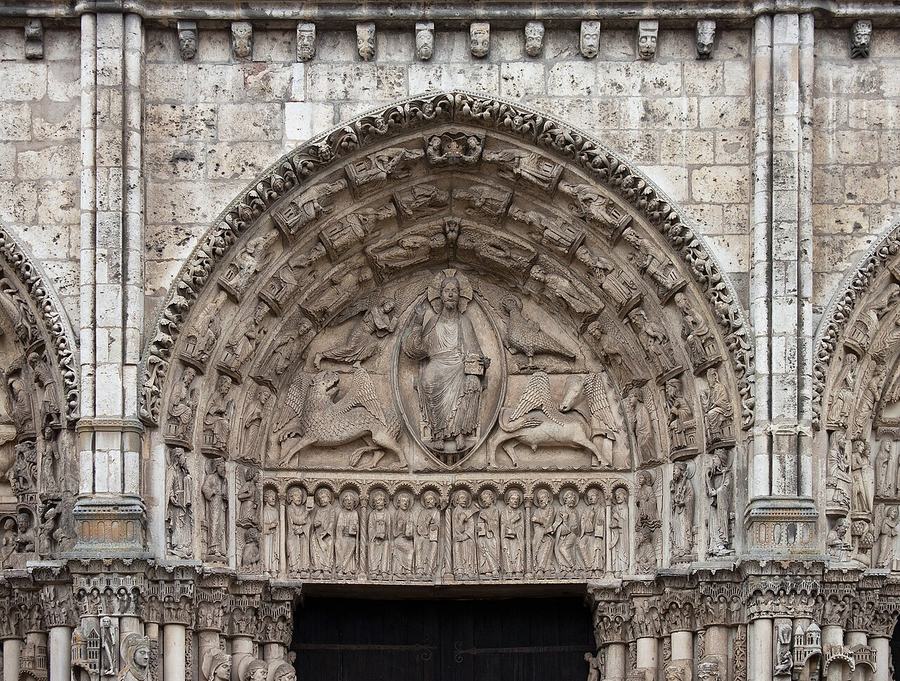
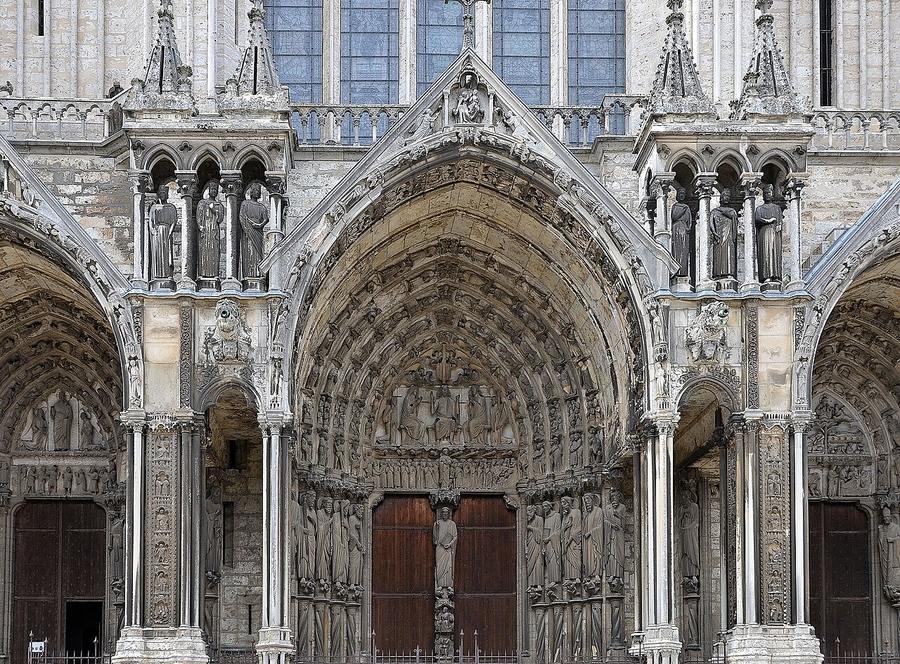
Between them is the Royal Portal, carved around 1145–1155 and one of the first great works of Gothic sculpture. Over the central door Christ sits in majesty among the symbols of the four evangelists, with the apostles beneath and the elders of the Apocalypse in the arches. On the left is the Ascension; on the right the Virgin and Child, surrounded by the liberal arts, a reminder of the famous cathedral school of Chartres. Along the door jambs are the tall, slender column figures of the kings and queens of the Old Testament, elongated to fit the columns they belong to.
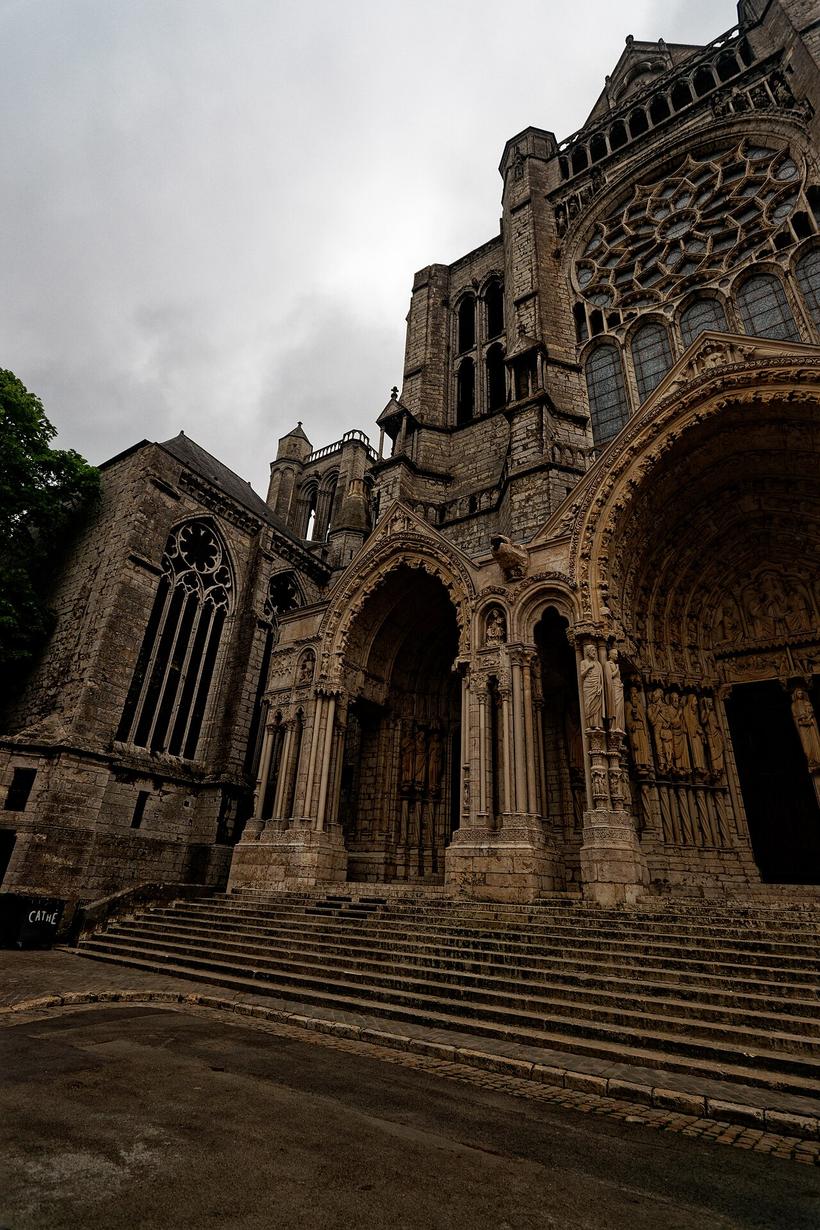
The north and south transepts each have a great porch of their own, of the early thirteenth century, with three portals and hundreds of figures. The south porch is devoted to the Last Judgement and the saints, the north to the Old Testament and the Virgin. Walk all the way round the outside before you go in.
The glass
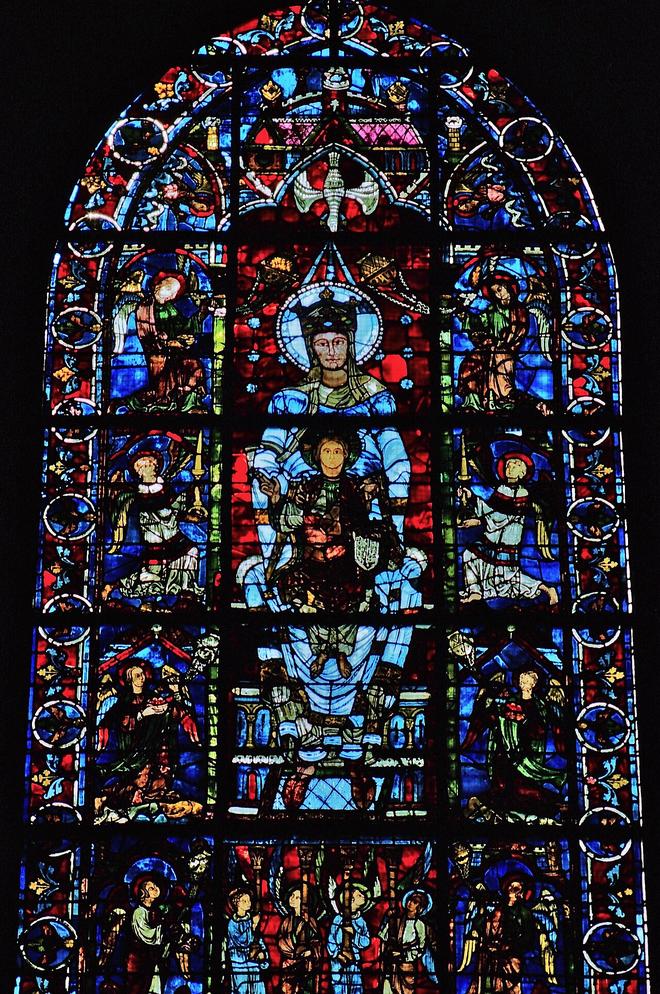
Inside, it takes a minute for your eyes to adjust. Chartres has more than 150 stained-glass windows, most of them from the first half of the thirteenth century, and together they make up one of the most complete sets of medieval glass in the world. The dominant colour is a deep blue, and on a bright day the walls glow with it. Bring binoculars: the windows were given by kings, nobles and the town’s trade guilds, and many of the small scenes at the bottom show the bakers, butchers, shoemakers and wine-sellers who paid for them.
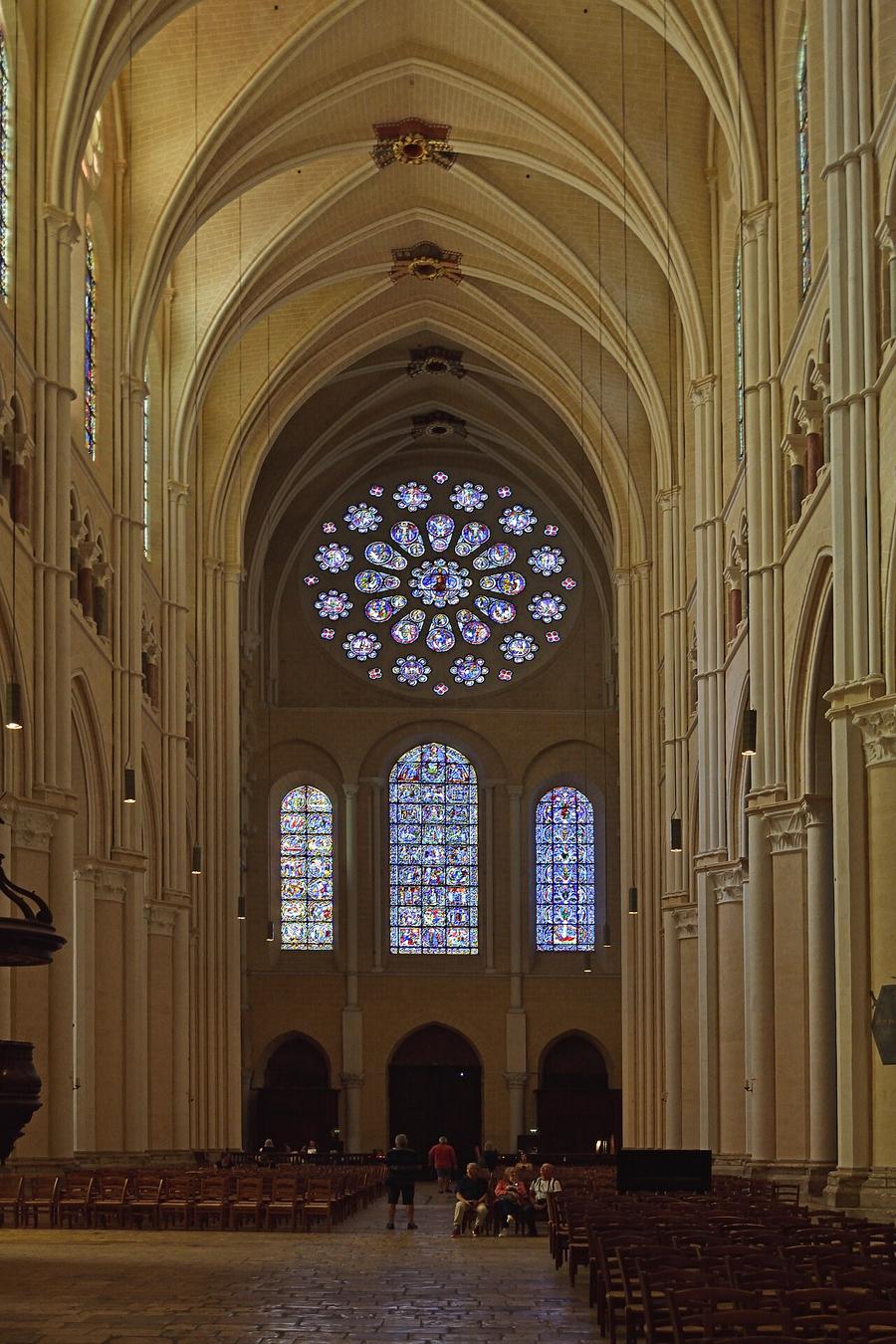
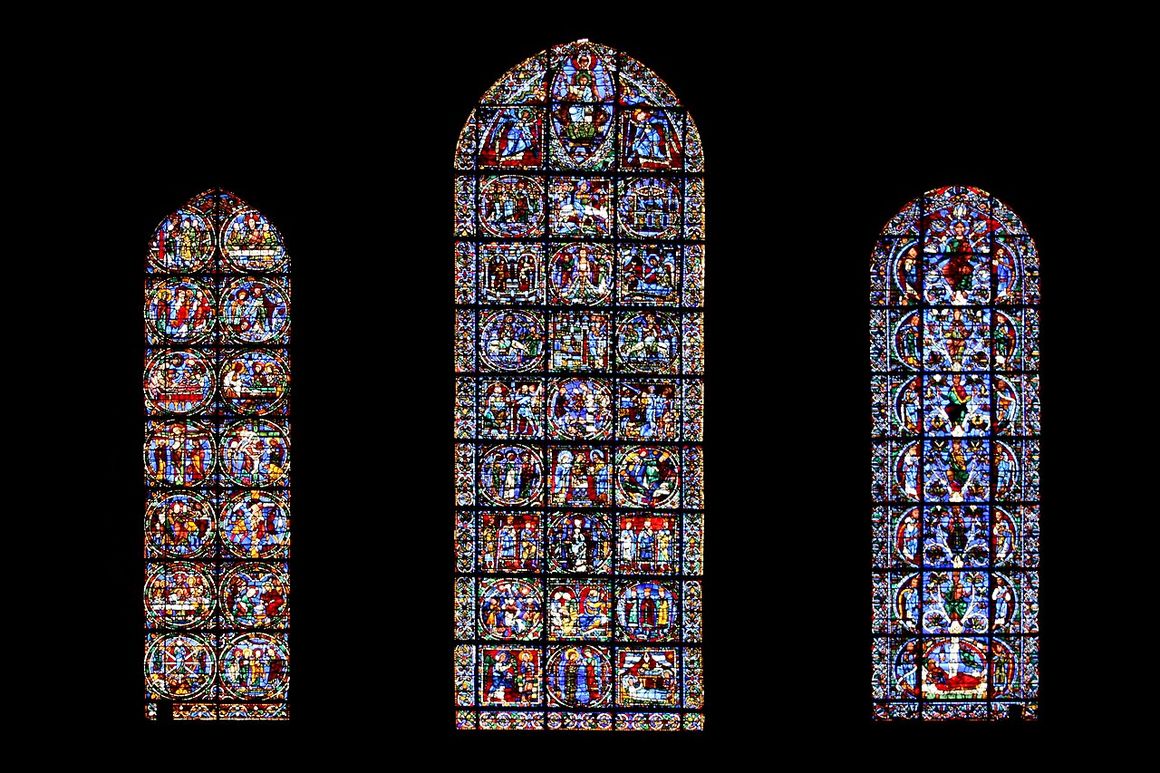
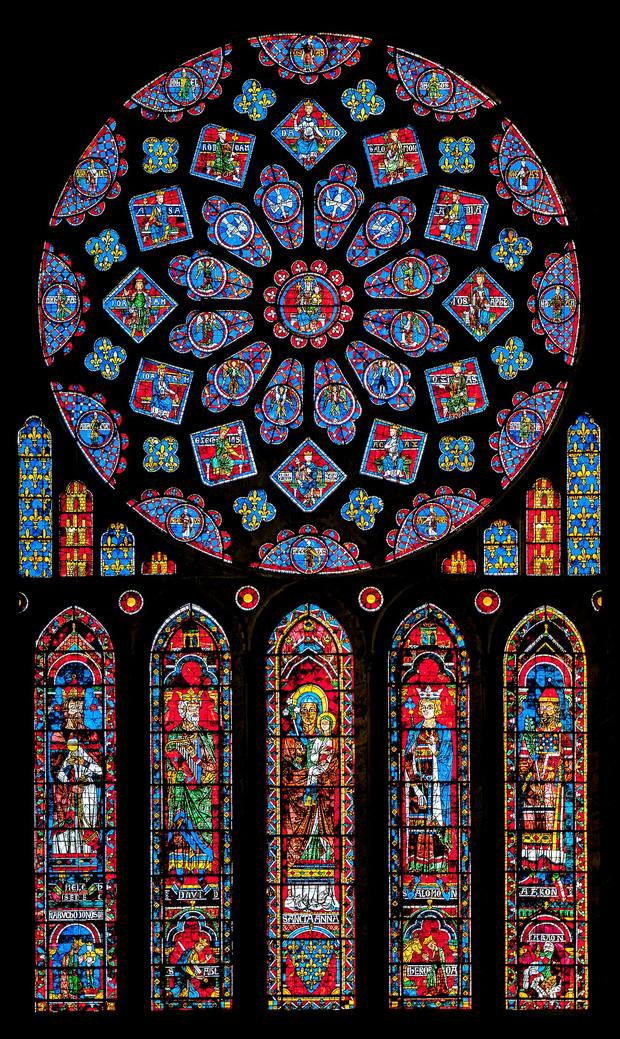
- The three west lancets, under the west rose, are older than the rest: about 1150, from the earlier cathedral, and they came through the fire. The right-hand one is the Tree of Jesse, Christ’s genealogy growing from the sleeping Jesse.
- Notre-Dame de la Belle Verrière, in the south ambulatory, is the most famous single image in the building: the Virgin and Child enthroned, from the twelfth-century cathedral, rescued from the fire and set into a new window around it.
- The north rose, the Rose of France, of about 1230, has the Virgin and Child at the centre, surrounded by doves, angels, the kings of Judah and the prophets. The fleurs-de-lis and castles are the arms of Louis IX and his mother, Blanche of Castile, who gave it.
- The south rose shows Christ of the Apocalypse, and below it the famous lancets of the four evangelists sitting on the shoulders of the four great prophets.
The restoration and the pale walls
If you knew Chartres before 2009, the inside will look very different. Between 2009 and the late 2010s the walls and vaults were cleaned of centuries of soot and repainted in the pale ochre wash, with painted false joints, that they had in the thirteenth century. Supporters point to the medieval evidence and to how much brighter the glass now looks against the walls. Critics, many of them, argued that it replaced a genuine, aged interior with a reconstruction. You can judge for yourself: the restoration is complete in most of the building.
The labyrinth
Set into the floor of the nave is the labyrinth, laid in the early thirteenth century and nearly thirteen metres across: a single winding path of more than 260 metres, with no dead ends, that leads to the centre. Walked slowly, often on the knees, it was a pilgrimage in miniature. For most of the year it is hidden under the chairs of the nave; from Lent to All Saints the chairs are cleared on Fridays, from 10.30am to 5pm, and visitors and pilgrims walk it together.
The choir screen, the Pillar and the Veil
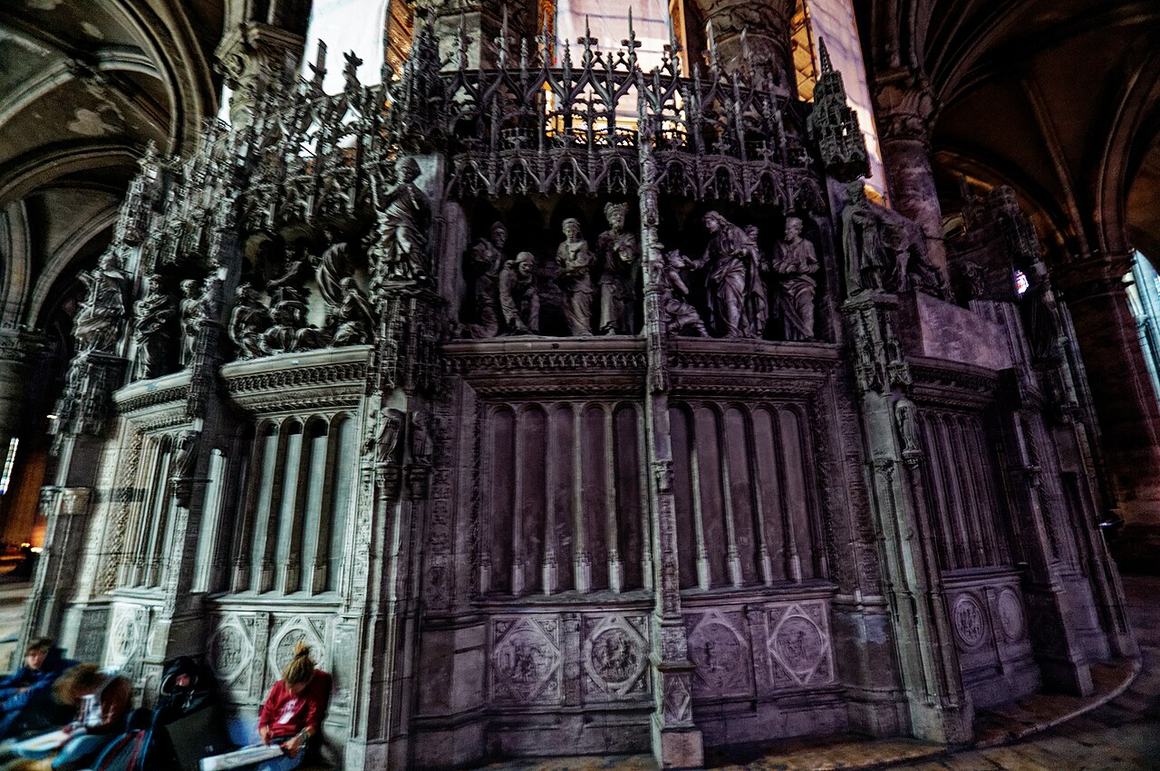
The choir is enclosed by a stone screen that is a whole second visit in itself. Begun by Jehan de Beauce in 1514 and not finished until the early eighteenth century, it tells the lives of the Virgin and Christ in forty groups with some two hundred figures, running round the ambulatory. Walk it from the south side, starting near the Belle Verrière.
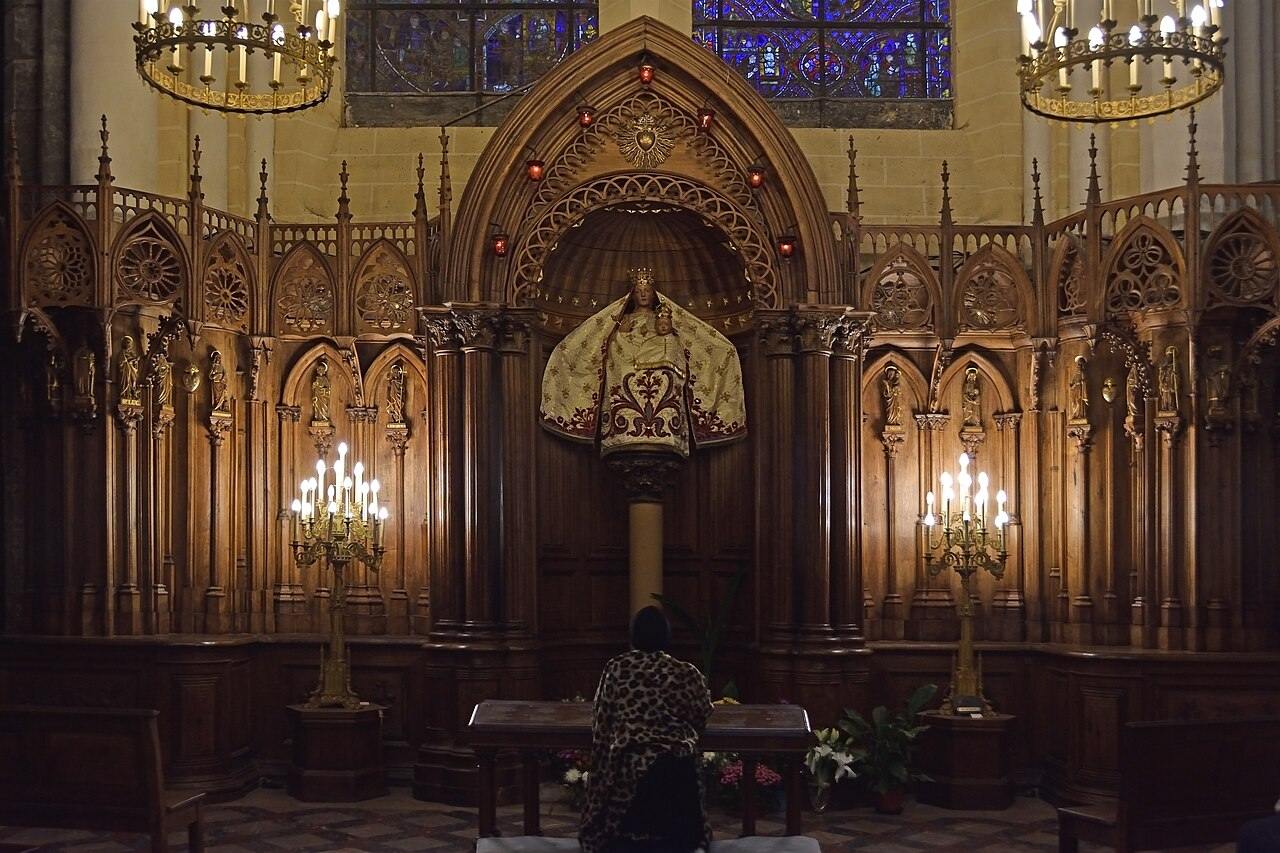
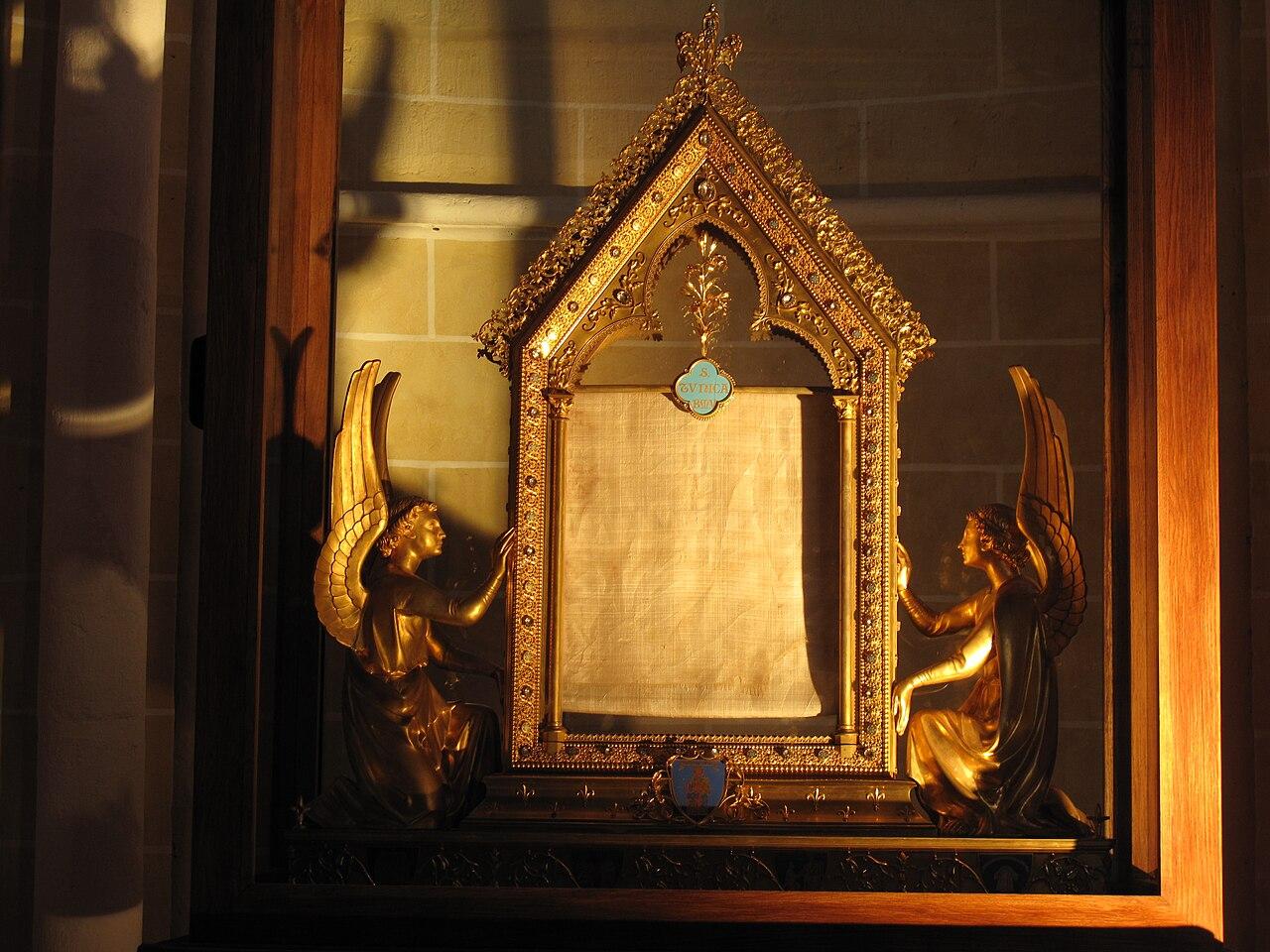
On the north side of the choir stands Notre-Dame du Pilier, a sixteenth-century wooden statue of the Virgin on a column, dressed in a mantle and surrounded by candles: the place where most pilgrims stop to pray. A little further east, in a chapel off the ambulatory, is the relic that made Chartres, the Sancta Camisa, displayed in a gilded frame.
The crypt
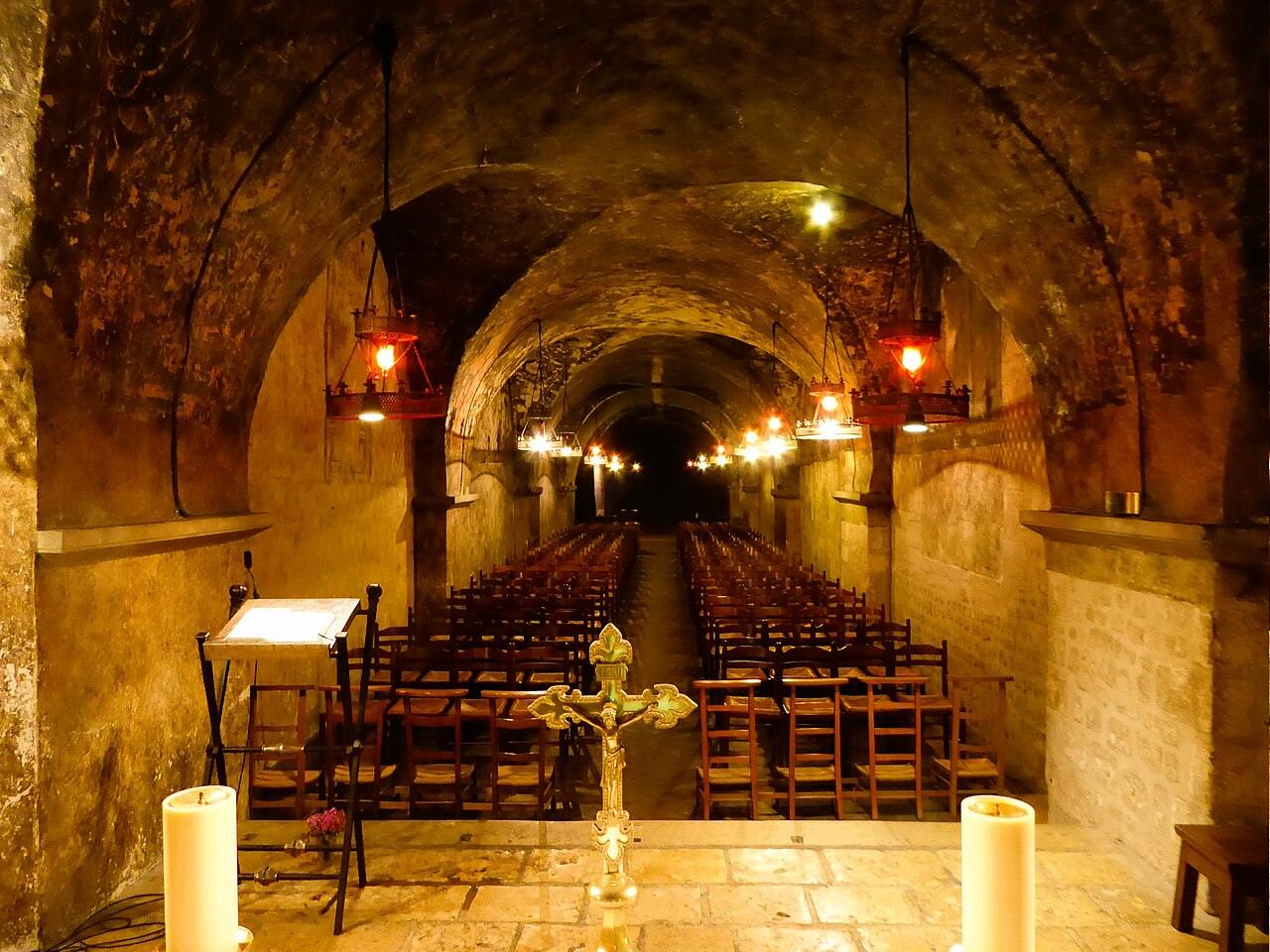
Under the cathedral is Bishop Fulbert’s crypt of 1020, the largest in France: two long galleries, more than two hundred metres in all, that run under the aisles and round the east end. In it is the chapel of Notre-Dame-sous-Terre, with a modern statue of the Virgin replacing the ancient one burned in the Revolution, and the well of the Saints-Forts. The crypt is a place of prayer and pilgrimage rather than a sight, and access for visitors is limited; ask at the cathedral on the day.
The treasury and the heights
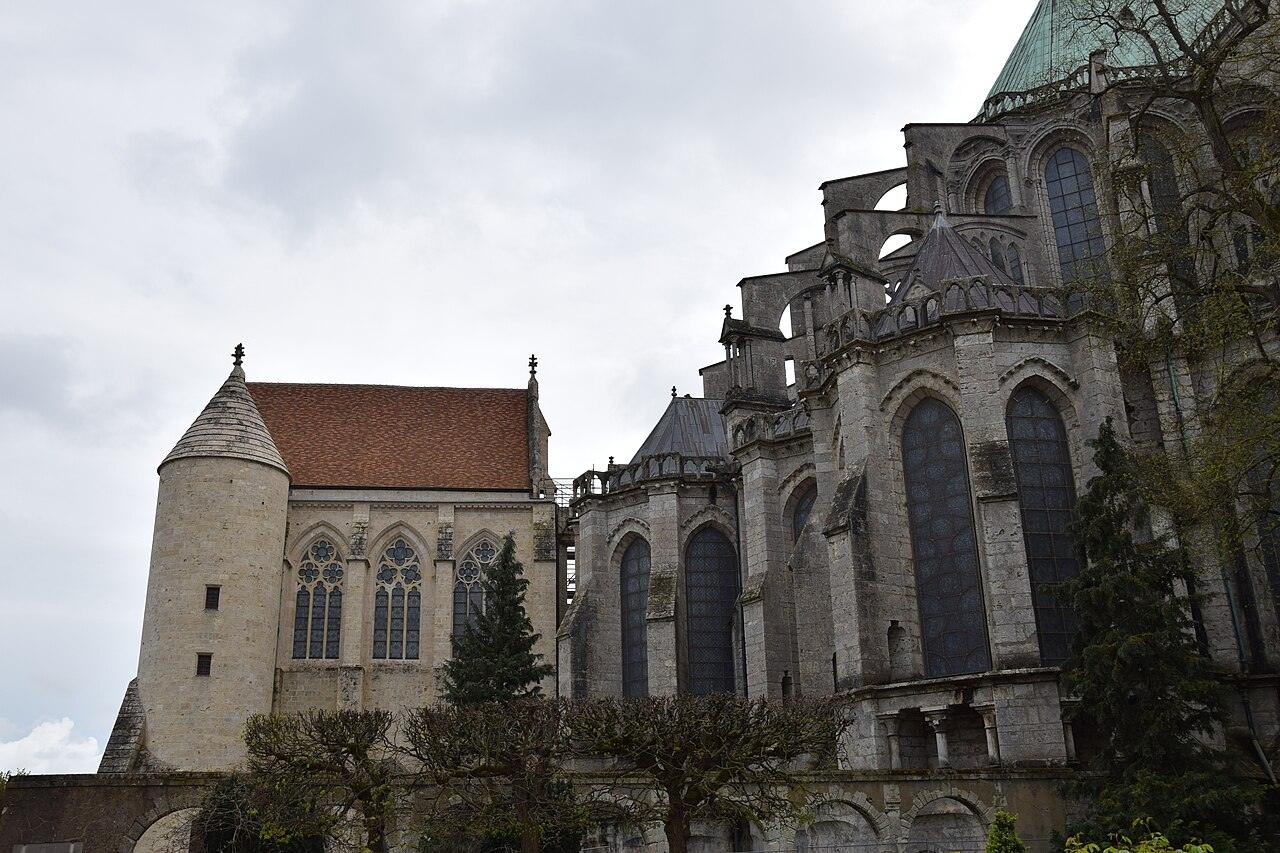
The cathedral’s treasury reopened in September 2024 in the Saint-Piat chapel, a fourteenth-century chapel attached to the east end, with around 150 objects: vestments, reliquaries, goldsmiths’ work and pieces of the old choir screen. It is run by the Centre des monuments nationaux and is closed on Sunday mornings.
The same €7 ticket covers the CMN’s guided tours. The one to book is the tour of the heights, in English on Tuesday, Thursday and Saturday at 10.30am: about two hundred steps, out onto the roof of the north transept and into the iron roof frame of 1837. The north tower, the Jehan de Beauce tower, is 300 steps and gives the best view over the town and the wheat fields of the Beauce.
When to go
For the glass, choose a bright day and go in the morning, when the sun is on the east end, or late in the afternoon for the west windows. On a heavy grey day the windows can look almost black. The cathedral is busiest from late morning, when the coach tours from Paris arrive, until mid-afternoon; if you come by an early train you will have the first hour largely to yourself. And if you can, make it a Friday between Lent and All Saints, for the labyrinth.
Chartres is still a pilgrimage church, and several times a year the pilgrims arrive in force. In 1912 the poet Charles Péguy walked here from Paris to pray for his son, and his route became a tradition: every year at Pentecost thousands of pilgrims walk the three days from Paris to Chartres, and on those days the cathedral belongs to them.
Getting there
Chartres is an easy day trip from Paris. Trains leave Paris-Montparnasse roughly every hour and take a little over an hour; from Chartres station the cathedral is a ten-minute walk up the hill. Allow time for the old town below the cathedral, on the river Eure, with its medieval houses and the church of Saint-Pierre, which has fine glass of its own. On summer evenings the cathedral and the town are lit up for Chartres en lumières, a good reason to stay the night.
Plan your visit
The cathedral is free. For the treasury and the tours, and somewhere to stay:
Some links are affiliate links. They cost you nothing extra and help keep this guide independent.
Frequently asked questions
Common questions
Is Chartres Cathedral free to visit?
Yes. The cathedral is free and open every day from 8.30am to 7.30pm. The treasury and the guided tour of the heights are run by the Centre des monuments nationaux and cost €7, free for under-18s and for EU residents aged 18 to 25.
When can you walk the labyrinth at Chartres?
The labyrinth is set in the floor of the nave and is usually covered with chairs. From Lent to All Saints it is uncovered on Fridays, from 10.30am to 5pm, and anyone can walk it.
How do you get to Chartres from Paris?
Trains run from Paris-Montparnasse to Chartres roughly every hour and take a little over an hour. The cathedral is a ten-minute walk uphill from Chartres station, and its spires are visible from the platform.
Can you climb the towers at Chartres?
The north tower, 300 steps, can be climbed, and there is also a guided tour of the heights that takes you onto the roof of the north transept and into the iron roof frame. Both are run by the Centre des monuments nationaux; the heights tour is given in English on Tuesday, Thursday and Saturday at 10.30am.
What is the Veil of the Virgin at Chartres?
The Sancta Camisa is a length of silk venerated as the garment worn by the Virgin Mary. It was given to the cathedral in 876 by the emperor Charles the Bald, and it made Chartres one of the great pilgrimage churches of Europe. It is displayed in a chapel off the north side of the ambulatory.