
Tintern Abbey, Wye Valley
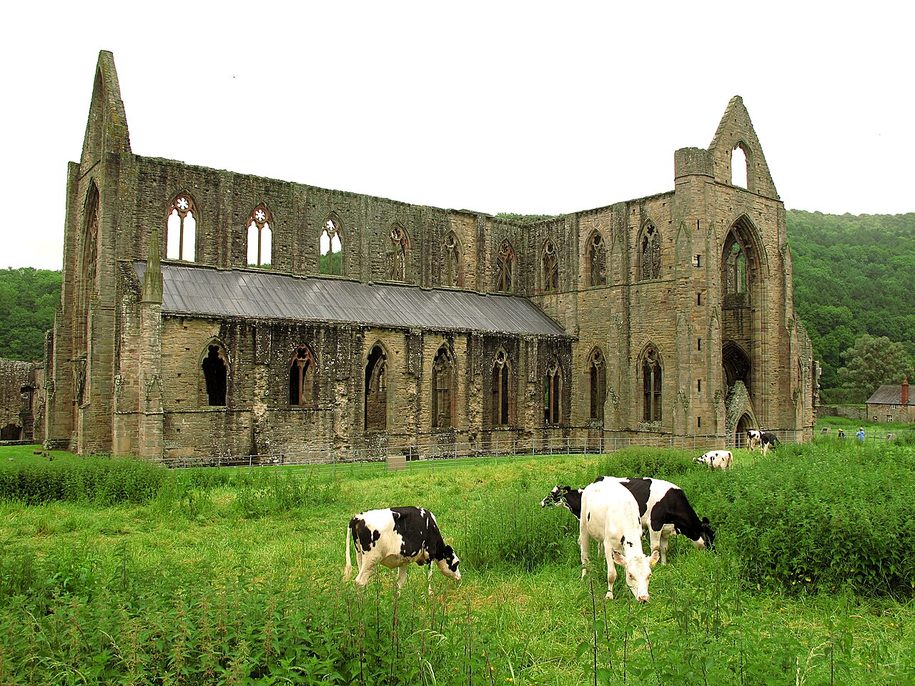
In a wooded bend of the River Wye, on the border between Wales and England, stands the most famous ruin in Wales. The great church of Tintern Abbey has lost its roof but almost nothing else: its walls, arcades and the empty frames of its huge windows still rise to their full height. For three centuries it has drawn painters, poets and tourists, and it is still one of the most beautiful places in Britain.
The first Cistercians in Wales
Tintern was founded on 9 May 1131 by Walter de Clare, Lord of Chepstow, for Cistercian monks from L’Aumône in France. It was the first Cistercian abbey in Wales and only the second in Britain. The Cistercians wanted remote places, simple buildings and a life of prayer and work, and the valley of the Wye gave them all three.
Little of the first, smaller abbey survives. In the thirteenth century the monks rebuilt almost everything, finishing with the great church, which was begun in 1269 and consecrated in 1301, largely paid for by Roger Bigod, Earl of Norfolk. On 3 September 1536 Abbot Wych surrendered the abbey to Henry VIII’s commissioners; the lead was stripped from the roofs and the buildings were left to decay.
The visitor's cheat sheet
| Where | Tintern, Monmouthshire, NP16 6SE |
|---|---|
| Getting there | On the A466 about 5 miles north of Chepstow (nearest station); buses along the Wye Valley; pay-and-display car park by the abbey |
| Opening hours | 1 March–31 October 9.30am–5pm (to 6pm in July and August); 1 November–28 February 10am–4pm; last admission 30 minutes before closing |
| Admission | Adults £9.40, seniors £8.40, children and students £6.50 (Sept 2026–March 2027, reduced during conservation work); under-5s and Cadw members free |
| How long | An hour to an hour and a half |
| Best time | Early morning or late afternoon, when the light comes low through the empty windows |
| Dress code | Outdoor shoes; gravel and cobbles |
| Tours | Self-guided; shop and toilets on site; dogs on leads welcome |
Hours and admission checked against the official site in October 2026. They change; the official site is always the last word.
The Wye Tour. In the later eighteenth century, tourists floated down the Wye in hired boats in search of the ‘picturesque’, and Tintern was the climax of the trip. Turner painted it, and in 1798 Wordsworth wrote his ‘Lines Composed a Few Miles above Tintern Abbey’.
What to see, in the order you meet it
The west front
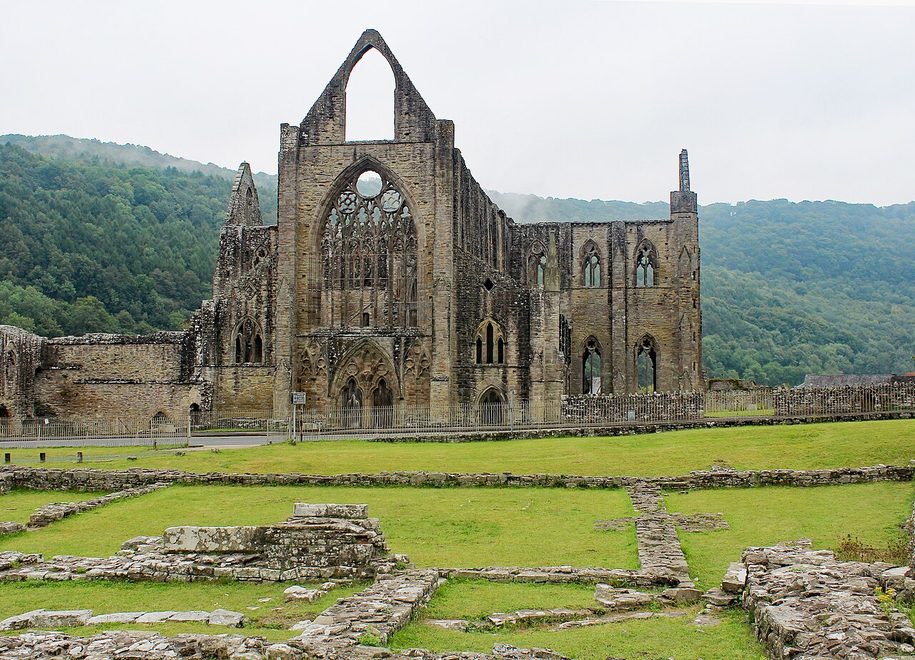
You approach the church from the west, where the front of around 1300 is filled by a seven-light window in the Decorated Gothic style. Walk through the doorway below it into the nave.
The church
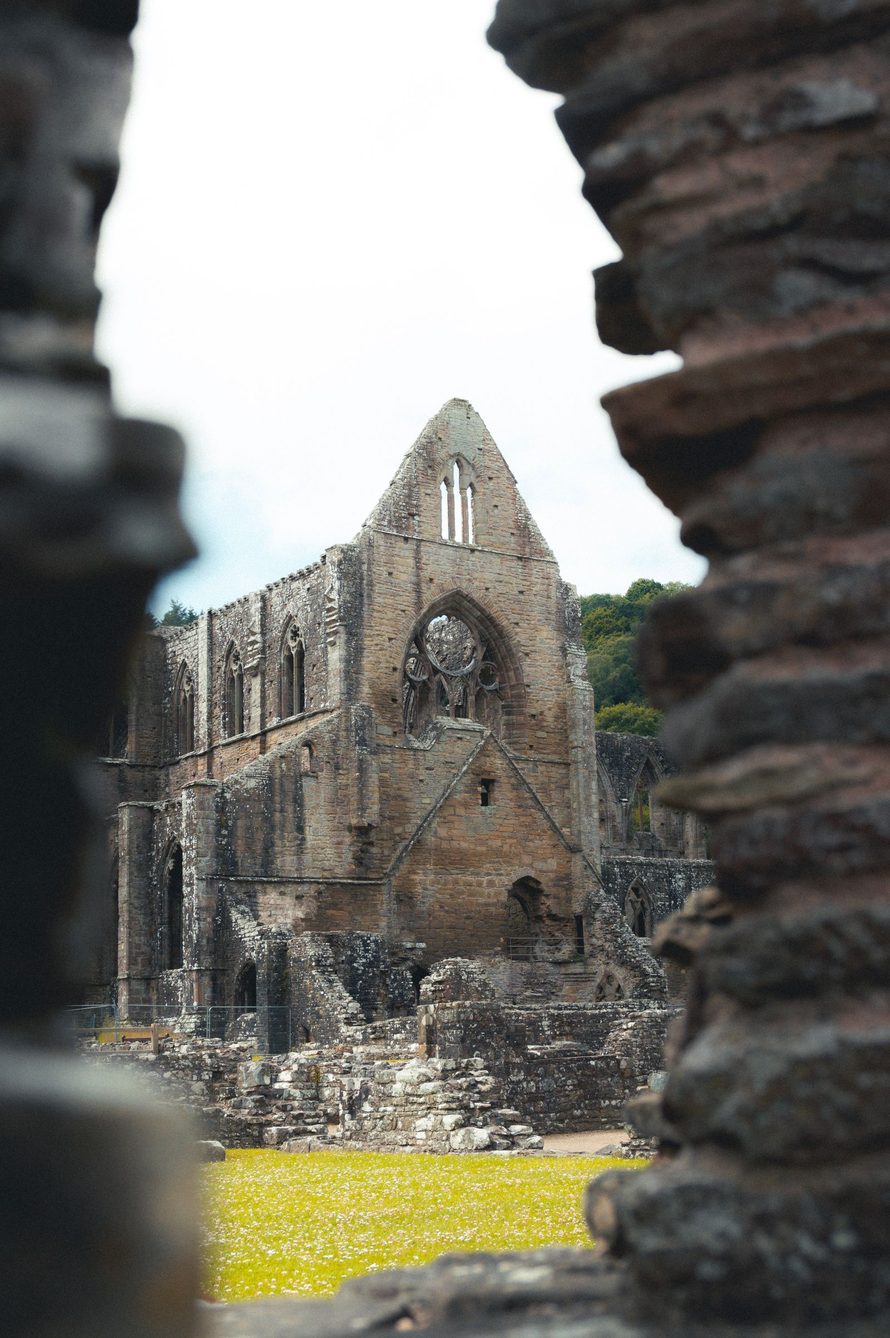
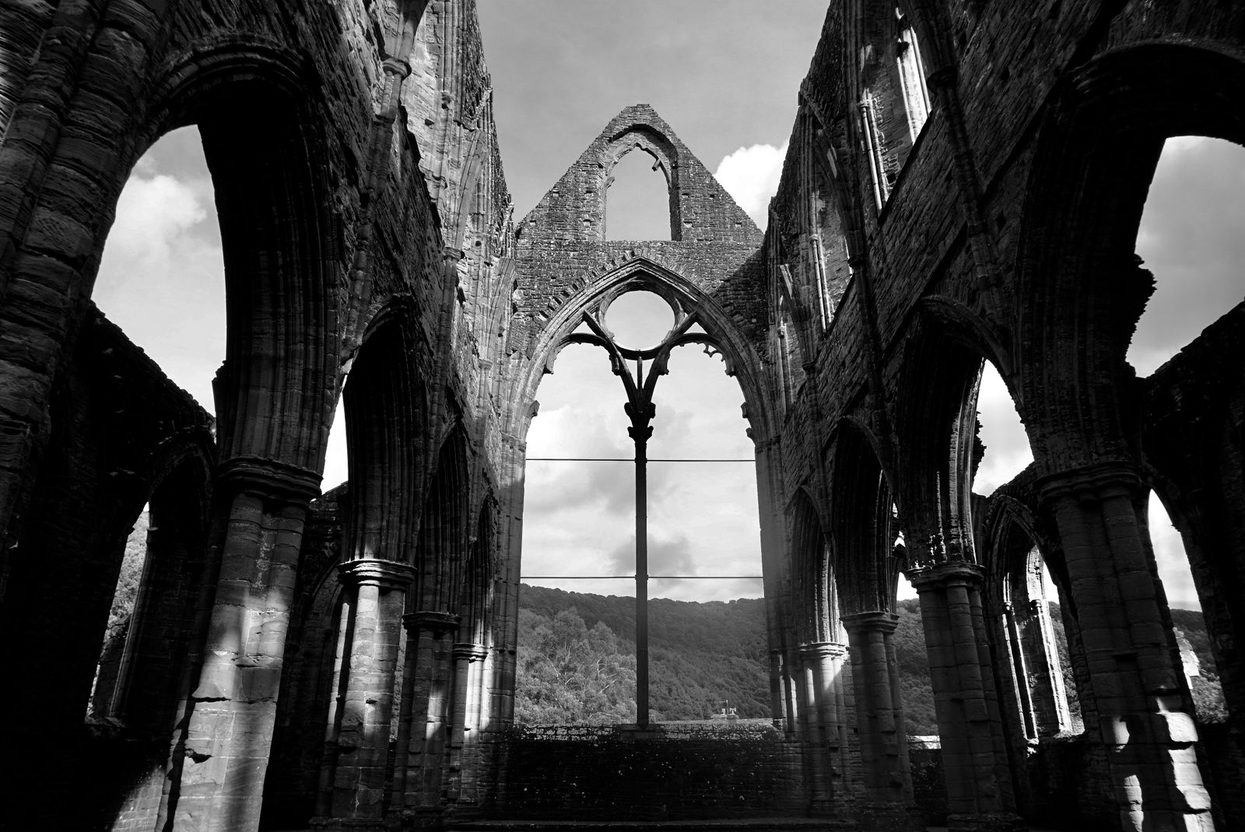
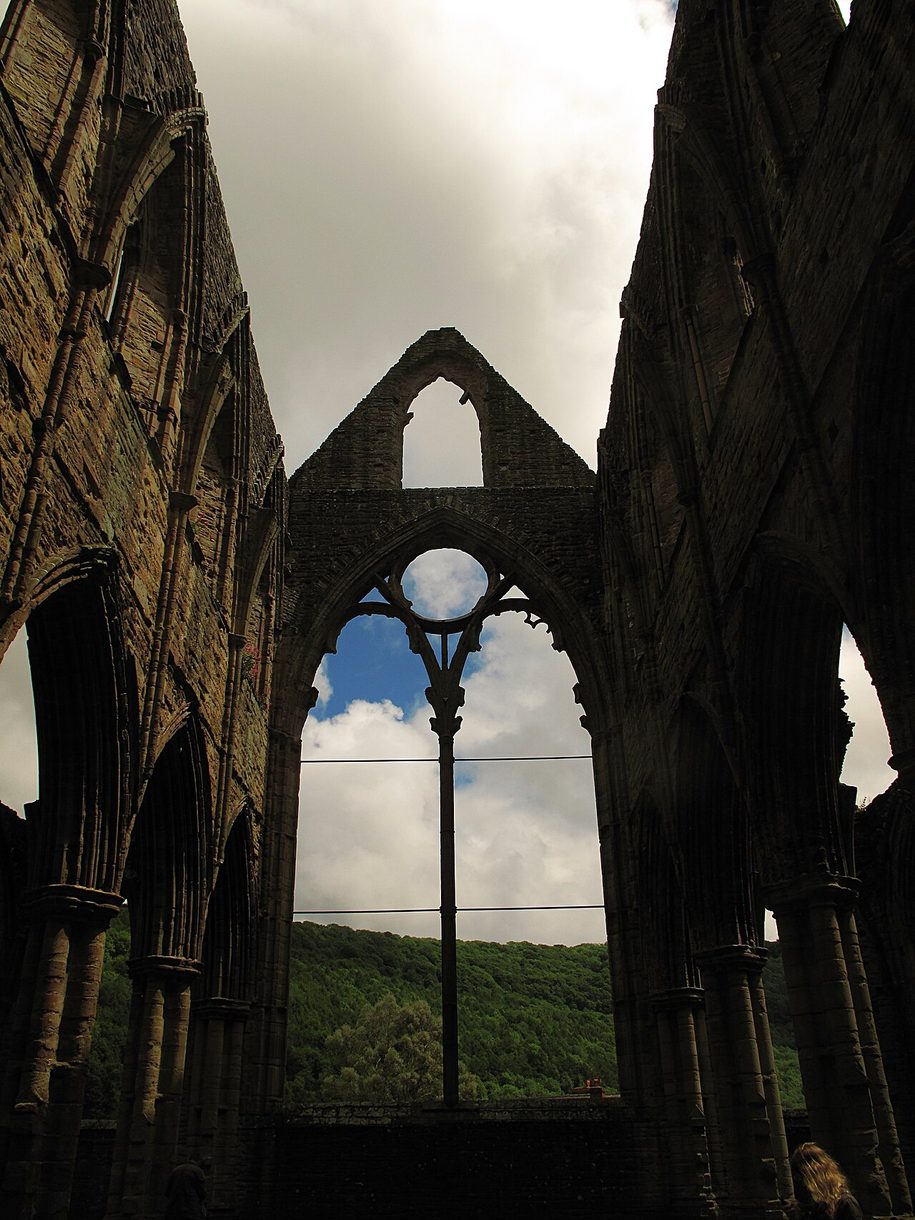
Inside, the church is a vast open space under the sky: a nave of six bays, transepts with two chapels each, and a four-bay presbytery ending in the great east window, of which only the central mullion remains. It is built of Old Red Sandstone, purple, buff and grey, and is 228 feet long.
The cloister and the monastic buildings
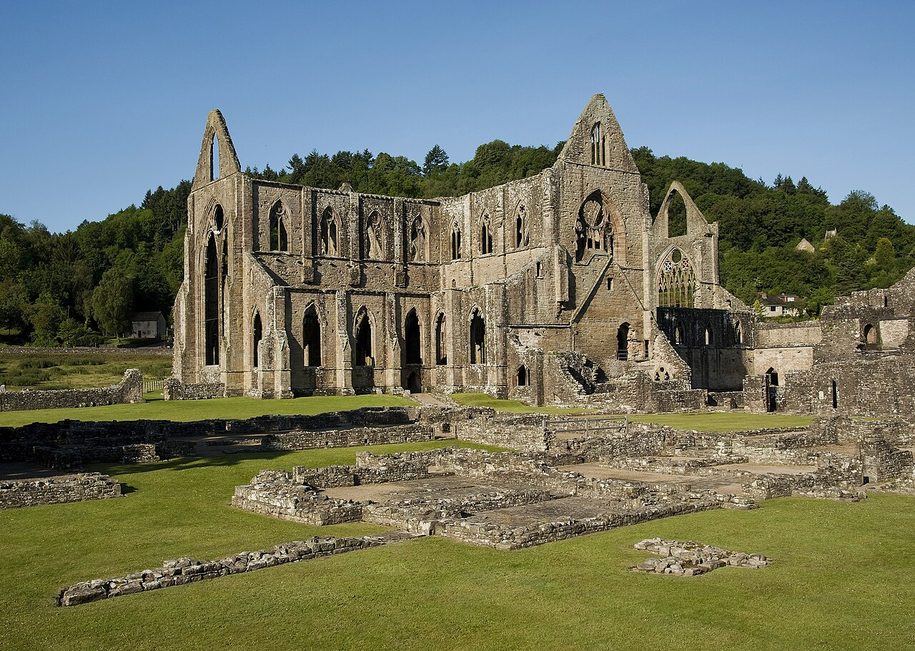
North of the church are the remains of the cloister and the rooms around it: the book room and sacristy, the chapter house where the monks met each day, the dormitory range, the refectory and the kitchens, and further off the infirmary. The walls are lower here, but the plan is easy to follow.
The valley
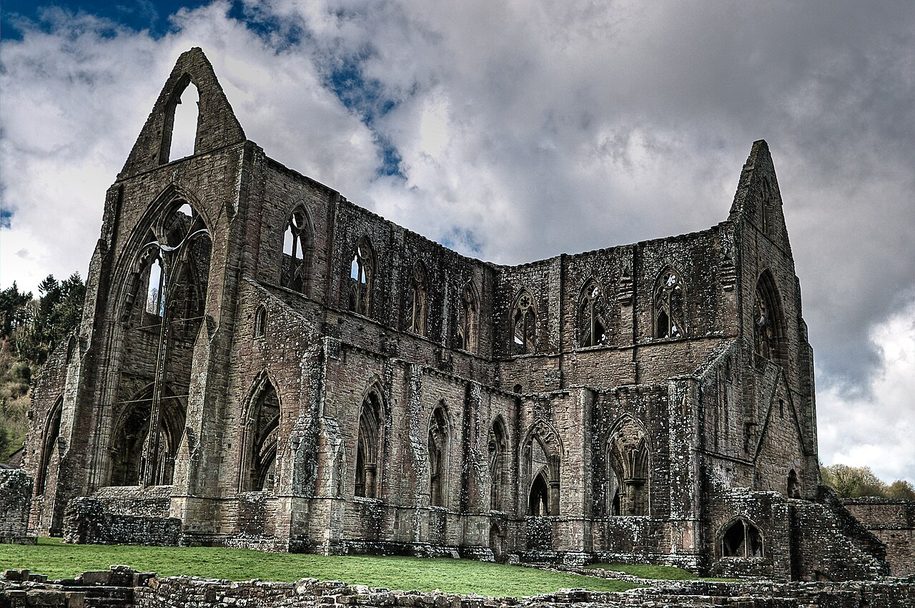
For the best view of the abbey in its setting, cross the footbridge over the Wye and climb through the woods on the English side to the Devil’s Pulpit, a rock high above the river on Offa’s Dyke Path.
Visiting
Tickets
Tickets are sold on site and through Cadw. Adults pay £9.40 until March 2027, a reduced price while scaffolding is up for conservation work.
The hotel link goes to Booking.com. This site earns nothing from it at present — it is here because it is the quickest way to check what is actually available.
Don't miss
- The west window Seven lights of Gothic tracery.
- The east window A single mullion against the sky.
- The book cupboards Survivors of the first abbey, in the cloister.
- The chapter house Where the monks met each day.
- The Devil’s Pulpit The view from across the river.
- The village Pubs and riverside walks.
Insider tips
Come early or late. Tintern is busy on summer afternoons. Arrive at opening time or in the last hour, when the low sun lights the sandstone. Chepstow Castle, at the mouth of the Wye, makes a good pairing on the same day.
Common questions
How much does it cost to visit Tintern Abbey?
Tintern is run by Cadw. From September 2026 to March 2027 an adult ticket is £9.40, seniors £8.40 and children and students £6.50, with family tickets available and under-5s free; the prices include a 10% reduction while conservation work is going on. Cadw members go free.
When is Tintern Abbey open?
From 1 March to 31 October it opens at 9.30am and closes at 5pm (6pm in July and August); from 1 November to 28 February it is open from 10am to 4pm. Last admission is 30 minutes before closing. It is closed on 24–26 December and 1 January.
Is there scaffolding at Tintern at the moment?
Yes. Cadw has scaffolding up for essential repairs to the sandstone of the church’s upper walls, and ticket prices are reduced while it is there. Expect some views to be partly blocked.
Why is Tintern so famous?
It was the first Cistercian abbey in Wales, founded in 1131, and its great Gothic church survives almost complete except for its roof. In the eighteenth century it became a highlight of the Wye Tour, and it was painted by Turner and celebrated by Wordsworth.
How do you get to Tintern Abbey?
Tintern is on the A466 in the Wye Valley, about five miles north of Chepstow, the nearest railway station. Buses run along the valley between Chepstow and Monmouth. There is a pay-and-display car park beside the abbey.
Where to stay and eat nearby
Tintern village has pubs and tea rooms, and there are hotels in Chepstow and Monmouth.
More churches in Wales
- Llandaff Cathedral — Cardiff’s cathedral, an hour away
- St Davids Cathedral — the shrine of the patron saint of Wales
- Hereford Cathedral — across the border