
Kilpeck Church
In a quiet village near the Welsh border stands one of the most perfect Norman churches in England. Kilpeck is small and simple in plan, but it is covered in carving: a doorway alive with serpents, warriors and beasts, and a band of strange faces and creatures running round the eaves, among them the most famous sheela-na-gig in Britain. Almost all of it is as the sculptors left it, nearly nine hundred years ago.
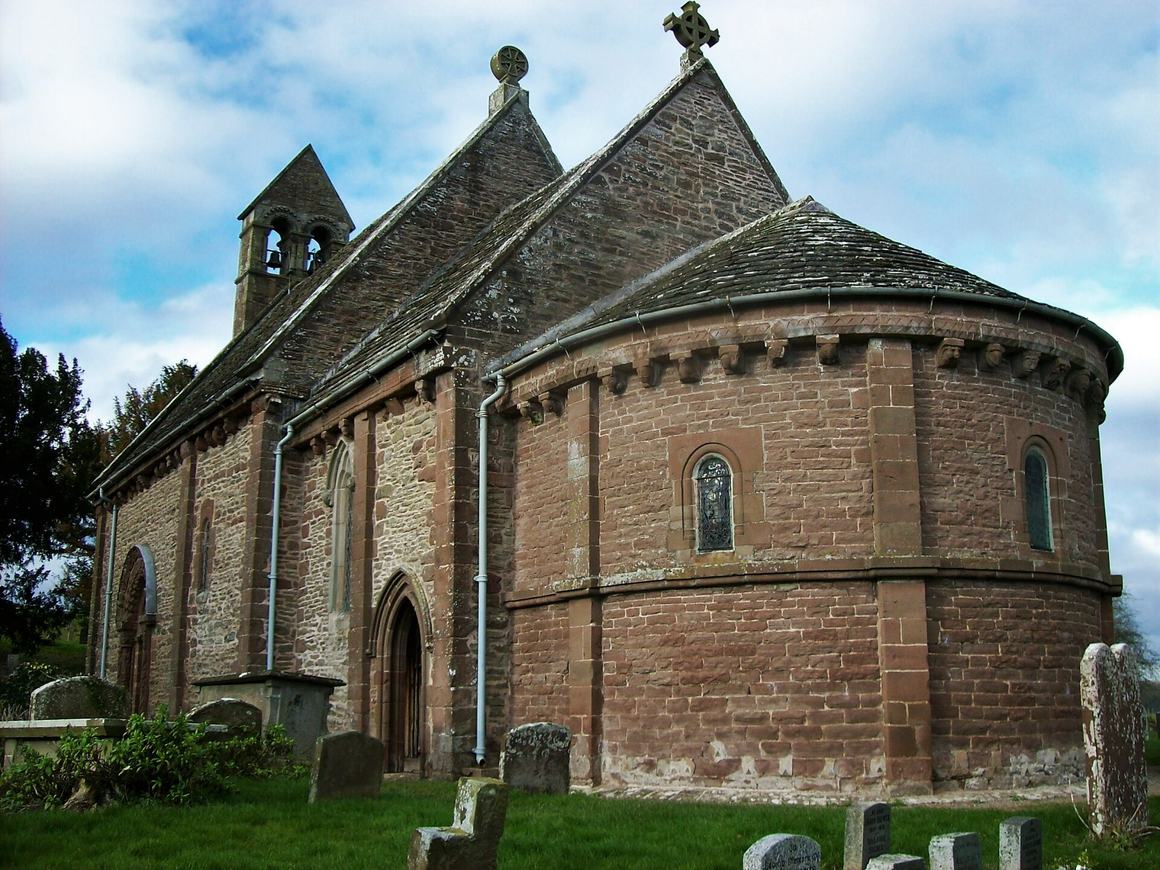
A Norman church in the Marches
The church of St Mary and St David was built in about 1134–40; in 1134 the church at Kilpeck was given to St Peter’s Abbey, Gloucester, now Gloucester Cathedral. It stands beside the earthworks of Kilpeck Castle, in what was then the frontier district of Archenfield, and the oval churchyard may be far older than the building. Its plan is the classic Norman one: a nave, a chancel and a rounded apse.
The carvings are the work of the Herefordshire School, a group of sculptors who also worked at Shobdon, Leominster and Rowlestone. One of the school’s patrons, Oliver de Merlimond, builder of Shobdon, had made the pilgrimage to Santiago de Compostela, and the carving draws on France and Spain, on Viking and Celtic art, and on the bestiaries. Why it survived the Reformation and the Puritans untouched is a mystery.
The visitor's cheat sheet
| Where | Kilpeck, Herefordshire, HR2 9DN, south-west of Hereford |
|---|---|
| Getting there | By car, off the A465 Hereford–Abergavenny road; parking by the churchyard gate |
| Opening hours | Every day: 9.15am–6.30pm from spring to autumn, 9.15am–5pm in winter |
| Admission | Free; donations welcome |
| How long | 30 to 45 minutes |
| Best time | Late afternoon sun, which brings out the carving on the south side |
| Dress code | No formal code; dress warmly, as the church can be cold inside |
| Tours | None regularly; a guidebook is on sale in the church |
Hours and admission checked against the official site in October 2026. They change; the official site is always the last word.
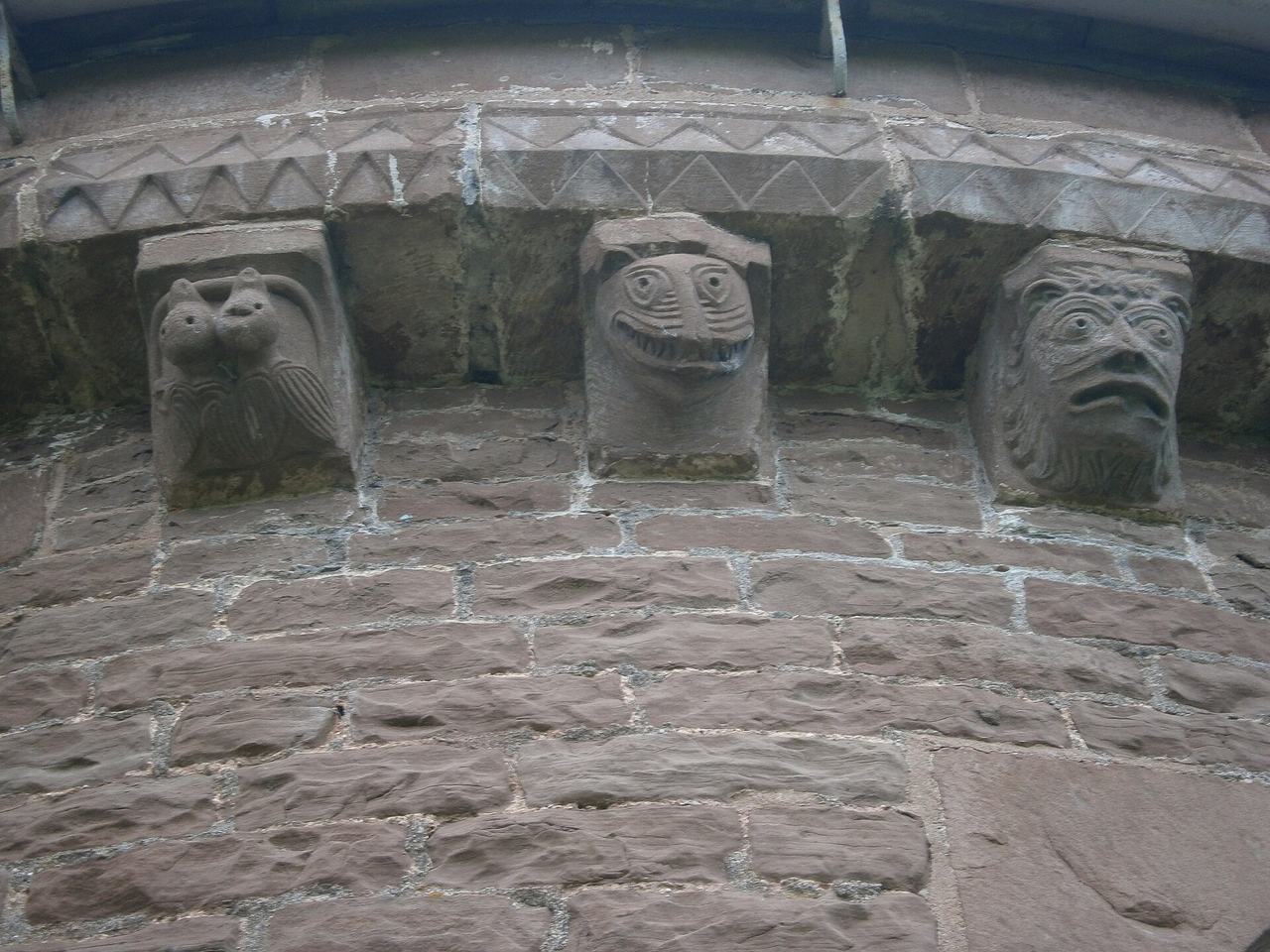
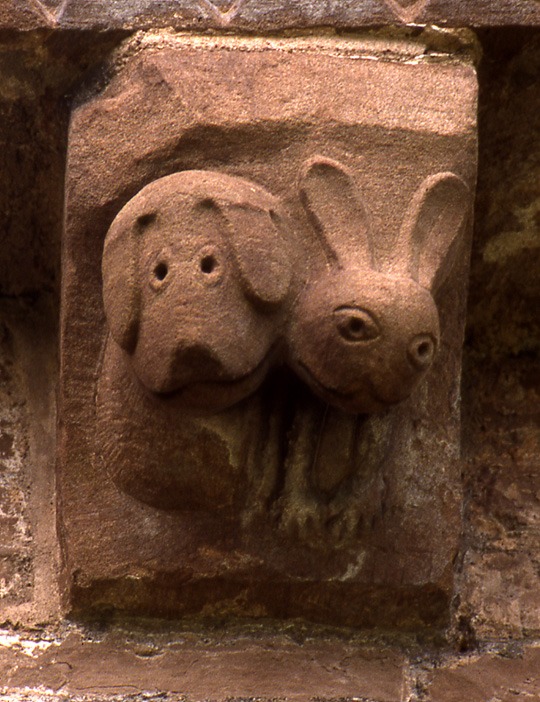
Eighty-five faces. Of the ninety-one corbels that once ran round the church under the eaves, eighty-five survive. Some come from the bestiaries; others, like the sheela-na-gig, have kept their meaning to themselves.
What to see, in the order you meet it
The south doorway
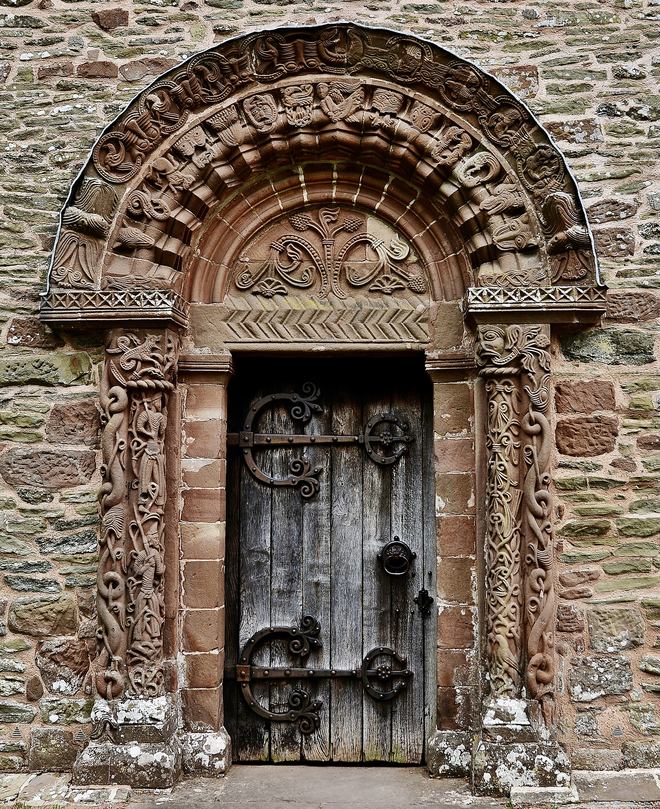
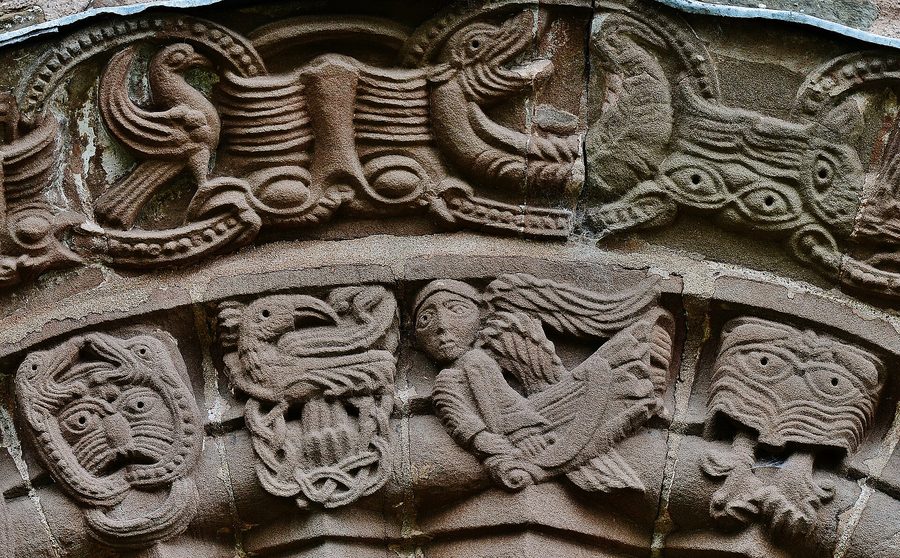
For centuries the doorway was protected by a wooden porch, removed in the nineteenth century, which is why the carving is so sharp. The tympanum shows a Tree of Life. On the columns, snakes swallow one another’s tails, two warriors in loose trousers stand one above the other, and a Green Man looks out from the top. Round the arches run birds, beasts, dragons and other creatures, with an angel at the top.
The corbels and the west end
Walk slowly round the outside to see the corbels: a hound chasing a hare, a ram, a musician with a stringed instrument, lovers, a pig, a bear, and on the south side of the apse, the sheela-na-gig. At the west end, dragons’ heads with coiled tongues project from the corners and the centre of the gable wall, and the west window has Green Men on its capitals.
The chancel arch
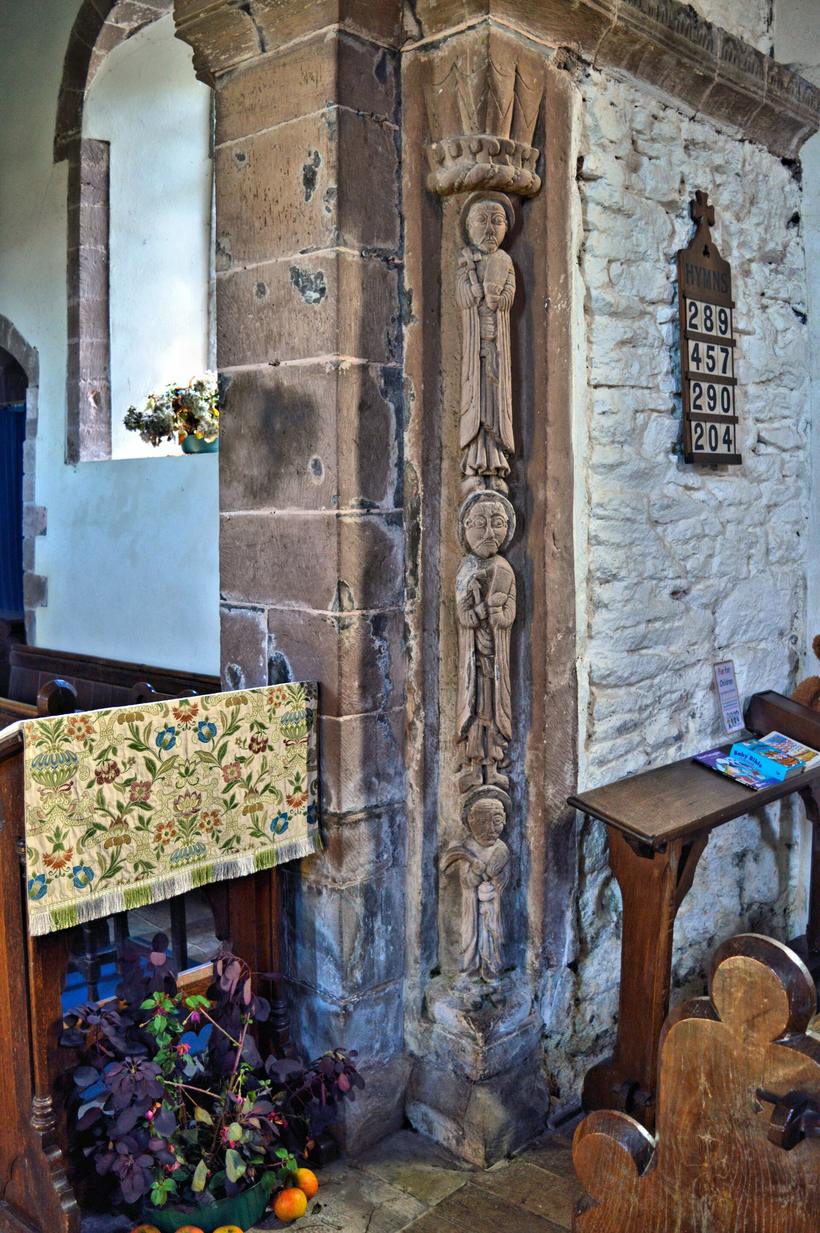
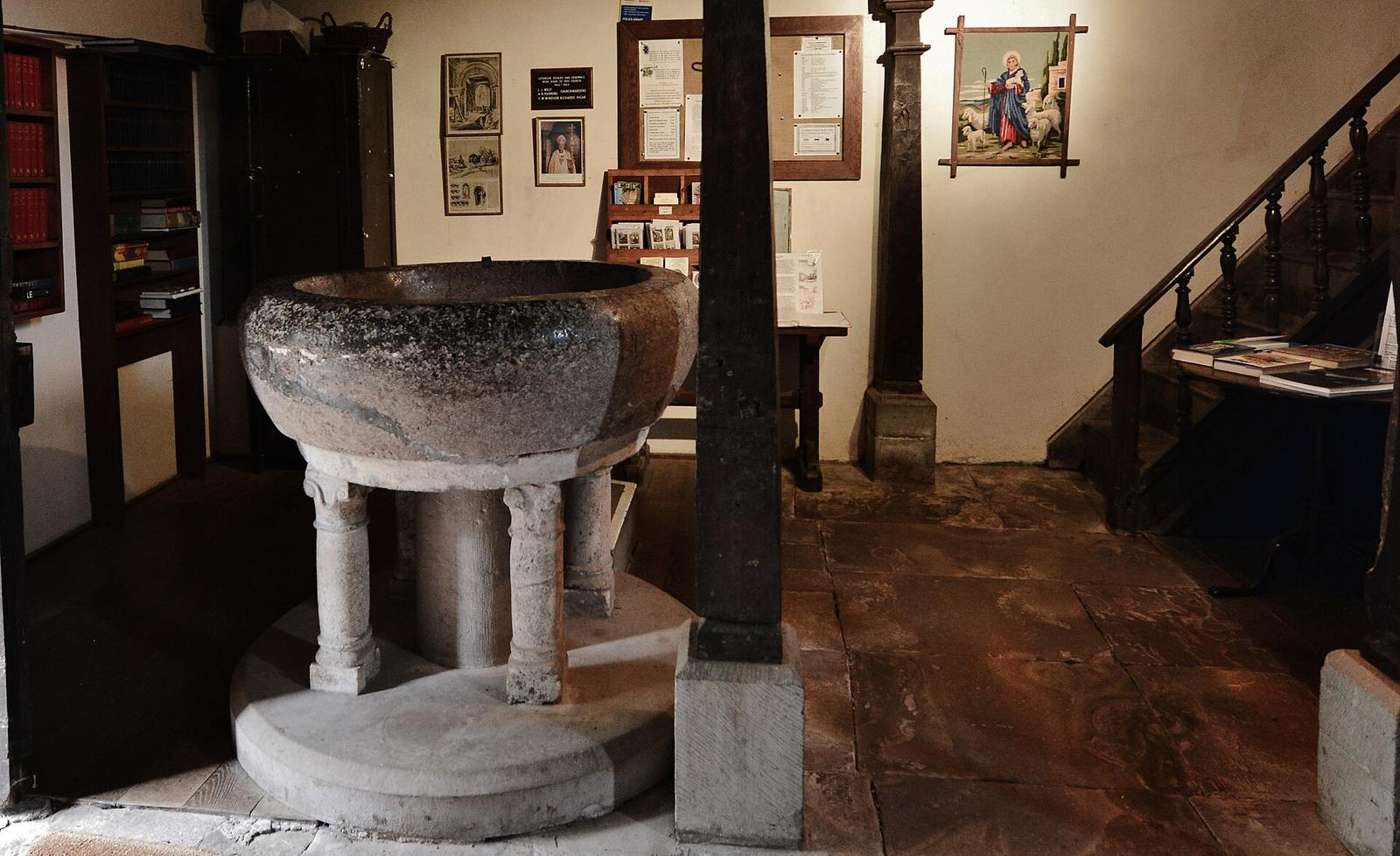
Inside, the church is plain and cool. The chancel arch has shafts carved with three figures, one above another, probably saints or apostles, a style seen in the work of the Herefordshire School and at Santiago. Beyond it the apse has a rib vault. The huge, plain font is carved from a block of conglomerate stone.
Tickets and tours
Free, every day
There is no entry fee and no booking. The church opens every day from 9.15am, closing at 6.30pm from spring to autumn and at 5pm in winter. A guidebook is on sale inside.
The hotel link goes to Booking.com. This site earns nothing from it at present — it is here because it is the quickest way to check what is actually available.
Don't miss
- The south doorway Serpents, warriors and a Tree of Life.
- The corbel table Eighty-five carved heads and creatures.
- The sheela-na-gig On the south side, under the eaves.
- The dragons’ heads At the corners of the west end.
- The chancel arch Saints stacked one above another.
- The castle mound The earthworks of Kilpeck Castle, next door.
Insider tips
Bring binoculars. The corbels are high up under the eaves, and a pair of binoculars, or a good zoom, makes all the difference. Dress warmly too: the church says the inside can be cold. There are no toilets at the church, but the Kilpeck Inn is close by.
Kilpeck makes a fine half-day with Hereford, its cathedral and the Mappa Mundi, or with the other churches of the Golden Valley to the west.
Common questions
Is Kilpeck church free to visit?
Yes. The church is open every day of the year and there is no entry fee. Donations help look after the carvings.
What is the Herefordshire School?
A group of masons and sculptors working in Herefordshire and the Welsh Marches in the twelfth century. Their carving, full of beasts, dragons and interlace, is unlike anything else in England, and Kilpeck is the most complete example of their work.
Is there a sheela-na-gig at Kilpeck?
Yes. One of the corbels is a sheela-na-gig, a carved female figure displaying herself, and it is among the best known in Britain. Nobody is sure what such figures meant.
Are there toilets?
Not at the church. The Kilpeck Inn in the village is close by. There is parking right beside the churchyard gate and no steps to the church.
How do you get to Kilpeck?
Kilpeck is a small village about eight miles south-west of Hereford, just off the A465 towards Abergavenny. You need a car or a taxi; there is no station nearby.
Where to stay and eat nearby
The Kilpeck Inn is in the village, and Hereford, about twenty minutes away, has plenty more.
More English churches
- Hereford Cathedral — the Mappa Mundi and the chained library
- St Laurence’s, Ludlow — the cathedral of the Marches
- The Saxon Church, Bradford-on-Avon — another small church that survived almost untouched
See all the cathedrals and churches worth visiting in England →