
Southwell Minster
Southwell is a small market town in the Nottinghamshire countryside, and its Minster is one of the least known of England’s cathedrals. That is a pity, and also its charm. It has a Norman nave and towers that have hardly changed in nine hundred years, and a chapter house where, in the 1290s, unknown carvers turned the stone into oak, maple, hawthorn and vine, leaf by leaf, so accurately that a botanist can name every species. Nikolaus Pevsner called them the “Leaves of Southwell”, and they are reason enough to make the journey.
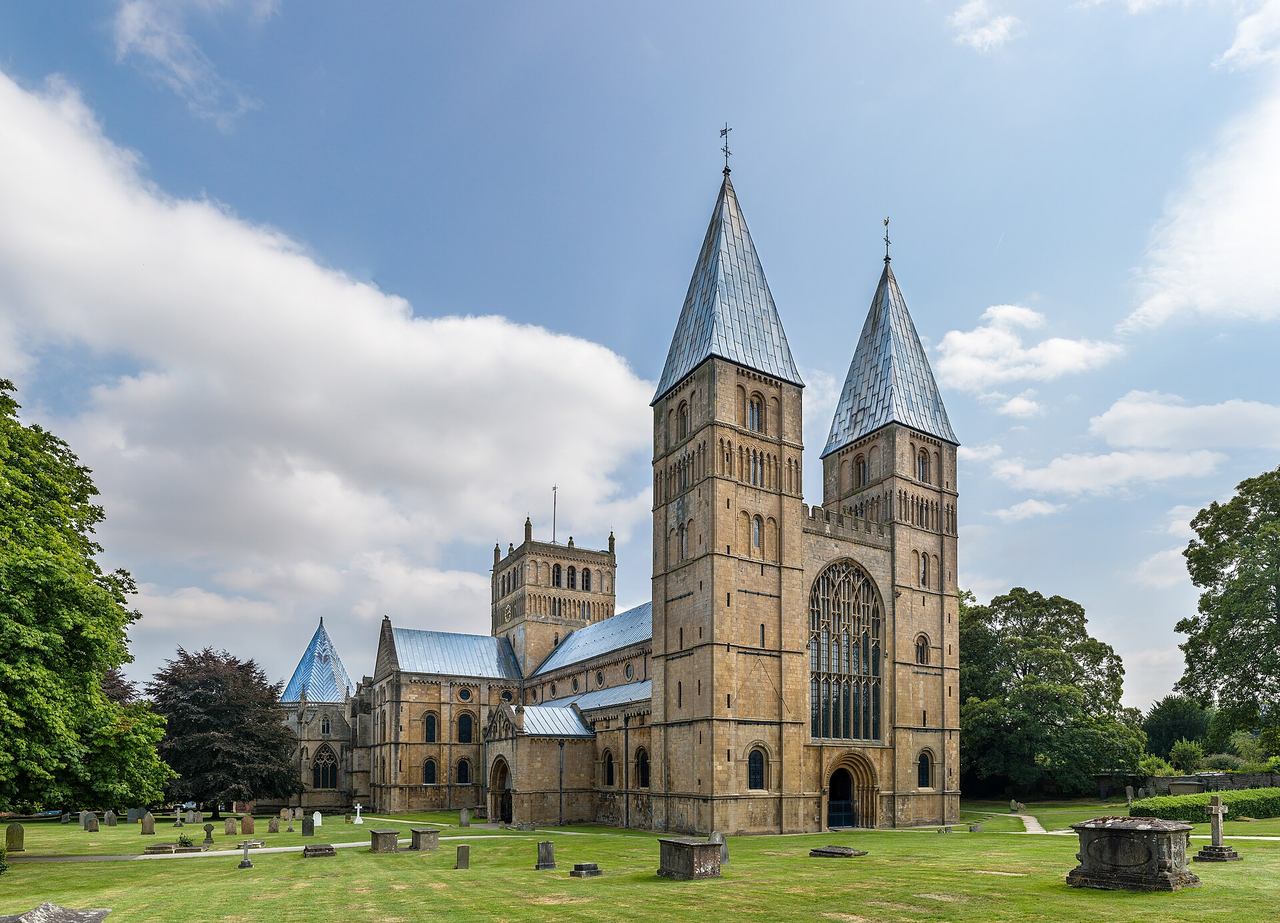
The archbishops' minster
Southwell has been a church of the Archbishops of York for more than a thousand years. In 956 King Eadwig granted land here to Archbishop Oskytel, and a minster was founded to serve this southern end of the great diocese of York. It was run by a college of canons, and for most of its history it was the archbishops’ mother church for Nottinghamshire, with a palace beside it where they stayed.
The Saxon church was replaced from about 1108 by the Norman building whose nave, transepts and west towers still stand. In 1234 the east end was pulled down and rebuilt in the new Early English style, and in the 1290s the chapter house was added. Henry VIII dissolved the college, then refounded it; it survived the Civil War, when Charles I spent his last night as a free man in Southwell before giving himself up to the Scots army in 1646, and it survived the zeal of nineteenth-century restorers. In 1884 it became a cathedral, the seat of a new diocese for Nottinghamshire and Derbyshire.
The visitor's cheat sheet
| Where | Church Street, Southwell, Nottinghamshire, NG25 0HD, in the middle of the small market town |
|---|---|
| Getting there | Fiskerton station is about three miles away; Newark (main line from London) about eight miles. Buses from Nottingham and Newark; parking in the town |
| Opening hours | Mon–Sat 10am–6.30pm; Sun 10am–4.30pm. Services and events can close parts of the building — the Minster lists closures on its website |
| Admission | Free; a donation of £5 per person or £10 per family is suggested. Guided tours £11 (under-16s free) |
| How long | 1–1.5 hours; longer with the Archbishop’s Palace |
| Best time | Any weekday; the chapter house is best in the morning light |
| Dress code | No formal code; respectful dress as in any working church |
| Dogs | Well-behaved dogs on leads welcome in the Minster and grounds |
Hours and admission checked against the official site in October 2026. They change; the official site is always the last word.
A cathedral in a small town. Southwell has only about seven thousand people, but its cathedral serves the whole of Nottinghamshire, including the city of Nottingham, fourteen miles away. The result is a cathedral of the first rank that is almost never crowded.
What to see, in the order you meet it
The west towers
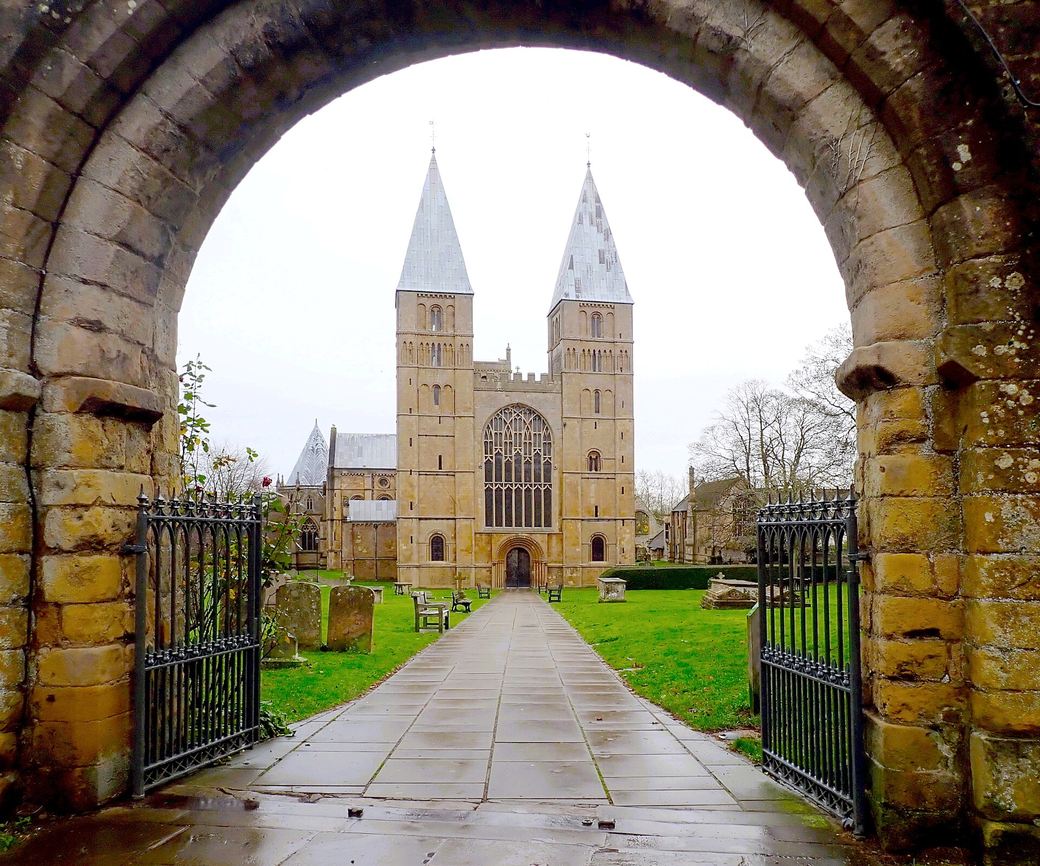
The two Norman towers at the west end are crowned with lead-covered pyramid spires, the “pepperpots”. They look medieval, and they are faithful to what was there, but they were put back in 1879–81 by the architect Ewan Christian; the originals had been taken down as unsafe in 1805. Between them, the great west window was cut into the Norman wall in the fifteenth century.
The Norman nave
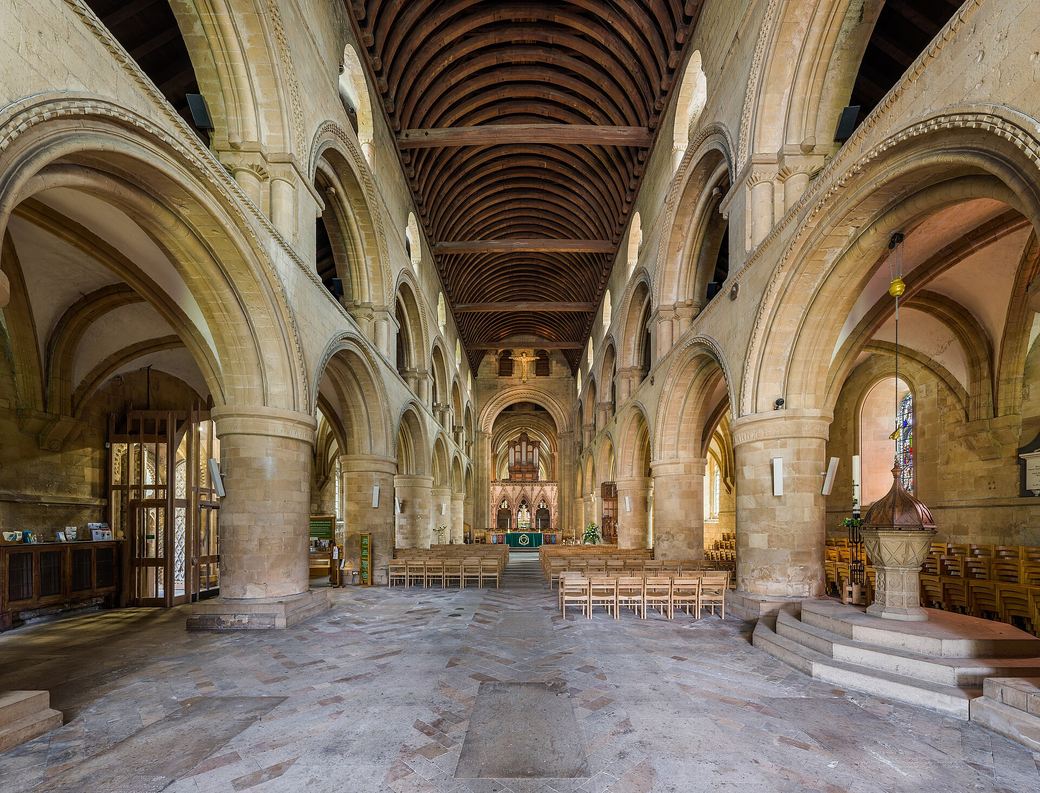
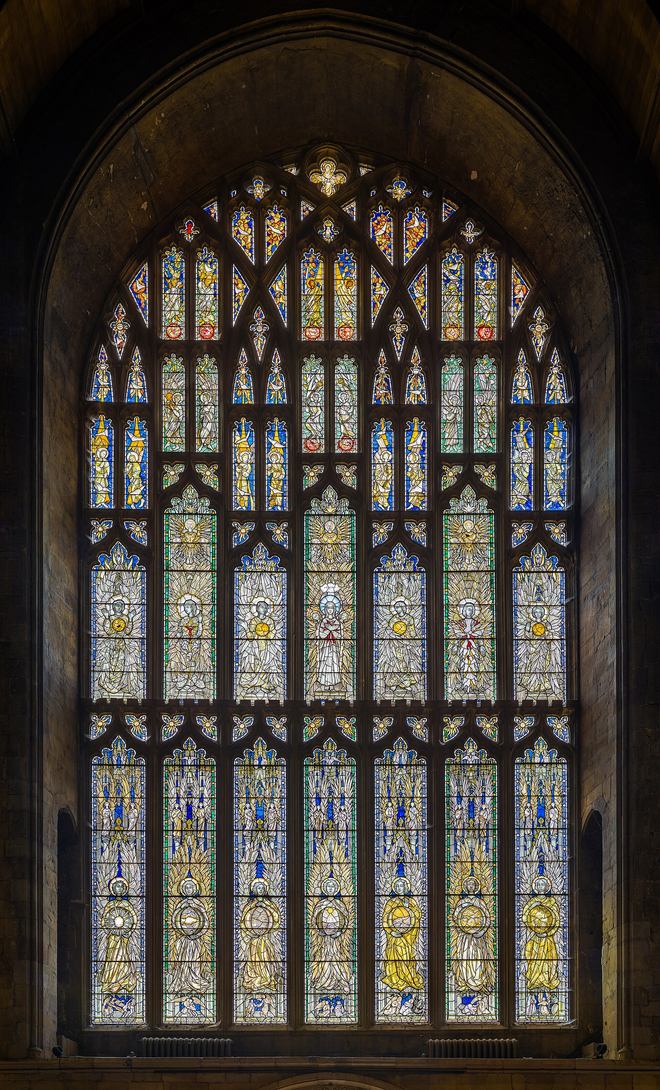
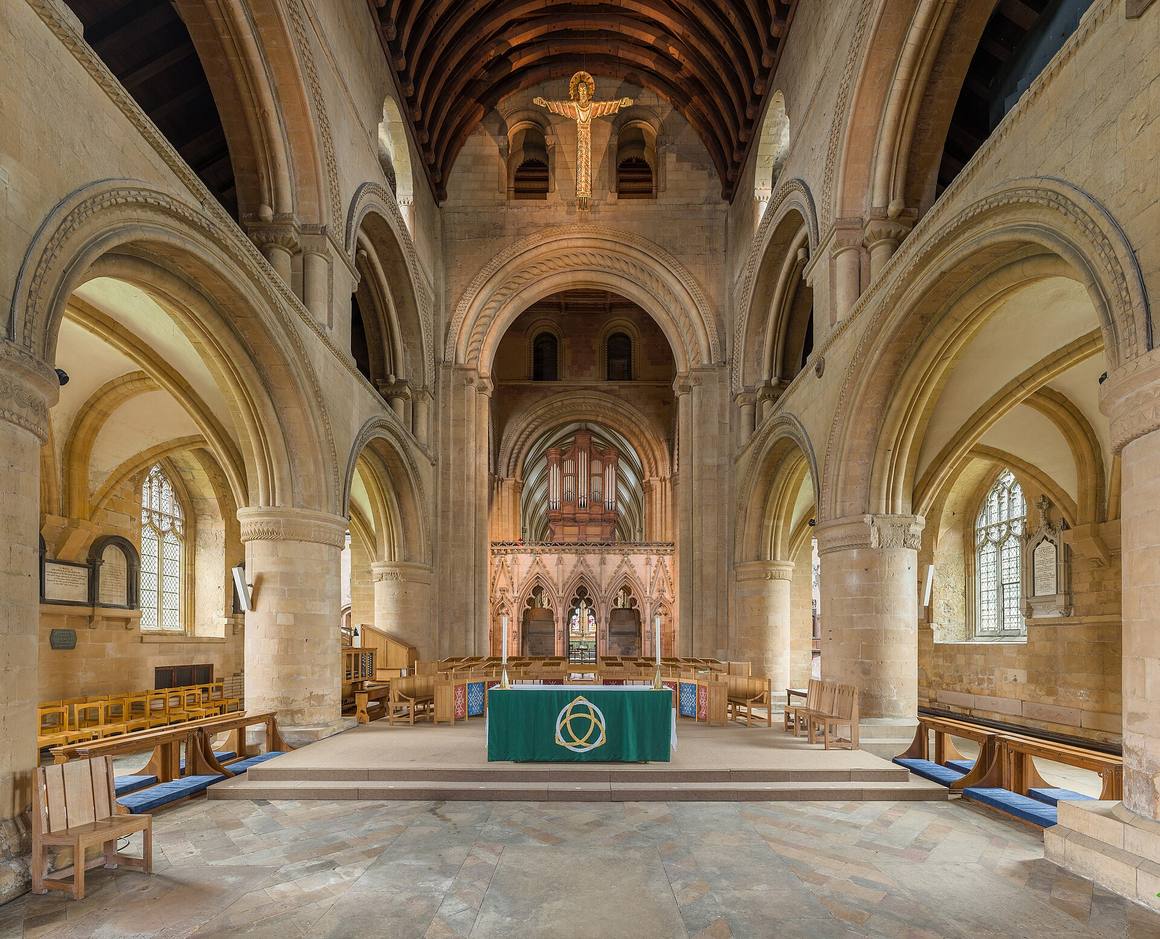
Inside, the nave is an almost untouched Norman interior: short, massive drum pillars, round arches, a gallery and a clerestory above, all from the first half of the twelfth century. The timber roof is a nineteenth-century replacement, but the walls are those the Normans built. At the far end, the west window is filled with the Angel Window, made by Patrick Reyntiens in 1996: rows of angels in glass that glows gold in the afternoon.
The crossing and the north transept
Look at the capitals of the crossing piers, which are carved with some of the earliest figure sculpture in the building, scenes from the life of Christ. In the north transept, above a doorway in the west wall, a carved stone lintel shows St Michael fighting a dragon and David rescuing a lamb from a lion; it is probably older than the Norman church of 1108, and was reused in it.
The pulpitum
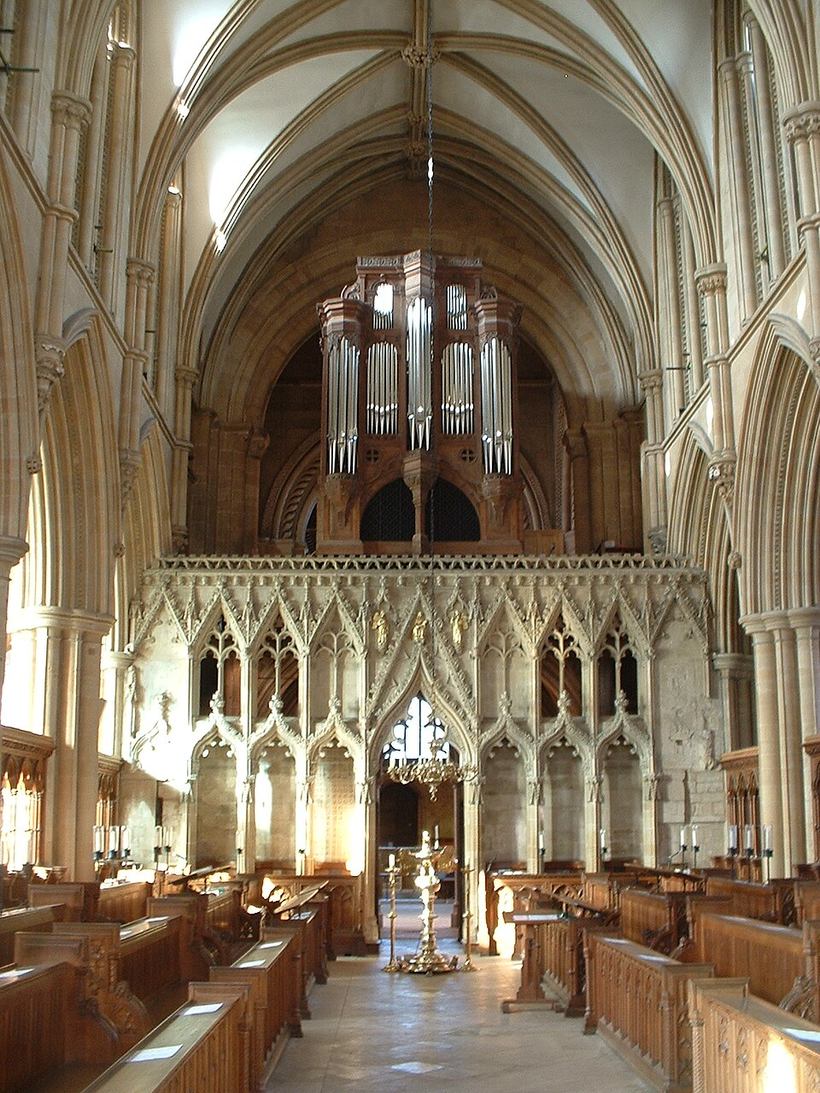
The stone screen between the nave and the choir was built between about 1320 and 1340. It is one of the most elaborate in England: a canopied passage with vaults inside it, and a riot of carving on the choir side, including a great many small heads, human and animal. Walk through it into the choir.
The choir
The choir was rebuilt from 1234 in the Early English style, tall and light, with lancet windows in two tiers. In the lowest tier of the east windows is sixteenth-century glass that came from the Temple church in Paris. In the choir, the brass eagle lectern was dredged out of the lake at Newstead Abbey, where the monks are said to have thrown it at the Dissolution; it was given to the Minster in 1805.
The chapter house and the Leaves of Southwell
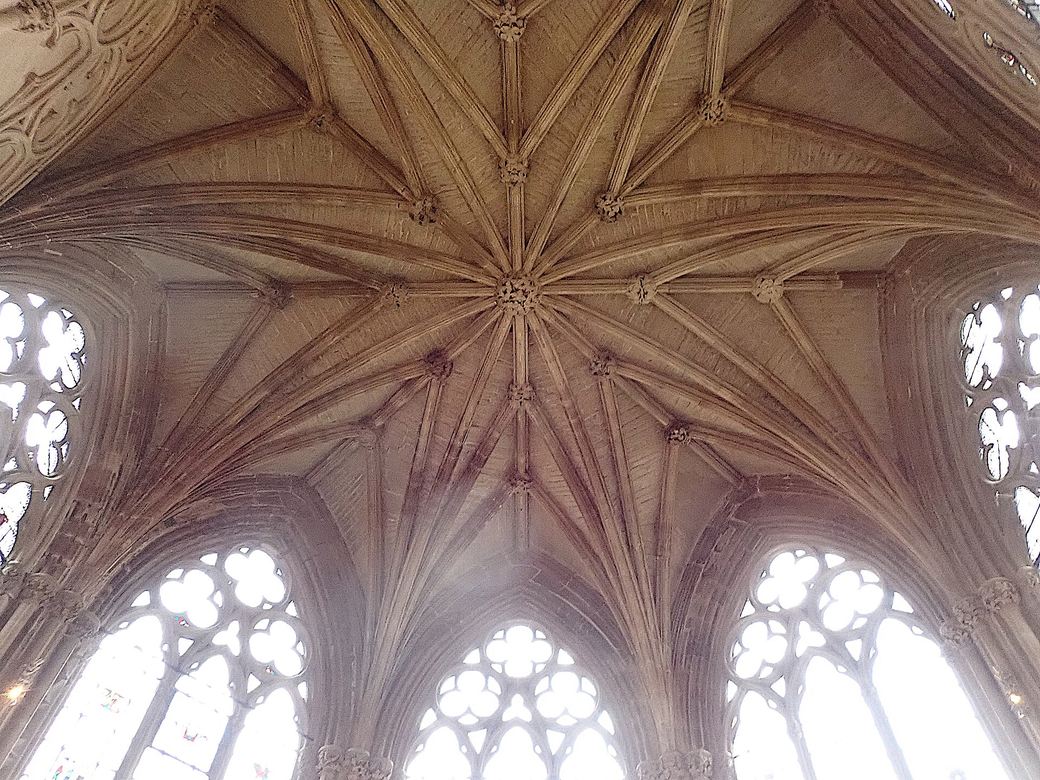
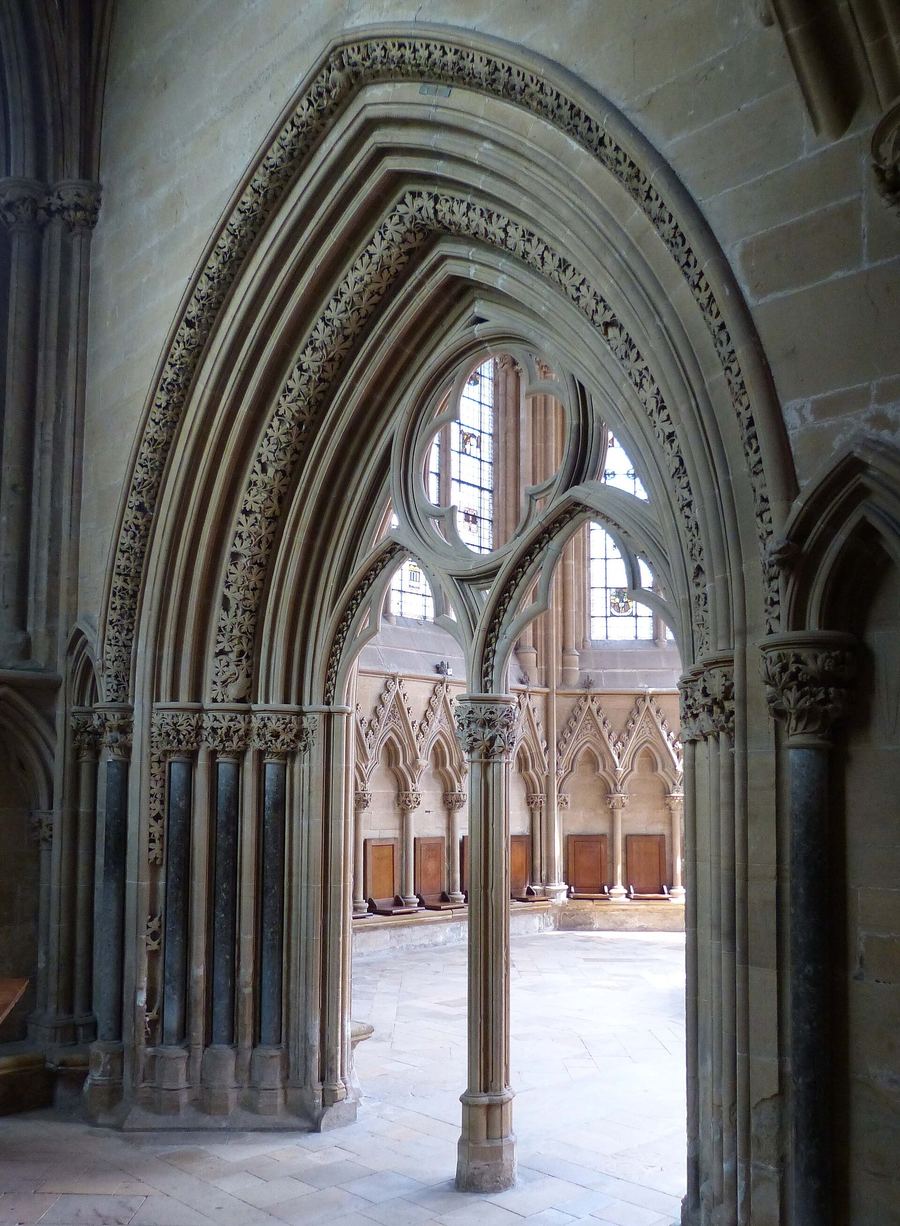
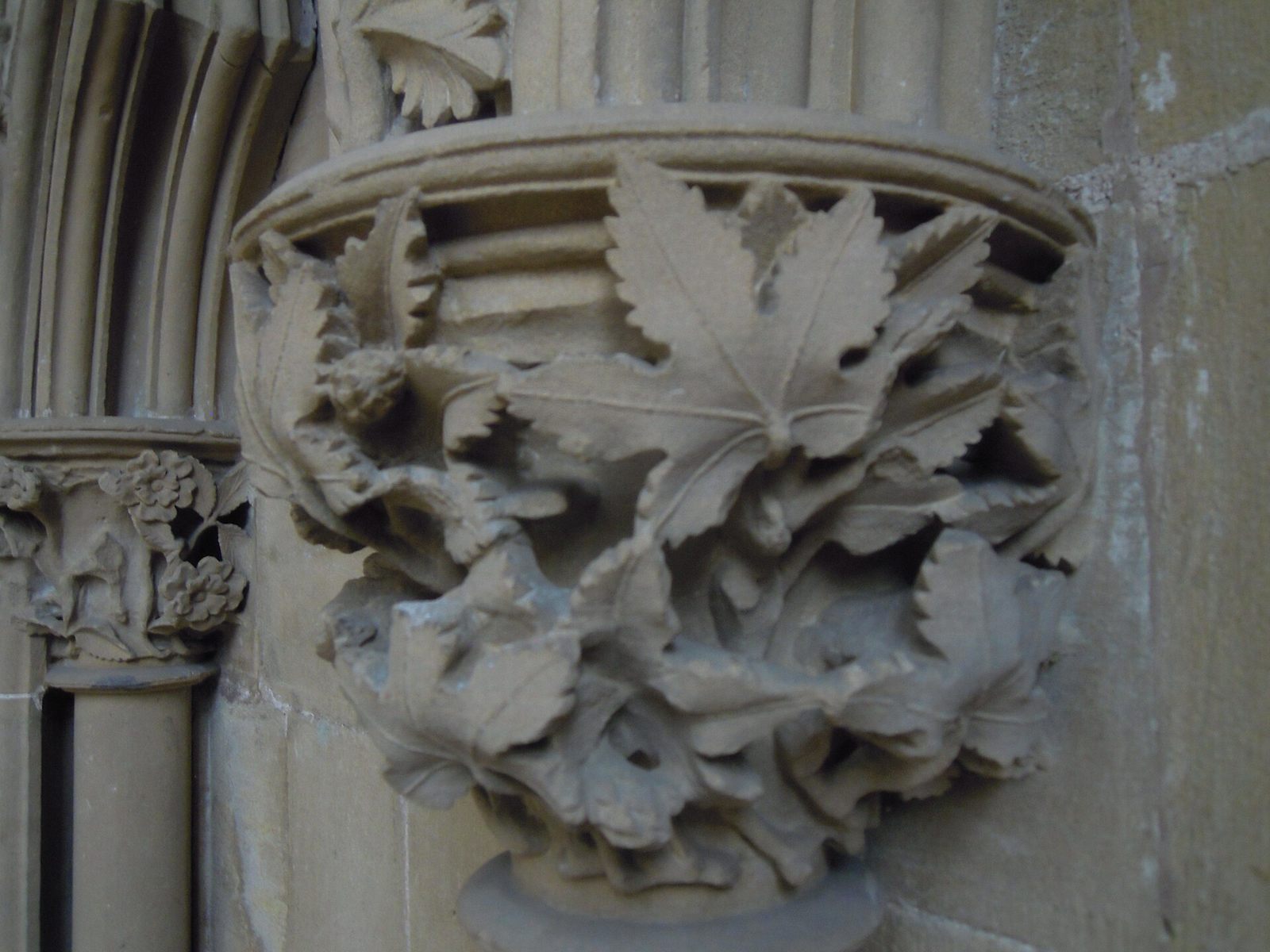
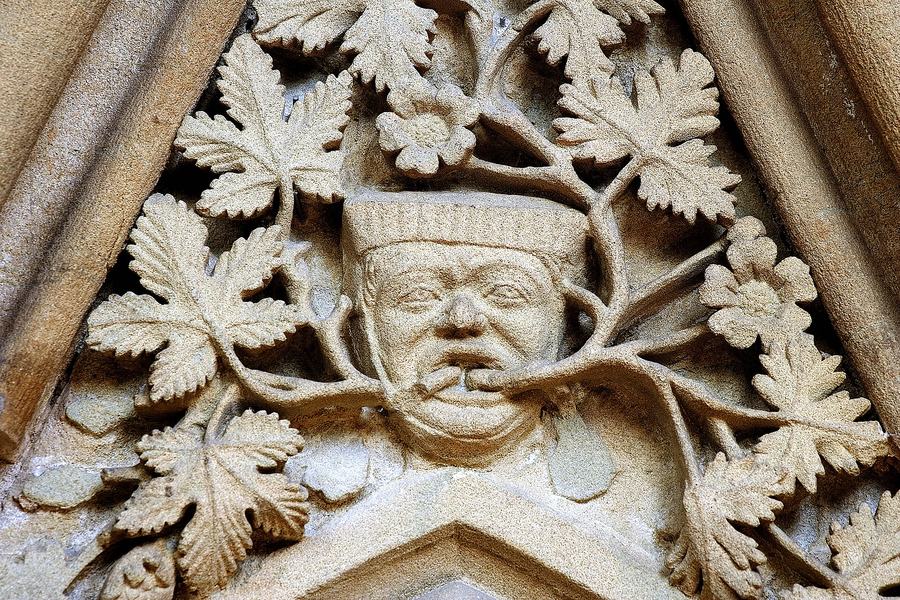
From the north choir aisle a vaulted passage leads to the chapter house, built in the 1290s. It is an octagon with a stone vault and no central pillar, and around its walls are the canons’ seats under gabled canopies. Every capital, every boss, every gable and the great doorway itself are covered with leaves: oak with acorns, hawthorn with haws, maple, vine and grapes, ivy, hop, buttercup, wild rose. They are carved deep enough to cast real shadows, and among them peer green men, with leaves pouring out of their mouths, as well as animals and birds.
Before the 1290s English masons carved stylised “stiff-leaf” foliage that belongs to no plant. At Southwell they looked at the hedgerows. The result is one of the masterpieces of medieval sculpture, and the chapter house is small enough to see it close.
The Archbishop's Palace
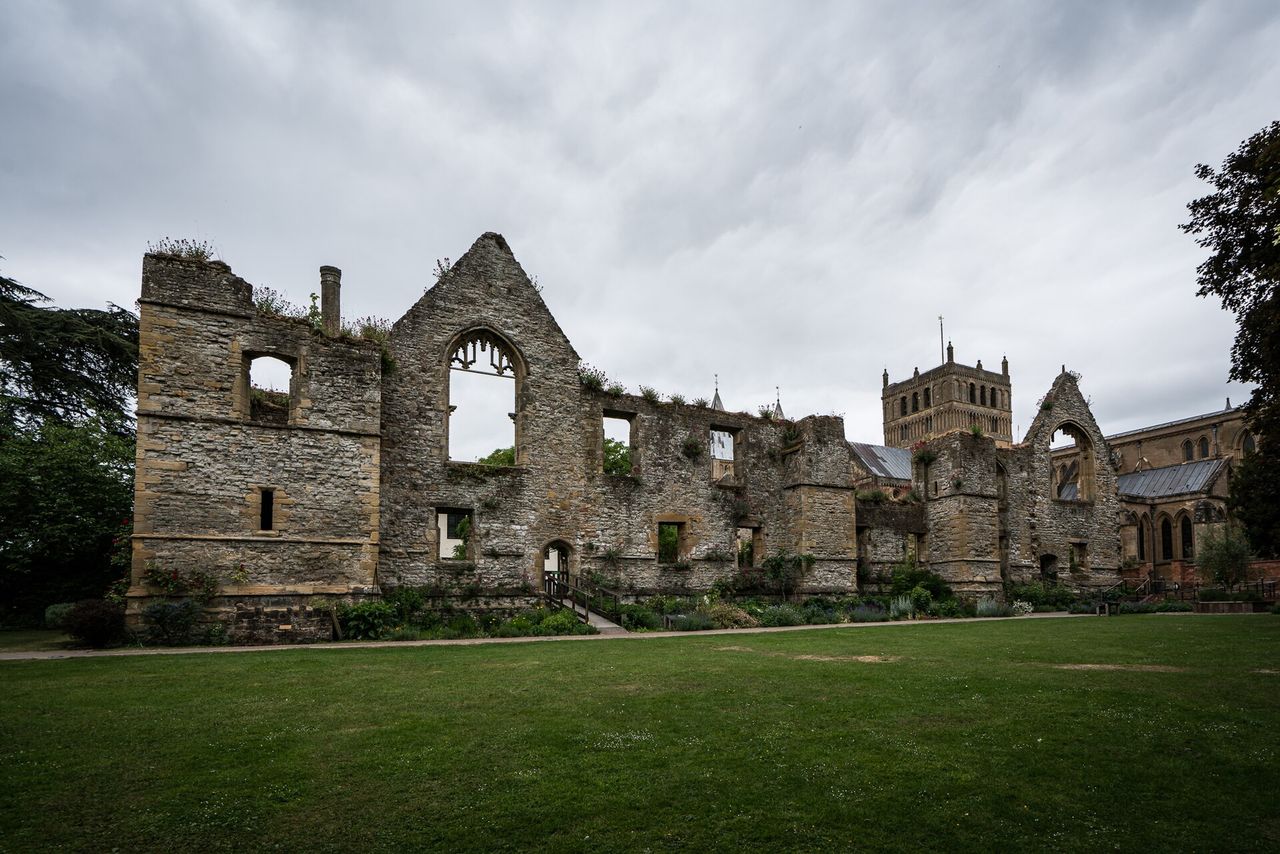
On the south side of the Minster are the ruins of the palace of the Archbishops of York, where Cardinal Wolsey stayed in 1530 in the months before his fall. Part of it, the State Chamber, is restored and used by the Minster; the rest is a garden laid out in the ruins.
Tickets and tours
Tours of the Minster, the tower and the palace
Entry is free, with a suggested donation. Guided tours of the Minster run on Wednesday, Saturday and Sunday afternoons and cost £11, with under-16s free; tours of the Archbishop’s Palace and its gardens cost £8.50. Bell Tower tours, which can take you out onto the roof, run on selected dates at £11 (£5.50 reduced). Book through the Minster’s website.
The hotel link goes to Booking.com. This site earns nothing from it at present — it is here because it is the quickest way to check what is actually available.
Don't miss
- The Leaves of Southwell The chapter house carvings of the 1290s.
- The Norman nave Almost untouched since the twelfth century.
- The pepperpot spires The two Norman west towers and their Victorian caps.
- The pulpitum A fourteenth-century stone screen covered in heads.
- The Angel Window Patrick Reyntiens’ glass of 1996 in the west window.
- The Newstead eagle A brass lectern fished out of a lake.
Insider tips
Take a torch or use your phone. Some of the best carving in the chapter house is in shadow on a dull day. A small light, held low and to the side, brings the leaves into relief — it is how the carvers meant them to be seen, by candle and lamp.
The Bramley apple began in Southwell: the first tree grew from a pip planted in a cottage garden in the town in about 1809, and the original tree, though ailing, still stands. The Saracen’s Head, where Charles I stayed in 1646, is still an inn on the main street.
Southwell Workhouse, a few minutes’ drive away, is a National Trust property: the best-preserved workhouse in England, and a sobering contrast to the Minster.
Common questions
Is Southwell Minster free to visit?
There is no compulsory charge. The Minster suggests a donation of £5 per person or £10 for a family. Guided tours of the Minster cost £11, with under-16s free.
What are the Leaves of Southwell?
They are the stone carvings of leaves, flowers and green men in the chapter house, made in the 1290s. They are carved so faithfully from nature that the species can still be named: oak, maple, hawthorn, vine, ivy, hop, buttercup and more. Nikolaus Pevsner wrote a small book about them in 1945, and they are among the finest naturalistic carving of the Middle Ages anywhere.
Is Southwell Minster a cathedral?
Yes. It became the cathedral of the new Diocese of Southwell in 1884, and is now the cathedral of the Diocese of Southwell and Nottingham. It is still called the Minster, the name it had for nine centuries as a great collegiate church of the Archbishops of York.
Can you climb the tower at Southwell?
Bell Tower tours run on selected dates and may take you out onto the roof. They cost £11 (£5.50 reduced) and have to be booked in advance.
How do you get to Southwell Minster?
Southwell has no station of its own. Fiskerton, on the Nottingham–Newark line, is about three miles away; Newark, on the main line from London, is about eight miles. Buses run from Nottingham and Newark. There is parking in the town.
Where to stay and eat nearby
The Minster has a refectory café and shop, open during visiting hours. The small town around it has tearooms, pubs and the Saracen’s Head. Nottingham and Newark have a much wider choice of hotels.
More English churches
- Lincoln Cathedral — another Midlands giant, under an hour away
- York Minster — the archbishops’ mother church, and Southwell’s for most of its history
- Lichfield Cathedral — three spires in Staffordshire
See all the cathedrals and churches worth visiting in England →