
Christchurch Priory
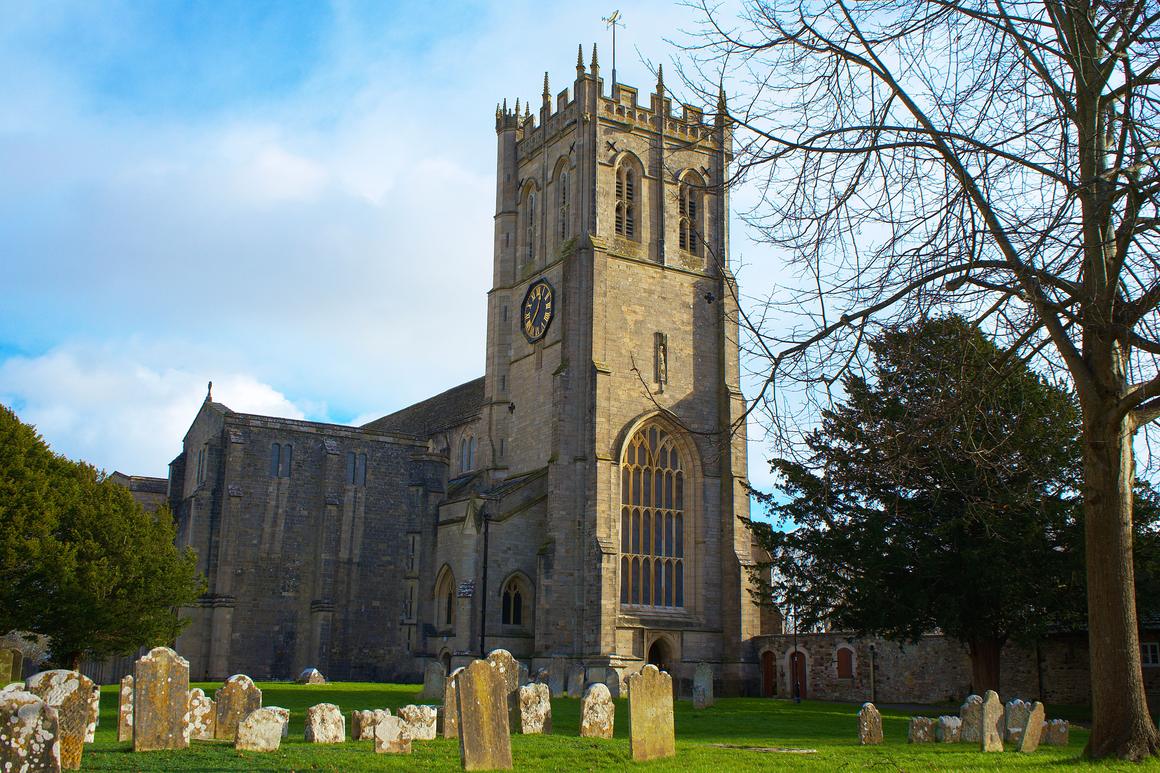
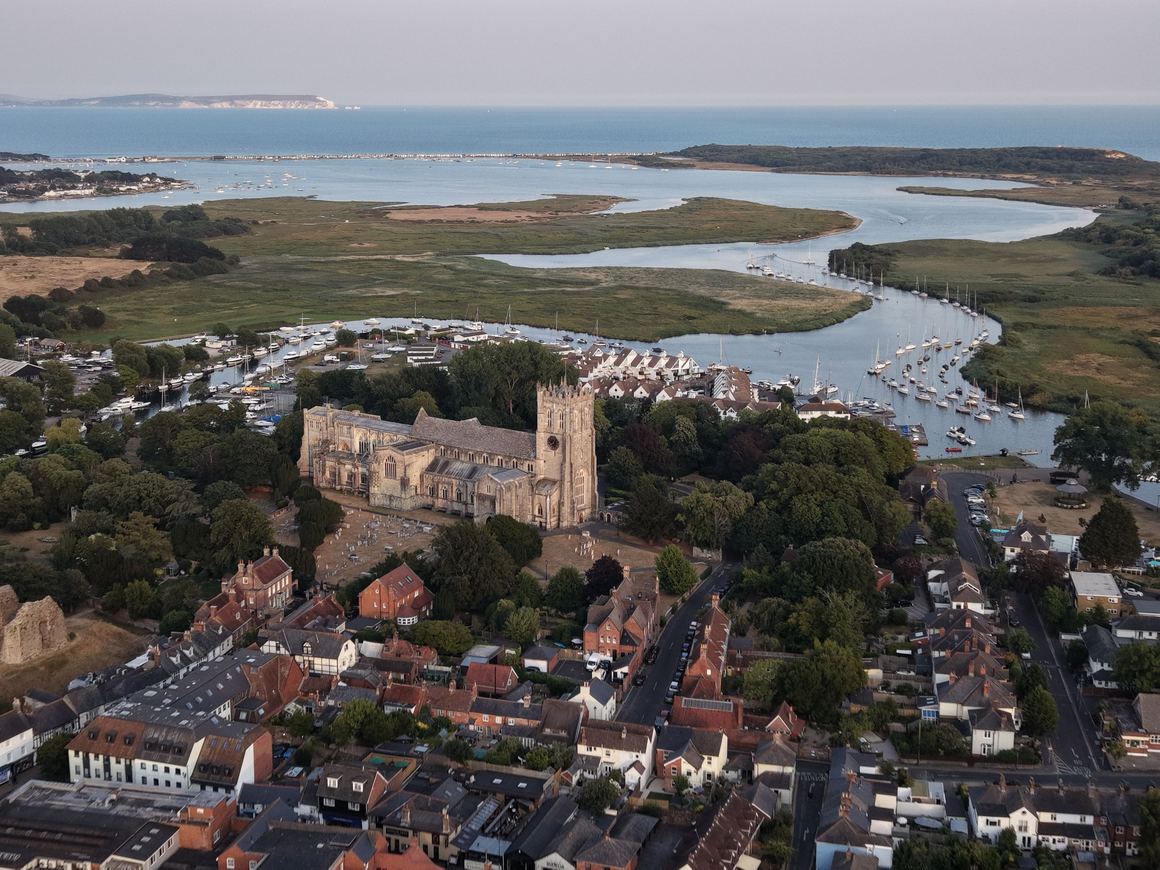
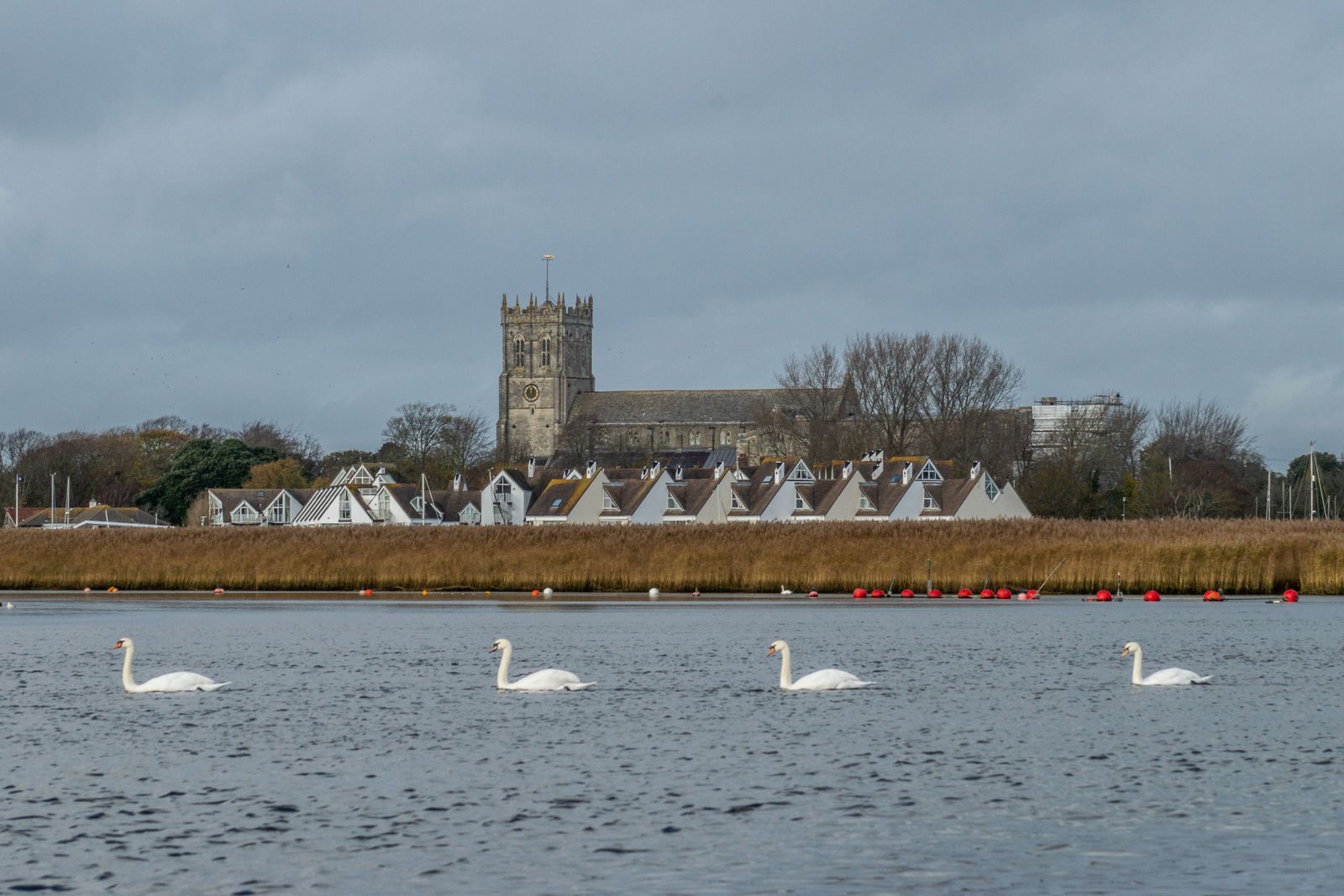
Christchurch Priory stands where the rivers Avon and Stour meet the sea in Dorset, and at about 95 metres long it is often called the longest parish church in England. It was the church of a great Augustinian priory until 1539; a year later Henry VIII, unusually, gave the whole building to the townspeople. Inside are a Norman nave, a medieval stone family tree of Christ, misericords among the oldest in England, and an empty tomb for a countess beheaded in the Tower — and in the roof, a beam that is said to have given the town its name.
From Twynham to Christchurch
There was a Saxon minster at Twynham, the town “between the waters”, by the eleventh century. In about 1094 Ranulf Flambard, the ambitious chief minister of William II and later Bishop of Durham, began a great new Norman church here. In 1150 it was given to Augustinian canons, and the priory grew rich. The Norman nave and transepts survive; the choir, the Lady Chapel and the west tower were rebuilt in the Gothic centuries.
The story of the Miraculous Beam, of a carpenter who joined the builders, ate nothing and took no pay, and whose too-short beam was found next morning to fit, gave the church the name of Christ’s Church, and in time the town became Christchurch too.
When the priory was dissolved in 1539, the last prior, John Draper, surrendered it, and in 1540 Henry VIII granted the church to the churchwardens and inhabitants of the town. That is why, unlike most monastic churches, it is still complete.
The visitor's cheat sheet
| Where | Quay Road, Christchurch, Dorset, BH23 1BU, between the town centre and the Quay |
|---|---|
| Getting there | Christchurch station is about 15 minutes’ walk (trains from London Waterloo); buses from Bournemouth. Pay car parks near the Quay |
| Opening hours | Daily 10am–4pm, last entry 3.45pm, except during special services and events |
| Admission | Free; donations welcome. Mini tower tours £5 (school-age children free); guided tours on set dates £8, children from eight £6 |
| How long | About 1 hour; longer with the tower |
| Best time | A weekday morning, then lunch on the Quay |
| Dress code | No formal code; respectful dress as in any working church |
| Tower | 176 steps; children from 8 with an adult; weather permitting, and not while the peregrines are nesting |
Hours and admission checked against the official site in October 2026. They change; the official site is always the last word.
A monastery church kept whole. Most English priories lost their churches at the Dissolution, or kept only the nave for the parish. At Christchurch the townspeople kept the lot — nave, quire, Lady Chapel and chantries — and it is run today by its parish, with entry free.
What to see, in the order you meet it
The north porch
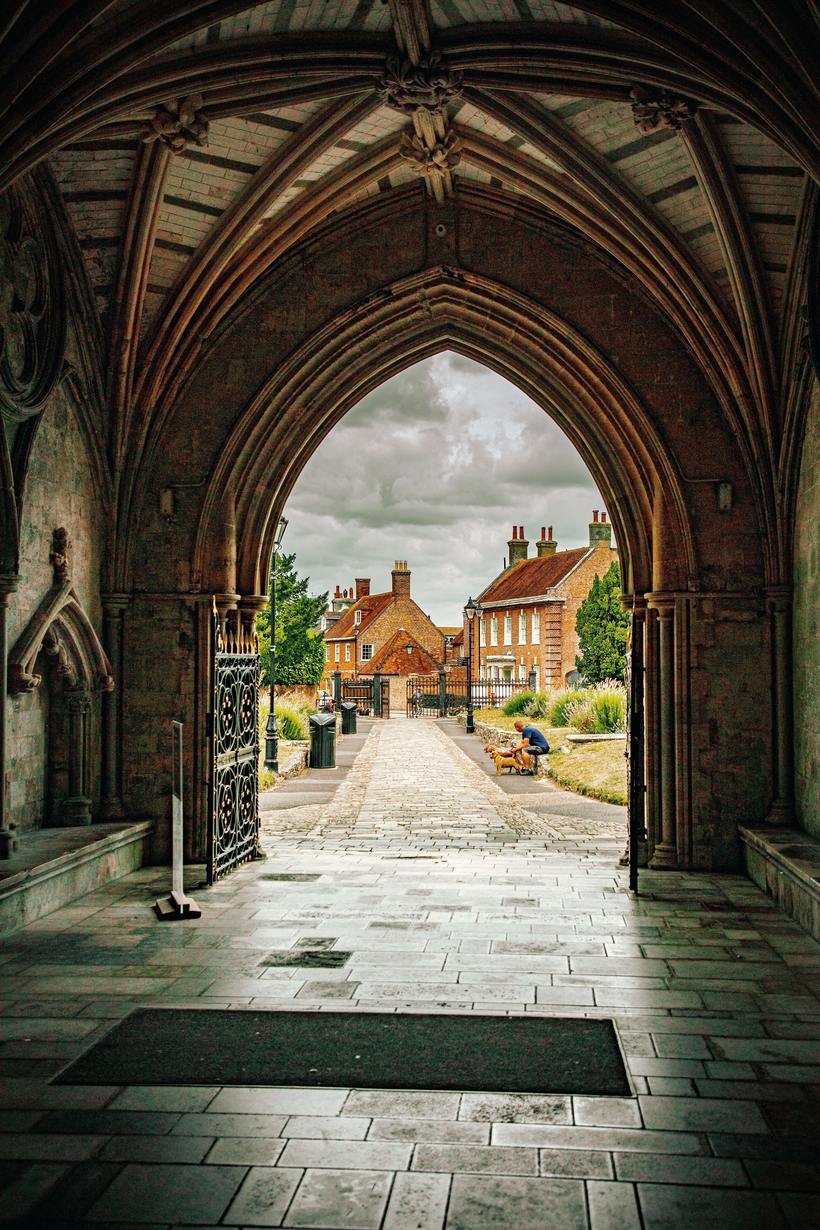
Visitors go in through the north porch, built in the thirteenth century and one of the largest in England, with a vaulted ceiling and a wide doorway. Outside, look at the Norman turret on the north transept, covered in carved scale and diaper patterns.
The Norman nave
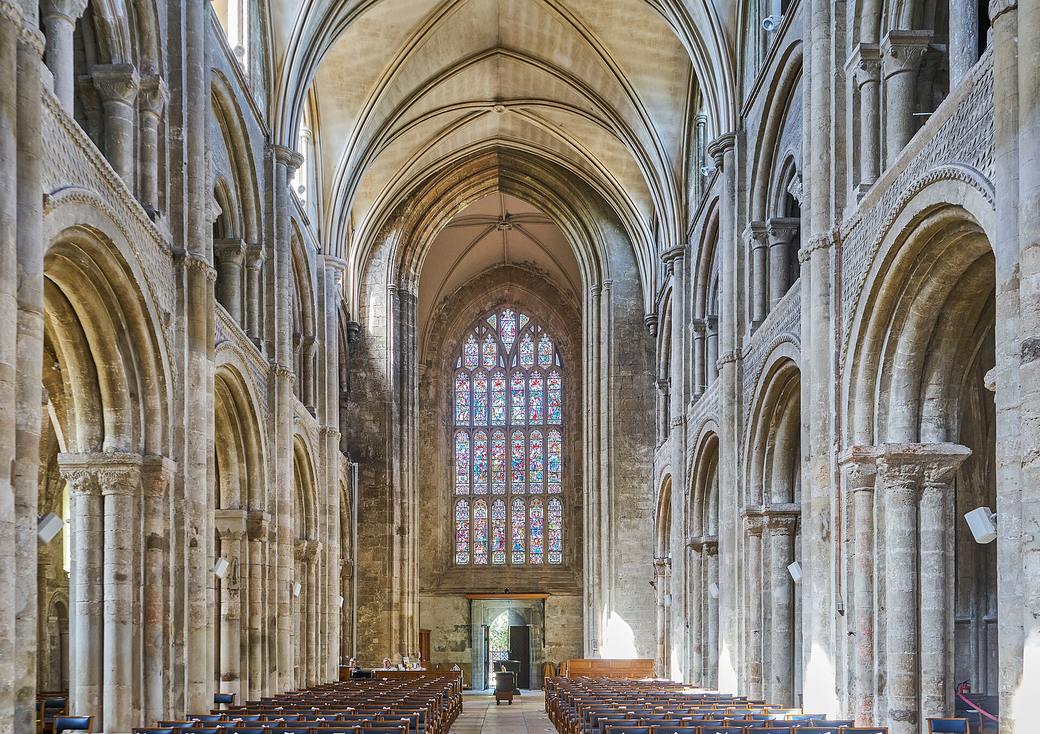
The nave is the Norman church of Ranulf Flambard and his successors: massive piers and round arches, with zigzag and carved ornament in the gallery above. The vault overhead looks like stone but is lath and plaster, added in about 1819–22; the arcades are as the Normans left them.
The quire and the Jesse reredos
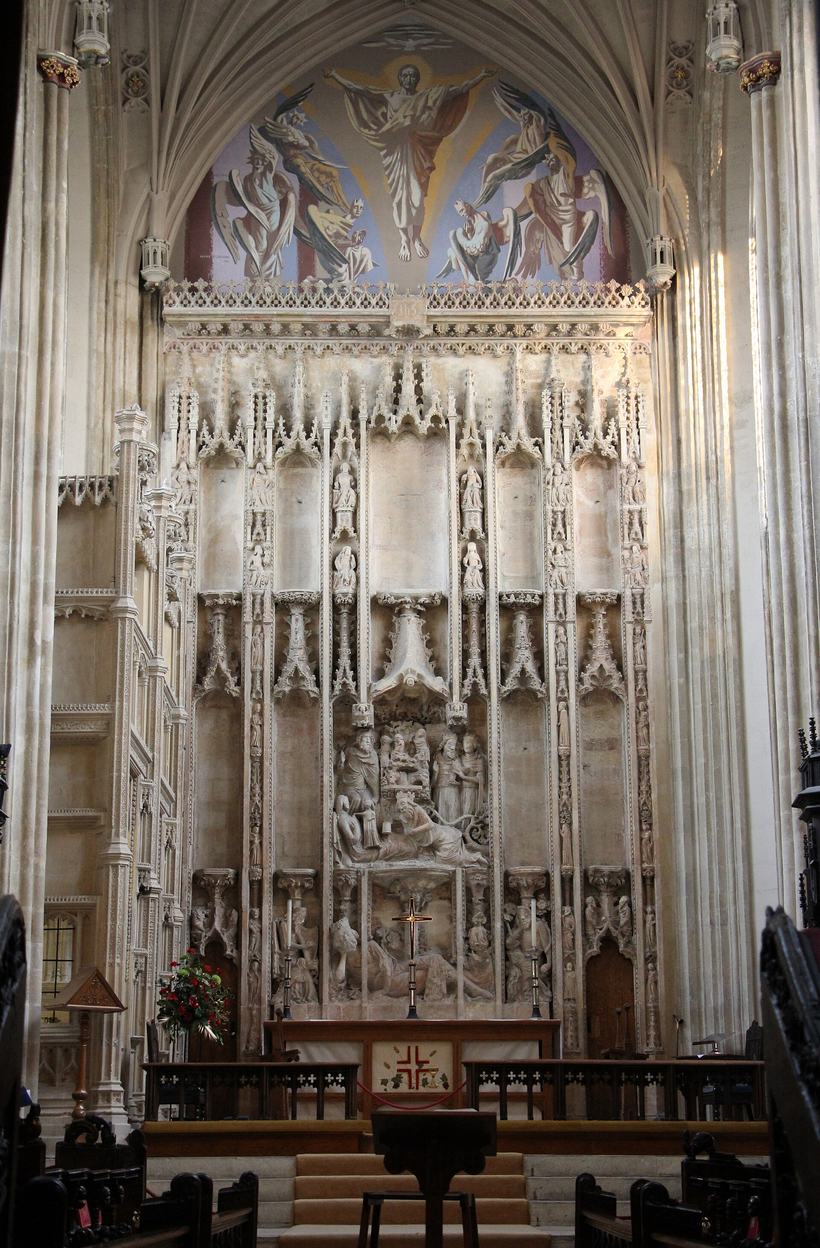
Beyond the stone screen is the Great Quire, built around 1500. Behind the high altar stands the Jesse reredos, carved in the fourteenth century: from the reclining figure of Jesse at the bottom grows a stone tree whose branches hold the kings of Judah, ancestors of Christ, around the Nativity and the Magi. The statues were damaged at the Reformation but the composition survives.
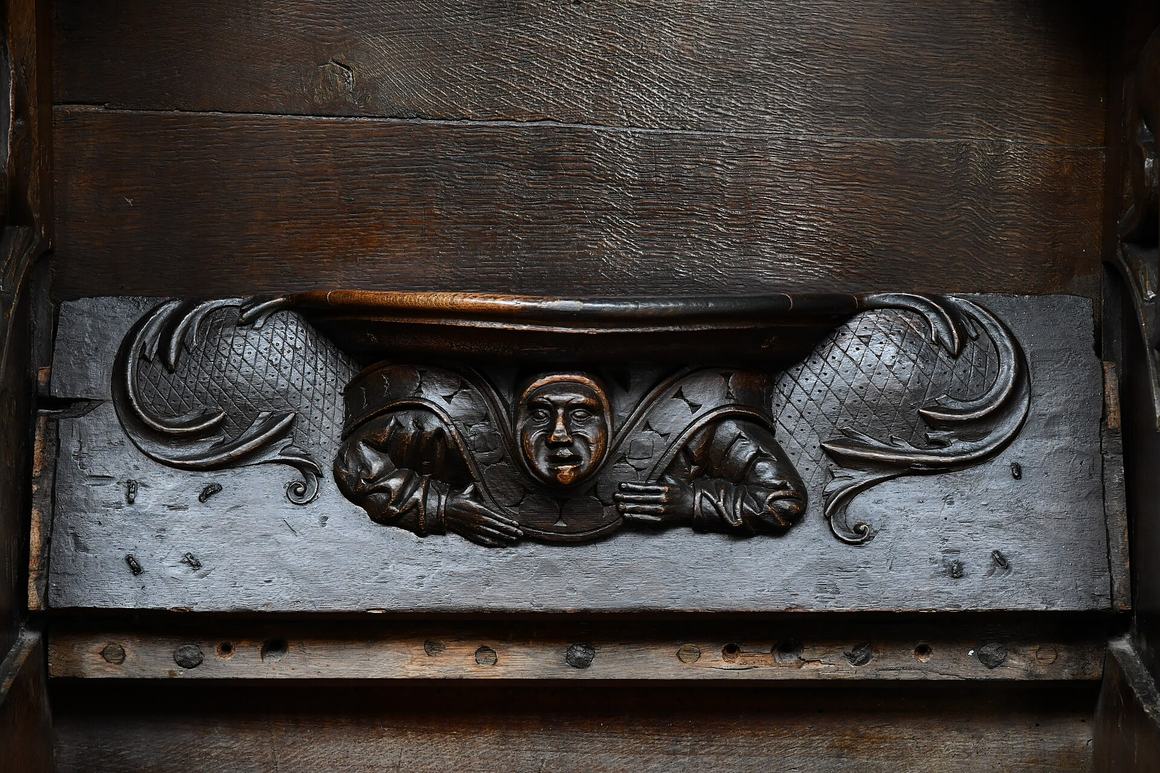
The quire stalls are early sixteenth-century, but some of the misericords under the seats are much older, from the thirteenth century, and among the earliest in England.
The Salisbury Chantry
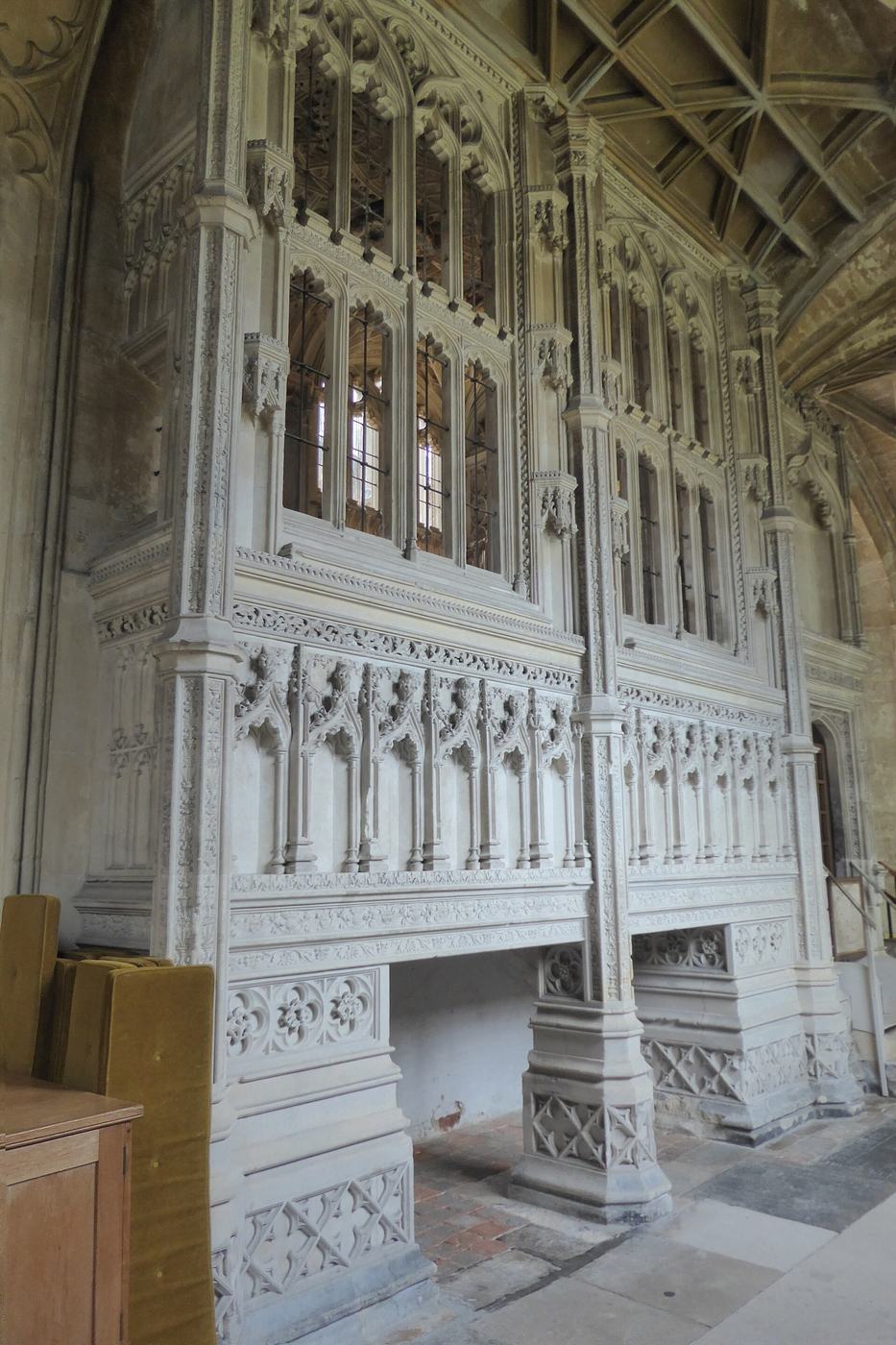
On the north side of the quire is the Salisbury Chantry, a tiny chapel carved in creamy stone with fan vaulting and a forest of tiny pinnacles. It was made for Margaret Pole, Countess of Salisbury, niece of Edward IV and Richard III, to be her tomb. She never lay in it: in 1541, aged sixty-seven, she was beheaded on Henry VIII’s orders at the Tower of London, and she is buried there. Its carved heraldry had already been defaced by the king’s commissioners at the Dissolution in 1539.
The Miraculous Beam
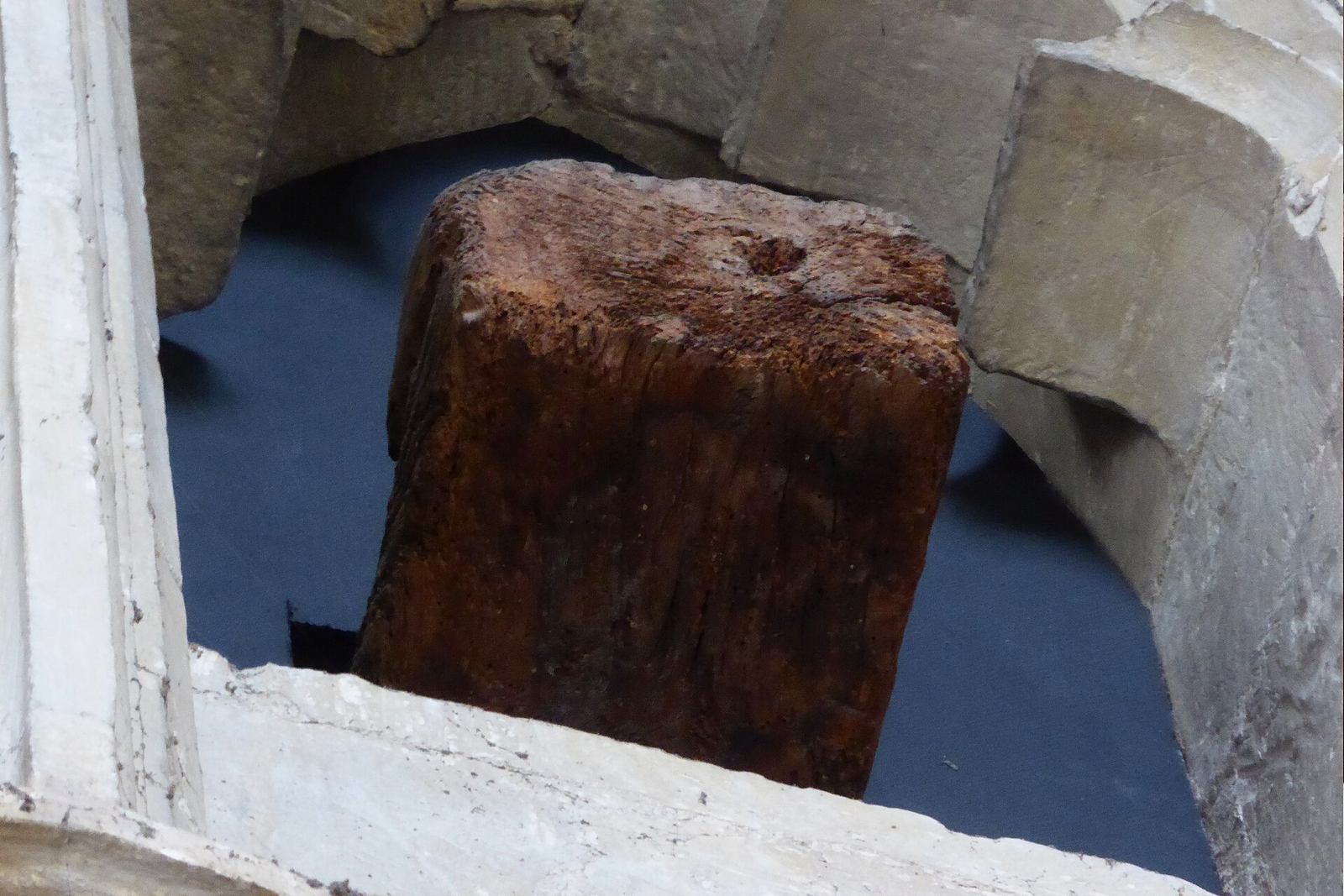
In the ambulatory behind the high altar, look for the Miraculous Beam, a piece of old timber set high in the roof. Whatever its real history, it is the beam of the legend, and the reason the town is called what it is.
The Lady Chapel and St Michael's Loft
At the east end is the Lady Chapel, of about 1400, with a stone reredos of its own. Above it is St Michael’s Loft, a long upper room that was the town’s grammar school for centuries and now holds a small museum of the Priory’s history.
Tickets and tours
Climb the tower
Entry is free. On-the-day mini tower tours climb 176 spiral steps for views across the harbour to the Isle of Wight, and cost £5 for adults, with school-age children free; children must be eight or older. Hour-long guided tours on set dates, on themes from art to medieval graffiti, cost £8, children from eight £6. Ask at the welcome desk or check the Priory’s events page.
The hotel link goes to Booking.com. This site earns nothing from it at present — it is here because it is the quickest way to check what is actually available.
Don't miss
- The Jesse reredos A stone family tree of Christ.
- The Salisbury Chantry An empty tomb for an executed countess.
- The Miraculous Beam The legend that named the town.
- The misericords Some of the oldest in England.
- The Norman nave and turret Ranulf Flambard’s church, inside and out.
- The tower 176 steps and a view to the Isle of Wight.
Insider tips
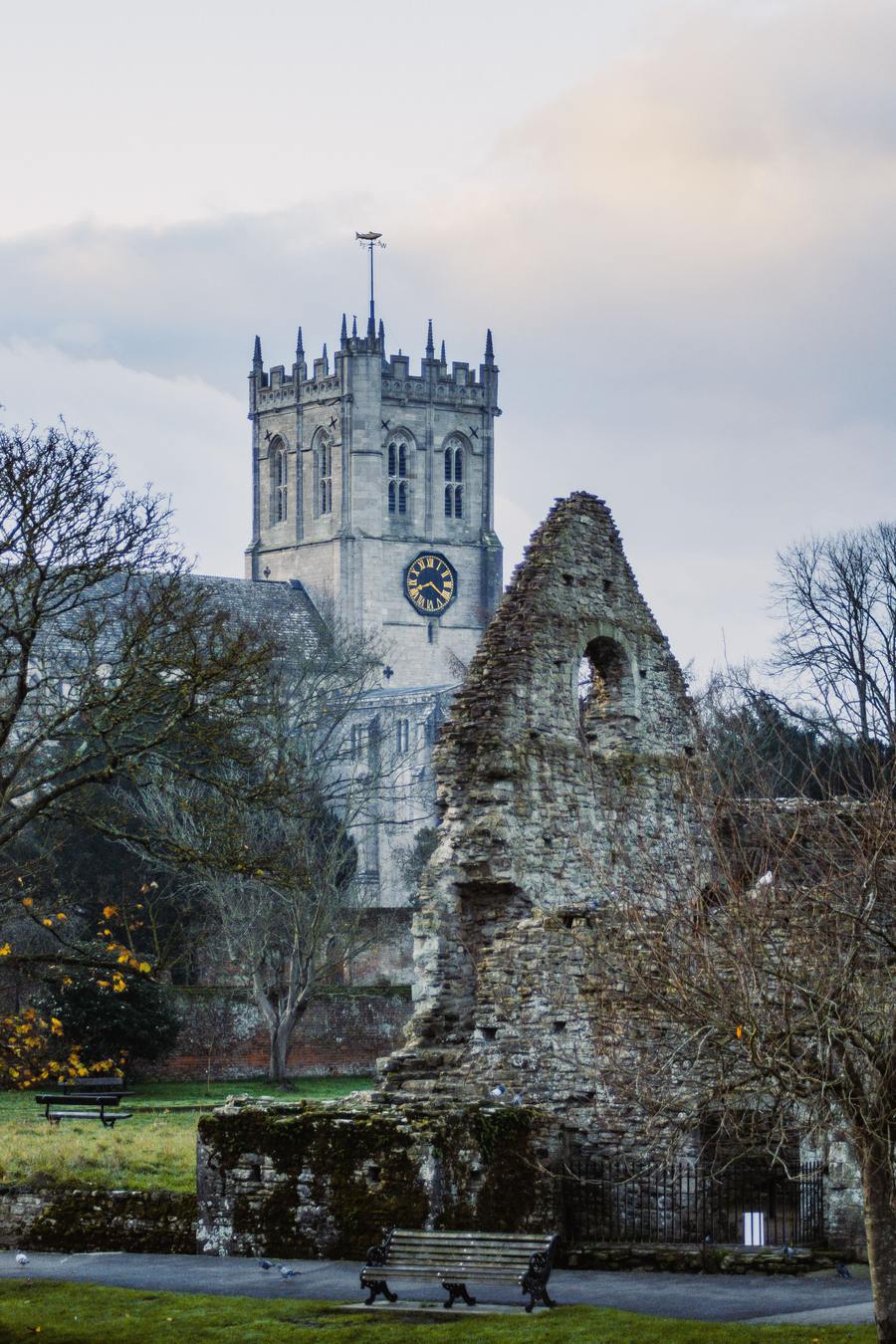
Walk down to the river. Behind the Priory, the ruins of the Norman Constable’s House, of about 1160, stand beside the Mill Stream, below the mound of the castle. Both are free to see. From there the path leads to the Quay, where boats leave for Mudeford and Hengistbury Head.
Common questions
Is Christchurch Priory free to visit?
Yes. There is no admission charge and donations are welcome. Mini tower tours cost £5 for adults (school-age children free), and the longer guided tours on set dates cost £8 per adult and £6 for children from eight.
Why is it called Christchurch?
The town was called Twynham, from its position between two rivers. According to legend, a mysterious carpenter worked on the church while it was being built; when a beam was cut too short, it was found the next morning to fit perfectly, and the carpenter was never seen again. People decided he had been Christ himself, and the church, and later the town, took the name Christchurch. The beam is still shown in the church.
Is Christchurch Priory a cathedral?
No. It was the church of a priory of Augustinian canons until 1539; in 1540 Henry VIII granted it to the people of the town as their parish church. It is often said to be the longest parish church in England.
Can you climb the tower at Christchurch Priory?
Yes, on a mini tower tour, which climbs 176 spiral steps to views across the harbour to the Isle of Wight. Children from eight can go with an adult; tours depend on the weather and may stop when peregrine falcons are nesting.
How do you get to Christchurch Priory?
Christchurch station, on the line from London Waterloo to Bournemouth and Weymouth, is about fifteen minutes’ walk. Bournemouth is a short bus ride away. There are pay car parks near the Quay.
Where to stay and eat nearby
The Quay and the high street, a few minutes away, have pubs, cafés and restaurants. Christchurch has small hotels and guest houses, and Bournemouth, a short drive away, has many more.
More English churches
- Sherborne Abbey — another great Dorset abbey church, with the finest fan vault in the county
- Winchester Cathedral — under an hour away
- Salisbury Cathedral — Britain’s tallest spire, up the Avon valley
See all the cathedrals and churches worth visiting in England →