
Paisley Abbey
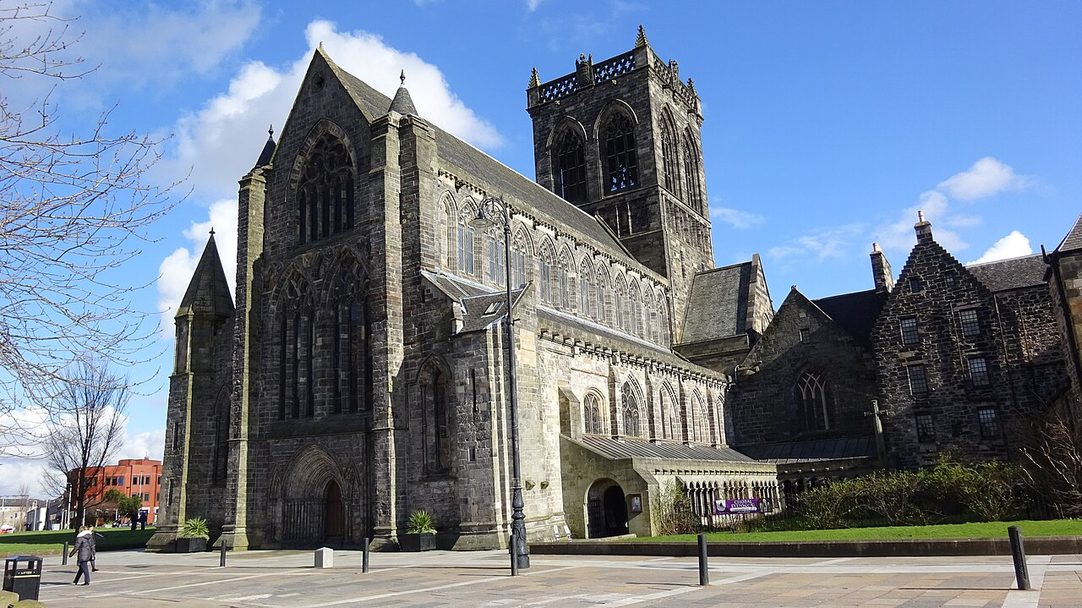
Paisley Abbey, a few minutes from Glasgow by train, is where the royal house of Stewart began. It was founded by the first High Steward of Scotland, and Marjorie Bruce, whose son became the first Stewart king, is buried here. Ruined after the Reformation, the medieval church was rebuilt piece by piece over seventy years and is now a parish church again, with a vaulted choir, royal tombs, fine glass and one very modern gargoyle.
The church of the Stewarts
In 1163 Walter fitz Alan, the first High Steward of Scotland, founded a priory here for Cluniac monks from Much Wenlock in Shropshire, on a site associated with the sixth-century St Mirin. It became an abbey in 1245. Edward I’s troops burned it in 1307, and it was rebuilt in the fourteenth century. William Wallace is believed to have been taught by the monks, and Marjorie Bruce, wife of Walter the Steward, was buried here after she died in 1316; her son became Robert II, the first Stewart king.
In the sixteenth century the central tower collapsed, wrecking the transepts and choir, and after the Reformation of 1560 only the walled-off nave was kept as the parish church. The rest was restored over seventy years: the nave in the 1860s, the transepts and lower tower by Rowand Anderson from 1888, and the choir by Peter Macgregor Chalmers from 1912, completed by Sir Robert Lorimer in 1928.
The visitor's cheat sheet
| Where | Abbey Close, Paisley, Renfrewshire, PA1 1JG |
|---|---|
| Getting there | Train from Glasgow Central to Paisley Gilmour Street (about 11 minutes), then a short walk; near Glasgow Airport |
| Opening hours | Monday–Saturday 10am–4pm, last admission 3.30pm; Sundays for services only (main service 11am) |
| Admission | Free; donations welcome; guided tours £5 |
| How long | About an hour |
| Best time | Tuesday, Thursday or Saturday, to join the 2pm tour |
| Dress code | None; it is a parish church |
| Tours | Guided tours Tuesday, Thursday and Saturday at 2pm, £5 from the shop; groups book a week ahead |
Hours and admission checked against the official site in October 2026. They change; the official site is always the last word.
The abbey drain. A great stone drain runs under the abbey grounds towards the river. Finds from it include pottery, cloth seals and a piece of slate scratched with what may be the oldest surviving piece of polyphonic music in Scotland. Some are on display in the abbey.
What to see, in the order you meet it
The nave
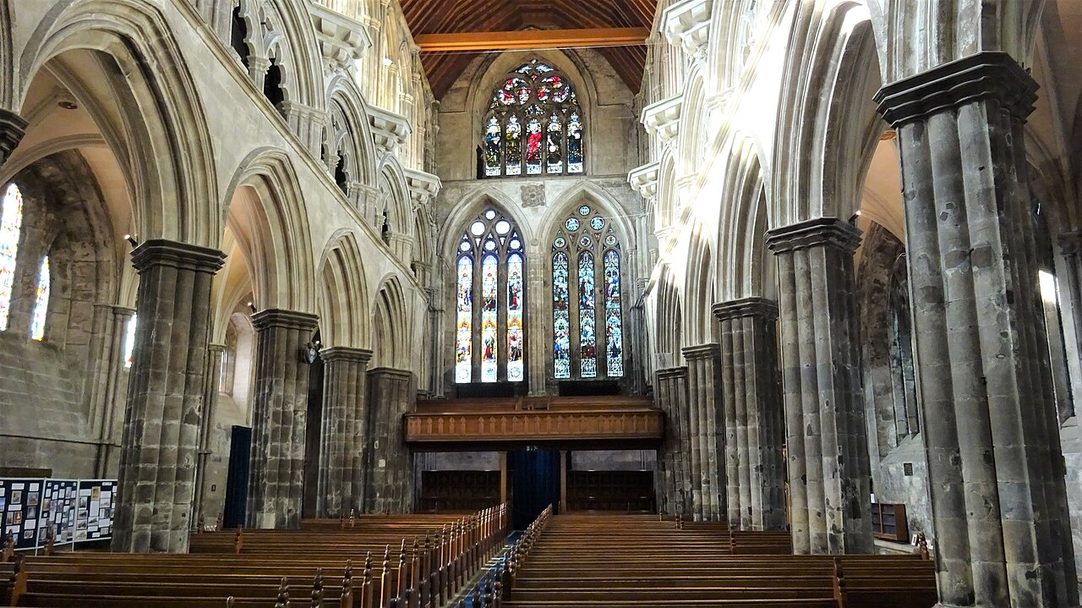
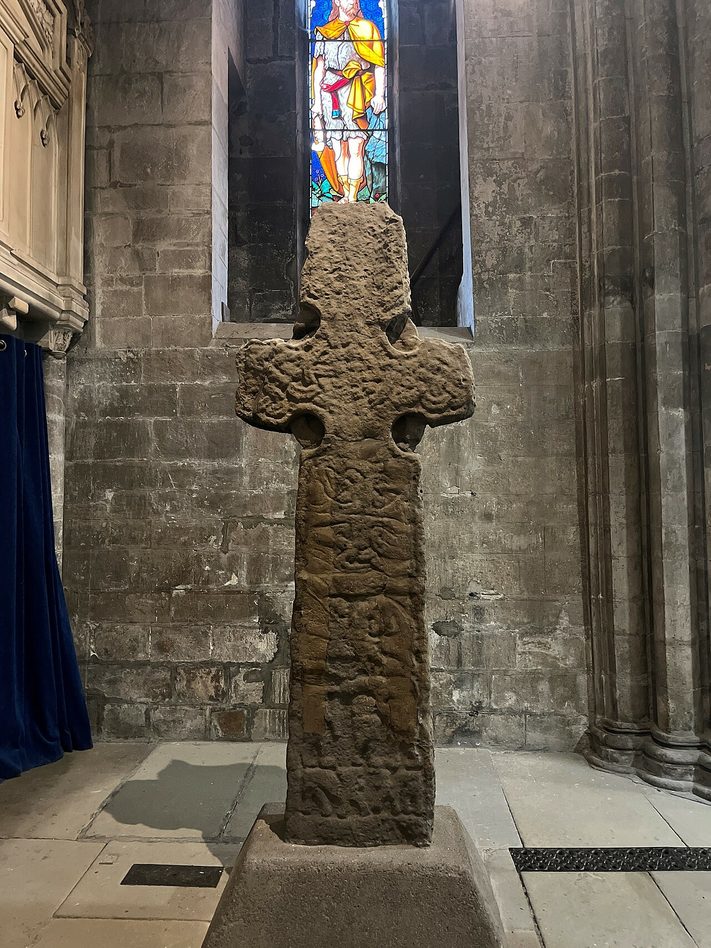
The nave is the medieval core of the abbey: tall pointed arcades, a triforium and clerestory, and a fine collection of stained glass, including windows by Edward Burne-Jones, Daniel Cottier and Stephen Adam. The Barochan Cross, a carved early medieval cross from the kingdom of Strathclyde, stands inside the church.
St Mirin’s Chapel
Off the south transept is St Mirin’s Chapel, built in 1499, with a medieval carved frieze telling the story of the saint’s life.
The choir and the royal tombs
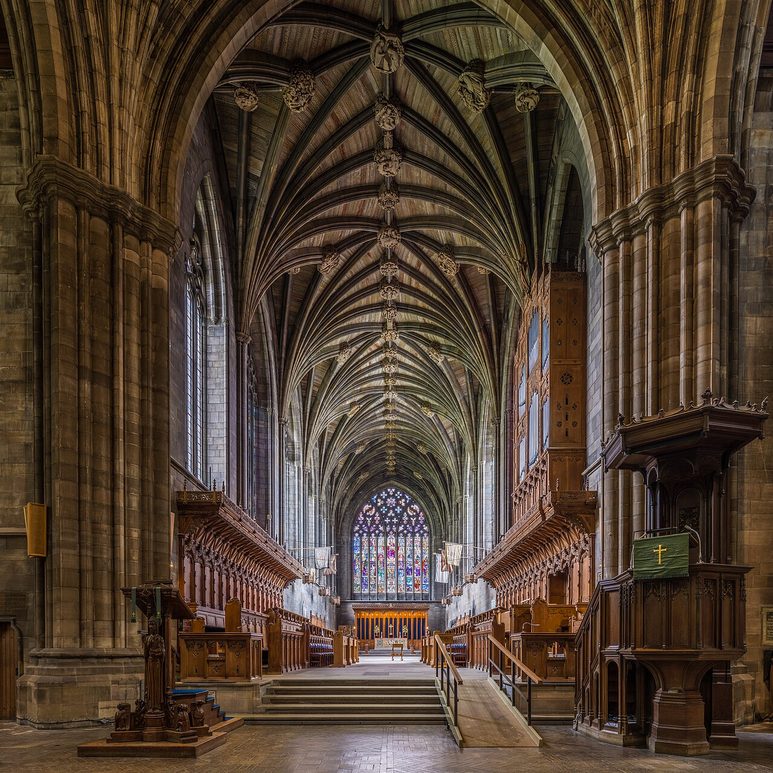
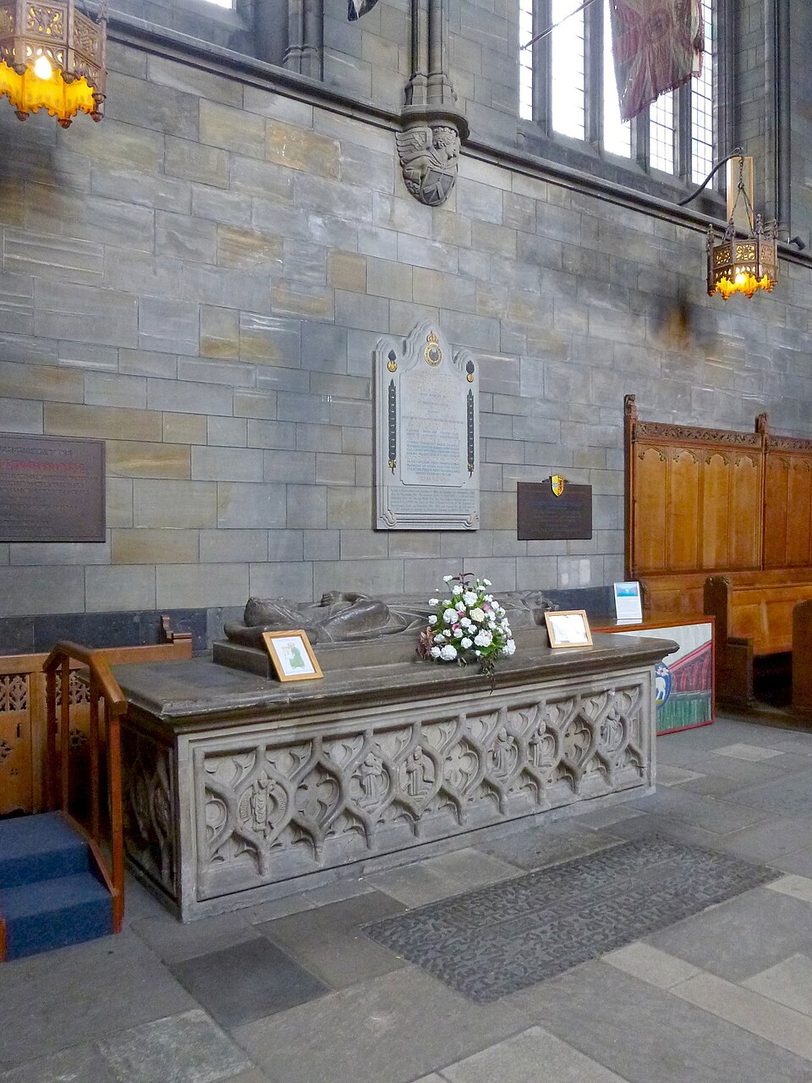
Beyond the crossing is the choir, rebuilt in the twentieth century, with Lorimer’s stone vault and choir stalls and Douglas Strachan’s great east window. On one side is the tomb traditionally said to be Marjorie Bruce’s; on the other, the memorial to Robert III.
The organ
The organ was built in 1874 by Aristide Cavaillé-Coll, the great French organ builder, and restored in 2009. It is heard at Sunday services and in recitals.
The outside and the gargoyle
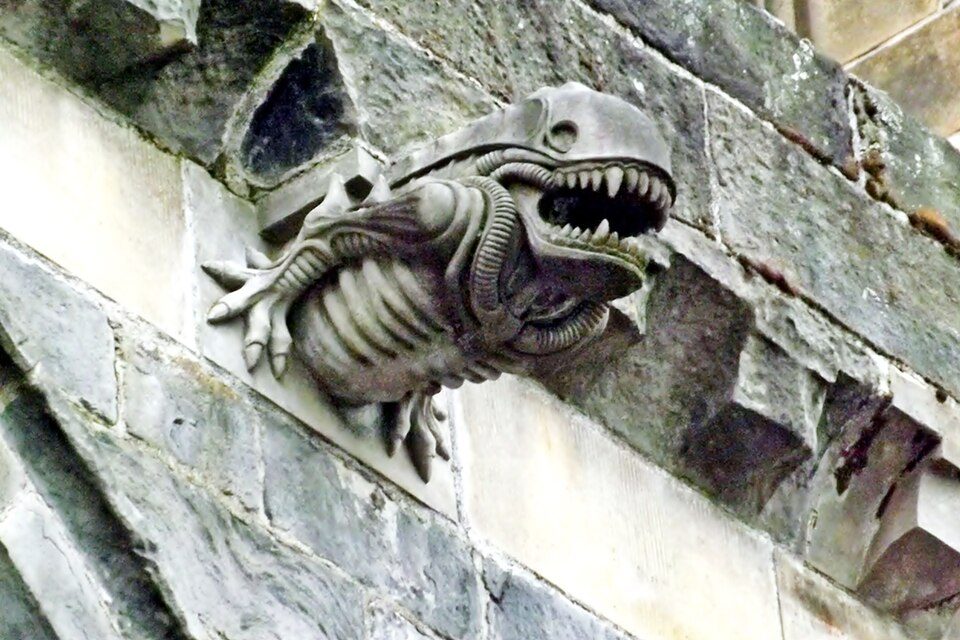
Walk round the outside of the church to the cloister garden, and look up on the south-west side for the gargoyles added in the 1990s restoration, among them the one that looks like the creature from Alien.
Visiting
Free to visit
Entry is free. Tickets for the guided tours, normally on Tuesday, Thursday and Saturday at 2pm, are sold in the abbey shop; groups should call at least a week ahead.
The hotel link goes to Booking.com. This site earns nothing from it at present — it is here because it is the quickest way to check what is actually available.
Don't miss
- Marjorie Bruce’s tomb Mother of the Stewart kings.
- The vaulted choir Lorimer’s finished work.
- St Mirin’s Chapel A medieval carved frieze.
- The Barochan Cross A thousand years old.
- The Cavaillé-Coll organ A French romantic instrument.
- The Alien gargoyle High on the south side.
Insider tips
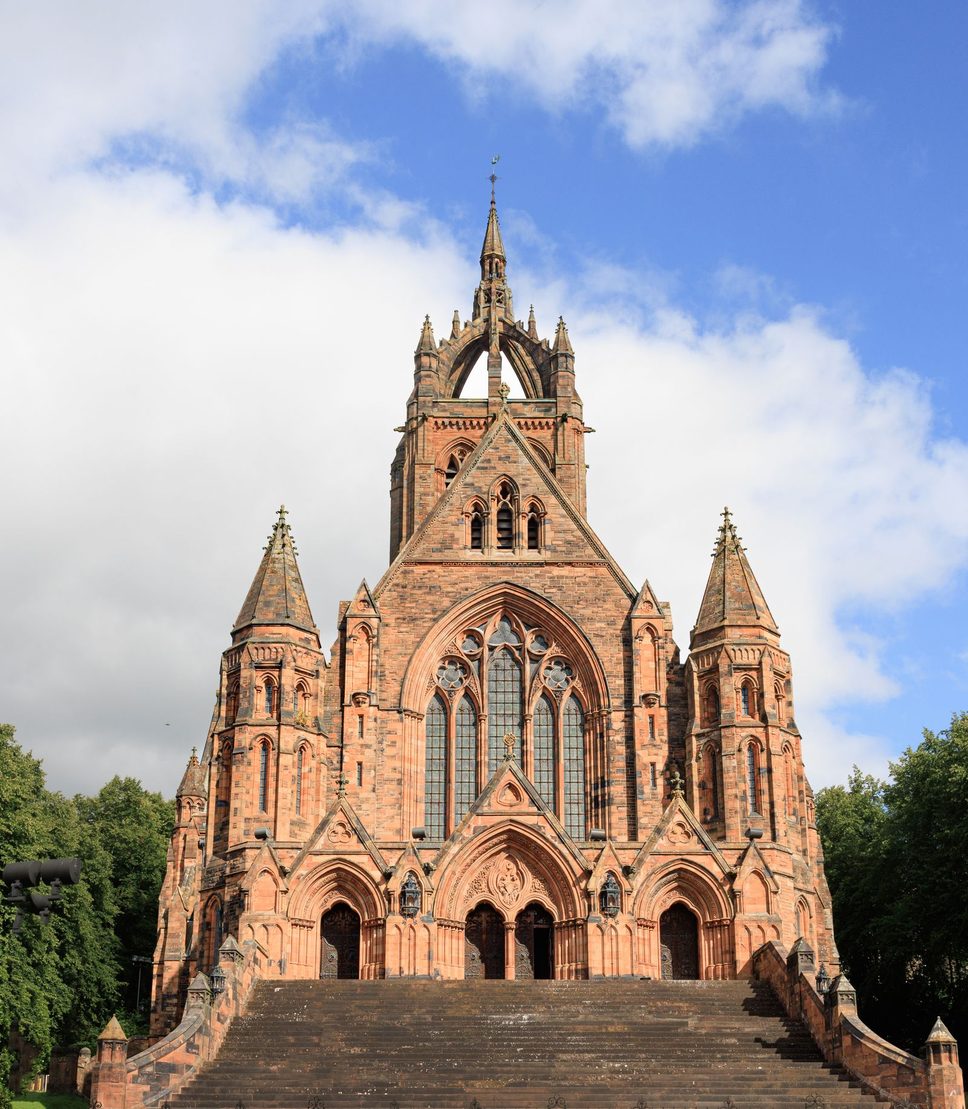
Paisley in 2026 and 2027. Paisley Museum, a short walk away, is closed for a major redevelopment and is due to reopen in early 2027. Meanwhile, the Sma’ Shot Cottages, a weavers’ museum, open on some afternoons in summer, and the Thomas Coats Memorial Church, a red sandstone Victorian cathedral of a church, is up the hill.
Common questions
Is Paisley Abbey free to visit?
There is no admission charge, and donations are welcome. Guided tours, normally on Tuesday, Thursday and Saturday at 2pm, cost £5, with tickets from the abbey shop.
When is Paisley Abbey open?
The abbey, shop and café are normally open Monday to Saturday from 10am to 4pm, with last admission at 3.30pm. On Sundays the abbey is open for services only. It sometimes closes early for events, so check the website before a special trip.
Who is buried in Paisley Abbey?
Marjorie Bruce, daughter of Robert the Bruce, who died in 1316; her son became Robert II, the first Stewart king. King Robert III, who died in 1406, is buried in the choir. Queen Victoria, who was descended from the Stewarts, paid for his memorial.
Is there really an Alien on Paisley Abbey?
Yes. When the stonework was restored in the early 1990s, the carver of the new gargoyles included one that looks very like the creature from the Alien films. It is high on the south-west side of the nave, and became famous online in 2013.
How do you get to Paisley Abbey from Glasgow?
Trains from Glasgow Central to Paisley Gilmour Street take about 11 minutes and run several times an hour. The abbey is a short walk south of the station, across the White Cart Water from the town hall. Glasgow Airport is about two miles away.
Where to stay and eat nearby
The abbey has its own café, open with the abbey. Paisley town centre is across the river, and most visitors stay in Glasgow, eleven minutes away by train.
More churches in Scotland
- Glasgow Cathedral — the medieval cathedral of Glasgow
- Dunfermline Abbey — where Robert the Bruce is buried
- Iona Abbey — another restored abbey church