
Dunfermline Abbey, Fife
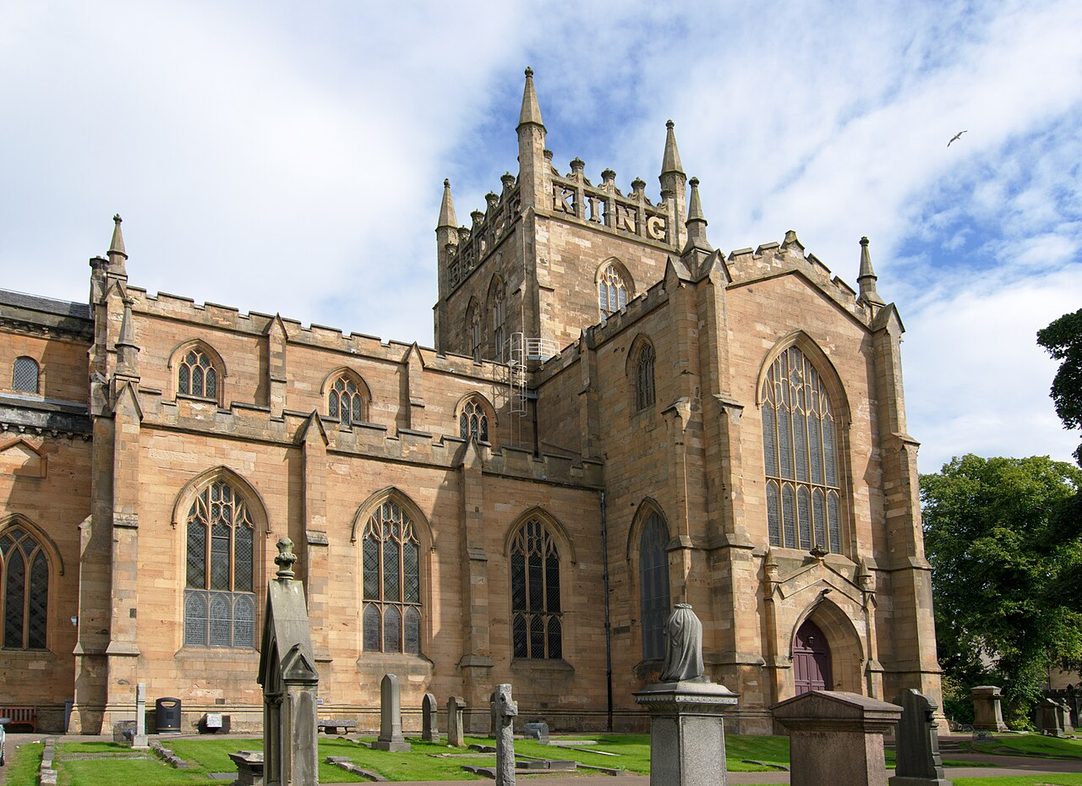
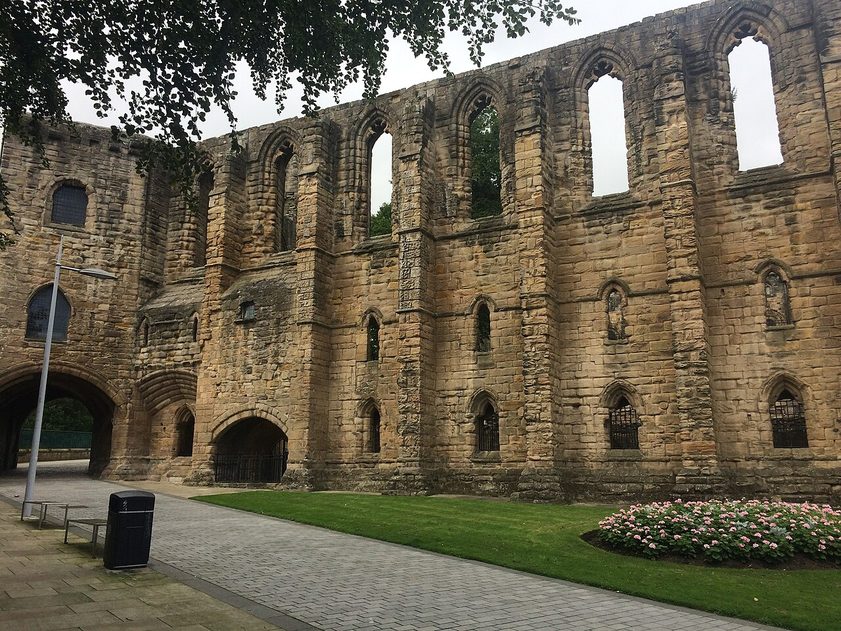
Dunfermline was Scotland’s royal burial ground before Edinburgh was its capital. St Margaret founded a priory here in the eleventh century; her son made it an abbey, and it became the burial place of Scottish kings, Robert the Bruce among them. Today a massive Romanesque nave stands joined to a church of 1821, whose tower spells out KING ROBERT THE BRUCE in stone letters around its top. Both are free.
Margaret, David and the Bruce
Malcolm III married the English princess Margaret at Dunfermline around 1070, and she brought Benedictine monks from Canterbury to found a priory. Their son David I raised it to an abbey in 1128 and began the great church whose nave still stands. Margaret, made a saint in 1250, was buried here, and so were Malcolm, David, Alexander III and, in 1329, Robert the Bruce.
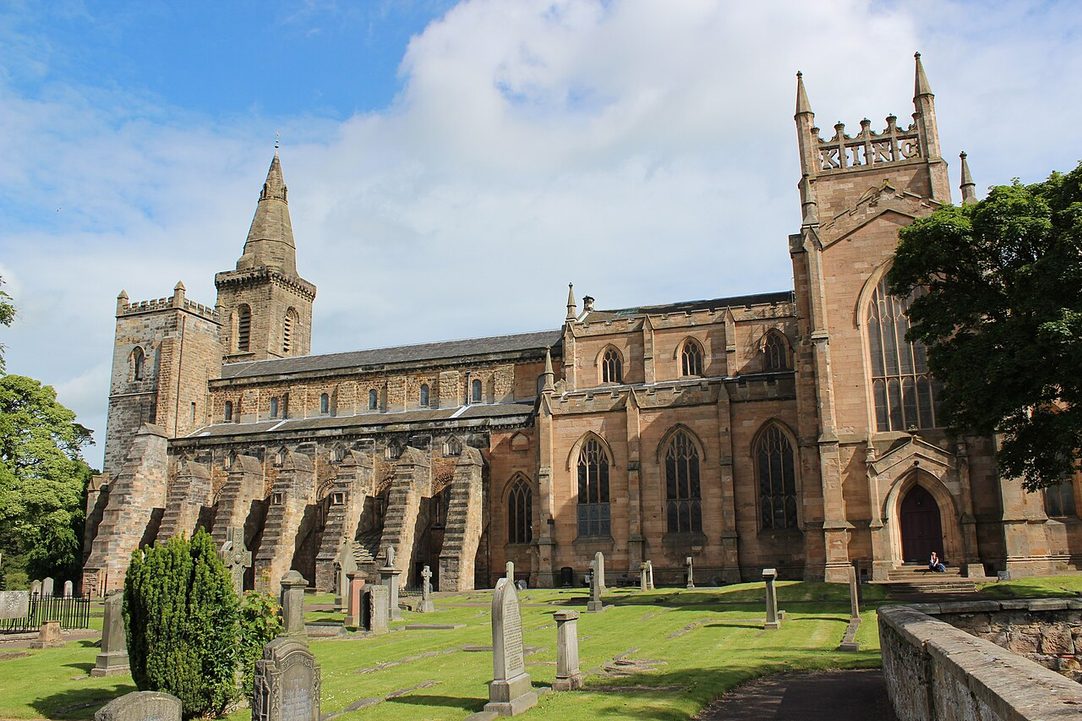
Edward I’s army burned much of the monastery in 1303–04. The Reformers sacked the church in 1560, and the choir and east end fell into ruin; the nave was kept as the parish church. In 1818, while the ground was being cleared for a new church on the site of the old choir, workmen found a skeleton wrapped in lead and cloth of gold, accepted as the Bruce’s. The new church opened in 1821, with his grave beneath its pulpit.
The visitor's cheat sheet
| Where | St Margaret’s Street, Dunfermline, Fife, KY12 7PE |
|---|---|
| Getting there | Train from Edinburgh to Dunfermline City (about 35 minutes), then a ten-minute walk; car parks in the town centre |
| Opening hours | Nave: 1 April–30 September daily 10am–4.30pm; 1 October–31 March Tuesday–Saturday 10am–4pm. Abbey Church: usually Tuesday–Saturday 10am–4pm. Closed 25 December–4 January |
| Admission | Free; donations welcome |
| How long | An hour, more with Pittencrieff Park |
| Best time | A weekday morning, when the Abbey Church is open as well as the nave |
| Dress code | None, but the Abbey Church is a place of worship |
| Tours | Volunteer guides in the Abbey Church; Sunday worship 10.30am |
Hours and admission checked against the official site in October 2026. They change; the official site is always the last word.
Two churches, two owners. The medieval nave is in the care of Historic Environment Scotland; the 1821 Abbey Church is a working Church of Scotland parish church. In August 2026 its trustees asked Historic Environment Scotland to consider taking the Abbey Church into state care too. Check both opening times before you go.
What to see, in the order you meet it
The nave
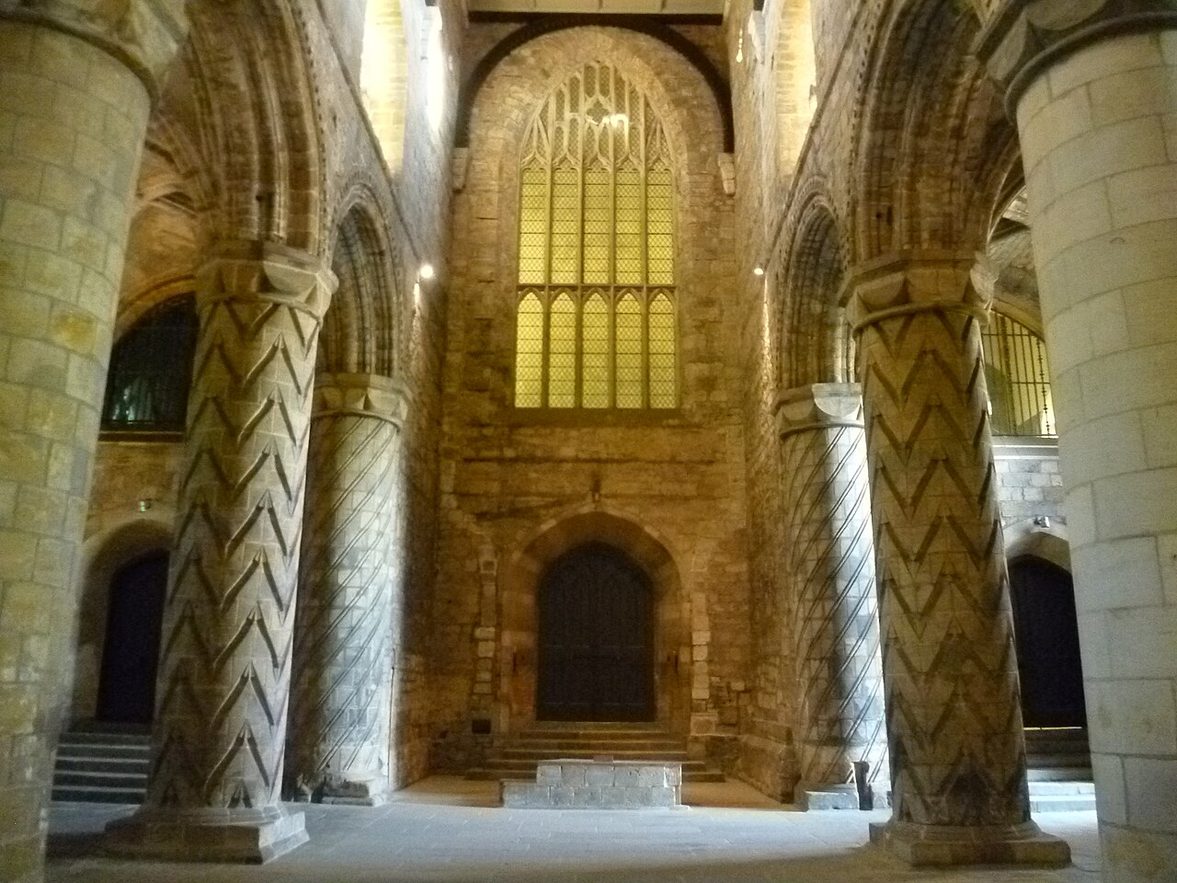
The nave, built in the twelfth century, is one of the finest Romanesque interiors in Scotland. Its massive round pillars are carved with zigzags and spirals, much like those at Durham Cathedral, and its walls lean out so far that huge buttresses were added to hold them up. Look for the memorial windows and the outlines of the medieval altars.
The Abbey Church
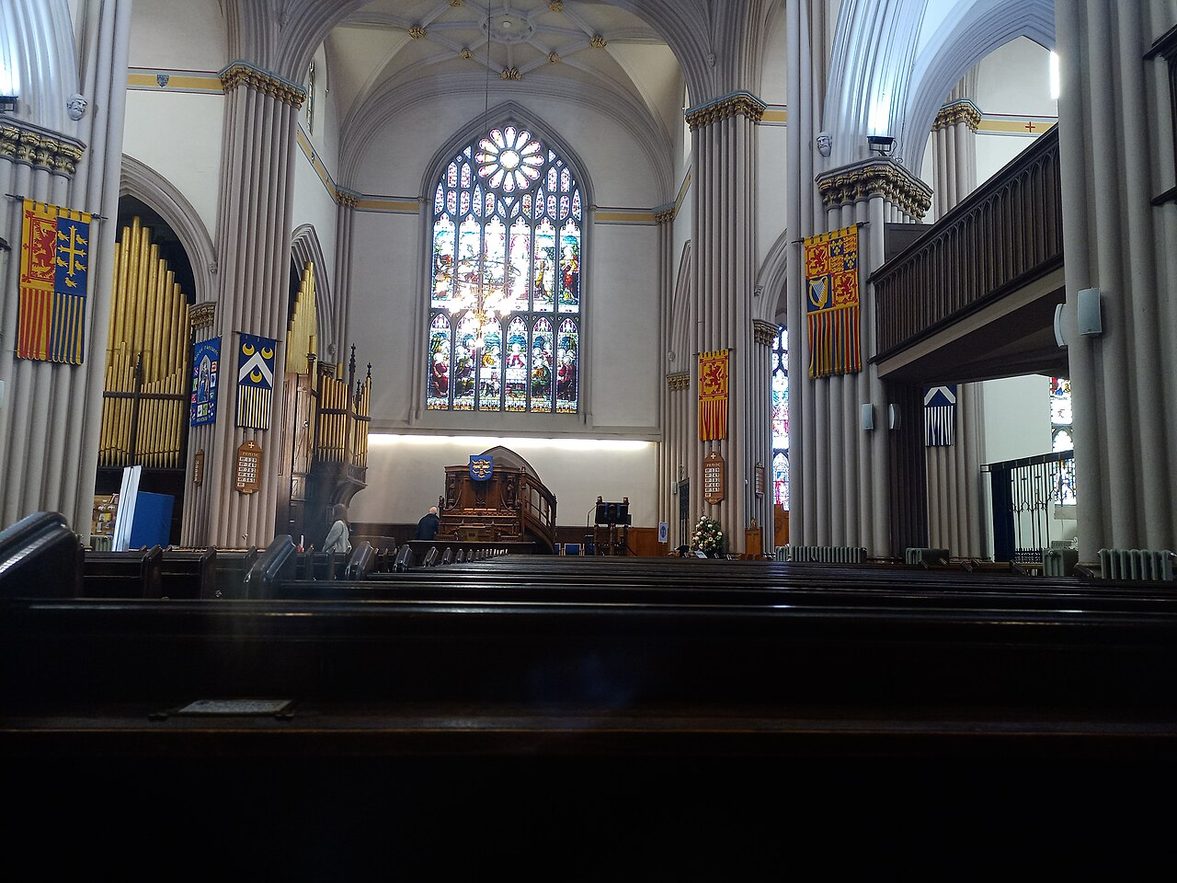
The church of 1821, in a Gothic style, stands on the site of the old choir. Bruce’s grave lies under the pulpit, marked by a brass of 1889. Outside, just east of the church, are the foundations of St Margaret’s shrine, where pilgrims once came to her tomb.
The palace and the glen
South of the abbey, across the road, are the ruins of the guest house that became a royal palace. It was rebuilt for Anne of Denmark, and Charles I was born there in 1600. The palace is currently closed, but its long wall is best seen from Pittencrieff Park below, where you can also find Malcolm’s Tower.
Visiting
Admission
Both the nave and the Abbey Church are free, with donations welcome. In winter the nave is closed on Sundays and Mondays.
The hotel link goes to Booking.com. This site earns nothing from it at present — it is here because it is the quickest way to check what is actually available.
Don't miss
- The nave pillars Romanesque zigzags and spirals.
- Bruce’s grave Under the pulpit of the Abbey Church.
- The tower lettering KING ROBERT THE BRUCE in stone.
- St Margaret’s shrine The foundations east of the church.
- The palace wall Best seen from below.
- Pittencrieff Park The glen and Malcolm’s Tower.
Insider tips
Come Tuesday to Saturday. That is when both the nave and the Abbey Church are usually open. Andrew Carnegie was born in a cottage a few minutes’ walk away, and his birthplace museum makes a good pairing.
Common questions
Is Dunfermline Abbey free to visit?
Yes. Historic Environment Scotland looks after the medieval nave and the grounds, which are free, with donations welcome. The Abbey Church, the working parish church of the Church of Scotland that holds Robert the Bruce’s tomb, is also free.
When is Dunfermline Abbey open?
The nave is open daily from 10am to 4.30pm from 1 April to 30 September, and from 10am to 4pm Tuesday to Saturday from 1 October to 31 March, when it is closed on Sundays and Mondays. It is closed from 25 December to 4 January. The Abbey Church is usually open Tuesday to Saturday, 10am to 4pm, and for Sunday worship at 10.30am.
Where is Robert the Bruce buried?
Under the pulpit of the Abbey Church, which stands on the site of the medieval choir. His grave was found during building work in 1818, and a brass marks it. His heart is buried separately at Melrose Abbey.
Can you go inside Dunfermline Palace?
Not at present. The palace ruins are currently closed, but you can see them from the grounds and from Pittencrieff Park below.
How do you get to Dunfermline Abbey?
Trains from Edinburgh to Dunfermline City station take about 35 minutes; the abbey is a ten-minute walk uphill. It is on St Margaret’s Street, beside Pittencrieff Park in the centre of town.
Where to stay and eat nearby
Dunfermline has cafes and restaurants around the abbey and the High Street, and is an easy day trip from Edinburgh.
More churches in Scotland
- St Giles’ Cathedral — across the Forth in Edinburgh
- Melrose Abbey — where Bruce’s heart is buried
- Rosslyn Chapel — south of Edinburgh