
St Davids Cathedral, Pembrokeshire
At the far western tip of Wales, in Britain’s smallest city, the cathedral of the patron saint of Wales sits in a hollow below the houses, hidden from the sea. For centuries it was one of the great pilgrimage shrines of Europe: two pilgrimages to St Davids, it was said, were worth one to Rome. Inside, the floor slopes, the arcades lean, and above the nave is one of the finest wooden ceilings in Britain.
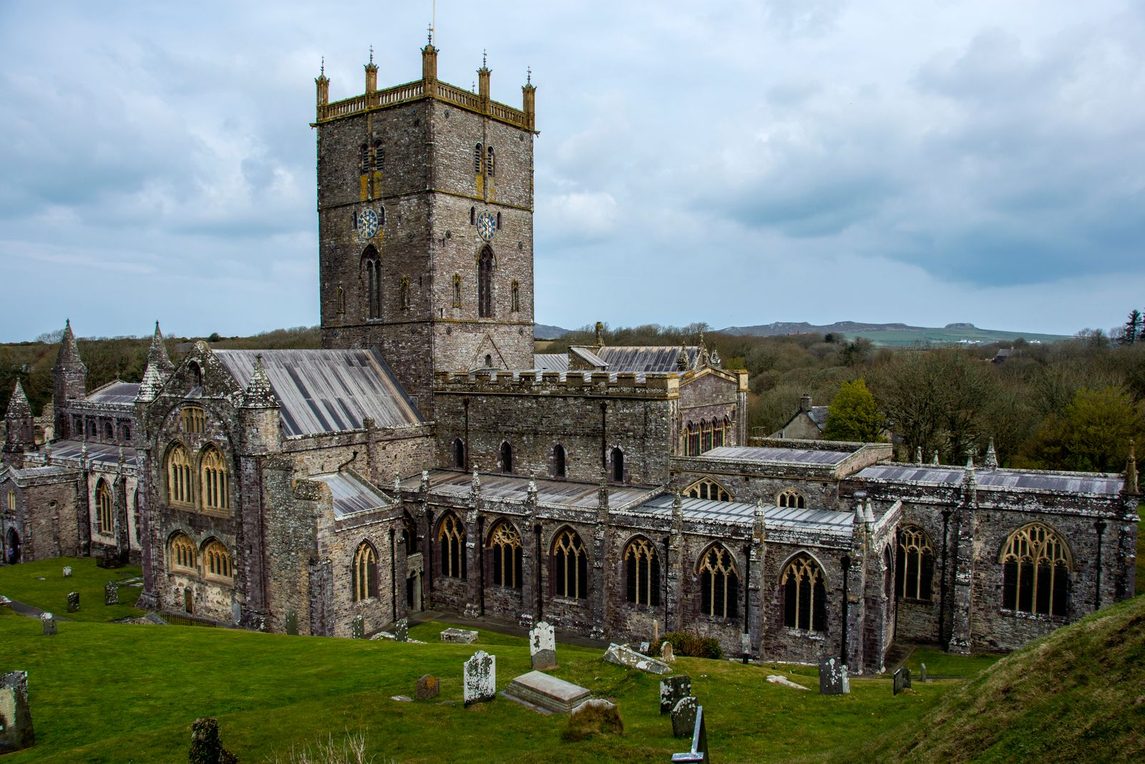
The shrine of St David
David, the patron saint of Wales, founded a monastery here in the sixth century and died, by tradition, in 589. The community survived repeated Viking raids — several of its bishops were killed — and in 1123 the Pope granted St Davids a privilege that made it a great place of pilgrimage. The present cathedral was begun in 1181.
It had a troubled start: the new tower collapsed in 1220, and an earthquake damaged the building in the 1240s. Later bishops added the rood screen, the Holy Trinity Chapel with its fan vault, and the nave ceiling. At the Reformation the shrine was stripped, and in the Civil War the cathedral was badly damaged. John Nash rebuilt the west front in the 1790s, and George Gilbert Scott restored the whole building between 1862 and 1870.
The visitor's cheat sheet
| Where | The Close, St Davids, Pembrokeshire, SA62 6RD |
|---|---|
| Getting there | Buses from Haverfordwest (nearest stations Haverfordwest and Fishguard); car parks in the city, a short walk away |
| Opening hours | Monday to Saturday 10am–4pm; Sunday 1pm–3pm; outside services |
| Admission | Free; suggested donation £5 per adult; Bishop’s Palace (Cadw) ticketed separately |
| How long | An hour; two with the Bishop’s Palace |
| Best time | A weekday morning, then the coast path in the afternoon |
| Dress code | No rule; respectful dress in a working cathedral |
| Tours | Self-guided; occasional guided tours; refectory café; Treasury |
Hours and admission checked against the official site in October 2026. They change; the official site is always the last word.
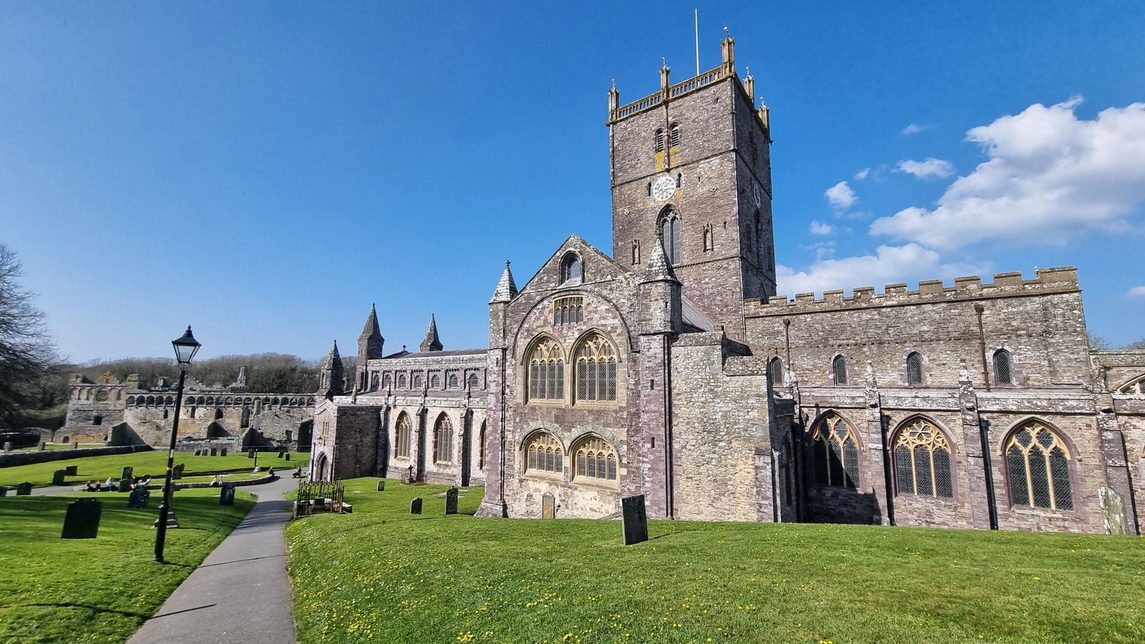
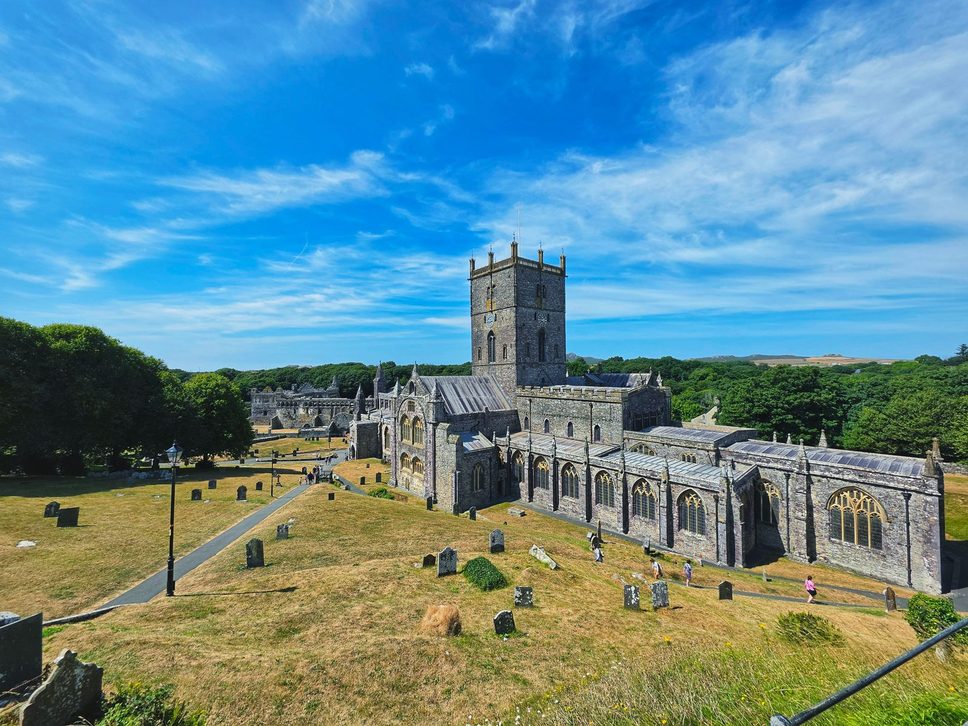
Hidden from the sea. The cathedral stands in the Glyn Rhosyn, the valley of the little River Alun, so low that only the top of its tower can be seen from the surrounding countryside — a defence, it is said, against raiders coming in from the sea.
What to see, in the order you meet it
The approach
From the city, you go down the ‘Thirty-nine Articles’ — a flight of steps — through the gatehouse of Porth y Tŵr, and the whole cathedral and the Bishop’s Palace are spread out below you in the valley.
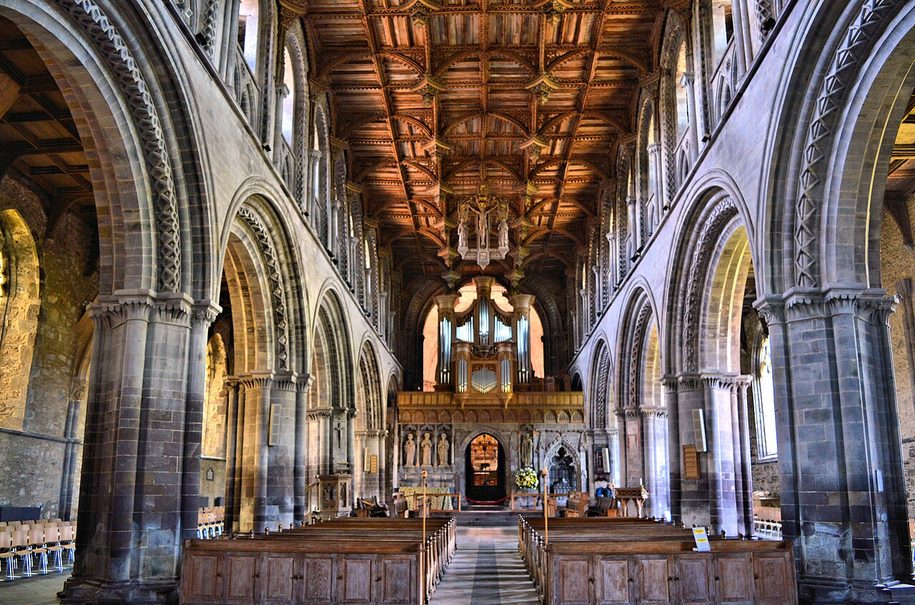
The nave
Inside, the Norman nave has round arches richly carved with zigzag, leaning visibly outwards, and a floor that climbs towards the east end. Above is the ceiling of Irish oak, made in the 1530s, a lattice of carved timber hanging from the roof.
The presbytery and the shrine
Beyond the stone rood screen and the choir stalls with their misericords is the presbytery. In front of the high altar is the tomb of Edmund Tudor, father of Henry VII, brought here from Carmarthen after the Dissolution. On the north side is the shrine of St David, restored and rededicated in 2012 with new painted icons.
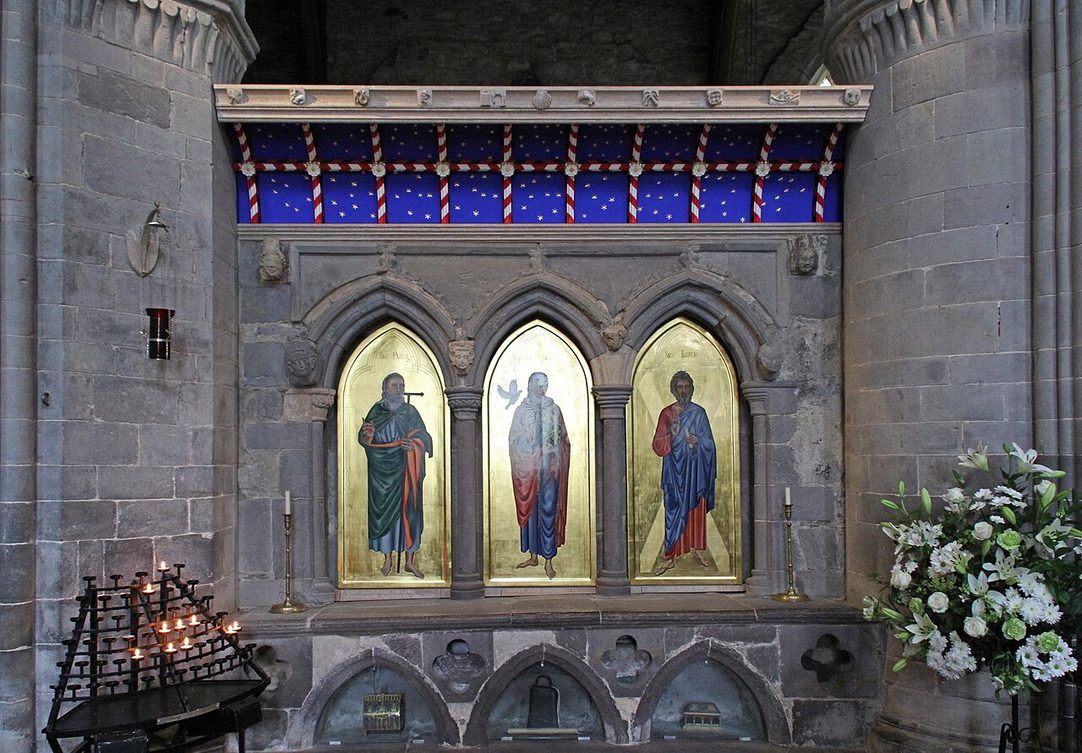
The east end and the Treasury
Behind the high altar is the Holy Trinity Chapel, with its fan vault, and further east the restored Lady Chapel. The Treasury displays the cathedral’s silver and other treasures.
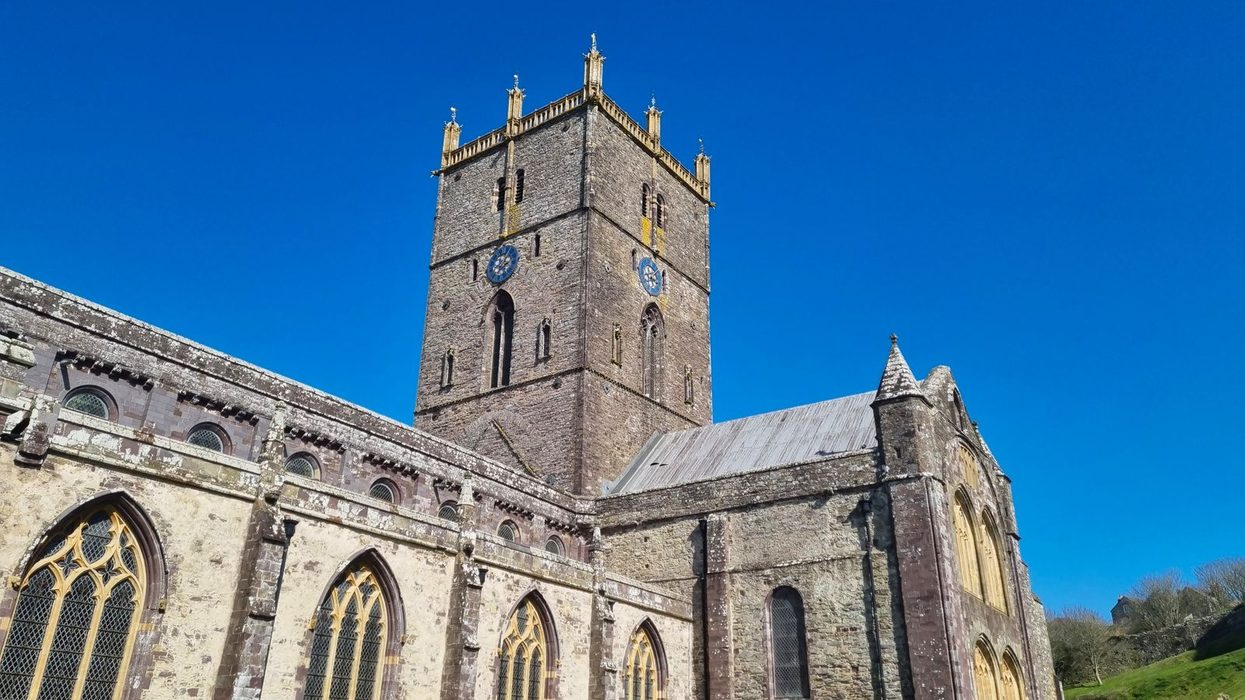
The Bishop’s Palace
Across the stream are the ruins of the medieval Bishop’s Palace, built largely by Bishop Henry de Gower in the fourteenth century, with an arcaded parapet running round the top of its walls. It is cared for by Cadw and has its own ticket.
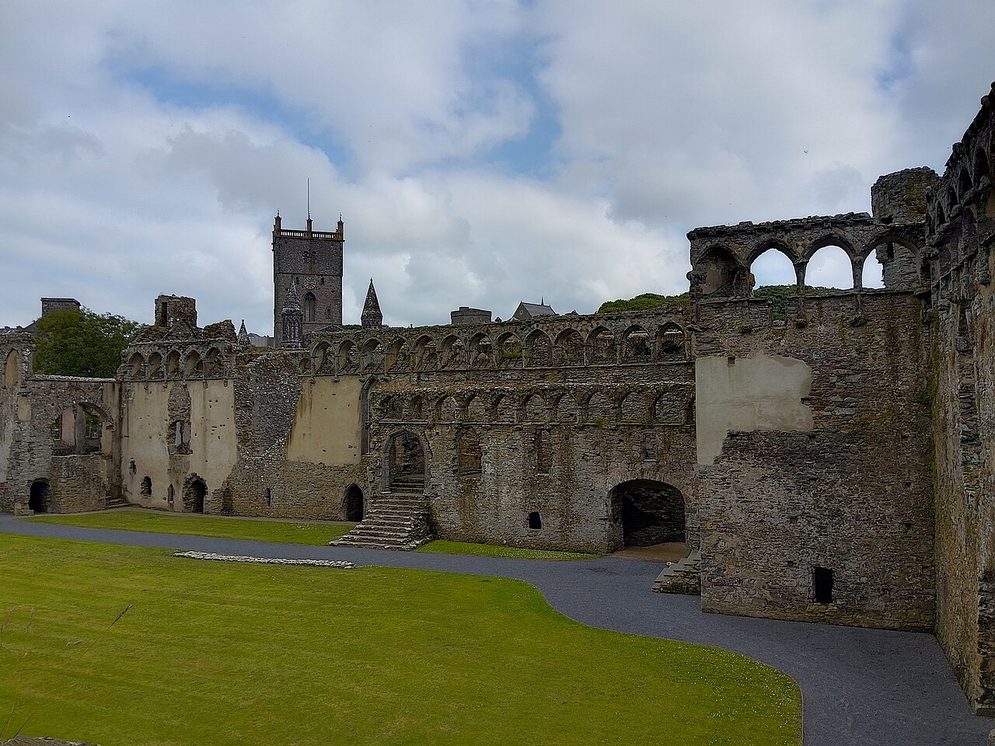
Visiting
Free, with a suggested donation
There is no charge to enter, but the cathedral asks visitors for a donation of £5 a head. It is open for visitors Monday to Saturday from 10am to 4pm and on Sunday afternoons.
The hotel link goes to Booking.com. This site earns nothing from it at present — it is here because it is the quickest way to check what is actually available.
Don't miss
- The nave ceiling Carved Irish oak of the 1530s.
- The sloping floor Nearly four metres from end to end.
- St David’s shrine Restored in 2012.
- Edmund Tudor’s tomb Father of Henry VII.
- The Holy Trinity Chapel Its fan vault.
- The Bishop’s Palace A spectacular ruin next door.
Insider tips
Walk to St Non’s. Just under a mile south of the city, on the Pembrokeshire Coast Path, is St Non’s Bay, traditionally where David was born, with a ruined chapel and a holy well. In summer the cathedral holds concerts and a music festival; check the website.
Common questions
Does it cost anything to visit St Davids Cathedral?
There is no compulsory charge, but the cathedral asks for a donation of £5 per adult visitor towards its upkeep. The Bishop’s Palace next door is run separately by Cadw and has its own ticket.
When is the cathedral open?
For visitors, Monday to Saturday from 10am to 4pm and on Sundays from 1pm to 3pm, outside services. Services and special events can change this, so check the cathedral website before you go.
Why is the floor of the cathedral sloping?
The cathedral was built on sloping, unstable ground beside the River Alun, and the floor rises by nearly four metres from the west door to the east end. The walls and arcades lean too; the building has been moving for centuries.
Is St Davids really a city?
Yes. Because of its cathedral St Davids has long been called a city, and the title was formally confirmed by the Queen in 1995. With fewer than 2,000 people it is the smallest city in Britain.
How do you get to St Davids?
St Davids is at the far western tip of Pembrokeshire. The nearest railway stations are Haverfordwest and Fishguard; buses run from Haverfordwest. The cathedral is a short walk down the hill from the centre of the city, where there are car parks.
Where to stay and eat nearby
St Davids has cafés, pubs and guest houses, and the cathedral has its own refectory café in St Mary’s Hall.
More churches in Wales
- Llandaff Cathedral — Cardiff’s cathedral
- Tintern Abbey — the Cistercian ruin in the Wye Valley
- Churches in Ireland — across the sea from Fishguard