
Rochester Cathedral
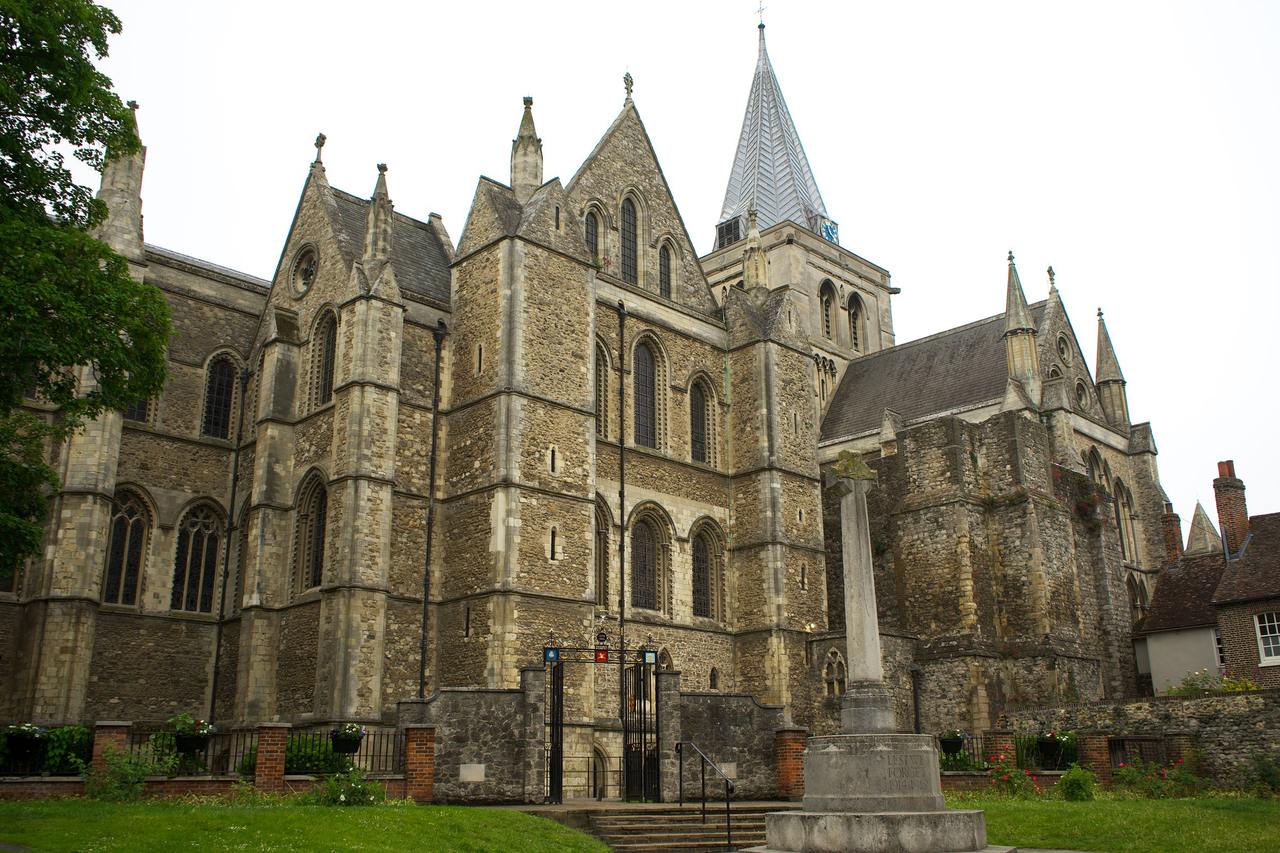
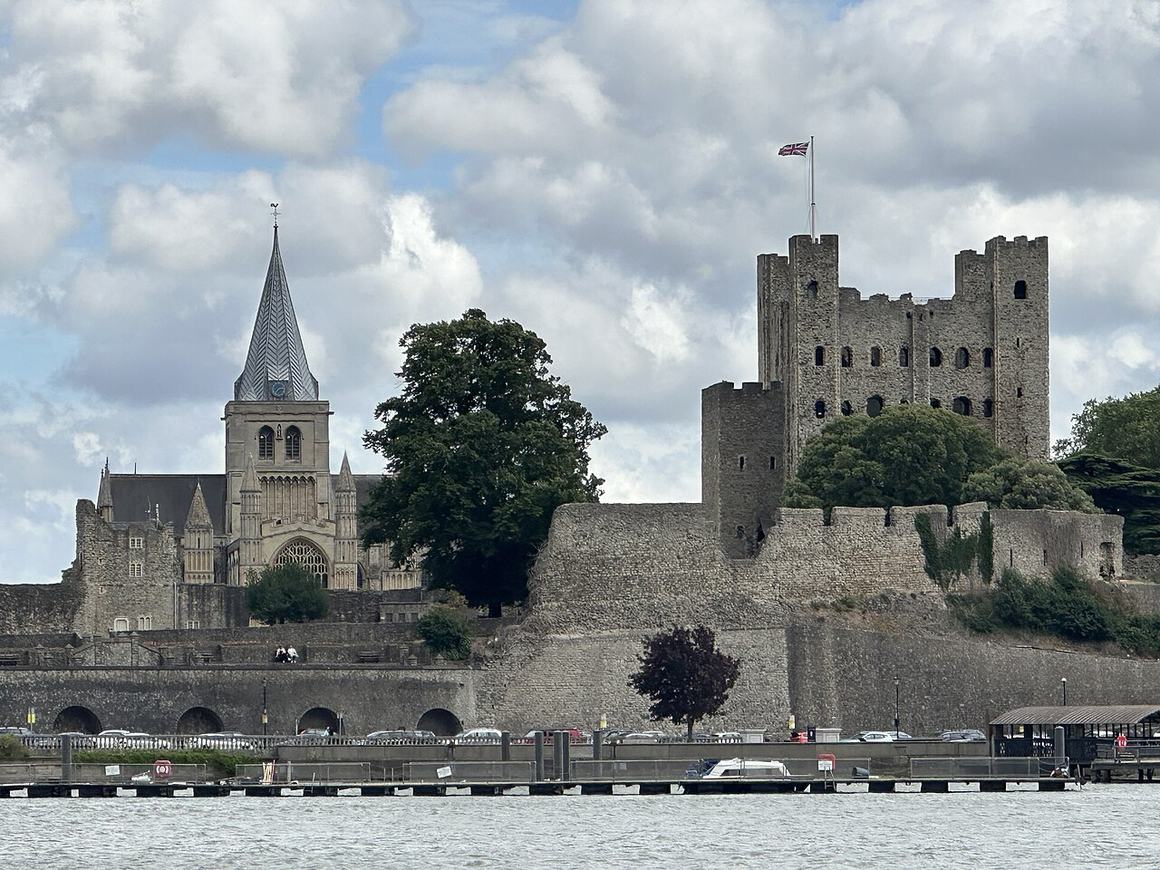
In 604, seven years after St Augustine landed in Kent, his companion Justus was made bishop of Rochester. Only Canterbury is an older cathedral foundation in England. Across the road the Norman castle keep still glowers over the Medway; the bishop who began the Norman cathedral also built the castle’s first stone walls. Rochester is small, a little battered and full of surprises: one of the finest Romanesque doorways in the country, a medieval painting of the Wheel of Fortune, and a book containing the first laws ever written in English.
Justus, Gundulf and the baker from Perth
The first cathedral was founded in 604 by King Æthelberht of Kent for Bishop Justus, one of the missionaries sent from Rome in 601 to reinforce Augustine. Nothing of it can be seen now, though its foundations have been found under the west end of the present building.
After the Norman Conquest the see was given to Gundulf, a monk from the abbey of Bec in Normandy and a gifted builder. Bishop from 1077 to 1108, he refounded the cathedral as a Benedictine priory, began a new church and the castle’s stone walls, and was also responsible for the White Tower at the Tower of London. His successors completed the Norman cathedral, which was dedicated in 1130.
Rochester was never as rich as Canterbury, but in 1201 it acquired a saint of its own. William, a baker from Perth on his way to the Holy Land, was murdered outside the city by his adopted son. His body was brought to the cathedral, miracles were reported, and pilgrims started to come. Their offerings helped pay for the rebuilding of the east end in the new Early English Gothic in the decades after 1200. The cathedral did not have an easy Middle Ages: it was plundered when King John besieged the castle in 1215, and again in 1264. In the twentieth century the tower was given a new spire, in 1904, based on its medieval predecessor.
The visitor's cheat sheet
| Where | The Precinct, Rochester, Kent, ME1 1SX, between the High Street and the castle |
|---|---|
| Getting there | Rochester station is about 10 minutes’ walk; trains from London St Pancras, Victoria and Charing Cross take from about 35 minutes |
| Opening hours | Mon–Fri 10am–5pm; Sat 10am–4pm; Sun 12pm–4pm (the crypt café and exhibition are closed on Sundays). Large services and events occasionally close the cathedral |
| Admission | Free; donations welcome. Guided tours about £7 per person, under-10s free, on set dates — book online |
| How long | About 1 hour; half a day with the castle opposite |
| Best time | A weekday morning; combine it with Rochester Castle across the road |
| Dress code | No formal code; respectful dress as in any working church |
| Photography | Allowed for personal use, but not during services or rehearsals |
Hours and admission checked against the official site in October 2026. They change; the official site is always the last word.
Short Saturdays. Rochester closes at 4pm on Saturdays and opens only at noon on Sundays, when the crypt café and exhibition are shut. For the full visit, come on a weekday.
What to see, in the order you meet it
The west front and doorway
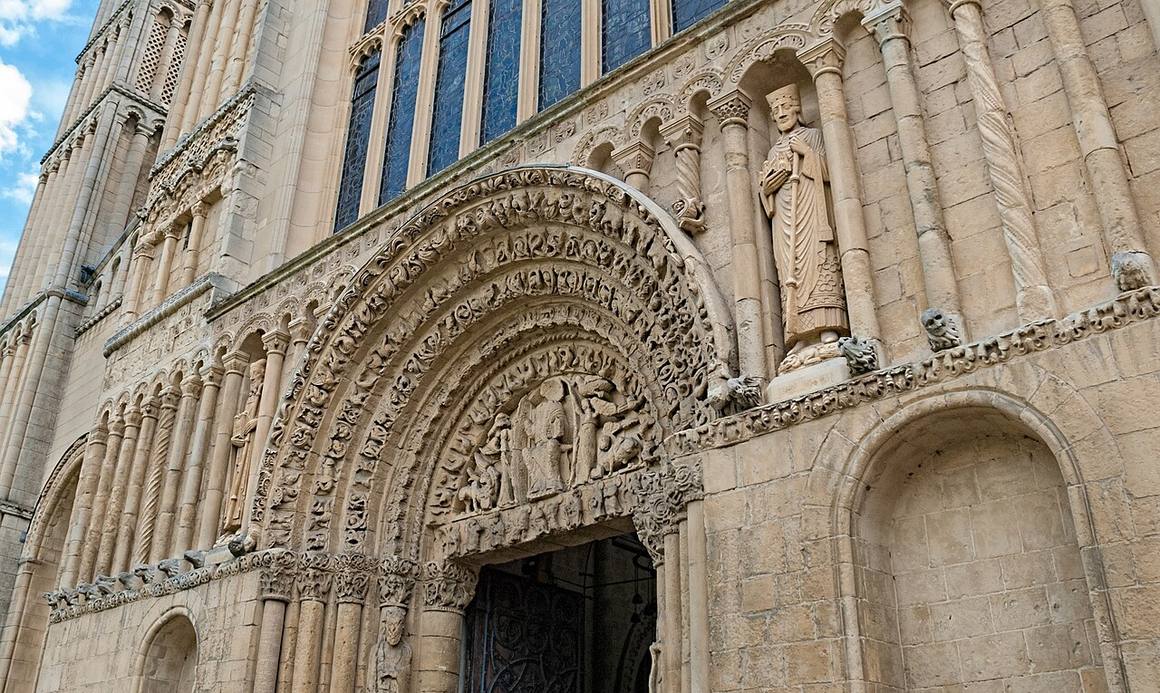
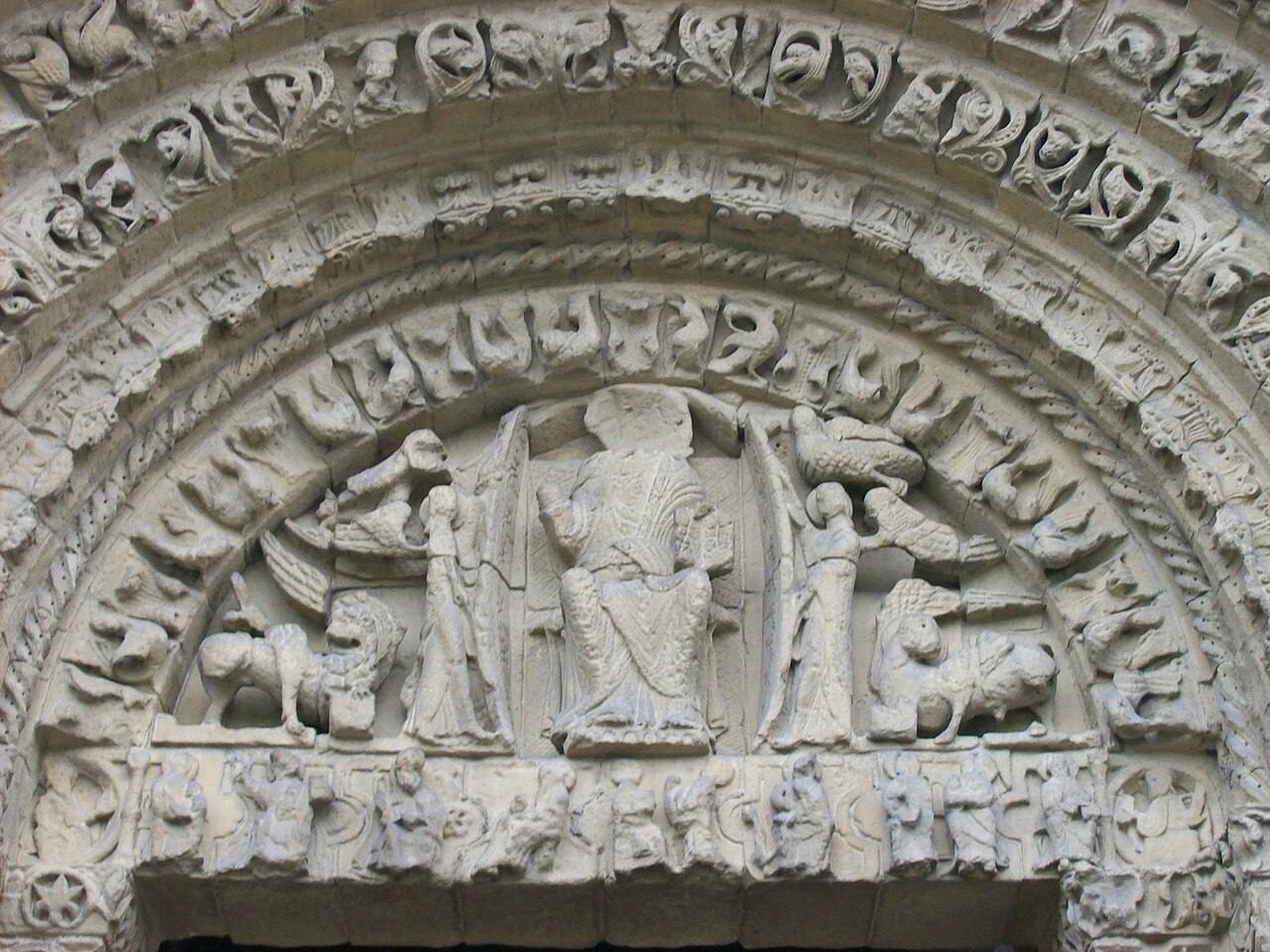
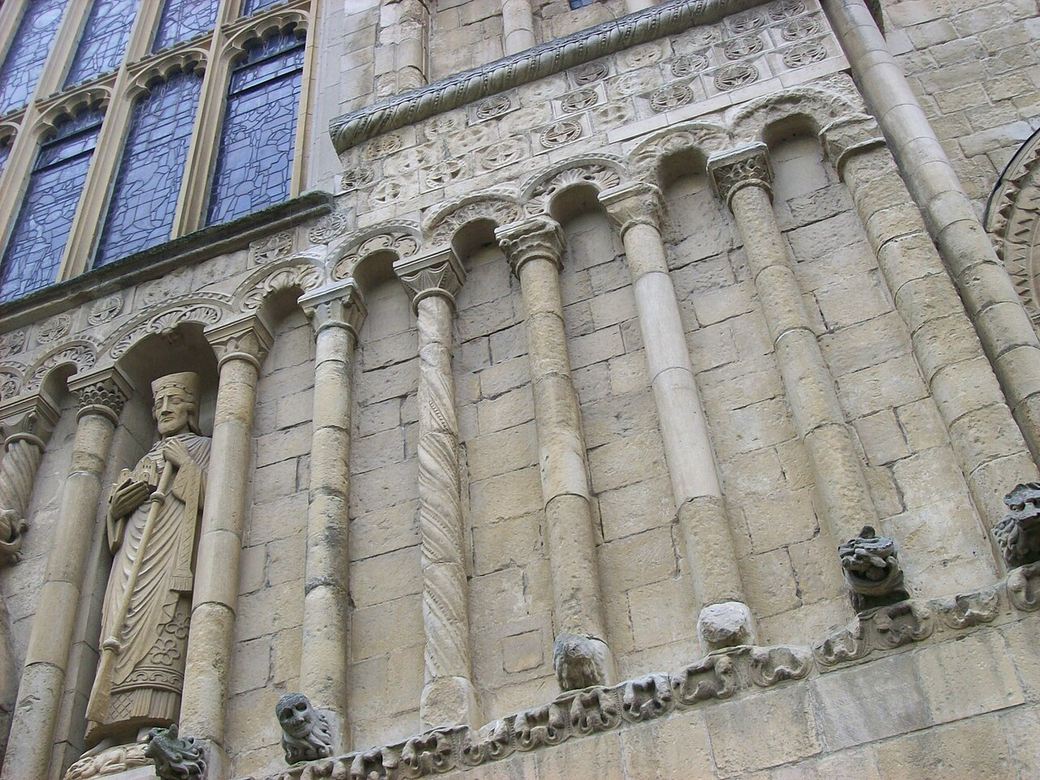
Start outside. The west front is Romanesque, of the mid-twelfth century, and at its centre is the great doorway of about 1160: five orders of carved arches, and in the tympanum Christ in Majesty surrounded by the symbols of the four evangelists, with the apostles in a row beneath. On either side of the door stand two tall column figures, generally identified as Solomon and the Queen of Sheba — among the earliest statues of their kind in England, modelled on the great portals of France. Look also at the blind arcading on the turrets either side.
The nave
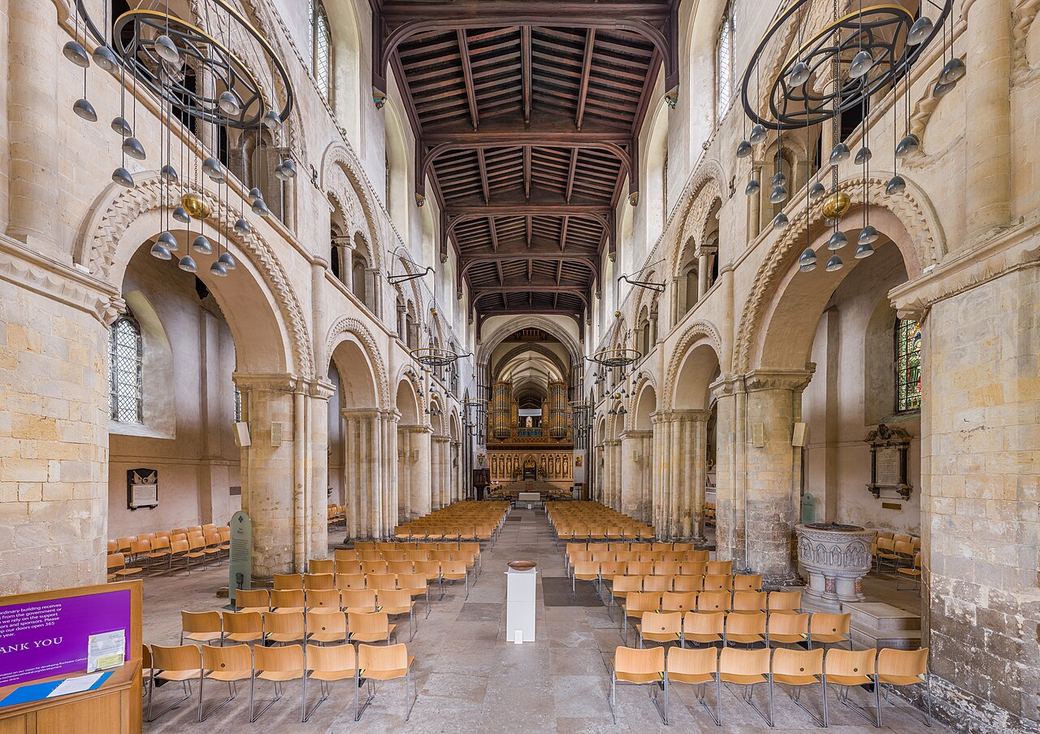
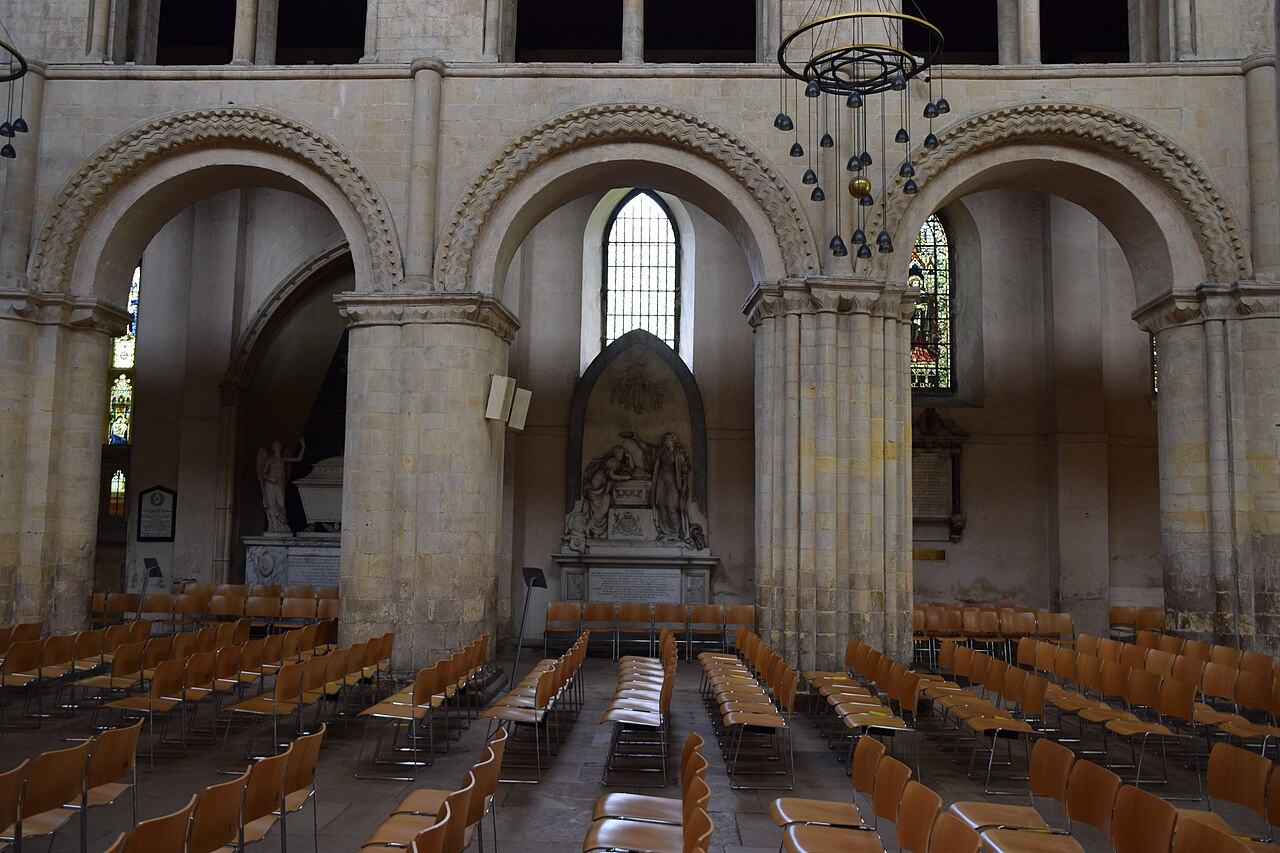
Inside, the nave is Norman, with round arches on massive piers and a gallery above decorated with chevron and diaper patterns, under a flat timber roof. Look up at the clerestory, which was rebuilt in the fifteenth century with larger windows. The nave is lighter and more intimate than the great Norman naves of Durham or Ely, but it is the same family.
The quire and the Wheel of Fortune
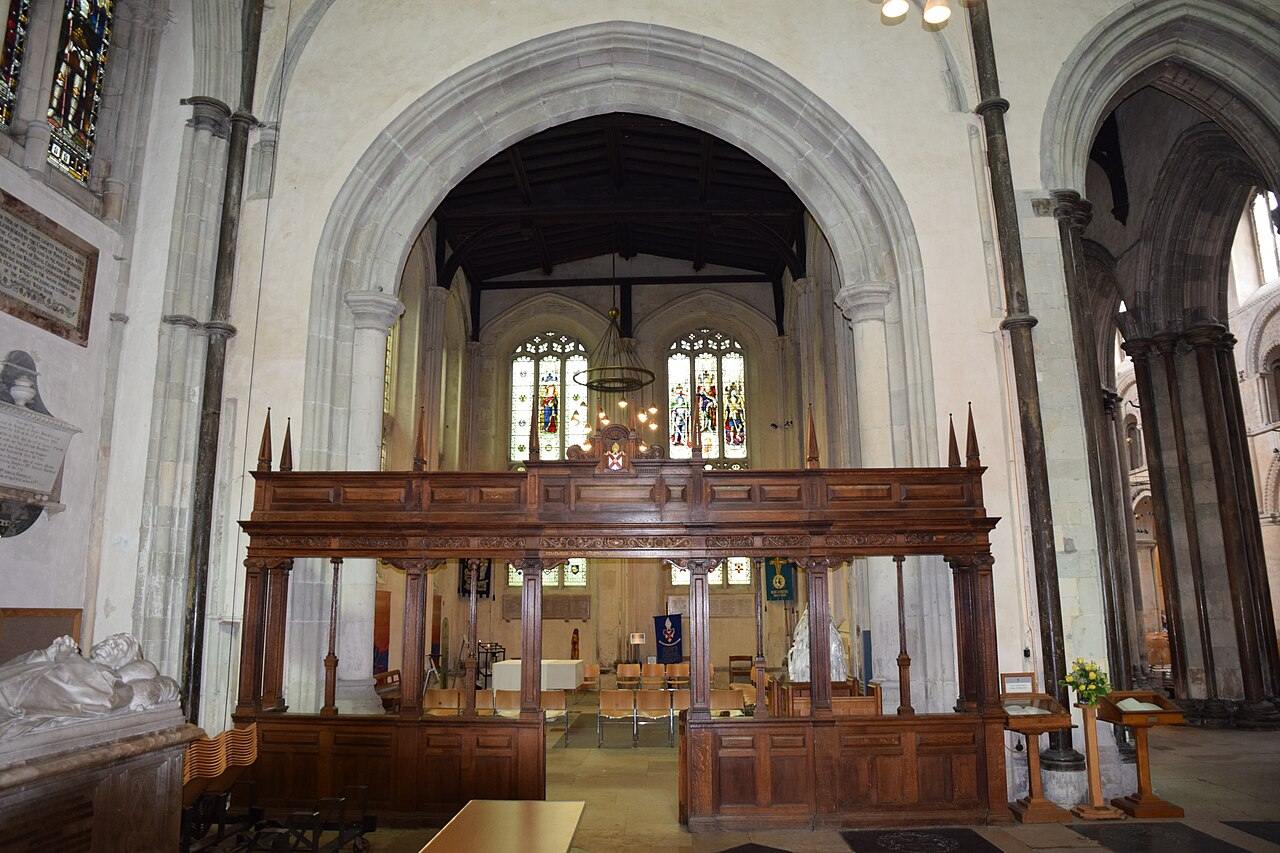
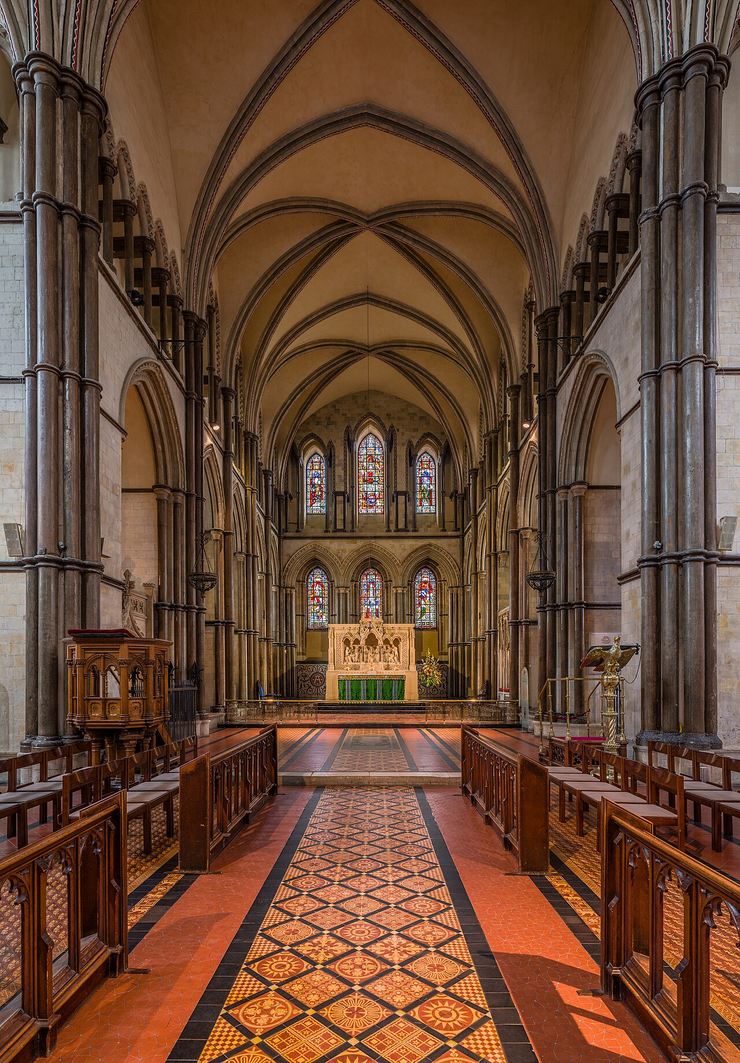
Climb the steps through the screen into the quire, and the building changes to the Early English Gothic paid for by William of Perth’s pilgrims. The steps to the east end are worn into hollows by centuries of feet; they are known as the pilgrim steps.
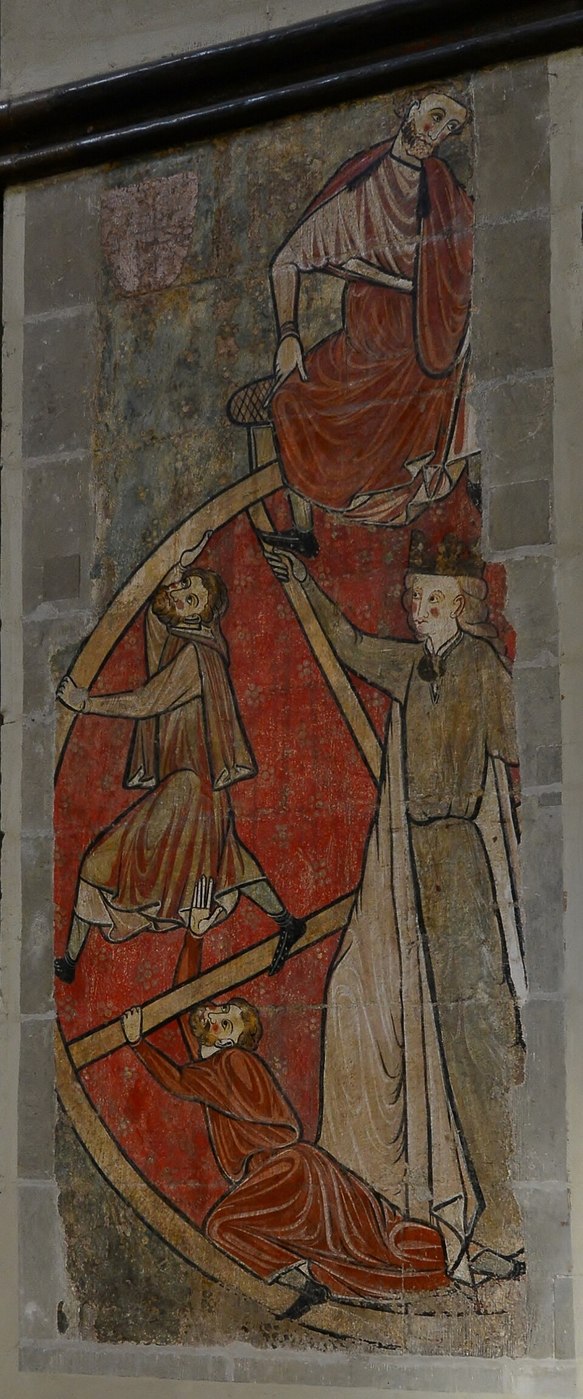
On the north wall of the quire is the cathedral’s greatest painting: the Wheel of Fortune, painted in the mid-thirteenth century. Fortune turns her wheel, and figures climb up one side towards a crowned king at the top; the descending half, where they fall, has been lost. Only part of it survives, but it is one of the finest medieval wall paintings in England, and it was a pointed thing to put in front of the monks’ stalls.
The presbytery and the chapter room door
The presbytery and east transepts are elegant thirteenth-century work in pale stone with dark Purbeck marble shafts. Off the south-east transept is one of the best pieces of fourteenth-century carving in the building: the doorway to the former chapter room, of the 1340s, with figures of the Church and the Synagogue on either side and bishops and angels in the arch above.
In the north transept is something much newer: a fresco of the Baptism of Christ, painted in 2004 by the Russian artist Sergei Fyodorov, in true fresco on fresh plaster — said to be the first in an English cathedral for some eight hundred years.
The crypt and the Textus Roffensis
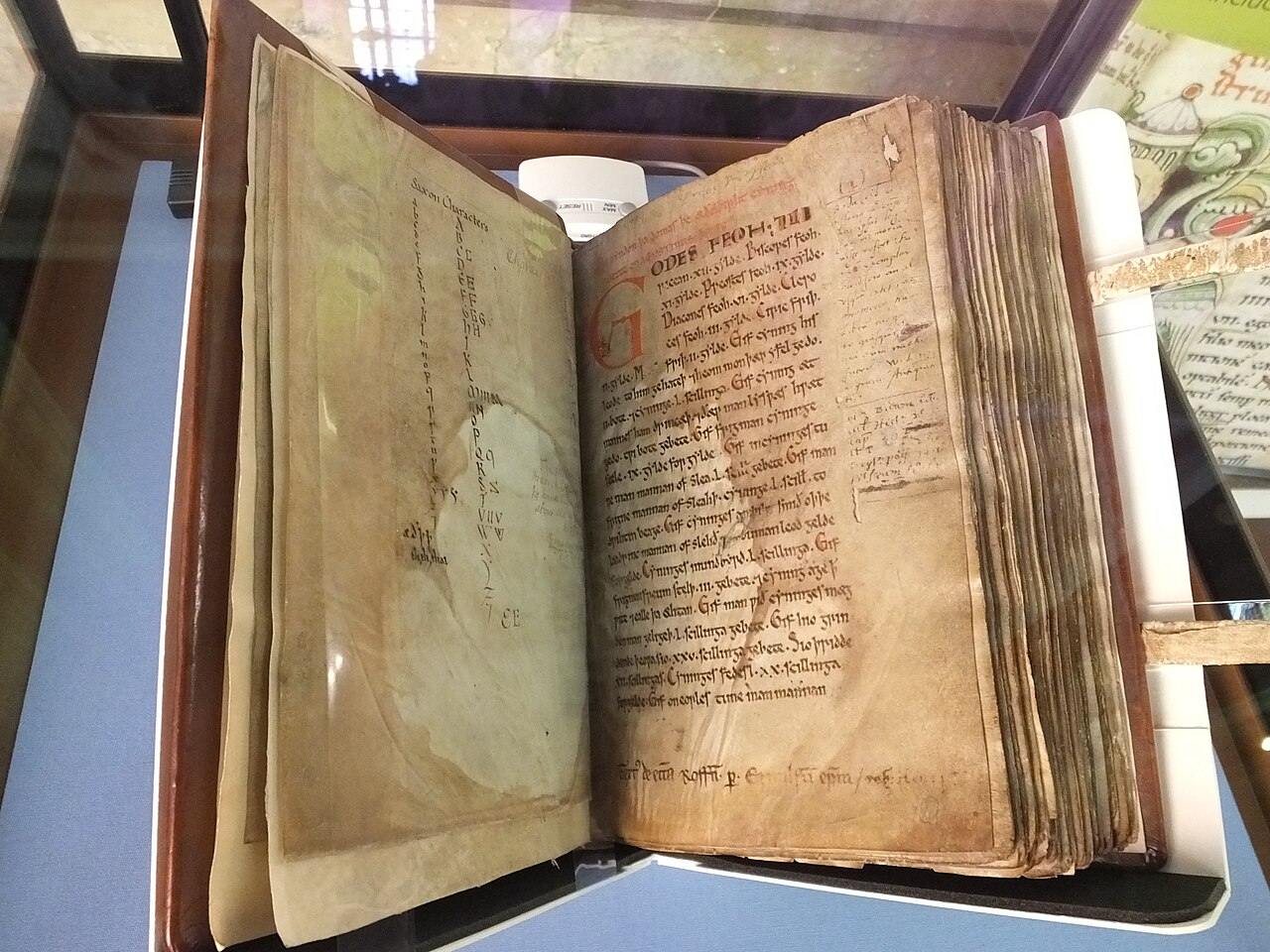
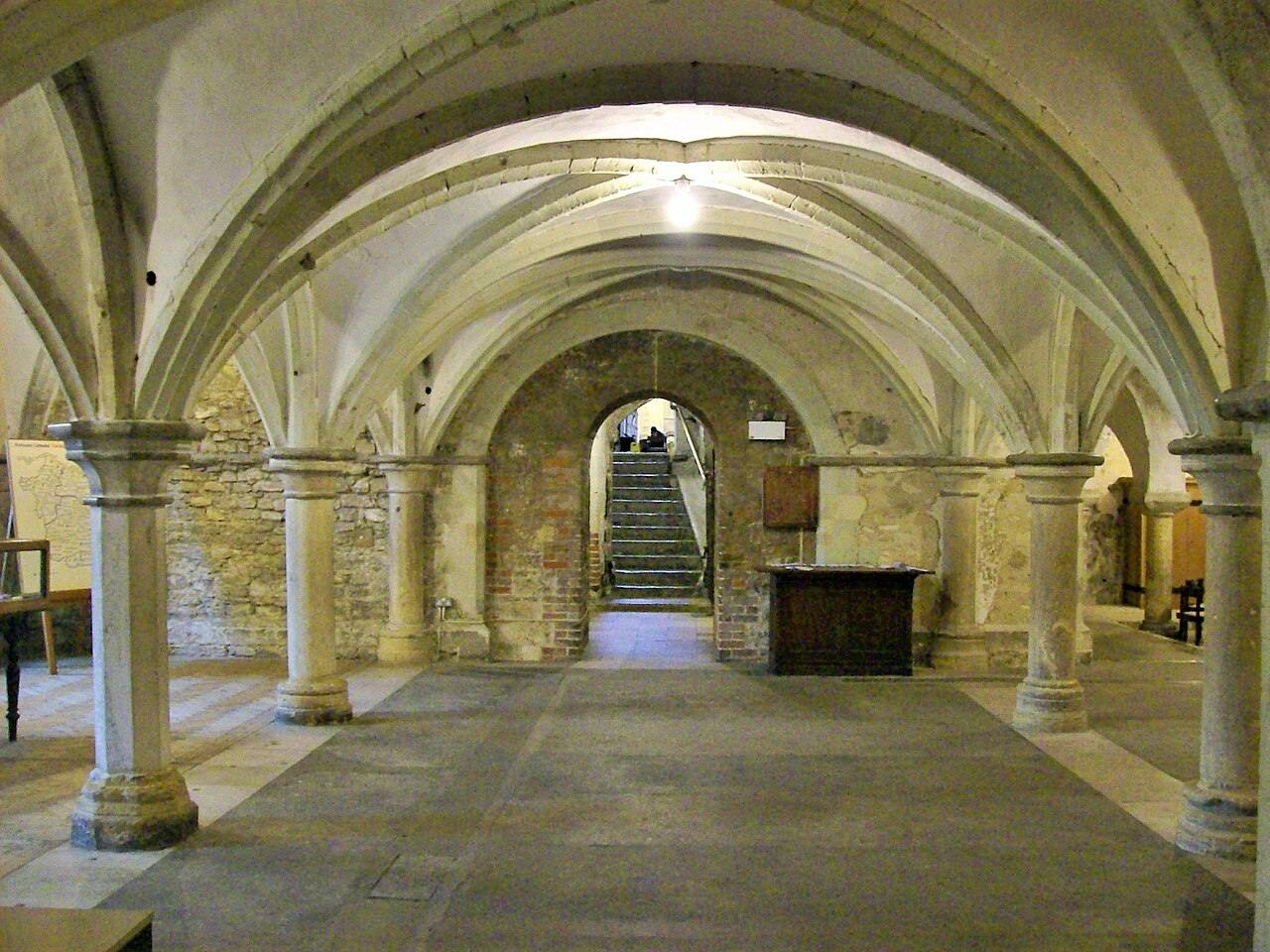
Beneath the east end is the crypt, partly Gundulf’s of the 1080s and partly thirteenth century, now home to the café. The cathedral’s exhibition explains its history and, when it is on display, shows the Textus Roffensis: a book written at Rochester around 1123 that preserves the laws of King Æthelberht of Kent, issued around 600 and the earliest laws ever written in English. Nothing else survives of them.
Tickets and tours
Book a guided tour
General guided tours last an hour and run on set dates through the year, usually mid-morning or early afternoon; they cost about £7 and are booked online. Groups of ten or more must book in advance.
Tour and hotel links go to GetYourGuide and Booking.com. This site earns nothing from them at present — they are here because they are the quickest way to check what is actually available.
Don't miss
- The west doorway Christ in Majesty and two of England’s earliest column statues, about 1160.
- The Wheel of Fortune A mid-thirteenth-century painting on the quire wall.
- The pilgrim steps Worn hollow by visitors to the shrine of William of Perth.
- The chapter room doorway Fourteenth-century carving of the Church and the Synagogue.
- The Textus Roffensis The earliest laws in English, when it is on display.
- The fresco A modern Baptism of Christ in the north transept.
- The castle opposite The tallest Norman keep in England, and worth the climb.
Insider tips
Do the castle too. Rochester Castle, opposite the west front and run by English Heritage, has the tallest Norman keep in England, and the view from the top takes in the cathedral, the Medway and the bridge. Together the two make an easy half-day from London.
Rochester is Dickens country. He grew up in nearby Chatham, lived at Gad’s Hill just outside the city, and used Rochester in The Pickwick Papers, Great Expectations and his last novel, The Mystery of Edwin Drood, set in a thinly disguised version of the cathedral city. He wanted to be buried here; Westminster Abbey won, but there is a memorial to him in the cathedral.
Evensong is sung on most days and is free. The cathedral’s gardens, including the old monastic precinct south of the building, are worth a wander.
Common questions
Is Rochester Cathedral free to visit?
Yes. Admission is free and donations are welcomed. Guided tours cost about £7 per person, with under-10s free, and charges apply to groups and school visits.
How old is Rochester Cathedral?
The cathedral was founded in 604, seven years after St Augustine reached Kent, which makes it the second-oldest cathedral foundation in England after Canterbury. The present building was begun by the Normans in the 1080s and has Norman, Early English and later work.
What is the Textus Roffensis?
A manuscript book written at Rochester around 1123. It contains the only surviving copy of the laws of King Æthelberht of Kent, the earliest law code written in English, as well as the earliest copy of Henry I’s Coronation Charter, a forerunner of Magna Carta. It has been on display in the cathedral.
What is the connection with Charles Dickens?
Dickens grew up partly in Chatham and later lived at Gad’s Hill, just outside Rochester. He used the city in several books and set his last, unfinished novel, The Mystery of Edwin Drood, in a cathedral city modelled on it. He hoped to be buried here, but was buried in Westminster Abbey; there is a memorial to him in the cathedral.
How do you get to Rochester from London?
By train: high-speed services from London St Pancras and other trains from London Victoria and Charing Cross take from about 35 minutes. Rochester station is a short walk from the cathedral.
Where to stay and eat nearby
The crypt café is open every day except Sunday. Rochester High Street, with its timber-framed buildings and second-hand bookshops, has plenty of tearooms and pubs, all within a couple of minutes of the cathedral.
More English cathedrals
- Canterbury Cathedral — the only older foundation, forty minutes away
- St Paul’s Cathedral — founded the same year, 604, but rebuilt after the Great Fire
- Chichester Cathedral — another Norman cathedral of the south-east
See all the cathedrals and churches worth visiting in England →