
St Paul’s Cathedral
The design that was built is not the design Wren wanted. His favourite, the Great Model, survives in the cathedral: a Greek cross, domed, sober, unmistakably Continental, and the clergy rejected it because it looked nothing like an English cathedral and offered nowhere to put a choir. Wren is said to have wept. What he built instead is a compromise with a long nave and a conventional plan — and then he put his dome on top of it anyway, and got a royal warrant allowing him to make “ornamental rather than essential” changes as he went, which he used for the next thirty-five years to build most of what he had been refused.
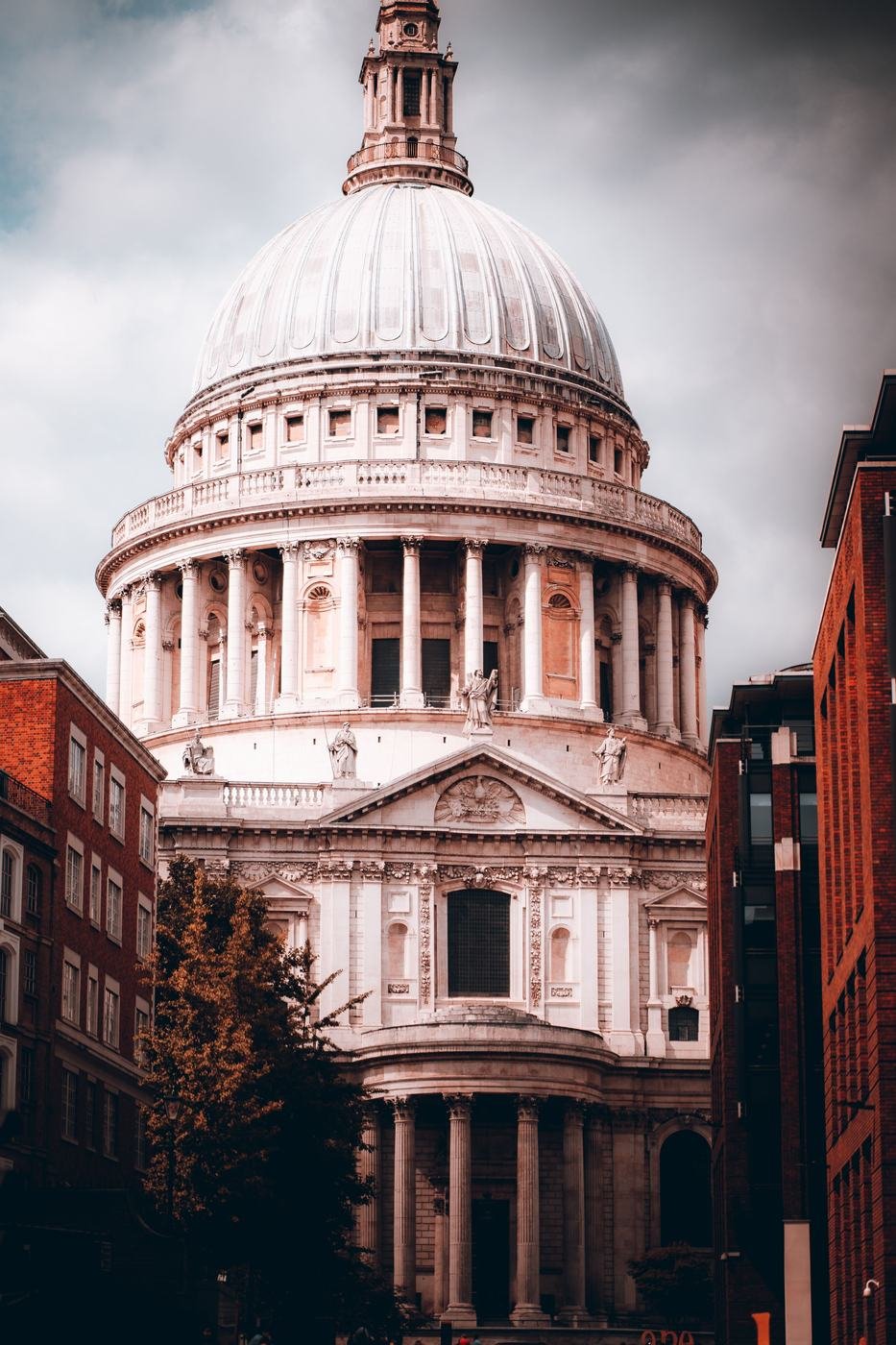
The cathedral Wren had to fight for
There has been a cathedral on this hill since 604. The one Wren replaced — Old St Paul’s — was enormous, medieval, and by the 1660s in a bad way: the spire had burned off in 1561 and was never rebuilt, the nave had been used as a market and a thoroughfare, and the fabric was decaying. Wren was consulted about repairs in 1666 and proposed, among other things, a dome. Six days after his report was accepted, the Great Fire started.
The fire gutted it. Fifty pounds of gunpowder and a battering ram later, the site was cleared, and Wren spent the rest of his working life on the replacement: the first stone in 1675, the last in 1710, one architect from start to finish, which almost never happens with a building this size. He was 78 when it was finished, and had been hauled up to the roof in a basket for years to inspect the work.
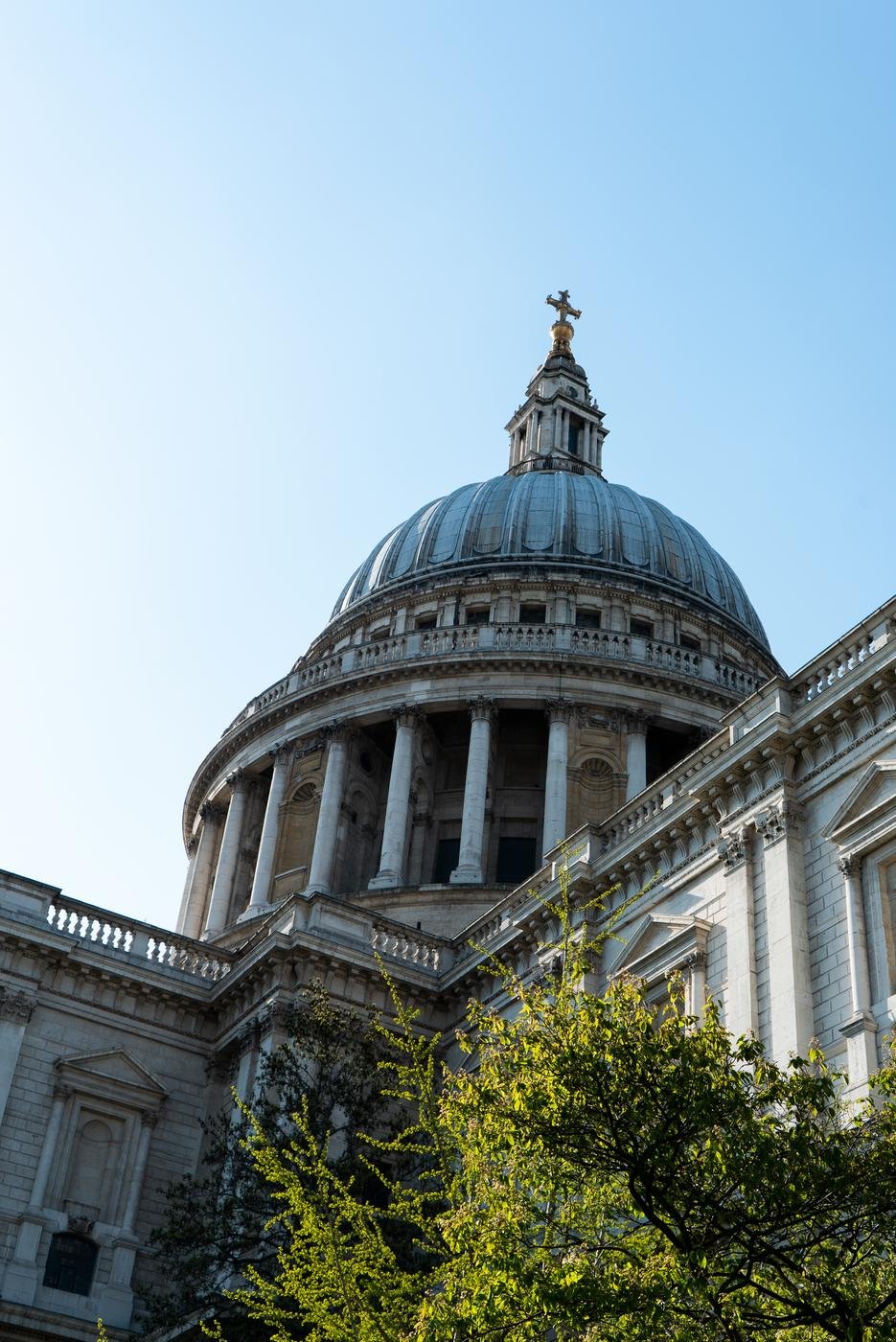
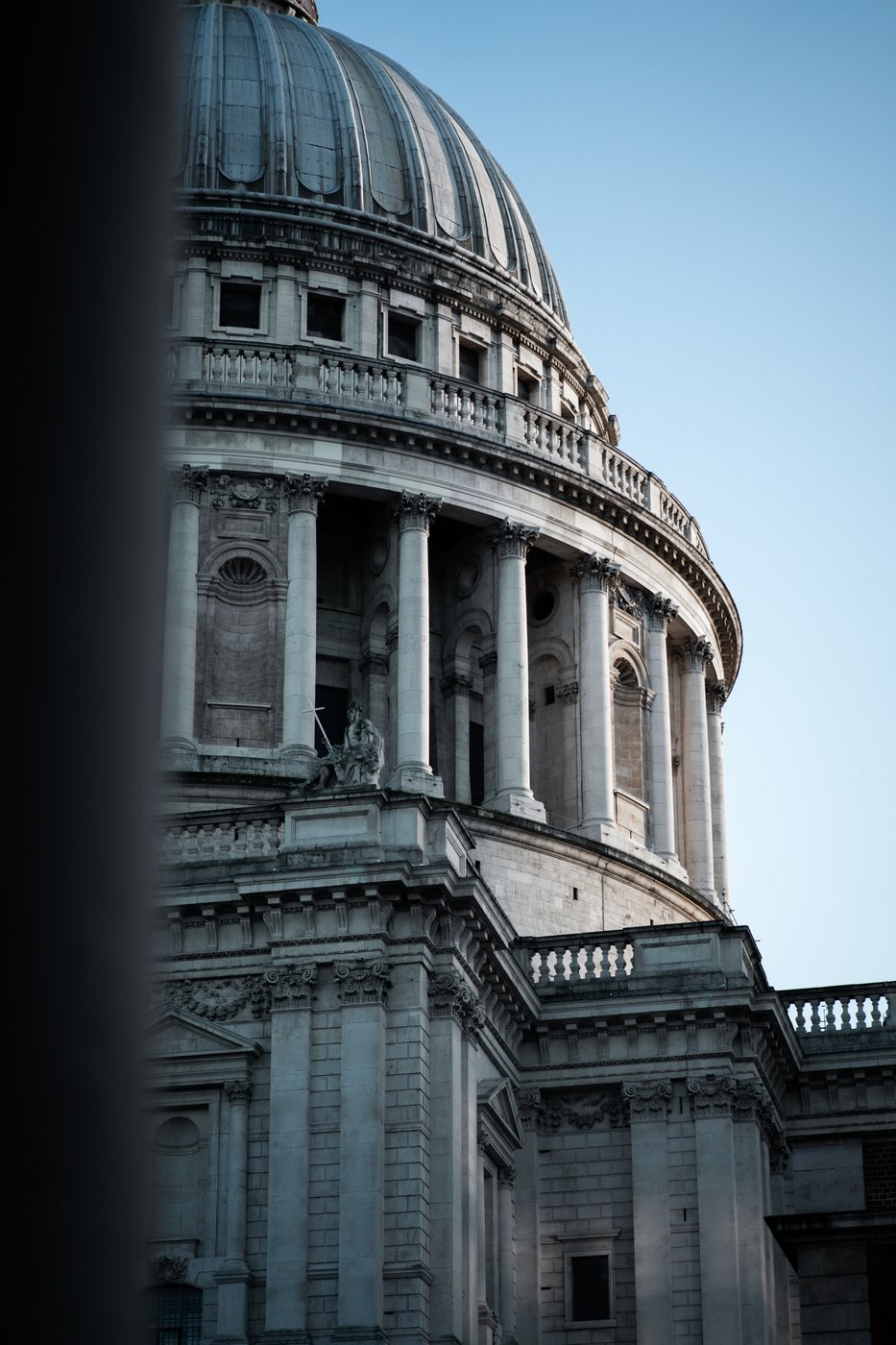
The dome is the thing, and the way it stands up is Wren’s cleverest trick. There are three domes, not one. The inner dome is what you see from the floor, shaped for the room. The outer dome is what you see from the street, shaped for the skyline and far too thin and tall to carry itself. Between them, invisible from everywhere, is a brick cone that does the actual work of holding up the stone lantern, the ball and the cross at the top. From the outside it is a Baroque crown; from the inside it is a calm painted ceiling; and neither is the structure.
The visitor’s cheat sheet
| Where | St Paul’s Churchyard, London, EC4M 8AD |
|---|---|
| Getting there | St Paul’s underground station (Central line) is a two-minute walk; Mansion House, Blackfriars and City Thameslink are all within ten minutes. From the South Bank, cross the Millennium Bridge and the west front is straight ahead |
| Opening hours | Monday to Saturday for sightseeing, doors from 8.30am and the building closing at 4.30pm, with last entry usually around 4pm. Sundays are for worship only, except for a separate dome-gallery arrangement between mid-March and late October |
| Admission | Adult £27; seniors and students £24; children 6–17 £10.50; under-5s free. During the summer offer, late June to early September, the adult price is £24. Each price has a higher ‘with donation’ version — the lower one is the real price. Includes the floor, the crypt, the dome galleries and a multimedia guide |
| The £1 ticket | UK visitors receiving Universal Credit, Pension Credit or Employment Support Allowance can buy admission for £1 for one adult and up to four children aged 6–17, online up to three months ahead or on the door, on production of supporting documentation |
| The climb | 257 steps to the Whispering Gallery, 376 to the Stone Gallery, 528 to the Golden Gallery. No lift. The galleries close for the winter at the end of October |
| How long | Two hours without the climb, three with it |
| Best time | First thing on a weekday. The building opens at 8.30am and is close to empty for the first hour, which is also when the light comes through the south windows |
| Closures | St Paul’s is a working cathedral and publishes a rolling list of planned closures, late openings and early last-entry times — some of them whole days. It is worth thirty seconds before you travel |
Hours and admission checked against the official site in September 2026. They change; the official site is always the last word.
The one thing to check before you go is the date. The dome galleries close for the winter at the end of October, and the climb is most of what people come for. St Paul’s also publishes a rolling list of planned closures and early last-entry times for services and state occasions, and some of those take out a whole day.
What to see, in the order you meet it
The west front
The portico has two storeys of columns rather than one giant order, and that is not a stylistic preference. The Portland quarries could not deliver stone in blocks big enough for single columns on the scale the front needed, so Wren stacked two smaller orders instead and made a virtue of it. The towers either side were a late addition, and the south-west tower carries a clock whose dial is far larger than it looks from the ground.
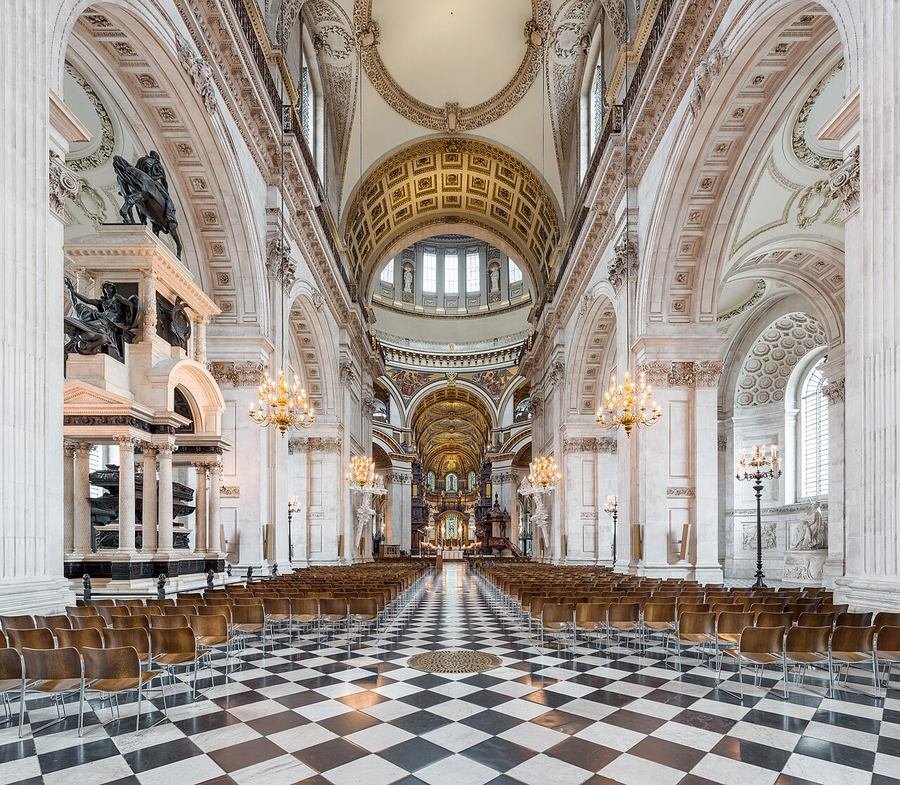
The nave, and Wellington’s monument
Wren’s interior is deliberately plain: white stone, plaster, clear glass, and light. Colour was a Victorian idea imposed later and only ever finished at the east end. The largest object in the nave is the monument to the Duke of Wellington in the north aisle, begun in 1856 and so long delayed that the equestrian figure on top was not installed until 1912 — objections had been raised to putting a horse in a cathedral.
The Light of the World
Holman Hunt’s lantern-lit Christ knocking at an overgrown door hangs in the south aisle, and it is worth being clear about what it is. This is not the original. Hunt painted the first version in the 1850s and it hangs at Keble College, Oxford. Late in life, half-blind and annoyed that his most famous picture was effectively private, he painted this larger version for public display, with considerable help from his assistant Edward Robert Hughes, and it went on a world tour before settling here. A great many guides call it the original. It is the third version, and it is the one that was always meant to be seen by everybody.
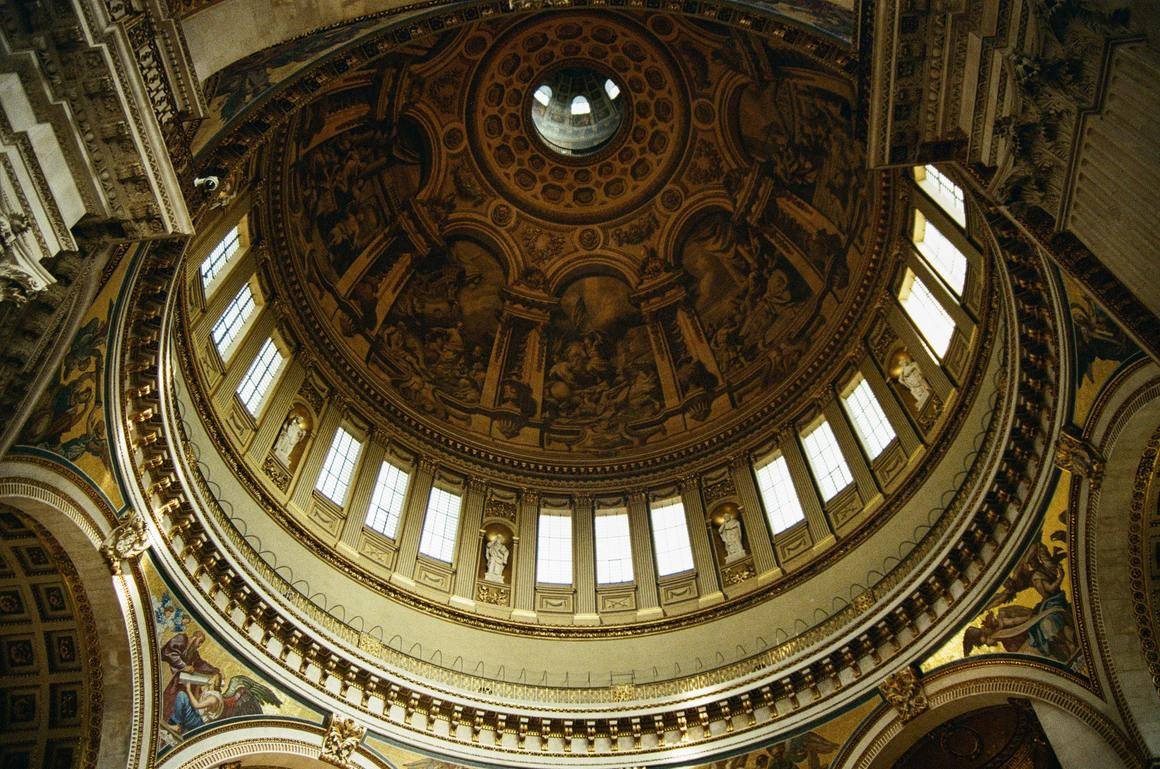
Under the dome
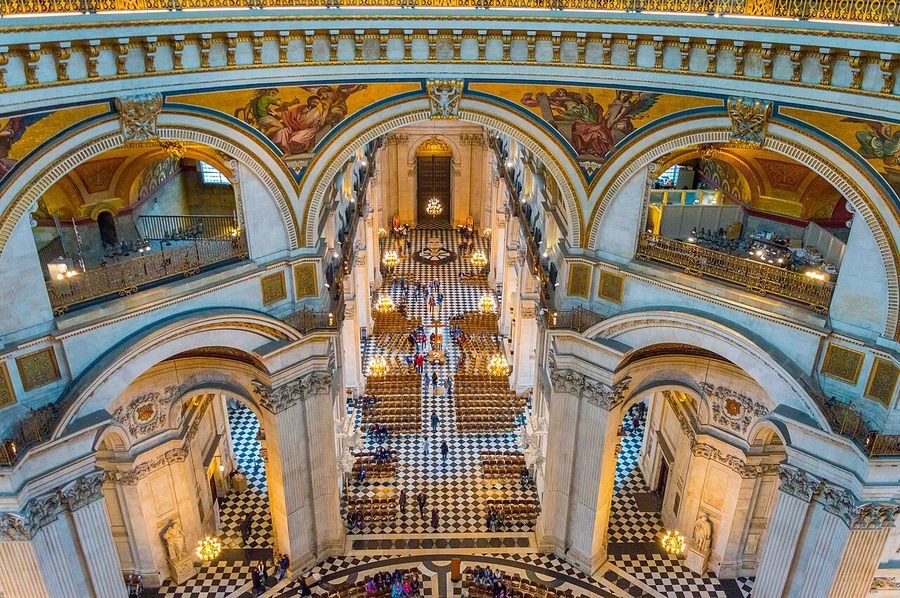
Stand on the compass in the floor and look up. The eight monochrome scenes from the life of St Paul are by Sir James Thornhill, painted in grisaille — grey on grey — because colour at that height and distance turns to mud. Wren had wanted mosaic and was overruled. The cathedral came back round to his view in the nineteenth century and gave the quire the gold that the dome never got.
The quire: Gibbons, Tijou and the mosaics
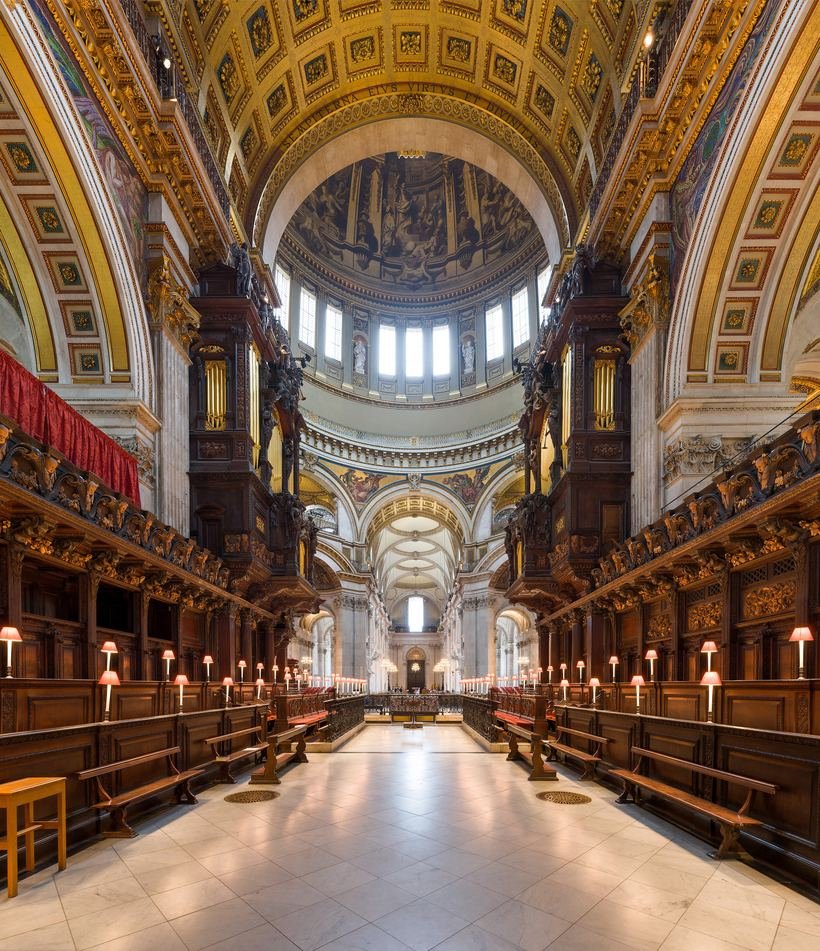
Grinling Gibbons carved the choir stalls, the organ case, the pulpit and the bishop’s throne, and his stone carving on the building outside is arguably better still. Jean Tijou, a Huguenot brought from France for the job, made the wrought-iron gates and screens; he left almost nothing else in England, and several of his pieces have been moved and recombined over the years. The glittering mosaics overhead are Victorian, by William Blake Richmond, finished in the 1890s. Not everything old in this cathedral is Wren, and almost nothing gold is.
The high altar and the American Memorial Chapel
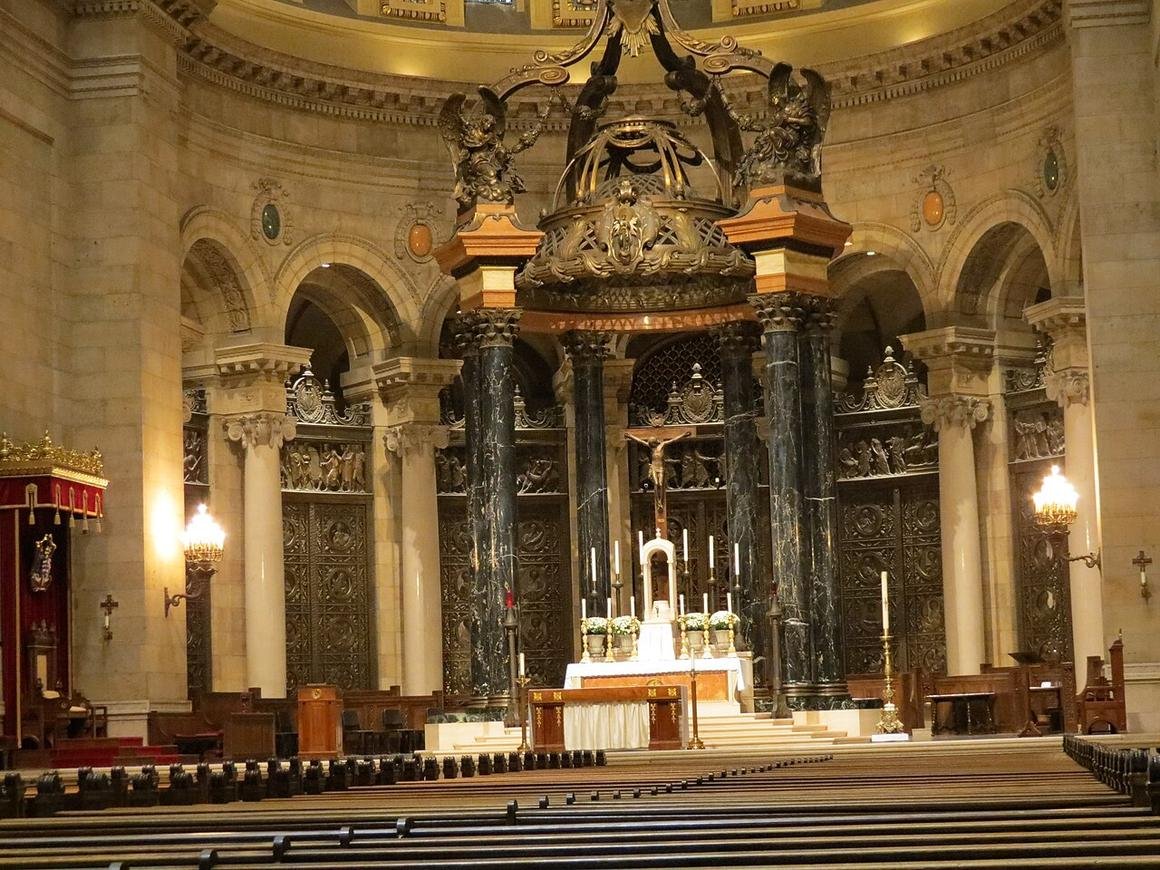
The high altar and the baldacchino over it are post-war work. What stood here was destroyed in 1941, and the canopy that replaced it was built from Wren’s own drawings for something he never executed. Directly behind it, in the apse, is the American Memorial Chapel, dedicated in 1958 in the space the bombing had emptied: a British thank-you to the United States, with a Roll of Honour naming more than 28,000 Americans who died on their way to or while stationed in the United Kingdom in the Second World War. A page is turned every day.
The Blitz, and the men who kept the roof
The photograph everybody knows — the dome standing clear above the smoke, captioned St Paul’s Survives — was taken on the night of 29 December 1940, during the raid the papers called the Second Great Fire of London. The myth that grew out of it is that the cathedral was somehow untouched. It was not. Bombs destroyed the high altar and wrecked the north transept, and in September 1940 a delayed-action bomb buried itself beside the west front and had to be dug out over three days and taken away to be detonated on Hackney Marshes.
What actually saved the building was a volunteer fire watch. The St Paul’s Watch — architects, clergy, staff, ordinary volunteers — slept in the crypt and spent the raids in the roof spaces and on the leads, putting out incendiaries where they fell, in a structure made largely of timber above the vaults. Churchill had given the instruction that the cathedral was to be saved at all costs. It was, and by people with sand buckets.
Mother and Child
Henry Moore carved this limestone Madonna and Child in 1943, and it sits in the north quire aisle looking entirely unlike everything around it. It was carved while the cathedral was being bombed, which is worth knowing when you look at it.
The Geometric Staircase
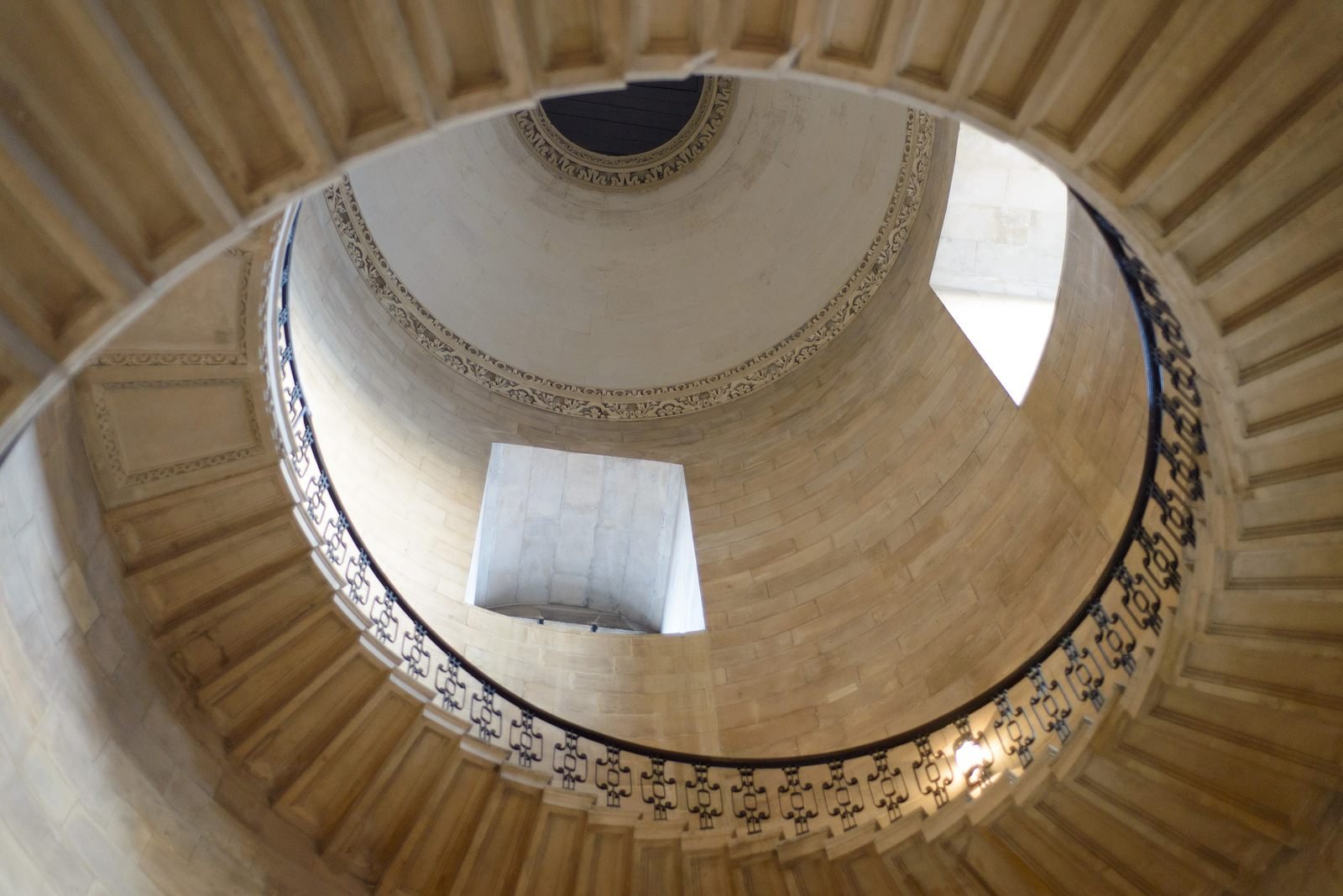
In the south-west tower, a spiral of 88 stone steps rises about fifty feet with no visible support: each step is let barely six inches into the wall, and the whole flight stands because every step rests on the one below it and the geometry closes. It was built by William Kempster to Wren’s design and is one of the finest pieces of masonry in England. Film crews love it. Ordinary admission does not normally take you onto it, so look through the doorway and admire it from there rather than arriving expecting to climb it.
The Whispering Gallery
257 steps up, a walkway runs round the inside of the dome 99 feet above the floor. Speak quietly against the wall and the sound runs round the curve to anyone with an ear to it on the far side. It works because the sound never leaves the wall — it grazes along the curved surface instead of crossing the empty middle. It works considerably better when the gallery is quiet, which is an argument for being there at 8.30am.
The Stone Gallery and the Golden Gallery
376 steps gets you outside onto the Stone Gallery, at the foot of the dome. 528 gets you to the Golden Gallery at the top, and the last stretch runs between the brick cone and the outer dome, in the hollow space that makes the whole thing possible. It is narrow, it is a genuine climb, and the view along the river is the best free-standing thing in the City.
The crypt
The crypt runs the length and breadth of the building — the largest in western Europe — because it is not really a basement, it is the structure the cathedral stands on. Wren is buried here, the first burial in the new building, in 1723. The line everybody quotes, Lector, si monumentum requiris, circumspice — reader, if you seek his monument, look around you — is on the wall above, written by his son, not carved on the slab.
Nelson lies under the dome in a sarcophagus made for Cardinal Wolsey two and a half centuries earlier and never used, Henry VIII having confiscated it. Wellington is a few yards away. So are Turner, Reynolds, Lawrence of Arabia and Alexander Fleming, and a long roll of soldiers whose monuments upstairs are grander than their graves.
The OBE Chapel and the Great Model
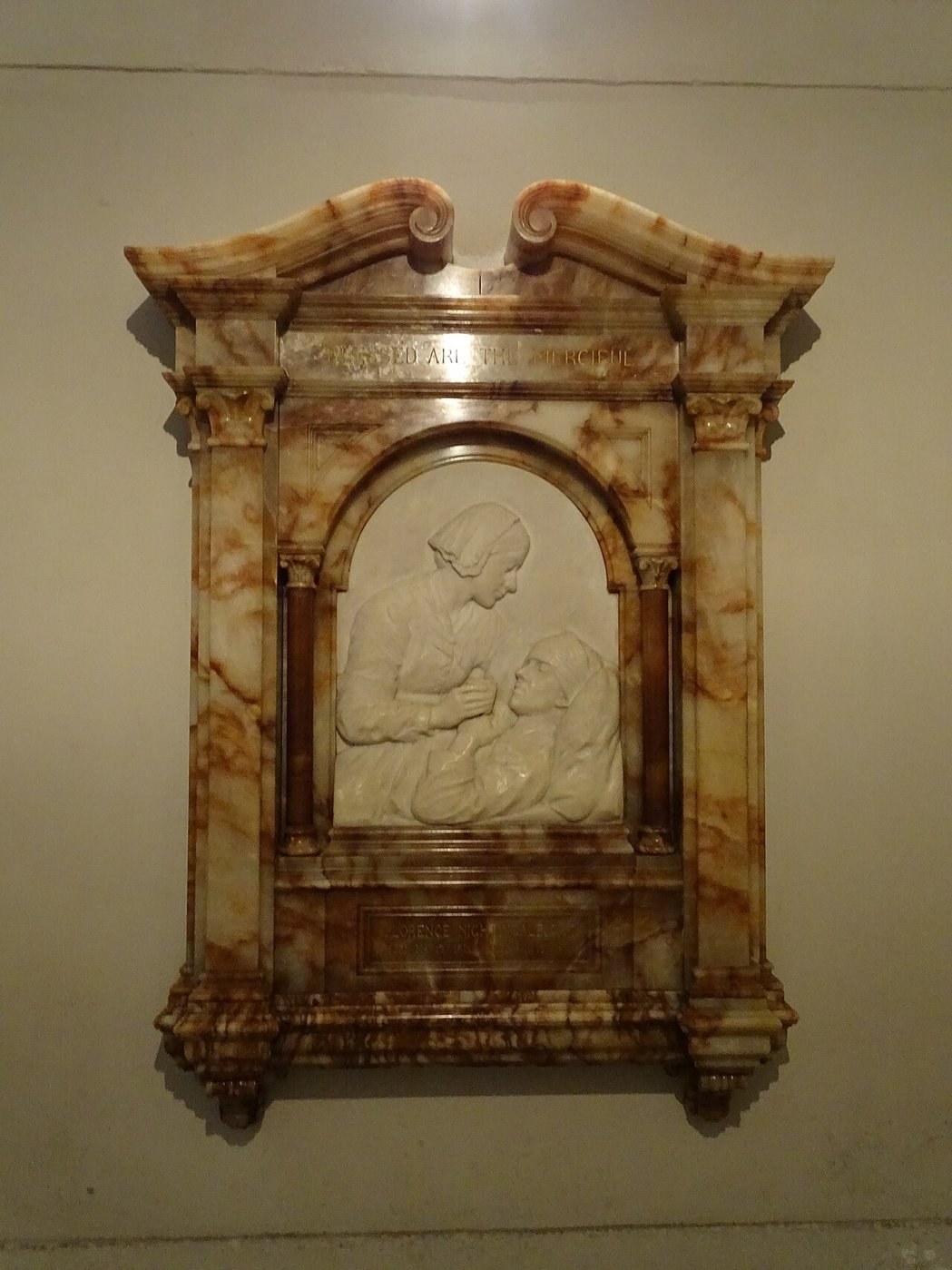
At the east end of the crypt is the Chapel of the Order of the British Empire, instigated in 1917 and fitted out to designs by Lord Mottistone. And somewhere every visitor should make a point of finding is the Great Model: thirteen feet high, twenty-one feet long, made in 1673 at a cost of over £500 when that was a house. It is the cathedral Wren wanted, and being able to walk round it and then walk round what he actually built is the most interesting twenty minutes in the place.
Tickets and tours
Book online, and go early
Admission includes the floor, the crypt, all three dome galleries and a multimedia guide, so a standard visit needs nothing extra. Two things are worth knowing. The first is that every published price has a higher with donation version alongside it — the lower figure is the real price. The second is the £1 ticket for UK visitors on Universal Credit, Pension Credit or Employment Support Allowance, which covers one adult and up to four children and is almost invisible on the booking pages.
Tour and hotel links go to GetYourGuide and Booking.com. This site earns nothing from them at present — they are here because they are the quickest way to check what is actually available.
Don’t miss
- The Great Model Wren’s rejected design, still in the building that replaced it. Walk round it before you walk round the cathedral.
- The Geometric Staircase 88 cantilevered steps in the south-west tower, holding themselves up.
- Nelson’s sarcophagus Made for Cardinal Wolsey in the 1520s, seized by Henry VIII, and unused for 250 years until somebody sufficiently important died.
- Thornhill’s grisaille Painted grey on purpose. Wren wanted mosaic and lost the argument.
- The turning page In the American Memorial Chapel, one page of the Roll of Honour is turned every day.
- Moore’s Mother and Child Carved in 1943, while the bombs were still falling.
- The minute hand Sixteen feet of it, on the south-west tower clock.
Insider tips
Be there at 8.30am. The doors open earlier than almost any other major London attraction and the first hour is close to empty. The Whispering Gallery only really works when nobody else is whispering in it, and the low morning light through the south windows is the best the building gets.
Climb first, look later. The galleries are the part of the visit with a queue and a closing time, and the floor and crypt are still there afterwards. If you do it the other way round you will be tired before you start the 528 steps.
Check the month. The dome galleries shut for the winter at the end of October and do not reopen until the spring. If the climb matters to you and you are visiting in November, it will not be available at any price.
Sunday is not a sightseeing day, but it is not a closed day either. Anyone can come to a service for nothing, and Sung Eucharist or Evensong under that dome is a better experience of the building than a ticket buys. Between mid-March and late October there is also a separate Sunday dome-gallery arrangement.
If you are on Universal Credit, Pension Credit or ESA, ask for the £1 ticket. It is real, it covers up to four children with one adult, and the cathedral does not advertise it loudly.
Common questions
How much does it cost to go into St Paul's Cathedral?
Adult sightseeing admission is £27, falling to £24 during the cathedral’s summer offer between late June and the start of September. Every price is also shown in a higher ‘with donation’ version; the lower figure is the actual price and the donation is voluntary. Admission covers the cathedral floor, the crypt, all three dome galleries and a multimedia guide. There is no charge to attend a service.
Is there a cheap ticket for St Paul's?
Yes, and it is barely advertised. UK visitors receiving Universal Credit, Pension Credit or Employment Support Allowance can buy a £1 ticket covering one adult and up to four children aged 6 to 17. It can be booked online up to three months ahead or bought on the door, and you need to bring the supporting documentation with you.
How many steps are there to the top of the dome?
257 to the Whispering Gallery, 376 to the Stone Gallery and 528 to the Golden Gallery at the top. There is no lift to any of them, the stairs narrow as you go up, and the last flight is a tight spiral. The cathedral asks anyone with heart or breathing problems, mobility difficulties or a fear of heights or confined spaces not to attempt the climb.
Can you climb the dome all year round?
No. The dome galleries run on a seasonal timetable and close for the winter at the end of October. A visitor arriving in November, December or January can see the cathedral floor and the crypt but cannot go up. If the climb is the reason for your visit, check the date before you book anything else.
Is St Paul's open on Sundays?
Not for ordinary sightseeing. Sunday is given over to worship, and anyone is welcome at the services free of charge. Between mid-March and late October there is a separate Sunday arrangement giving access to the dome galleries only, which is worth knowing about if a Sunday is the only day you have.
Is St Paul's the same as Westminster Abbey?
No, and the confusion is common. St Paul’s is the cathedral of the diocese of London and the place for state funerals — Nelson, Wellington, Churchill. Westminster Abbey, two miles west, is a royal peculiar and the coronation church. A third building, Westminster Cathedral, is the Roman Catholic mother church and is a different place again.
Where to stay and eat nearby
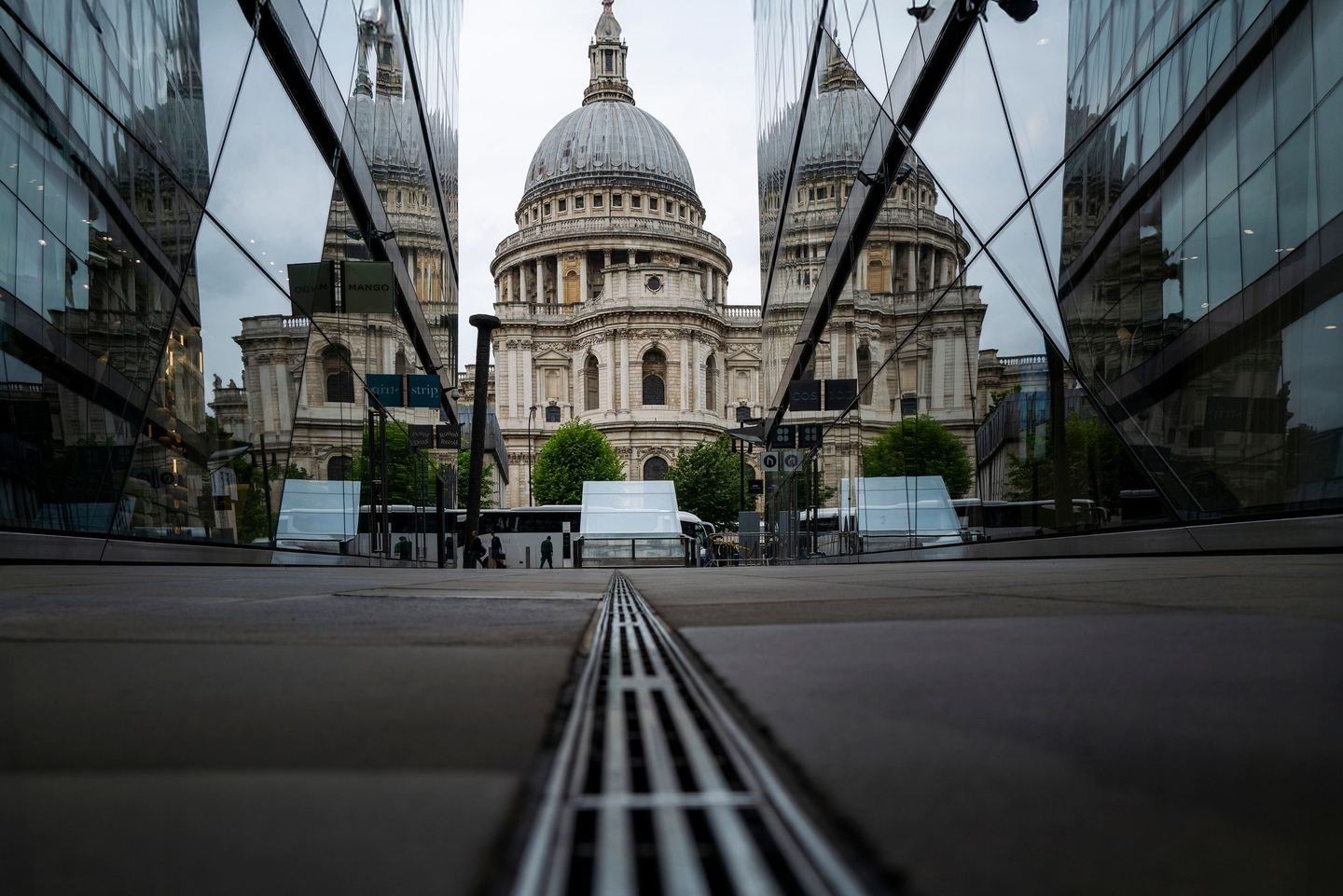
The City empties in the evening and at weekends, which makes it quiet to stay in and thin for eating. One Change and the streets around Paternoster Square have the usual chains; walk five minutes north to Smithfield or south over the Millennium Bridge to Bankside for something better. The cathedral’s own crypt café and restaurant are genuinely good and you do not need a ticket to use them.
More English cathedrals
- Westminster Abbey — two miles west, and the building St Paul’s is most often confused with.
- Westminster Cathedral — the Roman Catholic mother church, and the third building in the confusion.
- Liverpool Cathedral — the other Anglican giant, and the largest cathedral in Britain.
- Canterbury Cathedral — the mother church of the Anglican Communion, an hour east.