
Buckfast Abbey, Devon
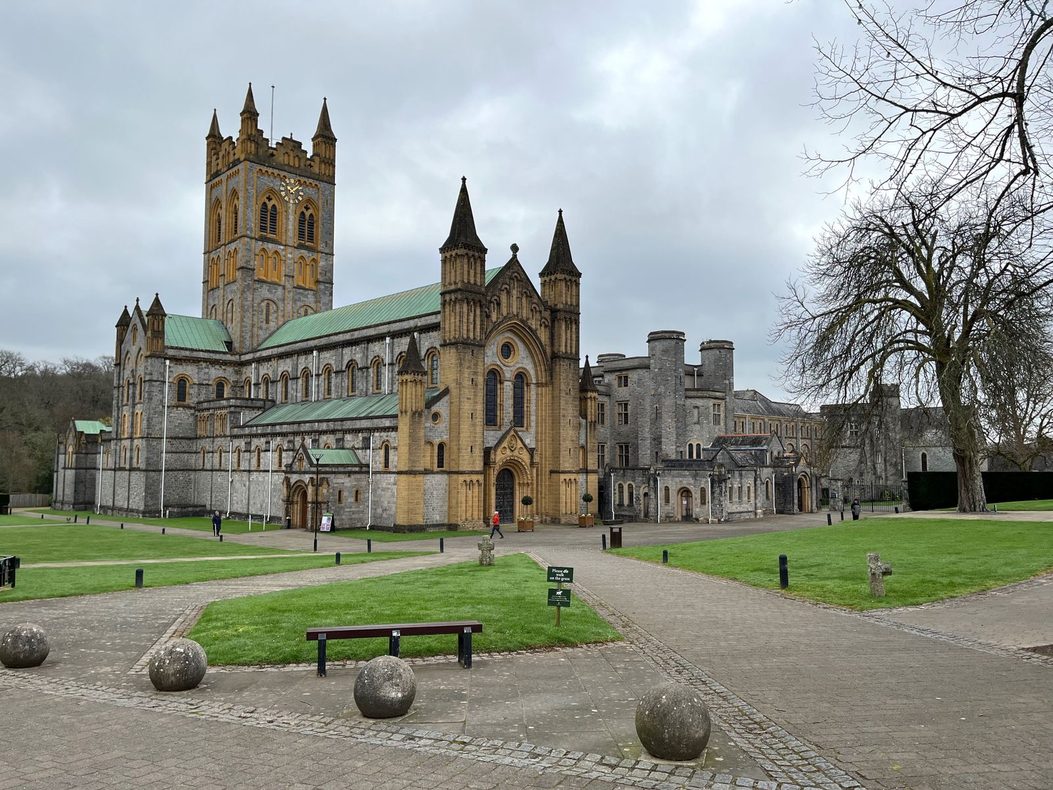
Most of England’s great abbeys are ruins. Buckfast is the exception: a monastery suppressed by Henry VIII, refounded by French monks in 1882, and rebuilt stone by stone by the monks themselves. Today it is a working Benedictine abbey on the edge of Dartmoor, free to visit, with a church of grey stone, gardens, shops and a restaurant — and the home of a famous tonic wine.
Founded, lost and rebuilt
The first abbey at Buckfast was founded in 1018. In the twelfth century it passed to the order of Savigny, and in 1147 it became Cistercian. The monks grew rich on the wool trade, selling fleeces as far away as Florence. In 1539 Abbot Gabriel Donne surrendered the abbey to Henry VIII, and the buildings were left to fall into ruin.
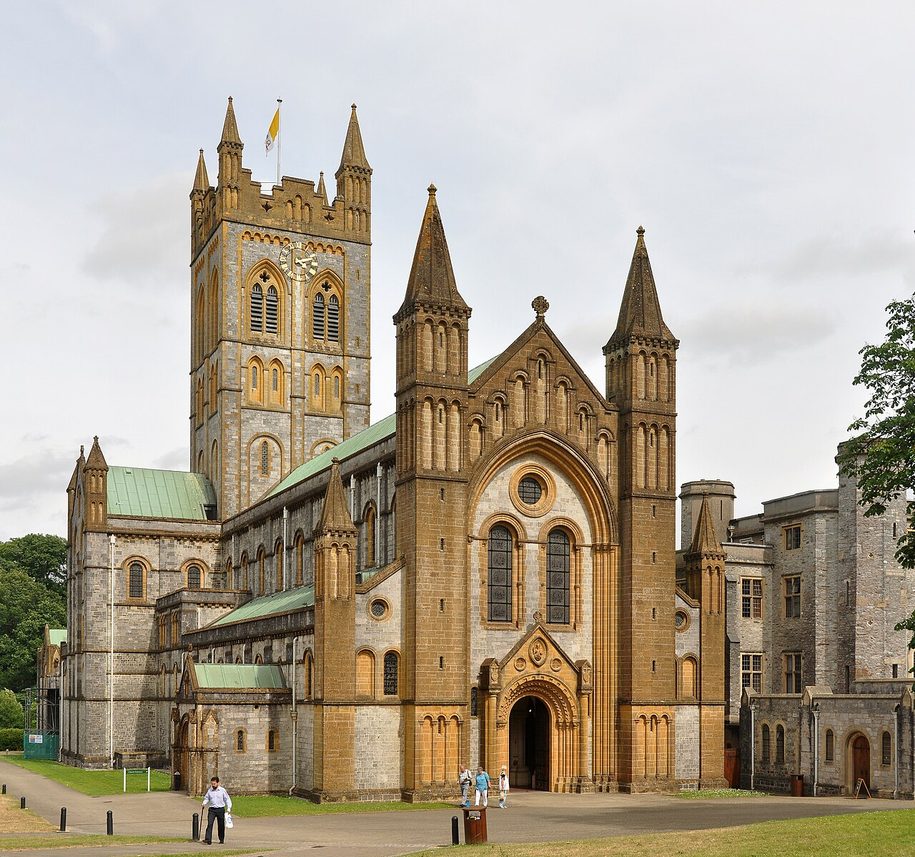
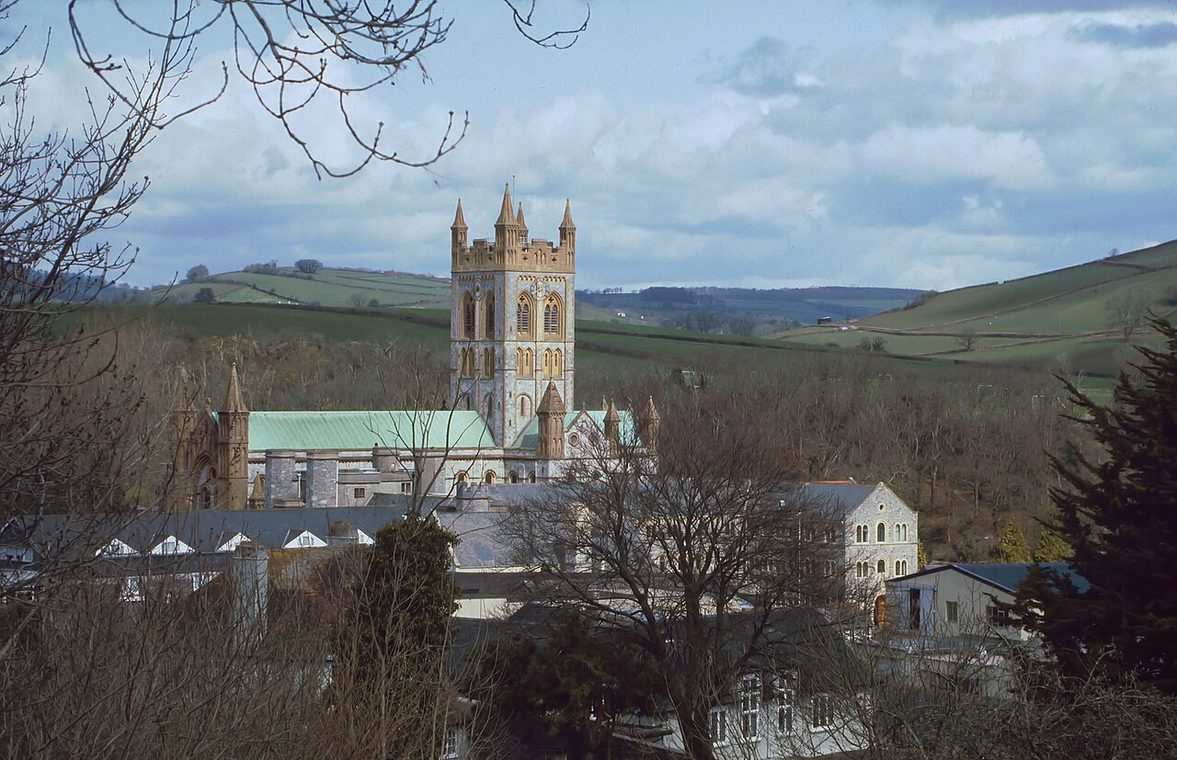
In 1882 a group of French Benedictine monks came to the site, and in 1902 Buckfast became an abbey again. In 1906 Anscar Vonier became abbot, and he set his community to rebuild the abbey church on its medieval foundations, to a design by Frederick Walters. The work was done by the monks themselves, mostly by a small team of brothers. The church was consecrated in 1932, the tower finished in 1937, and the whole church completed in 1938.
The visitor's cheat sheet
| Where | Buckfast Abbey, Buckfastleigh, Devon, TQ11 0EE |
|---|---|
| Getting there | Off the A38 at the Dart Bridge turning; Totnes station about 6 miles; South Devon Railway to Buckfastleigh in season; large free car park |
| Opening hours | Church daily 6.30am–6pm (closed to sightseeing during services); grounds 7.30am–8.30pm; shops 10am–4.30pm |
| Admission | Free; Monastic Way exhibition £2 |
| How long | One to two hours with the gardens |
| Best time | A weekday, and in time for a sung service if you can |
| Dress code | Modest dress; it is a working monastery |
| Tours | Monastic Way exhibition; gardens; shops and the Grange restaurant |
Hours and admission checked against the official site in October 2026. They change; the official site is always the last word.
Wine and bees. The monks have made Buckfast tonic wine since the 1890s. And from 1919 the abbey’s bees were looked after by Brother Adam, who bred the hardy, gentle Buckfast bee, now kept by beekeepers around the world.
What to see, in the order you meet it
The abbey church
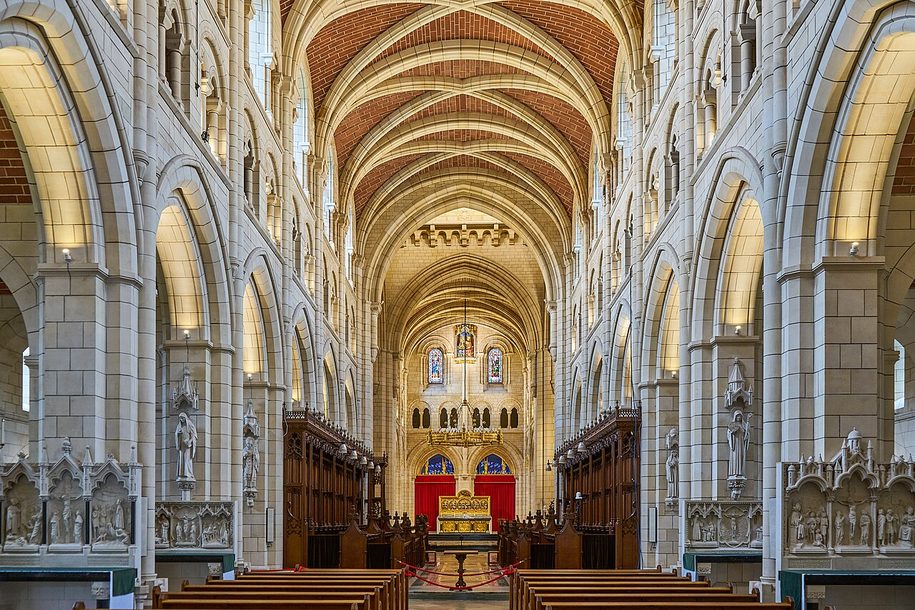
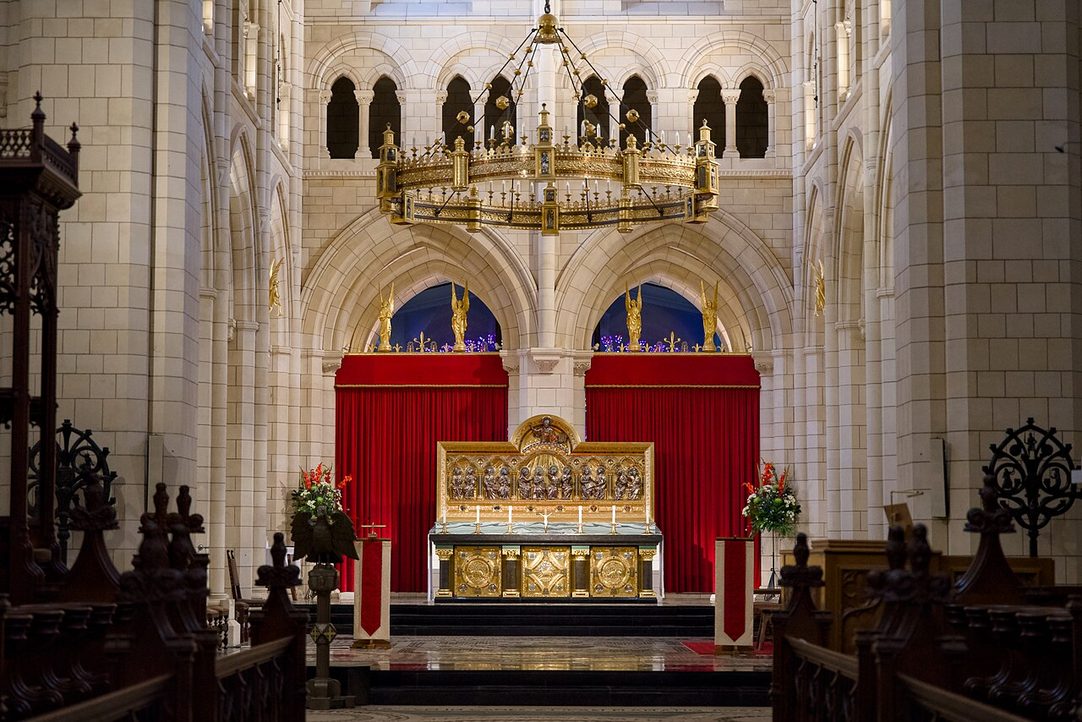
The church is built in a Romanesque style, in grey limestone with dressings of pale Ham Hill stone. The nave is long and bright, with round arches and a ribbed stone vault. At the east end the high altar is lit by a great crown-shaped chandelier. Since 2018 the church has had a large organ by the Italian firm of Ruffatti.
The Blessed Sacrament Chapel
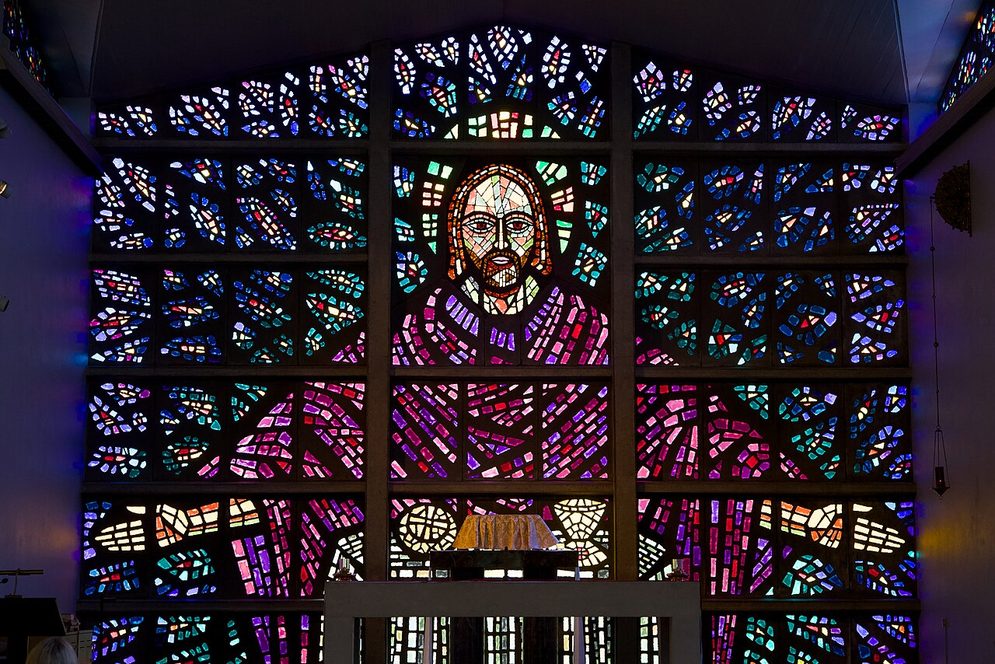
Behind the high altar is the most modern part of the church: the Blessed Sacrament Chapel, built in the 1960s, with a whole wall of thick slab glass made by the monk Dom Charles Norris, showing Christ offering the bread and wine of the Eucharist.
The Monastic Way and the gardens
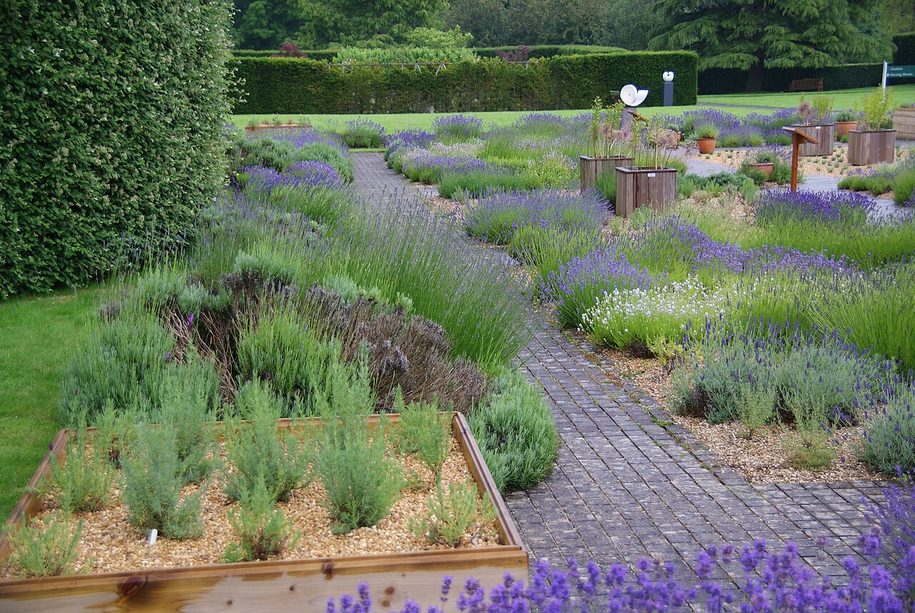
The Monastic Way exhibition tells the story of monastic life at Buckfast. Outside are the lavender garden, the physic garden of medicinal plants, the sensory garden and the Millennium garden, and the medieval Guest Hall, one of the few buildings to survive from the old abbey.
Visiting
Free to visit
The church, gardens and car park are free; the Monastic Way exhibition is £2. Visitors are welcome at services.
The hotel link goes to Booking.com. This site earns nothing from it at present — it is here because it is the quickest way to check what is actually available.
Don't miss
- The high altar Gilded, under the great chandelier.
- The slab glass In the Blessed Sacrament Chapel.
- The Ruffatti organ Listen at a service or recital.
- The lavender garden Best in July.
- The medieval Guest Hall A survivor of the first abbey.
- The monks’ shop Tonic wine, honey and more.
Insider tips
Come by steam. In season, the South Devon Railway runs steam trains along the Dart from Totnes to Buckfastleigh, and the walk from there to the abbey takes about 15 minutes. Dartmoor is on the doorstep.
Common questions
Is Buckfast Abbey free to visit?
Yes. The abbey church, gardens and car park are all free. The only charge is £2 for the Monastic Way exhibition (free for ages 11 and under).
When is Buckfast Abbey open?
The church is open daily from 6.30am to 6pm, and closed to sightseeing during services. The grounds and car parks are open from 7.30am to 8.30pm. The shops open from 10am to 4.30pm, the Monastic Way exhibition from 10am to 4.15pm (last entry 3.30pm) and the Grange restaurant from 9.30am to 4.30pm.
Did the monks really build the church themselves?
Yes. French Benedictine monks resettled Buckfast in 1882, and under Abbot Anscar Vonier they rebuilt the abbey church on its medieval foundations, using a small team of monks and only occasional outside help. It was consecrated in 1932 and the tower was finished in 1937.
Is this where Buckfast tonic wine comes from?
Yes. The monks have made it since the 1890s, and it is sold in the abbey shop. Buckfast was also home to Brother Adam, the beekeeper who bred the Buckfast bee; the abbey still keeps around 40 hives.
How do you get to Buckfast Abbey?
Leave the A38 Exeter–Plymouth road at the Dart Bridge turning by Buckfastleigh and follow the brown signs. The nearest main-line station is Totnes, about six miles away. From late March to October the South Devon Railway steam trains run from Totnes Riverside to Buckfastleigh, under a mile from the abbey.
Where to stay and eat nearby
The abbey has its own restaurant, the Grange, and café. There are pubs in Buckfastleigh and Ashburton, and more choice in Totnes.
More English churches
- Exeter Cathedral — half an hour up the A38
- Ottery St Mary — a Devon collegiate church
- Truro Cathedral — further west, in Cornwall