
Dore Abbey, Herefordshire
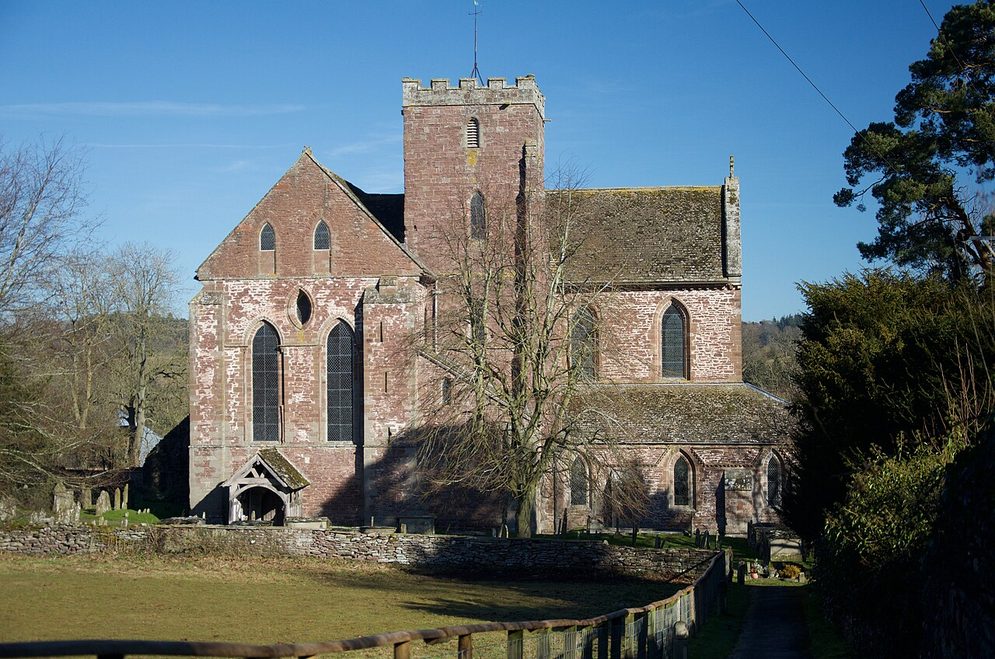
In a quiet valley near the Welsh border stands the surviving east end of a great Cistercian abbey. The monks’ nave has gone, but their tall early Gothic presbytery, ambulatory and transepts were rescued in the 1630s as a parish church, and fitted out with a magnificent oak screen, painted walls and new stained glass. The result is one of the strangest and most beautiful churches in England, and it is free and open every day.
A Cistercian abbey and a Stuart rescue
The abbey was founded in 1147 by Robert fitzHarold of Ewyas, for monks from Morimond in France. Building began around 1175, and in the early thirteenth century the east end was rebuilt and enlarged in the new Early English style. The church was consecrated by Bishop Thomas de Cantilupe of Hereford in 1282.
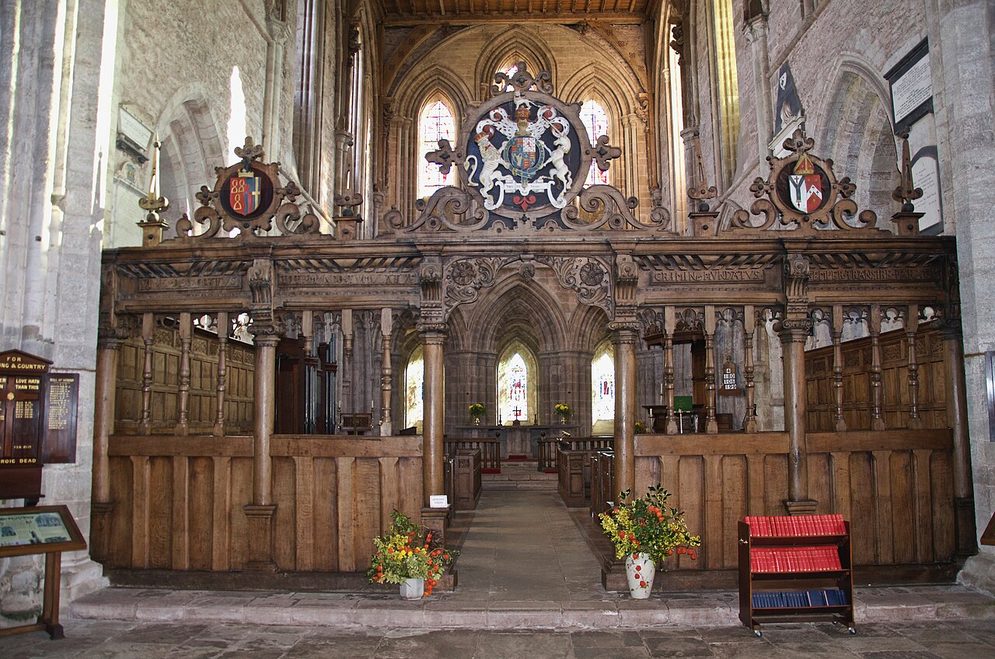
The abbey was dissolved in 1536 and its lands passed to John Scudamore. The buildings decayed and the nave fell. A century later his descendant John Scudamore, later 1st Viscount Scudamore, restored what was left as a parish church: he roofed the east end, built a new tower and commissioned the carpenter John Abel to make the great screen. The church was reconsecrated on 22 March 1634. Roland Paul repaired it and excavated the site between 1901 and 1909.
The visitor's cheat sheet
| Where | Dore Abbey, Abbey Dore, Hereford, HR2 0AA |
|---|---|
| Getting there | About 11 miles south-west of Hereford off the A465; bus 440 from Hereford, Monday–Saturday; parking at the church |
| Opening hours | Daily 9am–4pm, or dusk if earlier; parts may be closed during services |
| Admission | Free; donations welcome |
| How long | An hour |
| Best time | A sunny afternoon, when the light comes through the east windows |
| Dress code | Warm clothes in winter; there are no services in January and February because of the cold |
| Tours | Self-guided; picnic tables in the old orchard; grass labyrinth |
Hours and admission checked against the official site in October 2026. They change; the official site is always the last word.
Bats in the roof. The roof space above the chancel is home to a maternity colony of lesser horseshoe bats — some 170 to 180 at the latest count — and a maternity roost of Natterer’s bats. You will not see them, but they are part of why work on the building is planned with care.
What to see, in the order you meet it
The screen
You enter at the crossing and meet John Abel’s oak screen of the 1630s, carved with columns and topped by the royal arms and the arms of Scudamore and Archbishop Laud. Through it you see the presbytery.
The presbytery and east windows
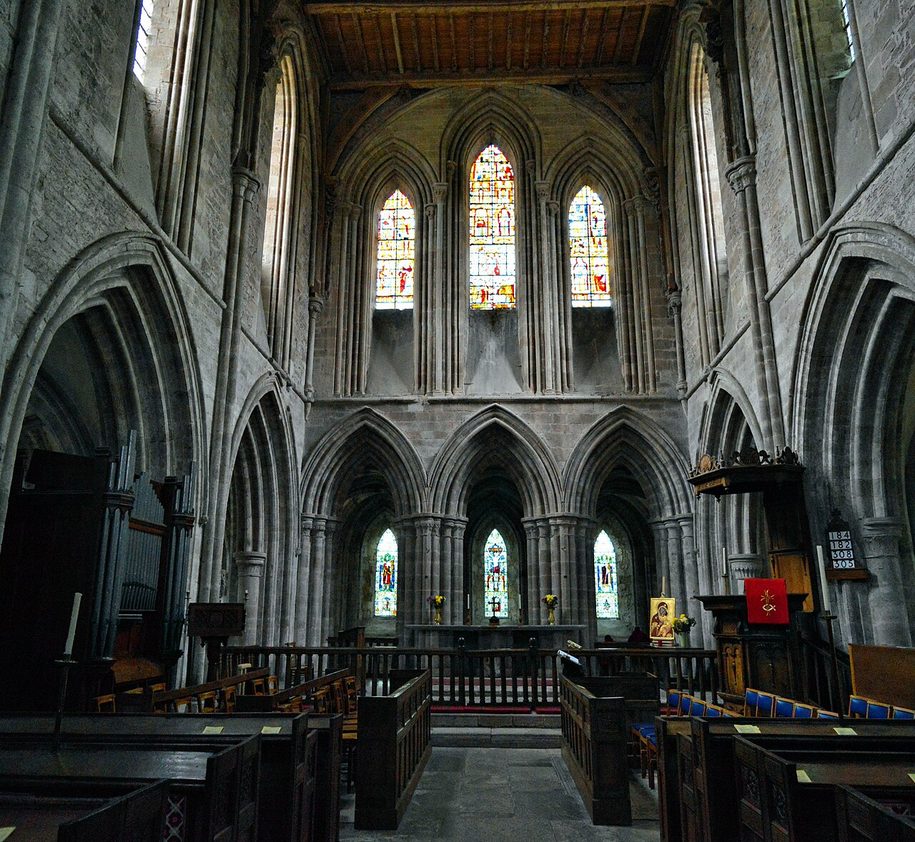
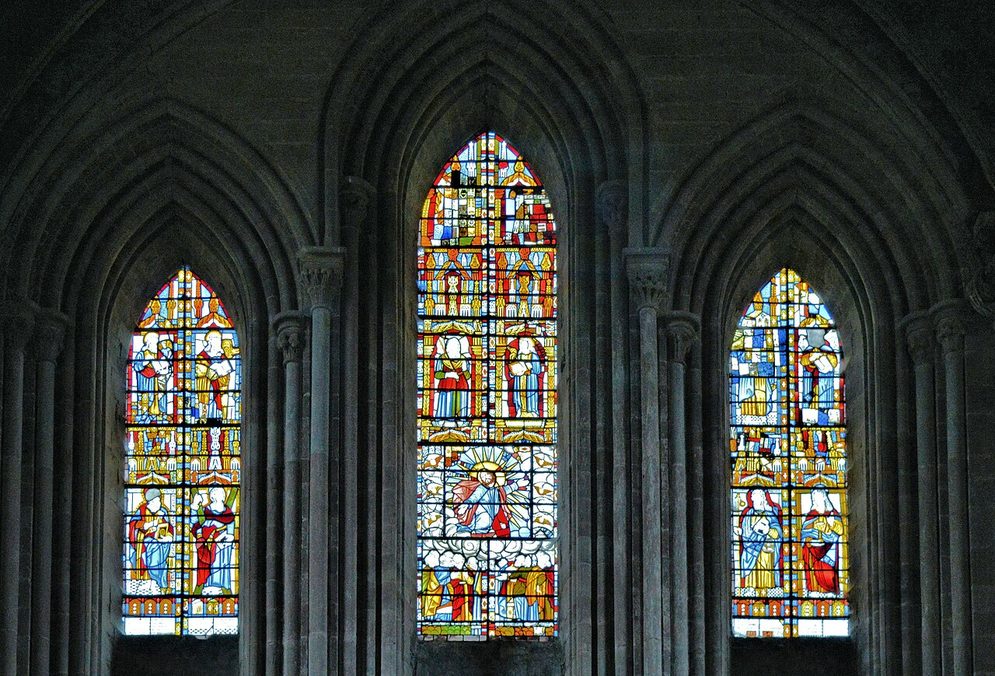
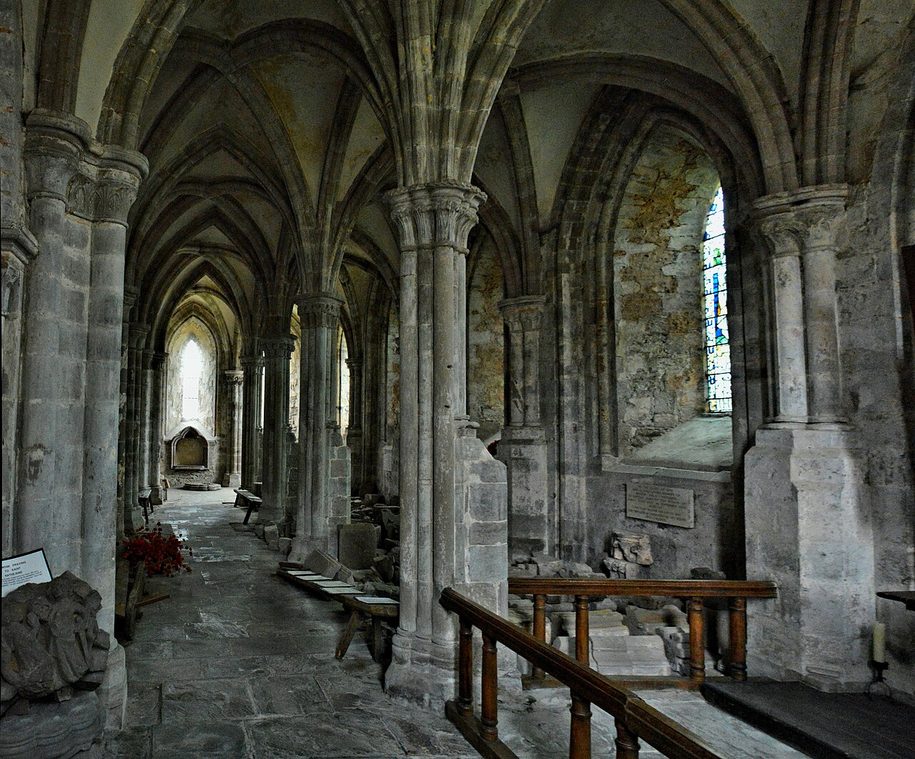
The presbytery is pure early Gothic: tall pointed arches, clustered shafts and lancet windows. The three east windows were filled with glass in the 1630s showing the Ascension and figures of saints; there are fragments of older glass elsewhere.
The ambulatory
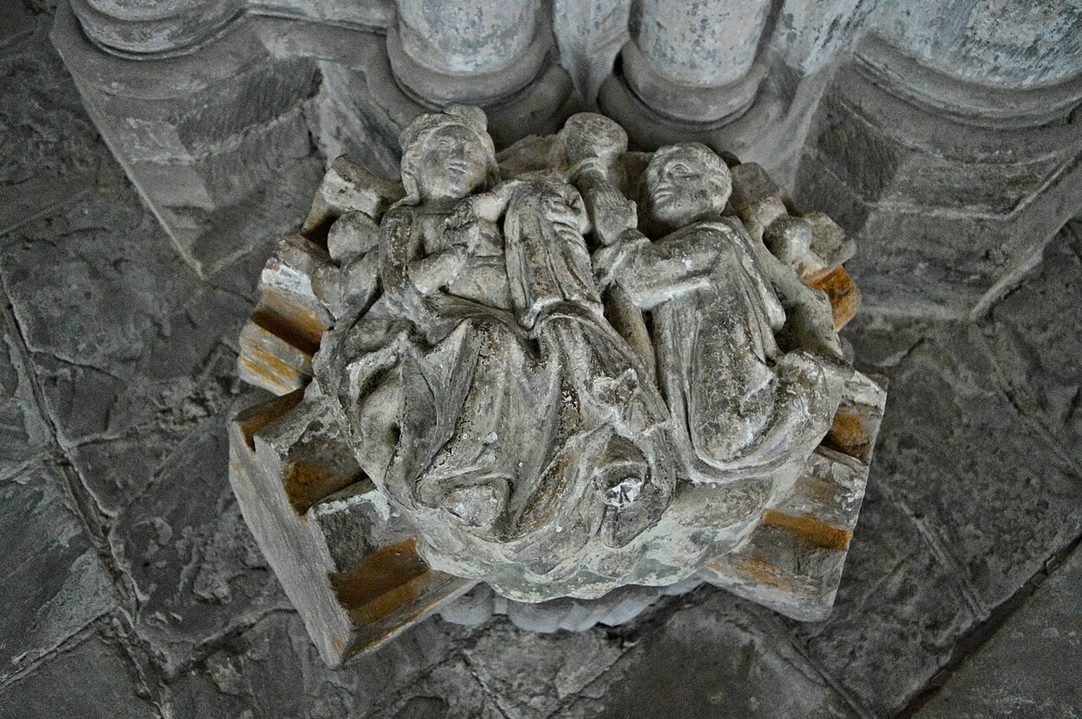
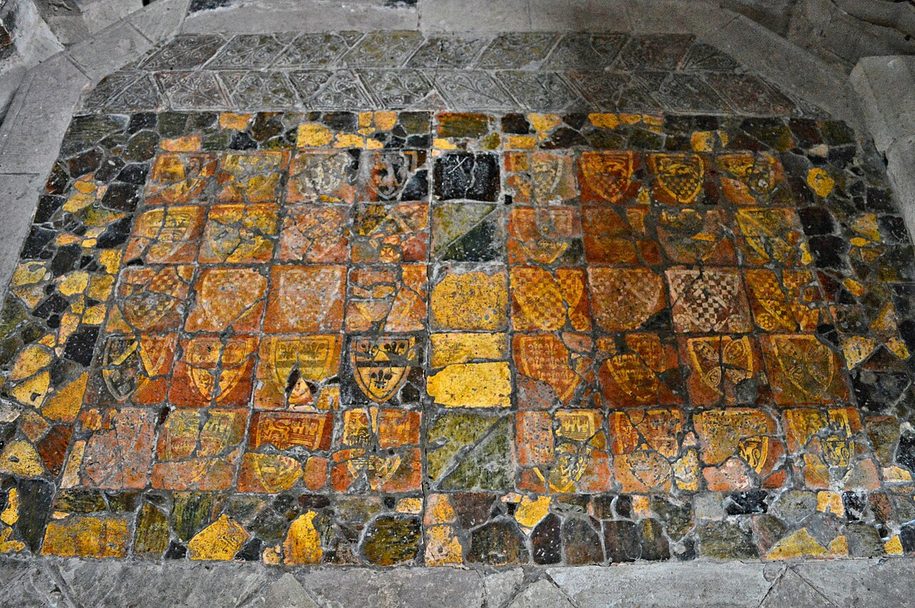
Walk behind the altar into the ambulatory, a double aisle of slender columns and vaults. Here and around the church are carved bosses saved from the fallen vault, and patches of medieval floor tiles.
The walls and monuments
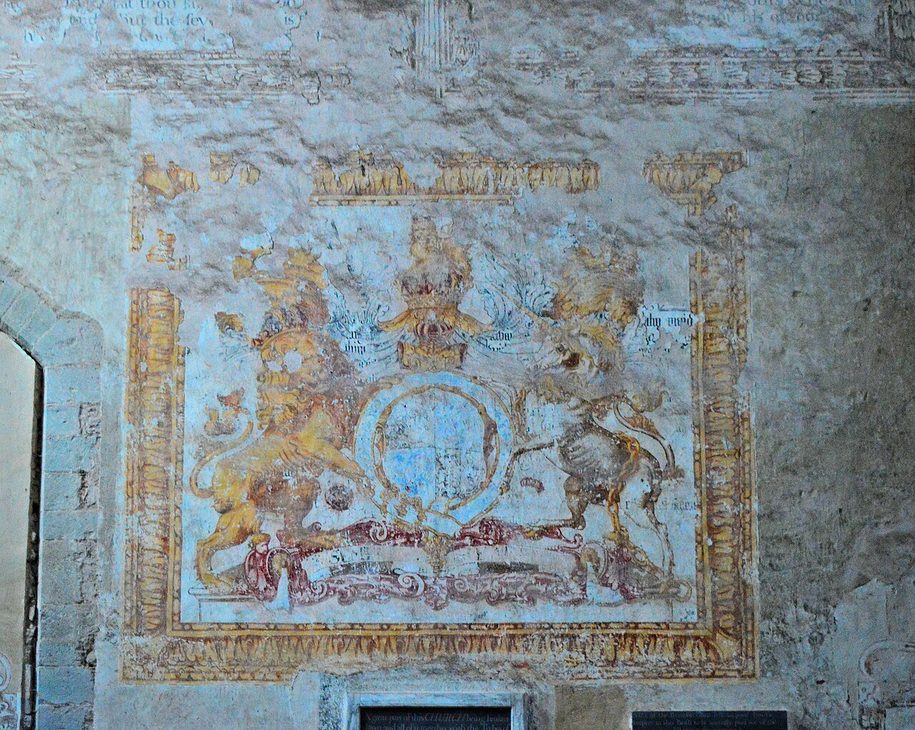
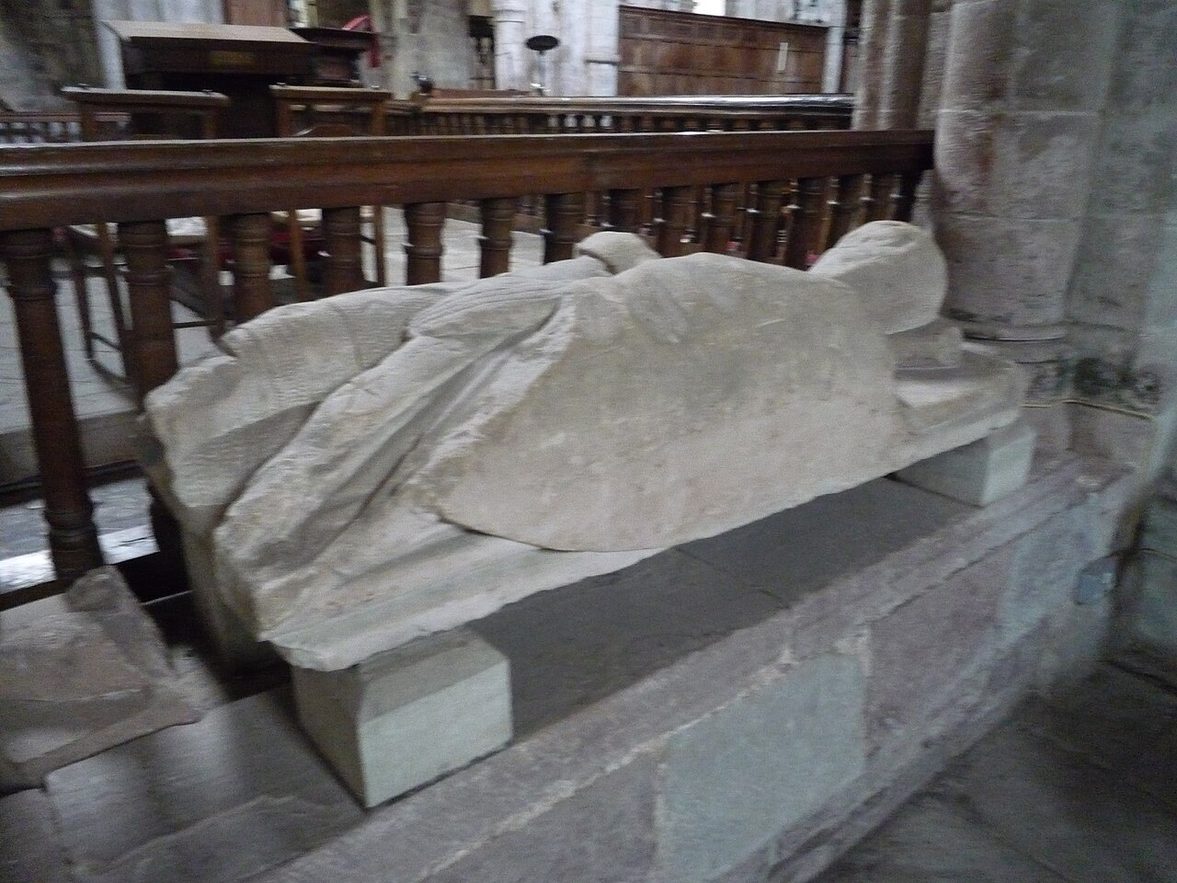
The walls are painted with texts, figures and coats of arms, many from the early 1700s, including the arms of Queen Anne. There are two worn thirteenth-century effigies, thought to be of Robert of Ewyas and Roger de Clifford, and a musicians’ gallery.
Outside
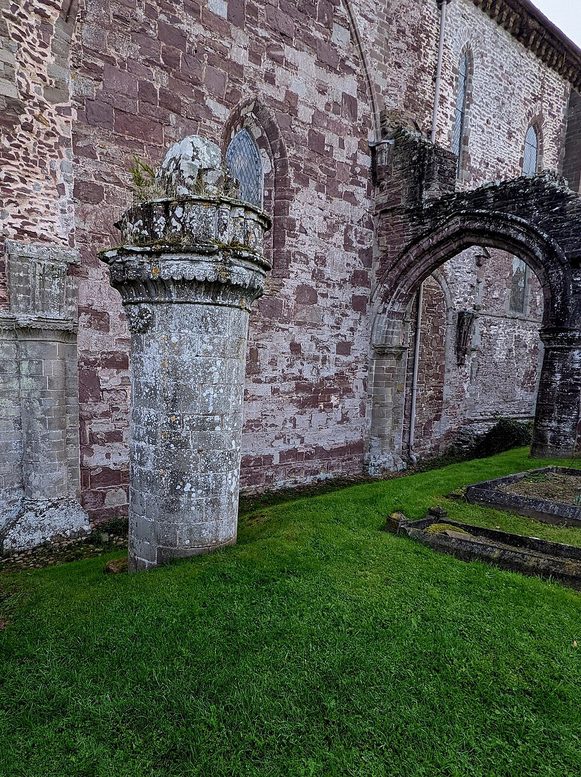
West of the church, look for the stumps of the lost nave’s piers among the graves, and the outline of the cloister, now a grass labyrinth.
Visiting
Free to visit
Dore Abbey is open every day and free; donations go towards conserving the building and its wall paintings. There is no café or shop, so bring a picnic for the old orchard.
The hotel link goes to Booking.com. This site earns nothing from it at present — it is here because it is the quickest way to check what is actually available.
Don't miss
- John Abel’s screen Carved oak, 1630s.
- The presbytery Early Gothic at its best.
- The east windows Glass of the 1630s.
- The ambulatory Columns, vaults and bosses.
- The wall paintings Texts and royal arms.
- The ruined nave Piers among the graves.
Insider tips
Make a day of the Golden Valley. Kilpeck church, with the finest Norman carving in England, is a short drive east. Combine the two with Hereford Cathedral and its Mappa Mundi for a day of Herefordshire churches.
Common questions
Is Dore Abbey free to visit?
Yes. Dore Abbey is the parish church of Abbey Dore and is free to visit, with donations welcome to help care for the building, which is on Historic England’s at-risk register.
When is Dore Abbey open?
The church is open every day of the year from 9am to 4pm, or until dusk if earlier. Parts of the presbytery may be closed during services, and there are no services in January and February because the building is too cold.
Why is only part of the abbey left?
After the Dissolution in 1536 the long nave fell into ruin. In the 1630s John Scudamore, later Viscount Scudamore, restored the surviving east end — the presbytery, crossing and transepts — as the parish church, walling off the old crossing and building a new tower.
How do you get to Abbey Dore?
Abbey Dore is in the Golden Valley, about 11 miles south-west of Hereford, off the A465. Bus 440 runs from Hereford a few times a day, Monday to Saturday. There is parking at the church.
Where to stay and eat nearby
There are pubs in the Golden Valley; Hereford, half an hour away, has the most choice.
More English churches
- Kilpeck Church — Norman carving, a few miles away
- Hereford Cathedral — the Mappa Mundi and chained library
- Tintern Abbey — another Cistercian abbey, across the Welsh border