
Newcastle Cathedral
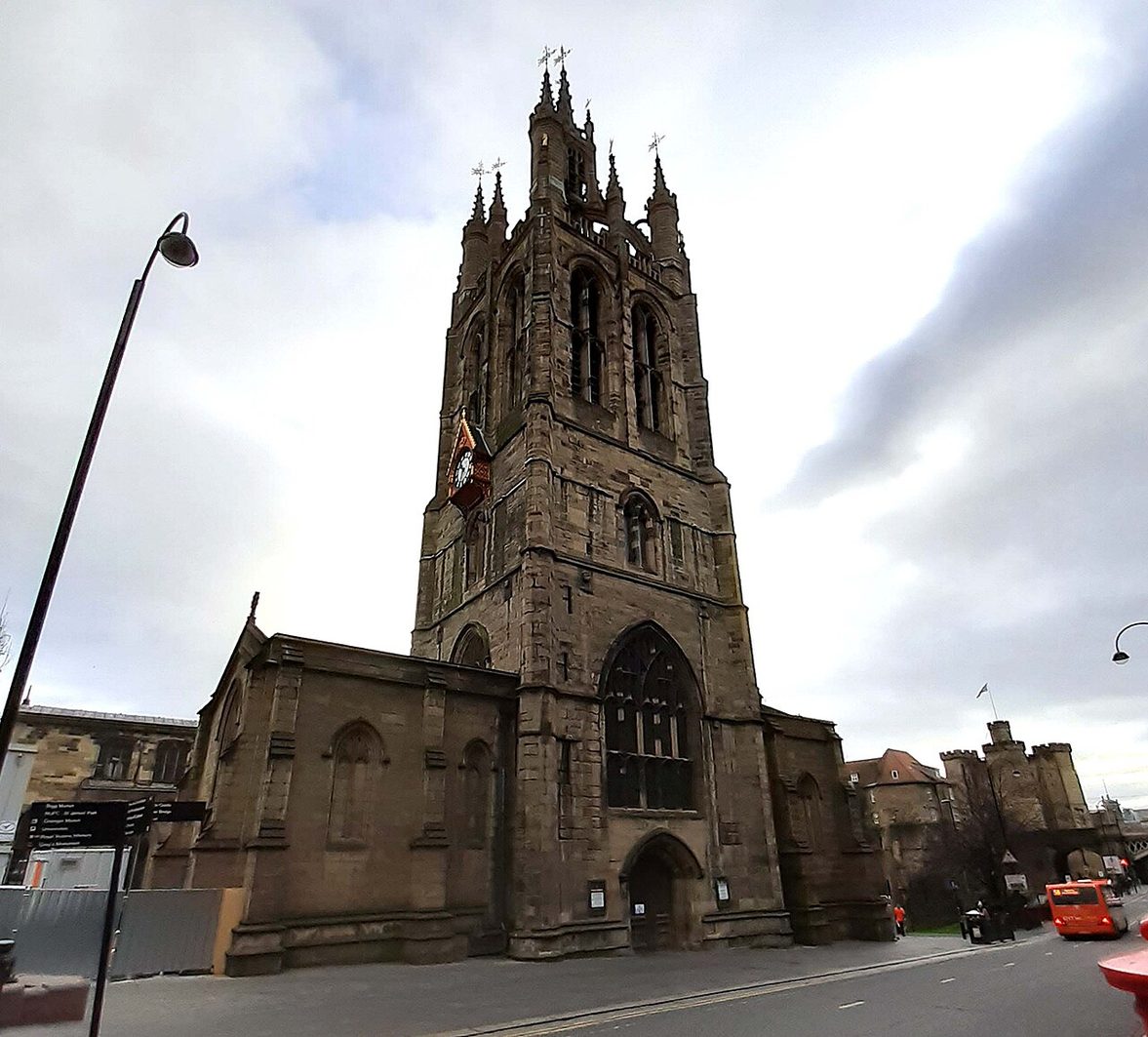
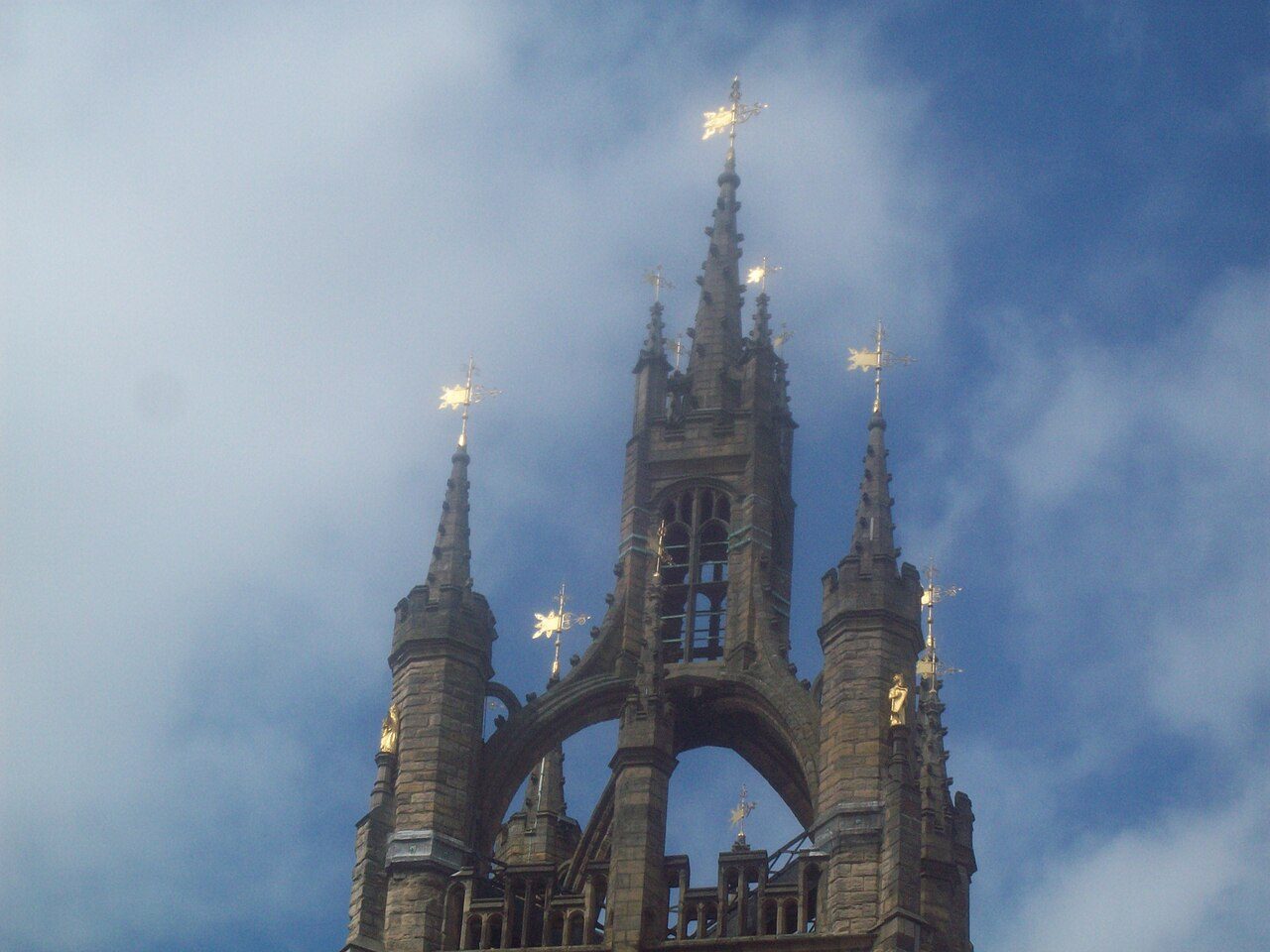
Newcastle’s cathedral was the town’s parish church for most of its life, and it still feels like one: a medieval church a few minutes from the station, with a café inside and its doors open from eight in the morning. Its glory is the lantern on top of the tower, a crown of stone built in 1448 that guided ships into the Tyne. Inside are the largest Flemish memorial brass in England, a font canopy knocked askew by a leaning tower, and memorials to the town’s merchants and to an admiral of Trafalgar.
The parish church of a merchant town
A church dedicated to St Nicholas, patron saint of sailors, stood here by the twelfth century; tradition dates its foundation to 1091. It burned in 1216, and the present church was built in the thirteenth and fourteenth centuries. In 1448 the tower was crowned with its lantern, paid for by Robert Rhodes, a wealthy local lawyer, and his wife Alice.
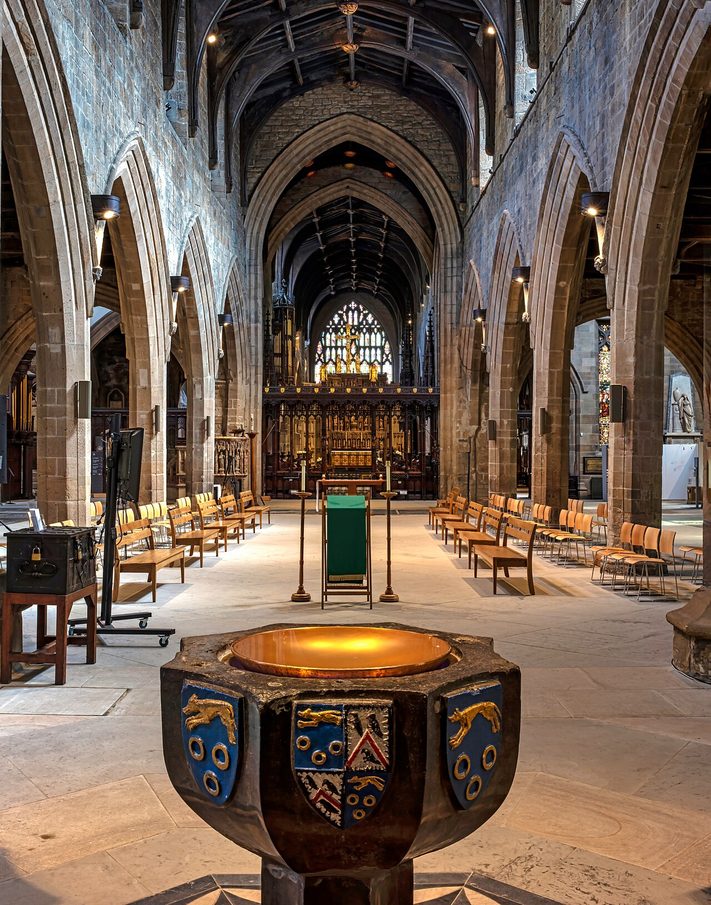
During the Scottish siege of Newcastle in 1644, the story goes, the Scots threatened to bombard the tower until the mayor, Sir John Marley, put Scottish prisoners inside it, and the tower was spared. In the 1860s Sir George Gilbert Scott strengthened the leaning tower and rebuilt its crown, and when the Diocese of Newcastle was created in 1882 the parish church became its cathedral. A £6 million restoration, mostly paid for by the National Lottery Heritage Fund, cleared the nave of its pews, restored the ledger stones in the floor and reopened the building in August 2021.
The visitor's cheat sheet
| Where | St Nicholas Square, Newcastle upon Tyne, NE1 1PF |
|---|---|
| Getting there | Five minutes’ walk from Newcastle Central Station; Central and Monument Metro stations under ten minutes; car parks on Dean Street |
| Opening hours | Usually Monday–Friday 8am–6pm, Saturday 8am–4pm, Sunday 8am–5pm; shorter hours at Christmas; check before a special trip |
| Admission | Free; donations welcome |
| How long | About an hour |
| Best time | A weekday afternoon, staying for Choral Evensong (check the service list) |
| Dress code | None; it is a working cathedral |
| Tours | Volunteer-led history tours, about £7, booked online; Lantern Tower tours currently postponed |
Hours and admission checked against the official site in October 2026. They change; the official site is always the last word.
The lantern and the castle. The town took its name from the “new castle” built by the Normans a stone’s throw from the church. Its keep still stands, and from the cathedral’s churchyard you can see both the lantern and the castle walls.
What to see, in the order you meet it
The font
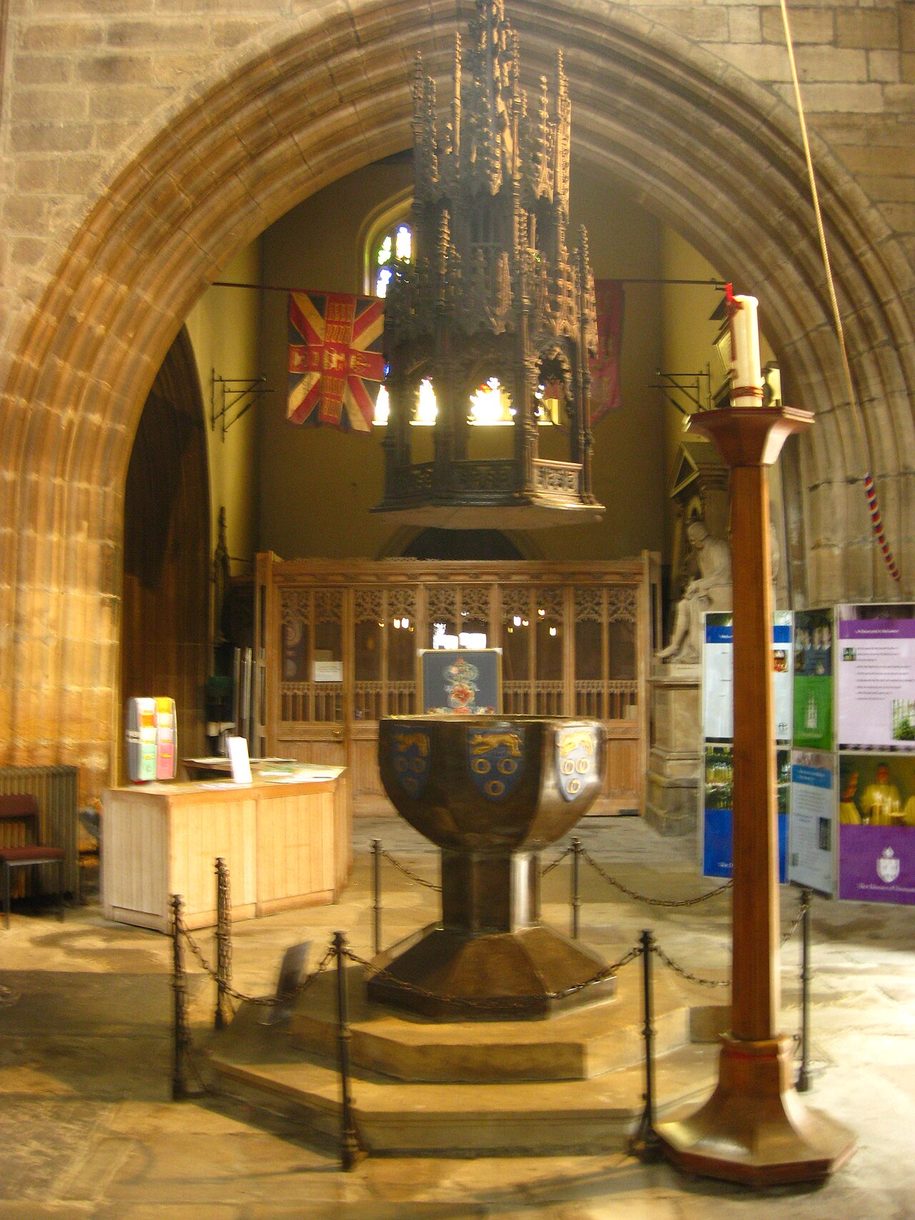
Just inside the west end is the fifteenth-century font, carved with the arms of Robert Rhodes. Its tall wooden canopy hangs off-centre because the tower above it has shifted over the centuries; look up inside the canopy for a carving of Christ crowning the Virgin.
The nave and the ledger stones
The open nave, without its pews, shows off the restored ledger stones: the gravestones of Newcastle merchants, mayors and their families set into the floor. Displays tell the stories of the people buried here.
St Margaret’s Chapel
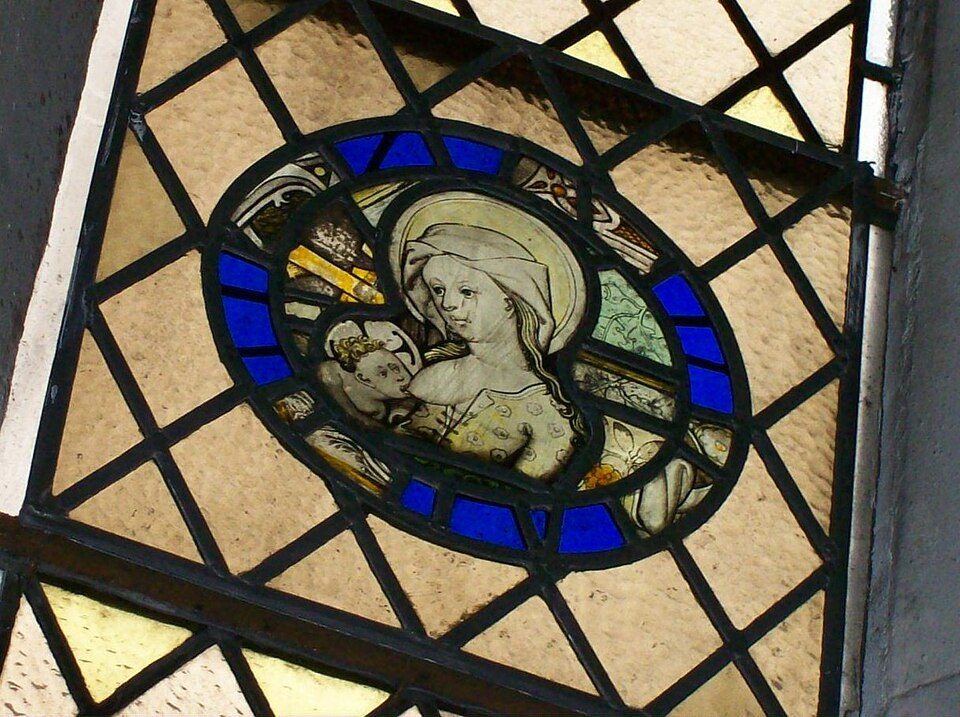
In this small chapel are the cathedral’s oldest treasures: the effigy of a knight carved before 1350, and a roundel of the Virgin feeding the Christ Child, the only stained glass of the fifteenth century left in the building.
The quire and the Thornton brass
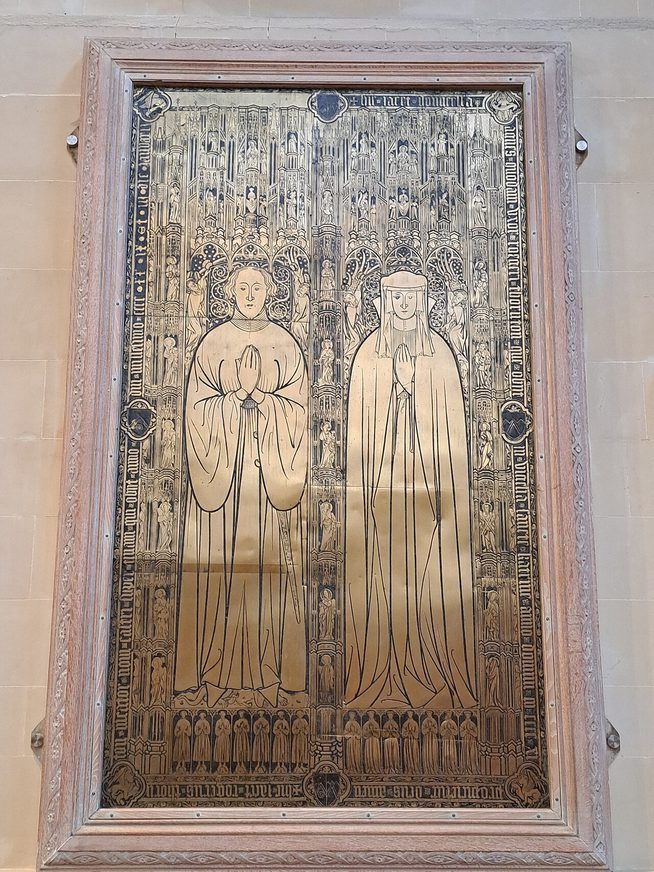
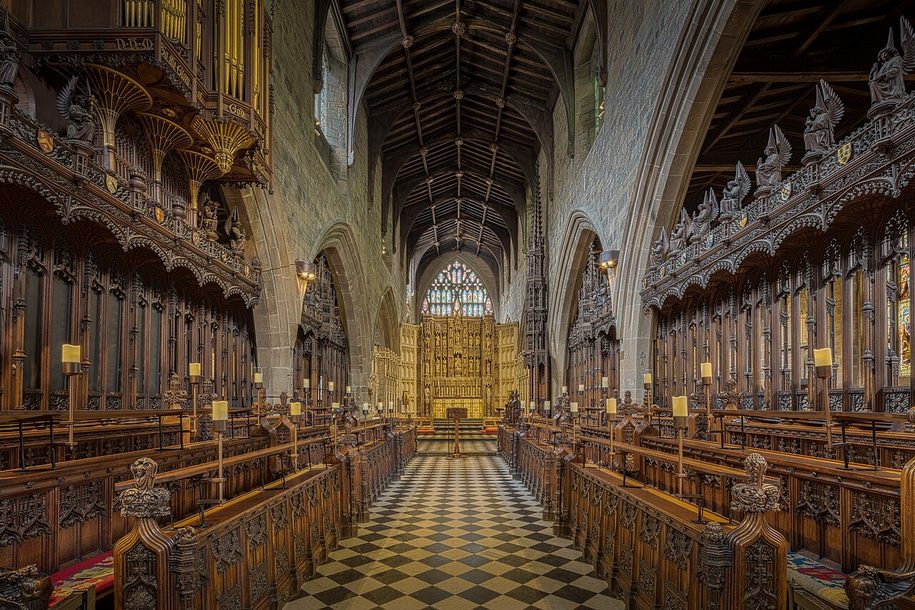
The quire was refitted after 1882, with stalls carved by the Newcastle craftsman Ralph Hedley. At the east end is the Thornton brass, made in Flanders by about 1441 for the merchant Roger Thornton and his wife Agnes, and the largest Flemish memorial brass in England. Look also for the organ, first built by Renatus Harris in 1676, and the brightly painted Maddison monument of the seventeenth century.
The Collingwood monument
In the north porch is the monument to Admiral Lord Collingwood, Nelson’s second-in-command at Trafalgar, who was born in Newcastle. Outside, in St Nicholas Square, is Alfred Gilbert’s statue of Queen Victoria, unveiled in 1903.
Visiting
Free to visit
Entry is free. Volunteer-led history tours can be booked through the cathedral website, and there are lunchtime organ recitals on Mondays.
The hotel link goes to Booking.com. This site earns nothing from it at present — it is here because it is the quickest way to check what is actually available.
Don't miss
- The lantern Look up from St Nicholas Square.
- The font canopy Hanging askew under a leaning tower.
- The Thornton brass Flemish work of the fifteenth century.
- The medieval roundel In St Margaret’s Chapel.
- The ledger stones Newcastle’s merchants underfoot.
- Café 16 Coffee inside the cathedral.
Insider tips
Walk down to the river. The Castle Keep and the Black Gate are a couple of minutes away, and from there steep lanes lead down to the Quayside and the Tyne bridges. Durham Cathedral is about a quarter of an hour away by train.
Common questions
Is Newcastle Cathedral free to visit?
Yes. Entry is free and donations are welcome. Guided history tours are ticketed, at about £7, and can be booked online through the cathedral’s website.
When is Newcastle Cathedral open?
The cathedral is usually open from 8am to 6pm on weekdays, 8am to 4pm on Saturdays and 8am to 5pm on Sundays, with shorter hours over Christmas and New Year. Services and events can limit access, and the published hours vary slightly from page to page, so check the cathedral’s website before a special trip.
Can you climb the lantern tower?
Not at the moment. Tower tours of 162 steps normally run on selected summer dates, but they have been postponed while maintenance work on the Lantern Tower is arranged with Newcastle City Council, which is responsible for the tower. While it lasts, the step-free West Entrance is closed; use the East Entrance.
Is there a café at Newcastle Cathedral?
Yes. Café 16, inside the cathedral, is run by The Oswin Project, a charity that trains and employs former prisoners. There is also a small gift shop in the south aisle.
How do you get to Newcastle Cathedral?
It is about five minutes’ walk from Newcastle Central Station along Neville Street, and under ten minutes from Central and Monument Metro stations. The nearest large car park is on Dean Street, below the East Entrance.
Where to stay and eat nearby
Café 16 is inside the cathedral, and the streets around Grey Street and the Quayside are full of places to eat and stay.
More English churches
- Durham Cathedral — a quarter of an hour by train
- St Paul’s, Jarrow — Bede’s monastery, a Metro ride and a short walk away
- Tynemouth Priory — at the mouth of the Tyne