
Derby Cathedral
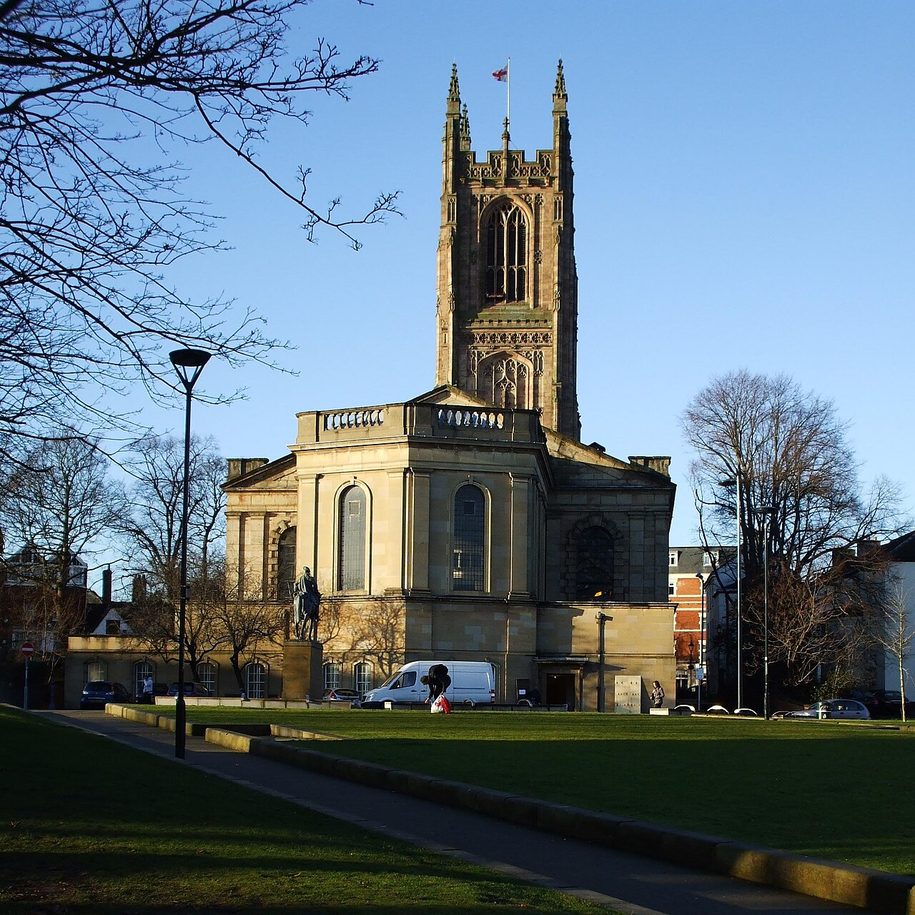
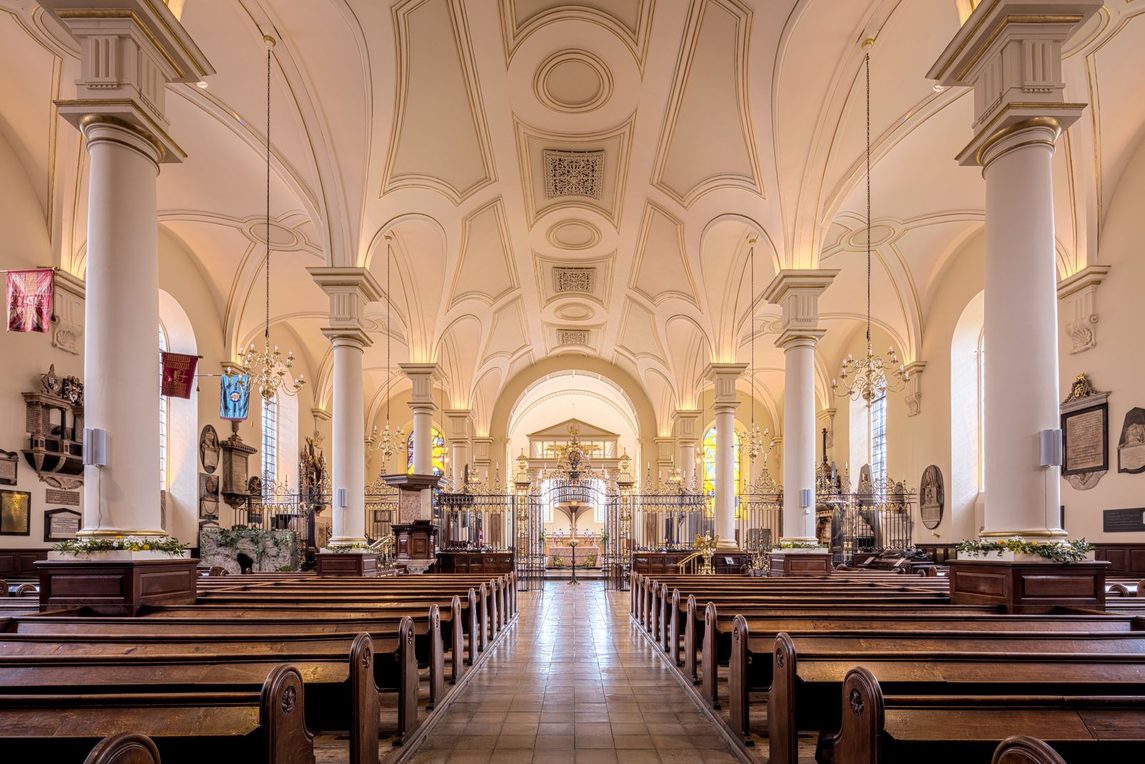
Derby Cathedral is a surprise. Outside is a tall Gothic tower of the early sixteenth century; inside, the medieval church has gone, replaced in 1725 by a light, elegant Georgian nave by James Gibbs. Across its east end runs one of the finest pieces of wrought ironwork in England, and in a side chapel lies Bess of Hardwick, one of the richest women of Elizabethan England. Peregrine falcons nest on the tower.
A Saxon foundation and a Georgian church
The church of All Saints is said to have been founded by King Edmund in about 943. Its great tower was built between about 1510 and 1530, 212 feet high, and in 1678 its bells were increased to ten; the cathedral claims them as the oldest ring of ten in the world.
By the 1720s the medieval church was in poor repair, and in 1723 the vicar, Dr Michael Hutchinson, had it pulled down. James Gibbs, the architect of St Martin-in-the-Fields, designed the new nave, which was finished in 1725; only the tower was kept. When the Diocese of Derby was created in 1927 All Saints became its cathedral, and in 1972 a retroquire by Sebastian Comper was added at the east end.
The visitor's cheat sheet
| Where | 18–19 Iron Gate, Derby, DE1 3GP |
|---|---|
| Getting there | About 20 minutes’ walk from Derby station, 10 minutes from the bus station; city-centre car parks |
| Opening hours | Daily; weekdays from 8.30am until 5pm–6.30pm depending on the day; shorter hours on Saturdays and bank holidays; check before a special trip |
| Admission | Free; donations welcome |
| How long | About an hour |
| Best time | Late spring, when the peregrines are nesting |
| Dress code | None; it is a working cathedral |
| Tours | Group tours £8 per adult, £3 per child, booked ahead; guided tower climbs (189 steps) on selected days |
Hours and admission checked against the official site in October 2026. They change; the official site is always the last word.
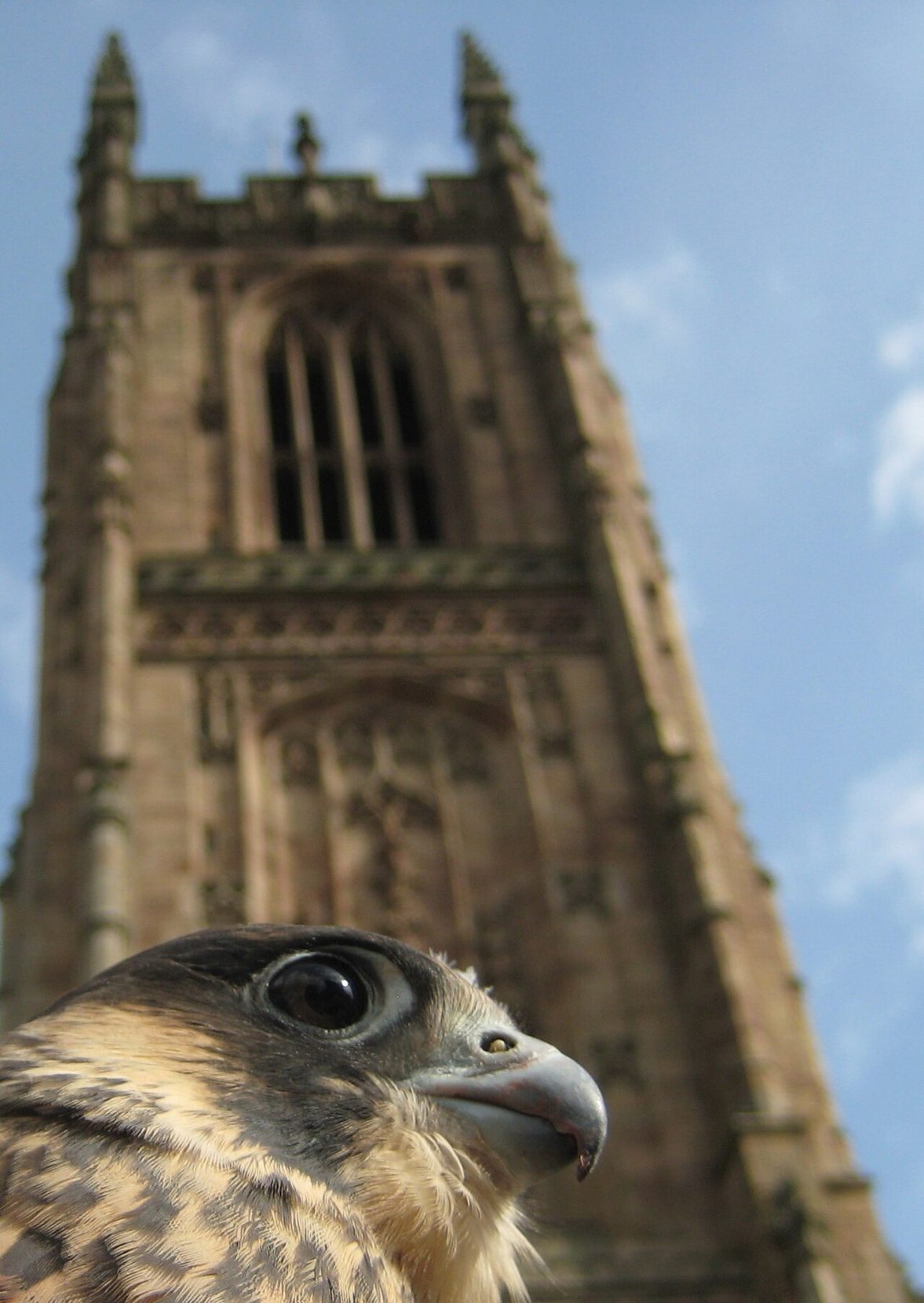
The Derby peregrines. A pair of peregrine falcons was seen on the tower in 2005. A nesting ledge was fitted the next year, and peregrines have bred there ever since, followed by webcams and by watchers on Cathedral Green.
What to see, in the order you meet it
The Gibbs nave
Walk in under the tower and the church opens out into a single bright space, with tall columns, round arched windows and a plaster ceiling. Around the walls are monuments of the eighteenth and nineteenth centuries, including works by Rysbrack, Roubiliac, Nollekens and Chantrey.
The Bakewell screen
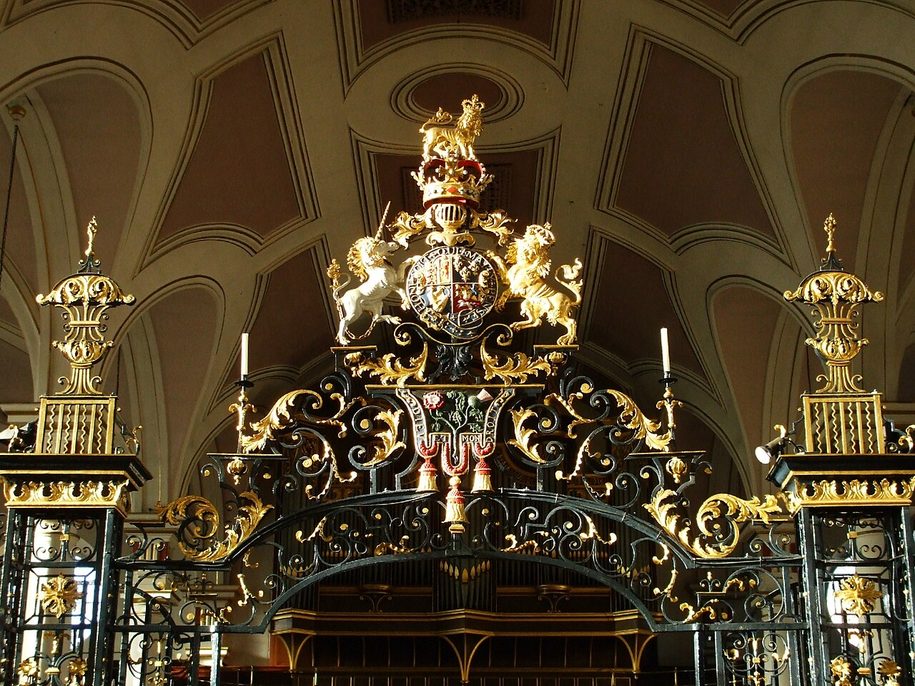
Across the chancel runs the wrought-iron screen made in about 1730 by Robert Bakewell, the Derby smith. Its scrolls and leaves are picked out in gold. Bakewell also made the entrance gates, brought here in 1957 and since 2012 called the Queen Elizabeth II Gates.
Bess of Hardwick and the Cavendish vault
In the Cavendish Chapel, at the east end of the south aisle, is the monument to Elizabeth, Countess of Shrewsbury, known as Bess of Hardwick, the builder of Hardwick Hall, who had it made before her death in 1608. In 1590 she bought the vault below, where more than forty members of the Cavendish family are buried, among them Georgiana, Duchess of Devonshire.

The Ceri Richards windows
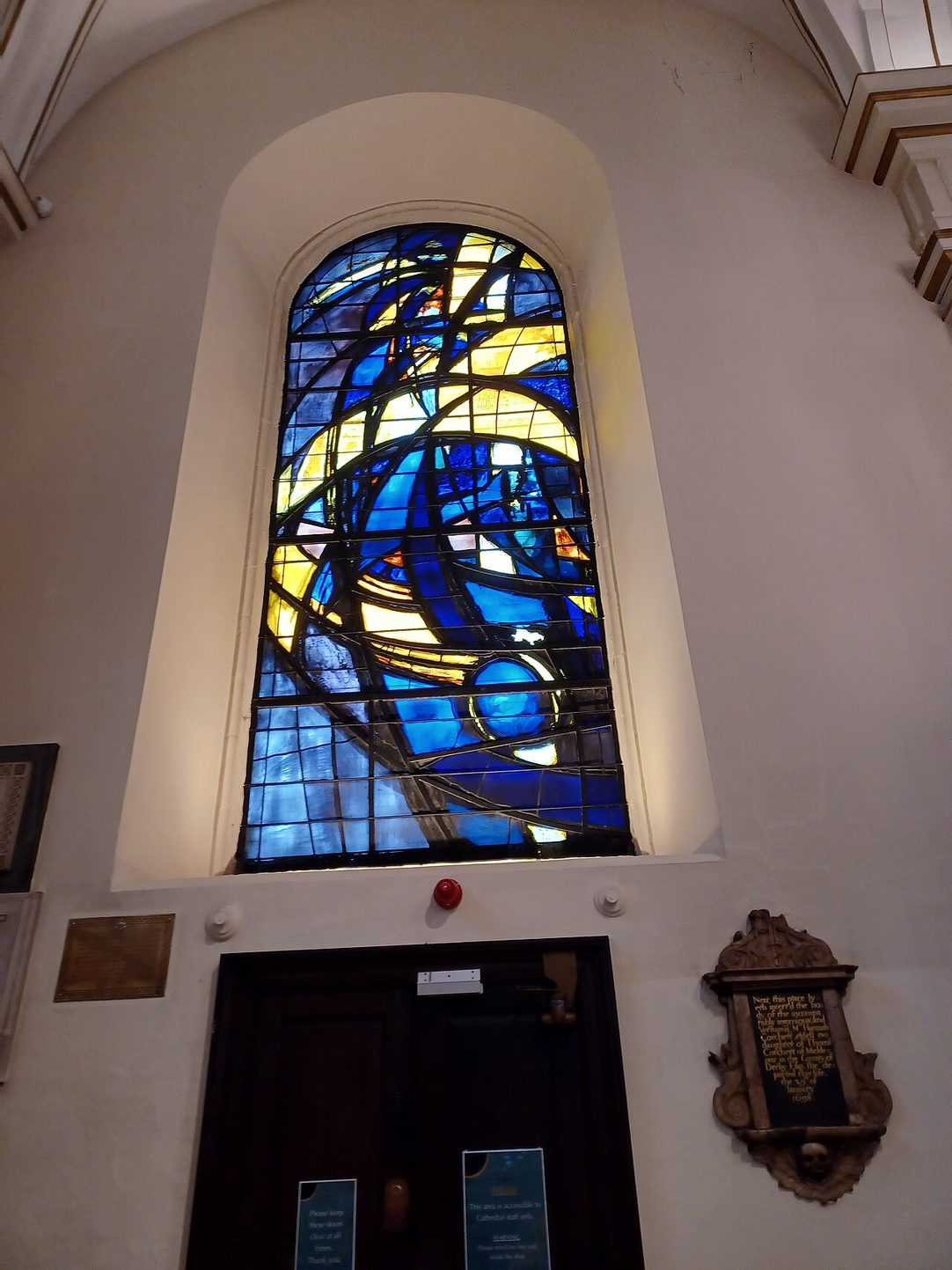
At the east ends of the aisles are two windows of the 1960s by the Welsh painter Ceri Richards, on the themes of All Saints and All Souls, their colours swirling across the glass. Beyond the screen is Comper’s retroquire, with its gilded canopy over the high altar.
Visiting
Free to visit
Entry is free. Group tours and tower climbs can be arranged through the cathedral office.
The hotel link goes to Booking.com. This site earns nothing from it at present — it is here because it is the quickest way to check what is actually available.
Don't miss
- The Bakewell screen Wrought iron at its finest.
- Bess of Hardwick The builder of Hardwick Hall.
- The Gibbs nave Georgian light and space.
- The Ceri Richards windows Colour from the 1960s.
- The peregrines On the tower in spring.
- Choral Evensong Sundays and most weekdays.
Insider tips
Walk down to the river. The Museum of Making, in the old Silk Mill by the Derwent, is a couple of minutes’ walk away and free. The mill is the southern end of the Derwent Valley Mills World Heritage Site, which follows the river north to Arkwright’s Cromford.
Common questions
Is Derby Cathedral free to visit?
Yes. Entry is free and donations are welcome. Guided tours for groups cost £8 per adult and £3 per child, booked through the cathedral, and the tower is opened for guided climbs on selected days.
When is Derby Cathedral open?
It is open every day, from about 8.30am on weekdays and Sundays until between 5pm and 6.30pm, with shorter hours on Saturdays and bank holidays. You may be asked to join a service under way or to come back later, and the cathedral sometimes closes at short notice for events, so check its website before a special trip.
Can you see the peregrine falcons?
Peregrines have nested on the tower since 2006. In late spring and early summer volunteers set up telescopes on Cathedral Green for free “Watch Point” sessions, and the nest can be followed online on the cathedral’s webcams.
Did Bonnie Prince Charlie come to Derby Cathedral?
Charles Edward Stuart reached Derby with his army on 4 December 1745, the furthest south the Jacobites came. According to tradition, the bells were rung for him and he attended a service in the church with his officers before the army turned back to Scotland.
How do you get to Derby Cathedral?
The cathedral is on Iron Gate in the city centre, about 20 minutes’ walk from Derby station and 10 minutes from the bus station. There is no public parking at the cathedral; use the city-centre car parks.
Where to stay and eat nearby
The cathedral stands in Derby’s Cathedral Quarter, with independent shops, cafés and restaurants in the streets around it.
More English churches
- Southwell Minster — the leaves of Southwell
- Lichfield Cathedral — three spires, about 40 minutes by car
- Birmingham Cathedral — another Georgian cathedral