
St James's Church, Chipping Campden
At the end of Chipping Campden’s golden High Street, past the almshouses and down an avenue of limes, stands one of the finest of the Cotswold wool churches. It was rebuilt in the fifteenth century with the wealth of merchants like William Grevel, “the flower of the wool merchants of all England”. Inside are their brasses, a rare set of medieval embroidered altar hangings, and the grand monuments of the family who built the almshouses and the Market Hall.
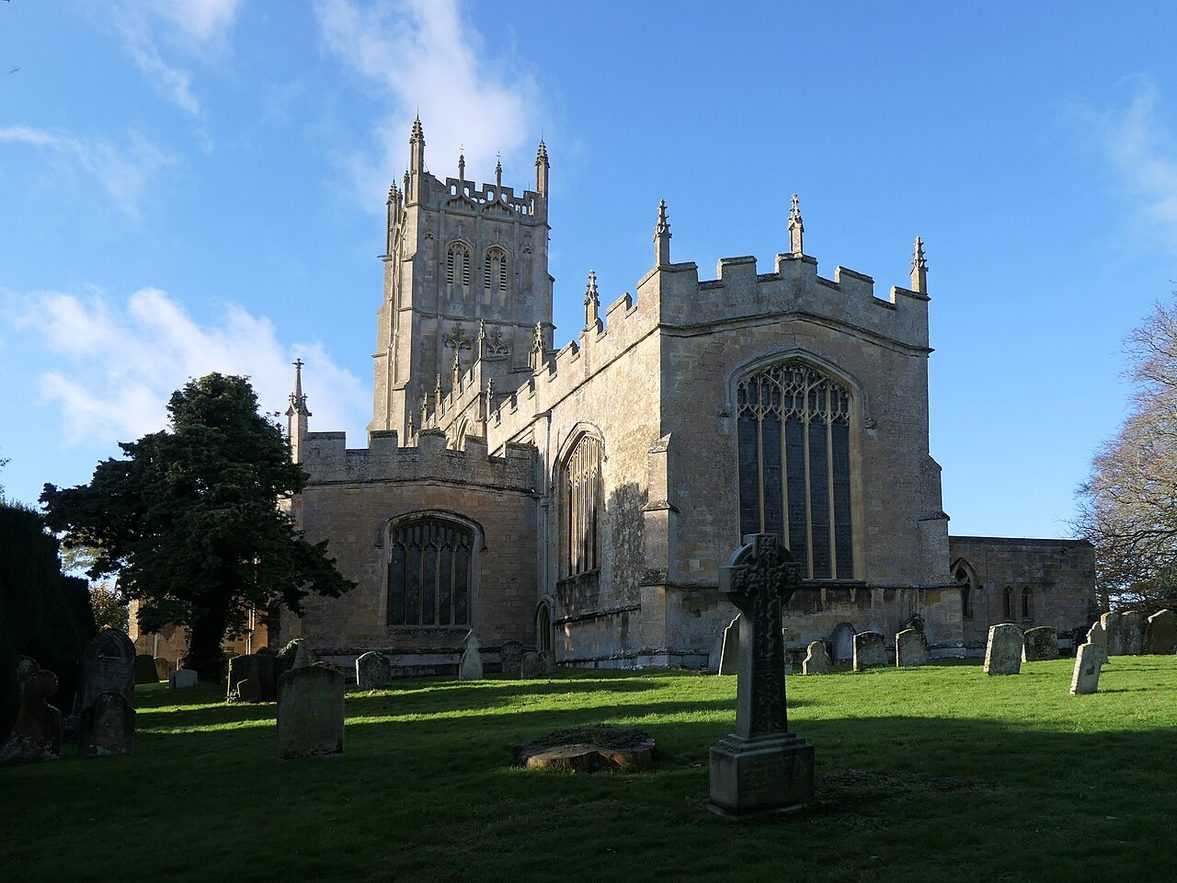
The wool merchants' church
Campden grew rich in the Middle Ages on the wool of the Cotswold sheep. William Grevel, who died in 1401, left money towards the “new building” of the church, and during the fifteenth century it was rebuilt in the Perpendicular style, with a tower 119 feet high. Parts of the older church survive, including the chancel of the fourteenth century.
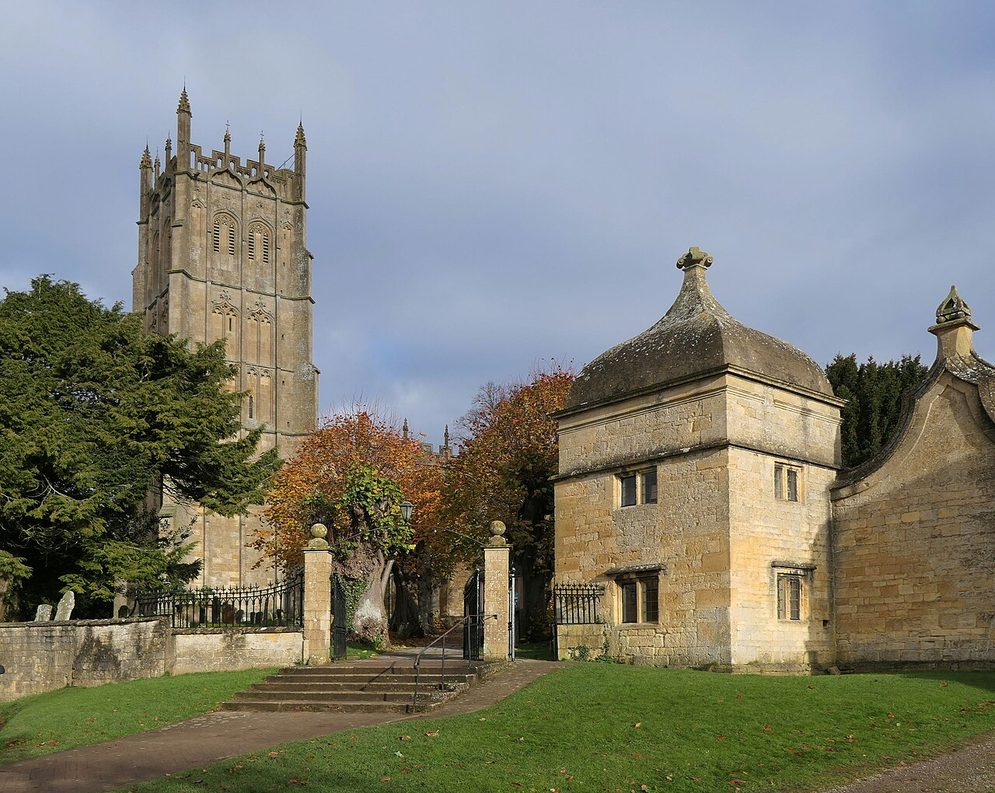
In the early seventeenth century the town’s great benefactor was Sir Baptist Hicks, a rich London mercer who became Viscount Campden. He built the almshouses in 1612 and the Market Hall in 1627, and a great house next to the church, which was set on fire by the departing Royalist garrison in 1645. Its gateway and two banqueting houses survive, now cared for by the Landmark Trust.

The visitor's cheat sheet
| Where | Church Street, Chipping Campden, Gloucestershire, GL55 6JG |
|---|---|
| Getting there | Moreton-in-Marsh station about 8 miles; buses to Moreton and Stratford; parking on the High Street and at Back Ends |
| Opening hours | Monday–Saturday 11am–4pm in spring and summer, 11am–3pm in autumn and winter; Sunday 12.30pm to 3pm or 4pm; check before a special trip |
| Admission | Free; donations welcome |
| How long | About an hour, more with a walk through the town |
| Best time | A weekday morning, before the coach parties arrive in the town |
| Dress code | None; it is a working church |
| Tours | No regular tours; groups should contact the church office |
Hours and admission checked against the official site in October 2026. They change; the official site is always the last word.
The start of the Cotswold Way. The 102-mile Cotswold Way runs from Chipping Campden to Bath. Many walkers set off from the Market Hall, a few minutes from the church.
What to see, in the order you meet it
The approach
Walk up Church Street from the High Street, past the almshouses of 1612, and you come to the church along an avenue of lime trees. Beside it is the gateway of Old Campden House, with its two lodges.
The brasses
In the chancel is the brass of William Grevel and his wife Marion, more than five feet long, and nearby are the brasses of later wool merchants of the fifteenth century. The Grevel brass is often covered by a carpet to protect it.
The altar hangings
The church’s greatest treasures are its medieval embroideries: altar frontals of about 1500 and a cope of about 1400, displayed in cases under the tower. There is also a brass eagle lectern of the late fifteenth century.

The Gainsborough Chapel
In the south chapel lie Sir Baptist Hicks and his wife Elizabeth, under a marble canopy carried on twelve columns. Beside them is the extraordinary monument of their daughter Juliana and her husband Edward Noel: two figures in their shrouds standing in an open doorway, carved by Joshua Marshall in 1664.

Visiting
Free to visit
Entry is free and donations are welcome.
The hotel link goes to Booking.com. This site earns nothing from it at present — it is here because it is the quickest way to check what is actually available.
Don't miss
- The Grevel brass “The flower of the wool merchants”.
- The altar hangings Medieval embroidery, still in its church.
- The Noel monument Two figures in their shrouds.
- The Hicks tomb Under its marble canopy.
- The almshouses Built in 1612 and still lived in.
- The Market Hall Of 1627, on the High Street.
Insider tips
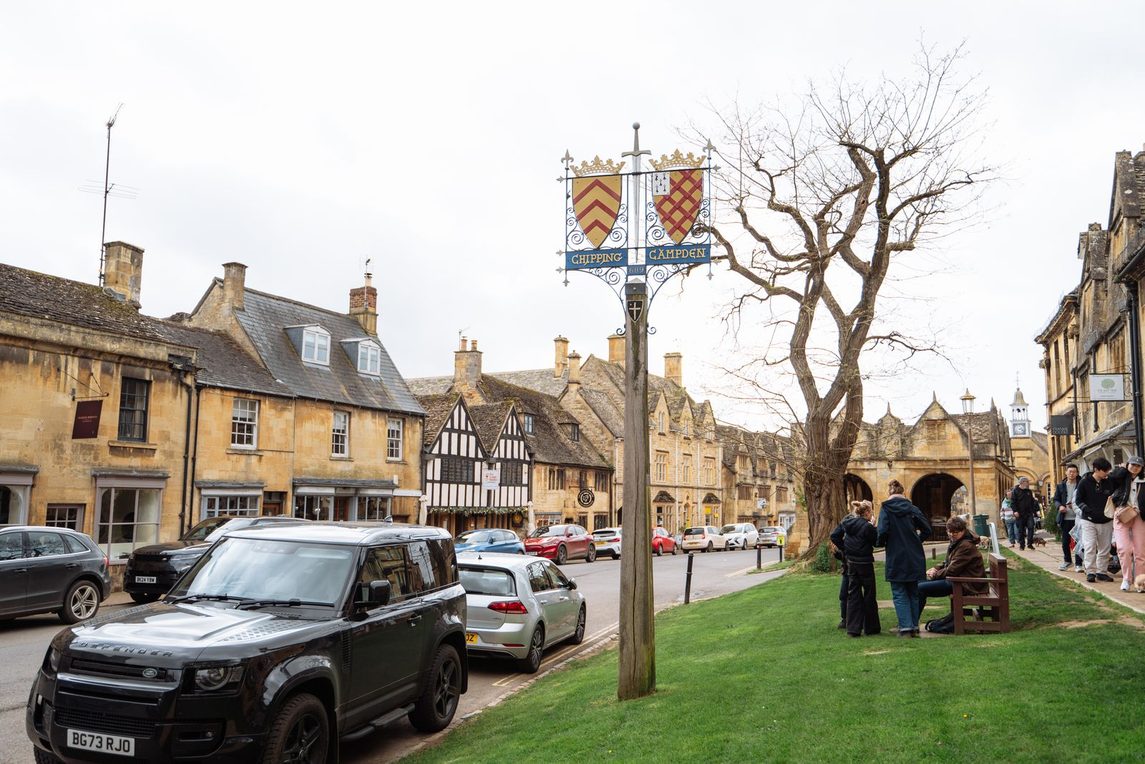
Walk the whole town. Chipping Campden’s High Street is one of the most beautiful in England. Walk its length to the Market Hall, then climb Dover’s Hill on the Cotswold Way for the view over the Vale of Evesham. Hidcote Manor Garden is about four miles away, and Broadway about five.
Common questions
Is St James's Church free to visit?
Yes. There is no charge and donations are welcome. Group leaders are asked to contact the church office before visiting.
When is the church open?
It is usually open from Monday to Saturday, 11am to 4pm in spring and summer and 11am to 3pm in autumn and winter, and on Sundays from 12.30pm to 3pm or 4pm. Weddings, funerals and concerts can close it, so check with the church office before a special trip.
Who was William Grevel?
A wool merchant who died in 1401. His brass in the chancel calls him “the flower of the wool merchants of all England”, and he left money towards rebuilding the church. His house, Grevel House, still stands on the High Street.
What are the Campden altar hangings?
The church keeps a set of medieval altar hangings of about 1500 and a cope of about 1400, among the rarest survivals of English church embroidery. The church says they are the oldest in England still in the church they were made for.
How do you get to Chipping Campden?
The nearest station is Moreton-in-Marsh, about eight miles away. Buses run to Moreton-in-Marsh and Stratford-upon-Avon. There is time-limited parking in the Square and free parking on the High Street and at Back Ends; the church is at the north-east end of the town.
Where to stay and eat nearby
The High Street has old coaching inns, tea rooms and restaurants, all a few minutes’ walk from the church.
More English churches
- Northleach church — more wool merchants’ brasses
- Cirencester church — the cathedral of the Cotswolds
- Holy Trinity, Stratford — Shakespeare’s grave, half an hour away