
Regensburg Cathedral
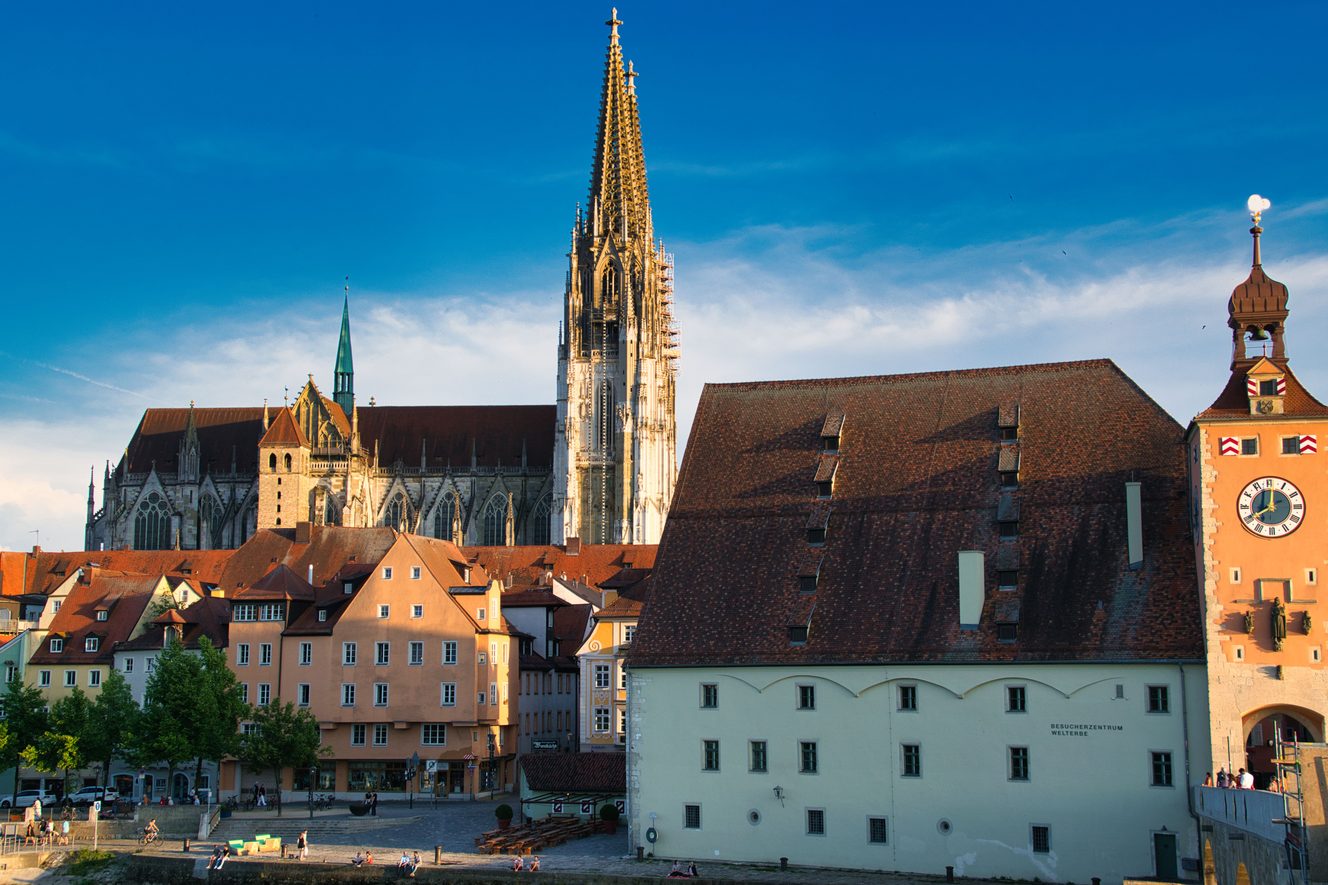
Regensburg Cathedral, the Dom St. Peter, is the great Gothic church of Bavaria: a French-inspired cathedral begun around 1275, filled with medieval stained glass, and crowned with openwork spires that were only finished in the 1860s. It is free, its famous boys’ choir, the Domspatzen, sings on Sundays in term time, and it stands in the middle of a UNESCO-listed old town a few minutes from the Danube.
Seven centuries of building
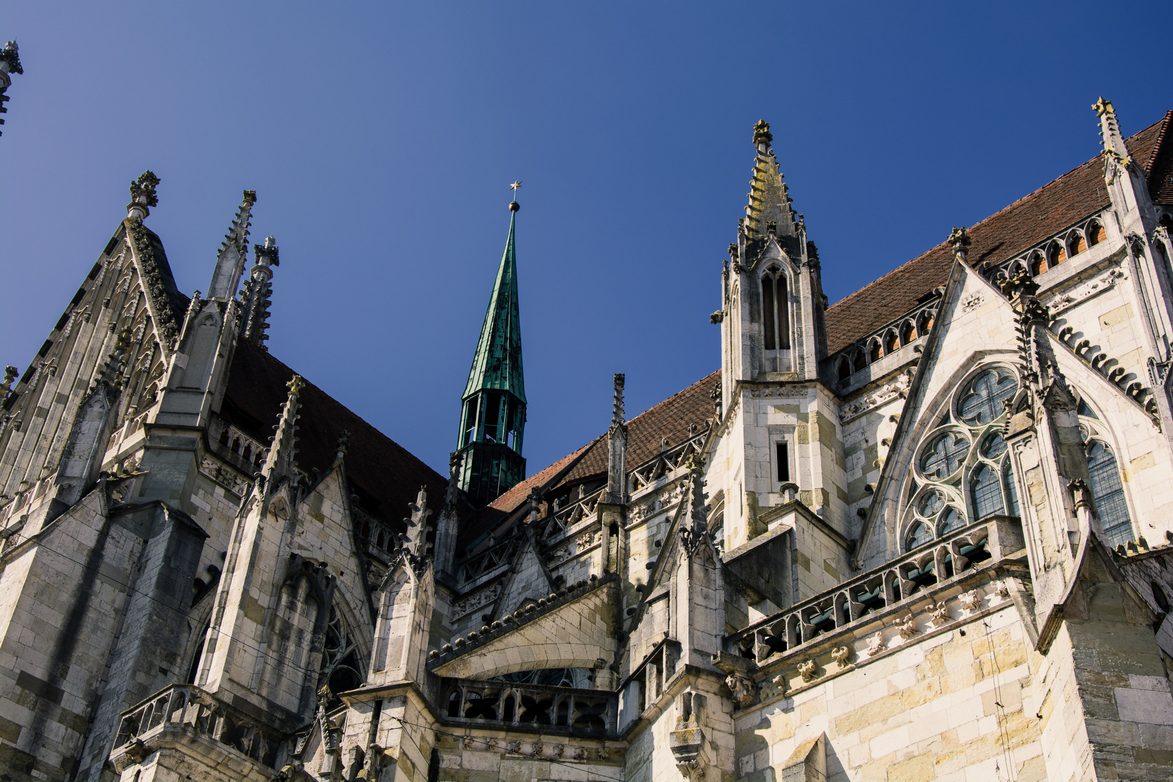
A church of St Peter is recorded here in 788, and a Romanesque cathedral followed; its Eselsturm, the “donkey tower” on the north side, still stands. After a fire in 1273 a new cathedral was begun around 1275; from about 1280 a master trained in France gave it its French High Gothic form, and in 2026 the diocese marked 750 years since its first altar was consecrated in 1276. Work went on for two and a half centuries, slowed and then stopped around 1520 with the towers unfinished. In the 1830s King Ludwig I of Bavaria had the Baroque fittings removed to restore its Gothic look, and the two spires, about 105 metres high, were at last completed between 1859 and 1869.
The old town of Regensburg, with its cathedral, became a UNESCO World Heritage Site in 2006. The Domspatzen trace their origins to the cathedral school founded by Bishop Wolfgang in 975; from 1964 to 1994 they were directed by Georg Ratzinger, the brother of Pope Benedict XVI.
The visitor’s cheat sheet
| Where | Domplatz 1, Regensburg old town; about 1 km from the Hauptbahnhof |
|---|---|
| Opening hours | Mon–Sat from 6.30am; closes 5pm November–March, 6pm April, May and October, 7pm June–September. Sundays and holidays from 1pm. No sightseeing during services |
| Admission | Free. Tours from DOMPLATZ 5: €8 (reduced €5), with the cloister €10 (May–October); under-17s free |
| Tours | In German: Mon–Fri 12.30pm (early January to mid-December); 2.30pm daily May–October (with cloister, €10); Sat, Sun and holidays November–April (without cloister, €8) |
| Mass | Sundays and holidays 10am and noon; Monday–Saturday 7am. Domspatzen in term time |
| Treasury | Closed until about 2028 |
| Access | Step-free entrance at the north-east corner, by the Eselsturm |
| How long | An hour; longer on a cloister tour |
Hours and admission checked against the official site in October 2026. They change; the official site is always the last word.
What to see
The west front
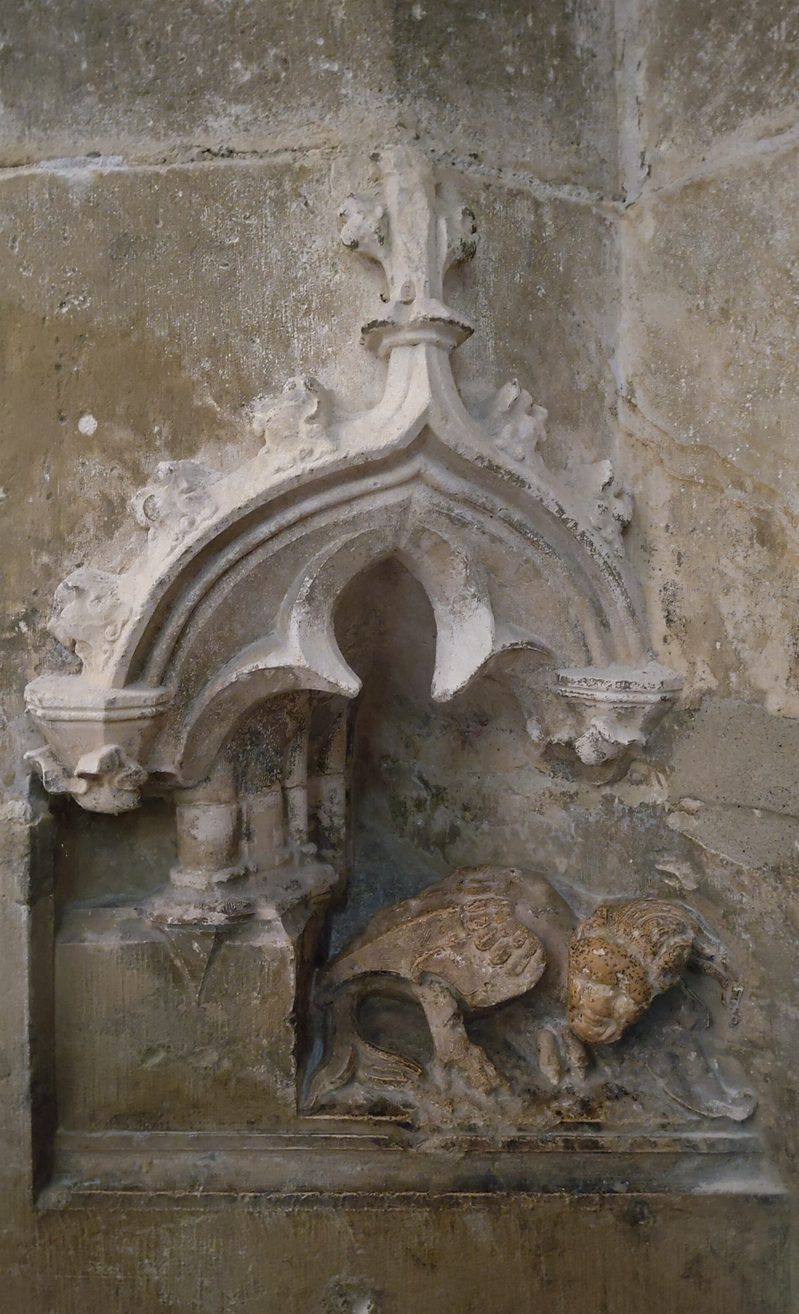
The west front is covered in carving, with a triangular porch in the middle. Look in the niches either side of the portal for two small figures known as the Devil and his grandmother, the subject of several local legends. On the south side, near the third buttress from the west, is a medieval antisemitic carving of a sow with Jewish figures, the so-called “Judensau”; a new information board, put up in 2023, explains its history and antisemitic meaning.

The nave and the glass
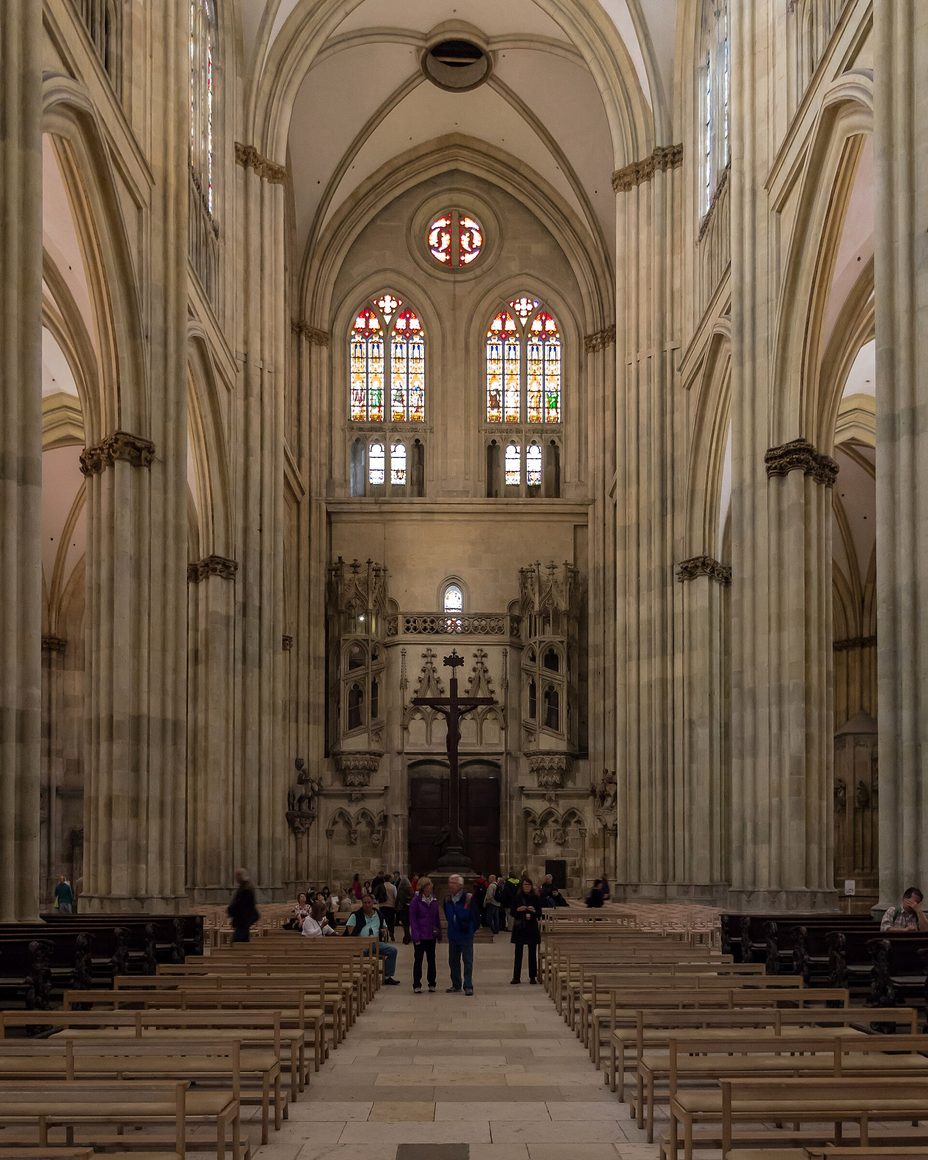
Inside, the nave rises 32 metres to the vault. The cathedral is one of the few in Germany to keep much of its medieval glass: over 1,100 panels in 39 windows, mostly of the 14th century, with some older pieces reused from the Romanesque church. Some windows, including those in the main choir lantern, are modern. On the western piers of the crossing stands an Annunciation of around 1280: the smiling angel Gabriel and the Virgin, by the sculptor known as the Erminold Master.
High in the north transept hangs the main organ, built by Rieger in 2009 and suspended on steel cables; it is said to be the largest hanging organ in the world. From May to October there is a short lunchtime meditation with organ music on weekdays at noon.
The cloister and All Saints’ Chapel
The cloister, and the Romanesque All Saints’ Chapel within it, built in the mid-12th century as the burial chapel of Bishop Hartwig II and still painted inside, can be visited only on a guided tour (daily at 2.30pm, May to October).


Getting there
The cathedral is in the centre of the old town, about a kilometre (15 minutes’ walk) north of the Hauptbahnhof by way of Maximilianstraße. Trains from Munich take from about 1 hour 25 minutes, and from Nuremberg just over an hour. Drivers should use the old-town car parks, such as the Parkhaus Dachauplatz, a few minutes east of the cathedral. The Stone Bridge over the Danube and the Historische Wurstkuchl are five minutes away.

Tours and where to stay
Cathedral tours start from the information centre DOMPLATZ 5, opposite the west front. Regensburg is a popular stop on Danube cruises, so the old town is busiest in the middle of the day.
These links go to GetYourGuide and Booking.com. This site earns nothing from them at present — they are here because they are the quickest way to check what is actually available.
Don’t miss
- The medieval glass Over 1,100 panels, mostly 14th-century.
- The smiling angel On the western crossing pier.
- The Domspatzen Sunday morning, in term time.
- The Devil and his grandmother By the west portal.
- All Saints’ Chapel On the summer cloister tour.
Insider tips
Come early on weekdays. The cathedral opens at 6.30am, long before the river-cruise groups arrive. On Sundays sightseeing begins only at 1pm, so if you want to hear the Domspatzen, come for the morning Mass instead.
Common questions
Is Regensburg Cathedral free?
Yes. Individual visitors can go in free outside service times. Guided tours cost €8, or €10 with the cloister (May to October only).
When is Regensburg Cathedral open?
From 6.30am Monday to Saturday, closing at 5pm from November to March, 6pm in April, May and October, and 7pm from June to September. On Sundays and holidays sightseeing begins at 1pm.
When can you hear the Domspatzen?
The cathedral’s boys’ choir sings at Sunday and holiday services during the Bavarian school term, normally at the 10am Mass, and at the great feasts. They usually do not sing during the Bavarian school holidays, especially in summer.
Can you see the cathedral treasury?
Not at present. The Domschatzmuseum closed in 2024 and is being rebuilt as part of the new KunstQuartier am Dom, expected to open in 2028.
Are there tours in English?
The public tours are in German. English tours can be booked for groups through the cathedral information centre, DOMPLATZ 5, which also has printed guides in English.
More churches in Germany
- Cologne Cathedral — the other great Gothic cathedral whose spires were finished in the 19th century.
- Ulm Minster — another Gothic church on the Danube, with one of the tallest church steeples in the world.
- Speyer Cathedral — the Romanesque imperial cathedral on the Rhine.