
Churches to Visit in Germany
Germany’s churches span the whole of European Christian architecture, from a chapel built for Charlemagne around 800 to a Gothic cathedral finished with Prussian money in 1880. This guide starts in the Rhineland with two World Heritage cathedrals, less than an hour apart by train: Aachen, where Charlemagne is buried and German kings were crowned for six centuries, and Cologne, the twin-spired giant beside the Rhine. In the south is Ulm Minster, for 135 years the tallest church in the world, and in the capital the Kaiser’s domed cathedral on Museum Island and the bombed Kaiser Wilhelm Memorial Church in the West End.

German cathedrals are working churches with long opening hours for worship and shorter hours for sightseeing, and the difference matters: tourists are usually asked to stay out during services, and on Sundays sightseeing often begins only after lunch. Cologne now charges tourists for entry, the first of Germany’s great Catholic cathedrals to do so; Aachen is free, but its throne and choir are shown only on guided tours. Berlin Cathedral, a Protestant church, charges €15, and Ulm Minster is free, with a charge only for the tower.
Where to start
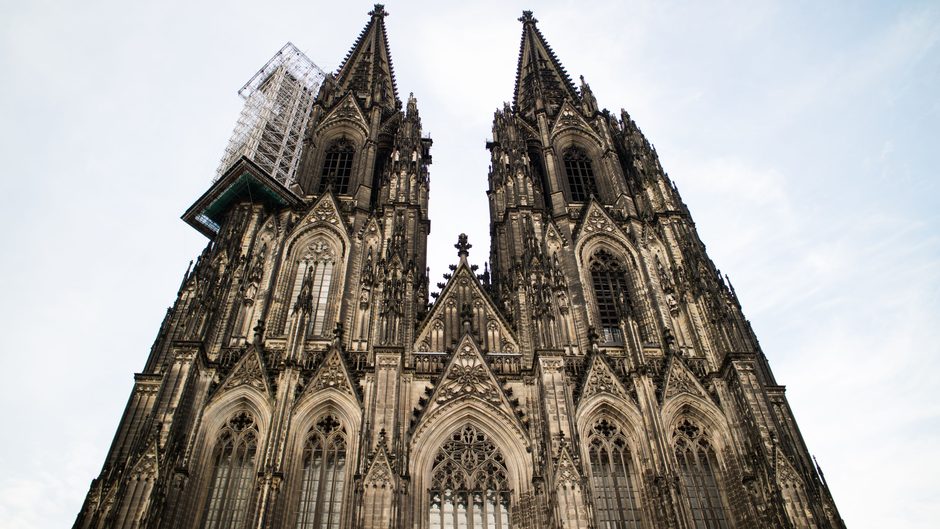
Cologne Cathedral
632 years in the building, 157 metres tall, and since July 2026 €12 for tourists. The Shrine of the Three Kings is behind the altar.
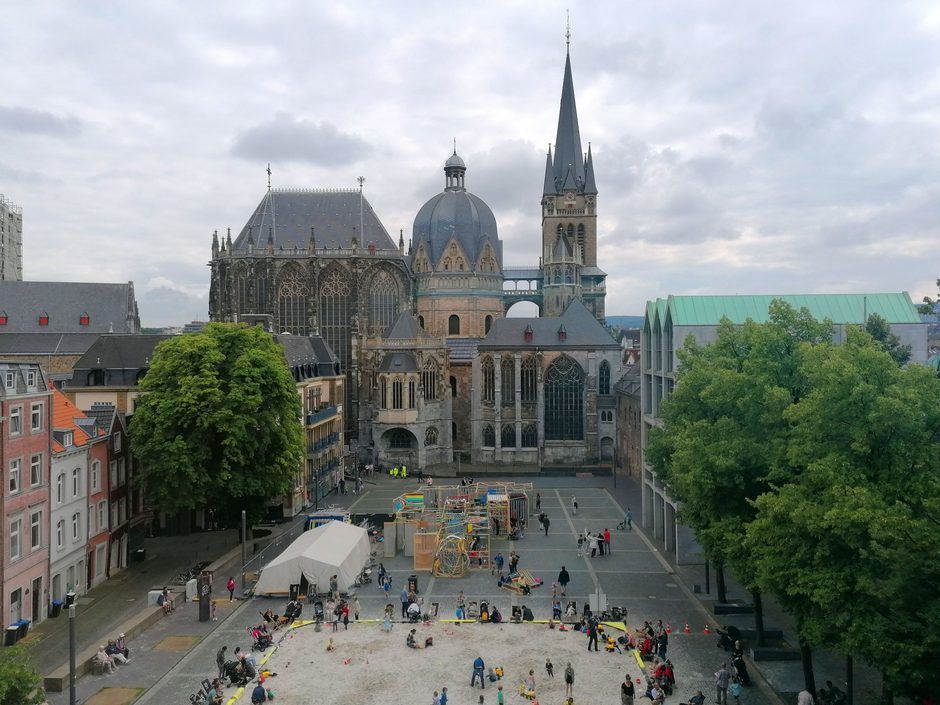
Aachen Cathedral
Charlemagne’s octagonal chapel, his throne and his shrine. Free, but book the guided tour to see the throne.
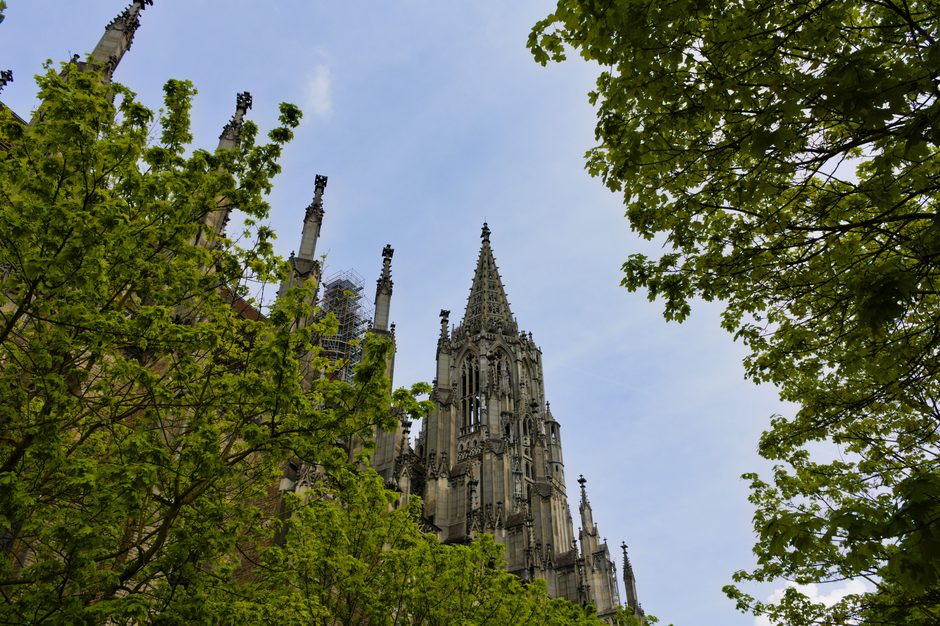
Ulm Minster
161.53 metres of Gothic tower and Syrlin’s choir stalls. Free; in 2026 the tower climb stops at 102 metres.
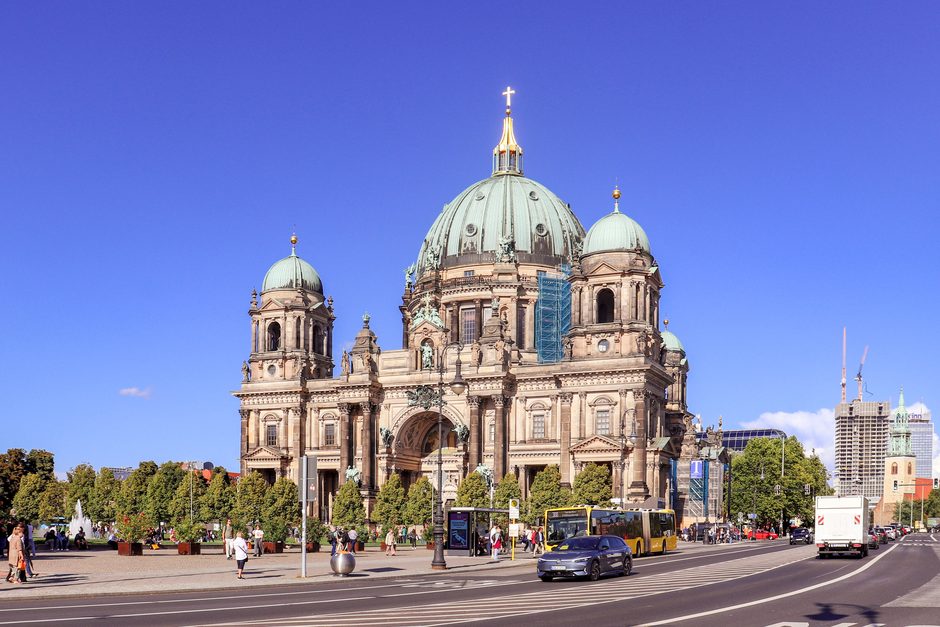
Berlin Cathedral
The Hohenzollern crypt, reopened in 2026, the Sauer organ and 270 steps round the dome. €15.

Kaiser Wilhelm Memorial Church
The bombed tower kept as a memorial, beside a church of blue glass. Free; restoration under way.
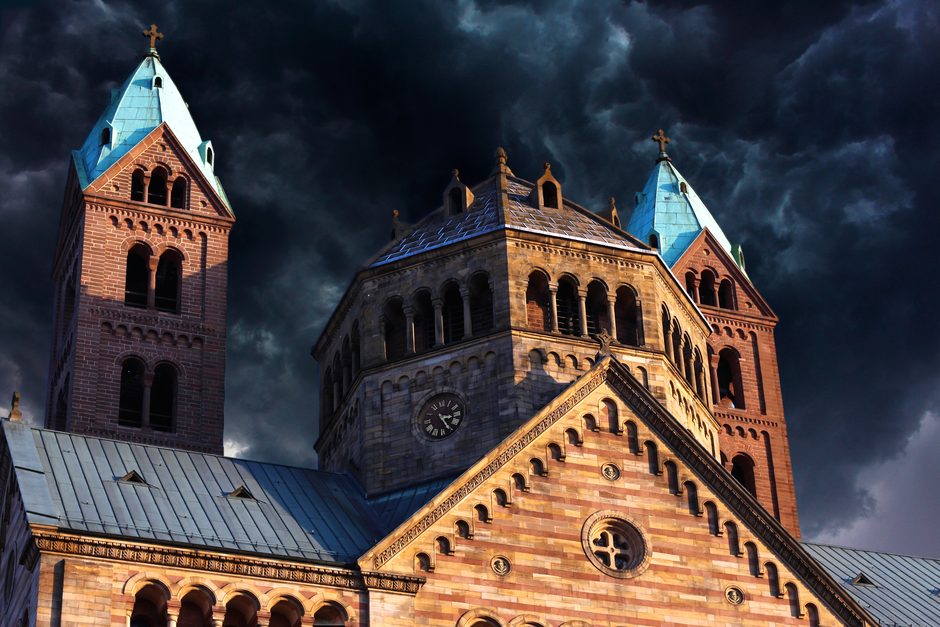
Speyer Cathedral
The largest surviving Romanesque church, with the tombs of eight emperors and kings. Free; crypt extra.
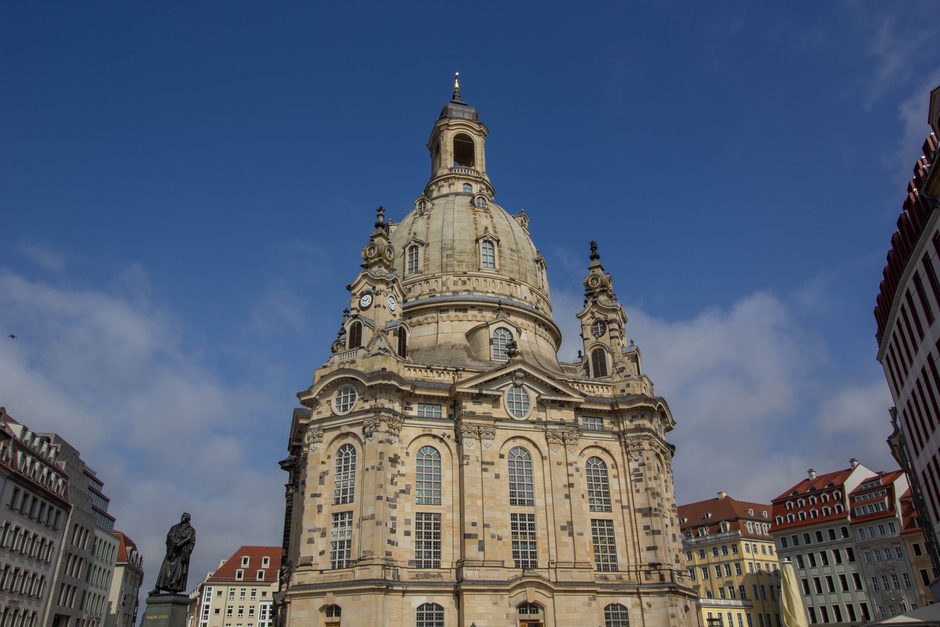
Dresden Frauenkirche
Destroyed in 1945, rebuilt and reconsecrated in 2005. Free; €12 to climb the dome.
Practical notes for the whole country
| Opening hours | Cathedrals open early for worship, but sightseeing hours are shorter: from 10 or 11am on weekdays, and only in the afternoon on Sundays. Visits stop during services |
|---|---|
| Admission | Aachen and Ulm are free; Cologne has charged tourists €12 since July 2026, though services and prayer stay free, and Berlin Cathedral costs €15. Towers, treasuries and guided tours are paid extras |
| Dress and bags | Shoulders covered; men remove hats. Large bags and suitcases are turned away, and there is rarely left luggage: use station lockers |
| Photography | Allowed for personal use without flash or tripods; Aachen asks €1 for a photo permit |
| Getting around | Cologne and Aachen are 35 minutes to an hour apart by train; Ulm is on the fast line between Stuttgart and Munich, and Berlin is about four and a half hours from Cologne by ICE |
All seven churches
- Cologne Cathedral The Shrine of the Three Kings, the Gero Cross and 533 steps to the top of the south tower.
- Aachen Cathedral Charlemagne’s chapel of around 800, the coronation throne and the Barbarossa chandelier.
- Ulm Minster The tallest church in the world from 1890 to 2025, with Syrlin’s celebrated medieval choir stalls.
- Berlin Cathedral The Hohenzollerns’ Protestant cathedral, its crypt and its dome walk.
- Kaiser Wilhelm Memorial Church West Berlin’s war memorial: the broken tower and the blue-glass church.
- Speyer Cathedral The Salian emperors’ Romanesque cathedral and burial church on the Rhine.
- Dresden Frauenkirche Bähr’s baroque dome, destroyed in 1945 and rebuilt with the old stones.
Coming next
Bamberg Cathedral and the pilgrimage church of the Wies are on the list, built the same way as the rest of this guide: one region finished properly at a time.