
St John Baptist, Cirencester
Cirencester’s parish church is often called the cathedral of the Cotswolds, and it is one of the largest parish churches in England. It was paid for by the wool merchants of the fifteenth and sixteenth centuries, who gave it a soaring tower, a light and lofty nave and, facing the Market Place, one of the grandest church porches in England. Inside are a fan-vaulted chapel, a medieval painted pulpit and a cup made for Anne Boleyn.
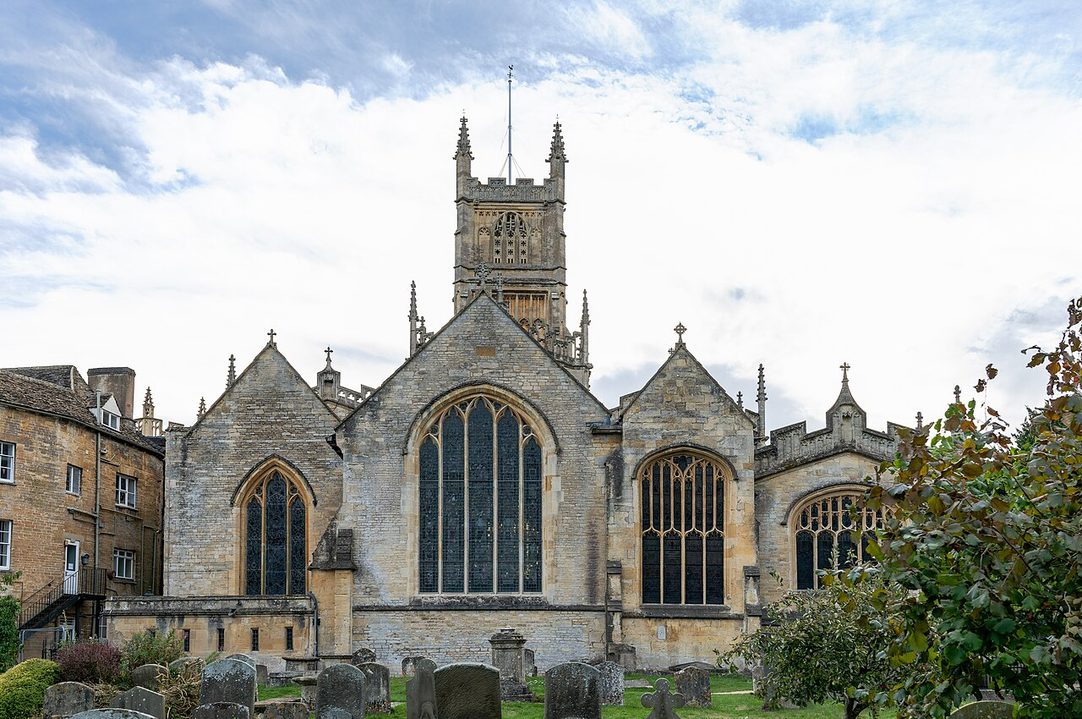
The wool town's church
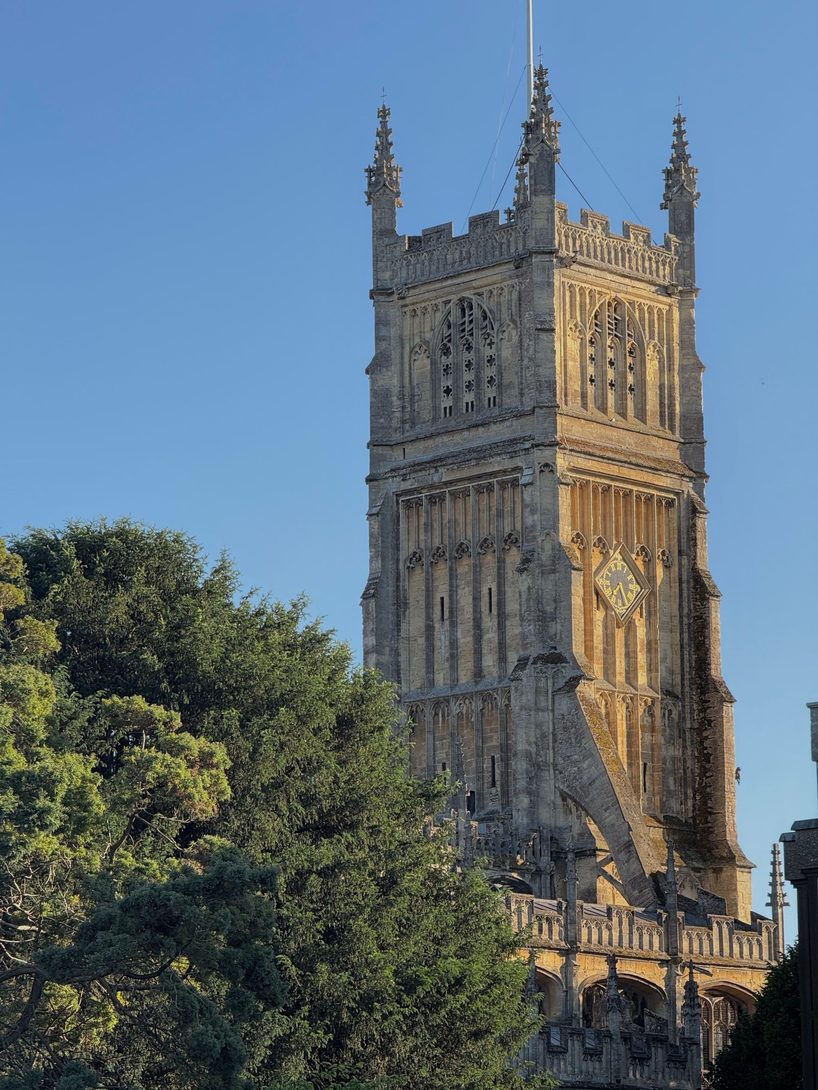
The chancel was begun in about 1115, and two years later Henry I founded a great Augustinian abbey next door. The tower was built in the early fifteenth century; tradition says that Henry IV helped to pay for it with goods taken from two rebel earls captured by the townspeople in 1400. It began to sink over an old Roman ditch, and the great buttresses were added to hold it up.
The south porch was built in about 1490, and after the abbey was dissolved it served as the town hall. Between 1515 and 1530 the nave was rebuilt in its present form, with money from the wool trade. Sir George Gilbert Scott restored the church in 1865–67.
The visitor's cheat sheet
| Where | Market Place, Cirencester, Gloucestershire, GL7 2NH |
|---|---|
| Getting there | Kemble station about 4–5 miles away, then bus or taxi; coaches from London; car parks in the town centre |
| Opening hours | Daily, 10am to 4pm or 5pm |
| Admission | Free; donations welcome; tower climb on set days £5 (£3 for ages 12–16) |
| How long | About an hour |
| Best time | A weekday between March and October, joining a free tour |
| Dress code | None; it is a working church |
| Tours | Free tours mid-March to October on most weekdays; group tours all year, £5 a head, booked with the parish office |
Hours and admission checked against the official site in October 2026. They change; the official site is always the last word.
The town hall porch. When the abbey was pulled down after 1539, the townspeople took over its grand porch on the Market Place. For centuries its upper rooms served as Cirencester’s town hall.
What to see, in the order you meet it
The south porch
Three storeys high and covered in panelling, pinnacles and tall windows, the porch is one of the grandest in England. You enter the church through it from the Market Place.

The nave and the pulpit
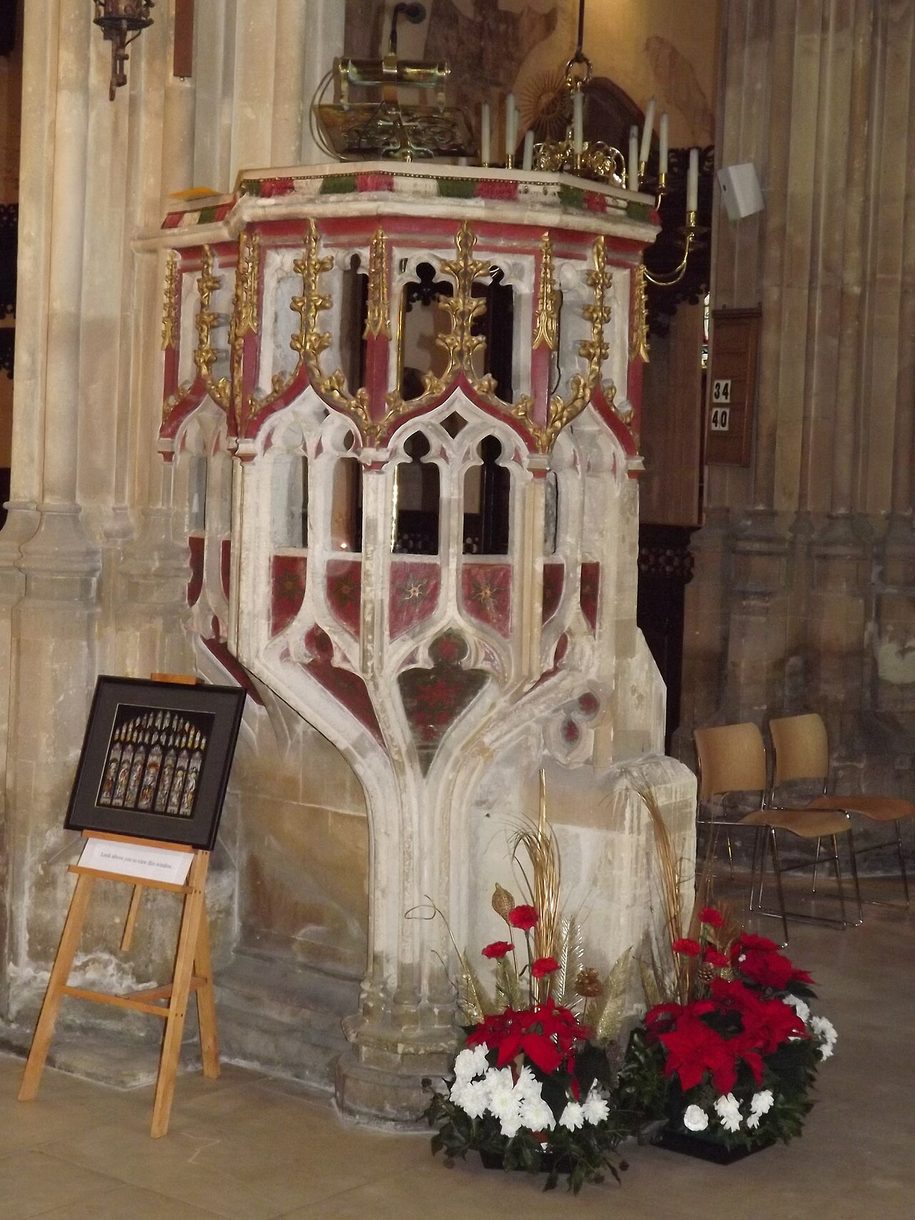
The nave of 1515–30 is tall and full of light, with slender piers and big clerestory windows. Against one of the piers is the painted stone pulpit of the fifteenth century, shaped like a wine glass, one of the few medieval pulpits left in England.
The chapels
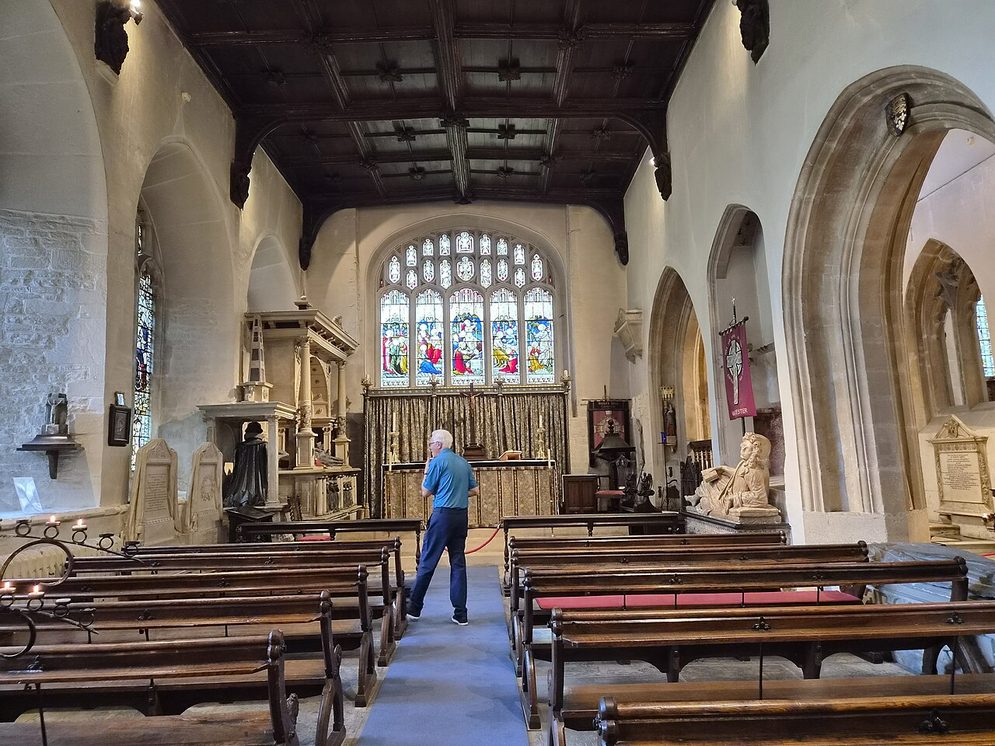
Around the chancel are a series of chapels. St Catherine’s Chapel has a fan vault given in 1508 by the abbot, John Hakebourne, and a wall painting of St Christopher. The Trinity Chapel has brasses of wool merchants of the fifteenth century, and the Garstang Chapel is a chantry chapel of the fifteenth century. In the east window and a south aisle window is medieval glass.

The Boleyn Cup
In a case in the wall is the Boleyn Cup, made of silver gilt in 1535 for Anne Boleyn, a year before her execution.
Visiting
Free to visit
Entry is free. The church shop is by the north door, and the tower is opened for climbs on set days.
The hotel link goes to Booking.com. This site earns nothing from it at present — it is here because it is the quickest way to check what is actually available.
Don't miss
- The south porch Once the town hall.
- The wine-glass pulpit Painted, fifteenth century.
- The fan vault In St Catherine’s Chapel.
- The Boleyn Cup Made for Anne Boleyn in 1535.
- The wool merchants’ brasses In the Trinity Chapel.
- The tower Climb it on an open day.
Insider tips
See Roman Cirencester too. The town was Corinium, the second largest town in Roman Britain. The Corinium Museum, a few minutes’ walk away, has superb mosaics, and the Abbey Grounds behind the church make a pleasant walk. Fairford church, with its complete set of medieval glass, and Northleach are each about half an hour away.
Common questions
Is Cirencester church free to visit?
Entry is free and donations are welcome. From mid-March to the end of October there are free guided tours on most weekdays, with no need to book; groups can book a tour all year, at £5 a head.
When is the church open?
It is open every day of the year, from 10am until 4pm or 5pm. Tours pause during services, and Choral Evensong is usually sung on Sunday afternoons.
Can you climb the tower?
On set days only, listed on the parish website. The climb costs £5 (£3 for ages 12–16); children under 12 are not allowed, no more than eight people can be at the top at once, and it closes in wet weather.
What is the Boleyn Cup?
A silver-gilt cup made in 1535 for Anne Boleyn, with her falcon badge on the lid. Elizabeth I is said to have given it to her physician, Richard Master, who gave it to the church; it is recorded there from 1614. It is displayed in a glass-fronted case in the wall.
How do you get to Cirencester?
The nearest station is Kemble, about four or five miles away, with buses and taxis into the town. Coaches from London stop in Cirencester. The church is in the Market Place, with pay-and-display car parks close by.
Where to stay and eat nearby
The Market Place and the streets around it are full of cafés, pubs and restaurants, and Cirencester makes a good base for the southern Cotswolds.
More English churches
- Fairford church — a complete set of medieval glass
- Northleach church — the wool merchants’ brasses
- Chipping Campden church — the wool church of the north Cotswolds