
St Mary’s Church, Fairford
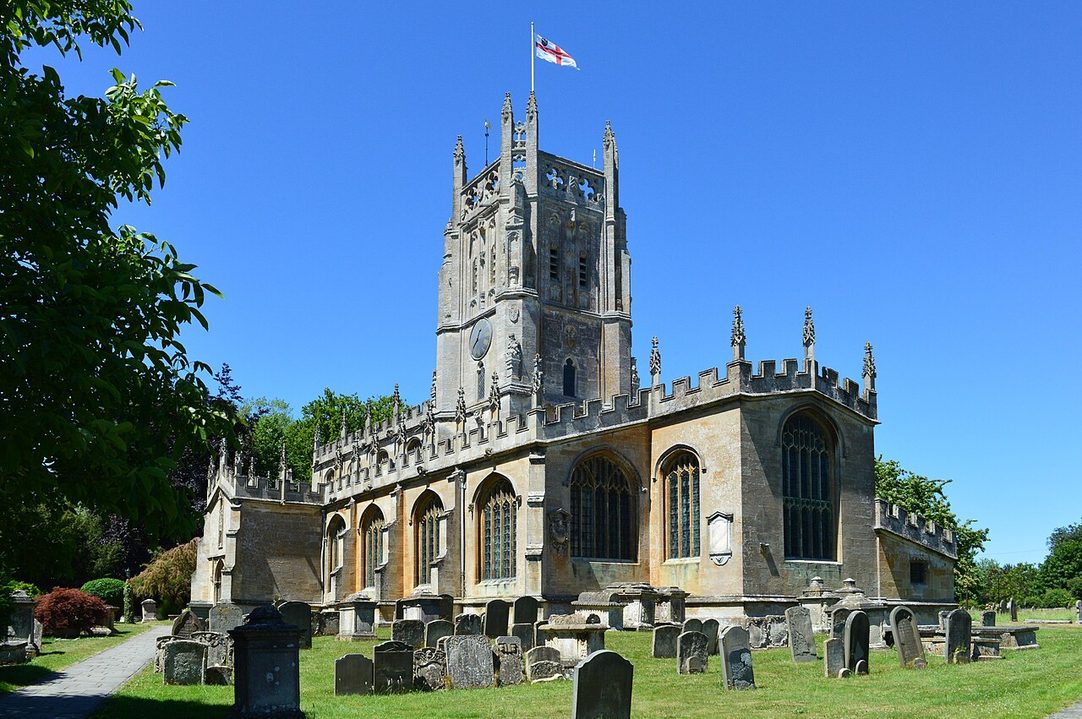
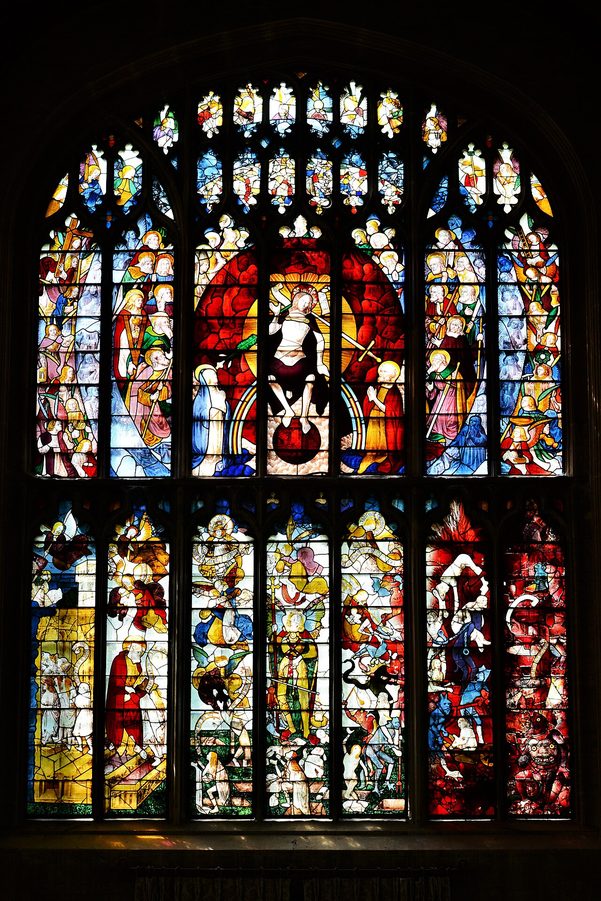
Outside, St Mary’s looks like many other Cotswold wool churches: honey-coloured stone, a pinnacled tower, a long line of windows. Inside, every one of those windows is still filled with the glass that was made for it five hundred years ago. Fairford has the only complete set of late medieval windows left in an English parish church, 28 of them, telling the story of the Bible from the Garden of Eden to the Last Judgement.
A wool merchant’s church
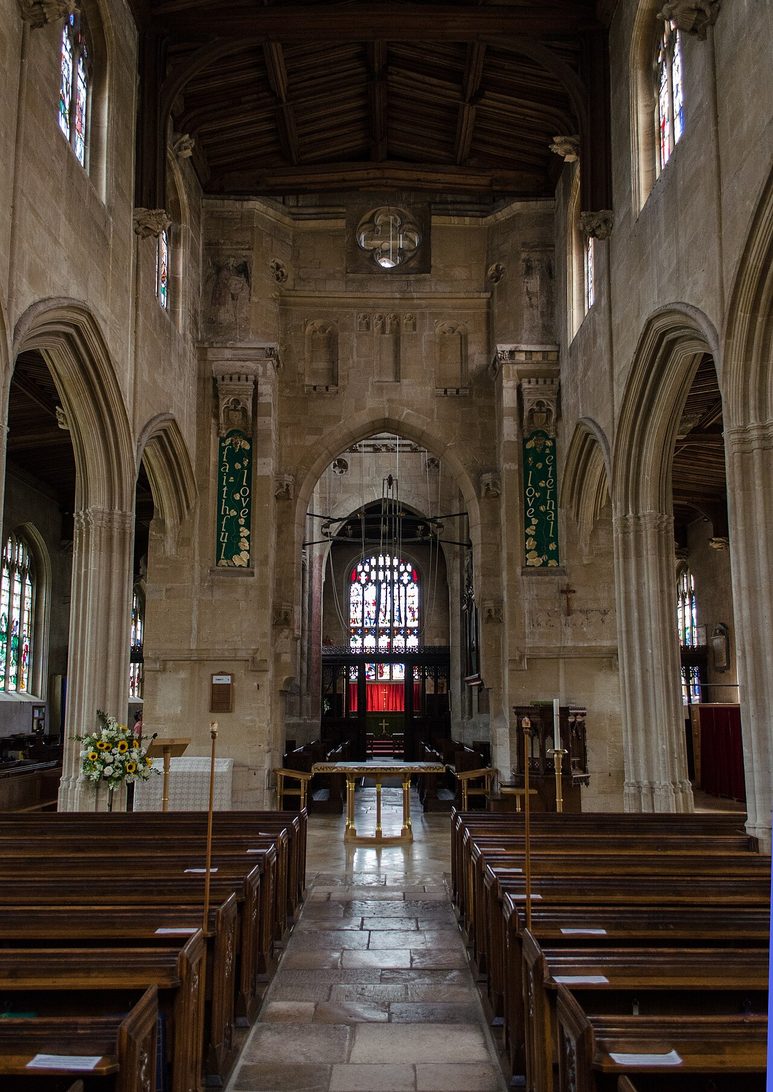
John Tame was one of the richest wool merchants in England. In the 1490s he rebuilt the church at Fairford, keeping only the base of the old tower, and it was consecrated in 1497. He designed it around its windows: the aisles run on along the chancel so that there is room for as many of them as possible. Tame died in 1500, and his son Edmund saw the glazing finished by about 1517.
How the glass survived the Reformation and the Civil War, when so much was smashed, nobody quite knows. It was damaged in a great storm in 1703, which brought down much of the upper west window, and in the Second World War it was taken out and hidden. A long restoration ended in 2010, and the old glass is now protected by clear glazing outside.
The visitor's cheat sheet
| Where | High Street, Fairford, Gloucestershire, GL7 4AF |
|---|---|
| Getting there | About 9 miles east of Cirencester on the A417; nearest stations Kemble and Swindon; parking in the town |
| Opening hours | Summer: daily 10am–5pm, Sundays from 11.30am. Winter: daily 10am–4pm. Access can be limited by services, tours and work in the church |
| Admission | Free; donations welcome; audio guide free to borrow |
| How long | An hour, to read the windows properly |
| Best time | A bright day, when the glass is lit from behind |
| Dress code | No rule; respectful dress in a working church |
| Tours | Guidebook and free audio guide; stewards usually on duty; binoculars for the upper windows; guided tours booked through the parish office |
Hours and admission checked against the official site in October 2026. They change; the official site is always the last word.
Tiddles. In the churchyard is a small stone memorial to Tiddles, the church cat, who for years kept the verger company, and who is said to have fallen from the church roof.
How to read the windows
The windows are meant to be read in order, walking round the church clockwise from the north-west corner. Take the binoculars the church lends, or the free audio guide, and go slowly.
The Old Testament and the life of the Virgin
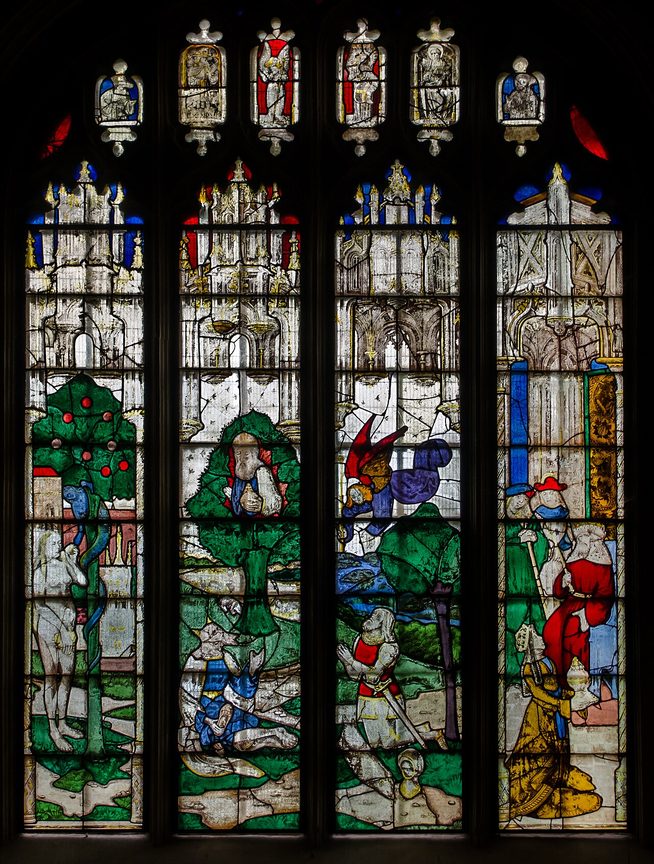
The story begins in the north aisle with Eve tempted by the serpent, then the figures who were believed to foretell Christ: Moses and the burning bush, Gideon, the Queen of Sheba. In the Lady Chapel the windows tell the life of the Virgin Mary, from her parents to the birth of Christ.
The Passion and the east window
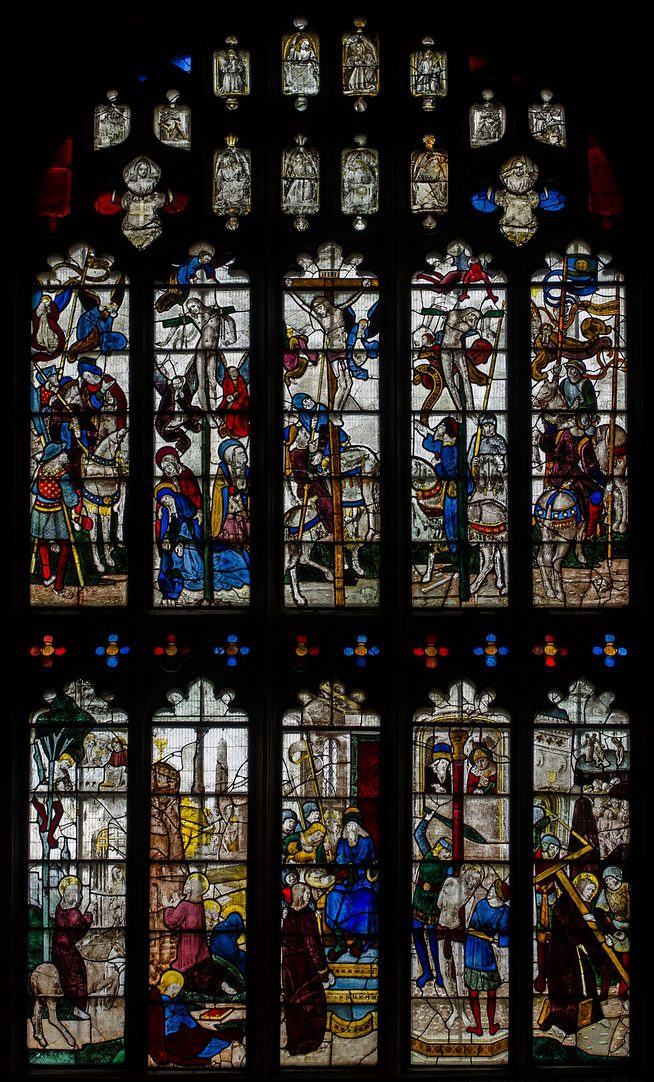
The great east window shows the Passion: Christ’s entry into Jerusalem, his trial, his scourging and, in the centre, the Crucifixion. The windows that follow show the Entombment, the Resurrection and Christ’s appearances to his disciples.
The apostles, prophets and persecutors
Along the clerestory and the aisles stand rows of apostles, prophets, saints and fathers of the Church, and, high on the north side, the persecutors of the Church, faced across the nave by its defenders.
The Last Judgement
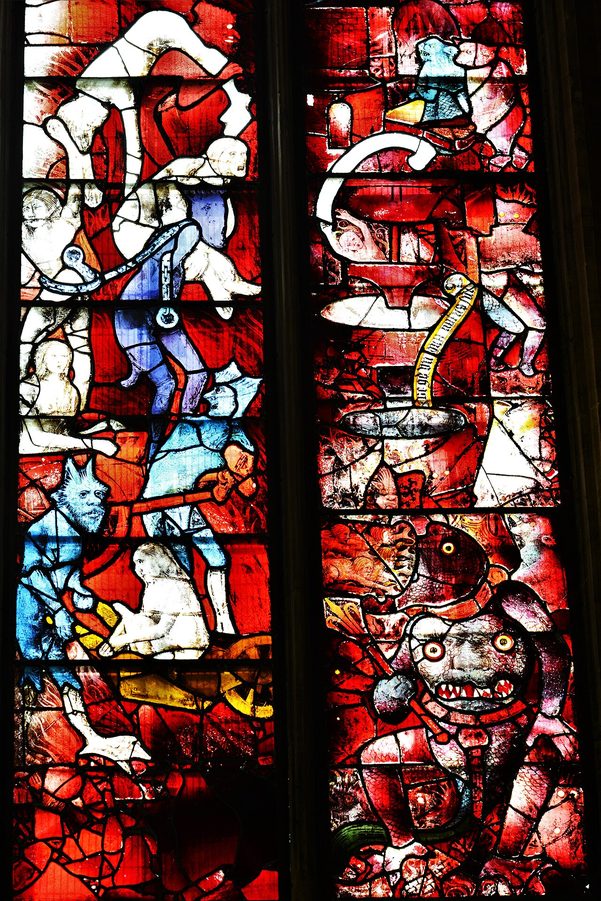
The story ends at the west, in the great window of the Last Judgement. Christ sits in judgement at the top, though much of the upper part is Victorian glass, put in after the original was wrecked in the storm of 1703. Below, St Michael weighs souls, the saved climb towards heaven, and the damned are dragged off by red and blue devils: some of the most vivid medieval glass in Europe.
The woodwork and the Tame tomb
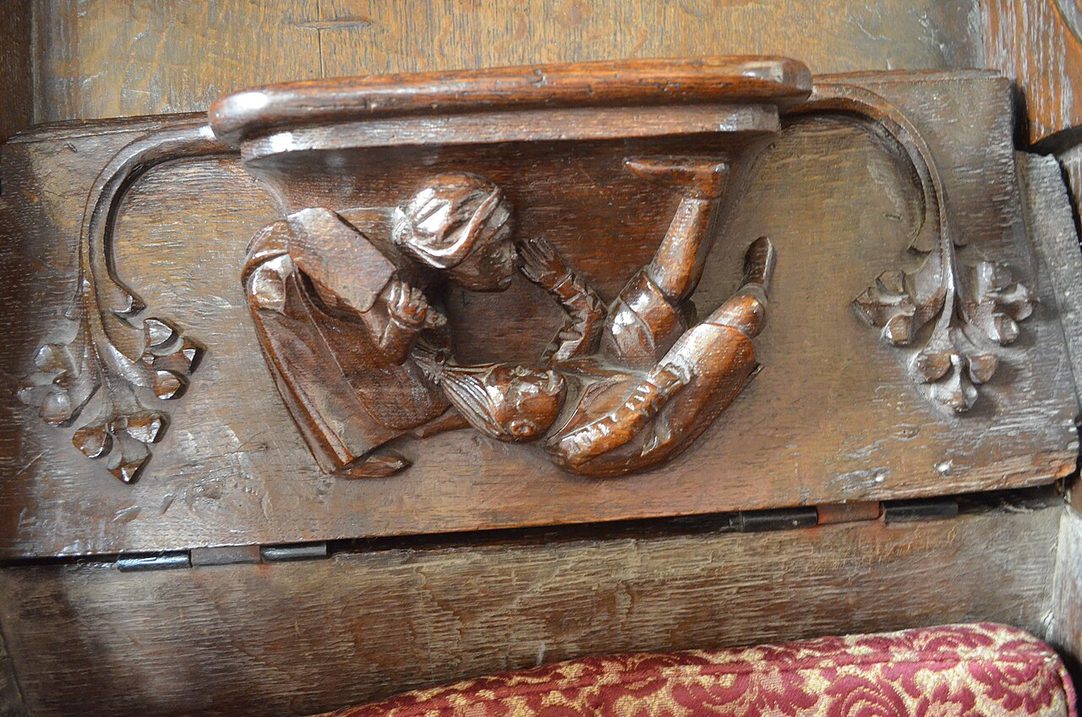
The chancel keeps its medieval screens and fourteen carved misericords, and on the north side of the chancel is the tomb of John Tame himself, with brasses of Tame and his wife Alice.
Visiting
Free to visit
There is no admission charge, and the audio guide is free. The church is open daily, from 10am to 5pm in summer and to 4pm in winter. Groups of five or more should contact the parish office in advance.
The hotel link goes to Booking.com. This site earns nothing from it at present — it is here because it is the quickest way to check what is actually available.
Don't miss
- The Last Judgement Red and blue devils in the west window.
- The east window The Passion and the Crucifixion.
- The Temptation Where the story starts.
- The persecutors High in the north clerestory.
- The misericords Fourteen carved seats in the chancel.
- Tiddles The church cat’s memorial in the churchyard.
Insider tips
Choose a bright day. Stained glass is made to be seen with light behind it, and on a dull day the Fairford windows lose much of their colour. Come in the middle of a sunny day, borrow the binoculars for the clerestory, and allow an hour. If you have time, Cirencester’s great wool church is nine miles away.
Common questions
Does it cost anything to visit St Mary’s, Fairford?
No. The church is free to visit, and the audio guide is free to borrow. Donations are welcome and help to look after the glass.
When is the church open?
It is open daily from 10am to 5pm in summer, from 11.30am on Sundays, and from 10am to 4pm in winter. Services, tours and work in the church can limit access, so if you are coming a long way it is worth calling the parish office first.
Why is the Fairford glass so special?
Because it is complete. Fairford has 28 windows of glass made between about 1500 and 1517, and it is the only parish church in England to keep a full set of late medieval windows. Together they tell the whole Christian story, from Adam and Eve to the Last Judgement.
Who made the windows?
They are now generally attributed to the workshop of Barnard Flower, a Flemish glazier who worked for Henry VII, and they were paid for by the Tame family: John Tame, the wool merchant who rebuilt the church, and his son Edmund.
How do you get to Fairford?
Fairford is in the Cotswolds, about nine miles east of Cirencester on the A417. There is no railway station; the nearest are Kemble and Swindon. The church is just off the Market Place.
Where to stay and eat nearby
Fairford has pubs and inns around its Market Place, and Cirencester and the villages of the Cotswolds are close by.
More English churches
- Lavenham — Suffolk’s great wool church
- Long Melford — with its own late medieval glass
- Malmesbury Abbey — another Cotswold-edge church, an hour away
See all the cathedrals and churches worth visiting in England →