
Hull Minster
Hull Minster, for seven centuries Holy Trinity Church, is the largest parish church in England by floor area, and one of the first great buildings in the country to be built of brick. Its transepts, raised around 1300, hold some of the finest medieval brickwork in England. William Wilberforce, who led the campaign against the slave trade, was baptised at its font, and since a recent transformation the church has become the heart of Hull’s Old Town again.
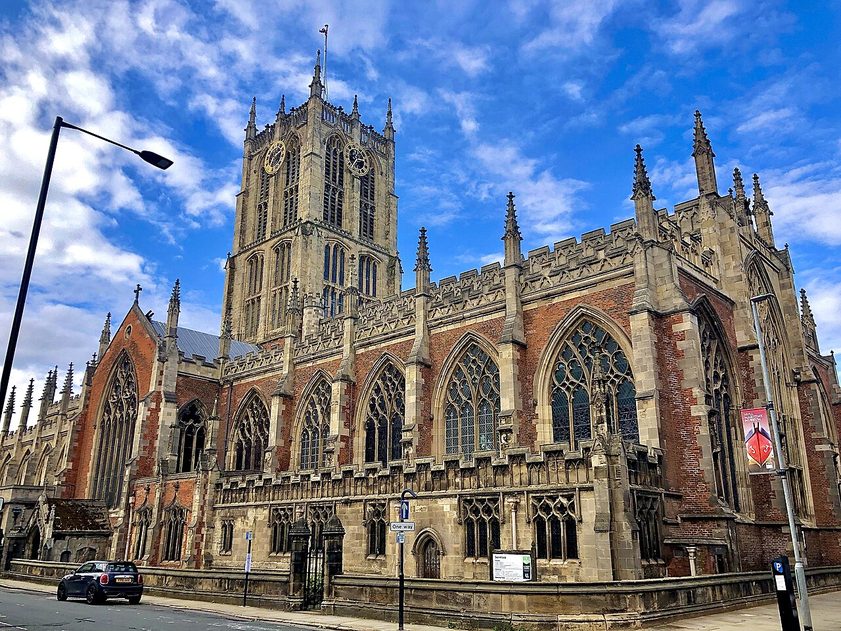
A church of brick
Hull had no building stone of its own, but it had clay. When the church was rebuilt, beginning with the transepts in the 1290s, the masons used brick, then a new and rare material in England. The chancel followed in about 1320–70, the nave in about 1380–1420, and the great central tower in about 1490–1520. The result is a church as long as many cathedrals.
Over the centuries it was plastered, galleried and restored: by Henry Francis Lockwood in the 1840s and by Sir George Gilbert Scott in the 1860s and 1870s. In 1906 the tower was found to be in danger and the church was underpinned. It came through the heavy bombing of Hull in both world wars, and on 13 May 2017, during Hull’s year as UK City of Culture, it was rededicated as Hull Minster.
The visitor's cheat sheet
| Where | Trinity Square, South Church Side, Hull, HU1 1RR |
|---|---|
| Getting there | Hull Paragon station 10–15 minutes’ walk; King William multi-storey car park about 50 metres away |
| Opening hours | Monday to Saturday 10am–4pm; Sundays for services |
| Admission | Free; donations welcome; tower tours booked and paid for separately |
| How long | An hour; add 1.5 hours for a tower tour |
| Best time | A weekday morning, then lunch in Trinity Square |
| Dress code | No rule; respectful dress in a working church |
| Tours | Self-guided; history tours; tower tours Wednesday to Saturday at 2pm, March to October; café |
Hours and admission checked against the official site in October 2026. They change; the official site is always the last word.
Wilberforce’s font. William Wilberforce, born in the High Street nearby, was baptised here in 1759. He went on to lead the parliamentary campaign that ended the British slave trade. His birthplace is now a museum, a few minutes’ walk away.
What to see, in the order you meet it
The nave
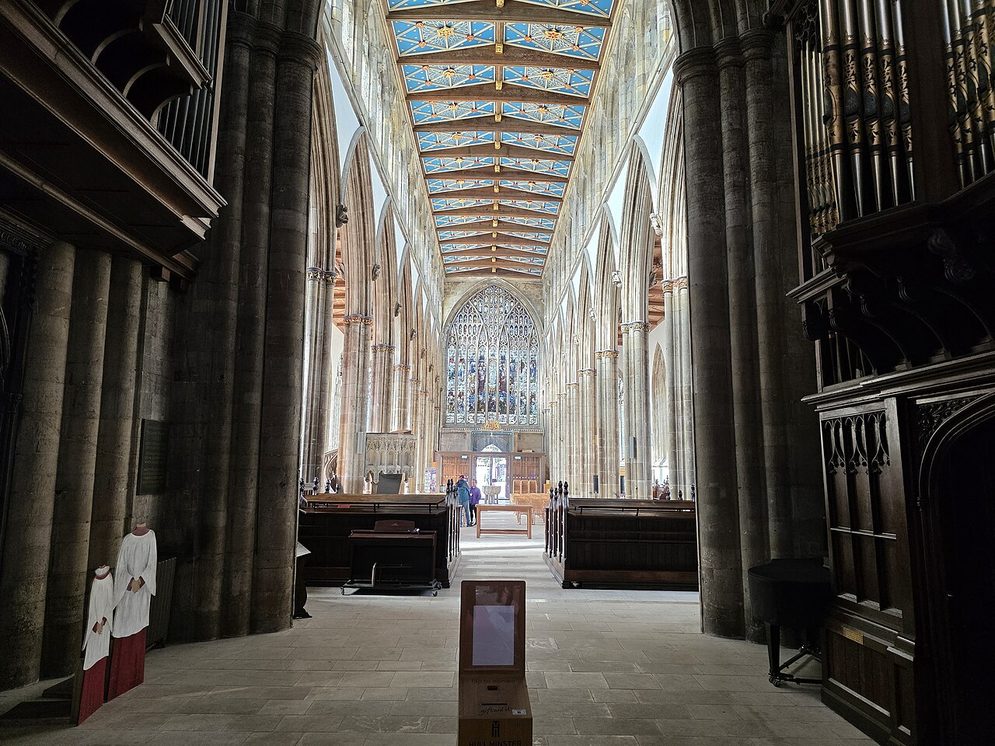
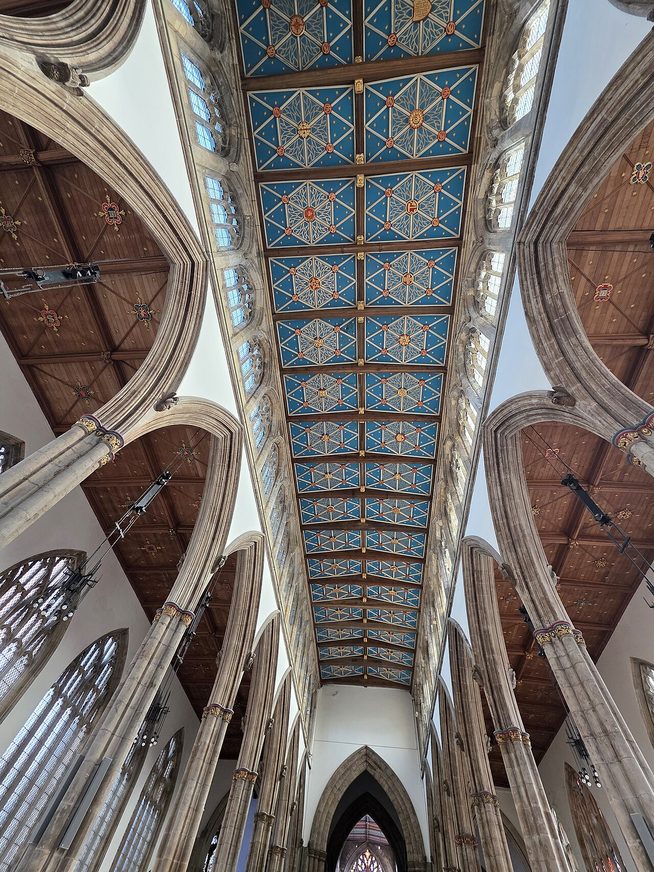
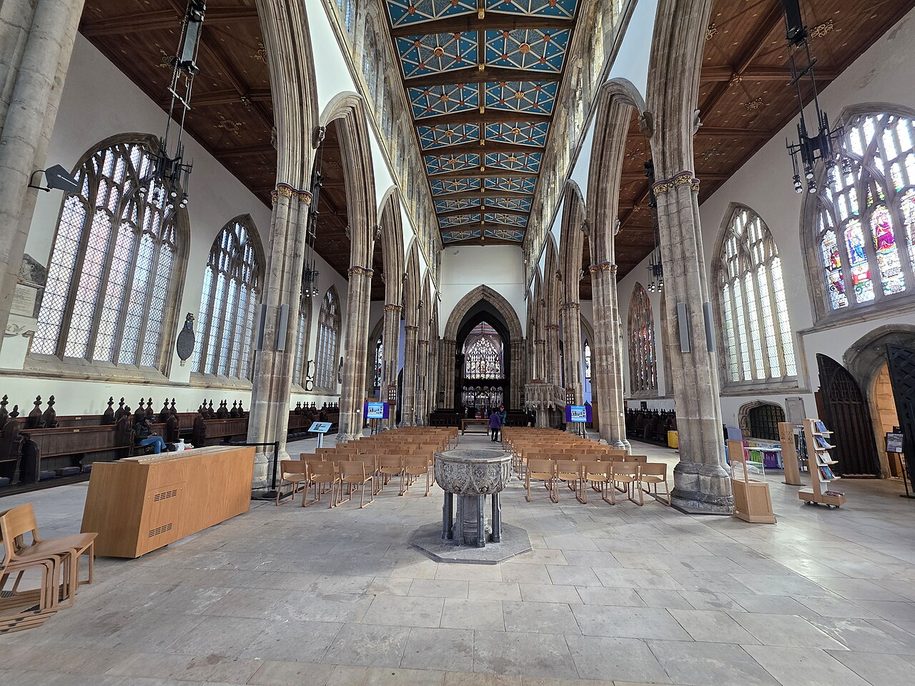
Inside, the scale is the first surprise. The nave is tall and light, with slender stone piers and great windows, and since the recent reordering the floor has been opened up, so that you can see the full length of the church to the east window.
The font
The medieval font, of the late fourteenth century, is the one in which Wilberforce was baptised. Look down too: the floor is laid with old memorial slabs and carvings.
The transepts and their brick
Look at the walls of the transepts, the oldest part of the church. Their brickwork, laid around 1300, is some of the earliest and finest medieval brick building in England.
The chancel and the Broadley Chapel
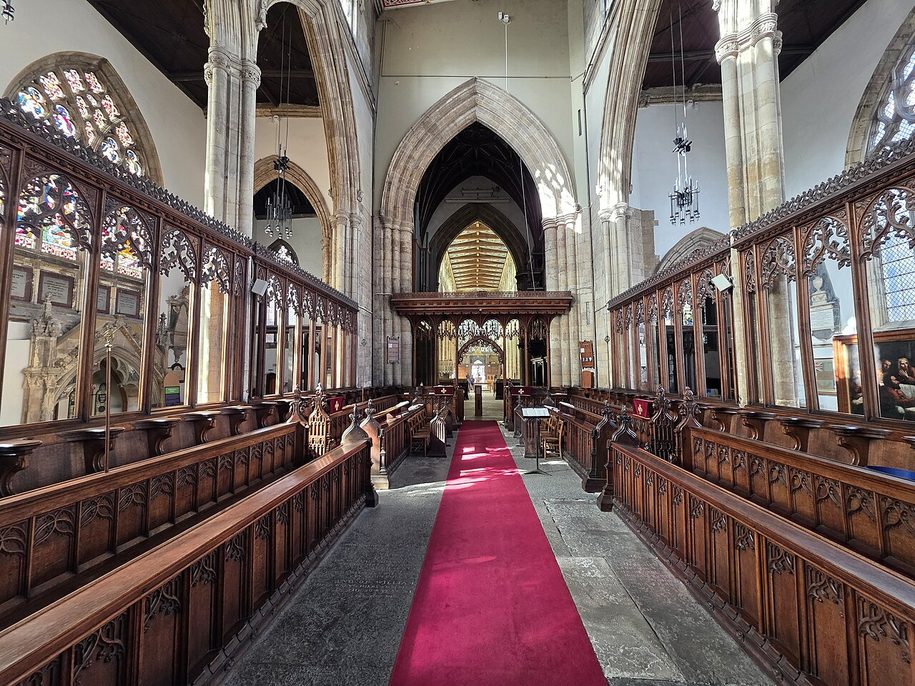
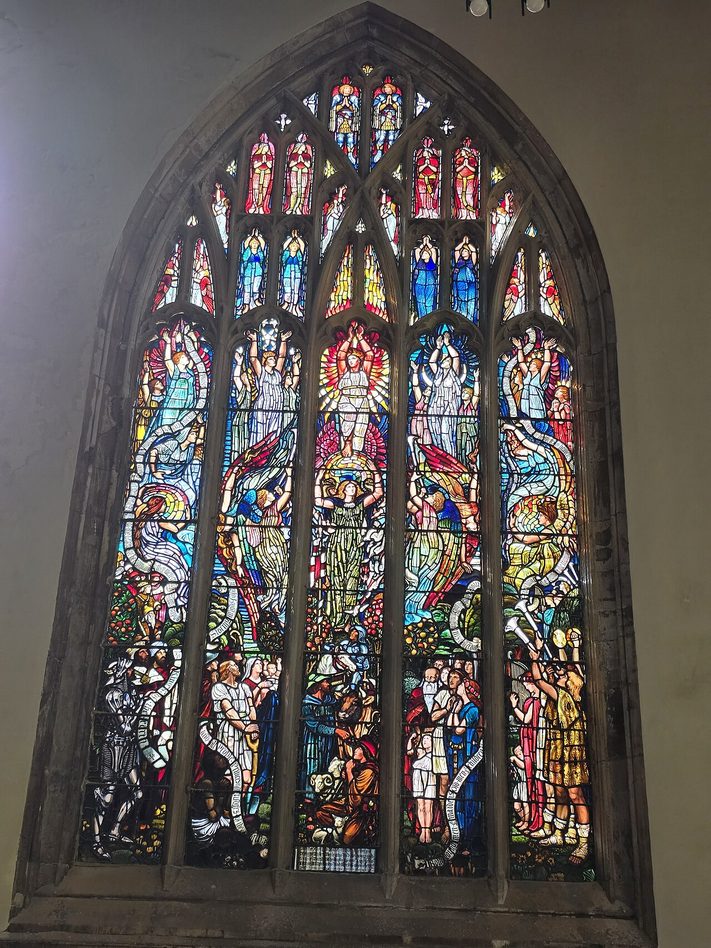
The chancel has carved stalls, which keep some medieval bench-ends, and Victorian poppy-head pew ends. Off it is the Broadley Chapel, and the windows around the church are filled with colourful stained glass.
The tower
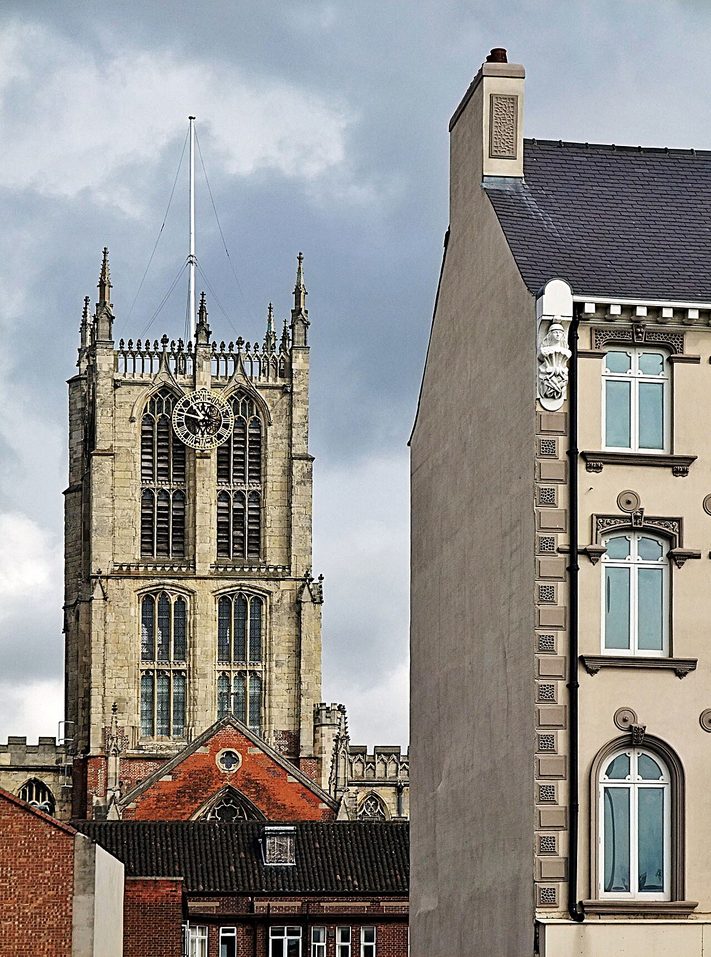
On a tower tour you climb 180 steps past the bell-ringing chamber and the clock to the roof, for a view over the Humber, the Old Town and the docks. The tower holds a ring of bells and a carillon of 25 bells.
Visiting
Free to visit
Entry is free. The minster is open from 10am to 4pm, Monday to Saturday, and has a café. Tower tours run from Wednesday to Saturday in the main season and are booked online.
The hotel link goes to Booking.com. This site earns nothing from it at present — it is here because it is the quickest way to check what is actually available.
Don't miss
- The transept brickwork Some of the earliest great brick building in England.
- Wilberforce’s font Where the abolitionist was baptised in 1759.
- The nave Tall, light and very long.
- The painted roof Blue and gold above the nave.
- The tower tour 180 steps to a view over the Humber.
- Trinity Square The Old Town’s market square, outside the west door.
Insider tips
Make a day of the Old Town. Combine the minster with Wilberforce House, the Maritime Museum and a walk along the waterfront. If you want to climb the tower, book ahead: tours are small and only go up on certain afternoons.
Common questions
Does it cost anything to visit Hull Minster?
No. Entry to the minster is free, and donations are welcome. Tower tours are paid for separately and are booked online.
When is Hull Minster open?
It is open to visitors from 10am to 4pm, Monday to Saturday. The café is open from 10am to 3pm on the same days. On Sundays the minster is open for services.
Can you climb the tower?
Yes, on a guided tower tour, which usually goes up at 2pm from Wednesday to Saturday between March and October, weather permitting. There are 180 steps on a narrow spiral stair, so you must be able to climb unaided, and children must be at least eight. Allow an hour and a half.
Why is it called a minster when it is a parish church?
The title is an honour. Holy Trinity Church was renamed Hull Minster on 13 May 2017, during Hull’s year as UK City of Culture, in recognition of its role in the life of the city. It remains a parish church, not a cathedral.
How do you get to Hull Minster?
The minster is in Trinity Square in Hull’s Old Town, a 10 to 15 minute walk from Hull Paragon station. The King William multi-storey car park is about 50 metres away.
Where to stay and eat nearby
The Old Town has pubs and restaurants around Trinity Square and the High Street, and the minster has its own café.
More English churches
- St Patrick’s, Patrington — the Queen of Holderness, 15 miles east
- Beverley Minster — another great church of the East Riding
- St Botolph’s, Boston — England’s other giant parish church
See all the cathedrals and churches worth visiting in England →