
St Wendreda’s Church, March
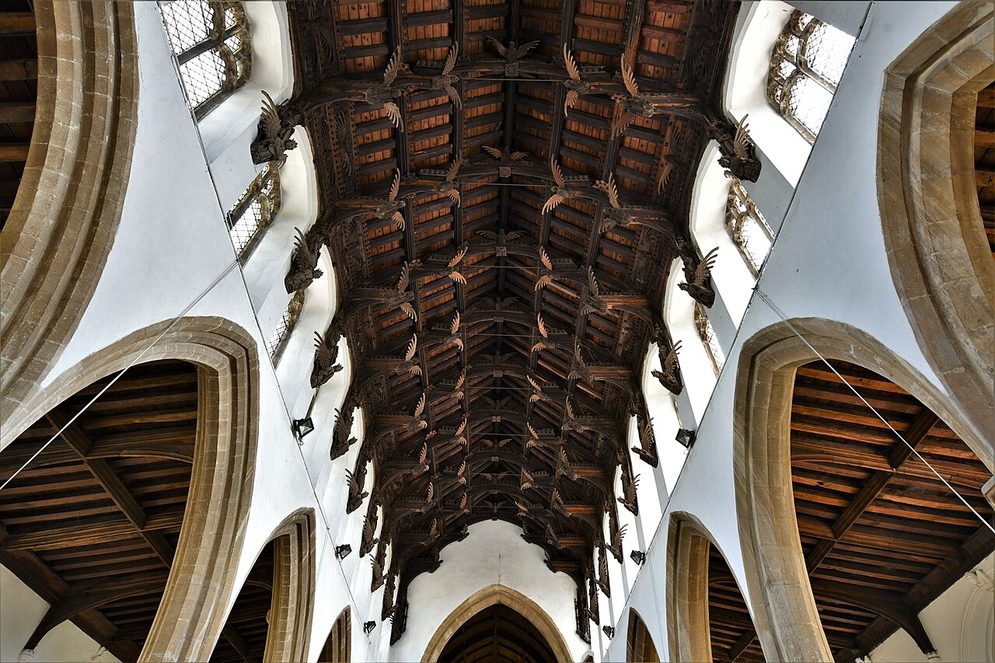
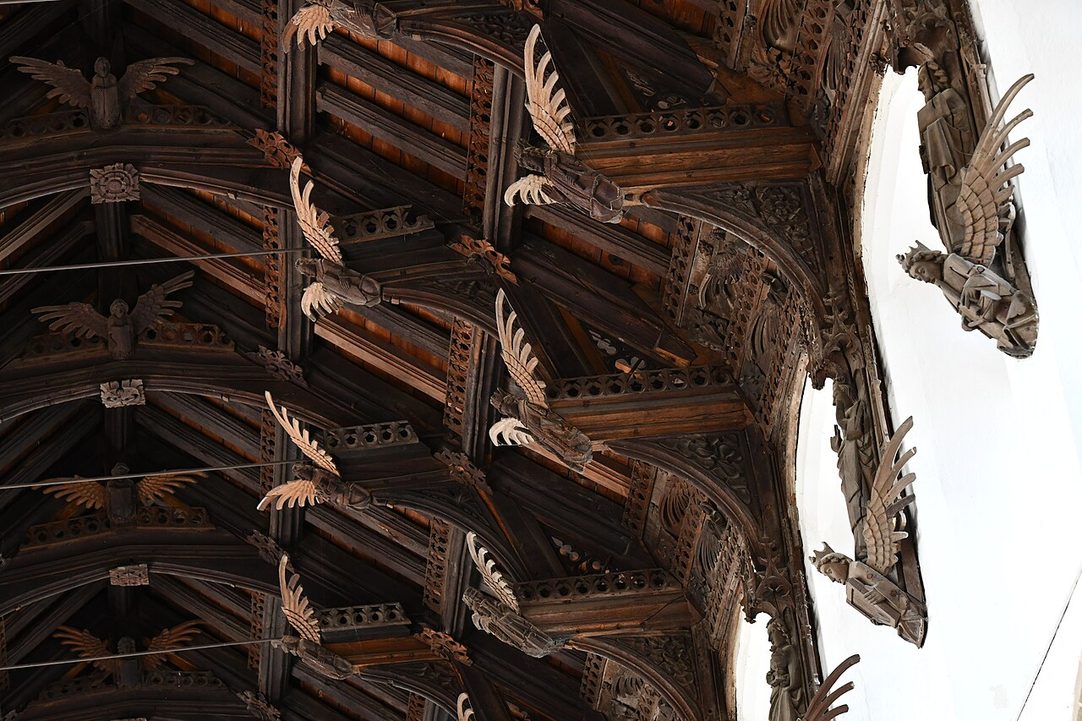
On the southern edge of a Fenland market town stands a parish church with one of the finest timber roofs in England. Look up in St Wendreda’s and you see well over a hundred carved angels, wings outspread, flying in rows along a double hammerbeam roof. John Betjeman said it was worth cycling forty miles in a headwind to see.
Wendreda and her church
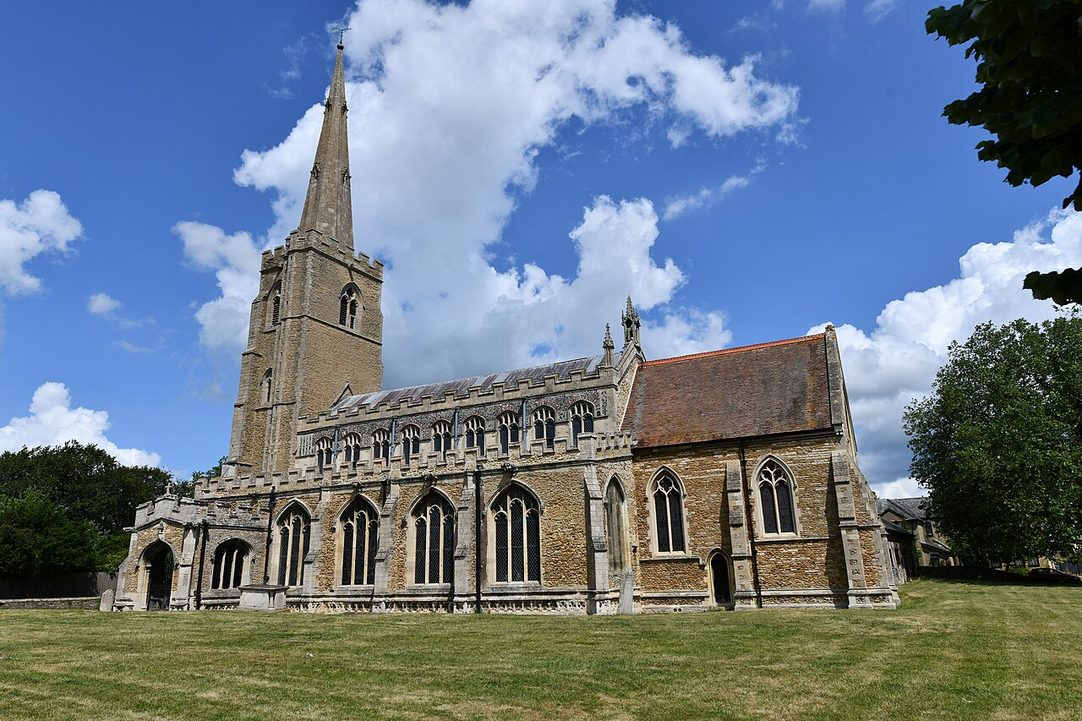
Wendreda was an Anglo-Saxon holy woman, remembered as a healer, and her relics were kept at March. This is the only church in England dedicated to her. The building grew in stages: the north arcade in the mid-thirteenth century, the south arcade and the west tower and spire in the fourteenth century, and then, early in the sixteenth century, the aisles, the clerestory and the great roof, paid for by the wealth of a prosperous Fenland town.
The chancel was rebuilt in 1874. Outside, the walls are a mix of stone, flint and rubble, with flushwork patterns on the clerestory and gargoyles on the south porch.
The visitor's cheat sheet
| Where | Church Street, March, Cambridgeshire, PE15 9PY |
|---|---|
| Getting there | Southern edge of March, about a mile from the centre; street parking; March station about two miles |
| Opening hours | Daily 9am–4pm |
| Admission | Free; donations welcome |
| How long | 30 to 45 minutes |
| Best time | A bright day, when light from the clerestory falls on the angels |
| Dress code | No rule; respectful dress in a working church |
| Tours | Self-guided; level access through the south entrance |
Hours and admission checked against the official site in October 2026. They change; the official site is always the last word.
Why the angels survived. Many church roofs lost their angels to the iconoclasts of the sixteenth and seventeenth centuries. March’s were spared. Local tradition says the townspeople plied Henry VIII’s commissioners with food and drink, and they left with the church silver but not the angels.
What to see, in the order you meet it
The outside
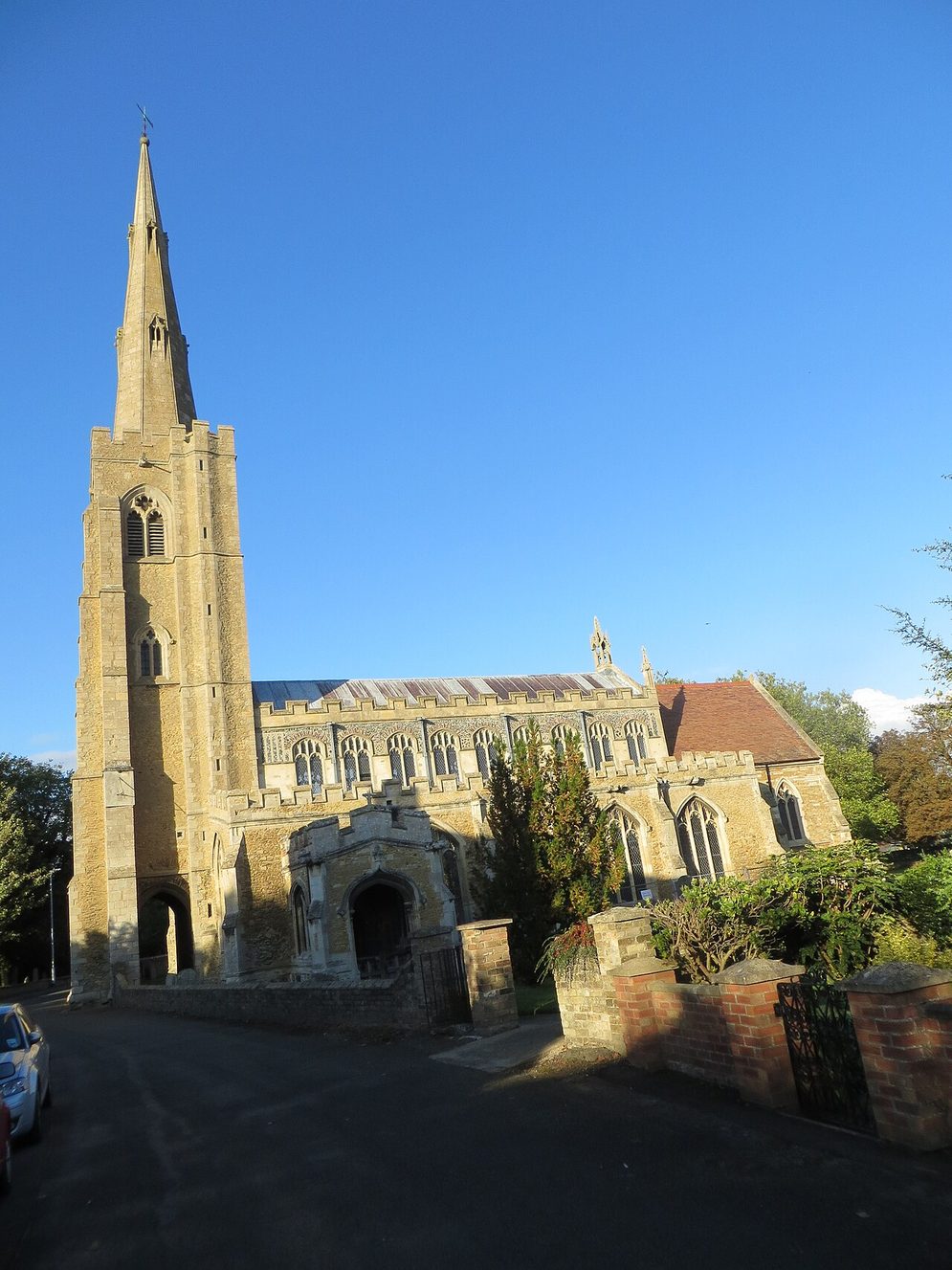
The church sits in a wide green churchyard with old chest tombs. The west tower carries a tall stone spire, a landmark for miles across the flat land.
The nave
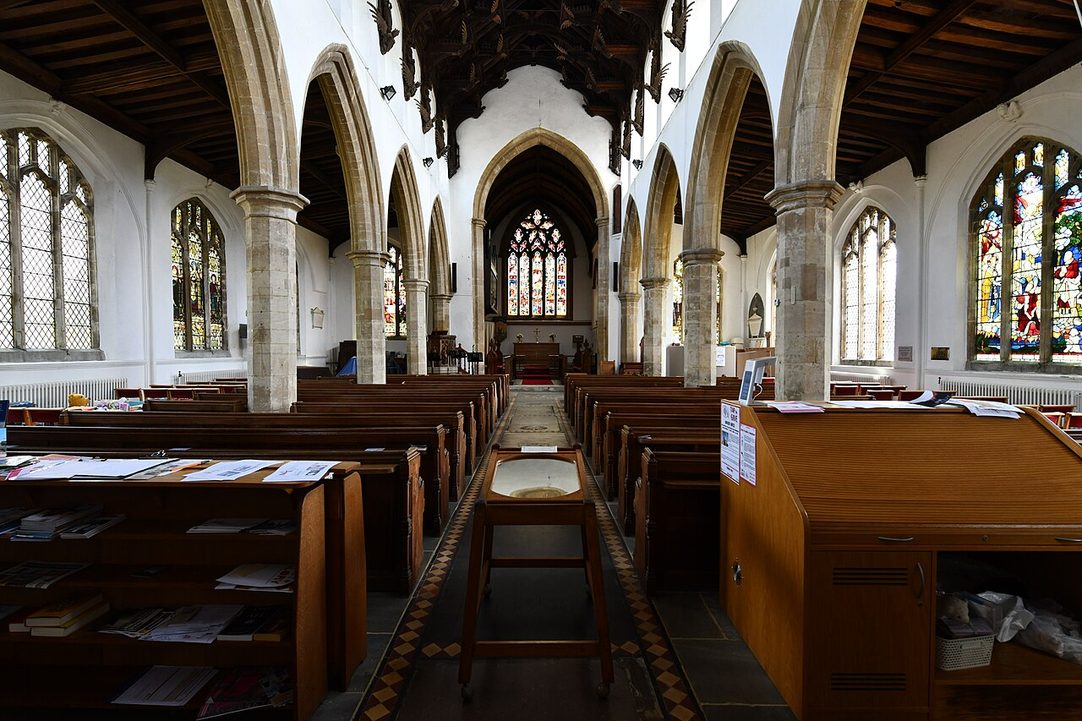
Inside, the walls are plain and white, which makes the dark timber of the roof all the more striking. Walk to the middle of the nave and look up before you do anything else.
The angel roof
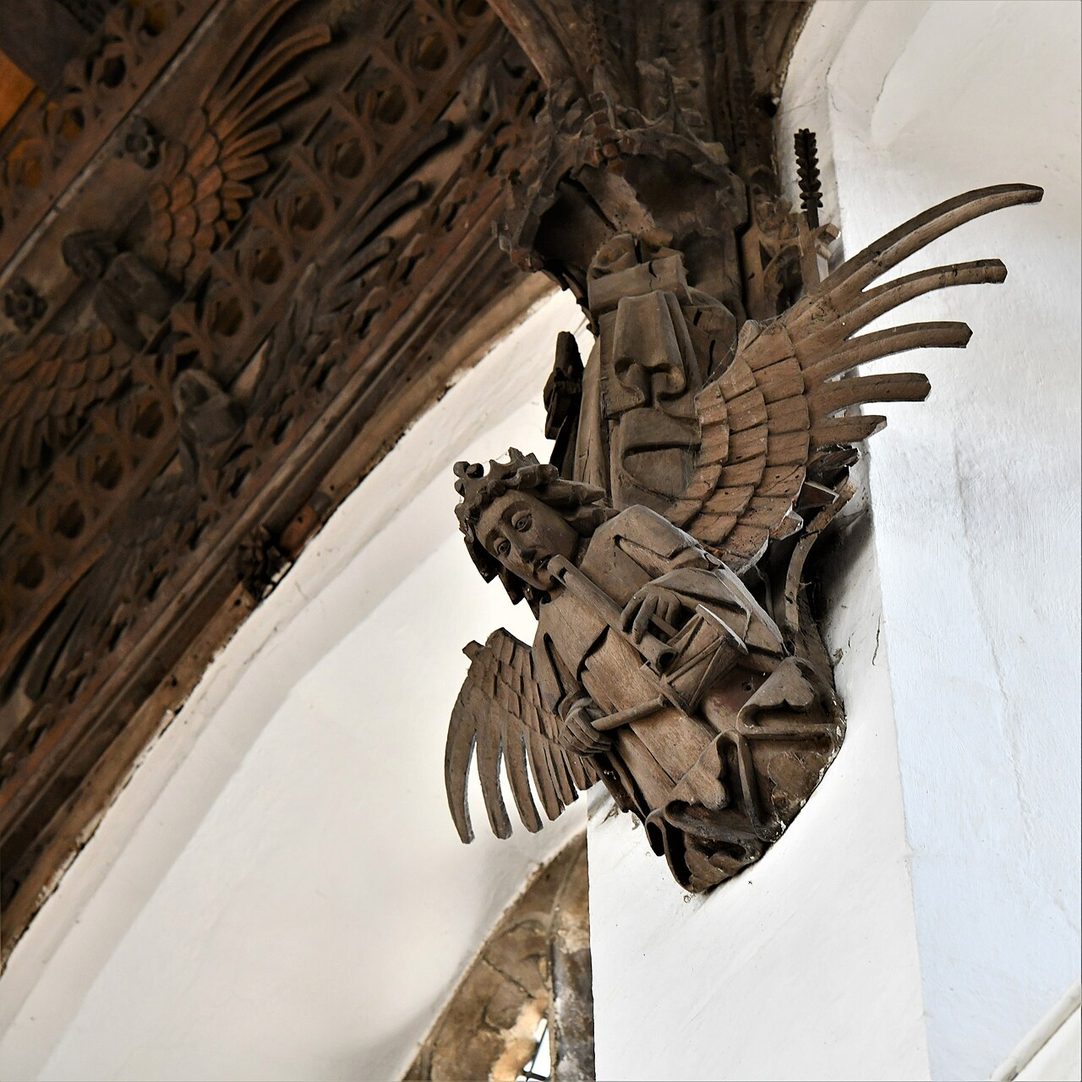
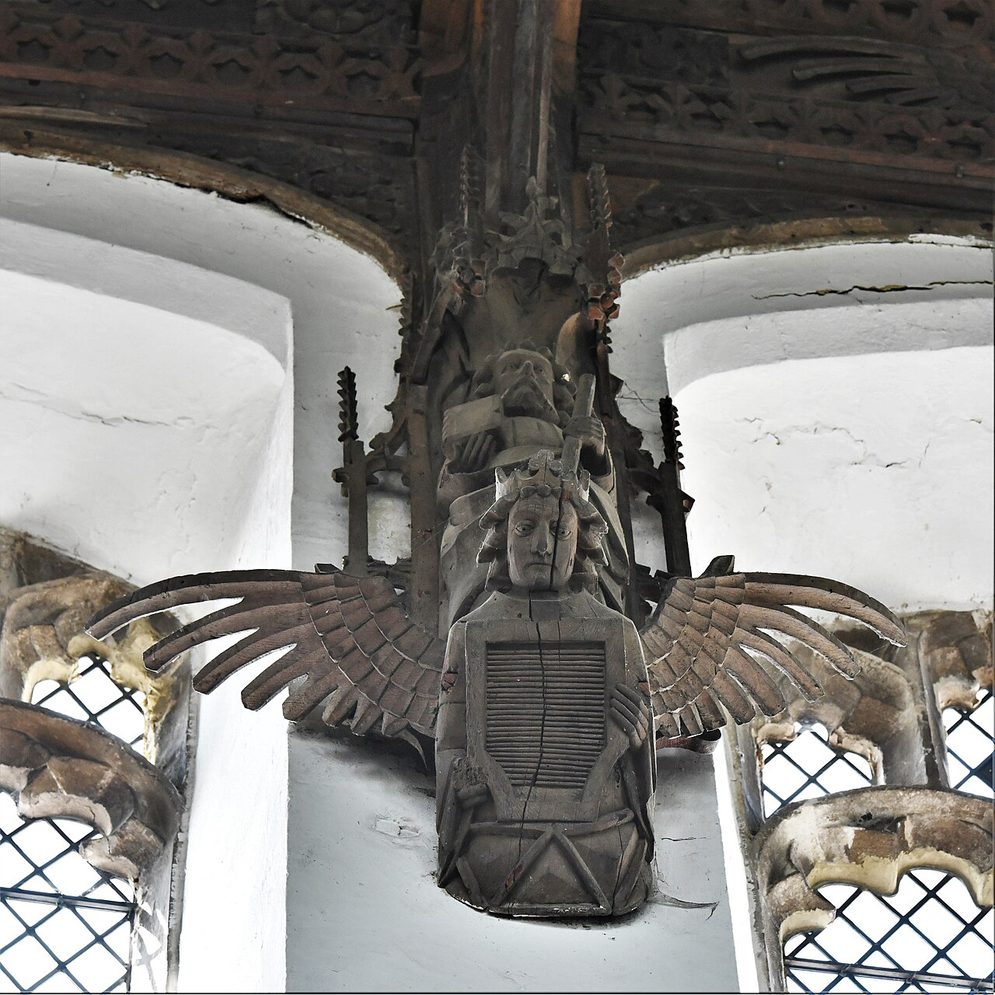
The roof is a double hammerbeam, with two tiers of brackets on each side, and angels everywhere: on the ends of the hammerbeams, in rows along the wall plates and in pairs near the ridge. Lower down, between the clerestory windows, angels support canopied niches with figures of saints. Some of the angels carry musical instruments; others hold shields with the symbols of the Passion. Bring binoculars if you have them.
The aisles
The church has two early sixteenth-century brasses and other memorials, and a fine pulpit. The aisle walls have blind arcading with small carved half-figures, closer to hand.
Visiting
Free to visit
There is no admission charge. The church is open daily from 9am to 4pm.
The hotel link goes to Booking.com. This site earns nothing from it at present — it is here because it is the quickest way to check what is actually available.
Don't miss
- The angel roof Well over a hundred carved angels.
- The musician angels Some playing instruments.
- The saints in niches Between the clerestory windows.
- The spire A landmark stone spire.
- The flushwork Patterns of flint on the clerestory.
- The churchyard Wide, green and quiet.
Insider tips
Combine it with Ely. March is about half an hour from Ely Cathedral, whose octagon is another great piece of medieval carpentry. The church is on the southern edge of the town, so allow for the walk if you arrive by train.
Common questions
Does it cost anything to visit St Wendreda’s?
No. The church is free to visit, and donations are welcome towards the care of the roof.
When is St Wendreda’s open?
The church is open daily from 9am to 4pm, and at other times by arrangement with the churchwardens.
How many angels are there in the roof?
Well over a hundred: the usual count is 118. They are on the hammerbeams, on the wall plates and on the corbels between the clerestory windows, and some carry musical instruments or shields with the symbols of the Passion.
Who was St Wendreda?
An Anglo-Saxon holy woman remembered as a healer, whose relics were kept here. The church is the only one in England dedicated to her.
Where is the church?
On Church Street, on the southern edge of March, about a mile from the town centre. There is parking in the street beside it. March station, on the line between Ely and Peterborough, is about two miles away.
Where to stay and eat nearby
March has pubs and cafés in the town centre; Ely and Peterborough have a wider choice of hotels.
More English churches
- Ely Cathedral — the Ship of the Fens
- Peterborough Cathedral — the Norman abbey with the painted ceiling
- Thaxted Church — another great church of the East of England
See all the cathedrals and churches worth visiting in England →