
Peterborough Cathedral
Two queens were buried in Peterborough Cathedral, fifty-one years apart, by the same gravedigger. One of them is still here. Catherine of Aragon lies in the north choir aisle, and people still bring pomegranates to her grave. Above them all stretches a painted wooden ceiling that has survived nearly eight hundred years, the only one of its kind in Britain.
From Saxon abbey to Tudor cathedral
A monastery was founded here, at a place then called Medeshamstede, in the middle of the seventh century, and it became one of the great houses of Anglo-Saxon England. The Danes destroyed it in the ninth century; it was refounded as a Benedictine abbey in 966, and it was then that the town took its later name, the burgh of St Peter. In 1070 Hereward the Wake, leading the English resistance to the Normans, sacked it. In 1116 it burned down by accident.
The building you see was begun two years later, in 1118, and built from east to west over more than a century, in the local Barnack limestone. It is one of the most complete large Norman churches in England: the long nave, the transepts and the apse at the east end all survive, with three storeys of round arches from end to end. The church was consecrated in 1238, once the west front was complete.
At the Dissolution the abbey could easily have been demolished. Instead, in 1541, Henry VIII made it the cathedral of a new diocese — a decision traditionally credited to the fact that his first wife was buried inside. A century later, in 1643, Parliamentarian soldiers broke in and did great damage: they destroyed the high altar and the reredos, smashed the glass, and wrecked the cloister and the Lady Chapel, which were later pulled down. In the 1880s the central tower was found to be unsafe and was taken down and rebuilt under the architect J. L. Pearson.
The visitor's cheat sheet
| Where | Minster Precincts, Peterborough, PE1 1XS, in the city centre |
|---|---|
| Getting there | Peterborough station is about a 10-minute walk; fast trains from London King’s Cross take around 50 minutes |
| Opening hours | Usually Mon–Sat 10am–5pm and Sun noon–3pm, with shorter hours in winter from October. Services, concerts and set-up days close or restrict the building often — check the website before you travel |
| Admission | Free the rest of the year, entry by donation. From 21 September to 15 November 2026 all sightseers need a Mary, Queen of Scots exhibition ticket: about £8 adults, £6 children and students, under-2s free |
| Tours | A ground-level Highlights Tour and an Upper Levels & Tower Tour, booked through the cathedral |
| How long | 1 hour; 1–2 hours with a guided tour |
| Best time | A weekday morning; late January for the annual commemoration of Catherine of Aragon |
| Dress code | No formal code; respectful dress as in any working church |
Hours and admission checked against the official site in September 2026. They change; the official site is always the last word.
Autumn 2026: ticketed. Peterborough is normally free, but while the Mary, Queen of Scots exhibition runs, until 15 November 2026, every visitor needs an exhibition ticket. The cathedral also closes or restricts access on a lot of days for services and events. Check before you set out.
What to see, in the order you meet it
The west front
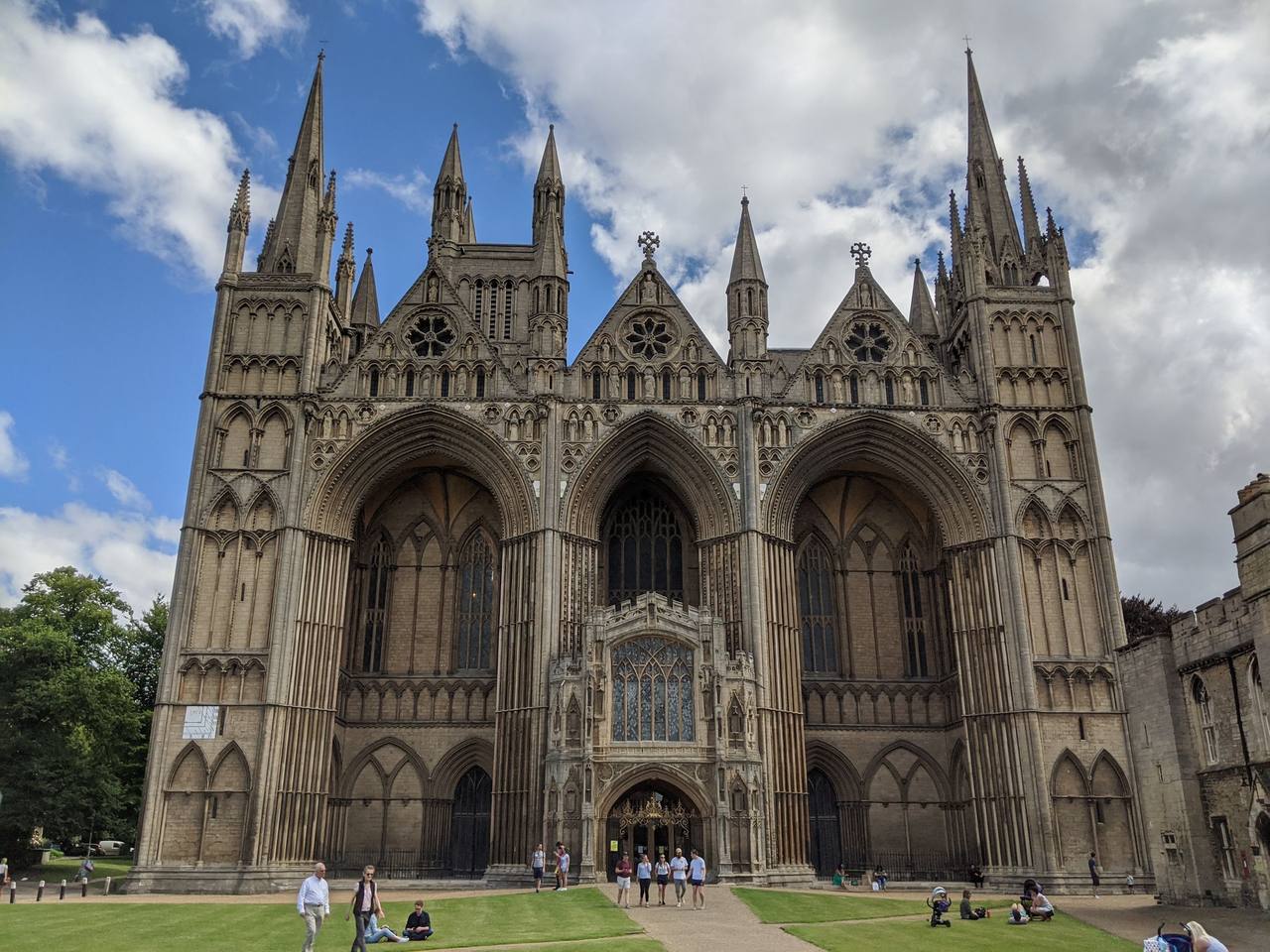
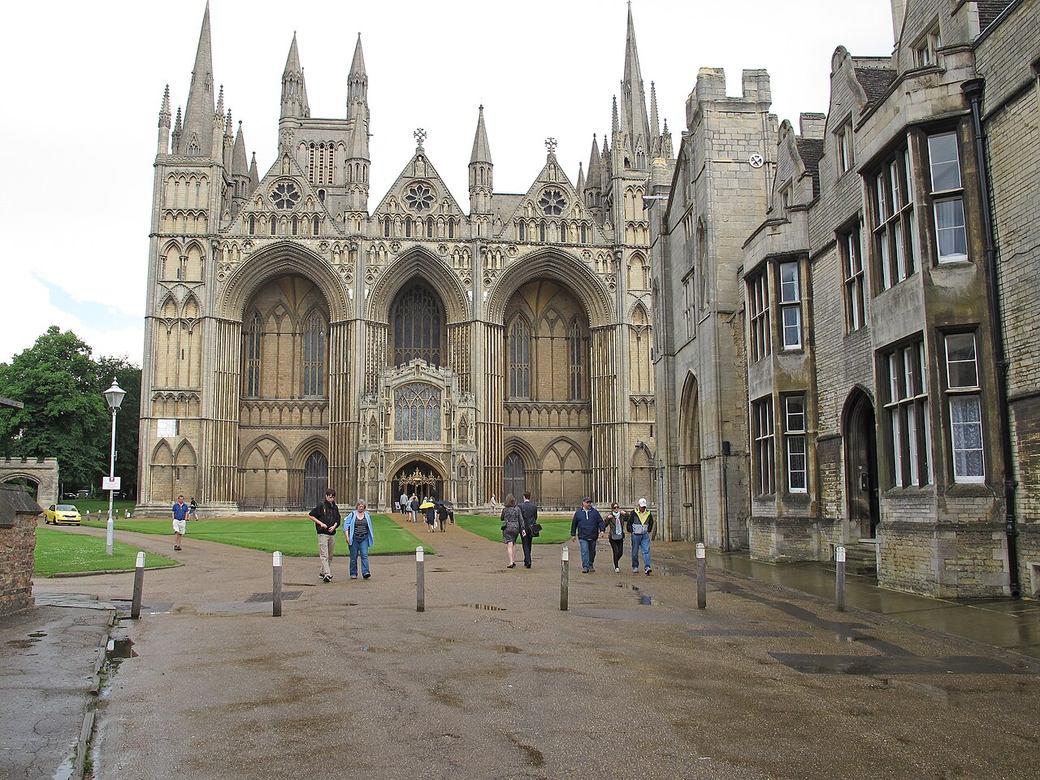
Approach from the Outer Gate on the market square, and the west front fills the view. Nothing else in England looks like it. Three enormous arches, each the full height of the building, stand in front of the church like a screen, with pinnacled towers at the corners. The small porch in the middle arch was added a century and a half later, to prop up the central arch, and it looks like a toy against the rest. The whole thing is a piece of theatre, and it works.
The nave and the painted ceiling
Inside, the Norman nave runs east, ten bays long, in pale stone, and above it is the ceiling. It is a flat wooden roof, painted between about 1230 and 1250 in a lattice of lozenges. In the lozenges are figures: saints, kings, bishops and a set of odd creatures, some of them playing musical instruments. It has been repainted twice, in 1745 and 1834, and was cleaned after a fire in 2001 filled the building with smoke, but the design is original. It is the only surviving painted ceiling of its kind in Britain and one of only four in Europe.
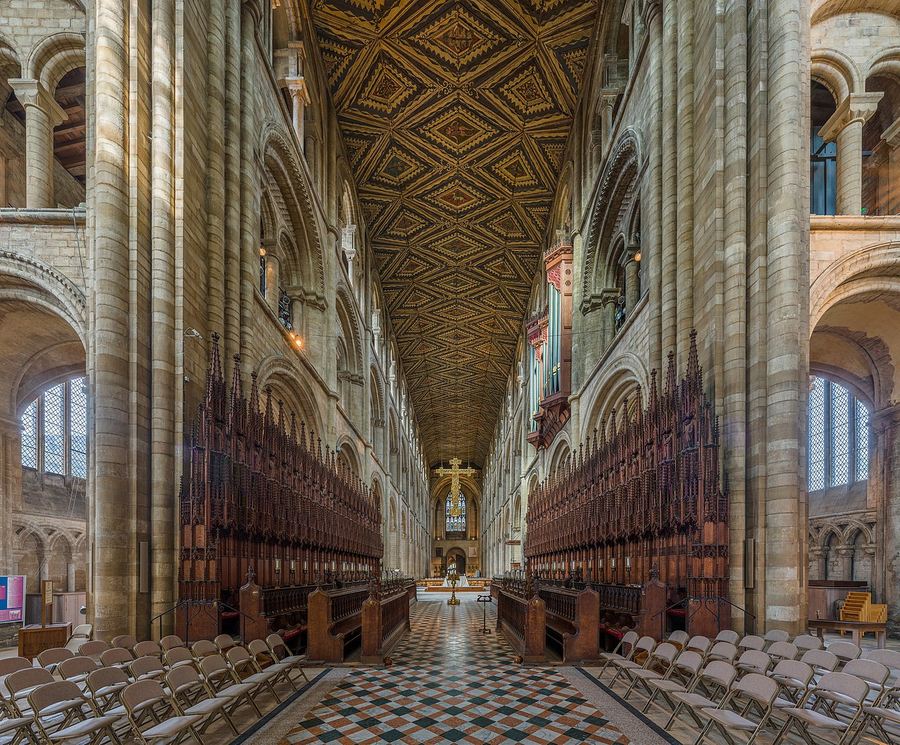
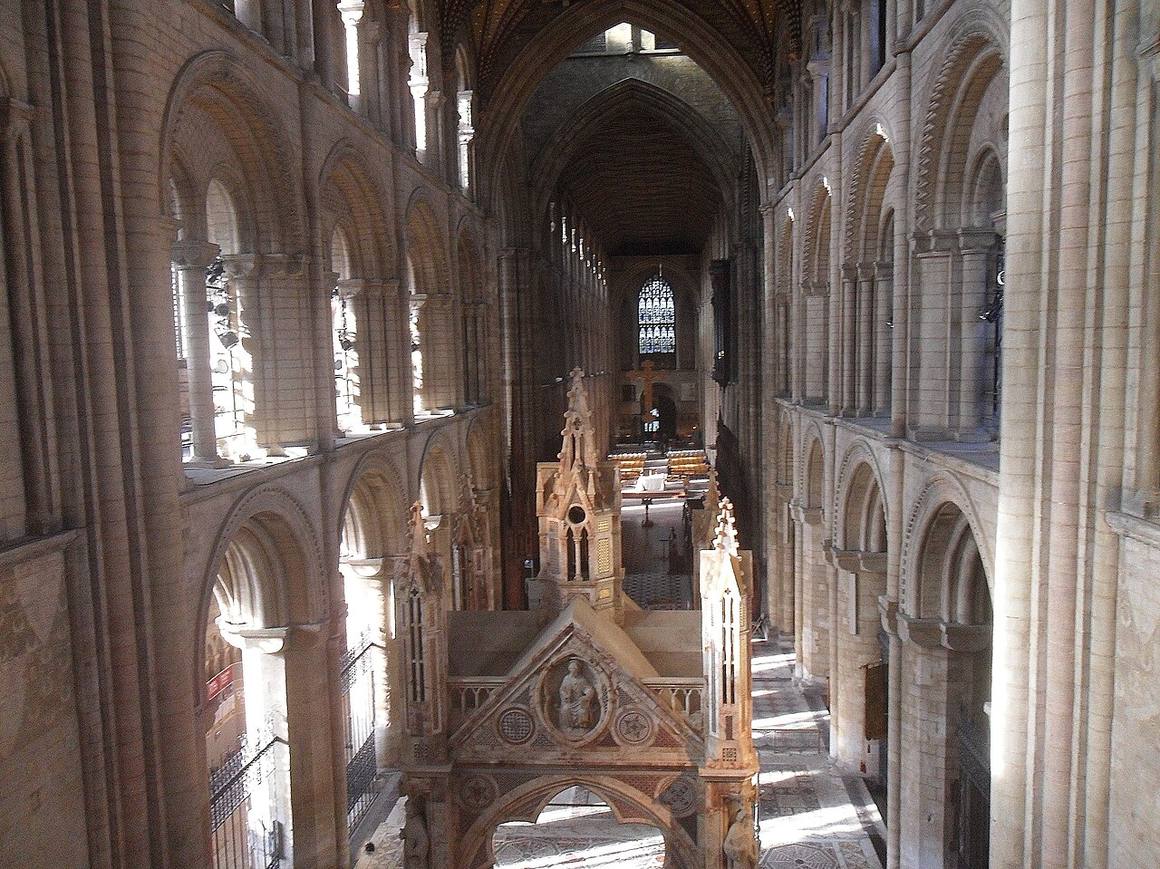
Walk slowly down the nave looking up, and when your neck gives out, look instead at the massive Norman piers and the gallery level above the arcade. The upper levels tour goes along there.
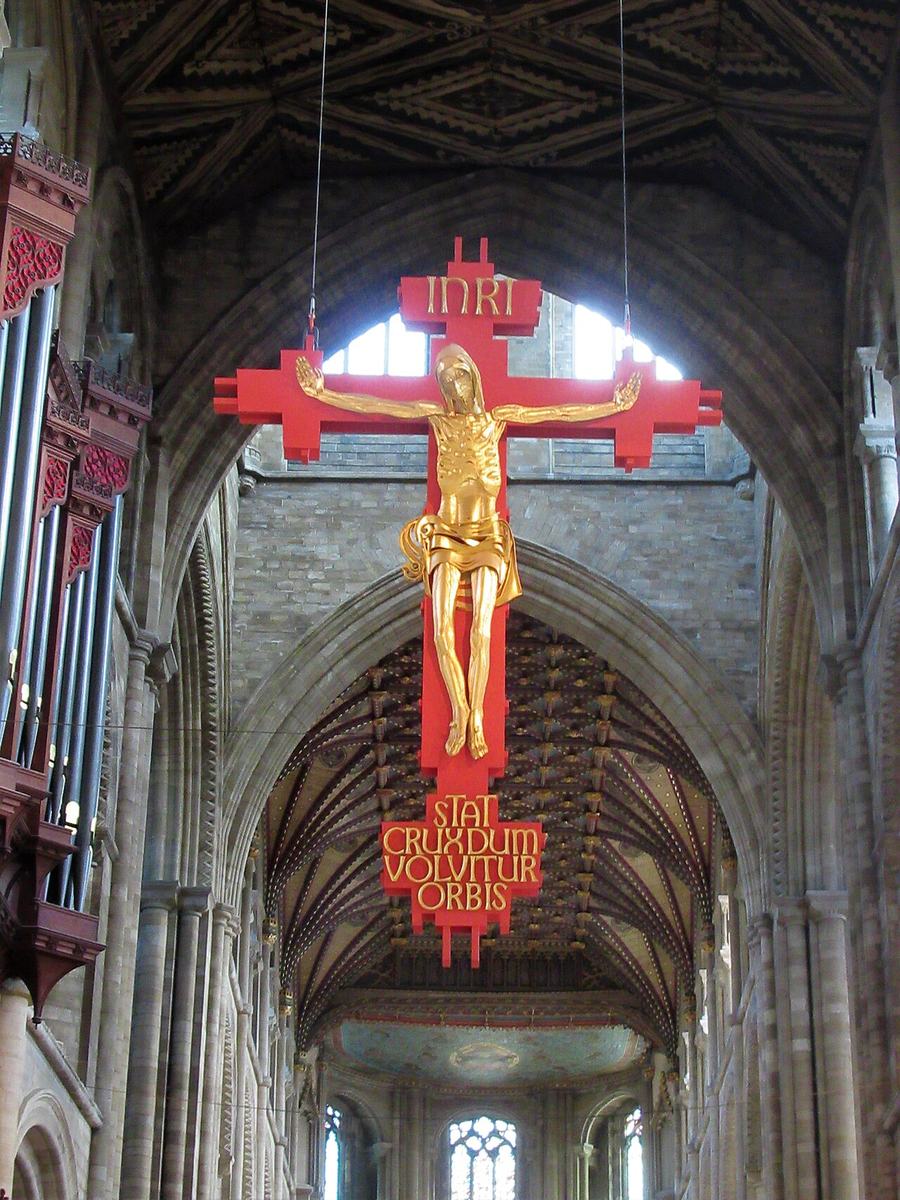
The crossing and the transepts
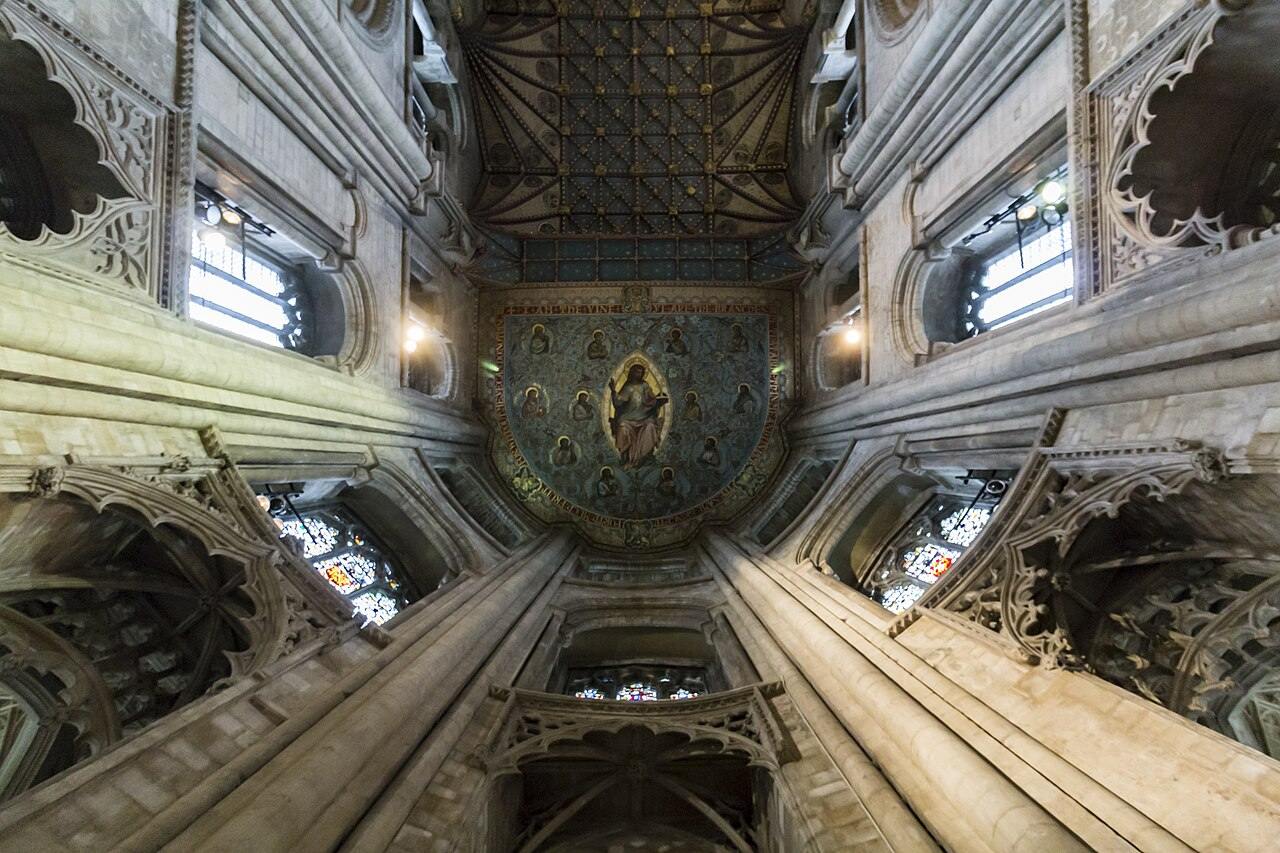
At the crossing, look up into the tower. It was rebuilt in the 1880s and has a painted wooden ceiling of its own. The transepts on either side keep their original flat wooden ceilings, earlier even than the nave’s. On the west wall, near the entrance, hangs a portrait of Robert Scarlett, the sexton who dug the graves of both queens and died in 1594, reputedly aged 98.
The Hedda Stone
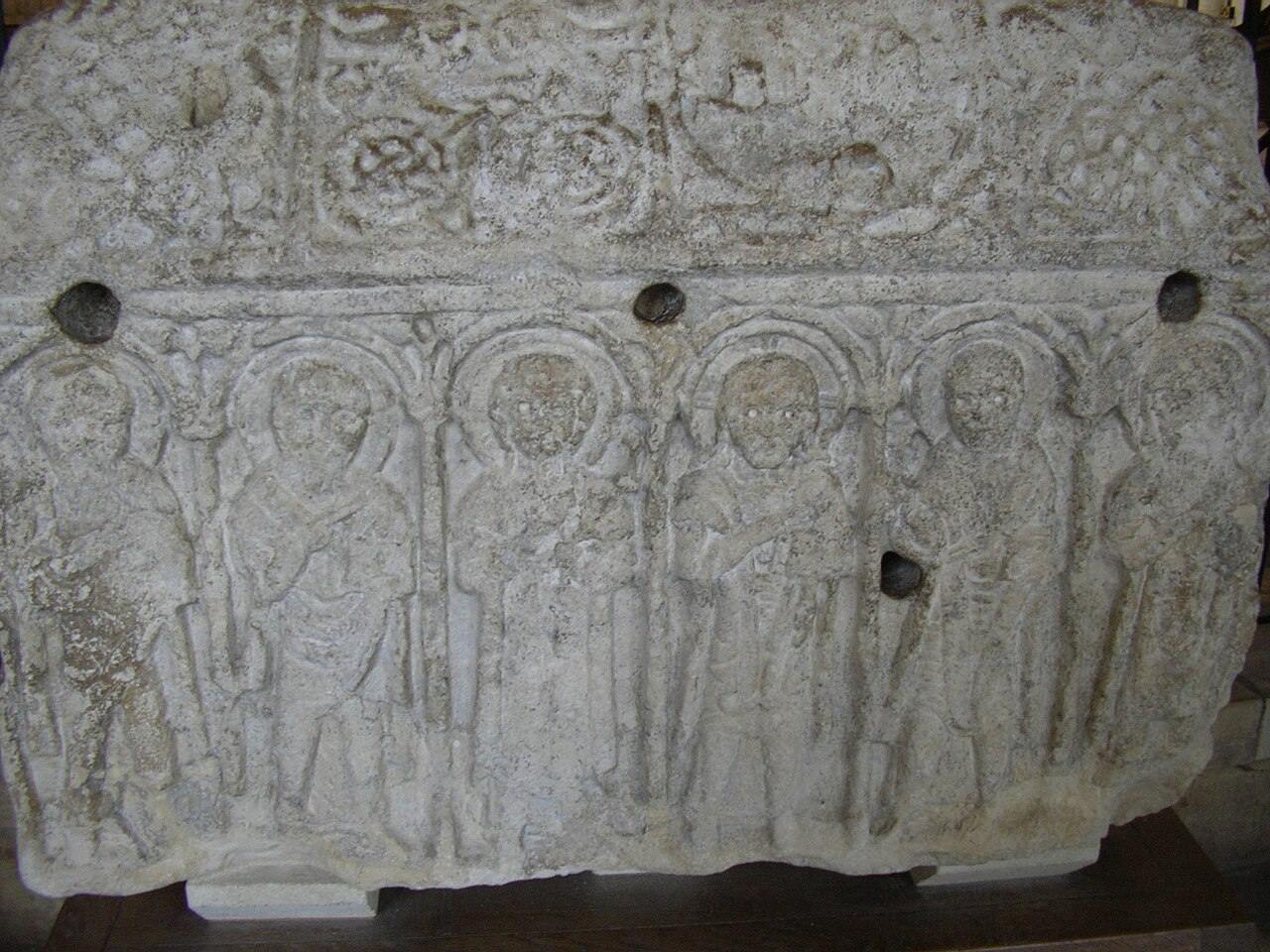
At the east end, in the New Building behind the high altar, is the oldest carving in the building: the Hedda Stone, a block of stone carved with figures of Christ, the Virgin and the apostles around 800. It survives from the Saxon monastery, and legend links it to the monks killed when the Danes attacked in the ninth century, although it seems to have been carved before that.
Catherine of Aragon
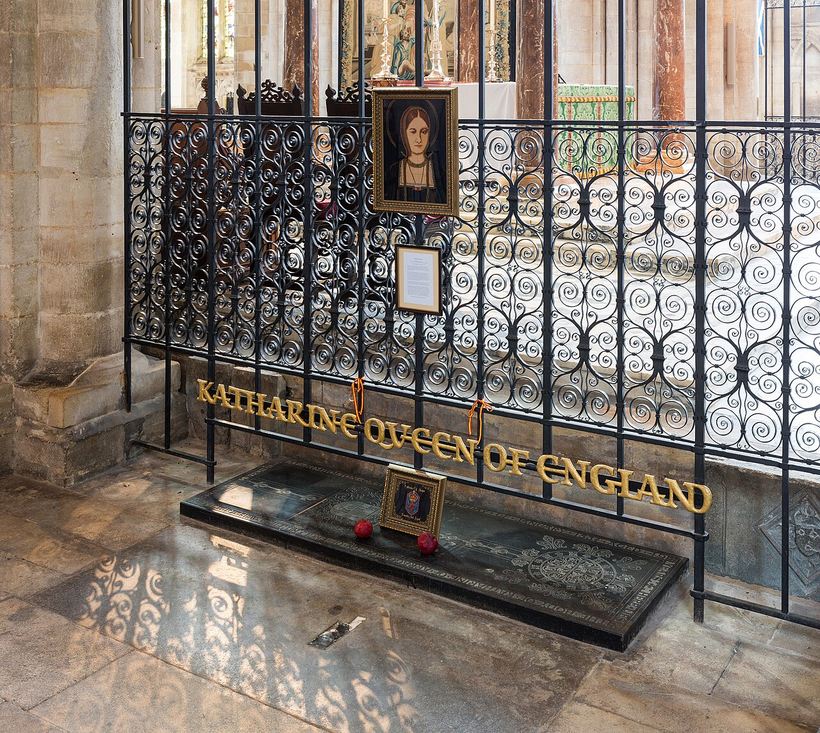
In the north choir aisle, behind railings, is the grave of Catherine of Aragon. She died at Kimbolton Castle, twenty miles away, in January 1536, divorced and exiled from court, and was buried here with the ceremony due to a princess of Wales rather than a queen. The original tomb was destroyed in 1643. The present marker, with the words “Katharine Queen of England” above it, was put up in the late nineteenth century after an appeal to women named Catherine. The banners above carry her arms, and visitors still leave pomegranates, the emblem of her home city of Granada. The cathedral holds a commemoration each January.
Mary, Queen of Scots
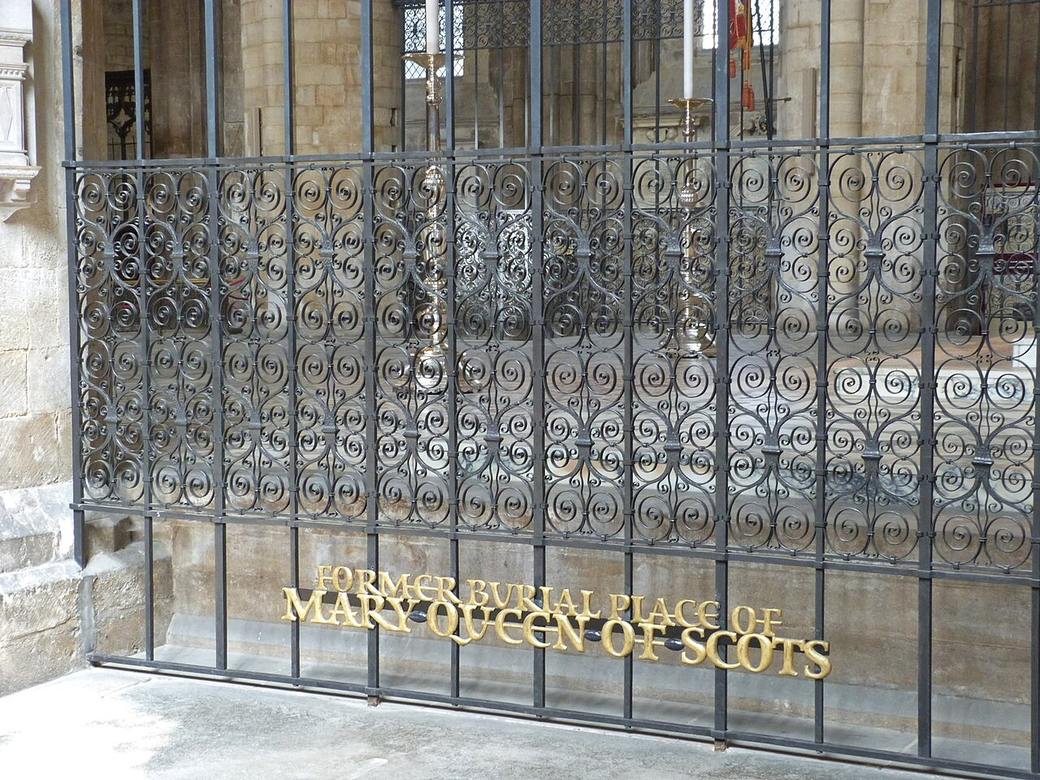
Across the choir, in the south aisle, is the spot where Mary, Queen of Scots, was buried after her execution at Fotheringhay Castle in 1587. She lay here for twenty-five years, until her son James I, by then king of England, had her moved to a grand tomb in Westminster Abbey in 1612. The place is marked with a plaque and the railings. The 2026 exhibition tells her story.
The apse and the New Building
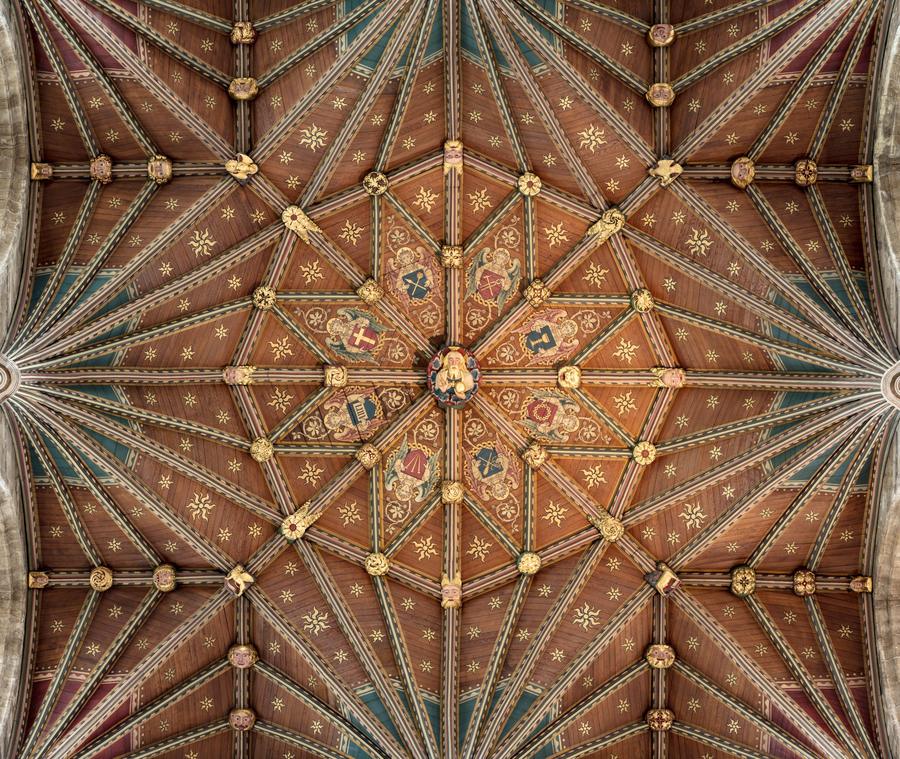
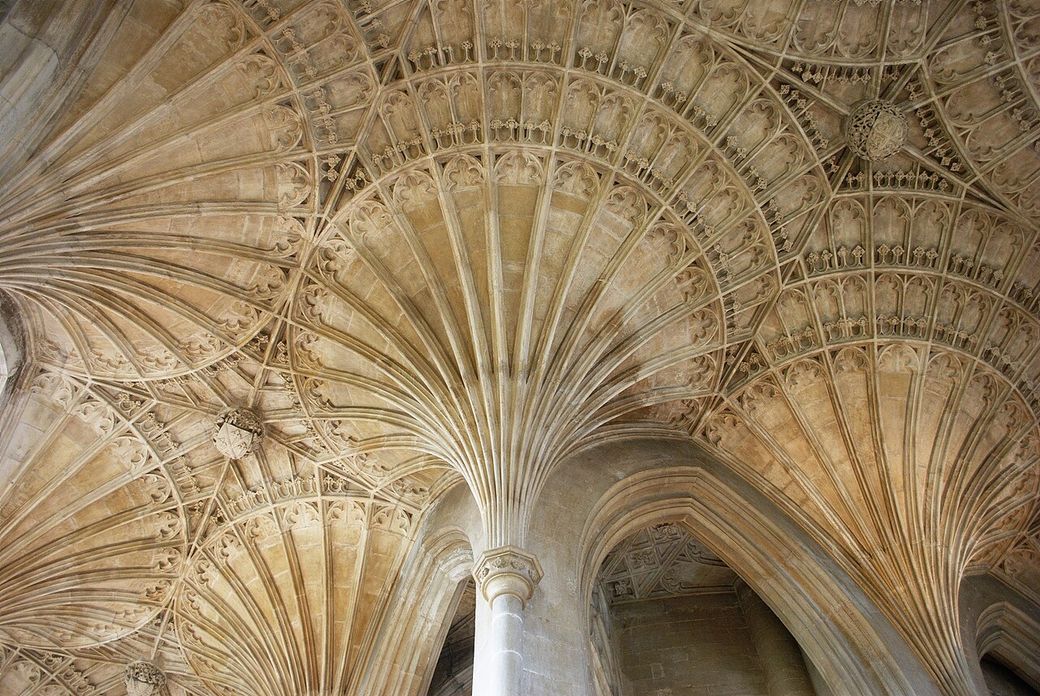
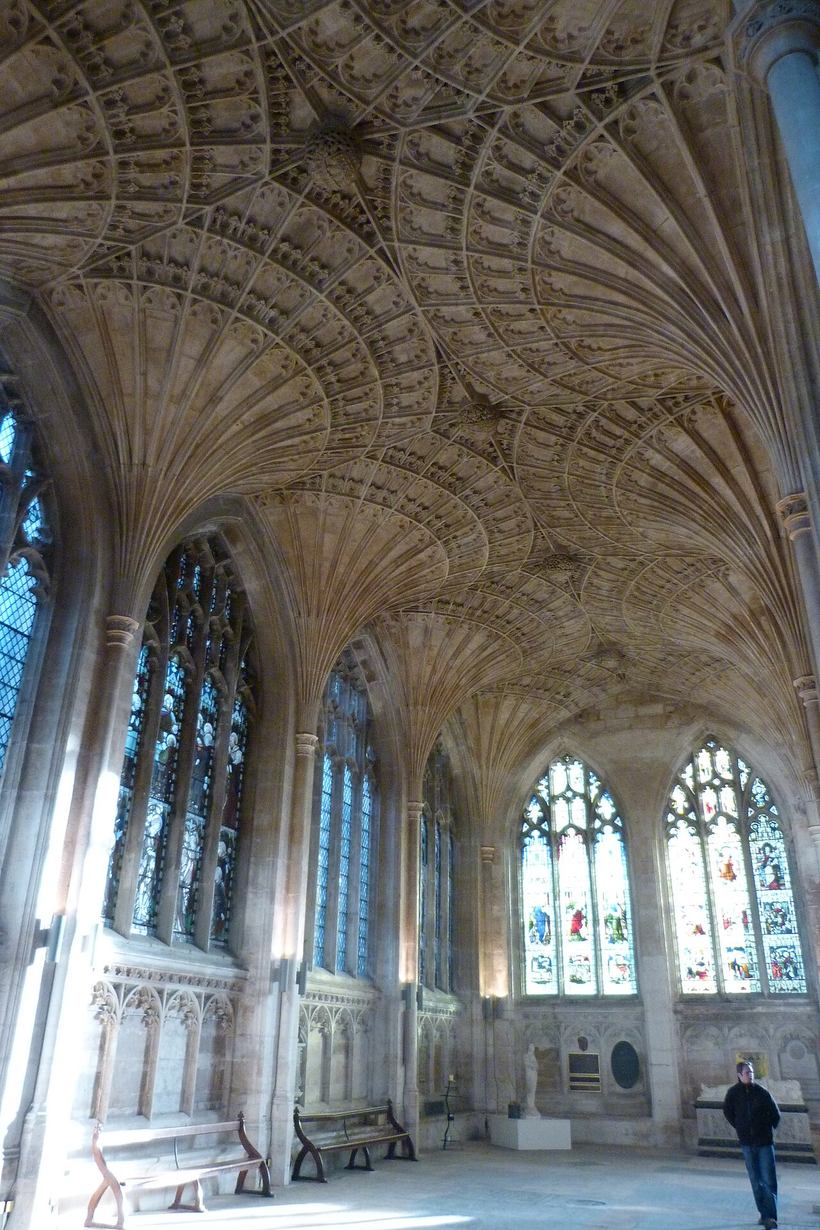
The Norman apse at the east end of the choir survives, under a painted ceiling that is a Victorian re-creation of the lost medieval scheme. In front of it, the choir is covered by a fifteenth-century wooden vault, painted and bossed. Around it runs the New Building, a retrochoir added between about 1496 and 1508 and roofed with a superb fan vault. It is probably by John Wastell, who went on to build the fan vault of King’s College Chapel in Cambridge, and it is one of the best places in England to see how that most English of vaults works close up.
Tickets and tours
Take the tower tour
The Upper Levels & Tower Tour starts at the gallery level of the nave, shows you archaeology, medieval graffiti and glass at close quarters, and goes up the tower for views over the city and the fens. The Highlights Tour stays on the ground. Both are booked through the cathedral and are well worth doing.
Tour and hotel links go to GetYourGuide and Booking.com. This site earns nothing from them at present — they are here because they are the quickest way to check what is actually available.
Don't miss
- The painted nave ceiling About 1230–50, and the only one of its kind left in Britain.
- Catherine of Aragon's grave North choir aisle, usually with pomegranates on it.
- The former grave of Mary, Queen of Scots South choir aisle, empty since 1612.
- Old Scarlett The painted portrait of the sexton who buried both queens, on the west wall.
- The Hedda Stone A carved Saxon stone of about 800, older than anything else here.
- The New Building fan vault Late Gothic at its best, probably by the architect of King’s College Chapel.
- The west front from the Outer Gate Three arches the height of the church, and nothing like them anywhere else.
Insider tips
Check the calendar. Peterborough is used for concerts and events, and on many days parts of the building are closed for rehearsals, set-up or services. The website lists restrictions by date. Out of the exhibition period, entry is by donation.
Peterborough is less than an hour from London by fast train and the station is a short walk from the cathedral, which makes it an easy half-day. Combining it with Ely, forty minutes by train, makes a good day of Norman cathedrals.
Around the cathedral, the precincts keep much of their monastic layout, including the gateways and the ruins of the infirmary. Walk round the outside to the east end to see the New Building from outside, and the Bishop’s Palace gardens.
Common questions
Is Peterborough Cathedral free to visit?
Normally, yes: entry is by donation. But from 21 September to 15 November 2026 the cathedral is hosting an exhibition on Mary, Queen of Scots, and during that period every sightseer needs an exhibition ticket — about £8 for adults and £6 for children and students. A chapel for private prayer stays free.
Is Catherine of Aragon buried in Peterborough Cathedral?
Yes. Henry VIII’s first wife died at Kimbolton Castle in January 1536 and was buried here later that month. Her grave is in the north choir aisle, marked with the words “Katharine Queen of England”, and visitors leave pomegranates, her emblem, on it.
Was Mary, Queen of Scots buried at Peterborough?
Yes, for 25 years. After her execution at Fotheringhay in February 1587 she was buried here that summer, in the south choir aisle. In 1612 her son, James I, had her body moved to Westminster Abbey. The site is still marked.
What is special about the painted ceiling?
It is a flat wooden ceiling painted in about 1230–50 with a lattice of diamond-shaped panels containing saints, kings, bishops and strange creatures. It is the only painted wooden nave ceiling of its kind to survive in Britain and one of very few in Europe, although much of the paint you see today is from repaintings in the eighteenth and nineteenth centuries.
How long do you need at Peterborough Cathedral?
About an hour, or an hour and a half with the exhibition. The guided tours take one to two hours.
Where to stay and eat nearby
The Cathedral Square and the streets around it have plenty of cafes; the Guildhall of 1671, on stilts in the square, is the landmark to meet at. Most visitors come for the day, but Peterborough has hotels near the station and the river.
More English cathedrals
- Ely Cathedral — forty minutes away, with its own great Norman nave and a painted ceiling
- Lincoln Cathedral — up the line, with another celebrated west front
- Westminster Abbey — where Mary, Queen of Scots, lies now
See all the cathedrals and churches worth visiting in England →