
Worcester Cathedral
King John, the most hated king in English history, asked to be buried here. He died in October 1216, a year after Magna Carta, and his body was carried across a country in civil war to lie between the shrines of Worcester’s two saints, in the hope that their company would help him at the Judgement. His tomb is still in front of the high altar, and his effigy on it is the oldest royal effigy in England.
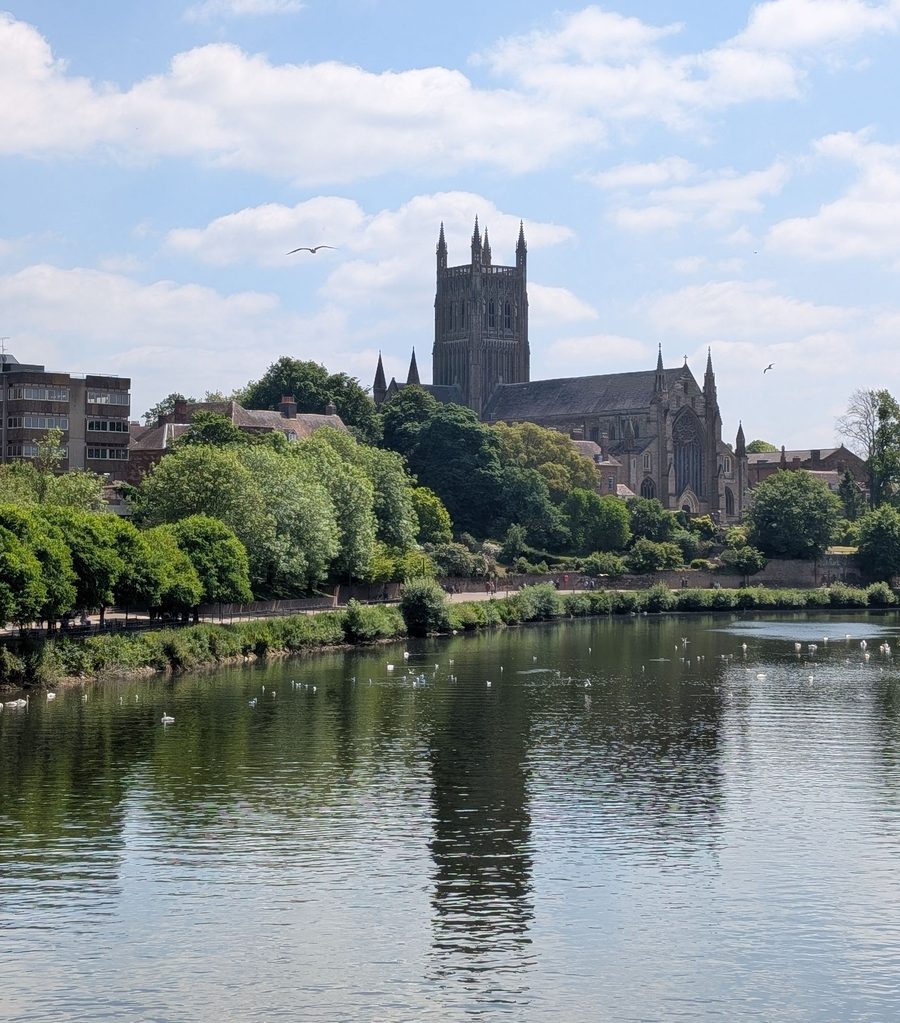
Fourteen centuries above the Severn
There has been a cathedral at Worcester since about 680, when a bishopric was created for the people of this part of the Severn valley. In the tenth century Bishop Oswald brought Benedictine monks here, and for the rest of the Middle Ages the cathedral was also a monastery.
The man who shaped the building we see was Wulfstan, bishop from 1062 to 1095. He was the last of the English bishops left in office after 1066, and the only one to keep his see for long, and in 1084 he began a new cathedral in the Norman style. His crypt survives almost complete beneath the east end. So does the round chapter house, built a generation later. In 1175 the central tower fell, and the two westernmost bays of the nave were rebuilt in a transitional style that is easy to spot: pointed arches but chunky Norman detail.
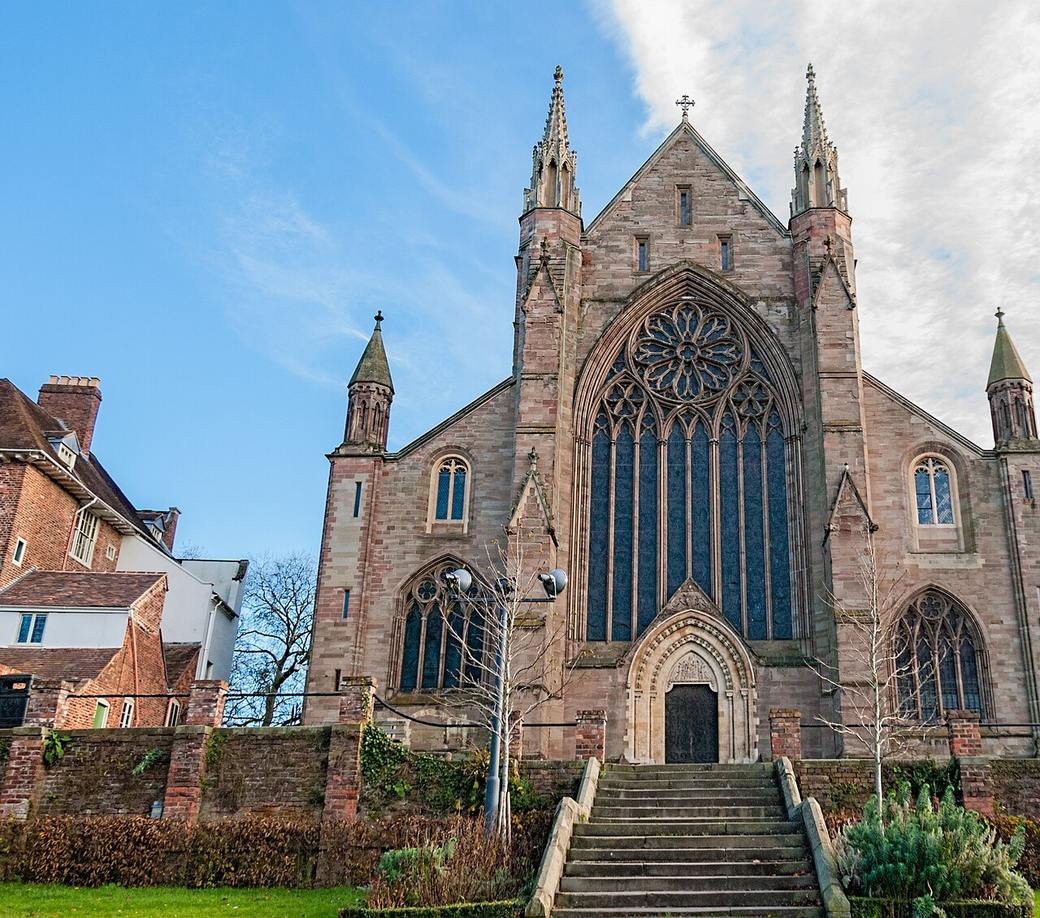
Wulfstan was made a saint in 1203, and pilgrims came. From 1224 the east end was rebuilt in Early English Gothic to house his shrine and Oswald’s, with King John buried between them. The nave followed in the fourteenth century, and the central tower was finished in 1374. In the Civil War the city was the last Royalist stronghold; in 1651 the young Charles II is said to have watched the Battle of Worcester from the cathedral tower before escaping into exile. A long Victorian restoration gave the cathedral much of its present furnishing and the west front.
The visitor's cheat sheet
| Where | 8 College Yard, Worcester, WR1 2LA, on the bank of the River Severn in the city centre |
|---|---|
| Getting there | Worcester Foregate Street and Shrub Hill stations are both a 10–15 minute walk; no car park on site, but public car parks are close by |
| Opening hours | Mon–Sat 10am–5pm; Sun 12.30pm–3pm. Weddings, graduations and services close parts of the building on some days — check the planned closures list before you go |
| Admission | Free; a donation of about £7 per adult is suggested. Guided tours £8 (£4 under-18s) at 11am and 2.30pm Mon–Sat; tower climbs about £10 in season |
| How long | 1–1.5 hours; 2.5 hours with a guided tour |
| Best time | A weekday morning, then back for Evensong if the choir is singing |
| Dress code | No formal code; respectful dress as in any working church |
| Dogs | Well-behaved dogs on a short lead are welcome in the cathedral and grounds, but not on tours, in the crypt or up the tower |
Hours and admission checked against the official site in October 2026. They change; the official site is always the last word.
The tower is closed until spring 2027. Worcester’s 235-step tower climb normally runs at weekends and in school holidays from February to the end of September. It is closed for the winter and expected to reopen at Easter 2027. Everything else is open as usual.
What to see, in the order you meet it
The nave
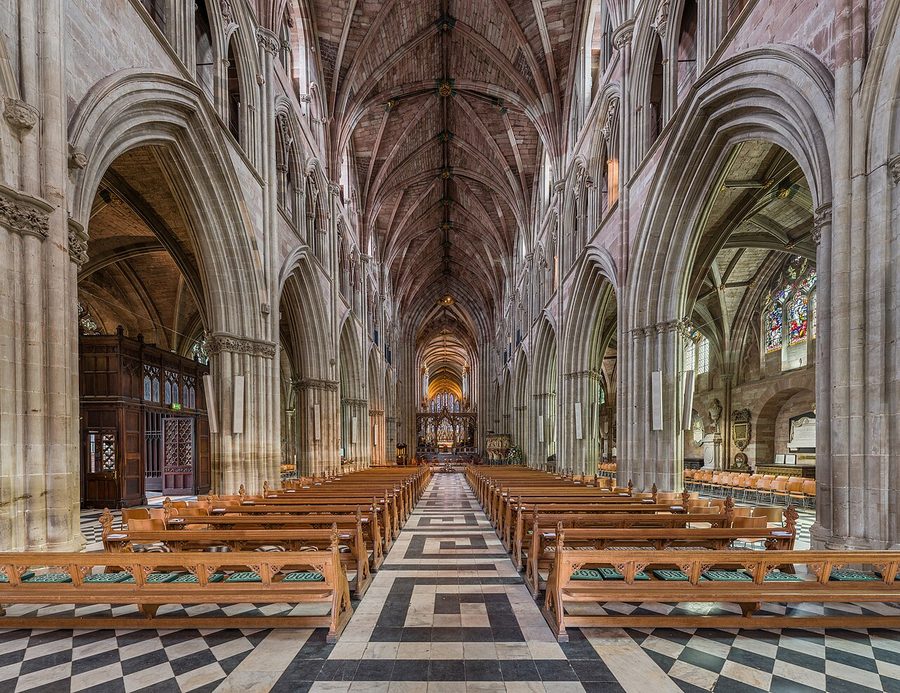
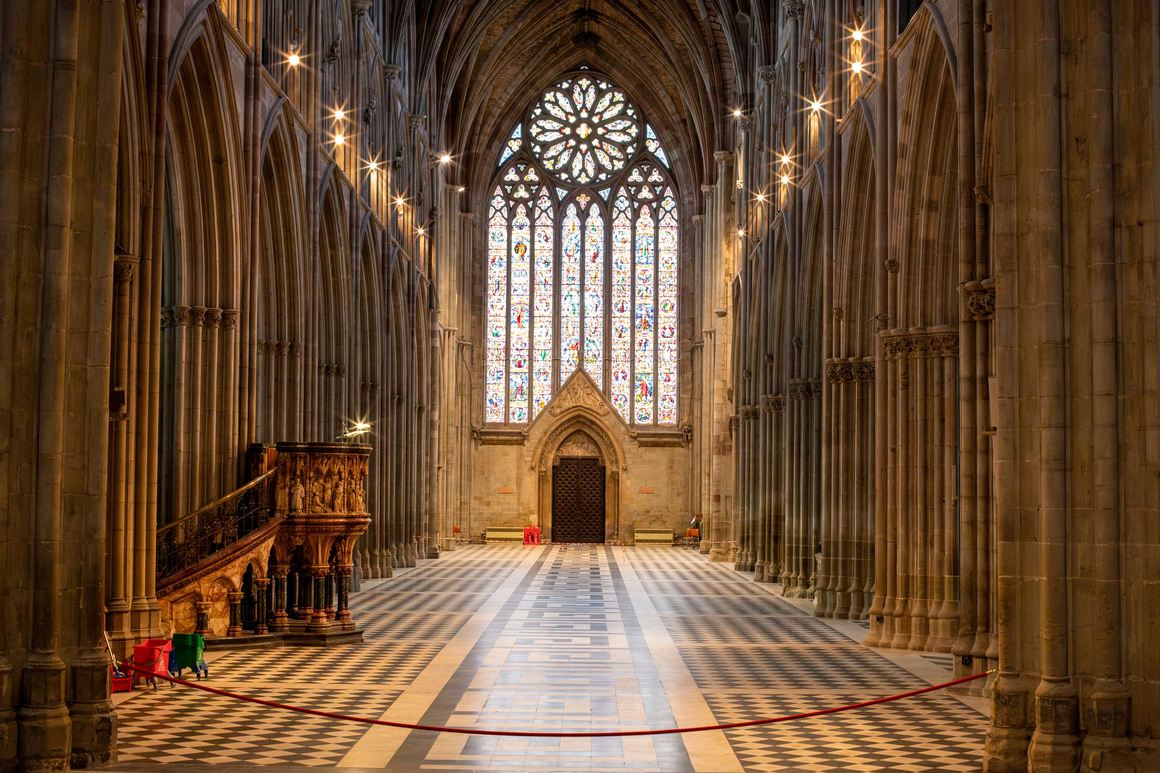
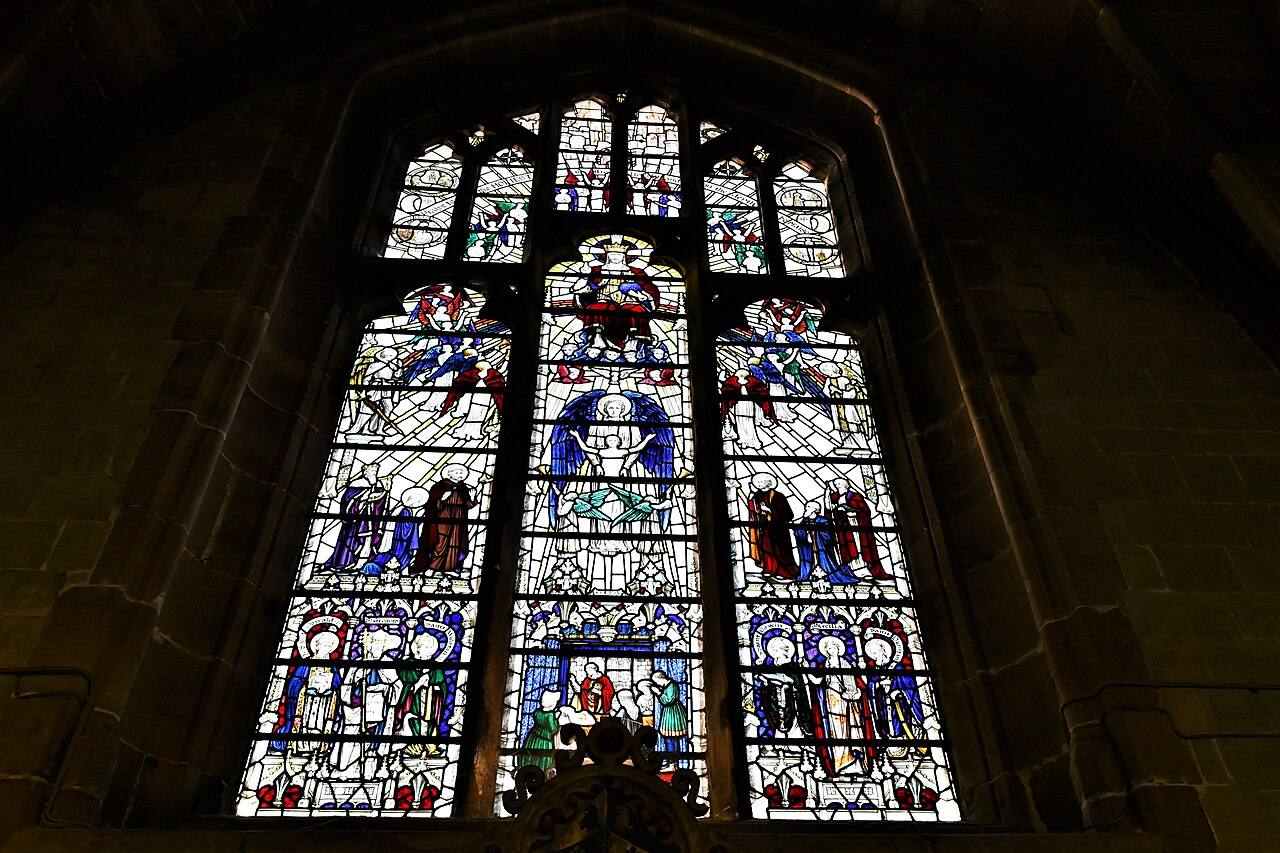
You enter by the north porch from College Yard, opposite the end of the High Street. The nave is long and tall, and it is worth walking to the west end first to see how the building changes. The two western bays are the late-twelfth-century rebuild after the tower collapse; the rest is fourteenth century, with the elaborate tracery and moulding of the Decorated style. In the north aisle, look for the Elgar memorial window, which illustrates The Dream of Gerontius. Edward Elgar was born a few miles away and spent much of his life in and around Worcester; the cathedral is one of the homes of the Three Choirs Festival, which gave several of his works their early performances.
The former prime minister Stanley Baldwin, a Worcestershire man, is buried in the nave with his wife.
The quire and King John
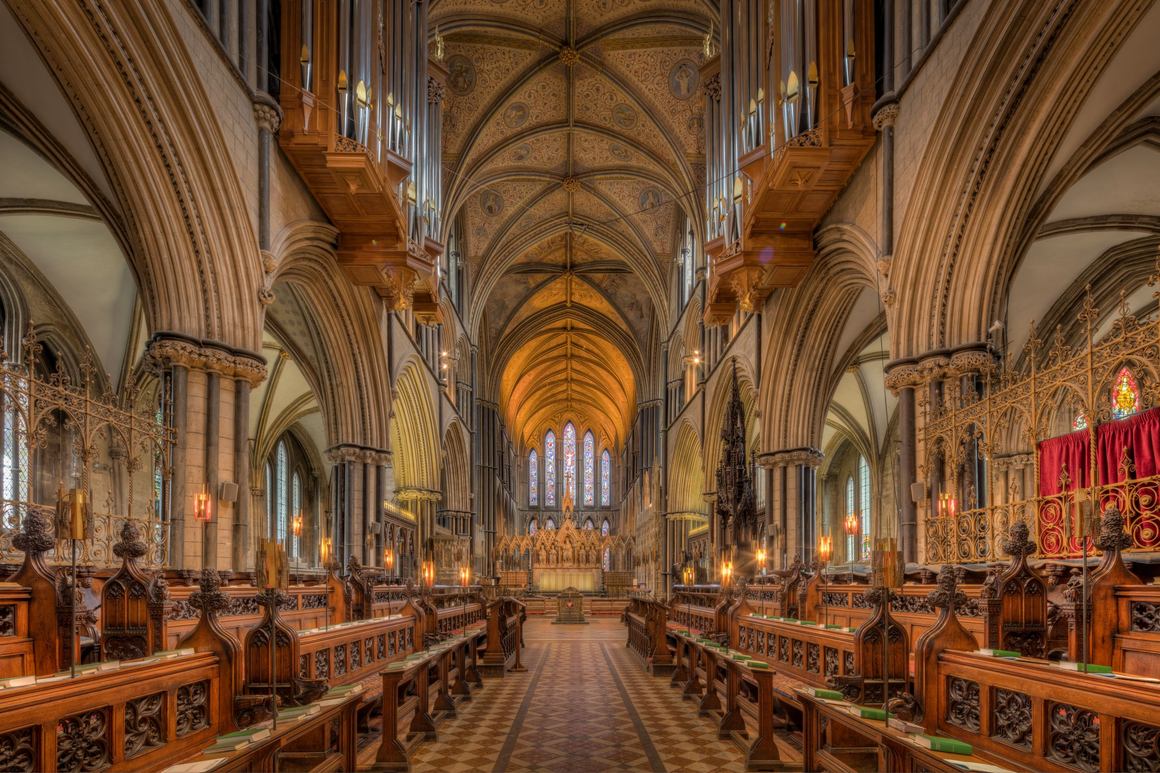
Go up into the quire. It was rebuilt from 1224 in the Early English style, with slender shafts of dark Purbeck marble against the pale stone, and it is one of the most graceful thirteenth-century interiors in England. The vault was repainted in the Victorian restoration.
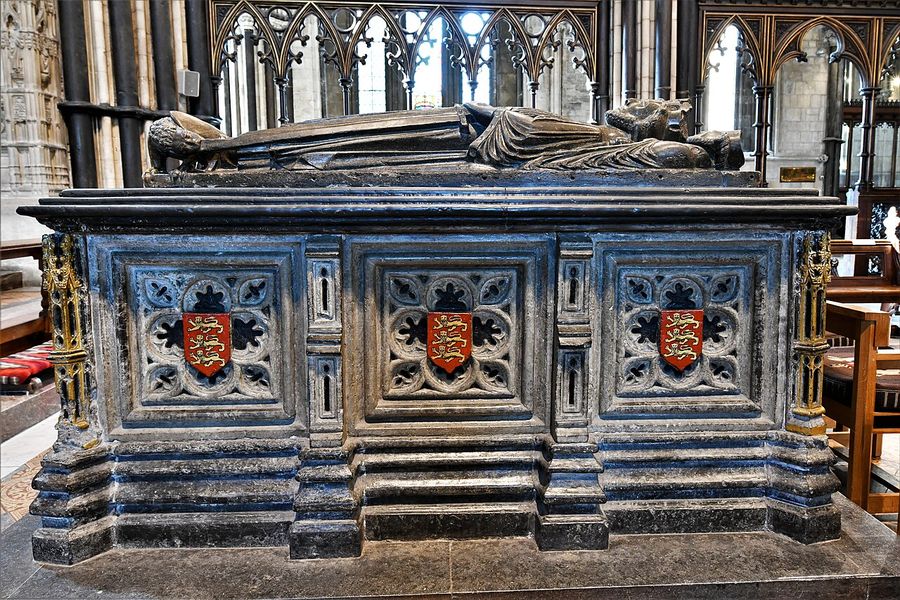
In front of the high altar lies King John. The tomb chest is Tudor, made in 1529, but the effigy on top is of about 1230: the king crowned, holding a sword, with a lion at his feet and two small bishops — Oswald and Wulfstan — censing his head. It is the oldest surviving royal effigy in England. The tomb was opened in 1797, and the king was found inside, much decayed but wrapped in his robes.
Prince Arthur's Chantry
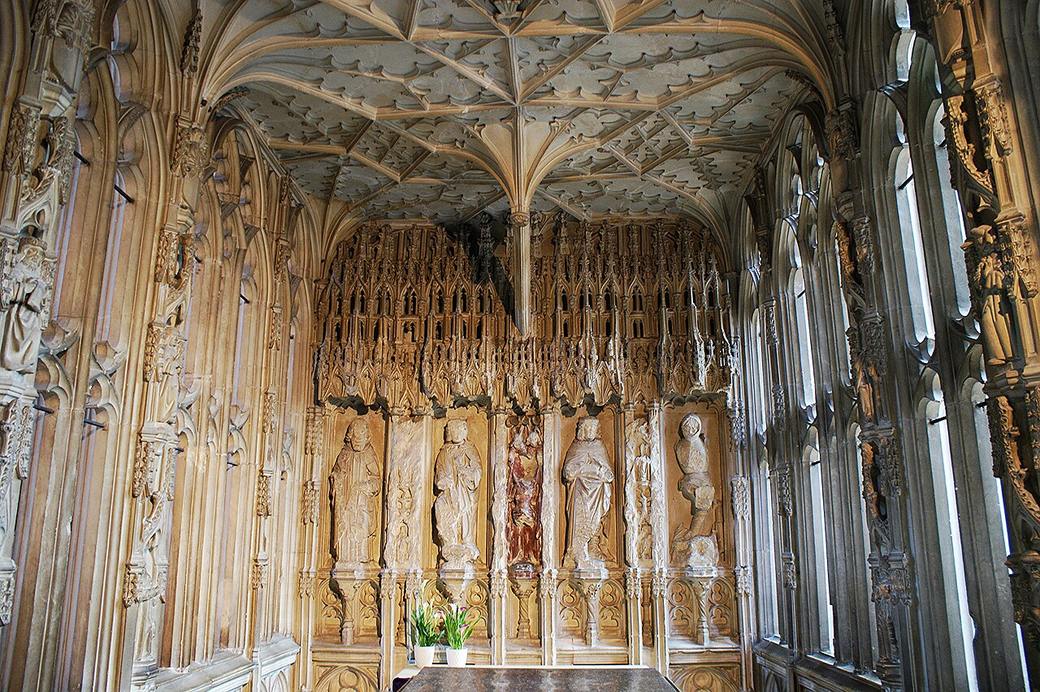
On the south side of the high altar stands a small chapel of carved stone, almost a building within the building. It was put up in 1504 by Henry VII for his eldest son, Arthur, Prince of Wales, who had died at Ludlow Castle in 1502 at the age of fifteen, a few months after marrying Catherine of Aragon. If he had lived, there would have been no Henry VIII as we know him. Look at the badges carved all over it: the Tudor rose, the Beaufort portcullis, the pomegranate of Catherine’s Granada. The statues inside were defaced at the Reformation.
The Lady Chapel and the east end
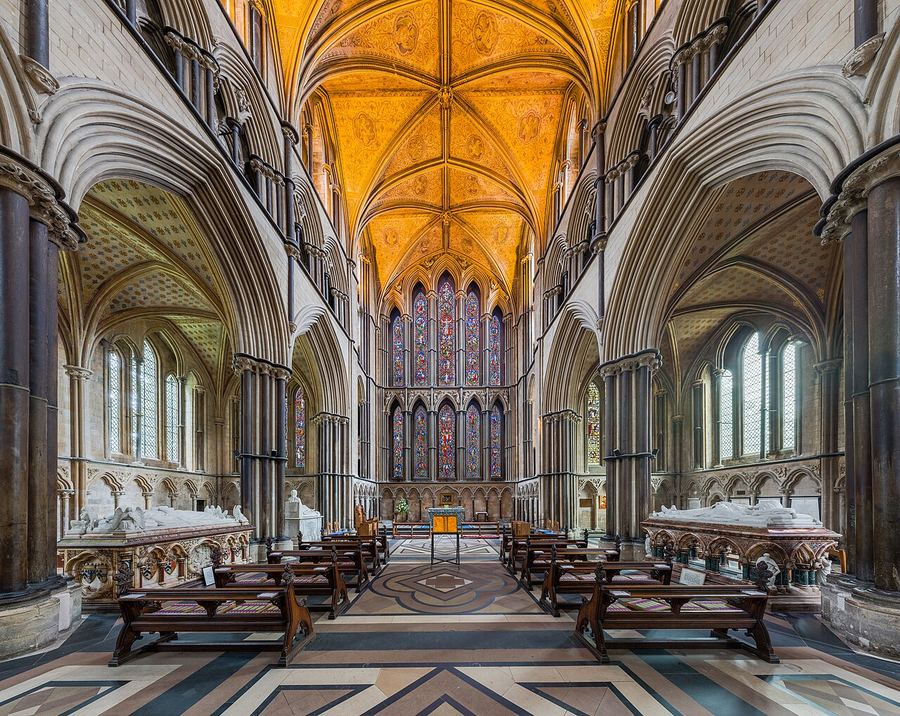
Behind the high altar, the Lady Chapel continues the thirteenth-century work: tall lancet windows, clusters of Purbeck shafts and carved spandrels in the wall arcading below. It is the calmest part of the building.
St Wulfstan's crypt
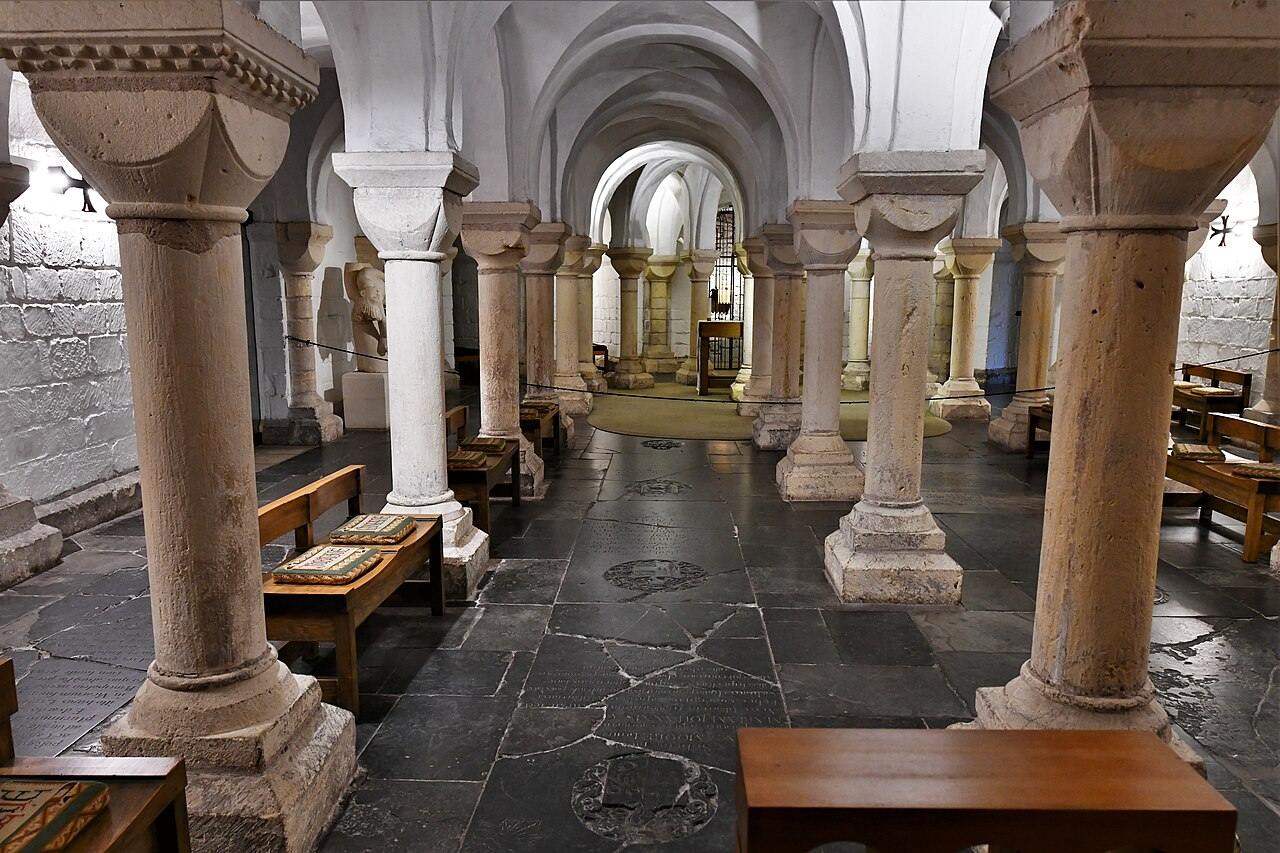
Steps from the south quire aisle lead down to the crypt, and this is the oldest part of the cathedral: Wulfstan’s work of 1084. It is one of the largest Norman crypts in England, a low forest of short columns with plain cushion capitals, and it gives the clearest idea of the church the Normans built, before the Gothic rebuildings above. It is not accessible to wheelchairs.
The cloister and the chapter house
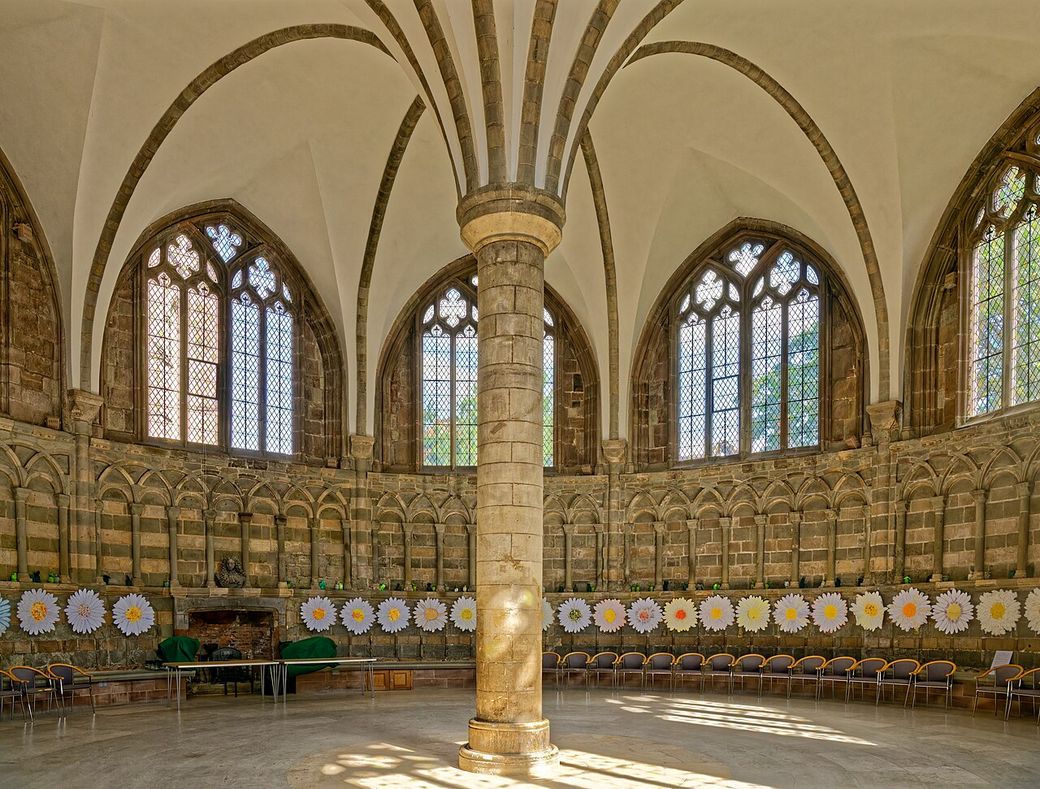
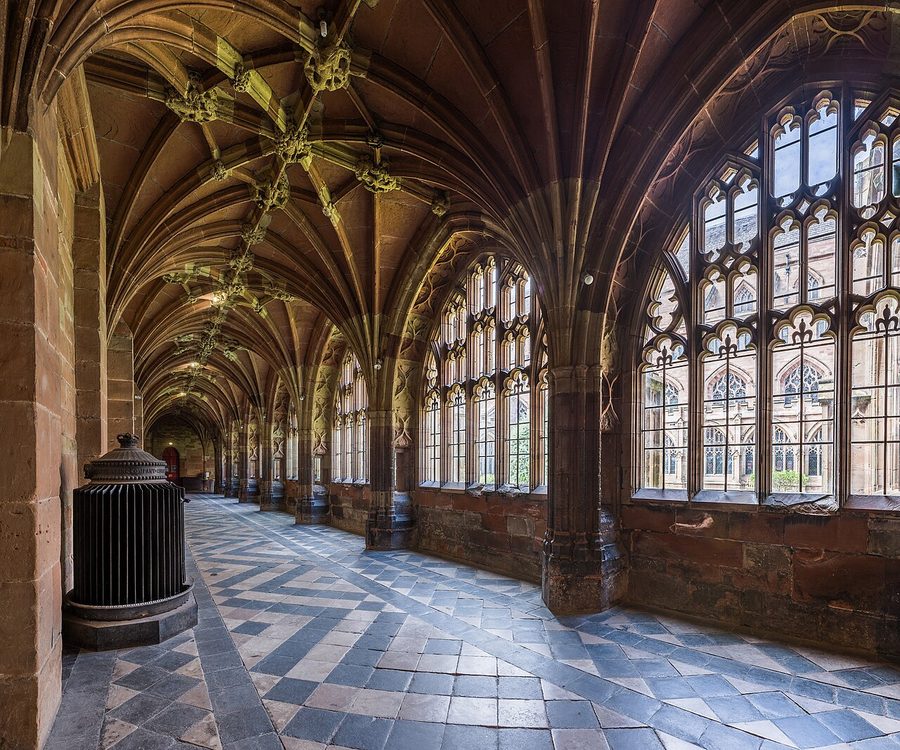
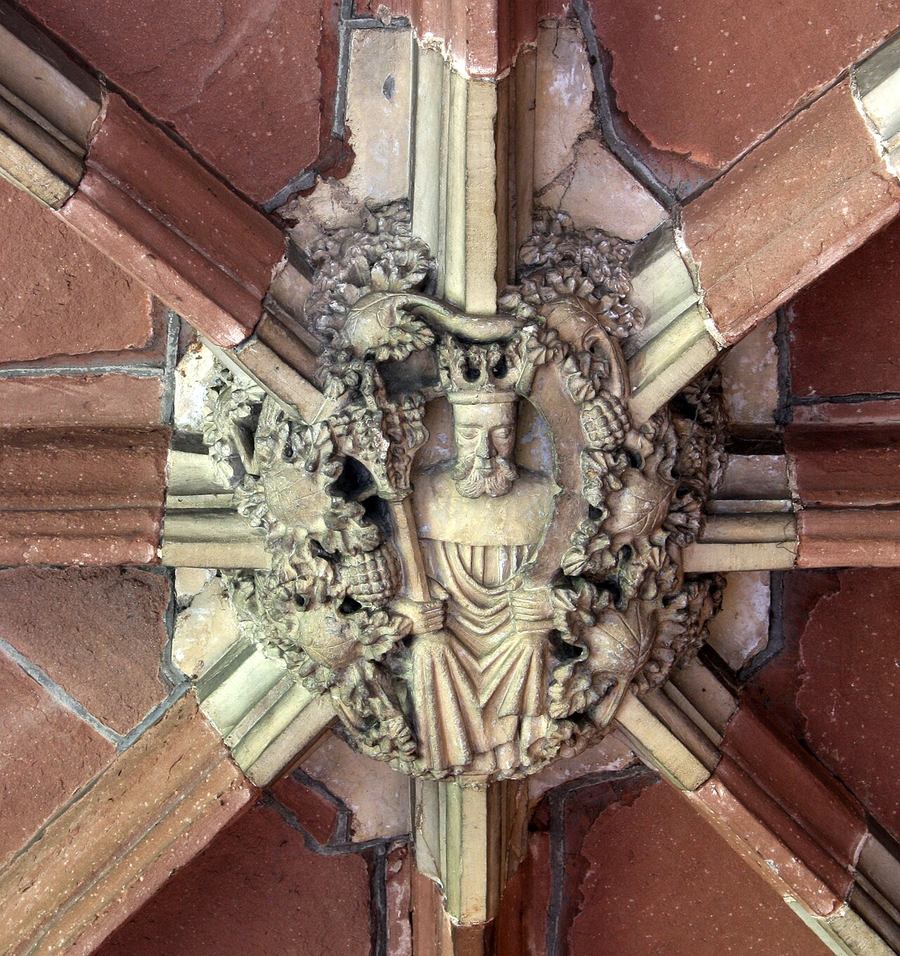
Go out through the south side of the nave into the cloister. The walks were rebuilt in the fourteenth and fifteenth centuries, with carved bosses in the vault and Victorian glass in the windows; the Cloister Café is here. Off the east walk is the chapter house, of about 1120 and one of the earliest of its kind: a circular room whose vault springs from a single central column. It is the ancestor of the great polygonal chapter houses at Lincoln, Wells and Salisbury.
Tickets and tours
Join a daily tour
Guided tours run at 11am and 2.30pm from Monday to Saturday, last 45–60 minutes and are bought at the welcome desk on arrival. Library tours, in the medieval library above the nave aisle, must be booked in advance. Tower tickets, when the tower is open, are sold only on the day.
Tour and hotel links go to GetYourGuide and Booking.com. This site earns nothing from them at present — they are here because they are the quickest way to check what is actually available.
Don't miss
- King John's effigy The oldest royal effigy in England, with two tiny bishops at his head.
- Prince Arthur's Chantry The tomb of the brother who should have been king.
- St Wulfstan's crypt The building of 1084, nearly intact beneath your feet.
- The chapter house A circle of stone round a single pillar, about 1120.
- The quire Early English Gothic at its most elegant.
- The Elgar window The Dream of Gerontius in glass, in the north aisle.
- The view from the river Walk down to the Severn path and look back.
Insider tips
See it from the cricket ground. Across the river, Worcestershire’s New Road ground has one of the most famous views in sport, with the cathedral rising behind the pavilion. The riverside path below the cathedral gives you the same view for free.
Choral Evensong is sung most days in school term time and at 4pm on Sundays. It is free, and it is how the building is meant to be heard.
Worcester rewards a day. The Commandery, the Royalist headquarters in 1651, is a short walk south; the Museum of Royal Worcester porcelain is next to it; and the medieval Edgar Tower gateway leads from Edgar Street into College Green and the cathedral precinct.
Common questions
Is Worcester Cathedral free to visit?
Yes. There is no admission charge, but visitors are asked for a donation of around £7 per adult. Guided tours, the tower climb and library tours are paid for separately.
Where is King John buried?
In Worcester Cathedral, in front of the high altar. John died at Newark in October 1216 and asked to be buried at Worcester, between the shrines of the city’s two saints, Oswald and Wulfstan. His Purbeck marble effigy, carved within a generation of his death, is the oldest royal effigy in England.
Can you climb the tower at Worcester Cathedral?
Usually, yes, at weekends and in school holidays from February half-term to the end of September — 235 steps, about £10 for adults, minimum age eight, tickets from the welcome desk on the day. The tower is closed for the winter and is expected to reopen at Easter 2027.
Who was Prince Arthur?
The eldest son of Henry VII and first husband of Catherine of Aragon. He died at Ludlow in 1502, aged fifteen, and was buried at Worcester. His younger brother became Henry VIII and married his widow. The chantry chapel round his tomb was built by his father in 1504.
How long do you need at Worcester Cathedral?
About an hour and a half for the cathedral, the crypt, the cloister and the chapter house. Add an hour for a guided tour.
Where to stay and eat nearby
The Cloister Café inside the cathedral is the obvious stop. Friar Street and New Street, a few minutes north, have the timber-framed pubs and independent restaurants. Most of the city centre is within ten minutes’ walk.
More English cathedrals
- Hereford Cathedral — its Three Choirs partner, with the Mappa Mundi
- Gloucester Cathedral — the third Three Choirs cathedral, with another royal tomb
- Tewkesbury Abbey — a Norman giant half an hour down the Severn
See all the cathedrals and churches worth visiting in England →