
Chichester Cathedral
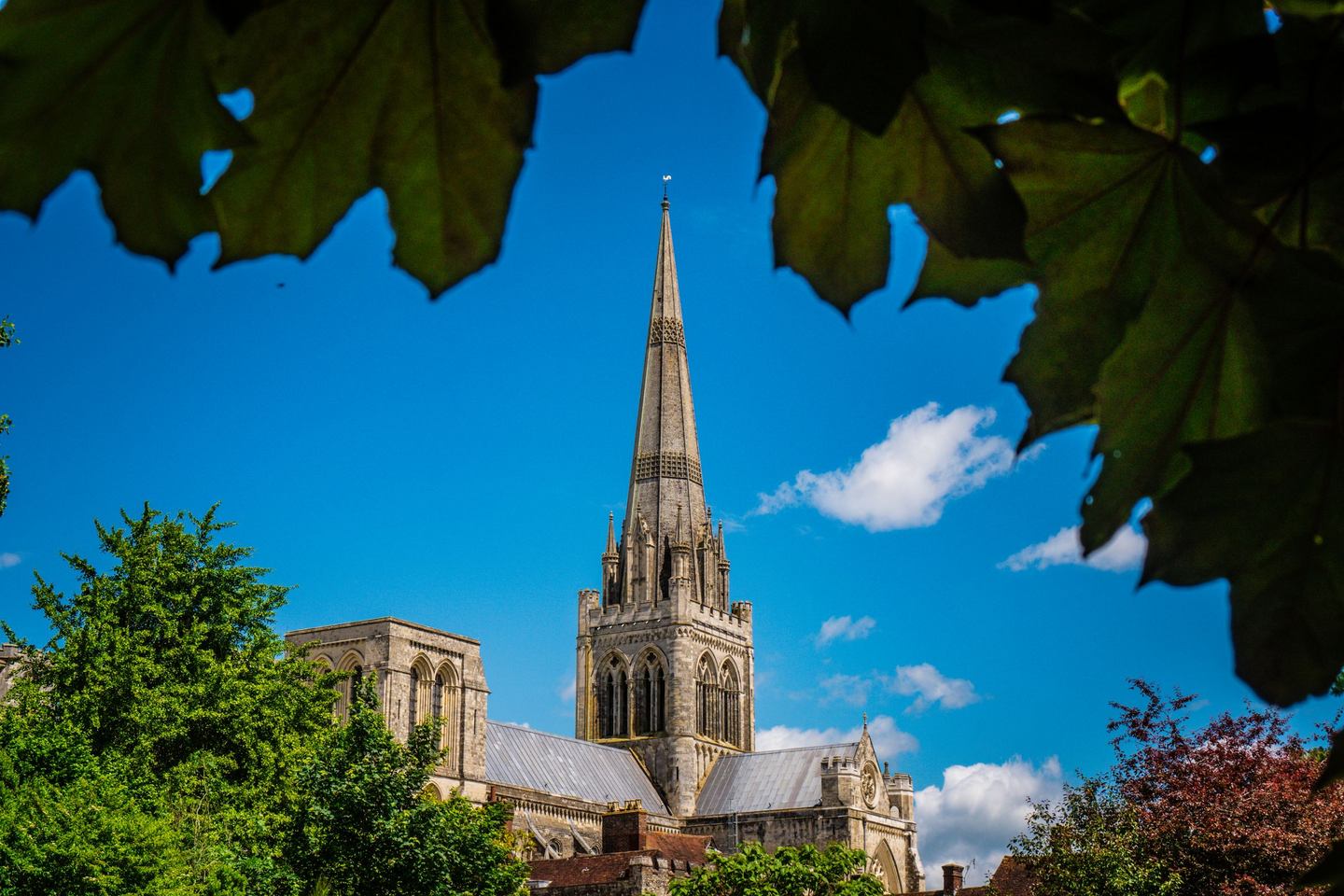
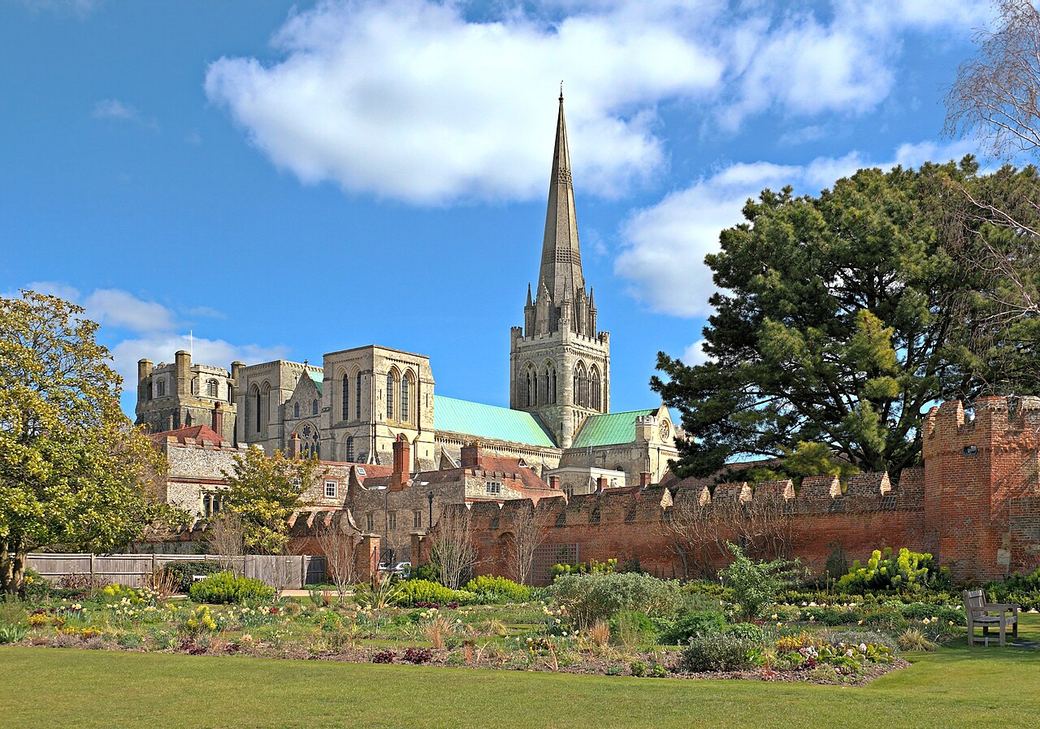
On 21 February 1861, after days of creaking and cracking, the central tower and spire of Chichester Cathedral sank quietly into the building, folding down on themselves like a telescope. Nobody was hurt. Within five years the spire was back, a copy of the old one, and it is still the landmark for miles across the Sussex coast. Underneath it is a Norman cathedral with a twelfth-century masterpiece of carving, a tomb made famous by a poem, and more good modern art than almost any other church in England.
From Selsey to Chichester
The bishops of the South Saxons first sat at Selsey, on the coast, where St Wilfrid had founded a monastery in the seventh century. In 1075 the Normans moved the see a few miles inland to the walled Roman town of Chichester, and work on a new cathedral began soon afterwards. Most of it was built under Bishop Ralph Luffa, and it was consecrated in 1108.
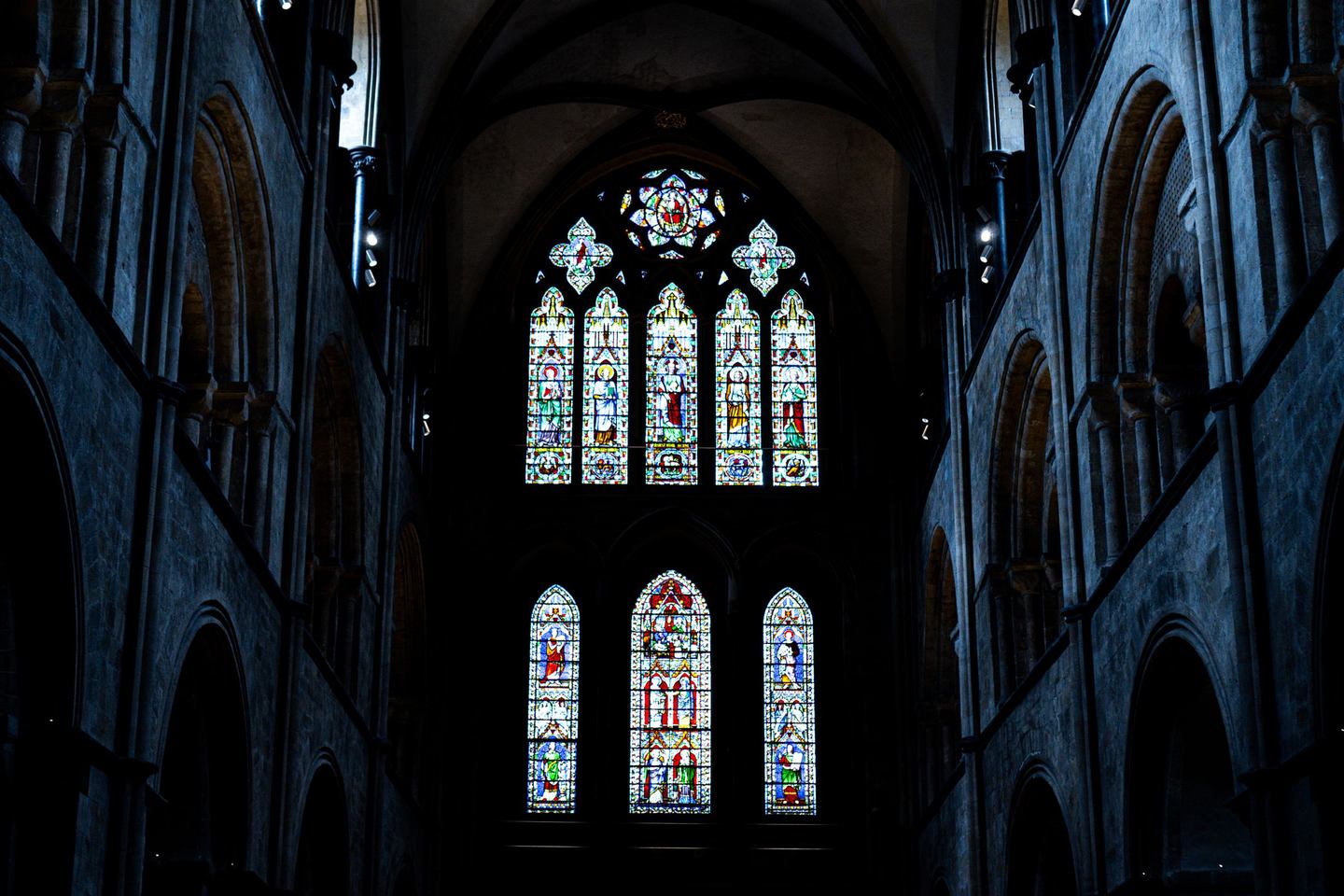
Fire damaged it in 1114 and again in 1187. The second fire led to a rebuilding of the east end and the upper parts of the church in the new Gothic style, with shafts of dark Purbeck marble; the retroquire beyond the high altar dates from this campaign. In the thirteenth century chapels were added along both sides of the nave, giving Chichester its unusual double aisles. Later came the spire, the detached bell tower, the cloister and the stone screen across the nave.
In the thirteenth century the cathedral acquired a saint: Richard of Wych, bishop from 1245 to 1253, canonised in 1262. His shrine in the retroquire was a major pilgrimage destination until it was destroyed on the orders of Henry VIII in 1538.
The visitor's cheat sheet
| Where | The Royal Chantry, Cathedral Cloisters, Chichester, West Sussex, PO19 1PX |
|---|---|
| Getting there | Chichester station is about 10 minutes’ walk; trains from London Victoria take around 1 hour 40 minutes, and from Portsmouth and Brighton less |
| Opening hours | Mon–Sat 9am–5pm; Sun 12.30pm–3pm. Services and events can restrict access to parts of the building |
| Admission | Free; a donation of £7 per visitor is recommended. Spire visits about £20 adults, £16 students, £14 children, booked online |
| How long | About 1 hour; 2 hours with a spire visit |
| Best time | A weekday morning, followed by a walk on the city walls and the Bishop’s Palace Gardens |
| Dress code | No formal code; respectful dress as in any working church |
| Tours | Guided tours are available; spire visits run on set dates and should be booked ahead |
Hours and admission checked against the official site in October 2026. They change; the official site is always the last word.
The spire that fell. In 1859 the cathedral removed the fifteenth-century Arundel Screen to open up the nave, and the work exposed how weak the crossing piers were. Shoring failed to save them, and in February 1861 the spire came down. George Gilbert Scott rebuilt it to the old design. The screen, stored in pieces for a century, was put back in 1961.
What to see, in the order you meet it
The bell tower and the west end
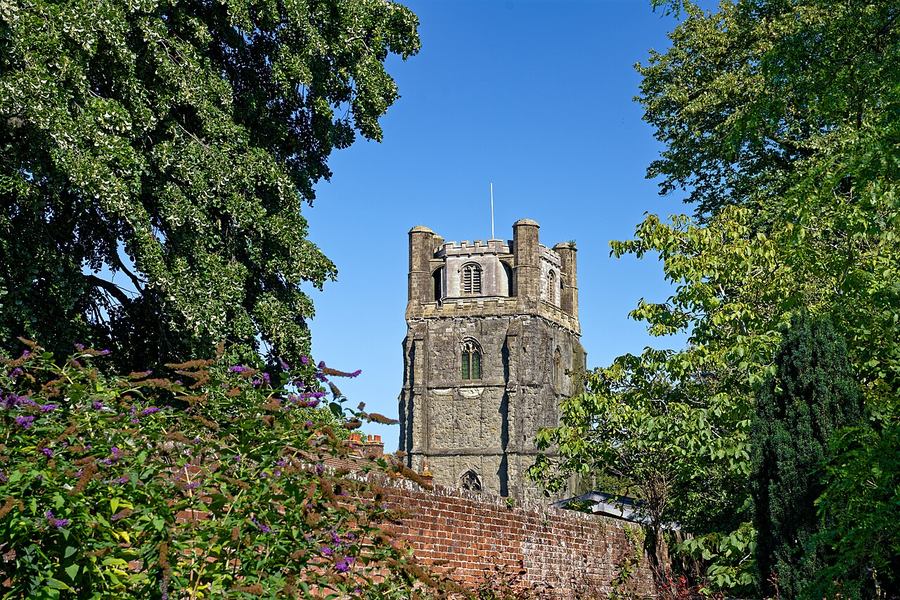
Before you go in, look at the bell tower standing on its own north of the west front. It was built in the late fourteenth and early fifteenth centuries, and it is the only detached medieval bell tower still standing at an English cathedral. Outside the west end of the building, the bronze statue of St Richard by Philip Jackson dates from 2000.
The nave
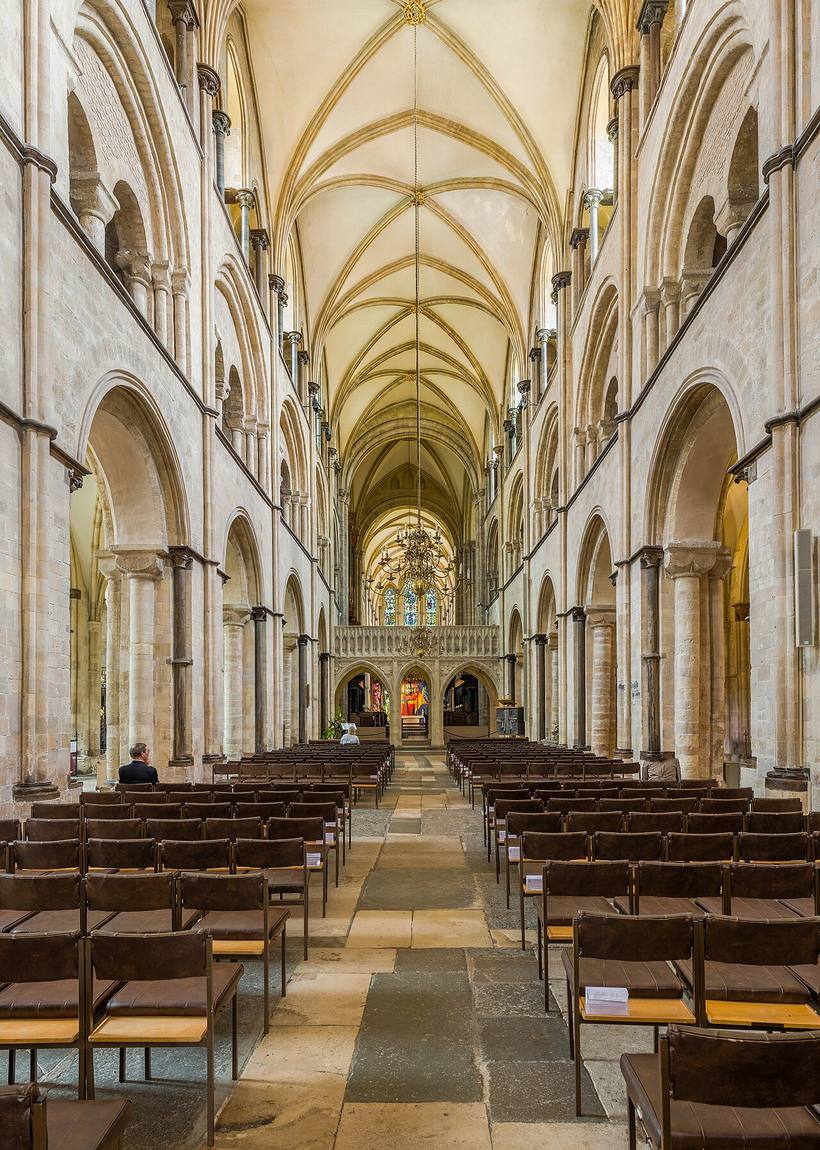
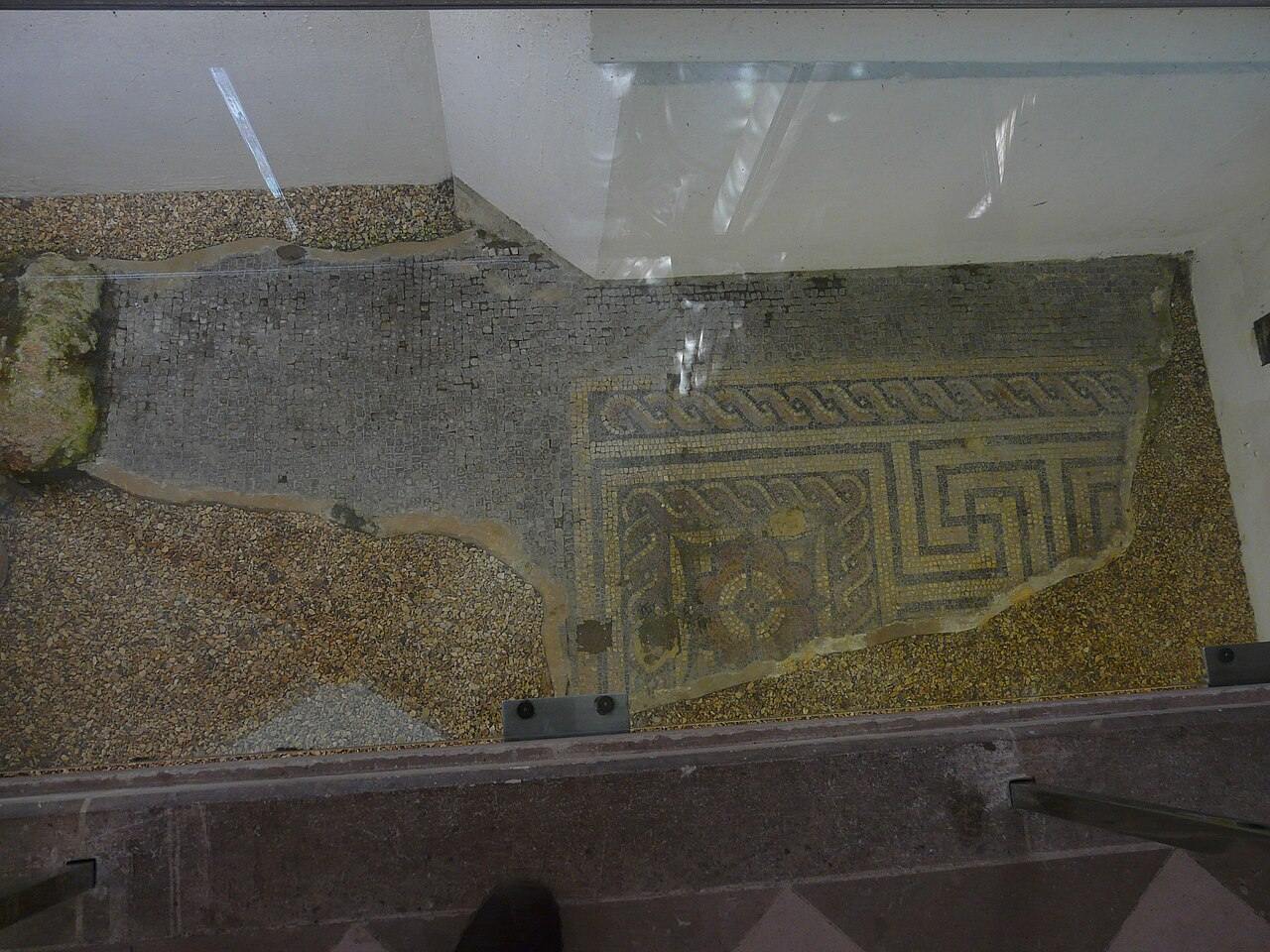
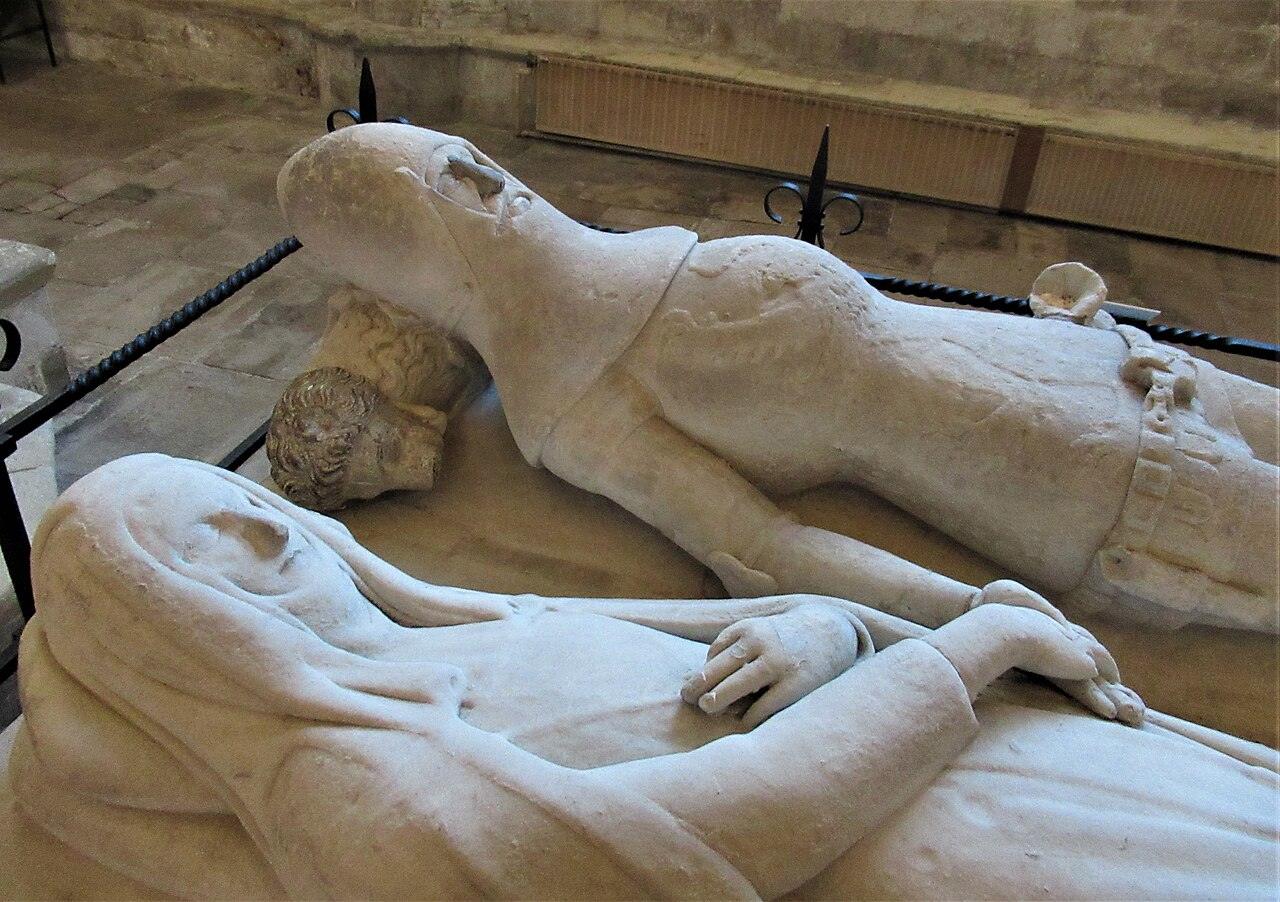
The nave is Norman, with round arches on solid piers and a gallery above, but it has a Gothic vault and those extra aisles on each side, which make it unusually wide. A glass panel in the floor shows a piece of Roman mosaic, found in 1966 and a reminder that the cathedral stands in the middle of a Roman town. In the north outer aisle lies the Arundel tomb: an earl and his countess in stone, she resting her hand in his. Philip Larkin saw it in 1956 and wrote “An Arundel Tomb” about it; the joined hands, as Larkin himself later learned, were carved by a Victorian restorer in 1843.
The Lazarus reliefs
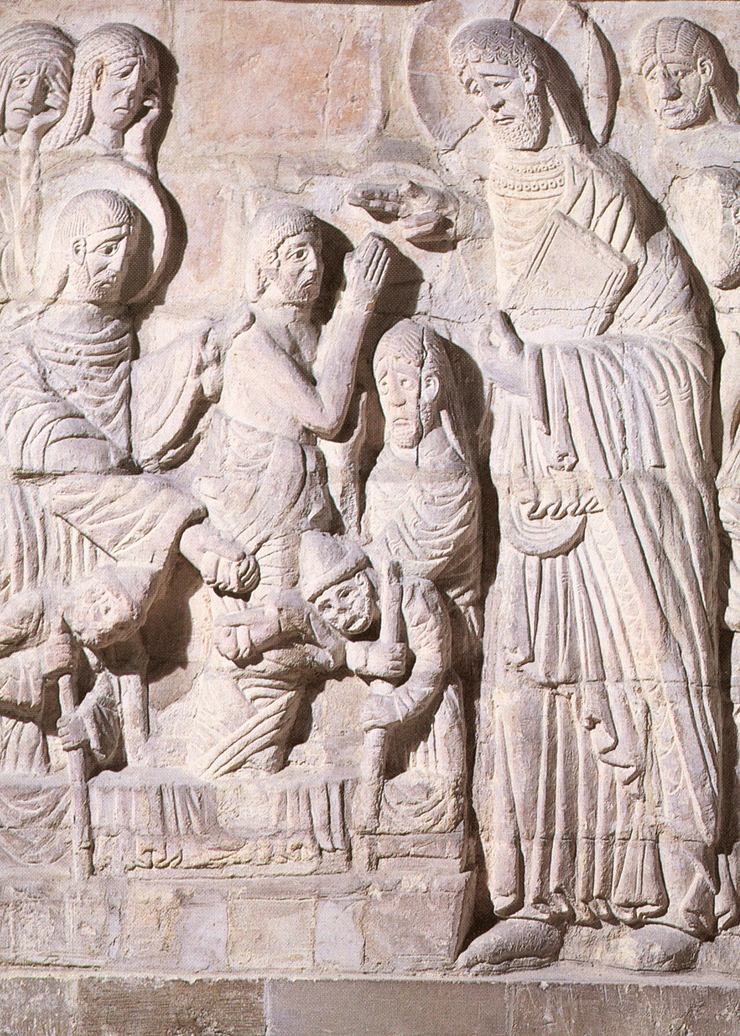
Inside the cathedral are its greatest treasures: two carved stone panels of the twelfth century, one showing Christ arriving at Bethany and the other the Raising of Lazarus. The figures are tall and grave, with long faces and drapery falling in tight folds, and they are among the finest Romanesque sculptures in England. They were found in 1829 behind boarding on a pier of the crossing; they would originally have been painted, and the eyes were probably set with coloured glass or jewels.
The quire and the Piper tapestry
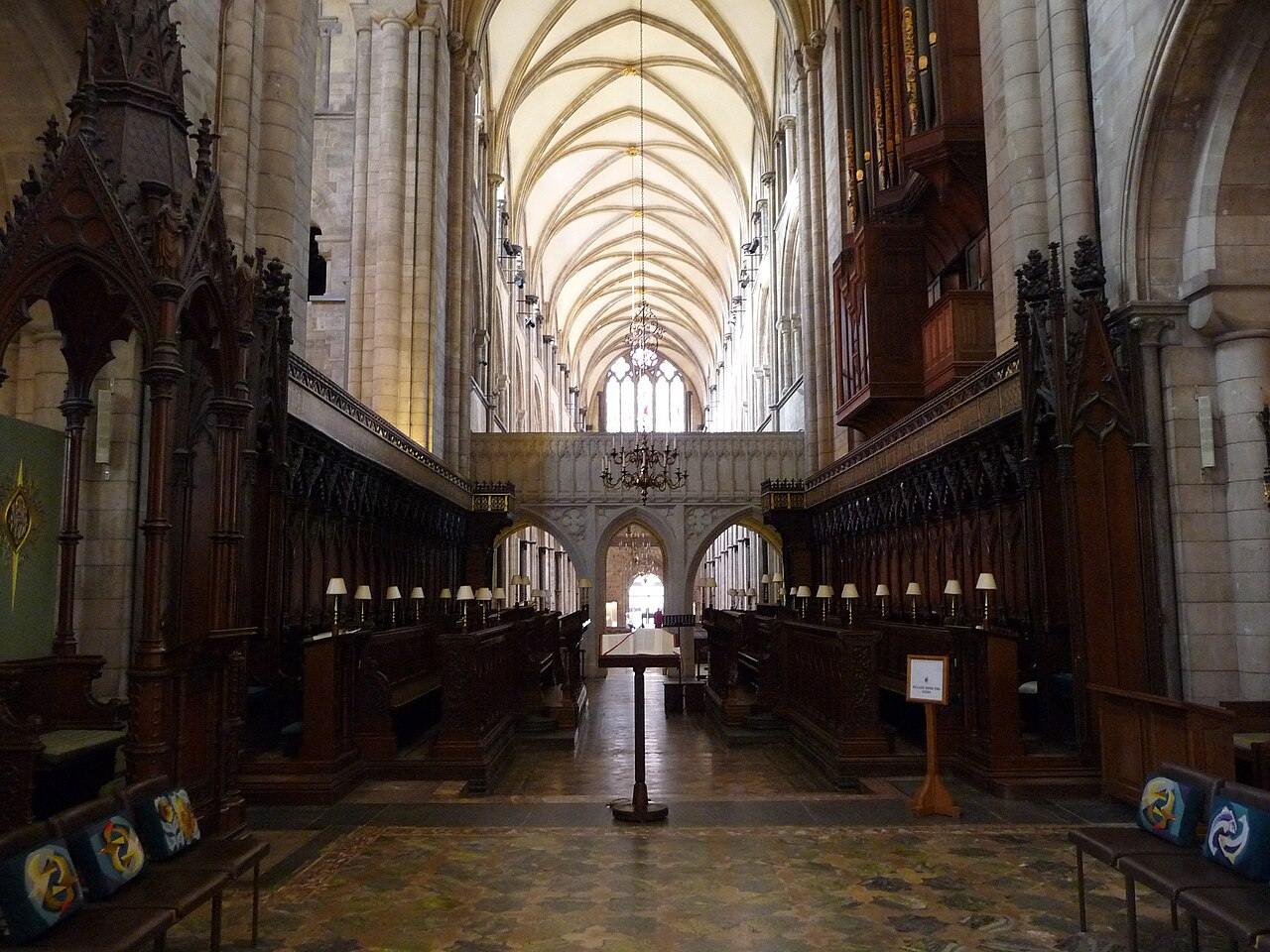
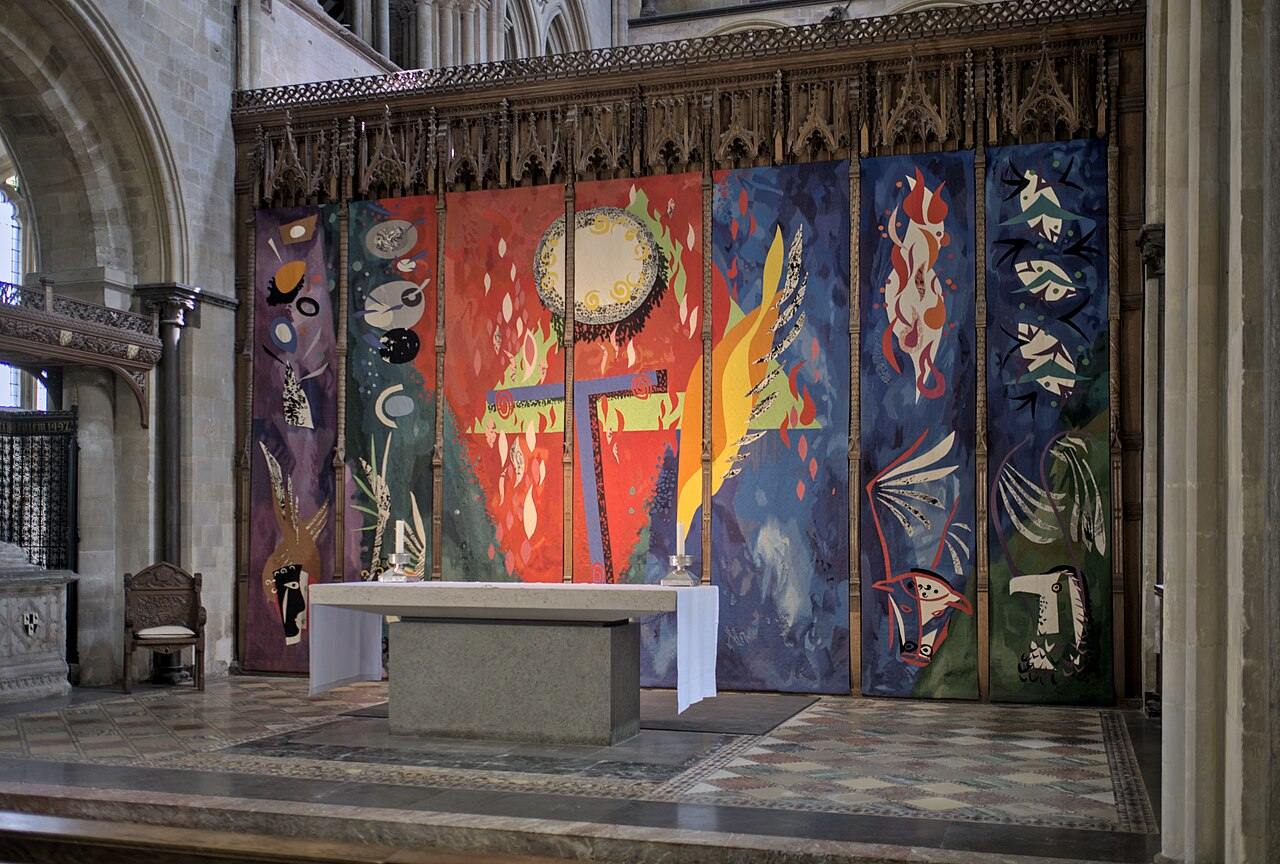
Go through the Arundel Screen into the quire, which has fourteenth-century stalls with carved misericords. Behind the high altar hangs John Piper’s tapestry of 1966, woven in France: seven panels in reds, blues and golds, with symbols of the Trinity, the four evangelists and the elements. It was controversial when it arrived and is now one of the best-loved things in the building. An exhibition on its history is on show until 15 November 2026.
The retroquire and the modern art
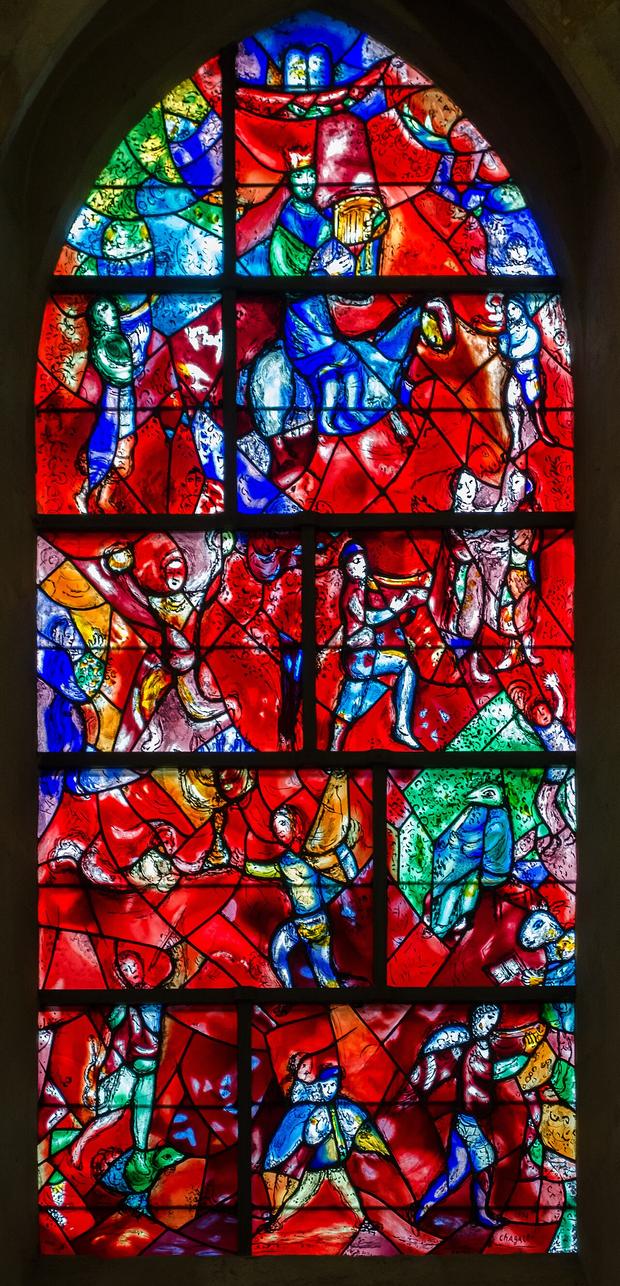
Behind the high altar, the retroquire of the 1190s is the site of St Richard’s shrine, now marked by a modern altar, and its Anglo-German tapestry of 1985 by Ursula Benker-Schirmer. The cathedral’s collection of modern art was largely the work of one man, Walter Hussey, dean from 1955 to 1977, who had already commissioned Henry Moore and Benjamin Britten for his previous church in Northampton. At Chichester he commissioned Piper, Graham Sutherland, whose small painting Noli me tangere hangs in the chapel of St Mary Magdalene, and Marc Chagall, whose window in the north quire aisle was installed in 1978, when the artist was ninety-one. It is a blaze of reds, inspired by Psalm 150.
In the north transept, a memorial marks the place where the ashes of the composer Gustav Holst were buried in 1934.
The cloister
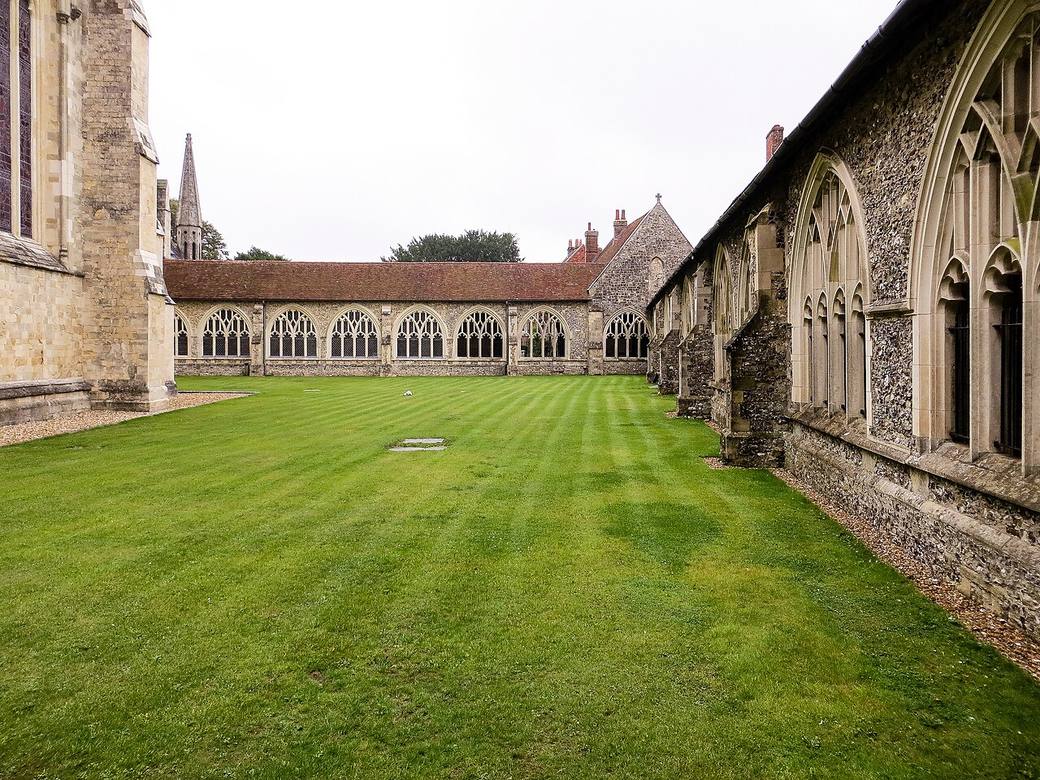
Leave by the south side into the cloister, built around 1400. Its enclosed garden is known as Paradise. From here, paths lead to the Bishop’s Palace Gardens and along St Richard’s Walk.
Tickets and tours
Book the spire
Spire visits climb 164 steps up winding staircases and through roof spaces to views reaching the Isle of Wight on a clear day. They run on set dates, cost about £20 for adults, are not suitable for young children or anyone uneasy in tight spaces, and are booked online. Guided tours of the cathedral itself are also available.
Tour and hotel links go to GetYourGuide and Booking.com. This site earns nothing from them at present — they are here because they are the quickest way to check what is actually available.
Don't miss
- The Lazarus reliefs Twelfth-century carving of the highest quality.
- The Arundel tomb The hand-holding couple who inspired Philip Larkin.
- The Piper tapestry Colour and symbol behind the high altar, 1966.
- The Chagall window The artist’s red window of 1978.
- The Roman mosaic Under glass in the cathedral floor.
- The bell tower The only detached medieval cathedral bell tower in England.
- The spire visit 164 steps up the spire that fell down.
Insider tips
Watch for the peregrines. Peregrine falcons have nested on the cathedral tower for more than twenty years. In spring the cathedral often runs a watch point and a nest camera.
The Bishop’s Palace Gardens, entered from Canon Lane or through the city walls, are free and give the best view of the cathedral and spire. Walk on along the walls, which run almost all the way round the old city.
Choral Evensong is sung on most weekdays and on Sunday afternoons, and is free. Chichester is also a good base for Fishbourne Roman Palace, ten minutes away, and for Bosham and the harbour.
Common questions
Is Chichester Cathedral free to visit?
Yes. Admission is by donation, with £7 per visitor recommended. Spire visits, which climb 164 steps into the roof and tower, are ticketed at about £20 for adults.
Why did Chichester Cathedral's spire fall down?
On 21 February 1861, during work to remove a screen and strengthen the crossing piers, the central tower and spire slowly gave way and collapsed into the building, telescoping down on itself. Nobody was killed. It was rebuilt to the old design by George Gilbert Scott and finished in 1866.
What modern art is in Chichester Cathedral?
A great deal, most of it commissioned by Walter Hussey, dean from 1955 to 1977: John Piper’s tapestry behind the high altar, Graham Sutherland’s painting Noli me tangere, and Marc Chagall’s stained-glass window, installed in 1978. A German tapestry of 1985, by Ursula Benker-Schirmer, was given as a sign of Anglo-German reconciliation.
Is the Arundel tomb in Larkin's poem at Chichester?
Yes. Philip Larkin’s poem “An Arundel Tomb” was written after a visit in 1956. The tomb, of an Earl of Arundel and his countess, lies in the north aisle of the nave. The joined hands that moved Larkin were carved by a Victorian restorer in 1843.
How long do you need at Chichester Cathedral?
About an hour for the cathedral and the cloister; add an hour for the spire visit and half an hour for the Bishop’s Palace Gardens.
Where to stay and eat nearby
The cathedral has a café in the cloister. The four main streets meet at the Market Cross, two minutes away, and are lined with cafes, pubs and restaurants. Chichester Festival Theatre is a short walk north.
More English cathedrals
- Winchester Cathedral — an hour away, with another Norman core and a longer nave
- Salisbury Cathedral — the tallest spire in England, which stayed up
- Coventry Cathedral — another Piper, and the twentieth century’s great cathedral
See all the cathedrals and churches worth visiting in England →